
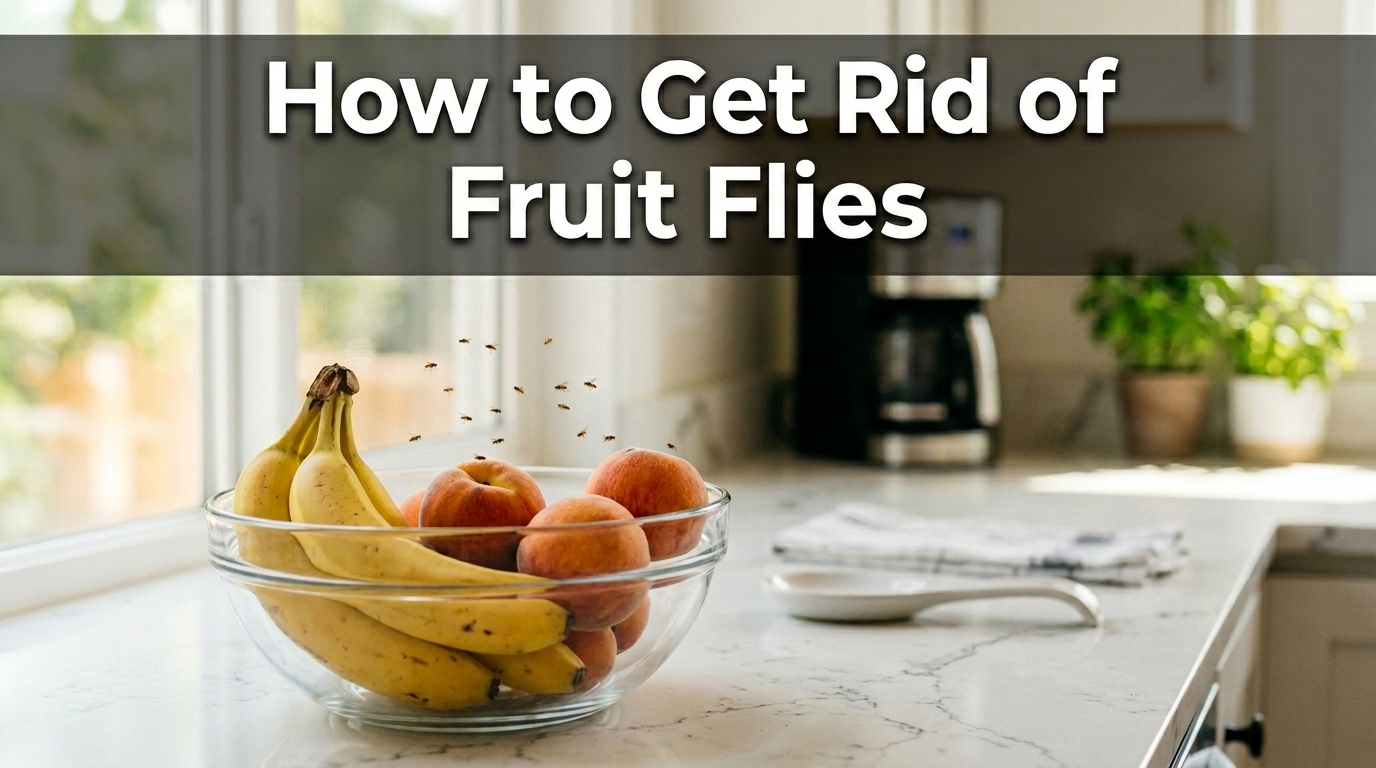
You walked into your kitchen, and there they were. A little cloud of tiny flies hovering over your fruit bowl like they pay rent there. You swat one away, and three more show up in its place.
If you’re nodding along right now, you’re dealing with one of the most common — and most misunderstood — pest problems in homes. The good news? You don’t need an exterminator, a fogger, or a small miracle. You just need to understand what’s actually going on and follow a plan that works.
This guide walks you through everything: what fruit flies actually are, why they showed up in your house, how to trap and kill them, how to deal with the ones hiding in your drain, and how to keep them from ever coming back. No jargon, no scare tactics — just the stuff that works.
What Are Fruit Flies, Really?
Before you can win this fight, it helps to know your enemy. Fruit flies (scientifically called Drosophila melanogaster) are tiny, tan or brownish insects, usually around an eighth of an inch long, with reddish eyes. They’re not the same as houseflies — they’re smaller, weaker fliers, and they tend to hover in lazy loops rather than darting around.
What makes them such a headache is how they reproduce. A single female can lay up to 500 eggs in her lifetime, and under warm conditions, a full life cycle from egg to adult can wrap up in as little as 8 to 10 days, according to Oklahoma State University’s extension entomology program. That’s why a problem that seemed minor on Monday can feel like an infestation by the weekend.
They’re drawn to anything sweet, ripe, or fermenting — fruit, sugary spills, wine, beer, even the sludge that builds up inside a drain. That smell is basically a dinner bell to them.
Why Do Fruit Flies Suddenly Show Up in Your House?
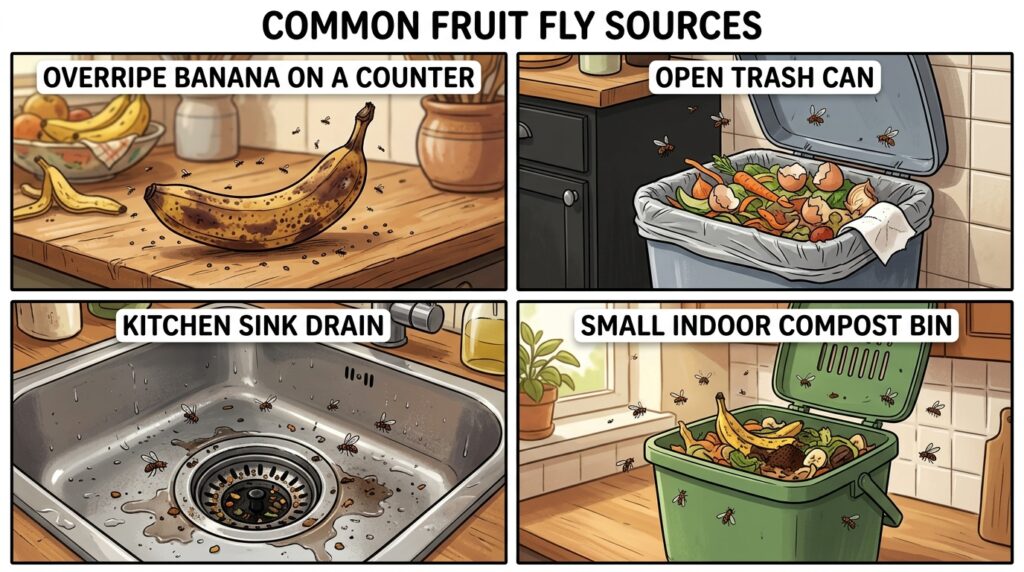
It can feel like they appeared out of nowhere, but fruit flies almost always have a clear point of entry. Here’s where they usually come from:
- Produce from the grocery store. Eggs can already be on fruits and vegetables before you ever bring them home.
- Open trash or recycling. Especially bins that held food packaging, juice bottles, or fruit peels.
- Drains, garbage disposals, and damp sponges. Anywhere food residue collects and stays moist.
- Compost bins. Indoor compost is a favorite breeding ground, since it stays warm, moist, and full of organic material.
- Spilled liquids. A splash of wine, beer, or soda that dried under the fridge or behind the stove is more than enough.
Once a few flies find a food source, they don’t just visit — they move in and start laying eggs almost immediately. That’s why understanding how do you get rid of fruit flies really starts with figuring out where they’re breeding, not just where you’re seeing them.
How to Get Rid of Fruit Flies in the Kitchen (Step-by-Step)
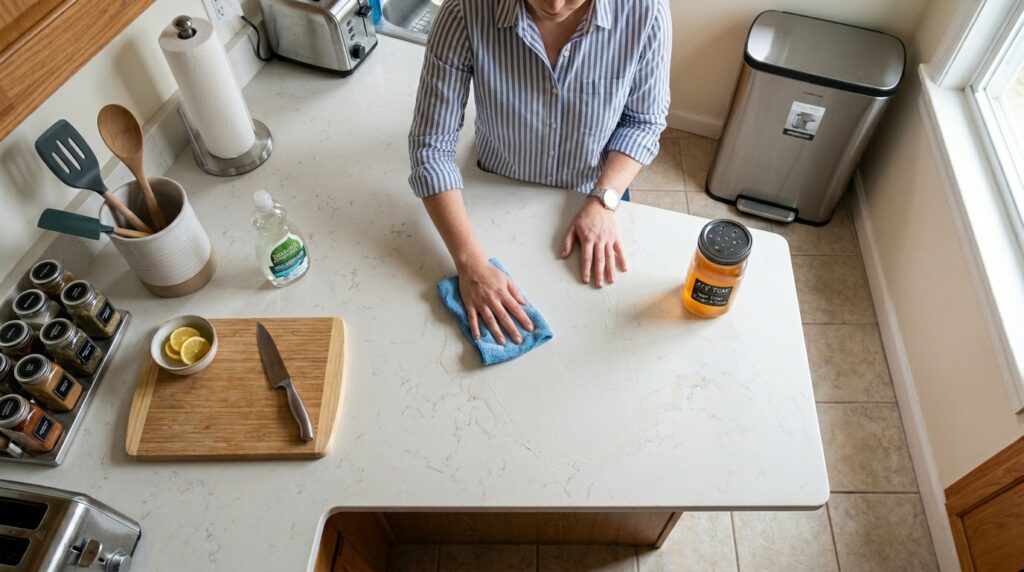
The kitchen is ground zero for almost every fruit fly problem, so this is where you start. Here’s a simple plan that handles both the flies you can see and the ones you can’t.
Step 1: Find and Remove the Food Source
This is the step people skip, and it’s the reason traps alone often don’t finish the job. Walk through your kitchen and check:
- The fruit bowl, especially anything bruised, overripe, or starting to ferment
- Inside the trash can and recycling bin
- Under the sink and around the garbage disposal
- Behind and under the refrigerator
- Inside cabinets where you store onions or potatoes (yes, really — soft spots attract them too)
Toss anything questionable, give the trash a fresh liner, and wipe down any sticky residue on counters or inside cabinets.
Step 2: Set Out DIY Traps
Once the food source is gone, traps clean up the adult flies that are still flying around. The most reliable homemade option uses apple cider vinegar, and there’s a reason it works so well — the fermented smell mimics rotting fruit almost perfectly, which is exactly what fruit flies are wired to chase.
Step 3: Treat Your Drains
If flies keep appearing even after the kitchen looks spotless, the breeding ground is probably inside your drain. More on exactly how to handle that below.
Step 4: Repeat for a Few Days
Because of how fast fruit flies reproduce, one round of cleaning and trapping usually isn’t enough. Keep traps out and keep surfaces clean for at least a week to catch any flies that hatch after your initial cleanup.
How to Trap Fruit Flies: 4 DIY Methods That Actually Work
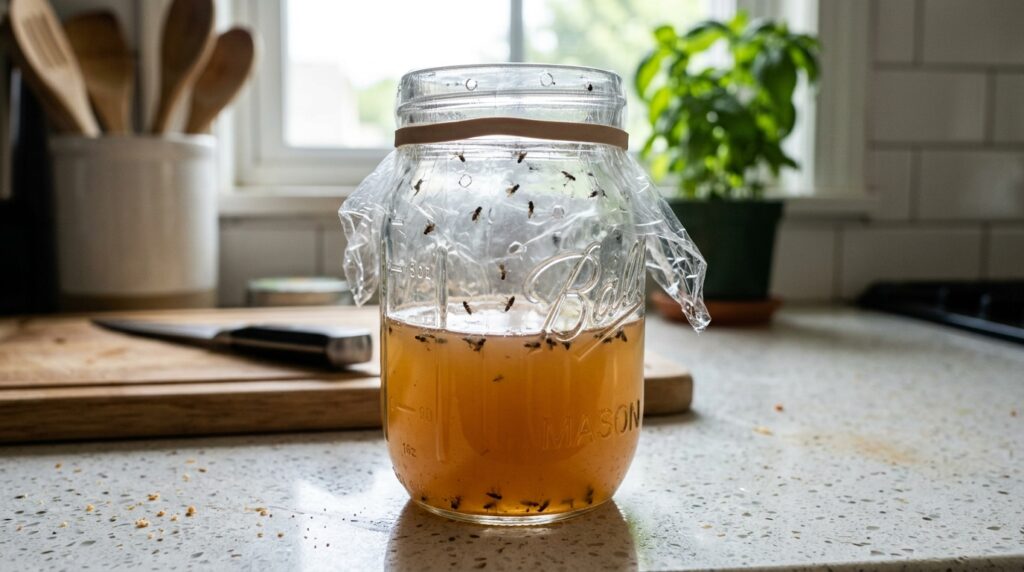
You don’t need anything fancy here. Every one of these uses stuff that’s probably already in your kitchen. The trick to how to catch fruit flies is always the same idea: lure them in with a smell they can’t resist, then make it impossible for them to fly back out.
Method 1: The Classic Apple Cider Vinegar Trap
This is the gold standard, and for good reason — it’s cheap, fast to set up, and genuinely effective. Apple cider vinegar fruit fly traps work because the smell draws the flies in, and adding a drop of dish soap breaks the surface tension so the flies can’t escape once they land.
What you need:
- A small jar or bowl
- Apple cider vinegar
- A few drops of dish soap
- Plastic wrap and a rubber band (optional but helpful)
- A toothpick or fork
How to make it:
- Pour about a quarter cup of apple cider vinegar into the jar.
- Add a couple of drops of dish soap and give it a gentle stir.
- Cover the jar with plastic wrap and secure it with a rubber band.
- Poke several small holes in the plastic wrap with a toothpick.
- Set the trap near the fruit bowl, trash can, or sink — wherever you’ve seen the most activity.
Flies smell the vinegar, crawl in through the holes, and once they touch the soapy liquid, they can’t get back out. One home tester who tried several versions of this trap found it caught over 50 flies in a single week using a Mason jar with tiny holes punched in the lid.
Method 2: The Overripe Fruit Trap
If you don’t have vinegar on hand, a piece of very ripe or slightly overripe fruit works almost as well.
- Place a chunk of overripe banana, peach, or melon in a jar.
- Cover with plastic wrap and poke small holes in it.
- Leave it near the problem area overnight.
The flies are drawn in by the real thing and get trapped the same way.
Method 3: The Wine or Beer Trap
Leftover wine or flat beer works because, again, it’s all about that fermented smell.
- Pour a small amount of leftover wine or beer into a glass.
- Add a drop of dish soap.
- Leave it uncovered, or cover it the same way as the vinegar trap for extra effectiveness.
Method 4: The Paper Cone Trap
This version skips the plastic wrap entirely and uses a simple paper funnel instead.
- Pour apple cider vinegar (with a drop of dish soap) into a jar.
- Roll a piece of paper into a tight cone shape.
- Insert the cone into the jar opening, point down, leaving a small gap at the bottom.
- Flies fly in through the wide top opening but struggle to find their way back out through the narrow point.
| Trap Type | Best For | Setup Time | Effectiveness |
|---|---|---|---|
| Apple Cider Vinegar + Soap | Most situations | 2 minutes | Very High |
| Overripe Fruit | When you’re out of vinegar | 3 minutes | High |
| Wine or Beer | Using up leftovers | 2 minutes | Moderate to High |
| Paper Cone | No plastic wrap on hand | 5 minutes | High |
How to Kill Fruit Flies Fast (When You Need Results Today)
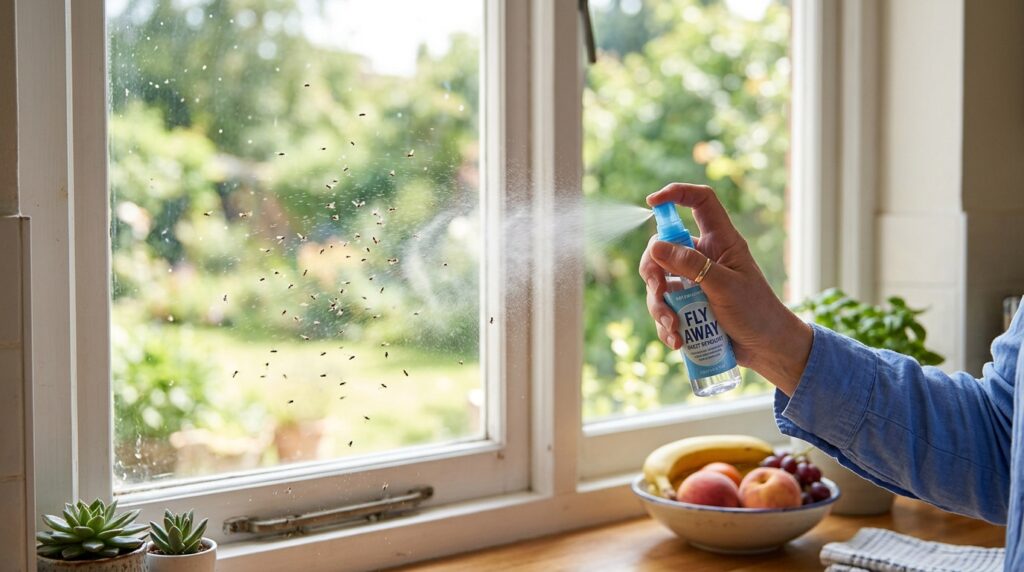
Traps are great, but they take a day or two to really clear a room. If you want to knock down the flies you can see right now, here are a few fast options.
The Spray Bottle Method
Mix equal parts water and vinegar in a spray bottle with a small squirt of dish soap. Spray directly on flies when you see them resting on a surface. The soap breaks down their wing structure on contact, which stops them from flying.
The Vacuum Trick
A handheld vacuum can suck up a cluster of flies hovering over your fruit bowl in seconds. It’s oddly satisfying and genuinely effective for an immediate cleanup, though it won’t stop new flies from hatching.
Boiling Water for Breeding Sites
If you suspect flies are breeding somewhere like a drain or disposal, boiling water poured directly into the site kills eggs and larvae on contact. This won’t help with adult flies already in the air, but it cuts off the source.
It’s worth knowing that fruit flies go through a complete transformation from egg to adult, and depending on temperature, that growth from egg to adult can take 18 to 20 days at cooler temperatures, or as little as 8 to 10 days when it’s warmer, according to Virginia Tech’s entomology department. That’s exactly why killing the adults you see isn’t enough — if there are eggs or larvae somewhere warm and moist, a new wave will hatch within days.
How to Get Rid of Fruit Flies in the Drain
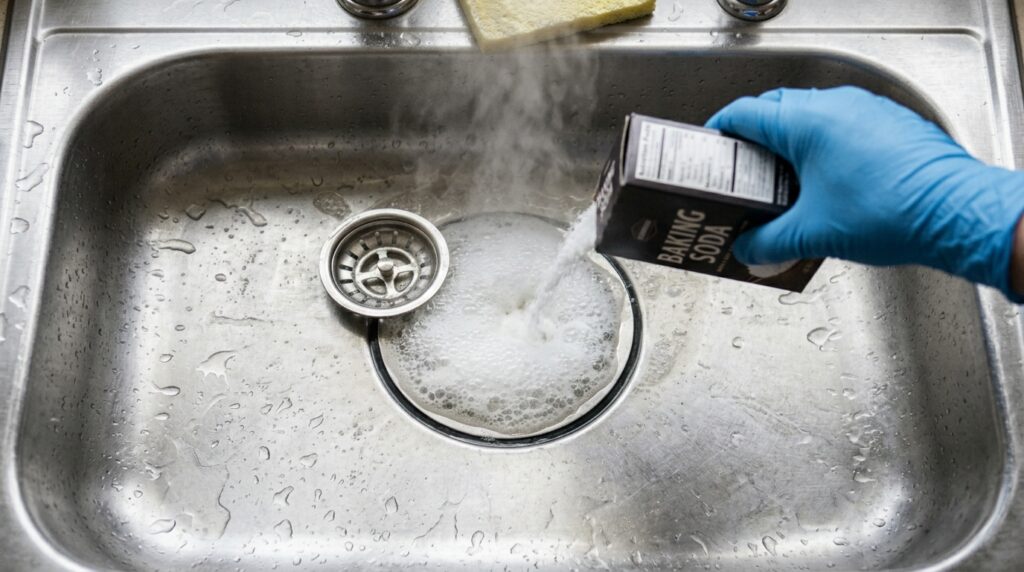
This is the step most people miss, and it’s usually the reason fruit flies keep coming back no matter how many traps they set out.
Drains — kitchen sinks, bathroom sinks, even floor drains — build up a layer of grime called biofilm over time. It’s made of soap scum, hair, food particles, and organic gunk, and it’s exactly the moist, sweet-smelling environment fruit flies love to lay eggs in. In kitchens, fruit flies often appear in drains, so paying attention to sink maintenance is an important part of getting rid of them for good.
How to Tell If Your Drain Is the Problem
Try this simple test:
- Cover the drain opening with a piece of clear tape, sticky side down, overnight.
- In the morning, check the tape.
- If you find flies stuck to it, your drain is breeding them.
How to Clean a Fruit Fly–Infested Drain
- Pour boiling water down the drain. This is the fastest first step and kills larvae and eggs on contact.
- Follow with a baking soda and vinegar flush. Pour about half a cup of baking soda down the drain, then a cup of vinegar. Let it fizz for 10–15 minutes, then flush with hot water.
- Scrub the drain stopper and the overflow hole. That little overflow opening near the top of a bathroom or kitchen sink is a notorious hiding spot. Fruit flies often breed in the gunk hidden in that overflow hole, so flushing it with boiling water or a vinegar mix once a week helps stop a recurring infestation.
- Use a drain brush for a deeper clean if the smell or the flies persist after a few flushes.
- Repeat weekly during warmer months when fruit flies are most active.
If you’ve already tried this and flies are still appearing, it’s worth checking whether the issue might actually be drain flies instead — a different (but similarly annoying) pest that looks fuzzy and moth-like rather than the leaner, more visible fruit fly.
How to Get Rid of Fruit Flies in Your House (Beyond the Kitchen)

Kitchens get most of the attention, but fruit flies can turn up in bathrooms, near houseplants, and even in bedrooms if there’s a forgotten glass of juice or soda nearby. Here’s how to clear them out room by room.
Bathrooms
Bathroom sinks have the same overflow-hole issue kitchens do. If you’re seeing flies in the bathroom, treat the drain the same way described above.
Living Rooms and Bedrooms
Check for:
- Empty cups or glasses with leftover juice, soda, or wine
- Houseplants sitting in overly damp soil (this is more often fungus gnats, but worth checking)
- Trash cans that held food wrappers or fruit peels
Garages and Basements
Fruit flies can also breed near recycling bins, especially ones that held juice bottles, beer cans, or wine bottles that weren’t rinsed out.
Whole-House Prevention Checklist
- Rinse recyclables before tossing them in the bin
- Take trash out at least every other day, more often in summer
- Store ripe fruit in the refrigerator instead of on the counter
- Keep counters and dining tables wiped down after meals
- Run drains with hot water regularly, even when you don’t see flies
Natural vs. Chemical Methods: What’s Worth Using?
A lot of people want to know if they really need pesticides for this, or if natural methods are enough. Here’s an honest breakdown.
| Method | Pros | Cons |
|---|---|---|
| Vinegar traps | Cheap, safe around pets and kids, very effective for most home infestations | Needs to be refreshed every few days |
| Boiling water / drain cleaning | Kills eggs and larvae at the source, no chemicals needed | Only works if the breeding site is reachable |
| Essential oils (lemongrass, eucalyptus) | Pleasant smell, mild repellent effect | Repels rather than kills; not a standalone solution |
| Store-bought sticky traps | No mixing required, low maintenance | Less effective against large infestations |
| Insecticide sprays | Fast knockdown of visible flies | Not necessary for most home cases; should be used carefully around food prep areas and according to label instructions |
For the vast majority of households, natural methods like vinegar traps combined with drain cleaning and basic sanitation are enough to fully resolve a fruit fly problem within a week or two. Reaching for chemical sprays is rarely necessary and adds risk around food surfaces without solving the root cause — the breeding site.
Expert Tips for Getting Rid of Fruit Flies for Good
These are the small details that make the difference between a problem that disappears in a few days and one that drags on for weeks.
- Refresh your traps every 2–3 days. Old vinegar loses its scent strength and stops attracting new flies as effectively.
- Set out multiple traps at once. One trap in a small kitchen is fine, but for a larger infestation, place two or three traps in different areas — near the trash, near the sink, and near the fruit bowl.
- Don’t forget the small stuff. Recycling bins, reusable grocery bags, and even the rubber gasket on your dishwasher door can hold enough residue to attract flies.
- Check produce before you store it. If you’re bringing home fruit during peak season, a quick rinse can remove eggs that may already be on the skin.
- Be patient with the timeline. Because of how quickly fruit flies reproduce, it’s normal to still see a few flies for several days after you’ve removed the source — those are likely flies that already hatched before you cleaned up.
- Combine methods. Traps catch adults, drain cleaning removes breeding sites, and sanitation prevents new ones. Skipping any one of these usually means the problem resurfaces.
Common Mistakes That Make Fruit Fly Problems Worse
Most people don’t have a fruit fly problem because they’re messy. They have one because of a handful of small, easy-to-miss habits. Here’s what to watch for.
Mistake 1: Only Dealing With the Flies You Can See
Swatting visible flies feels productive, but it does nothing for the eggs and larvae already developing in a food source you haven’t found yet. You can kill every adult fly in the kitchen tonight and still wake up to a fresh batch tomorrow if the breeding site is still there.
Mistake 2: Leaving Trap Liquid in Too Long Without Refreshing It
A vinegar trap that’s been sitting for a week stops being a trap and starts being its own little ecosystem. Old, cloudy trap liquid loses its scent strength, and in some cases, it can even become a breeding spot of its own if flies have been laying eggs near the rim.
Mistake 3: Ignoring the Garbage Disposal
A lot of people clean their visible drain area but never run or clean the disposal itself. Food particles get packed into the blades and housing, creating a hidden, moist food source that’s perfect for breeding. Running the disposal with ice cubes and a bit of dish soap, followed by cold water, helps clear out buildup that warm water alone won’t fully remove.
Mistake 4: Storing Produce Incorrectly
Leaving bananas, tomatoes, and stone fruit out on the counter feels natural, but once they start to soften, they become prime real estate for egg-laying. Moving ripe produce to the refrigerator — even temporarily — removes one of the biggest attractants in most kitchens.
Mistake 5: Forgetting About Reusable Bags and Bins
Canvas grocery bags, produce bins in the fridge, and the bottom of the trash can all collect juice and residue over time. These spots rarely get cleaned during a normal kitchen wipe-down, which makes them easy to overlook even when everything else looks spotless.
Mistake 6: Treating It as a One-Time Fix
Because of how quickly fruit flies reproduce, a single cleaning session usually isn’t enough to fully resolve an infestation. Treating this as a multi-day process — checking traps, re-cleaning drains, and staying alert for new spills — is what actually finishes the job instead of just knocking the numbers down temporarily.
Do Store-Bought Fruit Fly Traps Work?
If DIY traps aren’t your thing, commercial fruit fly traps are widely available and can be a convenient option, especially for kitchens, offices, or situations where you don’t want a jar of vinegar sitting on the counter.
How they typically work: Most store-bought traps use a similar principle to the homemade version — a food-based or pheromone-based attractant lures flies into a small chamber lined with a sticky surface or a one-way entry point they can’t escape from.
When they make sense:
- You want something low-maintenance that doesn’t need refreshing every few days
- You’d rather not have an open container of liquid around food prep areas
- You’re dealing with a persistent problem in a space like an office breakroom
When DIY is the better call:
- You need something working within minutes, not days
- You’re trying to keep costs as low as possible
- You want full control over trap placement and the ability to set out several at once
Either option can work well. The biggest factor in success isn’t which trap you choose — it’s whether you’ve also removed the food source and cleaned the breeding site. A trap without source control just slows the problem down instead of solving it.
Why Fruit Flies Get Worse in Certain Seasons
If it feels like your fruit fly problem always seems to peak around the same time every year, that’s not a coincidence. Fruit fly activity is closely tied to temperature, and warmer weather speeds up nearly every part of their life cycle.
In late summer and early fall, fresh produce is at its most abundant, which means more ripening fruit sitting on counters and more opportunities for flies to find a food source. Combine that with warmer indoor and outdoor temperatures, and you get faster breeding cycles on top of more available food — a combination that explains why infestations tend to spike during this stretch of the year.
During colder months, fruit fly activity naturally slows down since development takes longer in cooler conditions. That doesn’t mean they disappear entirely indoors, especially in heated homes, but outbreaks tend to be smaller and easier to control.
What this means practically: if you know late summer and fall tend to be your trouble spots, it’s worth being a little more proactive during that window — refrigerating ripe produce sooner, taking out trash more frequently, and giving drains a weekly flush before a problem even starts.
How Long Does It Take to Get Rid of Fruit Flies?
This is one of the most common questions, and the honest answer is: it depends on how thorough your cleanup is.
If you remove the food source, clean the drains, and keep traps out consistently, most home infestations clear up within 3 to 7 days. Because the egg-to-adult cycle can take as little as a week in warm conditions, you may see a small second wave a few days after your initial cleanup — that’s normal, not a sign that something failed. Keep traps active through that window and the numbers should drop steadily until they’re gone.
If flies are still present after two full weeks of consistent trapping and cleaning, that’s usually a sign there’s a breeding site you haven’t found yet — often deep in a drain, behind an appliance, or inside a piece of furniture where something sweet was spilled.
Fruit Flies vs. Other Small Flying Pests (How to Tell Them Apart)
Not every tiny flying bug in your kitchen is a fruit fly. Misidentifying the pest is one of the most common reasons home remedies seem to fail — you might be treating the wrong problem entirely. Here’s a quick comparison to help you confirm what you’re actually dealing with.
| Pest | Appearance | Where Found | Best Fix |
|---|---|---|---|
| Fruit flies | Tan/brown, red eyes, sleek body | Fruit bowls, trash, drains | Vinegar traps, drain cleaning |
| Drain flies (moth flies) | Fuzzy, gray/black, moth-shaped wings | Resting on walls near drains | Drain brush, biofilm removal |
| Fungus gnats | Thin, black, mosquito-like | Houseplant soil | Let soil dry out, sticky traps |
| Houseflies | Larger, gray/black, fast erratic flight | Anywhere, especially near doors/windows | Screens, fly swatters, sealing entry points |
If you’ve been treating a fruit fly problem with vinegar traps and nothing seems to change, it’s worth taking a closer look at the insects themselves. Fungus gnats, for example, breed in damp potting soil rather than rotting fruit, so a vinegar trap near your fruit bowl won’t make much of a dent — the fix there is letting the soil dry out between waterings instead.
Taking thirty seconds to actually identify the pest can save you days of trying remedies that were never going to work for that particular bug.
Frequently Asked Questions
What attracts fruit flies in the first place?
Fruit flies are drawn to the smell of ripening, fermenting, or rotting organic material — think overripe fruit, sugary spills, wine, beer, and the buildup inside drains. Anything sweet and slightly past its prime is basically an invitation.
How do you get rid of fruit flies without using chemicals?
A vinegar trap with a drop of dish soap, combined with thorough cleaning of trash cans, drains, and countertops, is enough to clear out most home infestations without needing any sprays or chemical pesticides.
Why do fruit flies keep coming back even after I clean?
Usually because the breeding site hasn’t been fully addressed. Drains, garbage disposals, and the overflow holes in sinks are common hiding spots that get overlooked during a regular kitchen cleanup.
Can fruit flies actually bite or spread disease?
Fruit flies don’t bite, and they’re not considered a major disease risk to humans the way some other pests are. That said, they do land on food and can carry bacteria from whatever they were breeding in, so it’s still worth keeping food covered and surfaces clean.
How can I tell the difference between fruit flies and drain flies?
Fruit flies are tan or brown, sleek, and have a more direct flight pattern. Drain flies (sometimes called moth flies) are fuzzy, gray or black, with a distinctive moth-like wing shape, and they tend to rest on walls near drains rather than hovering over fruit.
Final Thoughts
Fruit flies are annoying, but they’re also one of the most beatable pests out there once you understand what’s actually drawing them in. Remove the food source, set out a trap or two, give your drains some attention, and stay consistent for about a week. That combination handles the overwhelming majority of infestations without any need for harsh chemicals or professional intervention.
If you’ve been dealing with a swarm for more than two weeks despite trying all of this, it’s worth taking a closer look at less obvious spots — under appliances, inside recycling bins, or in a drain you haven’t checked yet. Somewhere, there’s still a food source they’re holding onto.
Try the vinegar trap tonight. By this time next week, that fruit bowl should finally be yours again.

