
A new mattress shows up, wrapped tight and ready to be unrolled, and suddenly there’s a second problem sitting in the middle of the bedroom: the old one. It’s heavy, it’s awkward around corners, and it definitely isn’t going to fit in the trunk of a sedan.
If you’re wondering how to get rid of a mattress, the short answer is that you usually have four realistic paths: donate it, recycle it, put it out for bulk trash pickup, or pay someone to haul it away. Which one makes sense depends mostly on the mattress’s condition and how much effort you want to put in yourself.
This isn’t one of those chores where there’s a single correct answer for everyone. A mattress that’s five years old with no stains is a very different situation than one that’s been sitting in a garage with mouse damage. Working through the options in order, starting with the free ones, usually gets you to the right choice fast.
This article is for general informational purposes only. Rules for mattress donation, recycling, and disposal vary by city and state, so check with your local waste management department or a specific donation center before finalizing your plan.
Check the Condition Before You Decide Anything
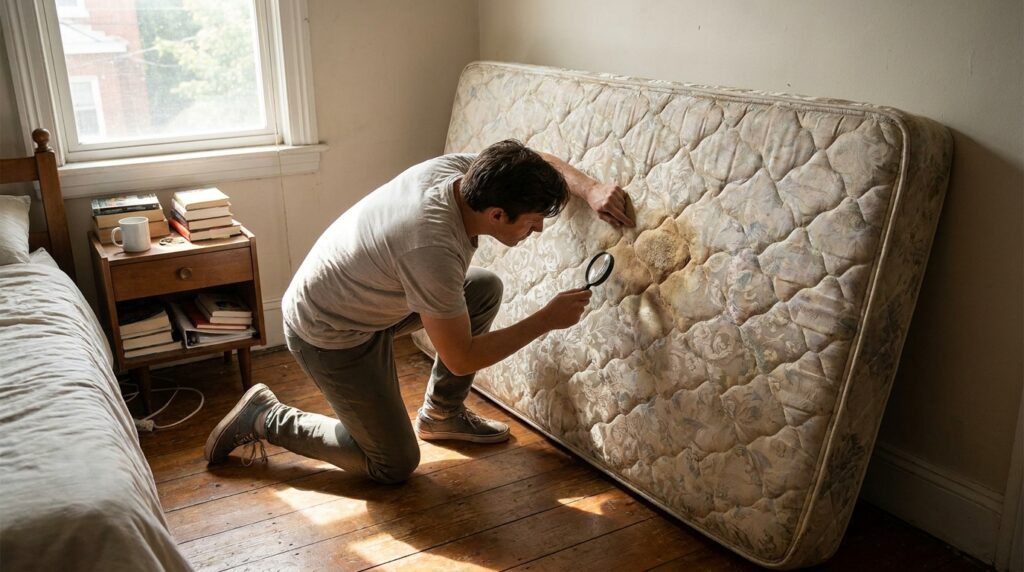
Before picking a method, look the mattress over honestly. This one step saves a lot of wasted trips.
- Clean and structurally sound: No rips, no sagging, no odor. This mattress is a strong candidate for donation or resale.
- Worn but usable: Some flattening or minor staining but still intact. Recycling is often the better route here.
- Damaged, moldy, or infested: Torn covers, mold, or signs of bed bugs mean it needs to go straight to disposal, not donation. Most charities will turn these away at the door.
Most experts agree that a mattress typically lasts seven to ten years before it’s time for a replacement, so if yours is within that window and in decent shape, don’t assume the landfill is the only option.
Option One: Donating a Mattress That’s Still in Good Shape
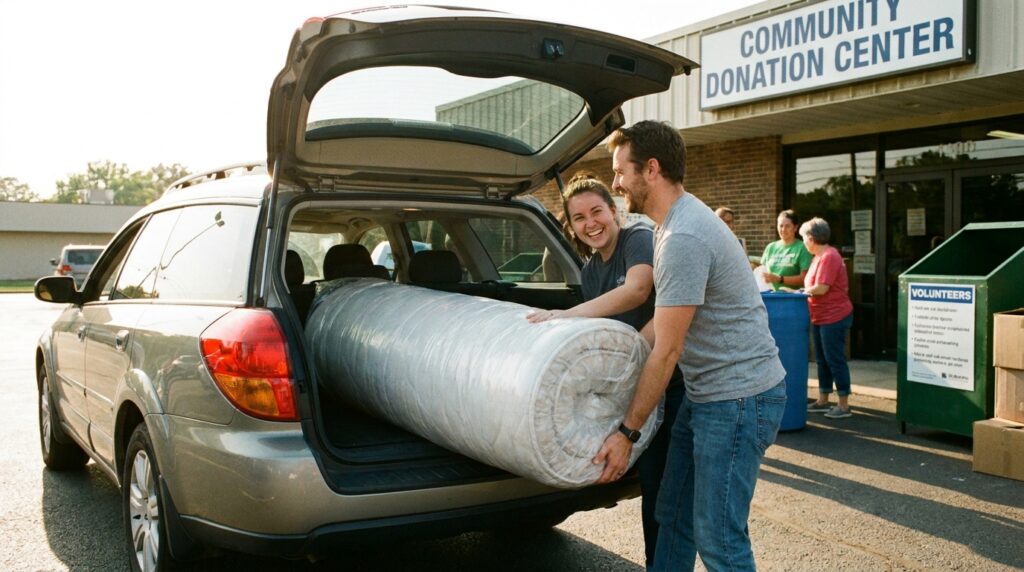
Donation is the most satisfying option when it’s available, since the mattress goes to someone who actually needs it instead of a landfill. Shelters, transitional housing programs, and some furniture banks accept mattresses, though policies differ a lot from one organization to the next.
A few things to know before you call:
- Many donation centers require the mattress to be less than a certain number of years old, often under eight.
- Stains, tears, sagging, or any hint of odor will usually get a donation turned down on the spot.
- Some organizations only accept mattresses in the original size categories (twin, full, queen, king) and skip specialty sizes.
- Bed bugs or pest damage are automatic disqualifiers everywhere, no exceptions.
Call ahead rather than just showing up. A quick phone call confirming they’re currently accepting mattresses saves you from loading it into a truck for nothing. If a local shelter can’t take it, a secondhand marketplace listing or an online donation group is often a solid backup, since plenty of people are actively looking for a free or low-cost mattress rather than buying new.
Option Two: How to Recycle a Mattress
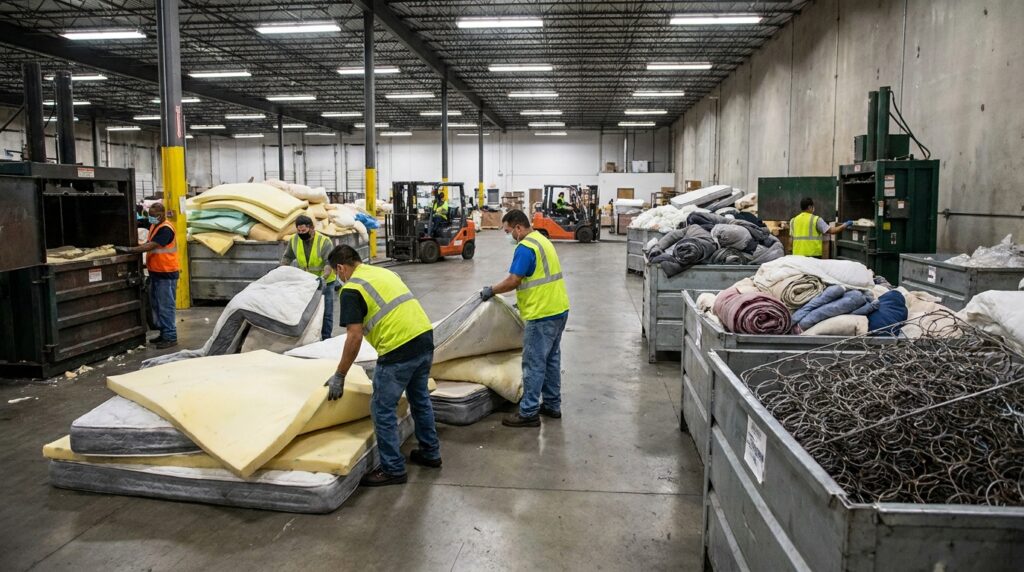
If donation isn’t an option, recycling is the next best thing for the environment. A surprising amount of a mattress is recoverable. Steel coils, foam padding, and fabric covering can all be broken down and reused in other products, and at least three quarters of the materials in an average mattress are recyclable.
This matters more than it might seem. Left in a landfill, a single mattress can take eighty to well over a hundred years to fully decompose, and its bulky shape means it takes up disproportionate space compared to other trash.
A few states now legally require mattress recycling programs to be available, and there’s a nationwide directory that helps you locate a certified mattress recycling site near your zip code, which makes this step much less of a guessing game than it used to be. Many mattress retailers will also recycle your old one for a small fee when they deliver your new mattress, so it’s worth asking at checkout.
Option Three: Curbside and Bulk Trash Pickup
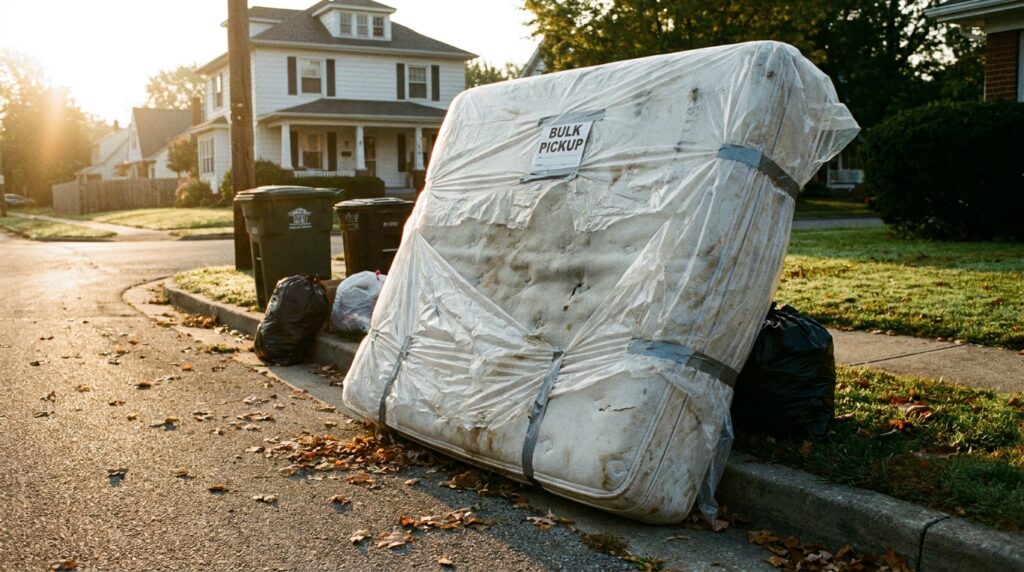
Regular garbage routes generally won’t take a mattress, but most cities offer a separate bulk item pickup service, sometimes free, sometimes for a scheduling fee.
Steps that apply almost everywhere:
- Check your city or county sanitation department’s website for bulk pickup rules and scheduling.
- Wrap the mattress in plastic sheeting or a mattress disposal bag. This is often required by law in areas dealing with bed bug concerns, and it also keeps rain from soaking it while it waits at the curb.
- Confirm the specific day, since bulk items are frequently collected on a different schedule than weekly trash.
- Some cities cap the number of bulk items allowed per pickup or per year, so double-check if you’re clearing out more than one piece of furniture at a time.
This route tends to be the cheapest option if your city offers it, though it usually takes the longest to schedule since most municipalities only run bulk pickups on specific days each month.
Option Four: Hiring a Mattress Removal Service
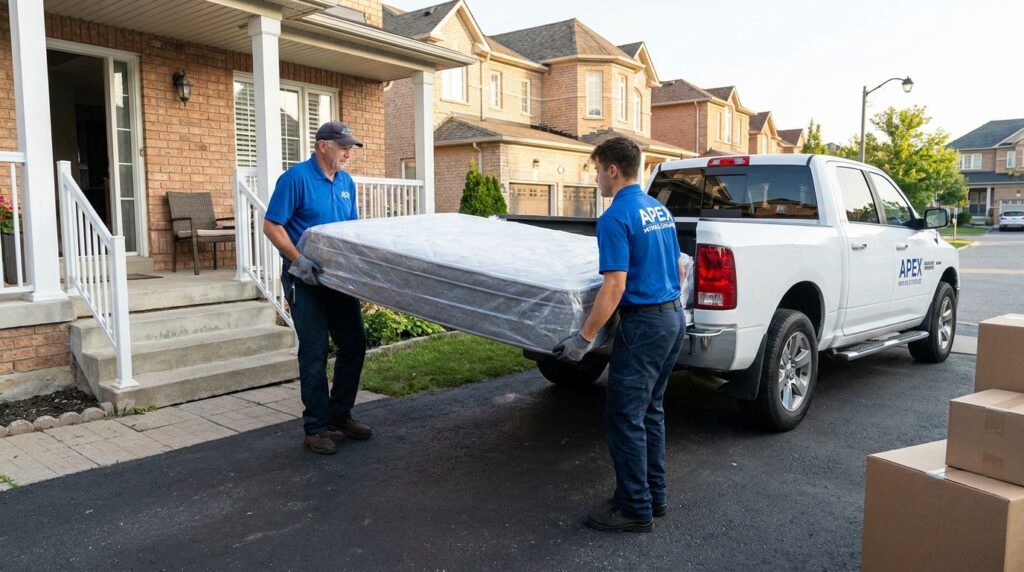
When time matters more than saving a few dollars, a junk removal or mattress hauling service picks it up, loads it, and takes care of proper disposal or recycling on your end. This is especially useful for anyone dealing with stairs, an apartment with no elevator, or simply no truck to haul it in.
Pricing typically depends on:
- The size of the mattress (a king costs more to haul than a twin)
- Whether it needs to be carried down multiple flights of stairs
- Local disposal or recycling fees in your area
- Same-day versus scheduled service
Most national hauling companies and local junk removal outfits can quote a flat rate over the phone once you describe the mattress and your building’s access, so it’s worth getting two or three quotes before booking.
How to Get Rid of an Old Mattress for Free
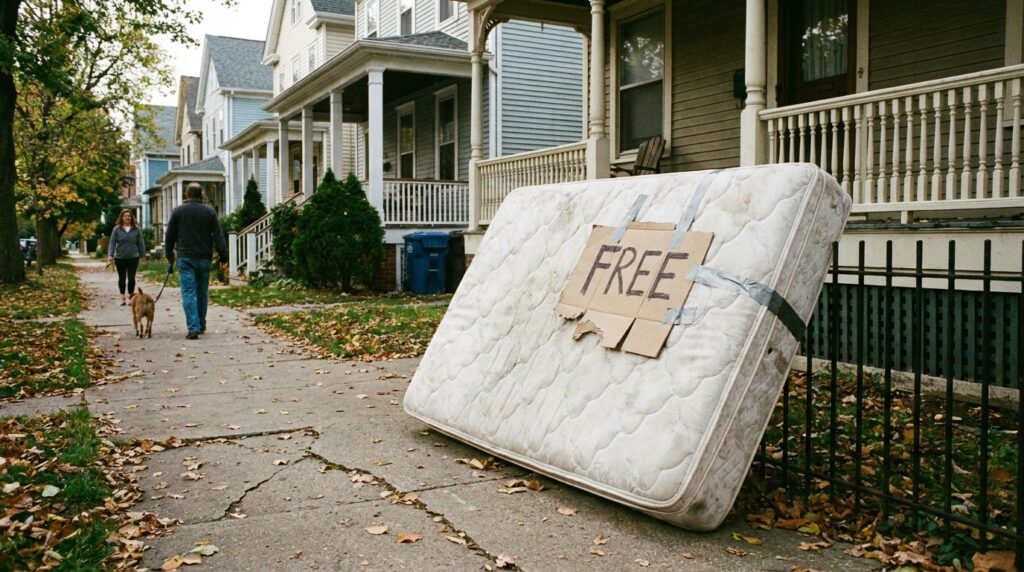
Not every method involves a fee. If the mattress is clean and usable, these routes cost nothing:
- Online marketplaces and local buy-nothing groups. Listing it as “free, must pick up” often gets a response within hours in busier areas.
- Retailer haul-away with new mattress purchase. Many stores include this at no extra charge when delivering a replacement.
- Community recycling events. Some towns hold periodic bulky item collection days at no cost.
- Direct donation to a shelter or nonprofit with pickup service. A handful of larger charities offer free scheduled pickup for furniture donations, mattresses included, provided the item passes their condition check.
Free almost always means a bit more effort on your part, whether that’s coordinating pickup times or driving it somewhere yourself, but for a mattress in reasonable shape it’s usually worth the extra phone calls.
How to Break Down a Mattress for Disposal Yourself
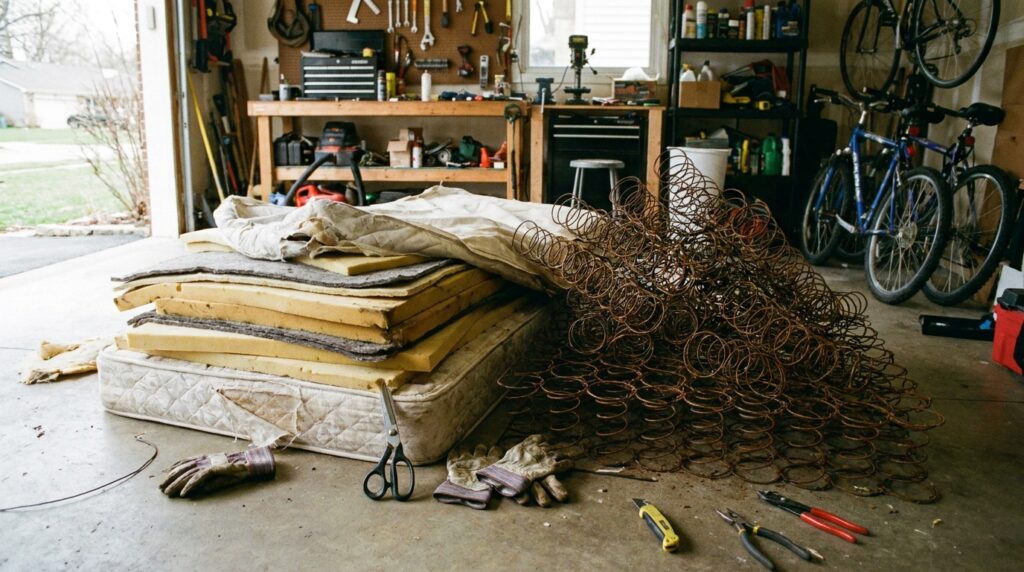
Some people prefer to take the mattress apart themselves, either to fit it into a smaller vehicle or to sort the materials for separate recycling drop-off. It’s more physical work than most other options, but it’s straightforward if you have basic tools and a little patience.
- Check your local regulations first. Some areas restrict how mattresses can be broken down or require specific disposal steps for the fabric cover.
- Wear thick gloves and, ideally, a dust mask. Old foam and fabric can release a fair amount of dust, and exposed coils can scratch or poke.
- Cut along the seams of the outer cover with heavy-duty scissors or a utility knife, and peel it back carefully.
- Separate the foam layers from the coil unit. Foam padding can usually go with regular trash unless your area has a specific foam recycling program.
- Pull the steel coils free from the frame. Scrap metal recyclers will often take these, sometimes even paying a small amount for the metal.
This method takes the most time of any option here, generally an hour or more for a full-size mattress, but it lets you recycle components separately if your city doesn’t have a dedicated mattress recycling service nearby.
What to Do With a Mattress That Has Bed Bugs
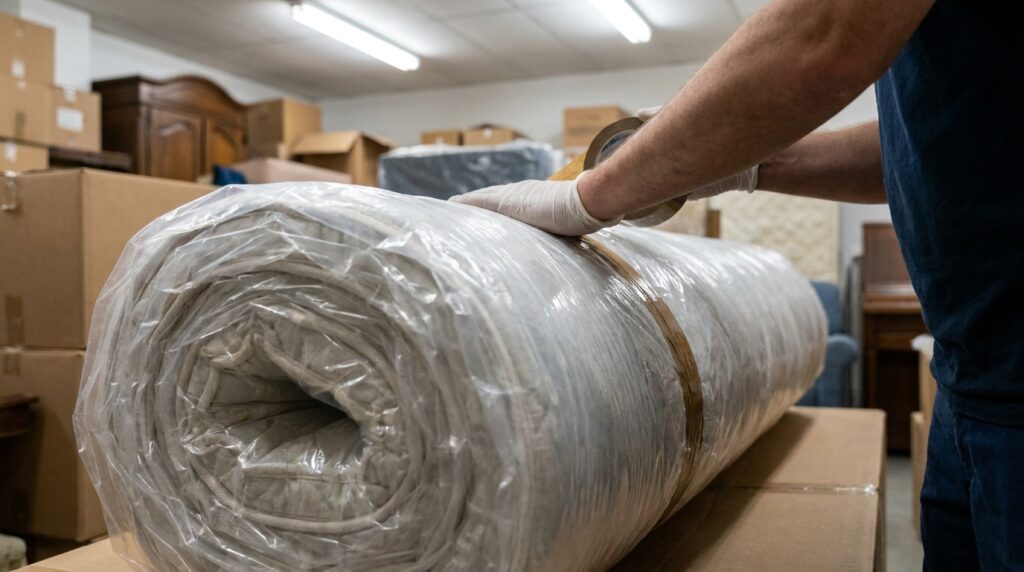
A mattress with bed bugs needs to be handled differently than a normal disposal. Donation is completely off the table, and simply setting it at the curb without precautions risks spreading the infestation to neighbors or anyone who might try to grab a “free” mattress off the street.
- Seal the entire mattress in a thick plastic mattress disposal bag, taped shut at every seam.
- Write “bed bugs” or a similar warning directly on the plastic in permanent marker so nobody tries to take it for reuse.
- Check whether your city has specific bed bug disposal instructions, since some require notification before pickup.
- Treat the surrounding room and any nearby furniture before bringing in a replacement mattress, since bed bugs can migrate to baseboards, furniture seams, and carpet edges in the meantime.
Skipping the sealing step is one of the most common mistakes people make, and it’s the one most likely to turn a single infested mattress into a much bigger household problem.
Timing It With a New Mattress Delivery
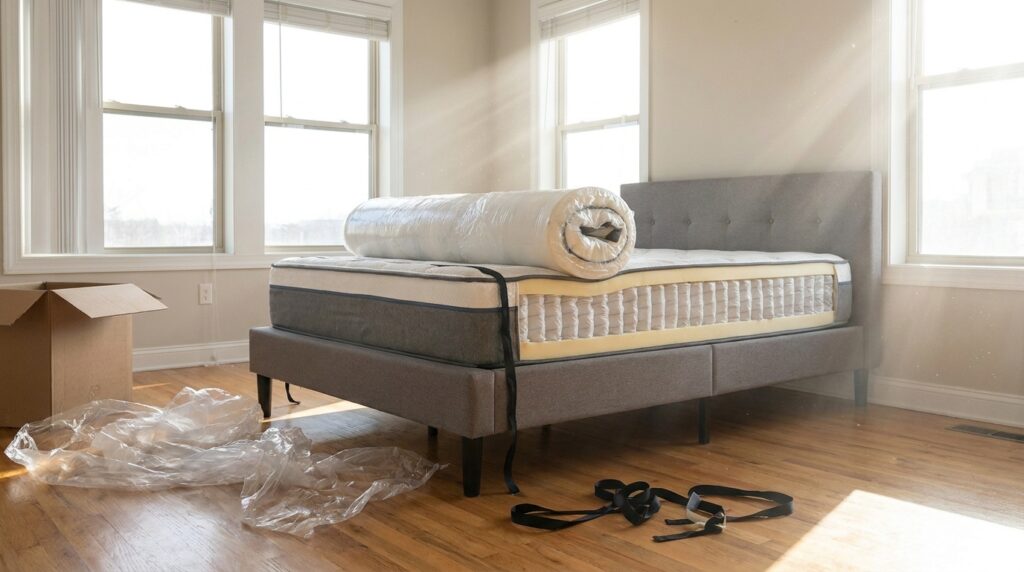
If you’re getting a new mattress delivered, the easiest sequencing is to arrange old mattress removal at the same time. Most retailers offer this as an add-on during checkout, and it eliminates the awkward window where both mattresses are taking up space in the room.
Once the new one is in place, it’s worth thinking about how you’ll maintain it long term, small habits like rotating it regularly and using a breathable mattress protector go a long way toward avoiding another disposal decision in just a couple of years. If overheating at night has ever been a factor in wanting a new mattress in the first place, pairing it with a cooling layer designed to manage trapped body heat is worth looking into before the first night on the new setup.
Common Mistakes People Make When Getting Rid of a Mattress
- Dumping it illegally. Leaving a mattress next to a public dumpster or in an alley is against the law in most cities and can carry a real fine.
- Skipping the plastic wrap. An uncovered mattress left outside for pickup can get soaked in rain, making it heavier and messier to handle, and in some areas it’s simply against local rules.
- Assuming donation centers take everything. Calling ahead saves a wasted trip when a center is temporarily full or has specific condition requirements.
- Forgetting to measure doorways and stairwells. A queen or king mattress can be surprisingly difficult to maneuver through tight hallways or around stairwell corners.
- Not checking for a bulk pickup fee. Some cities that advertise “free” bulk pickup still charge for mattresses specifically, since they require separate handling.
Pros and Cons of Each Disposal Method
| Method | Best For | Pros | Cons |
|---|---|---|---|
| Donation | Clean, gently used mattresses | Free, helps someone in need | Strict condition requirements |
| Recycling | Worn but not damaged mattresses | Environmentally responsible | May require travel to a drop-off site |
| Bulk curbside pickup | Most standard disposals | Often low cost or free | Scheduling can take weeks |
| Hauling service | Time-sensitive or difficult access situations | Convenient, handles heavy lifting | Costs more than DIY options |
| DIY breakdown | Hands-on households with basic tools | Allows material-specific recycling | Time-consuming and physically demanding |
Expert Tips for a Smoother Mattress Disposal
- Call two or three donation centers before ruling donation out entirely; policies vary more than people expect.
- Take a few photos of the mattress before disposal if you plan to list it online, even for free, since listings with photos move faster.
- Schedule bulk pickup as early in the week as your city allows, since weekend slots fill up fastest.
- If hiring a hauling service, ask upfront whether the fee includes recycling or if the mattress is headed straight to a landfill; not all services handle this the same way.
- Keep the receipt or confirmation from a donation center if the value might be relevant for a tax deduction.
Frequently Asked Questions
Can I just throw a mattress in a dumpster?
Usually not. Most cities classify mattresses as bulky waste that requires separate handling, and placing one in a regular dumpster or with weekly curbside trash is often prohibited.
Does Goodwill accept mattress donations?
Most Goodwill locations do not accept mattresses due to health and liability regulations, though policies can vary by region, so it’s worth calling your local branch directly.
How much does it cost to have a mattress hauled away?
Costs vary by location and mattress size, but a single mattress pickup through a hauling service typically falls in a moderate range, with king-size mattresses and multi-flight stair carries costing more than a twin on a ground floor.
Can a mattress be recycled if it has stains?
Yes. Recycling facilities break the mattress down into raw materials like foam, fabric, and metal, so cosmetic stains don’t disqualify it the way they would for a donation.
How do I know if my mattress has bed bugs before disposal?
Look for small reddish-brown insects, tiny dark spots (droppings), or small blood stains along seams and piping. If you notice any of these, treat it as infested and follow sealed disposal steps rather than attempting donation or resale.
Wrapping It Up
Getting an old mattress out of the house doesn’t have to turn into an all-day project. Start by being honest about its condition, then work through donation, recycling, bulk pickup, or a hauling service in whichever order makes sense for your schedule and budget. A little planning before moving day, or before the new mattress even arrives, makes the whole process faster and keeps one more mattress out of a landfill for the next century.

