
It’s 2 a.m. You’ve flipped your pillow to the cool side for the third time. You’ve kicked off every sheet. You’ve cracked the window, adjusted the thermostat, and still — you’re lying there, sweating, staring at the ceiling.
Sound familiar?
If you’re a hot sleeper, you already know the struggle. And at some point, you’ve probably wondered: is there a blanket that can actually keep me cool?
The answer is yes — and it’s called a cooling blanket.
In this guide, we’re breaking down everything you need to know: what a cooling blanket is, how cooling blankets work, what they’re made of, whether they actually work, and how to pick the right one for your needs. By the end, you’ll have a clear, no-fluff picture of whether a cooling blanket deserves a spot on your bed.
1. What Is a Cooling Blanket?
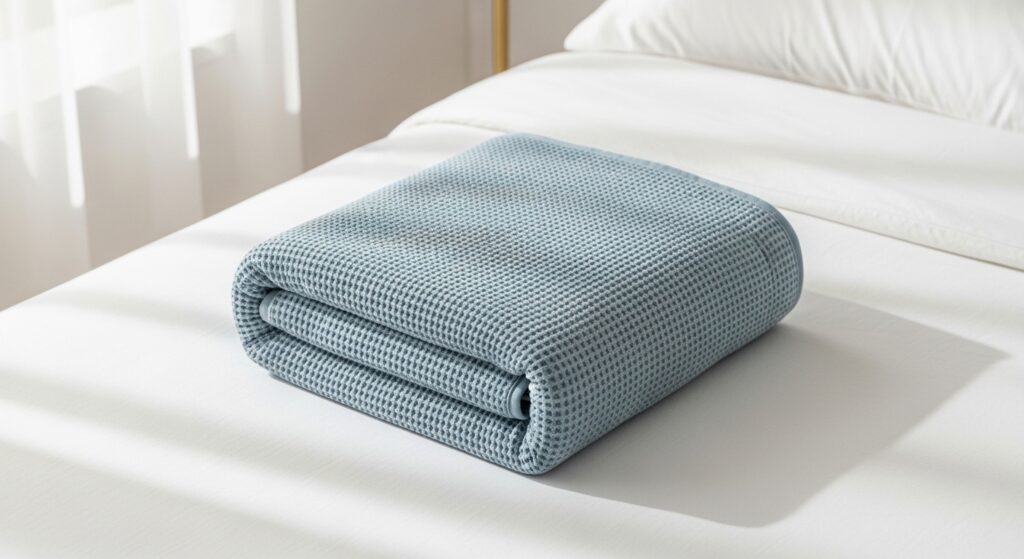
A cooling blanket is a type of blanket specifically engineered to reduce body heat and keep you comfortable while you sleep — or rest — rather than trapping warmth like a traditional blanket does.
Unlike a regular comforter or fleece throw, a cooling blanket uses specialized materials, fabric construction, or active technology to pull heat away from your body, promote airflow, or regulate your temperature throughout the night.
Think of it as the opposite of a winter comforter. Where a heavy blanket holds heat in, a cooling blanket is designed to let it out.
According to the National Sleep Foundation, the ideal sleep temperature for most adults is between 65°F and 68°F (18–20°C). When your body gets too warm, it disrupts the natural temperature drop that triggers deep sleep — which is why so many hot sleepers wake up at night or feel unrested in the morning.
That’s exactly the gap a cooling blanket is designed to fill.
2. How Do Cooling Blankets Work?
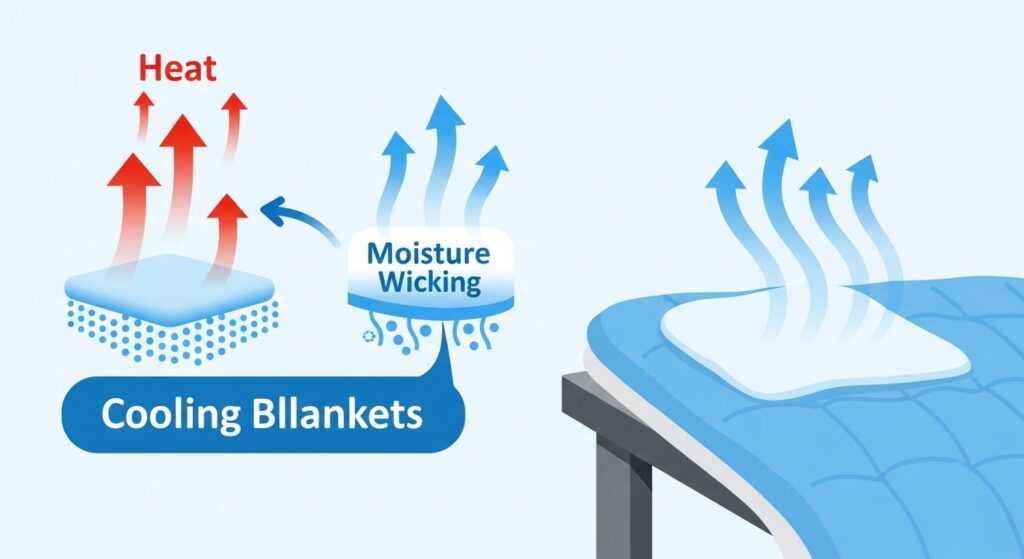
How do cooling blankets workThis is the question most people have — and the answer is more interesting than you might expect.
There’s no single answer because different cooling blankets work through different mechanisms. But all of them are built around one core principle: thermodynamics — specifically, the science of how heat moves.
Here’s a breakdown of the main ways cooling blankets work:
1. Heat Dissipation Through Breathable Fabrics
The most common type of cooling blanket works by using highly breathable, open-weave fabrics that allow body heat to escape rather than trapping it.
Traditional blankets — think flannel, fleece, or thick cotton — trap warm air close to your skin. A cooling blanket made from materials like bamboo viscose, Tencel (lyocell), or percale cotton does the opposite: the looser weave and moisture-wicking fibers let heat and moisture pass through.
The result? Less heat buildup, less sweating, and a more comfortable sleep environment.
2. Moisture-Wicking Technology
Many cooling blankets incorporate moisture-wicking technology — the same principle used in athletic wear.
Sweat carries heat. When you’re sleeping and sweating, your blanket absorbs that moisture and holds it against your skin, making you feel hotter. A moisture-wicking cooling blanket draws that sweat away from your body to the surface of the fabric, where it can evaporate more quickly.
This evaporation process actually creates a slight cooling effect, similar to how sweat keeps you cool naturally.
3. Phase Change Materials (PCMs)
Some higher-end cooling blankets use phase change materials (PCMs) — a fascinating technology originally developed by NASA for use in spacesuits.
PCMs are substances that absorb and release large amounts of heat as they change between solid and liquid states at specific temperatures. When woven into or coated onto a blanket’s fibers, they act like a thermal buffer:
- When you’re warm, the PCM absorbs your body heat (changing from solid to liquid state), cooling you down.
- When the environment cools, the PCM releases that stored heat (changing back to solid), keeping you from getting too cold.
This is what’s sometimes called “smart fabric” technology. Brands like Outlast have commercialized this technology for bedding products. Research published in journals like the Journal of Applied Polymer Science has validated the heat-absorption properties of PCMs in textile applications.
4. Conductive Cooling
Some cooling blankets — especially those made with materials like bamboo charcoal fibers or certain nylon blends — work through thermal conductivity, meaning they physically conduct heat away from your skin faster than a standard fabric would.
These blankets feel cool to the touch because the material’s molecular structure transfers heat away from your skin quickly — similar to why metal always feels colder than wood at the same room temperature.
5. Active Cooling Systems
Then there are electric cooling blankets — also called active cooling blankets — which use an actual temperature control system (usually a water-circulation unit or a thermoelectric device) to deliver consistent cooling.
We’ll cover these in more detail in the “Active vs. Passive” section below.
3. What Are Cooling Blankets Made Of?
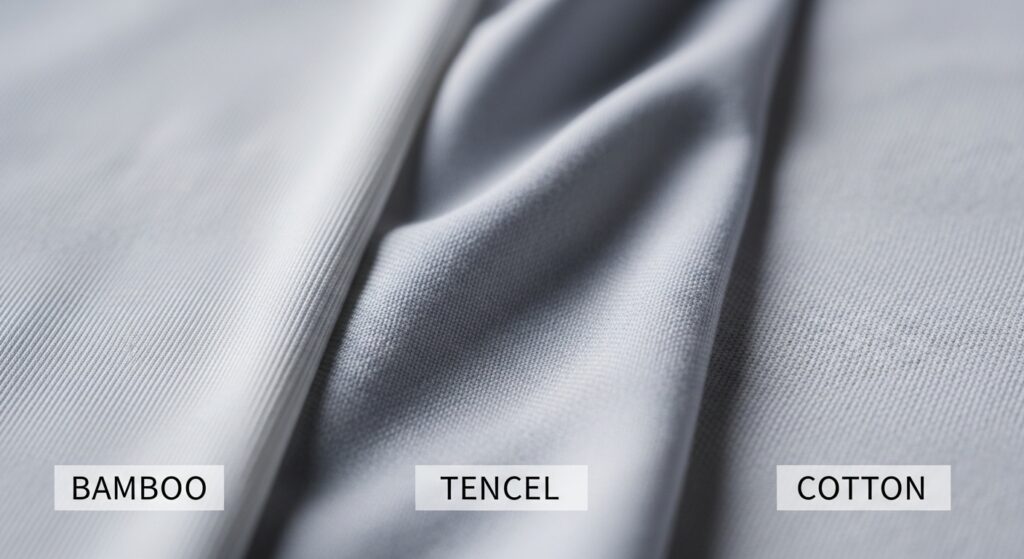
The material is everything when it comes to a cooling blanket. Here are the most common fabrics used:
| Material | How It Cools | Best For |
|---|---|---|
| Bamboo Viscose | Highly breathable, moisture-wicking | Hot sleepers, night sweats |
| Tencel (Lyocell) | Smooth, breathable, eco-friendly | Sensitive skin, mild heat |
| Percale Cotton | Crisp weave, good airflow | All-season use |
| Microfiber | Lightweight, decent airflow | Budget-friendly options |
| Q-Max / Arc-Chill Fiber | High thermal conductivity, cool touch | Immediate cool feel on contact |
| PCM-Infused Fabric | Absorbs and releases heat | Advanced temperature regulation |
| Nylon/Polyester Blends | Conductive cooling | Athletic-style cooling |
A Note on Arc-Chill Technology
You may have come across the term arc chill cooling blanket while shopping. “Arc-Chill” refers to a specific proprietary fiber technology — essentially a Q-Max rated fiber that has an unusually high thermal conductivity.
Q-Max is a metric used to measure how quickly a material pulls heat away from the skin on contact. Standard fabrics score around 0.10–0.15 W/cm². Arc-Chill and similar fibers can score 0.30 W/cm² or higher, which is why they feel noticeably cold the moment you touch them — not just neutral.
4. Types of Cooling Blankets
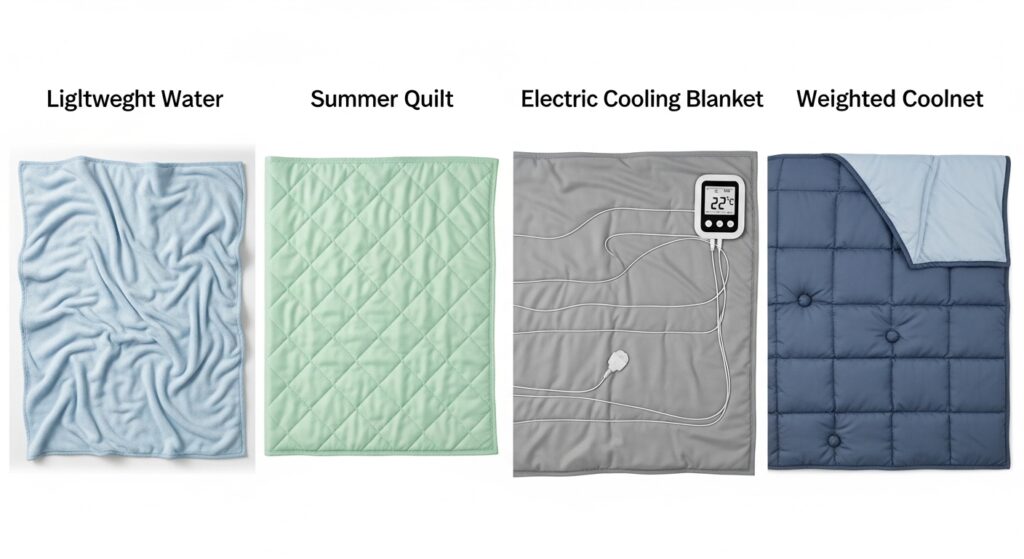
Not all cooling blankets are the same. Here’s how they break down by type:
Lightweight Breathable Blankets
These are the most common. They’re thin, open-weave blankets made from bamboo, Tencel, or cotton. They work passively through airflow and moisture management. Great for year-round use in warm climates or for mild hot sleepers.
Cool-Touch Blankets (High Q-Max)
Made from fibers with high thermal conductivity (like Arc-Chill or similar). They feel cold the instant you touch them. Best for people who want that immediate cool sensation when they get into bed.
PCM-Infused Cooling Blankets
Embedded with phase change materials that actively absorb excess heat. More expensive but more technologically advanced. Good for people who run very hot or need temperature regulation throughout the night — not just at the surface.
Weighted Cooling Blankets
A hybrid product: combines the sensory pressure of a weighted blanket (popularized for anxiety and sleep quality, as noted by the American Academy of Sleep Medicine) with cooling fabrics. These typically use bamboo or Tencel shells with lighter glass bead fills to minimize heat retention.
Electric Cooling Blankets (Active Systems)
Plugged-in systems that actively circulate cool air or water through the blanket. The most powerful option — and the most expensive. Covered in detail in the next section.
5. Active Cooling Blankets vs. Passive Cooling Blankets
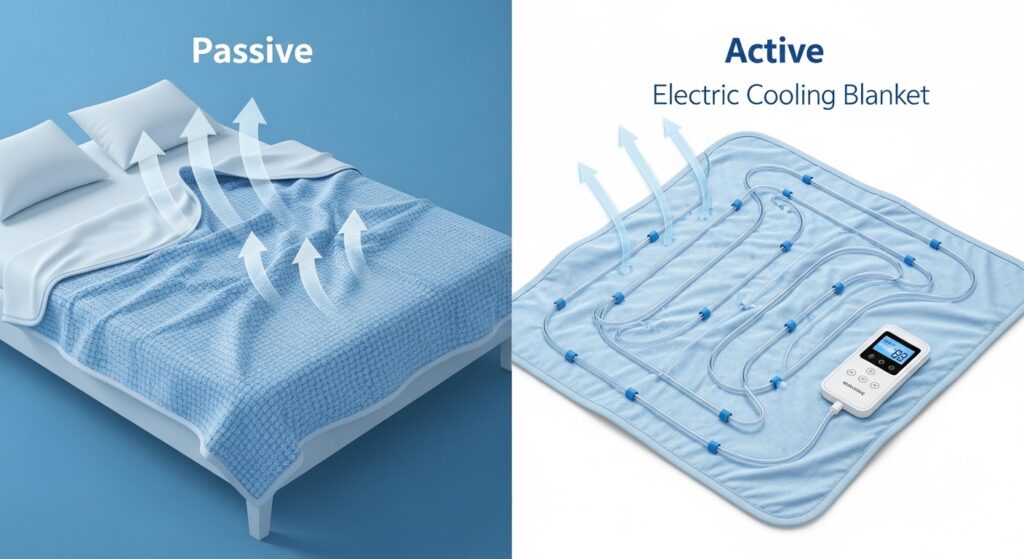
This is one of the most important distinctions to understand when shopping for a cooling blanket.
Passive Cooling Blankets
These rely entirely on material science — no electricity, no batteries, no maintenance systems. They stay cool through:
- Breathable, open-weave construction
- Moisture-wicking fibers
- High thermal conductivity materials
- Phase change material coatings
Pros: No cords, no maintenance, machine washable, lower cost Cons: Cooling effect is limited — they can’t actually lower ambient temperature, only help manage heat at the blanket surface
Active Cooling Blankets (Electric Cooling Blankets for Bed)
These are powered devices. The most well-known versions use water-circulation technology — a small bedside unit pumps temperature-controlled water through tubes embedded in a flat pad or blanket-style cover on your mattress.
Products in this category include systems from brands like ChiliSleep (Ooler/Cube) and BedJet. Some systems — like the BedJet — blow temperature-controlled air rather than circulating water.
Pros: Precise temperature control, effective even in very hot environments, often app-controlled Cons: Expensive ($200–$800+), require maintenance, not portable, water systems can leak if not maintained
Which One Should You Choose?
For most people, a high-quality passive cooling blanket is the right first step — affordable, low-maintenance, and genuinely effective for mild to moderate heat sensitivity. If you’re dealing with severe hot flashes (especially perimenopausal), a medical condition causing night sweats, or you live in an extremely hot climate without AC, an active cooling system may be worth the investment.
6. Do Cooling Blankets Really Work?
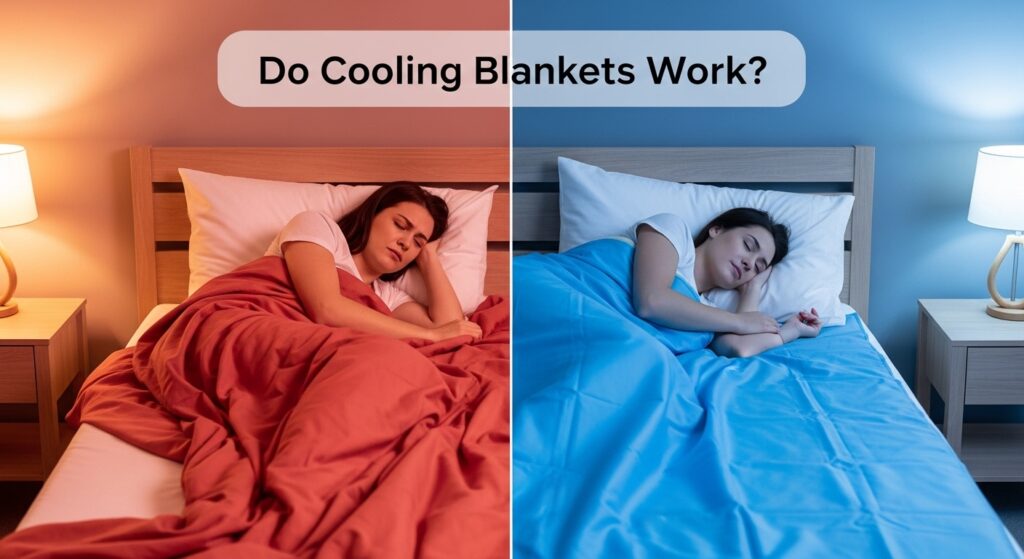
Let’s be honest — this is the real question. And the answer is: yes, but with realistic expectations.
Here’s what the science and real-world experience tell us:
What they do well:
- Reduce the surface temperature between your skin and the blanket (especially high Q-Max and PCM blankets)
- Wick moisture away to reduce that “sticky” overheated feeling
- Improve sleep onset for hot sleepers by creating a more comfortable microclimate
- Reduce tossing and turning caused by heat discomfort
What they can’t do:
- Lower the temperature of your entire room
- Eliminate sweating caused by medical conditions without addressing the underlying cause
- Replace proper HVAC in extremely hot environments (above 85°F ambient room temperature)
Research published in journals like Sleep Medicine Reviews consistently shows that thermoregulation is one of the most important factors in sleep quality. When skin temperature is reduced by even 1–2°F, sleep latency (how long it takes to fall asleep) decreases significantly.
A 2012 study from the University of Amsterdam found that skin cooling during sleep — even through simple wearable temperature devices — led to measurable improvements in sleep efficiency.
Do cooling blankets work in hot weather? Yes — but best when used alongside air conditioning. In very hot environments, passive cooling blankets manage the microclimate between you and your blanket, but they’ll be most effective when the room itself is somewhat cool.
Do cooling comforters work the same way? Yes — “cooling comforters” are essentially cooling blankets with a bit more fill (like lightweight down alternative), designed to look like traditional comforters while still promoting airflow and temperature regulation.
7. Cooling Blanket Benefits
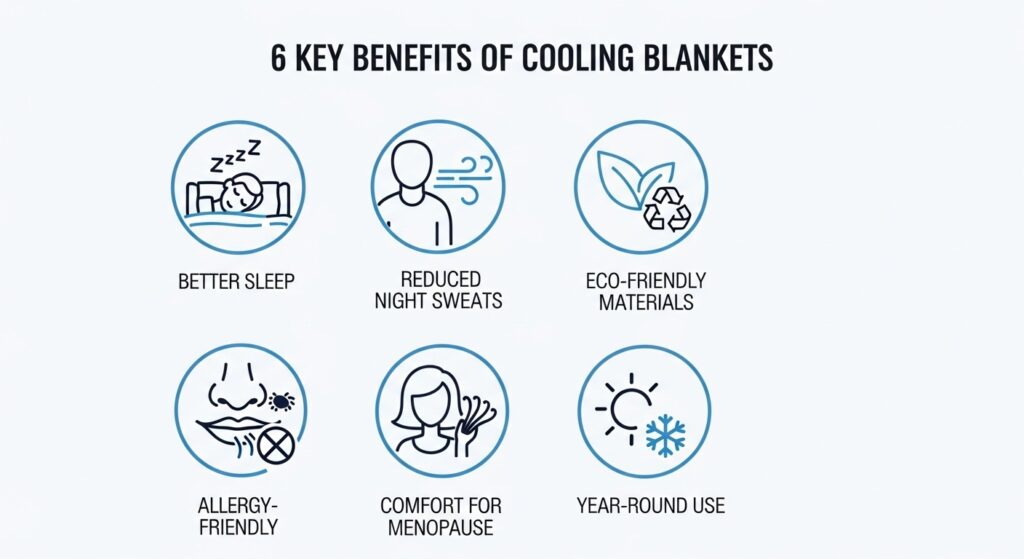
Here’s a clear breakdown of why more people are switching to cooling blankets:
Better Sleep Quality
Since body temperature regulation is directly tied to sleep cycles (as documented by the Harvard Medical School Division of Sleep Medicine), sleeping cooler means falling asleep faster and staying in deeper sleep stages longer. Cooling blankets directly support this process.
Reduced Night Sweats
People experiencing night sweats — whether from hormonal changes (menopause, andropause), medications, or medical conditions — find that cooling blankets significantly reduce discomfort. A moisture-wicking surface keeps dampness off the skin, reducing the clammy sensation that often causes waking.
Great for Hot Climates and Summer Months
For those in warmer regions like the American South or Southwest, cooling blankets serve as a practical tool during summer months when even AC sometimes isn’t enough to stay comfortable in bed.
Year-Round Versatility
Many cooling blankets — especially bamboo or Tencel options — are naturally temperature-regulating, not just cooling. They’re light enough for summer and comfortable in fall. You don’t need to swap them out seasonally.
Ideal for Couples with Different Sleep Temperature Preferences
It’s extremely common for couples to have mismatched temperature preferences. Individual cooling blankets allow each person to regulate their own sleep environment without fighting over the thermostat — a genuinely underrated use case.
Eco-Friendly Options Available
Bamboo and Tencel are both highly sustainable materials. Tencel by Lenzing is produced in a closed-loop process that recycles 99% of the solvent used — making it one of the most eco-friendly textile options available.
Good for Allergy Sufferers
Bamboo and Tencel fibers are naturally hypoallergenic and resistant to dust mites, making cooling blankets a solid option for people with allergies or asthma.
8. How to Use a Cooling Blanket
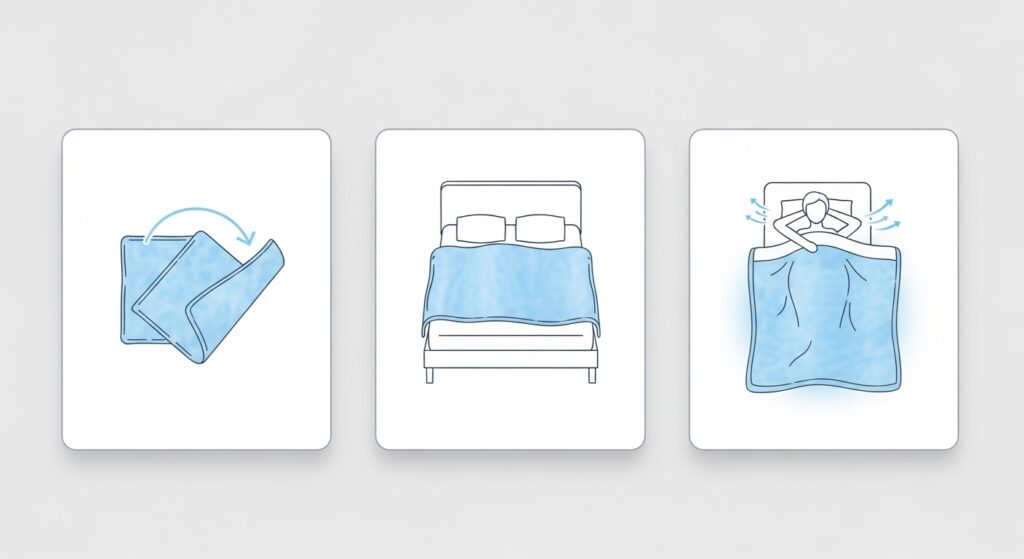
Good news: using a cooling blanket isn’t complicated. But a few tips will help you get the most out of it:
1. Use it as your primary blanket layer. Place the cooling blanket directly over your body — not under a heavy comforter. Layering it under insulating blankets defeats the purpose.
2. Try it without a top sheet first. Cooling blankets are designed to be used close to the skin. A cotton or flannel top sheet between you and the blanket can reduce its effectiveness.
3. Keep your room temperature in the 68–72°F range. Cooling blankets work best as a complement to a somewhat controlled room temperature, not as a substitute for air conditioning.
4. Store it loosely folded. Tight storage can compress fibers over time, reducing airflow through the weave.
5. Pair it with a cooling pillow for maximum effect. Cooling pillows use similar materials and can significantly enhance your overall sleep temperature comfort.
6. For active cooling blankets (electric): Follow the manufacturer’s instructions for setup, and use distilled water if the system requires it. Clean water reservoirs regularly per the product guidelines to prevent bacterial buildup.
9. How to Wash and Dry a Cooling Blanket
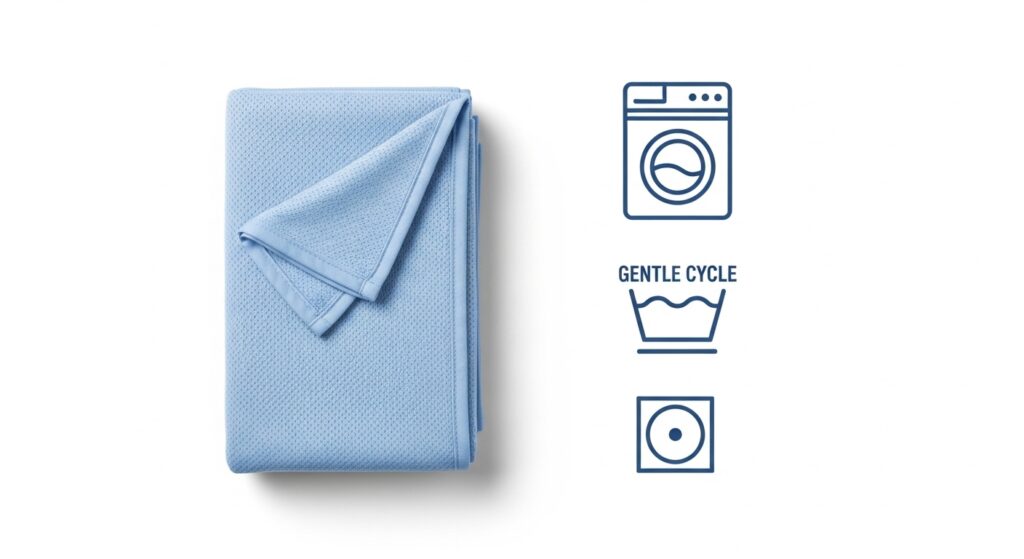
Can you wash a cooling blanket? Absolutely — and it’s important that you do. Here’s how to do it without damaging the fabric or the technology:
General Washing Tips
- Use cold or lukewarm water — hot water can break down moisture-wicking treatments and PCM coatings
- Use a gentle, fragrance-free detergent — harsh detergents can damage delicate fibers like Tencel or bamboo
- Use a gentle or delicate cycle — high agitation can damage fabric weave structure
- Do not use bleach or fabric softener — these degrade moisture-wicking properties and can mat down fibers
- Wash alone or with like colors — especially important for first wash to prevent color transfer
How to Dry a Cooling Blanket
- Air drying is always best — hang flat or drape over a drying rack to preserve fiber integrity
- If using a dryer, use the lowest heat setting and remove promptly
- Do not use high heat — this is the #1 way to damage cooling blanket materials, especially those with PCM coatings or high-conductivity fibers
- Do not wring or twist — gently press excess water out before drying
How Often Should You Wash It?
For regular sleepers: every 2–4 weeks. For people who sweat heavily during sleep: every 1–2 weeks. Keeping your cooling blanket clean maintains its moisture-wicking properties and hygiene.
Always check the care label on your specific product, as some blankets — especially those with embedded technologies — may have slightly different requirements.
10. Best Cooling Blankets to Consider in 2026
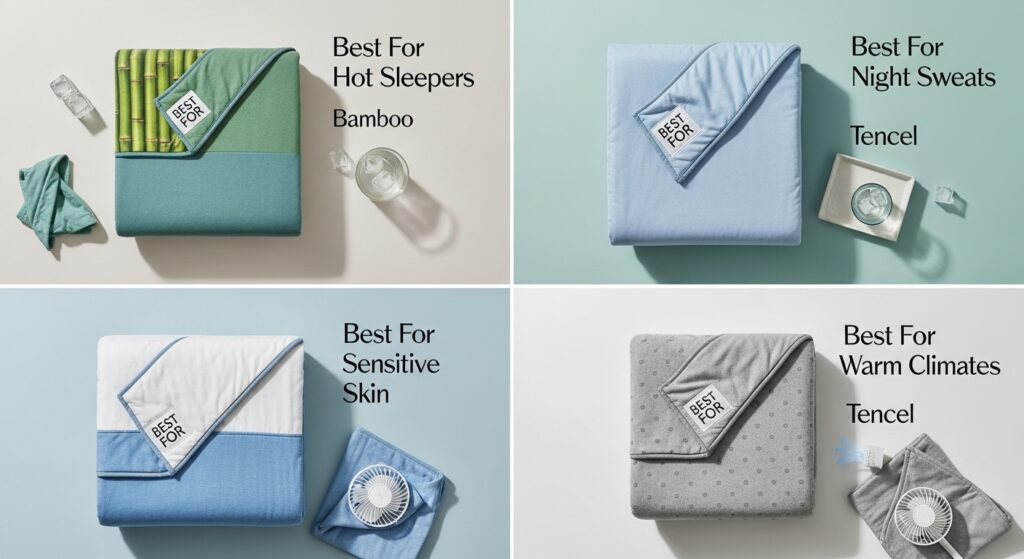
There are dozens of cooling blankets on the market. Here are categories and examples that represent the current landscape well:
| Category | What to Look For | Price Range |
|---|---|---|
| Best Overall Passive Cooling | Bamboo or Tencel, breathable weave, Q-Max > 0.20 | $40–$120 |
| Best Cool-to-Touch | Arc-Chill fiber, high Q-Max rating, lightweight | $35–$90 |
| Best PCM Technology | Outlast-certified or PCM-coated fabric | $80–$200 |
| Best Weighted Cooling | Bamboo shell, glass bead fill, <15 lbs | $60–$150 |
| Best Electric (Active) | ChiliSleep Ooler, BedJet | $200–$800 |
| Best Budget Option | Lightweight microfiber or percale cotton | $20–$50 |
What to look for when shopping:
- Q-Max rating (if listed) — aim for 0.20+ for noticeable cooling
- Material composition — bamboo, Tencel, and high-conductivity fibers outperform standard polyester
- Weight — lighter blankets (under 5 lbs) generally allow more airflow
- Certifications — look for OEKO-TEX® certified fabrics, especially if you have sensitive skin
- Customer reviews mentioning hot sleeper satisfaction specifically
Sites like Sleep Foundation and Wirecutter regularly test and update their cooling blanket recommendations based on real sleep testing — good resources if you want in-depth product comparisons.
11. Who Should Use a Cooling Blanket?
Cooling blankets aren’t just for people who “run hot.” They’re genuinely useful for a wide range of people:
- Hot sleepers — people who naturally sleep warm regardless of the season
- People experiencing menopause or perimenopause — night sweats are one of the most common and disruptive symptoms, affecting up to 75% of women going through menopause, according to the Menopause Society
- Pregnant women — body temperature naturally rises during pregnancy due to hormonal changes and increased blood flow
- Athletes and active individuals — after intense workouts, core body temperature remains elevated; a cooling blanket can accelerate recovery sleep
- People with anxiety — many people with anxiety run warm at night due to elevated cortisol; cooling blankets can provide comfort without the weight of a heavy blanket
- Couples with different temperature preferences — individual cooling blankets solve the age-old “duvet hog” problem
- People with certain medical conditions — including hyperhidrosis (excessive sweating), multiple sclerosis (which is sensitive to heat), and some autoimmune conditions. Always consult a physician if night sweats are severe or unexplained
- People living in warm climates or without AC — a practical, low-cost tool for summer comfort
12. Expert Tips for Hot Sleepers
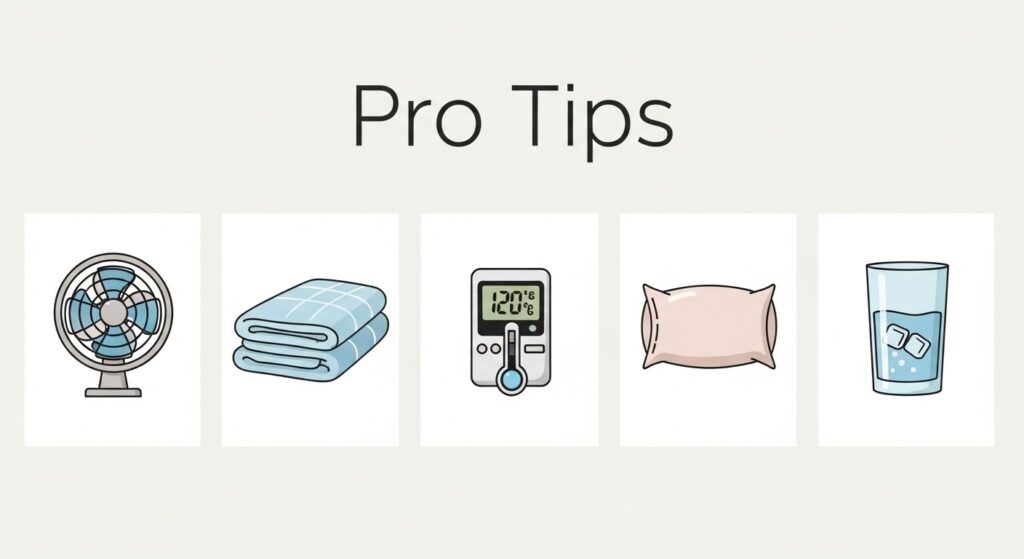
A cooling blanket is powerful — but it works even better as part of a broader sleep hygiene strategy. Here are expert-backed tips to maximize your cool sleep:
Tip 1: Lower your bedroom temperature before bed. The Sleep Foundation recommends a bedroom temperature of 65–68°F for optimal sleep. Set your thermostat about an hour before bed to give the room time to cool down.
Tip 2: Pair with a cooling mattress pad. Heat doesn’t just come from above — your mattress traps body heat too. A cooling mattress topper or pad works in tandem with a cooling blanket to prevent that trapped heat from building up.
Tip 3: Wear moisture-wicking sleepwear. Light, breathable pajamas — or sleeping in minimal clothing — reduce the amount of heat and sweat your blanket has to manage.
Tip 4: Take a warm shower before bed. This sounds counterintuitive, but research from UT Austin confirms that a warm shower 1–2 hours before bed actually lowers core body temperature afterward, helping you fall asleep faster.
Tip 5: Use a fan for airflow. A ceiling or bedside fan improves air circulation and amplifies the evaporative cooling effect of moisture-wicking cooling blankets.
Tip 6: Avoid alcohol before bed. Alcohol raises body temperature and disrupts thermoregulation — making even the best cooling blanket less effective. The American Academy of Sleep Medicine consistently identifies alcohol as one of the most common disruptors of sleep temperature regulation.
13. Pros and Cons of Cooling Blankets
Pros
- Genuinely effective for reducing sleep discomfort caused by heat
- Wide range of price points (from $20 to $800+)
- Many options are eco-friendly and sustainable
- Hypoallergenic materials (bamboo, Tencel)
- Lightweight and comfortable
- Works for a wide range of sleepers and conditions
- Most are machine washable
- Non-invasive — no medications, no devices, no risk
Cons
- Passive options can’t cool a room or overcome very high ambient temperatures
- Active (electric) options are expensive and require maintenance
- Some people dislike the feel of certain high-conductivity fabrics
- PCM-infused blankets can lose effectiveness over time and washings
- Not a medical treatment — won’t address underlying causes of severe night sweats
- May feel too thin for people who like the weight of a traditional comforter (though weighted cooling options exist)
14. Frequently Asked Questions (FAQs)
Are cooling blankets real, or just a marketing gimmick?
Cooling blankets are absolutely real — and the technology behind them is well-documented. High-conductivity fibers (like Arc-Chill), moisture-wicking fabrics (bamboo, Tencel), and phase change materials are all legitimate textile technologies with measurable thermodynamic properties. That said, not all “cooling blankets” on the market are created equal. Always check Q-Max ratings, material composition, and verified reviews before buying. A blanket with a high Q-Max rating and quality bamboo or Tencel fabric will deliver noticeable results. One made from generic polyester labeled “cooling” may not.
How does a cooling blanket differ from a regular blanket in terms of how it keeps you warm vs. cool?
A traditional blanket keeps you warm by trapping air warmed by your body close to your skin — insulation through air pockets. A cooling blanket works in reverse: it’s designed to minimize that trapped air layer, wick away moisture, and use high thermal conductivity materials to move heat away from your skin faster than it can build up. It’s the difference between a sealed thermos (traditional blanket) and a mesh bag (cooling blanket) — one holds heat in, the other lets it escape.
Do cooling blankets work in hot weather without air conditioning?
Yes, partially. In a very hot room (above 85–90°F), a passive cooling blanket will be less effective because it can’t cool air — it can only manage the microclimate between you and the blanket. You’ll still feel somewhat better than with a traditional blanket, but for truly hot environments, an active cooling system (like a BedJet or ChiliSleep Cube) combined with a fan is more effective. If you don’t have AC and it’s very hot, the most effective passive setup is: lightweight cooling blanket + fan + cold water bottle at your feet.
Can you wash a cooling blanket in a washing machine?
Yes — most cooling blankets are machine washable. The key rules are: use cold or lukewarm water, a gentle cycle, mild detergent, and no fabric softener or bleach. For drying, air dry when possible; if using a dryer, use low heat only. High heat is the most common way to damage cooling blanket materials, especially those with moisture-wicking coatings or PCM treatments. Always check your specific product’s care label first.
How long does a cooling blanket last?
A high-quality cooling blanket, properly cared for, typically lasts 3–5 years. PCM-infused blankets may see gradual reduction in their temperature-regulating effectiveness after many wash cycles, as the PCM coating can degrade over time. Blankets made from durable natural fibers like Tencel or bamboo tend to hold up better long-term. Following the washing and drying guidelines above will significantly extend the life of your blanket.
15. Conclusion
Here’s the bottom line: cooling blankets work — and for millions of hot sleepers across the United States, they’re genuinely life-improving.
They’re not magic. A passive cooling blanket won’t transform a sweltering 95°F room into a cool oasis. But when used thoughtfully — paired with a reasonable room temperature, breathable sleepwear, and good sleep hygiene habits — a well-made cooling blanket can make the difference between restless nights and genuinely restorative sleep.
The science is clear: body temperature and sleep quality are deeply linked. Anything that helps your body regulate heat during sleep helps you sleep better. And sleeping better affects everything — your mood, your metabolism, your immune function, your focus.
Whether you’re a hot sleeper who’s been suffering through summers, a woman navigating the night sweats of perimenopause, a couple who can’t agree on the thermostat, or just someone who wants to feel more comfortable in bed — there’s a cooling blanket designed for your situation.
Start simple: A quality bamboo or Tencel cooling blanket in the $50–$100 range is an excellent entry point. Check for a Q-Max rating above 0.20, look for OEKO-TEX certification, and read reviews from verified hot sleepers.
Your best sleep might just be one cooling blanket away.

