
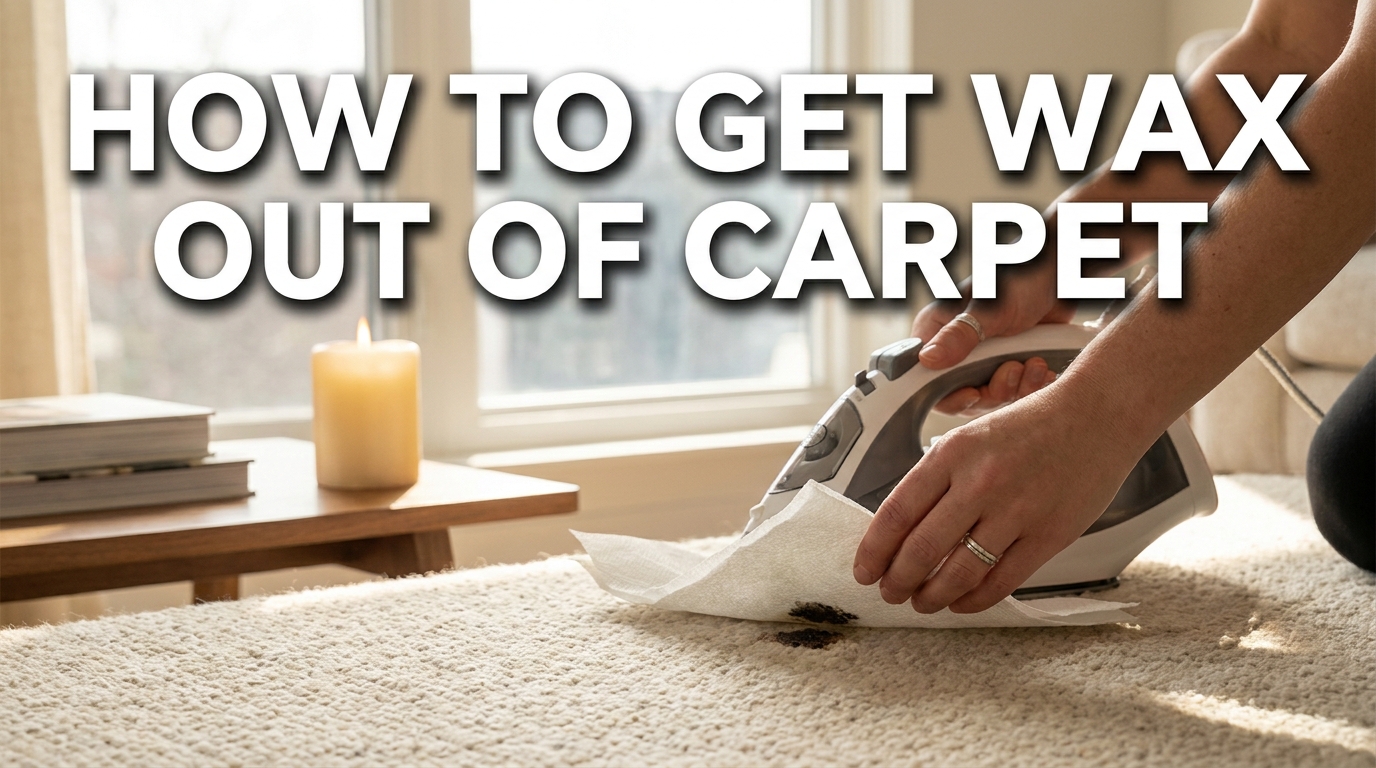
A candle tips over. A crayon melts under a heat vent. A wax warmer gets bumped by an elbow that wasn’t paying attention. However it happens, the result is the same: a hard, waxy blob fused into your carpet fibers, and a moment of quiet panic.
The good news is that how to get wax out of carpet is one of the more forgiving stain-removal jobs in the house, mostly because wax doesn’t actually dye or soak into fibers the way wine or coffee does. It hardens on the surface and clings to the pile, which means the right combination of cold, heat, or absorption will almost always lift it clean. The trick is choosing the right method for the type of wax, the type of carpet, and how long the mess has been sitting there.
This guide walks through every practical way to handle it, from the classic iron-and-paper-towel trick to steamer, hairdryer, and hot water methods, so you can pick whichever tools you already have on hand.
Why Wax Sticks So Stubbornly to Carpet Fibers
Wax is essentially a solid fat. When it’s liquid, it flows down between the individual carpet fibers, past the visible pile and into the backing. As it cools, it hardens back into a solid, but now it’s wrapped around dozens of tiny fibers instead of sitting on a flat surface. That’s why scraping alone rarely finishes the job.
There’s a second complication: dyed wax, like the kind used in scented candles or crayons, leaves behind a colored residue even after the solid wax is gone. That residue behaves more like a regular stain and often needs a completely different approach than the wax itself.
Understanding this two-part problem, solid wax first, color second, is the key to doing it right the first time instead of grinding the mess deeper into the pile.
What You’ll Need Before You Start
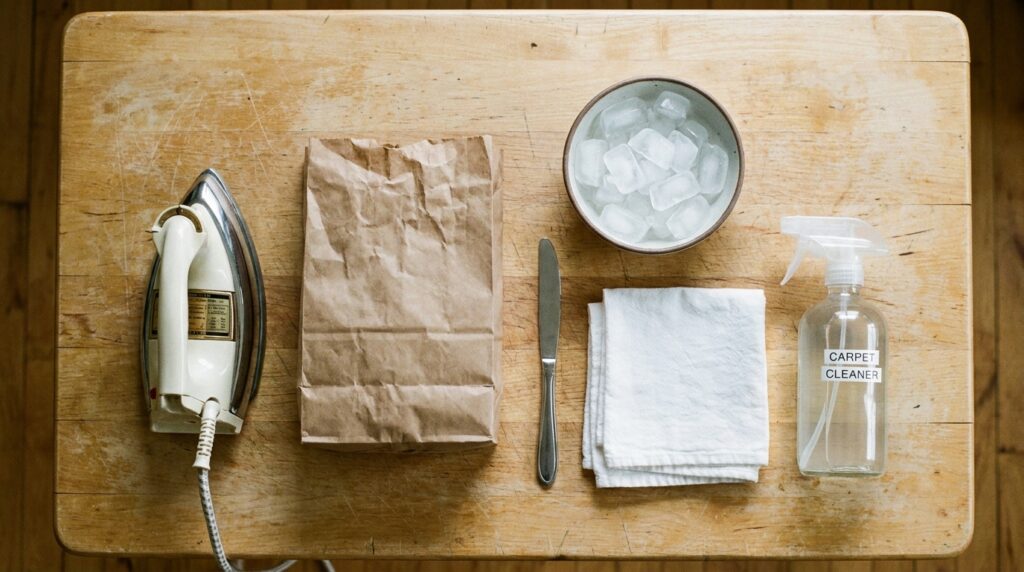
You don’t need anything specialized. Most of these items are already in a kitchen drawer:
- A dull butter knife or old credit card for scraping
- Ice cubes in a sealable bag
- A brown paper bag or plain white paper towels (no printed designs, since ink can transfer)
- A clothes iron or hairdryer
- Rubbing alcohol or dish soap
- A vacuum with a hose attachment
- A clean white cloth for blotting
Skip colored paper towels, patterned rags, or anything with dye that could bleed onto damp carpet. That’s a lesson usually learned the hard way.
Step One: Freeze It Before You Touch It
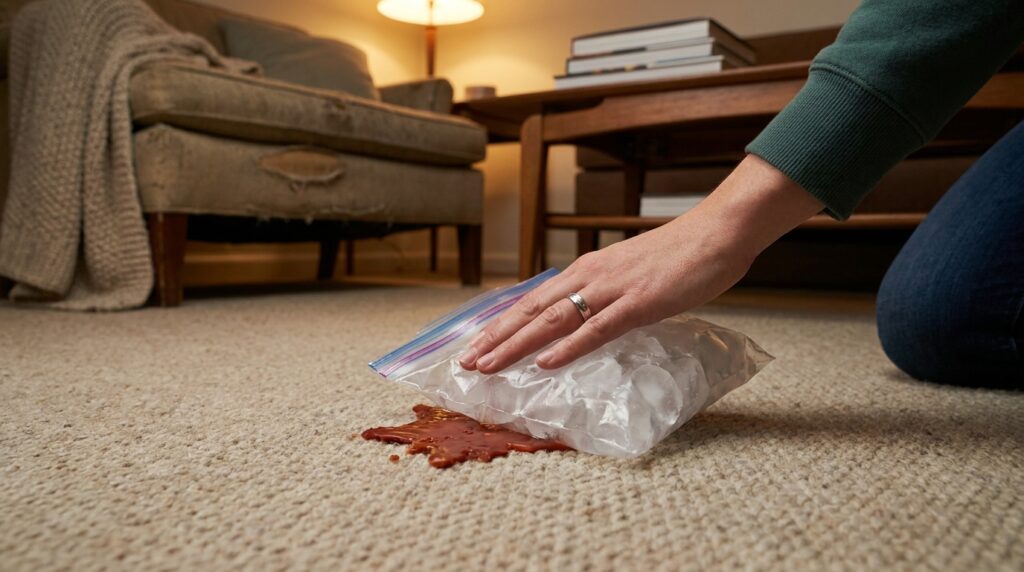
Whatever method you use afterward, start here. Fill a sandwich bag with ice, seal it, and press it against the wax for three to five minutes. Cold makes wax brittle, which means it separates from the fibers cleanly instead of smearing.
Once the wax feels hard and matte rather than shiny, use the edge of a butter knife or an old credit card to gently lift and crumble the pieces away. Work from the outer edge of the spill toward the center so you’re not spreading it further into clean carpet. Vacuum up the crumbs before moving to the next step.
For small, fresh spills, this alone sometimes finishes the job completely, especially with plain, undyed wax.
How to Get Wax Out of Carpet with Iron
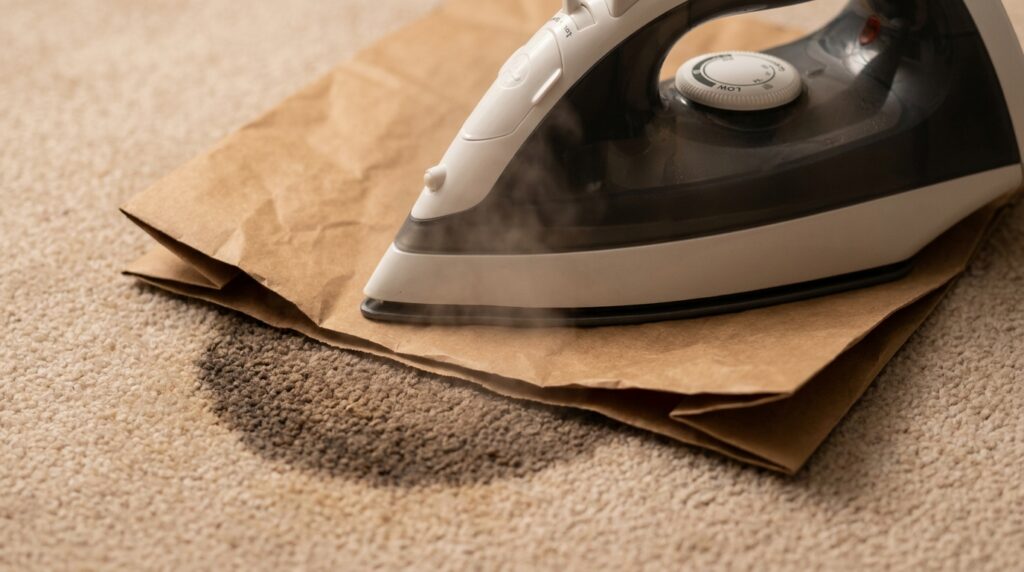
This is the method most professional cleaners reach for first, and it’s genuinely one of the most effective ways to pull melted wax back out of deep carpet fibers.
- Set your iron to a low or medium heat setting, no steam.
- Place a plain brown paper bag or a few layers of white paper towel directly over the wax spot.
- Press the warm iron on top for five to ten seconds, then lift and check.
- As the wax melts, it gets absorbed into the paper. Move to a clean section of paper bag and repeat.
- Keep the iron moving gently, never leave it resting in one spot, since carpet fibers can scorch or melt under sustained heat.
Repeat with fresh paper until no more wax transfers. You’ll usually see the greasy outline shrink with each pass. This same paper-towel-and-iron technique for fat, oil, and wax stains is a go-to among professional carpet technicians for exactly this reason.
How to Get Wax Out of Carpet Without an Iron
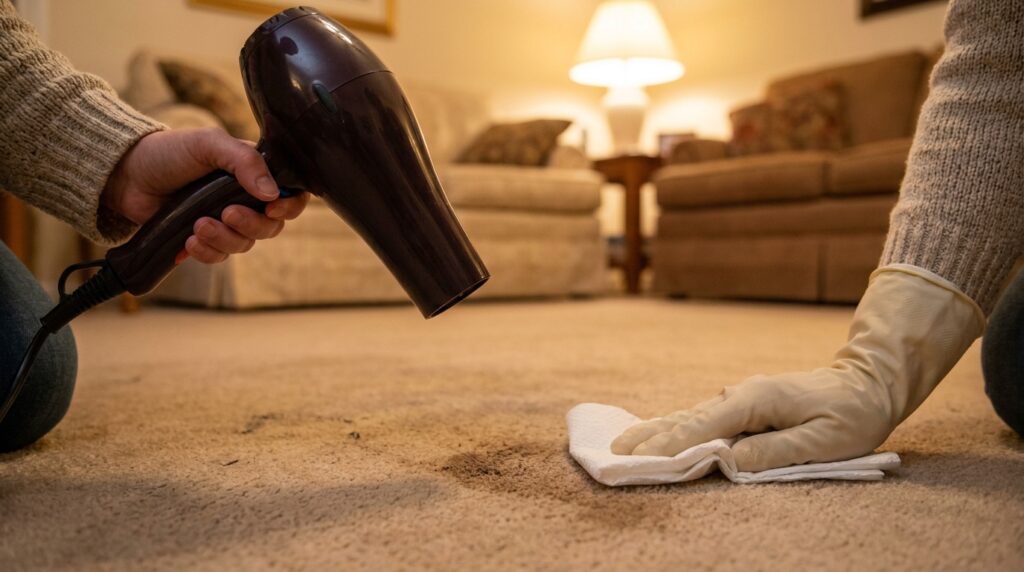
Not everyone has an iron handy, or wants to drag one out for a small spill. Luckily the same melt-and-absorb logic works with tools you probably already have.
Hairdryer method: Set the dryer to medium heat and hold it four to six inches from the wax. As it softens, blot immediately with a paper towel. Repeat in short bursts rather than one long blast, since carpet backing can warp under prolonged direct heat.
Hot water method: Boil a kettle, let the water cool for a minute so it’s hot but not scalding, then pour it slowly and directly over the wax. The heat softens the wax almost instantly, and you can blot it up with a towel while the carpet is still warm and damp. This works especially well on synthetic carpets, though it’s worth checking that your carpet is water-safe first, since wool blends can shrink or mat under repeated wet treatment.
Both of these routes avoid the risk of a hot iron sole plate touching carpet fibers directly, which makes them a good option for delicate or high-pile rugs.
How to Get Wax Out of Carpet with a Steamer
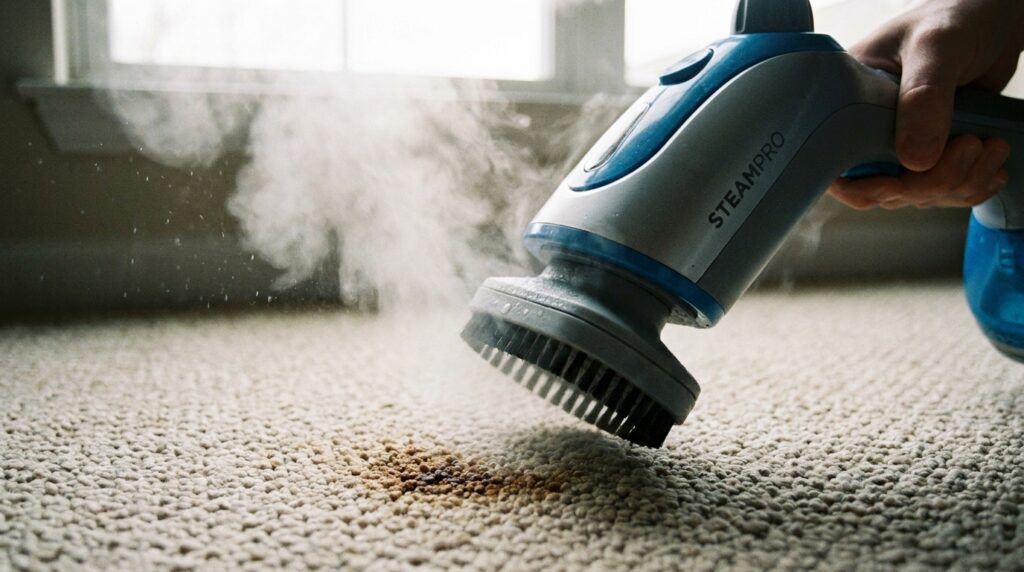
A handheld garment steamer or a carpet steam cleaner gives you more control than a kettle because the heat is concentrated and continuous rather than a single pour.
Hold the steamer nozzle two to three inches above the wax and move it slowly back and forth for about thirty seconds. Once the wax turns glossy and soft, blot it immediately with a folded white towel, pressing rather than rubbing. Repeat until the towel stops picking up residue.
Steamers are particularly useful for wax that’s worked its way into thick, high-pile carpet, since the moist heat penetrates deeper than dry heat from an iron or hairdryer alone.
How to Get Wax Out of Carpet with Baking Soda
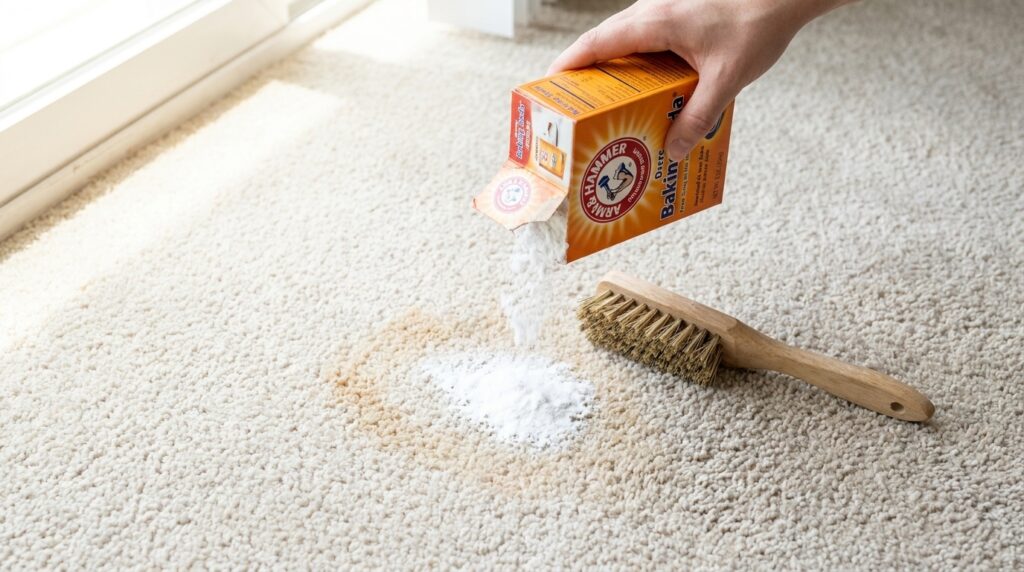
Once the solid wax itself is gone, you’re often left with a faint greasy shadow or, if the wax was dyed, a subtle color stain. This is where baking soda earns its reputation as a reliable, gentle way to lift dirt and stains from carpet fibers thanks to its mildly abrasive texture.
- Sprinkle a generous layer of baking soda directly over the remaining mark.
- Let it sit for fifteen to twenty minutes so it has time to absorb any leftover oil.
- Vacuum thoroughly.
- If a faint mark remains, mix a small amount of baking soda with a few drops of dish soap and water into a paste, dab it onto the spot with a soft brush, let it dry, then vacuum again.
This step is optional if the wax lifted cleanly, but it’s worth doing on any carpet where a greasy halo is visible under a lamp.
How to Get Wax Out of Carpet After It Dries
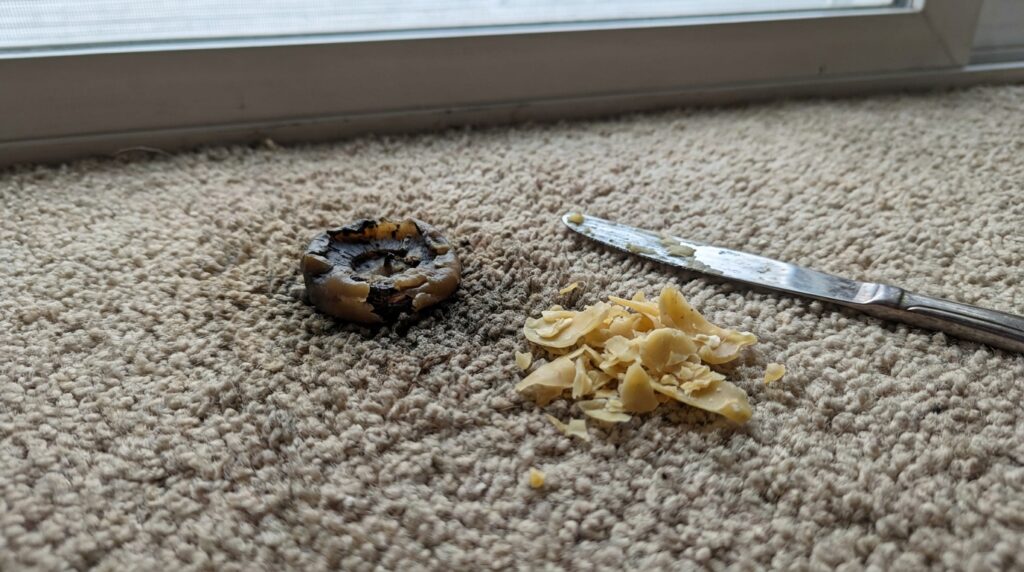
Wax that’s been sitting for days or weeks behaves a little differently than a fresh spill. It’s already fully hardened, so the ice step is less critical, though it still helps loosen any wax bonded to the backing.
Start by scraping off as much as you can with a dull knife, working carefully so you don’t tear the pile. Vacuum the loosened bits, then move straight to the iron, hairdryer, or hot water method to melt what remains. Older wax sometimes needs two or three heat-and-blot cycles instead of one, simply because it’s had more time to settle into the fibers.
If a colored ring is left behind afterward, a solution of one part rubbing alcohol to one part water, applied with a clean cloth and blotted (never rubbed) from the outside in, usually finishes the job. Treating stubborn carpet discoloration with a cloth dampened in isopropyl alcohol is a common approach cleaning professionals use for exactly this kind of leftover dye residue.
Dealing With Colored Wax and Crayon Stains
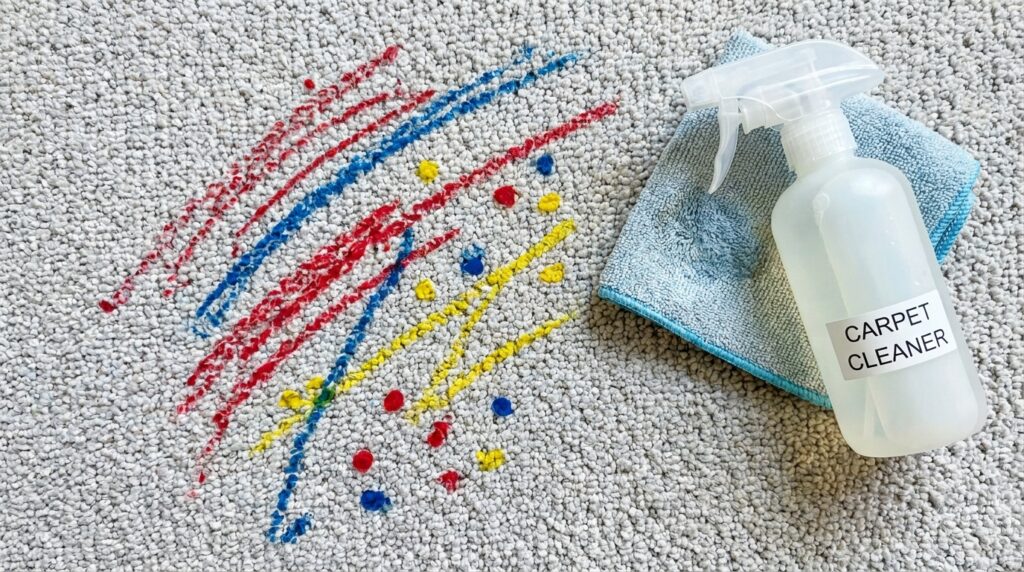
Birthday candles, scented candles, and crayons often contain dye that survives the heat-and-blot process even after the wax itself is gone. Once the solid wax is fully removed, treat the color separately:
- Dab the area with a cloth dipped in rubbing alcohol, working from the edges inward.
- Rinse with a cloth dampened in cool water to remove alcohol residue.
- Blot dry with a clean towel and let the area air dry fully before walking on it.
Wax isn’t the only sticky substance that clings to carpet fibers in layers like this. Sugary spills follow a similar lift-dissolve-rinse pattern, and if you’re curious how that plays out with a different kind of sticky mess, this breakdown of removing honey stains from carpet walks through the same core logic step by step.
Common Mistakes That Make Wax Stains Worse
A few habits tend to turn a simple fix into a bigger job:
- Scrubbing instead of blotting. Scrubbing pushes wax and color deeper into the fibers and can fray the pile.
- Using a high iron setting. Too much heat can scorch synthetic fibers or melt carpet backing.
- Skipping the ice step. Trying to scrape soft, warm wax usually smears it rather than lifting it.
- Using colored cloths or paper towels. Dye transfer from a printed towel can create a second stain on top of the first.
- Walking on damp carpet. This can push moisture and residue further into the padding underneath.
Patience with each cycle of heat, blot, repeat almost always beats trying to force the wax out in one aggressive pass.
Pros and Cons of Each Removal Method
| Method | Best For | Pros | Cons |
|---|---|---|---|
| Ice and scrape | Fresh, small spills | No heat risk, quick | Doesn’t fully remove deep residue alone |
| Iron and paper bag | Most wax types | Very effective, controlled heat | Requires care to avoid scorching |
| Hairdryer | Delicate or high-pile carpet | No direct contact, gentle | Slower, needs several passes |
| Hot water | Synthetic carpet, larger spills | Fast softening, no special tools | Not ideal for wool or wool-blend carpet |
| Steamer | Deep pile, older wax | Penetrates fibers well | Requires steamer equipment |
| Baking soda | Leftover grease shadow | Gentle, safe on most fibers | Doesn’t remove hardened wax itself |
Expert Tips for Long-Term Carpet Care
- Always test any heat or alcohol-based method on a hidden corner first, especially with wool, viscose, or antique rugs.
- Keep candles and wax warmers on stable, flat surfaces away from foot traffic and curious pets.
- Vacuum the treated area again once it’s fully dry, since a light layer of loosened fiber and residue often remains even after blotting.
- For carpets prone to frequent spills, a fabric protector spray designed for carpet can make future cleanups faster.
- If a large area or an antique rug is involved, it’s often worth consulting a professional cleaner rather than risking the fibers with repeated heat treatments.
Frequently Asked Questions
Does WD-40 remove wax from carpet?
It can help break down leftover greasy residue after the solid wax is removed, but it’s not a first-choice method since it can leave its own oily stain if not rinsed thoroughly with dish soap and water afterward.
Can I use a hot iron directly on the carpet?
No. Always place a barrier like a paper bag or towel between the iron and the carpet. Direct contact can scorch fibers or melt synthetic backing.
Will vinegar remove wax from carpet?
Vinegar isn’t especially effective on the wax itself, but a diluted vinegar solution can help lift any leftover dye or waxy film once the solid wax has already been removed.
How long does it take for wax to come out of carpet?
A fresh, small spill usually takes ten to fifteen minutes with the ice-and-iron method. Older or larger spills can take thirty minutes or more, especially if a colored residue needs separate treatment.
Is melted wax bad for carpet padding?
If wax soaks all the way through to the padding, it’s harder to remove but rarely causes permanent damage on its own. Treating the spill promptly keeps it from spreading further down into the backing and padding layers.
Final Thoughts
A wax spill looks worse than it usually is. Between freezing, gentle heat, and a little patience, most stains lift out completely without needing a professional cleaning crew. Start with the ice, work through a heat-and-blot method that matches the tools you have, and finish with a spot check for leftover color. Handled this way, the carpet usually looks like nothing ever happened.

