
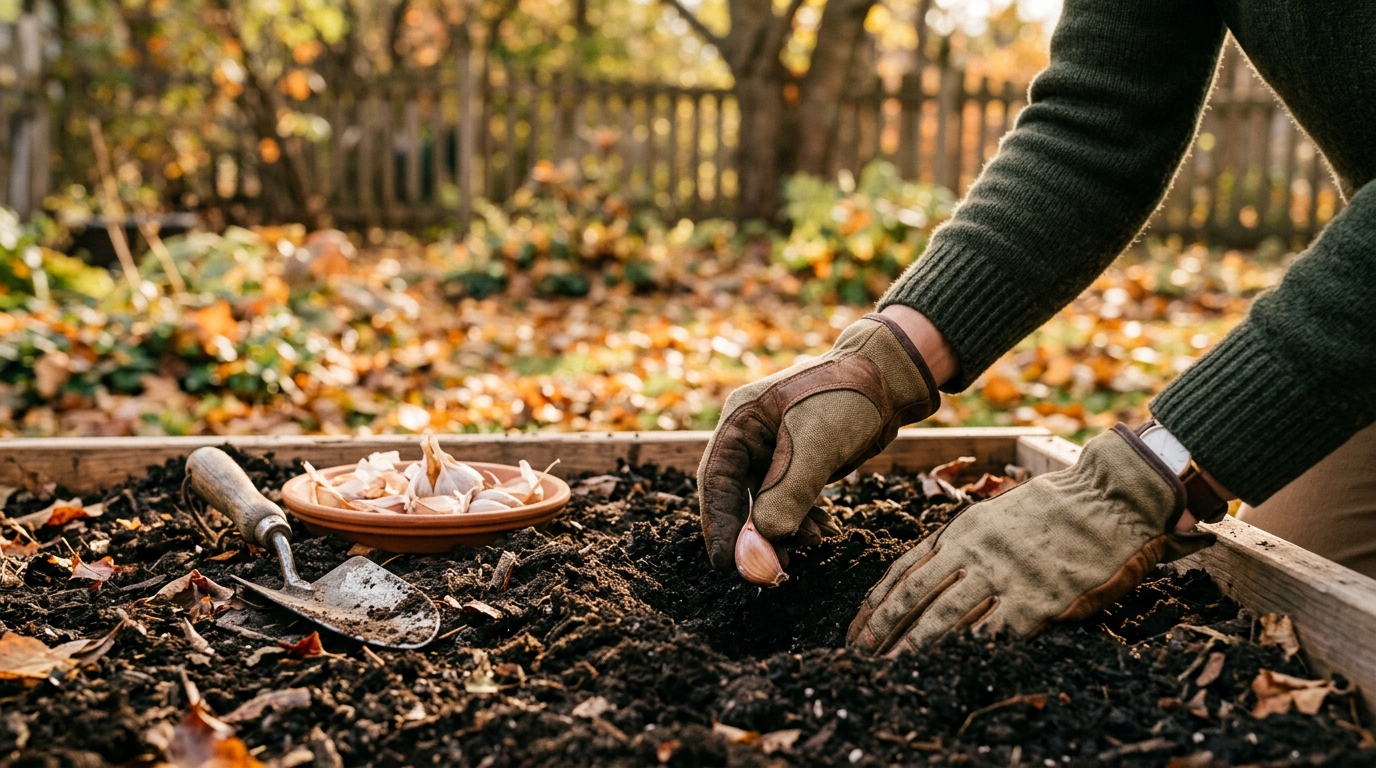
If you are wondering when to plant garlic in Indiana, the short answer is mid-October to early November, timed about four to six weeks before the ground freezes solid. The exact week depends on where you live in the state, since Indiana stretches across several growing zones with noticeably different frost timing from the northern lake counties down to the Ohio River valley. This guide breaks down the best planting window for your part of Indiana, along with the soil prep, depth, and mulch steps that actually determine whether your garlic bulbs turn out large next summer.
Garlic is one of the easiest crops to get right once you understand the timing, but planting too early or too late is the single biggest reason gardeners end up with small, disappointing bulbs. Getting the fall planting window right sets the whole season up for success.
Why Fall Planting Works Best for Garlic in Indiana
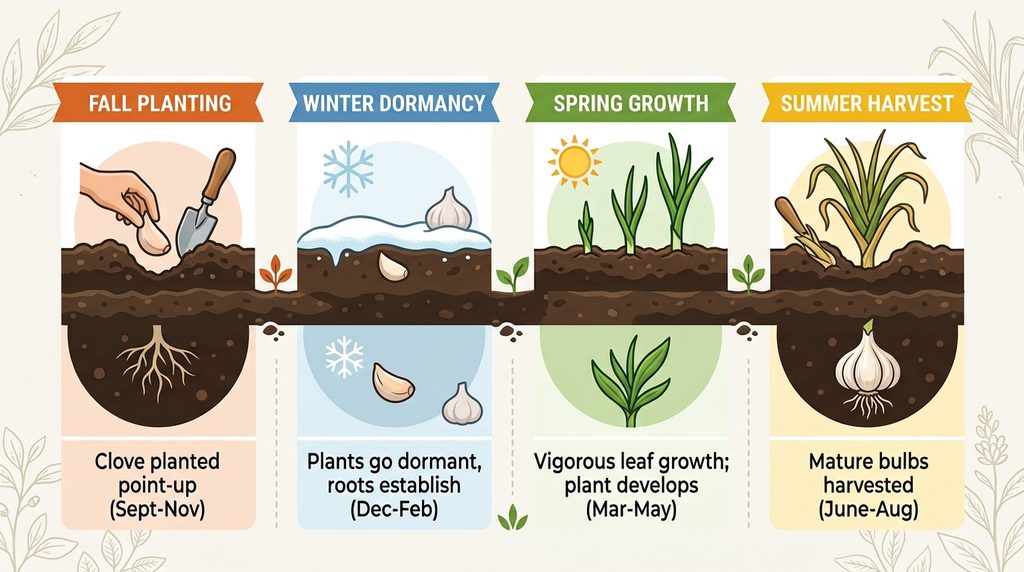
Garlic planted in autumn spends the winter forming a strong root system while the leaves stay below or just at the soil surface. Purdue University’s consumer horticulture program notes that garlic can technically be planted in either fall or early spring, but bulb formation is best when days are getting longer in late spring, and most gardeners find fall planting easier since early spring soils are often too wet to work.
There is also a biological reason fall planting produces bigger bulbs. Most garlic varieties grown in cooler climates need a period of cold exposure, called vernalization, to properly trigger clove division inside the bulb. Skipping that cold period by planting only in spring often results in a single round clove instead of a full, segmented bulb.
The Best Time to Plant Garlic in Indiana by Region
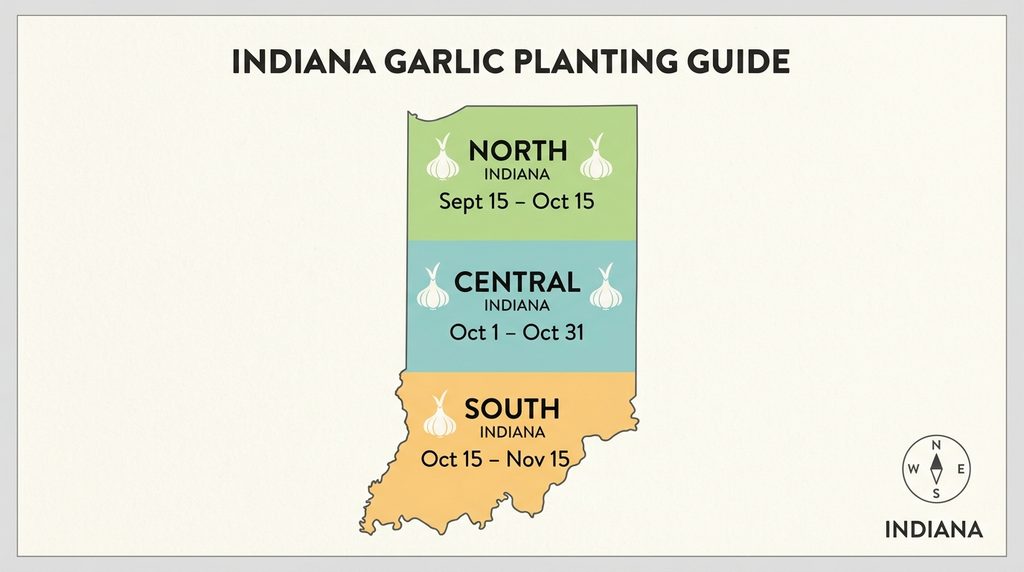
Because Indiana spans multiple USDA hardiness zones, the ideal planting week shifts by roughly two to three weeks from north to south. According to the Purdue Indiana State Climate Office, the state’s average first fall frost timing varies significantly by location, with some northern areas seeing frost by late September and southern counties often waiting until mid-October or later.
| Region | Typical USDA Zone | General Planting Window |
|---|---|---|
| Northwest Indiana (Gary, Valparaiso, Michigan City) | 5b to 6a | Late September to mid-October |
| North-Central and Northern Indiana (South Bend, Fort Wayne, Lafayette) | 6a | Early to mid-October |
| Central Indiana (Indianapolis, Carmel, Muncie) | 6a to 6b | Mid to late October |
| Southern Indiana and Ohio River Valley (Evansville, Bloomington, New Albany) | 6b to 7a | Mid-October to early November |
These windows are general guidance, not a hard rule for every yard. Microclimates, elevation, and how close you are to a large body of water can shift your actual frost timing earlier or later than the regional average, so it always helps to track your own local frost dates rather than relying only on the region.
How to Find Your Exact Planting Date
Instead of memorizing a single calendar date, base your garlic planting on your local first frost, since that is what actually drives the timing. The National Weather Service tracks average first frost and freeze dates for locations across the state, and its data for central Indiana shows the normal first frost typically lands in early to mid-October across most of the region, based on 1991 to 2020 climate normals. Once you know your local first frost date, count backward four to six weeks to land on your ideal garlic planting week.
Another reliable method is watching the soil rather than the calendar. Garlic generally goes in once soil temperatures cool into the 50 to 65 degree Fahrenheit range at planting depth, since planting into warmer soil can trigger premature green growth before winter, which weakens the plant and reduces bulb size.Step-by-Step: How to Plant Garlic in Indiana
Once you have identified your target week, the actual planting process is fairly quick. Follow these steps for the best results.
- Choose the right garlic type. Hardneck varieties tolerate Indiana’s cold winters well and produce a flavorful scape in spring, while softneck varieties store longer and also grow reliably across most of the state.
- Buy true seed garlic, not grocery store garlic. Purdue horticulture specialists note that garlic bought from the grocery store is often treated to prevent sprouting and may carry disease, so seed garlic from a garden center or reputable mail-order source is a safer bet.
- Prepare a sunny, well-drained bed. Work compost or aged organic matter into the top several inches of soil, since garlic dislikes standing water and heavy, compacted ground.
- Separate the cloves just before planting. Break the bulb apart no more than a day or two ahead of time, and keep the papery wrapper on each individual clove.
- Plant each clove two to four inches deep, pointed end up. Space cloves roughly four to six inches apart in rows spaced about twelve inches apart.
- Water the bed thoroughly after planting. This settles the soil around the cloves and helps root development begin before the ground freezes.
- Apply three to six inches of mulch. Straw, shredded leaves, or clean bark mulch insulates the soil and protects against frost heave through winter.
Common Mistakes That Hurt Garlic Yields
Even experienced gardeners run into a handful of avoidable problems with fall-planted garlic. Watch for these issues before and after planting.
- Planting too early. Warm fall soil can push cloves to sprout green growth above ground before winter, which weakens the plant and increases winter injury risk.
- Planting too late. Cloves need enough time to establish roots before a hard freeze, so waiting too long into November in colder zones can limit root development.
- Using grocery store garlic. Many grocery bulbs are chemically treated or carry disease that can spread through your soil for years.
- Skipping mulch. Bare soil freezes and thaws repeatedly through winter, which can heave shallow-planted cloves right out of the ground.
- Planting in poorly drained soil. Garlic cloves sitting in waterlogged ground are prone to rot before they ever establish roots.
- Forgetting to remove mulch gradually in spring. Leaving mulch too thick for too long in spring can trap excess moisture and delay warming of the soil.
Garlic Care Through Winter and Into Spring
Once cloves are mulched, garlic mostly takes care of itself through the cold months. There is no need to fertilize, water regularly, or disturb the bed once winter sets in, since the plant is focused on quiet root development below the frost line.
As temperatures warm in spring, green shoots will emerge through the mulch. At that point, Purdue’s guidance recommends a light fertilizer application, roughly one-half pound of a balanced 12-12-12 fertilizer per 100 square feet worked into the top four to five inches of soil, to support strong bulb development heading into summer. If you are also planning other spring beds this season, it can help to map out your whole growing space at once, especially if you are working on how to start a vegetable garden for the first time and want garlic to fit alongside other early crops.
Hardneck vs Softneck Garlic: Which Grows Better in Indiana
Both types can succeed in Indiana, but they behave differently through winter and in the kitchen. Knowing the difference helps you choose the right one for your goals.
| Feature | Hardneck Garlic | Softneck Garlic |
|---|---|---|
| Cold tolerance | Excellent, well suited to northern Indiana winters | Good, but generally better suited to milder regions |
| Scapes | Produces an edible flower stalk in late spring | Rarely produces a scape |
| Storage life | Shorter, typically a few months | Longer, often up to a year |
| Clove count | Fewer, larger cloves arranged in a single ring | More, smaller cloves in multiple rings |
| Flavor | Often described as more complex and robust | Milder, closer to what is sold in most grocery stores |
Northern Indiana gardeners with harsher winters often lean toward hardneck varieties for their cold hardiness, while central and southern growers have good success with either type. If storage life matters most to you, softneck is usually the better long-term choice.
Troubleshooting: What if You Planted Garlic Too Early or Too Late
Sometimes life gets in the way of the ideal planting window. Here is what to do if your timing was off.
If you planted early and see green shoots before winter, do not panic. A light layer of extra mulch usually protects the young growth through most winters, though you may see slightly reduced yields compared to properly timed plantings. If you planted very late, closer to or after the ground has started to freeze, cloves may not develop much root growth before dormancy, so expect smaller bulbs and consider adding extra mulch to compensate for the shorter root establishment period.
Missing the fall window entirely does not mean the season is lost. Garlic can still go in during early spring as soon as soil is workable, though bulbs from spring planting are typically smaller than fall-planted garlic because the cloves miss out on that longer cold vernalization period.
Frequently Asked Questions
What month should I plant garlic in Indiana?
Most of Indiana falls into a mid-October planting window, though northern counties often plant slightly earlier in late September to early October, and southern counties near the Ohio River can wait until early November.
Can I plant garlic in spring in Indiana instead of fall?
Yes, garlic can be planted in early spring as soon as the soil is workable, but expect smaller bulbs since spring-planted cloves miss the extended cold period that helps trigger proper bulb division.
How deep should garlic cloves be planted in Indiana?
Plant cloves two to four inches deep with the pointed end facing up, and cover with mulch afterward to help insulate against winter temperature swings.
Does garlic need full sun to grow well in Indiana?
Yes, garlic performs best in full sun with at least six hours of direct light daily, along with well-drained soil that does not stay waterlogged after rain or snowmelt.
How do I know if my soil is ready to plant garlic?
Soil is generally ready once temperatures at planting depth cool into the 50 to 65 degree Fahrenheit range, which typically lines up with the mid-fall planting window across most of the state.
Should I remove garlic scapes if I grow hardneck varieties?
Yes, most gardeners remove scapes once they curl, since leaving them on redirects the plant’s energy into the flower stalk instead of bulb growth, resulting in smaller bulbs at harvest.
How long does it take garlic to grow from a fall-planted clove to harvest?
Fall-planted garlic typically takes around eight months to mature, with harvest usually occurring the following summer once the lower leaves begin to yellow and die back.
Final Thoughts and Next Steps
Knowing exactly when to plant garlic in Indiana comes down to working backward from your local first frost date, generally landing somewhere between mid-October and early November depending on your region. Get the timing right, use good seed garlic, plant at the correct depth, and mulch well, and you will set yourself up for a strong harvest of full, flavorful bulbs next summer.
If garlic is your first fall planting project, it pairs naturally with the rest of your seasonal garden cleanup and bed prep. Before the ground freezes, it is worth reviewing the rest of your beds and taking care of any remaining fall tasks, and our guide on how to winterize your garden walks through exactly what else to check before the cold sets in.

