
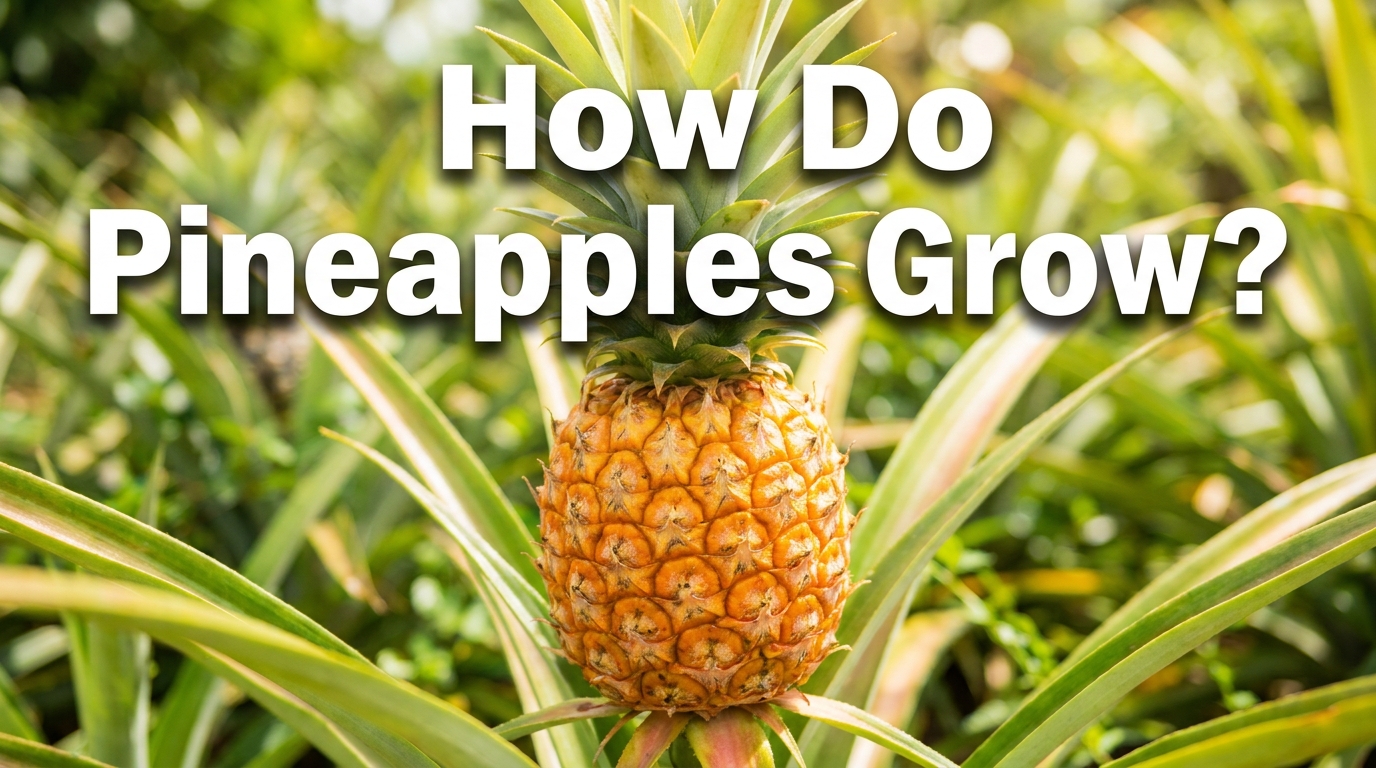
A pineapple doesn’t grow on a tree, and it doesn’t grow underground either. It forms at the center of a spiky, low-growing plant that looks more like a giant houseplant than a fruit tree.
If you’ve ever wondered how do pineapples grow from that crown of leaves into the fruit sitting on your counter, the process is slower and stranger than most people expect. It can take close to two years from planting to harvest, and the plant only produces one fruit at a time.
Here’s what actually happens at every stage, plus how to grow one yourself if you’re curious enough to try.
What Kind of Plant Produces a Pineapple
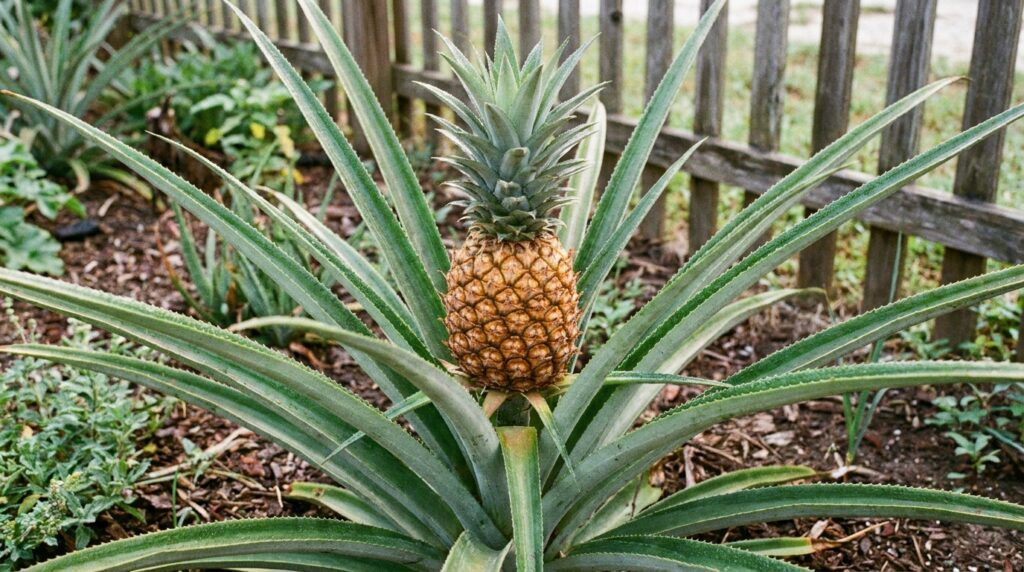
Pineapple isn’t a tree or a vine. It’s a tropical, perennial plant in the bromeliad family, the same plant family as Spanish moss and many ornamental houseplants.
The plant grows low to the ground as a rosette of stiff, sword-shaped leaves. A single fruit forms in the center on a short, thick stem, and the plant typically reaches three to six feet wide once mature.
Unlike apples or oranges, a pineapple plant doesn’t need pollination from another plant to fruit. It flowers and fruits entirely on its own, which is part of why it’s manageable to grow at home.
How Do Pineapples Grow, Step by Step

The full process breaks down into four distinct stages, and each one takes patience.
Planting the Crown or Sucker
Most home growers start with the leafy crown cut from the top of a store-bought pineapple, since it roots easily in soil or water. Commercial growers more often use “slips” or “suckers,” which are small offshoots that grow near the base or stem of an existing plant.
Whichever starting point is used, the young plant spends its first few weeks focused entirely on establishing roots.
The Vegetative Growth Stage
Once rooted, the plant enters a long leafy growth phase that can last 12 to 20 months. During this time, it’s simply building leaves, storing energy, and getting large enough to support a fruit later.
There’s no visible fruit yet. This stage tests patience more than gardening skill.
Flowering and Fruit Formation
When the plant has stored enough energy, a small flower stalk emerges from the center. Over several weeks, more than 100 individual purple-blue flowers bloom in a spiral pattern along that stalk.
Each of those flowers fuses together as it matures, which is why a pineapple’s surface looks like a cluster of small segments rather than smooth skin.
Ripening and Harvest
After flowering, the fruit takes another five to six months to fully ripen on the plant. Growers typically wait for the base of the fruit to shift from green to golden yellow before harvesting.
Once picked, a pineapple stops ripening. Unlike bananas or avocados, it won’t get any sweeter after harvest.
How Long Does It Take a Pineapple to Grow
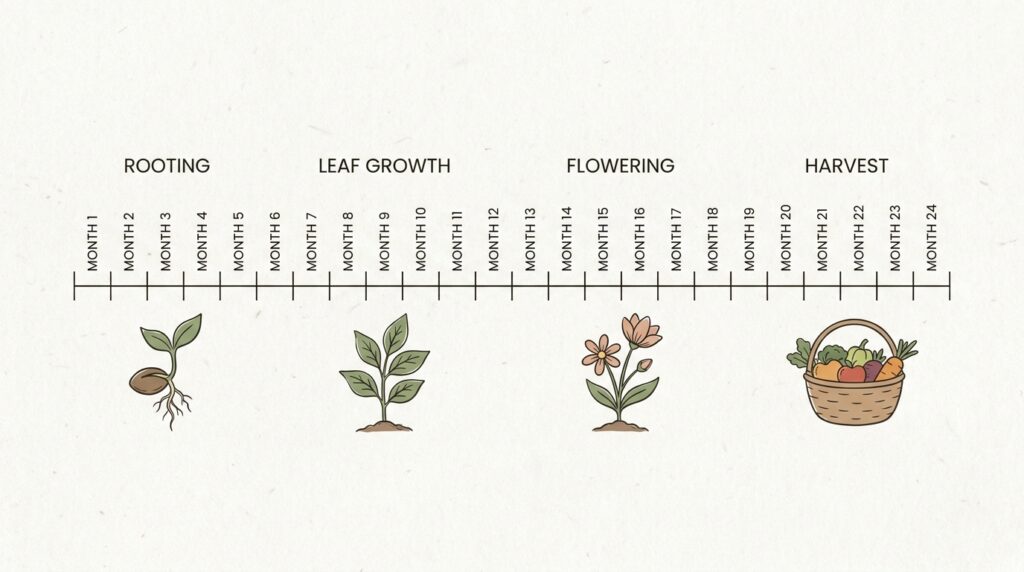
The full timeline depends on the growing method, climate, and plant size at the start. Commercial farms use hormone treatments to speed things along, but home growers should expect the slower, natural pace.
| Stage | Typical Duration |
|---|---|
| Rooting the crown or sucker | 4–12 weeks |
| Vegetative (leaf) growth | 12–20 months |
| Flowering | 3–6 weeks |
| Fruit ripening | 5–6 months |
| Total, planting to harvest | 18–24 months |
This is one reason pineapples cost more than many other fruits. A single plant, occupying garden space for close to two years, produces exactly one pineapple before it needs to be replaced by a new sucker or offshoot.
Where Pineapples Grow Best
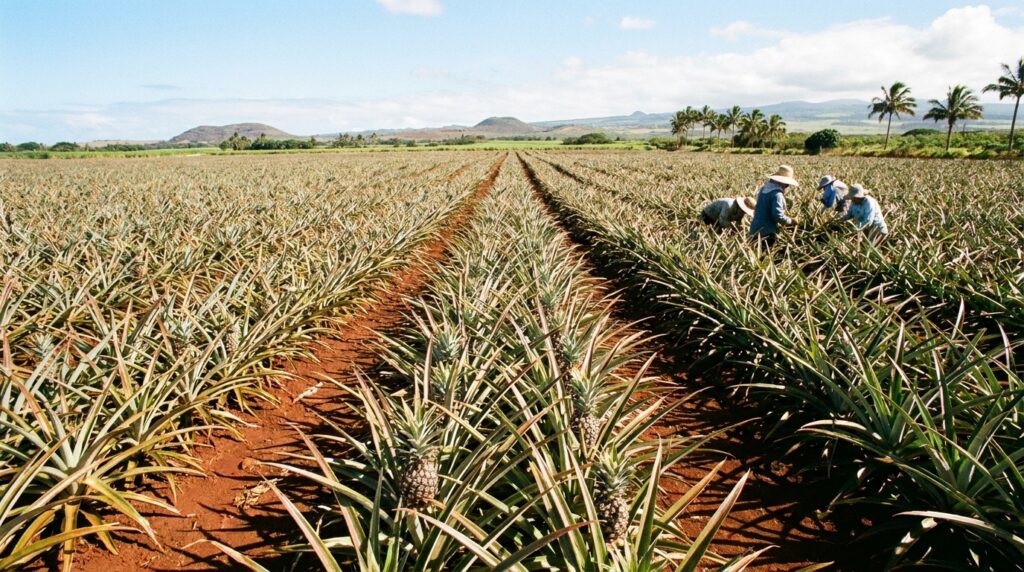
Pineapples originated in South America and are now grown throughout tropical and subtropical regions worldwide, including parts of the southeastern United States.
They need consistent warmth to thrive:
- Ideal temperatures between roughly 65°F and 85°F
- Full sun for at least six hours a day
- Protection from frost, since temperatures below 32°F can damage or kill the plant
- Well-draining, slightly acidic soil
Anyone outside of a warm climate can check their USDA hardiness zone before deciding whether a pineapple plant needs to live indoors, in a container, or in a greenhouse for part of the year. The same zone information is useful for other slow-to-mature perennials, similar to how it’s used when choosing warm-climate vines and perennials for a garden.
Growing a Pineapple at Home From a Store-Bought Top
This is the most common way home gardeners get started, and it doesn’t require any special equipment.
- Twist or cut the leafy crown off a ripe pineapple, keeping the leaves intact
- Peel away the bottom few rows of leaves to expose about an inch of stem
- Let the trimmed base air-dry for two to three days to reduce rot
- Suspend the base in a jar of water, or plant it directly in well-draining potting soil
- Keep it in bright, indirect light until roots appear, usually within four to eight weeks
Once roots are established, more detailed guidance on ongoing care is available through the University of Florida’s home landscape publication on pineapples, which covers watering, fertilizing, and cold protection for backyard growers.
Expert Tips for Healthier Pineapple Plants
- Water deeply but infrequently. Pineapples store water in their leaves and are more forgiving of dry spells than soggy roots.
- Feed lightly every four to six weeks during the growing season with a balanced fertilizer.
- Move container-grown plants indoors before nighttime temperatures drop near 40°F.
- Watch for small offshoots, called pups, slips, or suckers, forming near the base. These can be removed and replanted to grow a new pineapple without starting over from a crown.
- Be patient with flowering. Some growers use a controlled ethylene treatment, like placing the plant in a bag with a ripe apple for a few days, to encourage a reluctant plant to flower.
Pros and Cons of Growing Your Own Pineapple
Pros:
- Uses a part of the fruit that would otherwise be thrown away
- Makes an attractive, low-maintenance houseplant even before it fruits
- Produces offshoots for future plants, so one purchase can lead to years of growing
- Requires very little space compared to most fruit-bearing plants
Cons:
- Takes nearly two years to produce a single fruit
- Needs consistent warmth and won’t tolerate frost
- Home-grown fruit is often smaller than store-bought pineapples
- Flowering isn’t guaranteed without the right light, size, and sometimes intervention
Frequently Asked Questions
Do pineapples grow on trees?
No. Pineapples grow on a low, leafy plant close to the ground, not on a tree. The fruit forms at the center of the plant’s rosette of leaves.
Can you regrow a pineapple from the top you cut off?
Yes. The leafy crown can be rooted in water or soil, and with enough warmth and light it will eventually grow into a new fruit-bearing plant, though it takes patience.
How many pineapples does one plant produce?
A single pineapple plant produces one fruit per flowering cycle. After harvest, offshoots called pups or suckers can be replanted to grow additional fruit.
Why is my pineapple plant not flowering?
Flowering usually depends on the plant reaching a certain size and maturity, along with enough light and warmth. Some growers use a short ethylene gas treatment to help trigger flowering in a mature plant that’s stalled.
Do pineapples keep ripening after they’re picked?
No. Pineapples stop ripening once harvested, so it’s best to wait until the fruit has turned mostly golden at the base before picking it.

