
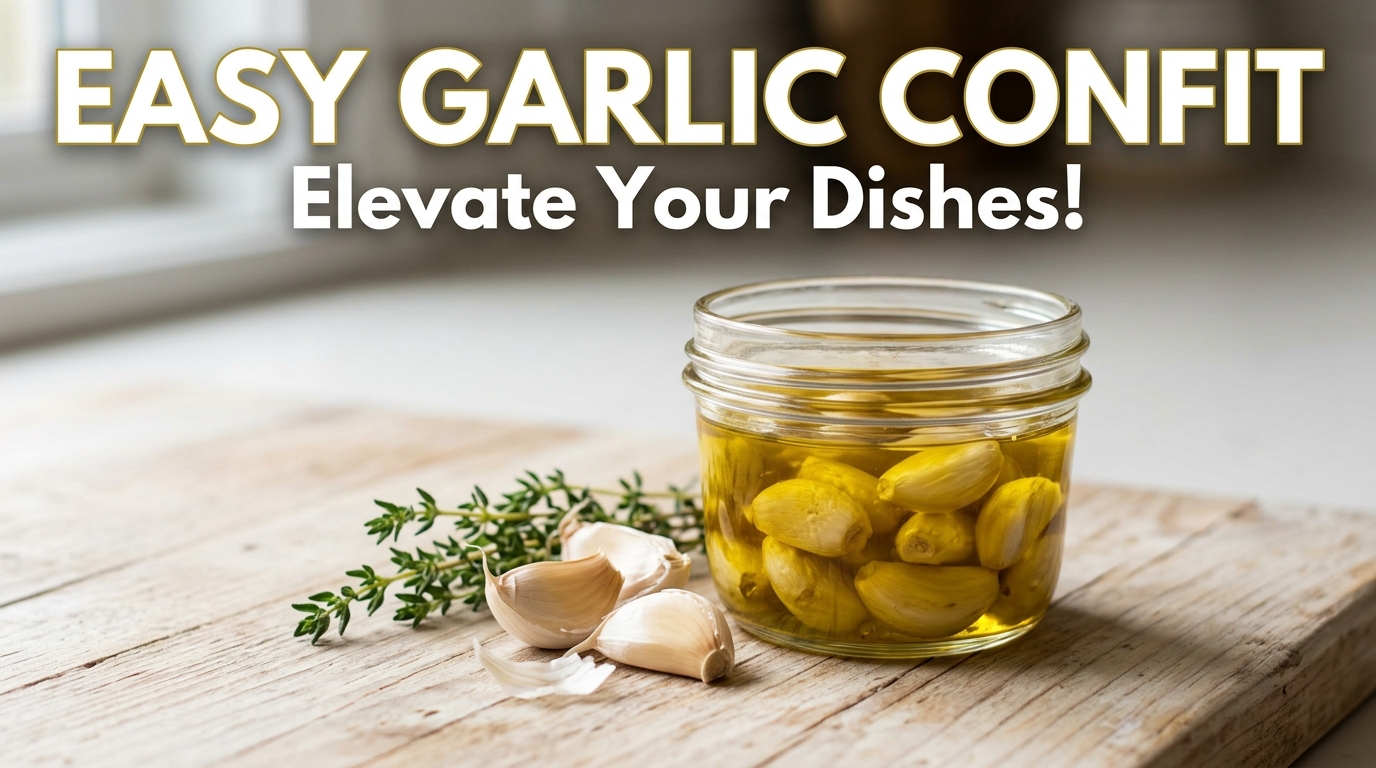
If you’ve ever wondered how to make garlic confit, the short answer is this: peel a batch of garlic cloves, submerge them in oil, and cook them low and slow until they turn soft, golden, and spreadable. It sounds almost too simple, but that simplicity is exactly what makes this dish worth learning. The cloves lose their raw bite and turn into something closer to a sweet, savory spread, and the leftover oil becomes a seasoning all on its own.
This guide walks through the full process, including oven, stovetop, and slow cooker methods, plus something many recipes skip over: how to actually store garlic confit safely once it’s made. That last part matters more than most people realize, so we’ll cover it in detail further down.
What Is Garlic Confit?
Confit is a French cooking method that originally referred to preserving meat by slow-cooking it in its own fat, most famously duck. Over time, cooks adapted the technique to vegetables, and garlic confit became one of the most popular versions. Instead of fat, garlic is gently poached in oil at a low temperature until the cloves soften completely.
The slow cooking breaks down the compounds that give raw garlic its sharp, pungent edge. What’s left is a mellow, slightly caramelized flavor with a texture soft enough to mash with a fork. Both the garlic and the infused oil are usable in cooking, which is part of why this recipe has become a favorite among home cooks and professional chefs alike.
What You Need to Make Garlic Confit
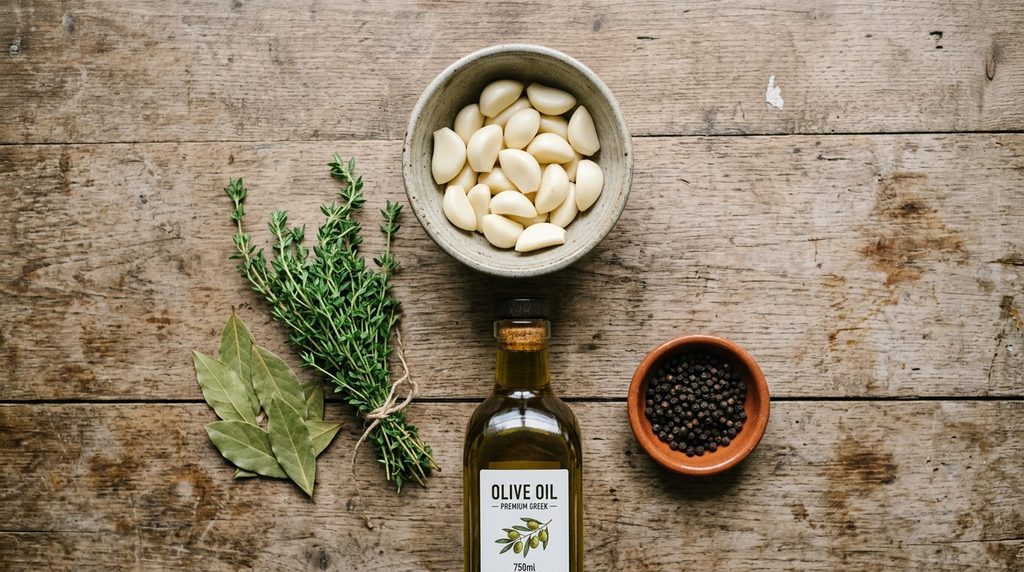
The ingredient list is short, but the quality of what you use matters more than usual since there’s nowhere for a weak ingredient to hide.
| Ingredient | Amount | Notes |
|---|---|---|
| Garlic cloves, peeled | 2 to 3 heads (about 1 to 1.5 cups) | Fresh, firm bulbs work best |
| Olive oil | Enough to fully submerge the cloves | Extra virgin adds more flavor |
| Salt | 1/2 teaspoon | Optional but recommended |
| Fresh thyme or rosemary | 2 to 3 sprigs | Optional |
| Black peppercorns | 1/4 teaspoon | Optional |
| Bay leaf | 1 | Optional |
How to Make Garlic Confit in the Oven
The oven method gives the most even, hands-off results, which is why it’s the version most cooks reach for first.
- Preheat the oven to 250°F to 275°F.
- Peel the garlic cloves and place them in a small oven-safe dish or baking pan.
- Pour in enough olive oil to fully submerge the cloves, then add any herbs, peppercorns, or salt you’re using.
- Cover the dish tightly with foil or a lid to help the garlic cook evenly and prevent the oil from browning too quickly.
- Bake for 1 to 1.5 hours, checking around the one-hour mark. The garlic is ready when a knife slides through a clove with no resistance.
- Let the dish cool to room temperature before transferring the cloves and oil to a clean, airtight container.
Stovetop Method
If you’d rather skip the oven, a heavy-bottomed saucepan works just as well. Combine the peeled garlic and oil in the pan and warm it over low heat until small, gentle bubbles form around the edges. Keep the heat low enough that the garlic never fries or browns quickly, since rapid heat will make the cloves bitter instead of sweet. This usually takes 35 to 50 minutes, and you’ll want to stir occasionally so the cloves cook evenly.
Slow Cooker Method
A slow cooker is the most forgiving option if you tend to forget things on the stove. Add the garlic, oil, and any seasonings to the slow cooker and cook on low for 3 to 4 hours, checking for tenderness after the third hour. Because slow cookers hold a steady low temperature, this method is less likely to scorch the garlic even if you leave it a little longer than planned.
| Method | Time | Difficulty | Best For |
|---|---|---|---|
| Oven | 1 to 1.5 hours | Easy | Even cooking, hands-off |
| Stovetop | 35 to 50 minutes | Moderate | Faster results, needs attention |
| Slow Cooker | 3 to 4 hours | Easy | Set-and-forget convenience |
Is Garlic Confit Safe to Make at Home?
This is the part most recipes gloss over, but it’s important enough to slow down for. Garlic is a low-acid food, and when it’s submerged in oil, it creates an oxygen-free environment. That combination can allow the bacteria that cause botulism, a rare but serious form of food poisoning, to grow if the mixture is left at room temperature for too long. The National Center for Home Food Preservation has confirmed through research that garlic-in-oil mixtures stored at room temperature carry a real botulism risk.
Cases linked to garlic-in-oil products have been documented and studied for decades, including outbreaks that led to changes in how commercial garlic-in-oil products are made and labeled. Health researchers who investigated one such outbreak found that even a product stored under refrigeration standards had tested positive for botulism-causing bacteria and toxin, which is why ongoing regulatory oversight of these products exists today. Commercial garlic-in-oil products are typically acidified specifically to prevent this risk, something home cooks can’t easily replicate without proper equipment and testing.
None of this means you should avoid making garlic confit. It means you should treat it the way food safety extension offices recommend: refrigerate it promptly, keep it cold the entire time it’s stored, and don’t leave it sitting out on the counter. Cooking extension programs that study herbs and vegetables preserved in oil consistently point to refrigeration as the key safeguard for home-prepared batches.
How to Store Garlic Confit Safely
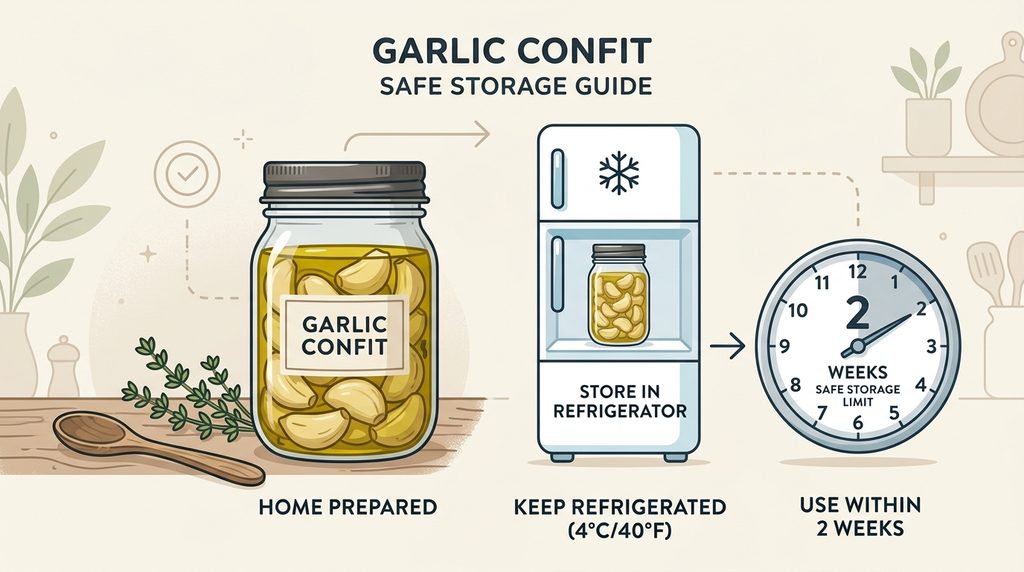
Once your garlic confit has cooled to room temperature, transfer it to a clean, airtight jar or container, making sure the cloves stay fully covered in oil. Store it in the refrigerator, not on the counter or in a pantry, and plan to use it within about two weeks. If you want it to last longer, portion the garlic and oil into small freezer-safe containers and freeze it for up to three months, thawing only what you need at a time.
Anyone canning or preserving food at home for the first time will notice these safety rules echo the same logic used for other homemade preserves, where controlling temperature and time is just as important as the recipe itself. If you’re building out a broader home food preservation habit, our guide on making strawberry jam at home covers similar jar-storage and shelf-life principles worth knowing. General food safety guidance from government health agencies also recommends keeping oil-based mixtures containing garlic or vegetables refrigerated at all times rather than relying on room-temperature storage.
Common Mistakes to Avoid When Making Garlic Confit
Most problems with garlic confit come down to temperature control or storage habits, not the recipe itself.
- Cooking at too high a heat: This browns the garlic too fast and leaves it sharp or bitter instead of sweet and tender.
- Skipping the submersion step: Any cloves poking above the oil line can dry out, brown unevenly, or spoil faster once stored.
- Storing at room temperature: This is the single biggest safety mistake, since it creates ideal conditions for bacterial growth.
- Using a container that isn’t fully airtight: Loose lids let air and moisture in, shortening the shelf life.
- Keeping it too long: Even refrigerated, garlic confit doesn’t last indefinitely. Use it within the recommended window rather than pushing past it.
Ways to Use Garlic Confit
Once you have a jar ready, there are plenty of ways to put it to use in everyday cooking.
- Mash a few cloves onto warm crusty bread as a simple spread.
- Stir cloves and a spoonful of the oil into pasta for an instant, mellow garlic flavor.
- Whisk the infused oil into salad dressings or marinades.
- Blend it into hummus, mashed potatoes, or soft cheese for extra depth.
- Top roasted vegetables or grilled meats with a few whole cloves.
Garlic Confit vs. Roasted Garlic vs. Garlic-Infused Oil
These three are easy to mix up, but they aren’t quite the same thing.
| Type | Method | Texture | Storage Note |
|---|---|---|---|
| Garlic Confit | Cloves slow-cooked in oil | Soft, spreadable | Refrigerate, use within 2 weeks |
| Roasted Garlic | Whole head roasted dry or with a little oil | Soft, slightly drier | Refrigerate, use within about a week |
| Garlic-Infused Oil | Oil flavored with garlic, garlic often removed after | Liquid, no solid cloves | Same botulism precautions apply if fresh garlic is used |
FAQs
How long does garlic confit last in the fridge?
Properly stored in an airtight container with the cloves fully submerged in oil, garlic confit typically lasts about two weeks in the refrigerator. Always keep it cold rather than at room temperature to reduce food safety risk.
Can you freeze garlic confit?
Yes, garlic confit freezes well for up to about three months when stored in a freezer-safe airtight container. Thaw only the portion you plan to use, and keep the rest frozen until needed.
Why is my garlic confit bitter?
Bitterness usually means the oil got too hot and the garlic browned too quickly instead of cooking gently. Lowering the temperature and cooking more slowly almost always fixes this on the next batch.
Is it safe to leave garlic confit at room temperature?
No. Garlic submerged in oil at room temperature can create the exact low-oxygen, low-acid conditions that allow botulism-causing bacteria to grow. Always refrigerate garlic confit promptly after cooking and cooling.
What oil is best for garlic confit?
Extra virgin olive oil is the most common choice because of its flavor, though neutral oils or rendered fats also work well. Whatever oil you choose, make sure it fully covers the garlic cloves during cooking and storage.
Can I reuse the leftover garlic-infused oil?
Yes, the oil is often just as useful as the cloves themselves and works well in dressings, marinades, or drizzled over finished dishes. Store it the same way you store the garlic, refrigerated and used within the same general timeframe.
Do I need to peel every clove by hand?
Peeling by hand gives the most control over quality, but a quick shake in a covered bowl or a silicone garlic peeler can speed things up for larger batches. Pre-peeled garlic from the store can also work, though freshness and flavor may not be quite as good.
Conclusion
Garlic confit is one of those recipes that rewards patience more than skill. Once you understand the basic method and, just as importantly, how to store it safely, it becomes a reliable staple you can lean on for weeks of easy, flavorful cooking. Try a small batch this week using the oven or stovetop method above, and keep a close eye on refrigeration once it’s done so you can enjoy it safely from the first spoonful to the last.

