
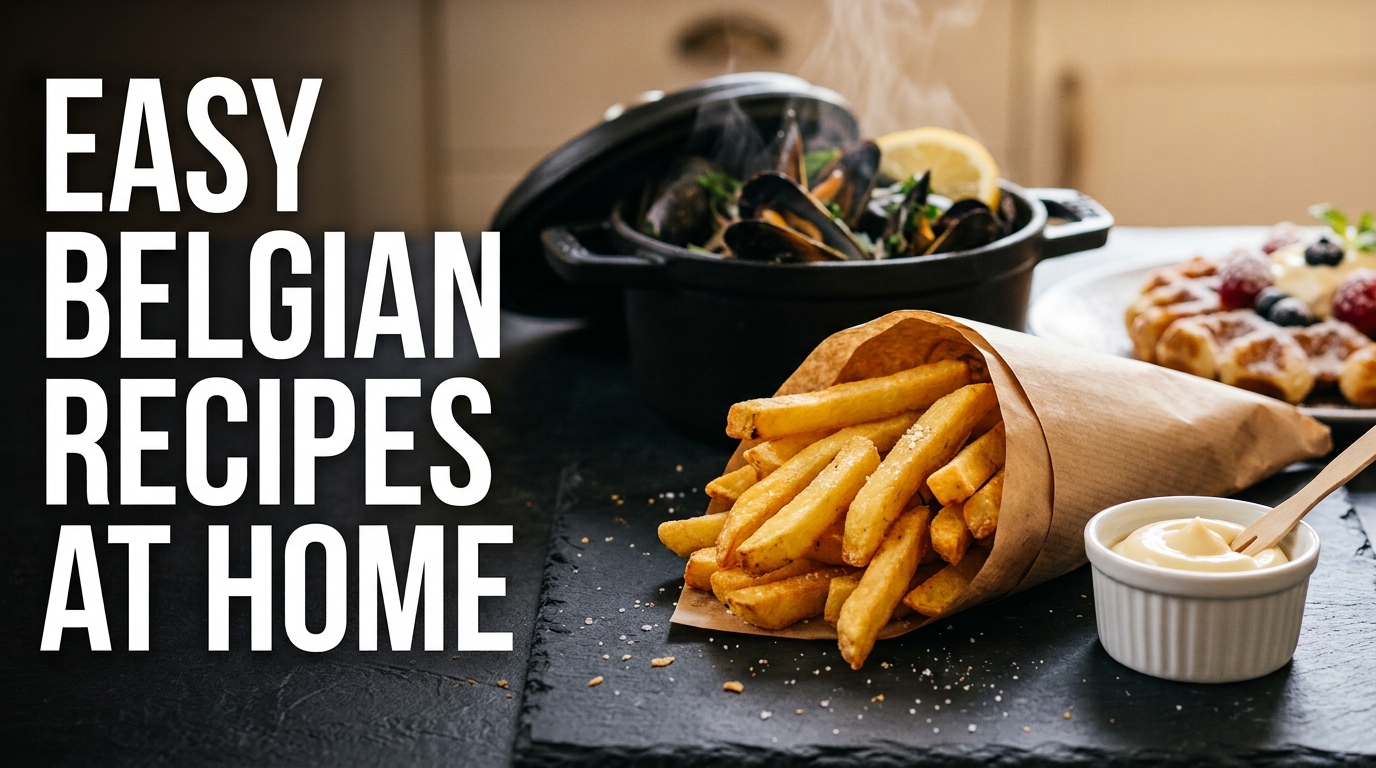
Easy Belgian recipes at home come down to a short list of comfort foods that depend on good technique rather than fancy gear. Crisp twice-fried frites, mussels steamed in white wine, beer-braised beef stew, buttery stoemp, and light Brussels-style waffles all use ordinary grocery ingredients. Each one takes under an hour of hands-on work.
This guide gives you working quantities, timing, and step-by-step methods for every dish. You will also find easy ingredient swaps, a troubleshooting table, and safety notes on hot oil, shellfish, and leftovers that most recipe roundups skip.
Easy Belgian Recipes at Home at a Glance
Belgian home cooking is generous rather than fussy. Most dishes pair a humble base, such as potatoes or beef, with butter, mustard, or beer for depth. The country’s beer traditions were even recognized as intangible cultural heritage in 2016, and beer shows up in the kitchen as often as in the glass.
| Recipe | Active time | Total time | Difficulty | Hardest item to find |
|---|---|---|---|---|
| Frites | 30 min | About 1 hr | Medium | None |
| Moules marinières | 15 min | 25 min | Easy | Fresh mussels |
| Carbonnade | 30 min | About 3.5 hrs | Easy | Belgian-style brown ale |
| Stoemp | 20 min | 40 min | Easy | None |
| Brussels-style waffles | 20 min | 35 min | Easy | Waffle iron |
Times are approximate and depend on your stove and oven.
Pantry Basics and Easy Swaps
You do not need a specialty shop for any of these dishes. A few smart substitutions cover almost everything.
| Traditional item | Easy swap | Why it works |
|---|---|---|
| Bintje potatoes | Russet or Yukon Gold | Starchy potatoes give fluffy centers |
| Belgian dubbel or brown ale | Malty brown or amber ale | Hoppy IPAs turn bitter when reduced |
| Spiced gingerbread | Bread slice spread with mustard | Thickens the stew and adds tang |
| Shallots | Yellow onion | Use about half a small onion per shallot |
| Dry white wine | Stock plus a squeeze of lemon | Keeps the mussels alcohol-free |
Belgian Frites (Twice-Fried Fries)
Frites are crisp outside and fluffy inside, and the secret is frying twice. The first fry cooks the potato through, and the second crisps the surface. Before you start, check that your potatoes are still good, because green patches or soft spots will spoil the batch.
Ingredients (serves 4): 2 pounds starchy potatoes, 2 to 3 inches of peanut or canola oil in a deep, heavy pot, fine salt, and mayonnaise for dipping. Have a thermometer, a slotted spoon, and a wire rack ready.
- Cut the potatoes into sticks about ½ inch thick. Soaking raw sticks in cold water for 15 to 30 minutes can reduce acrylamide, a compound that forms during high-heat cooking. Drain and blot them completely dry.
- Heat the oil to 325°F. Fry in small batches for 5 to 6 minutes until soft with no color, then drain on the rack.
- Rest the fries for 15 minutes. Raise the oil to about 350°F and fry again for 2 to 4 minutes until golden yellow, not brown.
- Salt immediately and serve hot.
Brown areas on fried potatoes tend to contain more acrylamide, so pull the fries at golden yellow. Store raw potatoes in a cool, dark pantry rather than the fridge, since cold storage can increase acrylamide during cooking.
Hot oil deserves respect. Frying oil can top 400°F, and water hitting hot oil turns to steam instantly and makes it splatter. Never leave the pot unattended, keep a lid or kitchen fire extinguisher within reach, and never use water on a grease fire.
Moules Marinières (Mussels in White Wine)
Mussels look impressive but steam in about seven minutes. Your main job is sorting them carefully before they reach the pot. Buy from a seller whose sacks carry a harvest tag, which shows the shellfish came through certified handling.
Ingredients (serves 2): 2 pounds live mussels, 1 tablespoon butter, 1 shallot or ½ small onion, 1 celery rib, 1 garlic clove, ½ cup dry white wine, a handful of chopped parsley, and black pepper. Serve with bread or frites and use a large pot with a tight lid.
- Rinse the mussels in cold water. Discard any with cracked shells, and do the tap test on open ones: live mussels close when tapped, and those that stay open should go in the trash. Pull off any beard just before cooking.
- Melt the butter over medium heat. Cook the shallot and celery for 3 minutes, then add the garlic for 30 seconds.
- Pour in the wine and bring it to a boil. Add the mussels, cover, and steam for 5 to 7 minutes, shaking the pot once or twice.
- Discard any mussels that stay shut, since shells should open during cooking. Scatter parsley over the top and serve with the broth.
Carbonnade Flamande (Beer and Beef Stew)
Carbonnade is the most forgiving dish in this guide. You brown the beef, cook onions slowly, add beer, and let the oven do the rest. The mustard-spread bread thickens the sauce and adds a gentle sweet-sour edge.
Ingredients (serves 5 to 6): 3 pounds beef chuck in 1½-inch cubes, 3 large sliced onions, 2 tablespoons oil or butter, 1 tablespoon brown sugar, 2 cups Belgian-style brown ale, 1 cup beef stock, 2 tablespoons Dijon mustard, 1 slice of bread, 2 bay leaves, a few thyme sprigs, 1 tablespoon cider vinegar, salt, and pepper. A Dutch oven with a lid works best.
- Pat the beef dry and season it. Brown it in batches in hot oil, then set it aside.
- Lower the heat and cook the onions with a pinch of salt and the sugar for about 20 minutes, stirring often, until deep golden.
- Pour in the beer and scrape up the browned bits. Add the stock, bay leaves, thyme, and beef, then tuck in the bread spread with mustard.
- Cover and bake at 325°F for 2½ to 3 hours, until the beef is fork-tender.
- Stir in the vinegar, taste, and adjust the seasoning. Serve with frites or stoemp.
Stoemp (Mashed Potatoes With Vegetables)

Stoemp is comfort food at its simplest: mashed potatoes folded together with cooked vegetables. It is often served with a sausage, and it is a handy way to use up carrots and leeks. Boiling is also the lowest-acrylamide way to cook potatoes, because boiled potatoes do not form the compound at all.
Ingredients (serves 4): 2 pounds Yukon Gold potatoes, 3 carrots, 2 leeks, 3 tablespoons butter, ½ cup warm milk, a pinch of nutmeg, salt, pepper, 4 pork sausages, and grainy mustard. Use a masher or ricer rather than a blender.
- Peel and cut the potatoes and carrots into even pieces. Boil in salted water for 15 to 20 minutes until tender.
- Slice the leeks and rinse them well to remove grit. Cook in 1 tablespoon of butter for 8 to 10 minutes until soft.
- Drain the potatoes and carrots. Mash with 2 tablespoons of butter and the warm milk, fold in the leeks, and season with nutmeg.
- Pan-fry the sausages until browned and they reach 160°F on a thermometer. Serve with mustard.
Brussels-Style Waffles
Brussels-style waffles use a light batter, while Liège waffles use a yeasted dough studded with pearl sugar. The batter version is far easier for beginners, and whipped egg whites make it airy. Because fresher eggs whip better, it helps to check that your eggs are fresh before you start.
Ingredients (makes about 6): 2 cups all-purpose flour, 1 tablespoon sugar, 2 teaspoons baking powder, ¼ teaspoon salt, 2 separated eggs, 1¾ cups milk, ½ cup melted butter, and 1 teaspoon vanilla. If your butter has been sitting out, confirm how long butter can sit out before using it.
Preheat the waffle iron. Whisk the flour, sugar, baking powder, and salt in a large bowl.
- Whisk the yolks, milk, slightly cooled melted butter, and vanilla. Pour into the dry mix and stir until just combined, leaving a few small lumps.
- Beat the whites to stiff peaks and fold them in gently.
- Rest the batter for 5 minutes. Cook in a greased iron for 3 to 5 minutes until deep golden and crisp.
- Keep finished waffles on a rack in a 200°F oven, not stacked, so they stay crisp. Top with berries, powdered sugar, or whipped cream.
Common Mistakes and Troubleshooting
Most failures trace back to a few simple causes. This table covers the ones that come up most often.
| Problem | Likely cause | Fix |
|---|---|---|
| Soggy frites | Wet potatoes, a crowded pot, or oil below 325°F | Dry thoroughly, fry small batches, use a thermometer |
| Dark, bitter frites | Second fry too long or too hot | Pull them at golden yellow |
| Tough carbonnade | Not cooked long enough | Return to the oven for 30 minutes and test again |
| Bitter stew sauce | Very hoppy beer | Use a malty brown ale and balance with sugar and vinegar |
| Gluey stoemp | Overworked or blended potatoes | Mash by hand and stop when mostly smooth |
| Flat waffles | Deflated whites or a cool iron | Fold gently and preheat fully |
Leftovers, Storage, and Food Safety
Carbonnade and stoemp reheat well, while frites and waffles are best fresh. Follow safe leftover handling: refrigerate cooked food within 2 hours, use it within 3 to 4 days, or freeze it for up to 3 to 4 months. Cool big pots in shallow containers, and reheat sauces and stews to a rolling boil so everything reaches 165°F.
Build an Easy Belgian Menu
You can mix these recipes into simple meals without extra planning. Pair what you already have the time and equipment for.
- Weeknight: Stoemp with pan-fried sausage and mustard.
- Weekend treat: Moules marinières with frites.
- Slow Sunday: Carbonnade with frites and a green salad.
For dessert, dame blanche needs only vanilla ice cream, warm chocolate sauce, and whipped cream, and it comes together in minutes.
Frequently Asked Questions
What is the easiest Belgian recipe for beginners?
Stoemp is the gentlest start because it needs only boiling and mashing. Moules marinières comes next, since it cooks in minutes as long as you sort the shellfish carefully.
What potatoes are best for frites?
Bintje is the classic choice in Belgium, but russets and Yukon Golds work well at home. Choose starchy potatoes over waxy ones for fluffy centers, and store them in a cool, dark spot rather than the fridge.
Can I use frozen fries for moules-frites?
Yes. Bake or air-fry them until golden yellow rather than dark brown, which also helps limit acrylamide. Season them right after cooking so the salt sticks.
Which beer works best for carbonnade?
A malty Belgian-style brown ale, dubbel, or amber ale gives the best balance. Avoid hoppy IPAs, which can turn the sauce bitter. If you avoid alcohol, use extra beef stock with a spoonful of brown sugar and cider vinegar.
Does the alcohol cook out of beer and wine dishes?
Not completely. A retention data shows about 40 percent remains after 15 minutes of simmering and about 5 percent after 2½ hours. A quick steam like moules marinières removes far less, so use stock if you need an alcohol-free dish.
Can I make Belgian waffles without a waffle iron?
Not authentically, because the deep pockets and crisp crust come from the iron. In a pinch, cook the batter as thick pancakes for a similar flavor.
What should I serve with carbonnade?
Frites are the classic partner, and stoemp or boiled potatoes soak up the sauce just as well. A simple green salad balances the richness.
Conclusion: Start With One of These Easy Belgian Recipes at Home
Easy Belgian recipes at home rely on patience and a few smart habits: dry your potatoes, sort your mussels, brown your beef well, and fold your batter gently. Once you cook one of these dishes, the rest feel much less intimidating.
Pick one recipe this week. Choose stoemp for a low-effort dinner or frites if you want a small project, then cook the next dish on the list the following weekend.
This article offers general cooking and food safety information. Follow your equipment’s instructions and local guidance, especially when deep frying, cooking shellfish, or serving guests who avoid alcohol.

