
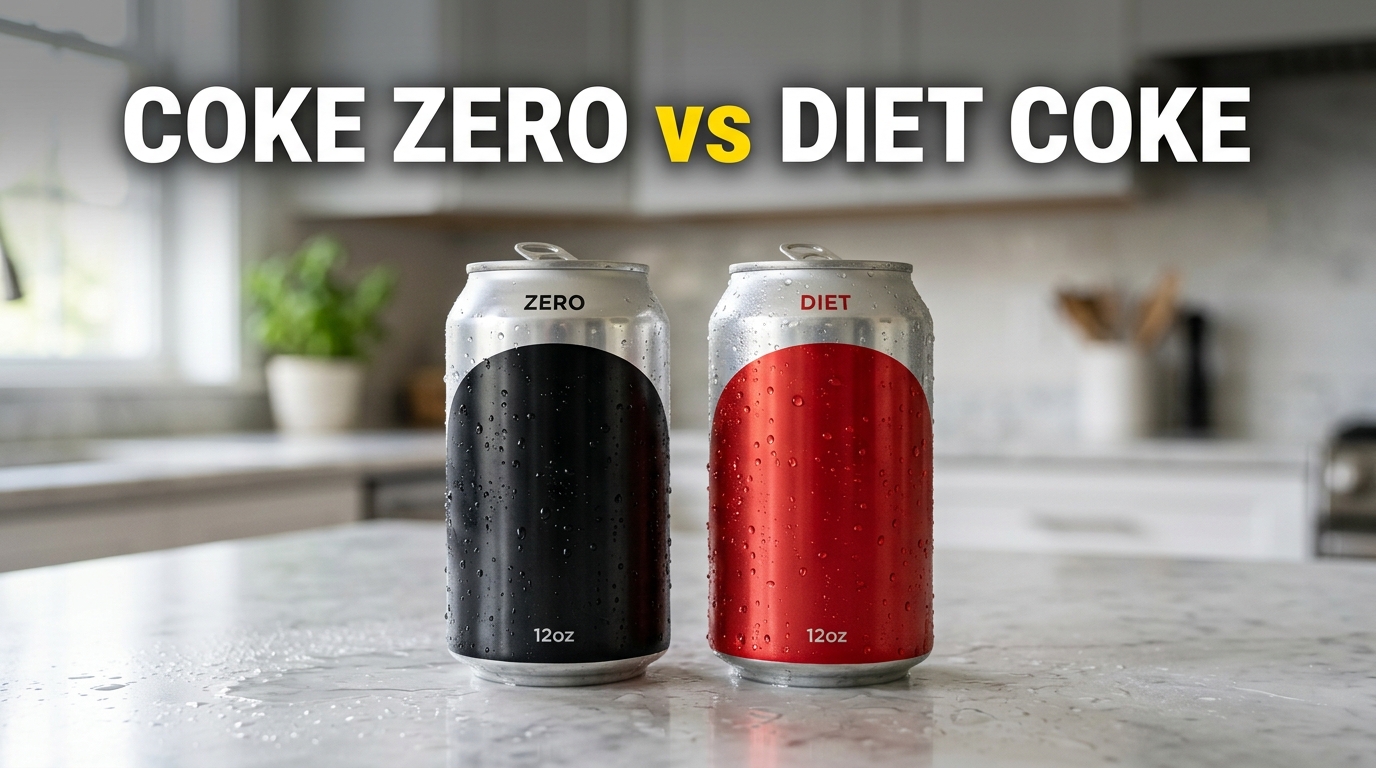
If you have stood in the soda aisle wondering which can to grab, you are not alone. The coke zero vs diet coke debate comes up constantly because both drinks promise the same thing: cola flavor with zero sugar and zero calories. The short answer is that the two sodas are close cousins rather than identical twins. They share most of their ingredient list, but they differ in sweetener blend, caffeine amount, and overall taste, and those small differences are enough to make people loyal to one or the other.
This guide breaks down the ingredients, nutrition facts, taste profile, and health considerations for both drinks, using current label data and public health guidance rather than marketing claims. By the end, you will know exactly which one fits your taste buds and your daily habits.
Quick Answer: How Coke Zero and Diet Coke Compare
Both drinks are sugar-free, calorie-free colas made by the same company, but they were built for different goals. Diet Coke was designed as a lighter, distinct-tasting diet cola, while Coke Zero Sugar was formulated later to taste closer to original Coca-Cola. That single design goal explains almost every difference you will notice once you open a can.
| Feature | Diet Coke | Coke Zero Sugar |
|---|---|---|
| Calories (12 oz) | 0 | 0 |
| Sugar | 0 g | 0 g |
| Caffeine | 46 mg | 34 mg |
| Sweeteners | Aspartame only | Aspartame and acesulfame potassium |
| Acidity ingredient | Citric acid | Potassium citrate |
| Taste profile | Lighter, slightly citrus-forward | Closer to regular Coca-Cola |
| Sodium | 40 mg | 40 mg |
| Potassium | Not listed | 60 mg |
Ingredient Breakdown: What’s Actually In Each Can
The two colas share a nearly identical ingredient list, which is why the differences feel subtle rather than dramatic. Both start with carbonated water and caramel color, then add phosphoric acid, potassium benzoate as a preservative, natural flavors, and caffeine.
Diet Coke uses citric acid to round out its tartness, while Coke Zero Sugar swaps that for potassium citrate and adds a second sweetener, acesulfame potassium (often shortened to Ace-K), alongside aspartame. Aspartame appears earlier in Diet Coke’s ingredient list than in Coke Zero’s, and since ingredients are listed by weight, that suggests Diet Coke carries a bit more aspartame per can. Both sweeteners belong to the group of six high-intensity sweeteners approved as safe food additives in the United States.
Both sodas also contain phenylalanine, a byproduct of aspartame. This matters specifically for people with phenylketonuria, a rare inherited condition that makes it hard to break down phenylalanine, which is why both cans carry a phenylalanine warning label.
Taste Test: Why They Don’t Taste the Same
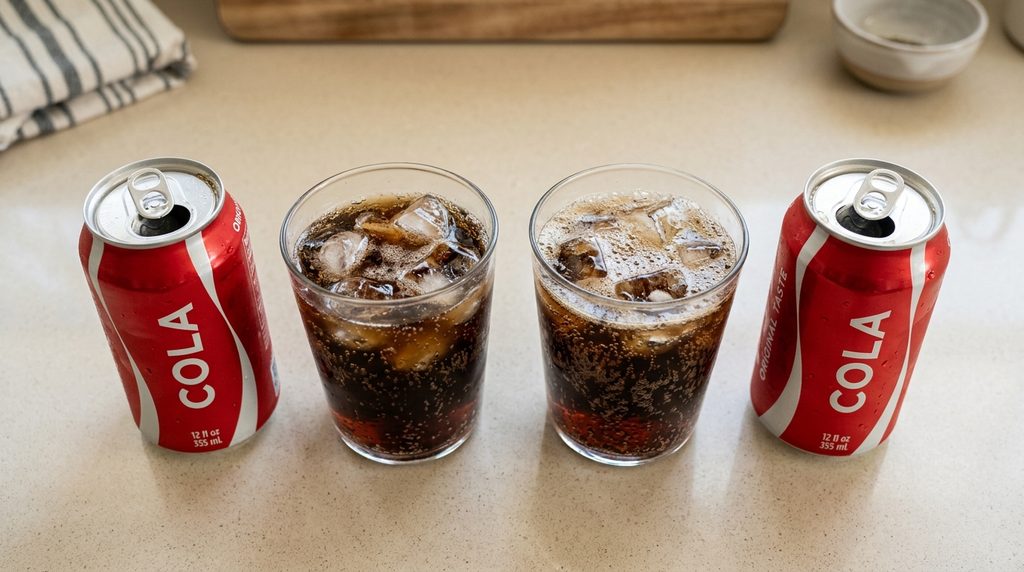
Ask any regular drinker and they will tell you Coke Zero and Diet Coke taste different, even though the ingredient lists look almost the same on paper. Coke Zero Sugar was engineered specifically to mimic the flavor of original Coca-Cola, giving it a bolder, more classic cola punch. Diet Coke has its own separate flavor identity, often described as lighter and slightly more citrus-driven.
The second sweetener in Coke Zero, acesulfame potassium, also changes the aftertaste. Ace-K tends to hit the palate faster and fade quicker than aspartame, which can make Coke Zero feel less lingering on the tongue. Diet Coke’s single-sweetener formula leans more heavily on aspartame, which some tasters notice as a slightly different, more consistent sweetness throughout the sip.
Caffeine Content: Which One Has More
Caffeine is one of the clearest, most measurable differences between the two drinks. A 12-ounce can of Diet Coke contains about 46 milligrams of caffeine, while the same size can of Coke Zero Sugar contains about 34 milligrams. That gap of roughly 12 milligrams is unlikely to be noticeable physically to most people, but it can matter if you are tracking intake closely.
For context, most healthy adults are advised to keep total daily caffeine intake under 400 milligrams, an amount not generally linked to negative effects. A single can of either soda uses up only a small fraction of that limit, but caffeine from coffee, tea, energy drinks, and chocolate adds up across the day. If you are sensitive to caffeine or cutting back in the evening, Diet Coke’s slightly higher content is worth knowing, and both brands also sell caffeine-free versions.
Sweeteners Explained: Aspartame and Acesulfame Potassium
Aspartame is the sweetener both drinks rely on, and it has been reviewed extensively since its approval decades ago. In 2023, the cancer research arm of a major international health body classified aspartame as possibly carcinogenic to humans, a designation based on limited evidence, while the joint food additive committee that assesses safety thresholds reaffirmed that the existing acceptable daily intake for aspartame remains unchanged at 40 milligrams per kilogram of body weight. In practical terms, an adult weighing about 70 kilograms would need to drink more than nine to fourteen cans of diet soda in a single day, every day, to exceed that safety threshold.
Acesulfame potassium, the second sweetener in Coke Zero, is a separate compound that passes through the body without affecting blood sugar and carries its own long-standing safety approval. Because Coke Zero blends two sweeteners at lower individual amounts rather than relying on one at a higher amount, some people find the aftertaste less pronounced, though this varies person to person.
Common mistake: Assuming “diet” or “zero” automatically means “healthiest possible choice.” Both drinks are sugar-free and calorie-free, but that does not make them equivalent to water, and neither should replace hydration from plain water throughout the day.
Health Considerations Beyond the Ingredient List
Because both sodas are sugar-free, they avoid the added-sugar concerns tied to regular cola. Public health guidance recommends keeping added sugar intake under 10 percent of total daily calories, a target that regular sugary soda can blow through quickly. Swapping to a diet version removes that specific concern, but a few other factors are worth knowing.
Both drinks are still acidic, and that acidity can affect tooth enamel over time regardless of whether sugar is present. Dental research has found that acids in both sugary and sugar-free sodas can erode enamel with frequent, prolonged exposure, since it is the acid rather than the sweetener that drives the erosion. Drinking soda with a meal rather than sipping it slowly all day, and rinsing with water afterward, can help limit that effect.
People managing phenylketonuria need to avoid aspartame entirely, which rules out both drinks unless a phenylalanine-free version is available. Anyone monitoring caffeine for pregnancy, heart conditions, or sleep issues should also factor in the 34 to 46 milligrams per can on top of other caffeine sources during the day.
Pros and cons at a glance:
- Coke Zero pros: closer to original Coca-Cola flavor, lower caffeine, two-sweetener blend some find smoother
- Coke Zero cons: slightly more complex ingredient list, still acidic
- Diet Coke pros: distinct lighter flavor many long-time drinkers prefer, widely available flavor variants
- Diet Coke cons: higher caffeine per can, relies solely on aspartame for sweetness
Storing and Serving Your Zero-Sugar Cola
Both drinks keep their carbonation and flavor best when stored in a cool, dark spot away from direct sunlight and heat, since warm temperatures speed up flavor breakdown even in unopened cans. Once opened, both lose fizz within a day or two in the fridge, so pouring over ice right away preserves the taste better than letting a can sit half-finished. If you like applying the same data-driven approach to shelf life that governs other pantry staples, the reasoning behind how long packaged food actually stays safe past its printed date applies here too: unopened cans typically stay at peak quality for around nine months past the printed date, though they remain safe to drink well beyond that if stored properly.
Which One Should You Choose
There is no universally “better” option between these two colas, since the nutrition facts are nearly identical and the real deciding factor is personal taste and caffeine tolerance. If you grew up drinking Diet Coke and like its lighter, slightly tangier profile, switching probably will not feel worth it. If you miss the taste of regular Coca-Cola but want zero sugar and calories, Coke Zero Sugar is built specifically to close that gap.
For caffeine-sensitive drinkers, Coke Zero’s lower 34 milligrams per can gives it a slight edge, while Diet Coke’s 46 milligrams might suit someone who wants a bit more of a lift with their afternoon can. If you are simply trying to drink less soda overall regardless of which one you choose, building small pauses into your routine, the same way taking an intentional pause from constant kitchen tasks helps reset daily habits, can make it easier to reach for water more often between cans.
Common Mistakes to Avoid
- Coke Zero pros: closer to original Coca-Cola flavor, lower caffeine, two-sweetener blend some find smoother
- Assuming zero-calorie means zero impact on teeth, since acidity still applies to both drinks
- Drinking soda slowly over hours instead of with a meal, which extends acid exposure to enamel
- Ignoring caffeine from other sources (coffee, tea, energy drinks) when counting your daily total
- Choosing a flavor variant without checking whether it swaps aspartame for a different sweetener like sucralose
- Assuming both drinks taste the same and being surprised when a substitute doesn’t match your preference
Frequently Asked Questions
Is Coke Zero healthier than Diet Coke?
Neither is meaningfully healthier than the other, since both have zero calories, zero sugar, and nearly identical sodium content. The main practical differences are caffeine amount and sweetener blend, so the better choice depends on your personal tolerance and taste preference rather than a clear health advantage.
Why does Coke Zero taste more like regular Coke?
Coke Zero Sugar was specifically reformulated to match the flavor profile of original Coca-Cola, while Diet Coke was created decades earlier as its own distinct recipe. The blend of aspartame and acesulfame potassium in Coke Zero also contributes to a fuller, more classic cola taste.
Does Diet Coke have more caffeine than Coke Zero?
Yes, a 12-ounce can of Diet Coke contains about 46 milligrams of caffeine compared to roughly 34 milligrams in the same size can of Coke Zero Sugar. Both amounts are well under general daily caffeine guidance for healthy adults.
Can people with diabetes drink Coke Zero or Diet Coke?
Both drinks contain no sugar and are formulated with non-nutritive sweeteners that do not raise blood glucose the way sugar does, which is why many people managing diabetes choose them over regular soda. Anyone with diabetes should still check with a healthcare provider about how these fit into their overall diet.
Is aspartame safe to drink regularly?
Regulatory safety reviews have repeatedly found aspartame safe within established daily intake limits, even after a 2023 classification review flagged it as a possible carcinogen based on limited evidence. A person would need to drink far more cans in a single day than typical consumption to approach that safety threshold.
Which one is better for weight loss?
Neither drink causes weight loss on its own, since the benefit comes from avoiding the added sugar and calories found in regular soda rather than from any active fat-burning property. Replacing sugary soda with either diet option can support a lower-calorie eating pattern when combined with an overall balanced diet.
Do Coke Zero and Diet Coke have the same amount of sodium?
Yes, both contain about 40 milligrams of sodium per 12-ounce can, which is a small fraction of typical daily sodium intake. Coke Zero additionally lists 60 milligrams of potassium, which Diet Coke’s label does not include.
Can I drink Coke Zero or Diet Coke while pregnant?
Both are generally considered acceptable in moderation during pregnancy, but caffeine intake should be monitored and kept within guidance limits for pregnant individuals, which are lower than the general adult recommendation. It’s best to discuss individual caffeine and sweetener intake with a healthcare provider during pregnancy.
Final Thoughts
The coke zero vs diet coke choice ultimately comes down to what your taste buds and your daily caffeine habits prefer, since both drinks deliver zero sugar and zero calories with only minor differences in sweetener blend and caffeine content. Try both side by side, pay attention to how each one sits with you, and let that simple taste test settle the debate once and for all. If you’re also rethinking other everyday kitchen and pantry habits, explore more practical, data-backed guides to make smarter choices throughout your home.

