
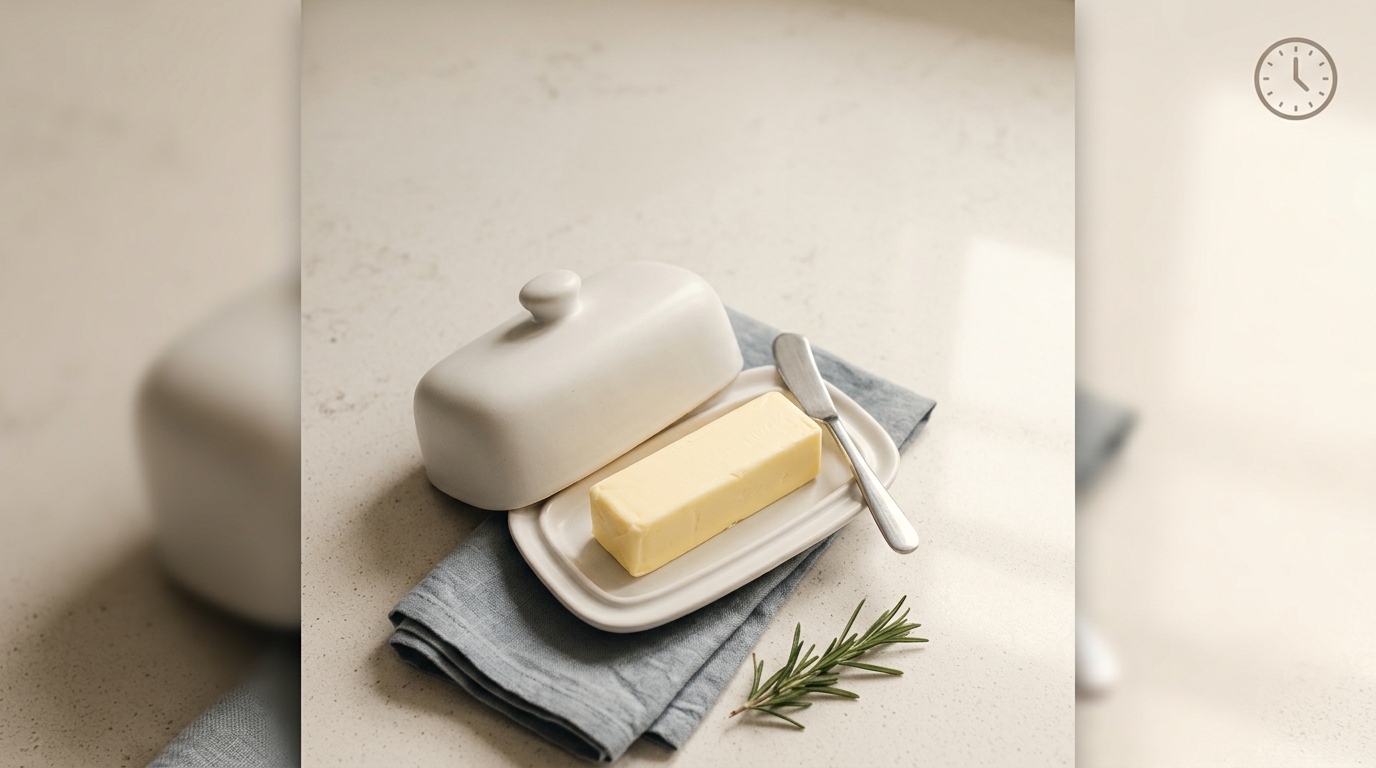
If you have ever left a stick of butter on the counter overnight and wondered whether it is still safe for your morning toast, you are not alone. So how long can butter sit out? In most cases, butter can safely sit at room temperature for one to two days, according to United States Department of Agriculture guidance, though salted butter can often last longer than unsalted butter thanks to its lower water content and natural preservative effect. That is the short answer, but the full picture depends on your kitchen’s temperature, whether your butter is salted or unsalted, and how it is stored.
This guide breaks down what food safety researchers and government agencies actually recommend, why butter behaves differently from other dairy products, and how to tell when a stick has gone from soft and spreadable to genuinely spoiled. You will also find a practical comparison table, storage tips, and answers to the most common questions people search for around this topic.
A quick note: this article covers general food safety guidance and is not a substitute for professional medical or food safety advice. If you have specific health concerns, especially around pregnancy, young children, or a weakened immune system, check with a healthcare provider or a certified food safety professional.
Why Butter Is Different From Other Dairy Products
Most dairy products spoil quickly at room temperature because bacteria thrive in moist, protein-rich environments. Butter behaves differently. It is made almost entirely of fat, typically around 80 percent, with a much smaller amount of water folded in during churning. That fat-heavy structure physically traps the water in tiny droplets, which makes it far harder for bacteria to spread and multiply compared to milk, cream, or soft cheese.
During commercial production, the cream used to make butter is also pasteurized, which knocks down bacterial counts before the product ever reaches store shelves. That combination of low water content and pasteurization is why food safety agencies classify butter as a relatively low-risk food at room temperature, unlike raw milk or freshly cooked meat, which fall squarely into the FDA’s two-hour perishable food rule.
How Long Can Butter Sit Out? The Short Answer
For most households, the safe window for leaving butter out is one to two days. This is the guidance published in the USDA’s FoodKeeper food storage resource, and it is echoed by food safety extension programs at land-grant universities across the country. Beyond that window, butter is unlikely to make you sick in the way raw chicken or unpasteurized dairy might, but it starts losing quality through a process called rancidity rather than bacterial spoilage.
Rancidity is a chemical reaction, not a bacterial one. Exposure to air, light, and warmth causes the fat molecules in butter to oxidize, which produces the sour, waxy, or “off” smell and taste many people associate with old butter. Rancid butter is generally not considered dangerous to eat in small amounts, but it tastes unpleasant enough that most people would not want to anyway.
Salted vs Unsalted Butter: Why the Difference Matters
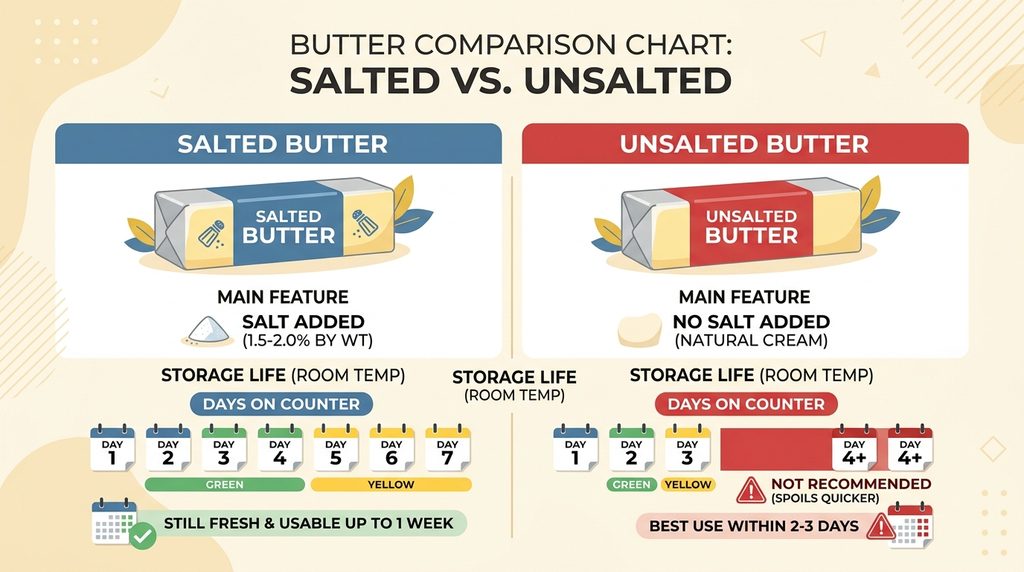
If you searched for how long can you leave unsalted butter out, the answer is shorter than for salted butter, and there is a real scientific reason behind it. Salt acts as a natural preservative. It draws out moisture and creates an environment that is harder for certain bacteria, including Listeria and Yersinia, to survive in. Salted butter, which typically contains around 1.5 to 3 percent salt, benefits from this protective effect.
Unsalted butter lacks that buffer, which is why food safety researchers generally recommend refrigerating it and limiting counter time to about one to two days at most, and ideally less in a warm kitchen. Unsalted butter is also more commonly used in baking recipes that call for precise fat content, so many bakers keep it refrigerated until shortly before use anyway.
| Butter Type | Recommended Room Temperature Limit | Refrigerator Shelf Life | Freezer Shelf Life |
|---|---|---|---|
| Salted butter | 1 to 2 days (up to about a week in a cool, covered dish) | 1 to 2 months | 6 to 9 months |
| Unsalted butter | 1 to 2 days | 1 to 2 months | 6 to 9 months |
| Whipped or homemade butter | Not recommended; refrigerate | 1 to 2 weeks | 3 to 4 months |
What Actually Happens When Butter Sits Out Too Long
Understanding what goes wrong helps explain why the guidance is what it is. Two separate processes affect butter left out at room temperature.
The first is oxidative rancidity, where exposure to oxygen breaks down fat molecules and produces off flavors and smells. This is the most common reason old butter tastes stale or “waxy.” The second is hydrolytic rancidity, where the water trapped inside the butter reacts with fat molecules over time, again producing unpleasant flavors, especially in warm conditions.
There is also a smaller but real risk of bacterial contamination, particularly if the butter is repeatedly touched with unwashed knives, exposed to crumbs, or left uncovered near raw food. Bacteria such as Staphylococcus aureus can be introduced through handling rather than growing naturally in the butter itself. This is one reason food handlers in commercial kitchens are generally required to keep butter refrigerated, even though home cooks have more flexibility.
Signs Your Butter Has Gone Bad
Butter rarely spoils suddenly. It degrades gradually, so look for a combination of these signs rather than relying on just one.
- A sour, sharp, or paint-like smell that is noticeably different from butter’s usual mild, creamy scent
- A darker yellow color around the edges or surface, especially where it has been exposed to light
- A gritty or crumbly texture instead of the usual smooth consistency
- Visible mold spots, which mean the butter should be discarded immediately
- A stale or “cardboard” aftertaste when tasted in small amounts
If you notice any of these signs, it is best to throw the butter out rather than risk an unpleasant meal. When in doubt, a quick smell test before use is one of the simplest habits worth building into your routine, similar to how you might check whether eggs are still good before cooking with them.
How Kitchen Temperature Changes the Timeline
Room temperature is not a fixed number, and that matters more than most people realize. Food safety experts generally define comfortable room temperature as somewhere between 68 and 78 degrees Fahrenheit. Butter left out in a kitchen that regularly stays below 70 degrees Fahrenheit will hold up noticeably better than butter left out during a summer heatwave when indoor temperatures creep toward 80 degrees or higher.
The broader FDA “danger zone” guidance explains that bacteria multiply fastest between 40 and 140 degrees Fahrenheit, doubling in number in as little as 20 minutes under ideal conditions. While butter’s low moisture content makes it more resistant than meat or dairy liquids, warmer kitchens still accelerate both rancidity and any bacterial risk, which is why the one to two day guidance shortens in hot, humid climates and can stretch slightly longer in cooler, drier ones.
Step-by-Step: How to Store Butter Safely on the Counter
If you prefer soft, spreadable butter and want to keep some out, follow these steps to reduce risk and preserve flavor.
- Use a covered butter dish or crock. An airtight or semi-sealed container blocks light and reduces oxygen exposure, both of which slow rancidity.
- Keep it away from heat sources. Store the dish away from stovetops, ovens, direct sunlight, or windows that get warm during the day.
- Only take out what you will use in a day or two. Cut a small portion for the counter and keep the rest refrigerated, rather than leaving an entire pack out.
- Use clean utensils every time. Avoid double-dipping a knife that has touched raw food, crumbs, or your mouth, since this introduces bacteria.
- Choose salted butter for countertop storage if possible. Its natural preservative properties make it more forgiving than unsalted butter.
- Check it daily. A quick smell and visual check takes a few seconds and helps you catch early signs of spoilage before you use it in cooking or baking.
Common Mistakes People Make With Butter Storage
Even careful home cooks fall into a few predictable traps. Leaving an entire pound of butter out “just in case” is one of the most common, since it increases the surface area exposed to air and handling compared to portioning out a small amount. Storing butter in direct sunlight near a kitchen window is another frequent mistake, since UV exposure speeds up oxidation noticeably faster than indoor lighting alone.
Another mistake is assuming that because a house is air-conditioned, room temperature guidance does not apply. Many homes run warmer in the kitchen specifically, especially near ovens, dishwashers, or south-facing windows, so the actual temperature where the butter sits can be several degrees higher than the thermostat setting for the rest of the house.
Butter Storage Compared to Other Pantry and Fridge Staples
Butter is often lumped in with other perishable items, but its shelf-stable fat content puts it in a different category from most dairy and produce. If you are also trying to figure out safe timelines for other kitchen staples, the same core principles of temperature, moisture, and handling apply, whether you are working out how long a rotisserie chicken stays good in the fridge or checking whether potatoes have gone bad before cooking with them.
For context, here is how butter’s room temperature tolerance compares with a few other common refrigerated foods.
| Food Item | Safe Room Temperature Window |
|---|---|
| Butter (salted or unsalted) | 1 to 2 days |
| Fresh milk | 2 hours (1 hour if above 90°F) |
| Cooked meat or poultry | 2 hours (1 hour if above 90°F) |
| Hard cheese | Several hours, but refrigeration recommended |
| Eggs (in shell) | 2 hours |
Expert and Institutional Guidance Worth Knowing
Food safety researchers have studied butter storage specifically and found that its unique fat structure, formed when water molecules become surrounded and separated by fat during churning, is what gives it more resistance to bacterial growth than other dairy products. Their guidance aligns closely with the USDA’s own recommendation of limiting room temperature storage to one to two days for best quality and safety.
It is worth noting that some manufacturers give more conservative advice than government guidance. Some brands recommend returning unused butter to the refrigerator within just a few hours, largely for flavor and quality reasons rather than a documented safety risk. This is a case where legal safety minimums and manufacturer quality recommendations differ, and following the more conservative option is a reasonable choice if you are especially cautious or serving butter to someone with a weakened immune system. Guidance on groups at higher risk for food poisoning specifically flags older adults, young children, pregnant individuals, and those who are immunocompromised as groups who benefit from more conservative food storage practices across the board, not just with butter.
Pros and Cons of Leaving Butter Out
Pros:
- Softens naturally for easy spreading on bread and toast
- Blends more evenly into baking recipes that call for room temperature butter
- Saves the extra step of softening cold butter before use
- Low bacterial risk compared to most dairy products when stored properly
Cons:
- Gradually loses flavor and develops rancid notes after a couple of days
- More exposed to contamination from repeated handling and uncovered storage
- Not recommended for immunocompromised individuals, infants, or in commercial food service settings
- Unsalted and whipped varieties spoil faster than salted stick butter
Conclusion: Finding the Right Balance for Your Kitchen
So, how long can butter sit out? For most people, one to two days on the counter is a safe and practical guideline, especially if the butter is salted, covered, and kept away from heat and sunlight. Unsalted butter deserves a bit more caution given its shorter safety window. The real key is paying attention to your kitchen’s temperature, storing only what you will use quickly, and trusting your senses if something smells or looks off.
If you found this guide useful, take a look at more practical food storage guides on the site to keep your kitchen running smoothly and your ingredients fresh for longer.
Frequently Asked Questions
How long can you leave unsalted butter out?
Unsalted butter is generally safe at room temperature for about one to two days, similar to salted butter, but it lacks salt’s natural preservative effect. In warm kitchens, it is best to limit counter time to closer to one day and refrigerate the rest.
Is it safe to eat butter that has been left out for a week?
Butter left out for a full week is more likely to have developed rancid flavors, especially if unsalted or stored in a warm kitchen. While it may not necessarily be dangerous, the taste and texture are usually noticeably worse, so it is generally better to discard it.
Does butter need to be refrigerated after opening?
Butter does not strictly need refrigeration after opening thanks to its low water content, but refrigeration extends its usable life significantly and helps preserve flavor. Most people refrigerate the bulk of their supply and keep only a small portion out for daily use.
Can leaving butter out make you sick?
It is uncommon, but not impossible, especially if the butter has been repeatedly handled with unclean utensils or left uncovered near raw food. The bigger and more likely issue is rancidity, which affects taste and smell rather than causing illness.
Why does salted butter last longer than unsalted butter at room temperature?
Salt draws out moisture and creates a less hospitable environment for certain bacteria, which slows spoilage. This is the same principle behind other salt-cured and salted foods that traditionally did not require refrigeration.
What is the best way to store butter on the counter?
Use a covered butter dish or crock, keep it away from direct sunlight and heat sources, and only leave out a small portion that you will use within a day or two. This limits exposure to air, light, and handling.
Can you refreeze butter after it has been left out?
Yes, butter that has only been left out briefly and shows no signs of spoilage can generally be refrigerated or frozen again. However, repeated temperature swings can affect texture slightly, so it is best for baking rather than spreading once refrozen.

