
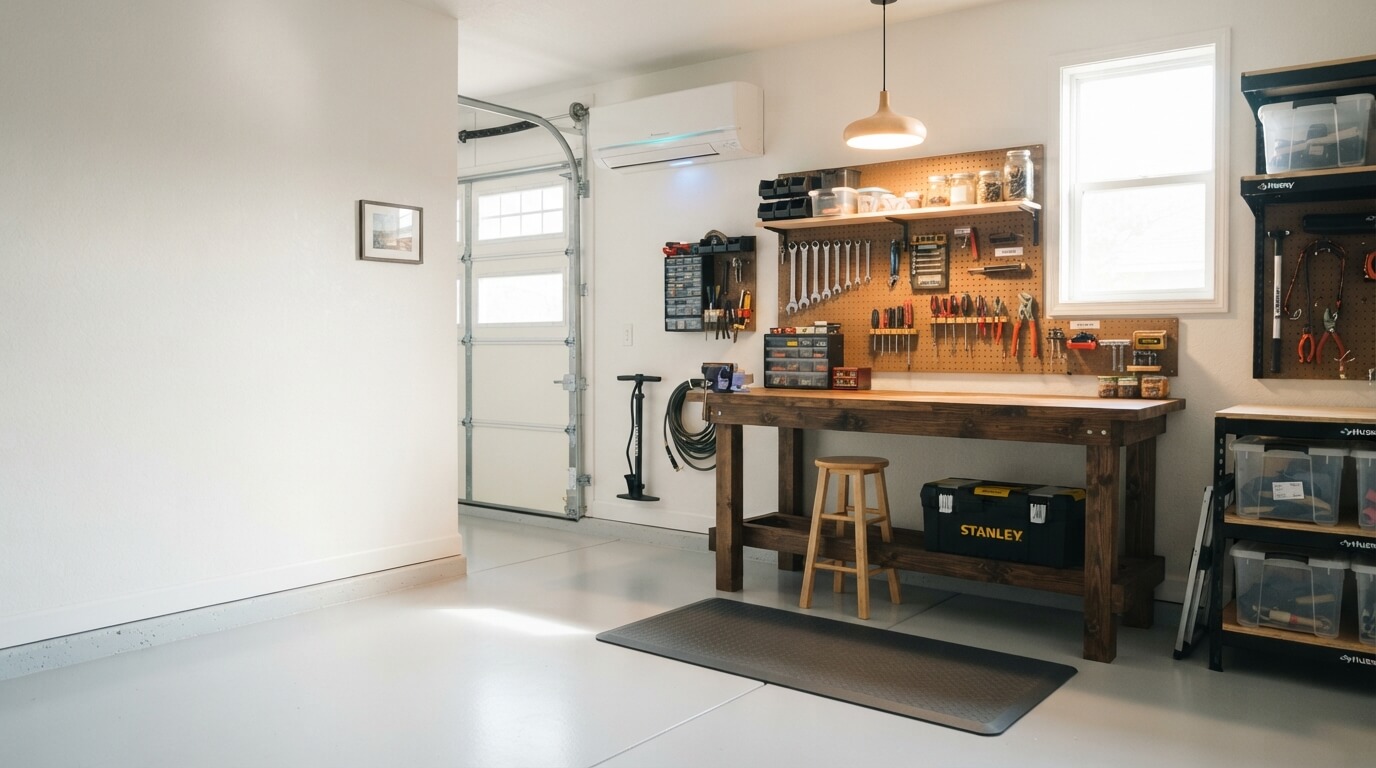
If you want to know how to make a garage more comfortable, start with the shell of the building, not a gadget. Seal the air leaks, insulate the door and ceiling, control moisture, and only then add heating, cooling, better lighting, and a softer floor. That order matters because a leaky garage loses warm or cool air almost as fast as you create it.
This guide walks through each upgrade in a practical sequence, with difficulty levels, safety warnings, and common mistakes. You will also see what changes between attached and detached garages, since the best choices are not identical for both.
How to Make a Garage More Comfortable: The Right Order
Most people buy a heater or a fan first and feel disappointed a week later. The real problem is usually the building itself, which swings with the weather, traps damp air, and has poor light. Working from the outside in gives you the biggest comfort gain for each dollar spent.
The table below ranks the main upgrades. Costs are shown as relative levels rather than exact prices, because they vary by region, materials, and whether you hire a pro.
| Step | What it fixes | Difficulty | Cost level |
|---|---|---|---|
| Seal air leaks | Drafts, dust, pests | Easy | Low |
| Insulate door, ceiling, walls | Big temperature swings | Easy to hard | Low to high |
| Control humidity and air | Damp, musty smell | Easy to medium | Low to medium |
| Add heating and cooling | Extreme heat or cold | Medium to hard | Medium to high |
| Improve lighting | Dim, tiring workspace | Easy to medium | Low to medium |
| Upgrade floor and layout | Cold, hard standing | Easy | Low to medium |
Seal Air Leaks Before Anything Else
Start with a slow walk around the garage on a windy day. Feel for moving air around the bottom of the garage door, the side and top edges, the service door, and any windows. Replace a cracked bottom seal, add weatherstripping where you feel drafts, and caulk small gaps around window frames.
This job also helps with pests. Gaps that let in cold air are often the same openings mice and insects use, so sealing them closes off some of the common pest entry points around the home.
If the garage is attached, treat the shared wall with extra care. Building-science guidance recommends that you air seal the shared wall between the garage and living space, seal holes around wiring and pipes, and fit a self-closing, weather-stripped door to the house. That keeps car exhaust and chemical fumes out of your living area while also steadying the temperature in the garage.
Insulate the Door, Ceiling, and Walls
Start With the Garage Door
The door is the largest, thinnest surface in the garage, so it is often the best first target. Foam board or fiberglass kits fit into the door sections and suit most steel doors. A full replacement costs more, but insulated custom garage doors combine better thermal layers with tighter perimeter seals.
Extreme temperatures also wear out the equipment you store and use in the garage. For example, a hot, uninsulated space can shorten the life of a garage door opener backup battery, so a battery that keeps dying early may be a temperature problem.
Ceiling and Walls

If there is a room above the garage, insulating the ceiling pays off quickly. Adding rigid foam board to the garage ceiling can make the floor above feel warmer and improve air sealing between the garage and the house. For walls, batts between studs work well when covered with drywall, while spray foam also seals air leaks but costs more.
| Method | Best for | Watch out for |
|---|---|---|
| Door insulation kit | Steel doors, tight budgets | Panels must stay clear of springs and tracks |
| Insulated replacement door | Old, dented, or wood doors | Higher upfront cost |
| Batts plus drywall | Finished walls | Gaps and compressed insulation reduce results |
| Rigid foam board | Ceilings under living space | Seams must be sealed; follow local fire code |
| Spray foam | Odd shapes and air sealing | Needs a professional and is pricier |
Insulation works best when air sealing comes first, and foam or drywall coverings must follow local fire rules. Check with your local building department before finishing walls shared with the house.
Heat a Garage Safely
Once the garage holds temperature better, heating becomes cheaper and simpler. The right heater depends on how often you use the space and whether the garage is attached.
| Heater type | Best for | Main caution |
|---|---|---|
| Portable electric | Short weekend projects | Needs a wall outlet and constant supervision |
| Wall or ceiling electric | Regular workshop use | Often needs a dedicated circuit from an electrician |
| Mini-split heat pump | Year-round use | Higher upfront cost and professional installation |
| Fuel-burning (gas, propane) | Only when properly vented and listed for garages | Carbon monoxide and flammable vapor risks |
Follow the basic portable heater safety rules: keep the heater at least three feet from anything that can burn, place it on a stable surface, never leave it running unattended, and plug it straight into a wall outlet instead of a power strip. The same guidance warns against running a generator in a garage, and opening the door does not make it safe. Never run a car or cook on a charcoal grill in the garage either.
Gasoline and solvent fumes settle near the floor, so keep open flames and glowing heating elements away from fuel cans and paint thinner. A carbon monoxide alarm in the room next to an attached garage is also a smart precaution. This article offers general guidance only, so have a licensed electrician or HVAC professional handle wiring, gas lines, and permits.
Add Heating and Cooling With a Mini-Split
For a garage you use often, a mini-split heat pump is the cleanest all-season solution. An outdoor unit pulls heat from the air, even in cold weather, and refrigerant carries it to an indoor unit. In summer the process reverses to cool the space, and certified models can use up to 60 percent less energy than standard electric radiators.
Here are the trade-offs to weigh:
Pros
- Heats and cools in one system
- Needs no ductwork
- Runs quietly
- Does not burn fuel inside the garage
Cons
- Higher upfront cost
- Professional installation is usually needed
- May be overkill for occasional use
Have the unit sized after you insulate, since a tighter garage often needs smaller equipment. Buying an oversized unit wastes money, while an undersized one runs constantly and never feels right.
Cool a Hot Garage Without Overspending
A hot garage is often fixable with low-cost habits before you buy any equipment. Open the door and windows during the coolest part of the day, and aim a fan so it pushes hot air out. Let your car cool off before parking it, and save heat-producing tools for mornings or evenings.
A few more ideas help in summer:
- Switch old bulbs to LEDs, which run cooler.
- Add a ceiling fan if the ceiling is high enough.
- Use a window AC unit if you have a suitable window.
- Insulate the door and ceiling to slow heat from outside.
Some households also use connected temperature sensors and thermostats to watch the garage remotely or switch equipment on only when needed.
Control Humidity and Air Quality
Damp air makes a garage feel sticky, smell musty, and rust tools. Aim to keep indoor humidity below 60 percent, ideally between 30 and 50 percent, and check it with an inexpensive humidity meter. A dehumidifier helps, but fixing leaks and drainage problems matters more.
Ventilation matters too, especially when you paint, sand, or use solvents. Open the door when working with fumes and keep chemical containers tightly closed. Sealing the shared wall of an attached garage and keeping the house door closed reduces how much garage air reaches your home.
Upgrade the Lighting
Good light makes a garage feel safer, bigger, and easier to work in. Buy by lumens instead of watts, since an 800-lumen LED gives about the same light as a 60-watt incandescent bulb while drawing roughly 6 to 10 watts. Check the packaging for brightness and color temperature too.
Layer your lighting for the best result. Use bright overhead LED fixtures for general light, add focused task lights above the workbench, and let in daylight through a window if the wall allows it. Whiter light helps with detail work, while warmer light feels more homelike in a hangout area.
Make the Floor and Layout Work for You
Bare concrete is hard and cold on your feet. Rubber or anti-fatigue mats, interlocking tiles, or a sealed floor coating make the space far more comfortable, and they also reduce dust and oil stains. Before coating, clean the slab well and check for moisture, because a damp floor can make coatings peel.
Layout is the final comfort piece. Get clutter under control first by following a simple plan to declutter, then use wall storage such as pegboards and shelves to get items off the floor. Create clear zones for parking, a workbench, storage, and, if you like, a seating corner. If you need extra outlets, hire an electrician, since garage circuits usually require specific protection.
Attached vs. Detached Garages and Starting Fresh
An attached garage needs tighter air sealing and careful heater choices because fumes and heat can move into the home. A detached garage has more freedom for heating options, but it needs its own power supply and often more insulation since no heated house shares a wall.
Some owners decide it is easier to start over than to retrofit an old structure. If that sounds like you, a professional crew that can build garage Edmonton properties with insulation, wiring, and drainage planned before the slab is poured gives you a comfortable space from day one.
Common Mistakes to Avoid
- Buying a heater before sealing leaks and insulating the door.
- Using a fuel-burning heater in a closed garage without proper venting.
- Running heaters on power strips or extension cords.
- Oversizing a mini-split instead of having it sized for the insulated space.
- Coating a damp slab without checking moisture first.
- Blocking vents or ignoring moisture problems.
Quick Troubleshooting
| Problem | Likely cause | Fix |
|---|---|---|
| Still cold after adding a heater | Air leaks, uninsulated door | Seal gaps, add door insulation |
| Musty smell | High humidity or leaks | Fix water source, use a dehumidifier |
| Heater keeps tripping the breaker | Overloaded circuit | Use a dedicated circuit installed by an electrician |
| Damp floor in warm, humid weather | Warm air meeting a cold slab | Ventilate and dehumidify |
Frequently Asked Questions
What is the cheapest way to make a garage more comfortable?
Sealing air leaks and adding a door insulation kit are usually the lowest-cost upgrades with the biggest payoff. Adding a fan in summer and a floor mat for your work area also costs little. Save heating and cooling equipment for after these steps.
What is the safest way to heat a garage?
For most people, a properly sized electric heater or a mini-split heat pump installed by a professional is safer than fuel-burning options. Keep any portable heater at least three feet from flammable items, never leave it unattended, and plug it directly into a wall outlet.
Is it worth insulating a garage door?
Often yes, because the door is a large, thin surface that loses heat easily. Results depend on your door type, climate, and whether the rest of the garage is sealed. Steel doors usually accept kits easily, while very old or damaged doors may be better replaced.
Can you put a mini-split in a garage?
Yes, mini-splits are a common choice for garages because they need no ductwork and provide both heating and cooling. Have a professional size the unit after insulation and handle the electrical and refrigerant work.
How can I cool a garage with no windows?
Use fans to move air, open the main door during cooler hours, and avoid running heat-producing tools at midday. Insulating the door and ceiling helps, and a mini-split can give lasting relief for windowless spaces.
How do I stop a garage from feeling damp?
Find and fix leaks, improve drainage around the building, and use a dehumidifier to keep humidity in the recommended range. Store items off the floor and on shelves so air can circulate.
How do I make an attached garage comfortable year-round?
Air seal and insulate the shared wall and ceiling, fit a self-closing weather-stripped door to the house, and then add heating and cooling sized for the garage. Keep any fuel-burning equipment out of the space unless it is correctly vented and approved.
What flooring makes a garage more comfortable to stand on?
Rubber or anti-fatigue mats give the most comfort for work areas, while interlocking tiles or a sealed coating work better over large areas. Check that the slab is clean and dry before adding any permanent finish.
Conclusion
Learning how to make a garage more comfortable is mostly about doing things in the right order: seal, insulate, control moisture, then add the right heating, cooling, light, and flooring. Small fixes like weatherstripping and mats can change how the space feels within a weekend, and larger upgrades can follow as your budget allows.
Pick one task to tackle this week, such as walking the garage door edges to find drafts, and build your plan from there. When you are ready to keep improving your home, explore our other guides on storage, decluttering, and everyday maintenance.

