
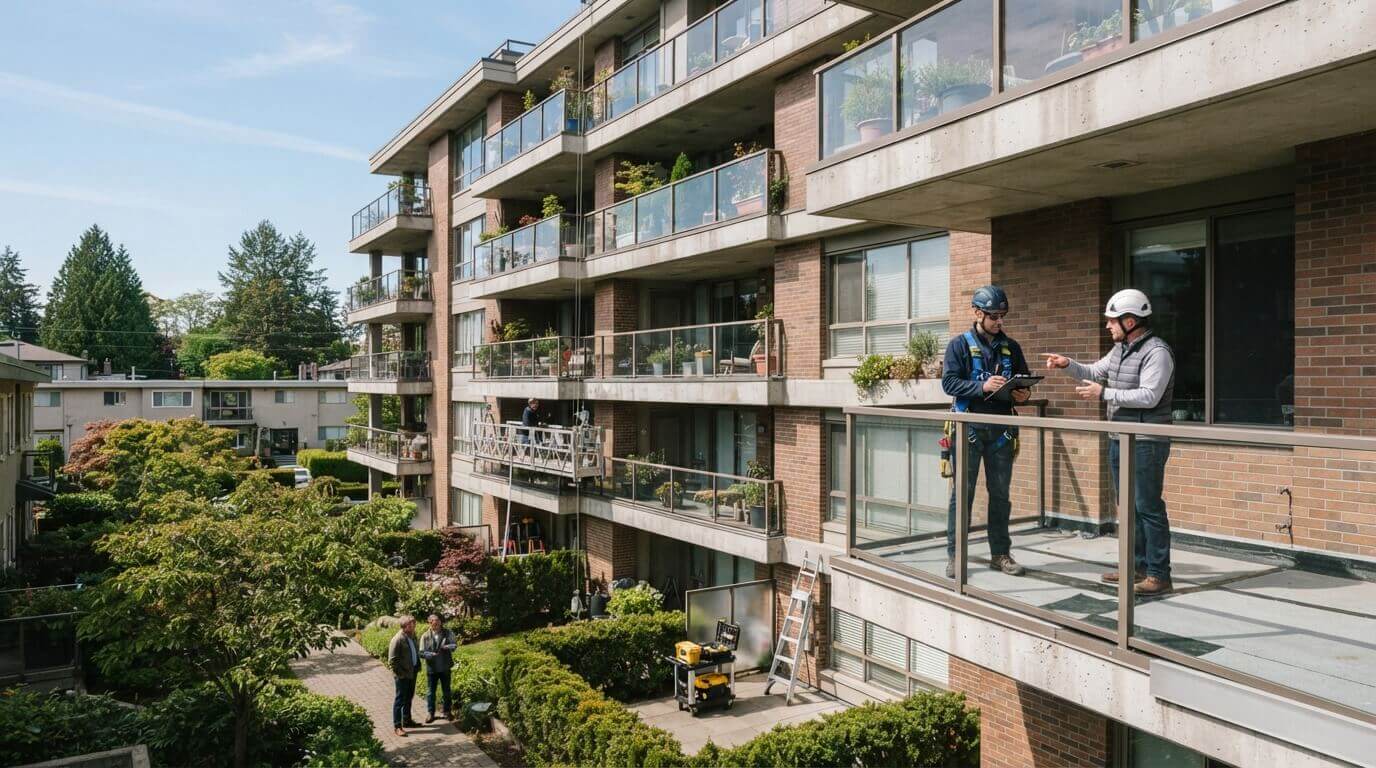
Strata building repairs and maintenance involve more than fixing visible damage. Owners and committees need to identify problems, document their condition, determine responsibility, manage immediate risks, obtain appropriate inspections, compare repair scopes, and plan funding for larger works.
Early reporting can help prevent water, corrosion, and safety issues from becoming larger repair projects. Clear records and a defined scope can also make it easier to understand what needs to be repaired and how the work should be managed.
Key Takeaways
- Early reporting can help prevent water, corrosion, and safety issues from becoming larger repair projects.
- Clear records, a proper inspection, and a defined scope make repair decisions easier to manage.
- Common property repairs are generally the responsibility of the owners’ corporation, while lot owners usually maintain property within their lot.
- Quotes should be compared on scope, safety controls, access, warranties, and exclusions, not price alone.
- Capital works planning helps strata schemes prepare for major future repairs instead of reacting at the last minute.
Why Early Repair Planning Matters

Strata buildings contend with driving rain, salt-laden coastal air, heat, storms, and the everyday wear and tear of busy shared spaces. Small warning signs can become disruptive if they are ignored.
Owners corporations that arrange strata building repairs & maintenance Sydney services should begin with a clear understanding of the issue rather than rushing into an incomplete fix. A ceiling stain may appear minor, yet the source could be a roof penetration, balcony membrane, plumbing line, façade crack, or failed drainage detail. Recurring plumbing concerns can also benefit from a documented maintenance approach.
The visible mark is not always the cause. Early action means documenting the issue, managing any immediate risk, and understanding how water damage emergencies can develop before the issue spreads to other lots or common areas.
Common Strata Defects to Watch For
Residents, cleaners, building managers, and committee members are often the first people to notice changes. Report concerns promptly when you see:
- Cracks in walls, ceilings, concrete, render, masonry, or tiles.
- Water staining, bubbling paint, musty or recurring household odors, mould, or recurring leaks.
- Rust marks, spalling concrete, or loose material around balconies and building edges.
- Ponding water, blocked drains, lifting membranes, or loose tiles.
- Damaged handrails, balustrades, steps, doors, gates, or access paths.
- Defects that reappear after an earlier repair.
Photos taken from a safe position are useful, particularly when the condition changes after rain. Residents should not access roofs, elevated balconies, façades, plant rooms, or restricted areas to investigate a defect themselves.
Minor Issues
Worn paint, small cosmetic marks, and non-safety-related fixture wear may be suitable for routine maintenance. They should still be recorded, especially if the same issue is reported repeatedly.
Major Issues
Recurring water entry, widespread cracking, deteriorating concrete, failed waterproofing, or defects affecting several lots usually require a more detailed inspection and written repair scope.
Surface patching or repainting without identifying the underlying cause can lead to recurring costs, particularly when water stains keep returning. The repair should address the source where possible rather than only covering the visible symptom.
Urgent Issues
Falling material, exposed electrical hazards, severe leaks, unsafe walkways, suspected structural movement, and fire safety concerns need immediate attention.
What to Record Before Requesting Repairs
A shared repair register creates a reliable history and reduces confusion when the issue reaches a committee meeting or contractor.
Record the date, precise location, photographs, weather conditions, effect on residents, temporary controls, and any earlier reports or invoices. Include a responsible contact, next action, target date, and current status.
For questions about responsibility, approvals, emergency work, and the repair process, NSW owners can use the government’s guidance on strata repairs and maintenance, along with their strata plan and by-laws.
How the Repair Process Usually Works
- Report the concern: Send it to the strata manager, building manager, committee, or secretary.
- Confirm the area involved: Establish whether it concerns common property, a private lot, or both.
- Manage the risk: Put practical temporary controls in place where safety or further damage is a concern.
- Arrange an inspection: Use an appropriately qualified contractor or consultant when the cause is unclear.
- Prepare a scope: Define the repair method, materials, access requirements, protection measures, and expected finish.
- Approve and schedule: Follow the scheme’s spending limits, meeting procedures, and record-keeping requirements.
A written process can make it easier to distinguish an urgent repair from routine maintenance and to keep decisions traceable.
Comparing Quotes and Scopes of Work
The lowest quote is not necessarily the most suitable comparison point if it omits access equipment, preparation, waterproofing tests, waste removal, protection of common areas, or finishing work.
Wherever possible, provide each contractor with the same written scope.
- Check the proposed repair method and materials.
- Confirm licenses, qualifications, insurance, and contract requirements relevant to the work.
- Ask how noise, dust, resident access, parking, and site safety will be managed.
- Identify exclusions, provisional sums, timeframes, warranties, and defects liability arrangements.
- Confirm whether photos, certifications, testing, or consultant sign-off are included.
For common property work valued at $30,000 or more, NSW strata schemes must obtain at least two independent quotes, subject to the emergency repair exception. A consistent scope helps the committee compare those quotes on the same basis.
Funding Repairs Through the Capital Works Fund
Routine items may include ongoing building-system upkeep, such as HVAC maintenance, while major repair and replacement work should be considered against the scheme’s 10-year capital works fund plan.
A useful planning list can include the building element, known condition, likely timing, estimated cost, priority, funding source, and next review date. Allow for reasonable contingencies on older buildings, as concealed conditions may become apparent after finishes are removed.
From 1 April 2026, new and revised NSW 10-year capital works fund plans must use the prescribed standard form. Committees can track the staged reforms through the NSW Government’s information on changes to strata laws.
Keeping Residents Informed During Building Works
Clear notices reduce confusion and help contractors work safely.
Tell residents what was found, why repairs are needed, the commencement dates, the affected locations, any access restrictions, the expected noise, the required preparation, and the contact person for questions.
For balcony works, this may include temporary closure dates, furniture removal instructions, and access appointments.
Checking the Work After Completion
Before finalizing payment, compare completed work against the approved scope.
Check that areas are safe, clean, accessible, and functioning as intended. Keep completion photographs, warranties, certificates, reports, and details of any incomplete items.
Update the repair register and capital works plan so future committees understand what was done and when follow-up inspections may be needed.
NSW Changes Strata Committees Should Track
As of September 10, 2026, further NSW strata reforms are scheduled to begin on October 1, 2026. New and returning strata committee members will be required to complete annual training within three months of appointment, subject to stated exemptions.
Committees approving significant repair work should check current requirements before making decisions.
Common Questions About Strata Repairs
Who usually pays for common property repairs?
The owners’ corporation generally repairs and maintains common property, while owners are generally responsible for property within their lot. The strata plan, bylaws, and facts of the particular defect can affect the answer.
Should a small crack be reported?
Yes. It may be cosmetic, but a dated record helps identify whether it changes over time or is associated with water entry, movement, or deterioration.
Can a resident arrange a common property repair?
Residents should normally report the issue through the strata process. In a genuine emergency, immediate action may be necessary to reduce safety risks or prevent further damage, but the strata contact should be notified as soon as possible.
What if the same defect returns?
Review the original scope, repair records, warranty information, and inspection findings. Repeated surface repairs may indicate that the underlying source has not been resolved.
Conclusion
Effective strata repairs depend on steady, evidence-based decisions rather than reacting only when a defect becomes urgent. Early reporting can give an owners’ corporation more time to investigate concerns, compare repair options, and plan the required work before conditions worsen.
Safe inspections, clear documentation, detailed scopes of work, and appropriate specialist advice can help clarify the cause and extent of a problem before contractors begin repairs. Realistic funding is equally important, particularly when major works involve waterproofing, concrete, balconies, façades, drainage, or other shared building components.
Owners’ corporations should also communicate clearly with residents about inspection dates, access requirements, expected disruption, costs, and project timelines. Keeping records of decisions, reports, quotations, completed repairs, and future maintenance needs can make later planning easier.
By combining early action, sound evidence, realistic budgeting, and clear communication, strata communities can better manage building repairs and ongoing maintenance.

