
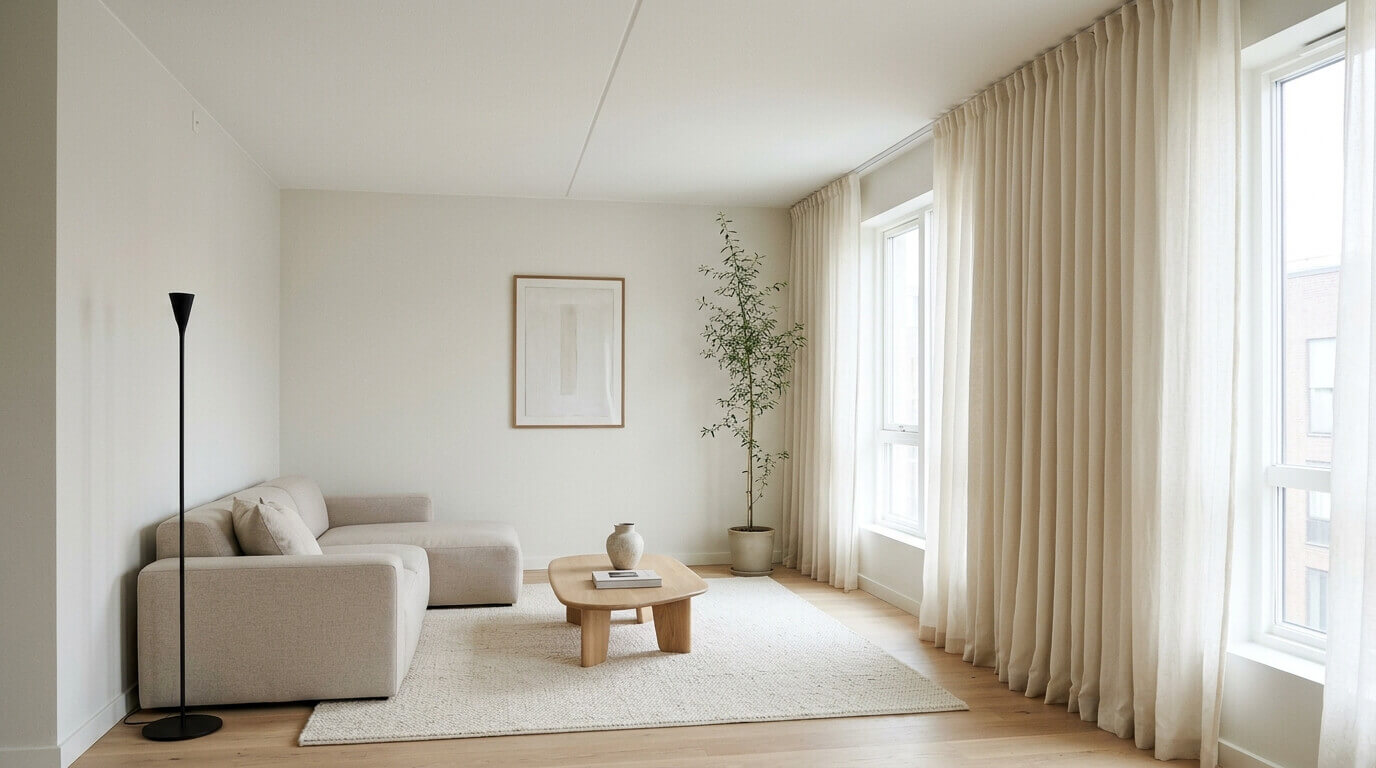
Learning how to make low ceilings look taller can help a room feel brighter, more open, and better balanced without changing its actual dimensions. The right curtain placement, fabric, and window treatment can draw the eye upward and make the walls appear taller.
Low ceilings are common in older homes, apartments, and properties where raising the roof would be impractical or expensive. Although a room’s physical height cannot be changed through decorating alone, thoughtful window styling can influence how spacious it feels.
In Australia, the National Construction Code generally specifies a 2.4-metre minimum ceiling height for habitable rooms, subject to applicable provisions and exceptions. However, even a room that meets building requirements may feel compact depending on its lighting, furniture, and window proportions. Instead of undertaking major structural work, homeowners can use several straightforward design techniques to create a greater sense of vertical space.
Why Ceiling Height Affects the Feel of a Room
A room’s proportions influence how people perceive its space and atmosphere. Low ceilings, heavy window coverings, dark corners, and bulky furniture can make a room feel enclosed, while clear sightlines and balanced lighting can create a more open impression.
Research published in Frontiers in Psychology explores the relationship between perceived ceiling height and human cognition. However, the way a room feels also depends on personal preferences, lighting, furnishings, and the surrounding environment.
Window treatments are one practical way to influence these perceptions. Long vertical fabric panels can guide the eye from the floor toward the ceiling, while lightweight materials help preserve daylight. When these elements work together, the room can feel taller without any structural changes.
Use Window Hardware to Emphasize Vertical Space
The position of curtain hardware affects how a window relates to the surrounding wall. A rod mounted immediately above the window frame creates a strong horizontal line and leaves a visible strip of wall between the curtains and ceiling.
Mounting the hardware closer to the ceiling can reduce this visual separation. Ceiling-mounted Curtain Tracks allow fabric to fall from a higher starting point, creating a longer, more continuous vertical line.
The best mounting position depends on the ceiling structure, window proportions, curtain design, and available clearance. In some rooms, a track installed just below the ceiling will work well; in others, a recessed track may provide a cleaner finish.
For additional ideas about selecting and positioning window coverings, explore this guide to window treatments.
Top Window Styling Techniques That Make Ceilings Look Taller
Choosing suitable hardware is only one part of the process. Fabric weight, curtain length, fold style, and the amount of exposed glass also influence how a room looks.
1. Choose S-Fold or Wave Curtains
S-fold curtains, also called wave curtains, create evenly spaced folds that produce a consistent vertical pattern. Their simple appearance works well in contemporary and understated interiors.
Choose a fabric that hangs smoothly rather than one that creates excessive bulk. When the curtains are open, stack them far enough to the sides to preserve as much window glass as practical.
2. Layer Sheer and Blockout Curtains
Combining sheer curtains with blockout curtains can provide flexibility throughout the day. Sheers soften incoming daylight and offer a degree of daytime privacy, while blockout curtains help reduce incoming light when a darker room is needed.
A double-track system makes it possible to operate the two layers separately. Select fabrics that suit the room’s lighting conditions and privacy requirements rather than choosing layers solely for appearance.
3. Extend Curtains Across More of the Wall
Curtains that extend beyond the window frame can make the window appear wider. Where the layout allows, a track that spans most of the wall can create a broader, more continuous arrangement.
This approach works particularly well when the curtains can be drawn away from the glass. Avoid extending the hardware so far that it interferes with doors, furniture, switches, or other architectural features.
4. Use Floor-Length Curtains
Curtains that finish close to the floor create a continuous line along the wall. Panels that stop at the windowsill may introduce a strong horizontal break, especially when the window is positioned low on the wall.
Measure carefully before selecting curtain lengths. The fabric should generally finish just above the floor or lightly touch it, depending on the material and the desired look. Excessively long curtains can collect dust, become a trip hazard, or interfere with cleaning.
5. Select Lightweight Fabrics and Balanced Colors
Heavy fabrics and thick folds can add visual weight to a compact room. Linen-look materials, lightweight cotton, and sheer fabrics may help maintain a softer appearance while allowing more daylight through.
Light colors can also help create a sense of openness, especially when they coordinate with the walls. White, warm ivory, pale beige, and soft neutral shades are useful options, but the best choice depends on the room’s existing palette and natural light.
For more ideas on combining colors, textures, and furnishings, see these interior design and space optimization ideas.
Consider Recessed and Ceiling-Mounted Curtain Tracks
Homeowners planning a larger renovation may be able to integrate window treatments into the ceiling design. Recessed curtain tracks sit within a ceiling channel, concealing much of the hardware and allowing the fabric to appear to begin at the ceiling.
This arrangement can create a clean, uninterrupted line from the top of the room to the floor. It may be particularly suitable for contemporary interiors where simple finishes and minimal visual clutter are preferred.
A recessed track usually requires more planning than a surface-mounted system. The ceiling construction, track dimensions, curtain weight, access for maintenance, and installation requirements should all be considered before work begins.
Square-set ceilings, which omit traditional projecting cornices, can complement this style. However, removing or changing existing cornices is not essential to making a low-ceiling room look taller. A carefully positioned standard curtain track can still achieve a similar visual effect at a lower cost.
Common Window Styling Mistakes to Avoid
Some window treatments can unintentionally make a room feel shorter or more crowded. Check for these issues before buying new curtains or changing the hardware.
- Mounting the rod too close to the window frame: This can emphasize the window’s existing height rather than the full wall.
- Choosing curtains that are too short: A large gap between the curtain hem and floor can interrupt the vertical line.
- Using overly bulky fabric: Excessive folds may make a small window feel crowded.
- Blocking too much natural light: Thick curtains that remain across the glass can make the room feel darker.
- Ignoring the room’s proportions: A wall-wide track is not suitable for every layout, particularly where doors or built-in furniture interrupt the wall.
- Measuring inaccurately: Incorrect measurements can result in uneven hems, poor stacking, or hardware that does not fit the intended space.
Before installation, measure the wall, window, and distance between the ceiling and window frame. Check the curtain’s finished length and the space needed for the fabric to stack when open. These details help ensure the finished arrangement looks intentional and functions properly.
How to Make Low Ceilings Look Taller Without Major Renovations
Curtains work best when they complement the rest of the room. A few additional adjustments can reinforce the impression of height without requiring structural changes.
- Keep the upper walls visually simple. Avoid unnecessary horizontal decorations or heavy trim that draws attention to the ceiling line.
- Use vertical accents. Tall artwork, narrow shelving, and vertically oriented patterns can encourage the eye to move upward.
- Choose appropriately scaled furniture. Oversized furniture can make the room feel crowded, while pieces with lighter silhouettes may preserve more visual space.
- Improve the lighting. Combine natural daylight with suitable ambient and task lighting to reduce dark corners.
- Limit visual clutter. Keeping surfaces and window areas relatively clear helps the room feel more orderly.
- Coordinate curtains with the walls. Similar or complementary colors can reduce abrupt visual divisions and make the overall composition feel more continuous.
The aim is not to make every surface identical or remove all decorative details. Instead, use a few consistent elements to create a balanced room in which the windows, walls, and furnishings work together.
Conclusion
Knowing how to make low ceilings look taller starts with making the most of the room’s existing proportions. Ceiling-mounted curtain tracks, floor-length panels, lightweight fabrics, and carefully positioned hardware can create a stronger vertical line and help a room feel more open.
For the best result, consider the window’s position, the amount of available daylight, the curtain’s finished length, and the room’s overall layout. Recessed tracks may suit larger renovations, while simple adjustments to curtain placement can work well when a more affordable solution is preferred. These styling choices will not change the actual ceiling height, but they can improve the way the space looks and feels.

