
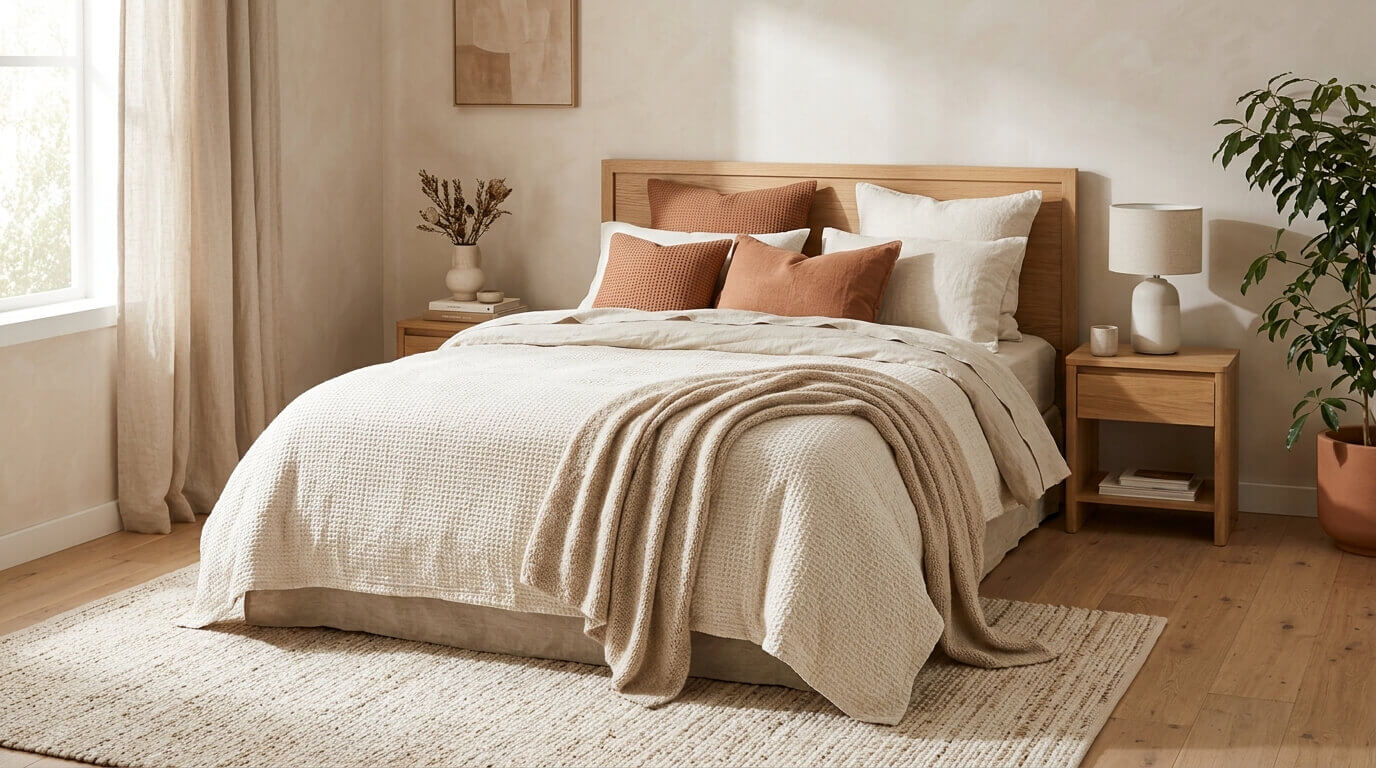
Layered bedding ideas can help transform a bedroom into a comfortable, inviting space. A bedroom should be a personal sanctuary designed for rest and relaxation. However, sleep quality can be affected by several factors, including temperature, comfort and the sleeping environment. Choosing suitable fabrics and arranging bedding in layers can make a bedroom feel more restful while adding visual interest.
Homeowners often use bed covers, such as those from Bianca Australia, alongside complementary textiles to create a coordinated, comfortable bedroom. Combining different fabrics, colors and textures can make an ordinary bed feel more inviting without requiring a complete room makeover.
Embracing Tactile Richness and Earthy Tones
Bedroom styling increasingly emphasizes tactile materials such as textured cotton, linen, velvet and woven fabrics. Rather than using perfectly matching bedding throughout, combining complementary textures can create depth and visual interest.
Color choices also influence the overall appearance of a bedroom. Warm ivory, terracotta, muted clay and earthy neutrals provide a versatile foundation, while deep blue, plum or olive accents introduce contrast. For more inspiration, explore these bedroom color combinations to see how muted shades can complement different interior styles.
Building the Perfect Bed with Strategic Layers
Creating a layered bed follows a simple approach. The aim is to combine practical comfort with a relaxed, well-finished appearance.
Start with a breathable base. Cotton and linen are popular bedding choices because they feel comfortable against the skin and can help manage moisture. The best fabric depends on personal preference, room temperature and the season.
Next, add a middle layer, such as a quilted coverlet or textured bedspread. This layer introduces structure and helps the bed look neat and inviting. Choosing a complementary fabric can add depth without making the arrangement feel overly coordinated.
Finally, drape a throw blanket or runner across the foot of the bed. This adds another texture, introduces a contrasting color and provides an extra layer when temperatures drop.
For more seasonal styling ideas, see how to refresh a bedroom for fall, including ways to combine warm bedding, textured throws and complementary colors.
Key Benefits of a Layered Sleep Environment
Layering bedding offers practical advantages alongside its decorative appeal.
- Flexible temperature control: Separate layers can be added or removed as room temperatures change.
- Effortless styling: A relaxed arrangement of quilts, pillows and throws creates an inviting appearance without precise bed-making.
- Seasonal adaptability: Lightweight cotton and linen work well in warmer conditions, while additional blankets provide warmth in cooler weather.
- Everyday comfort: Combining smooth cotton, quilted fabrics and soft knits adds variety to the bed’s texture.
Choosing durable textiles and caring for them according to their washing instructions can also help extend their useful life. By combining suitable fabrics, complementary colors and practical layers, you can create a bedroom that feels comfortable, cohesive and suited to your preferences.

