
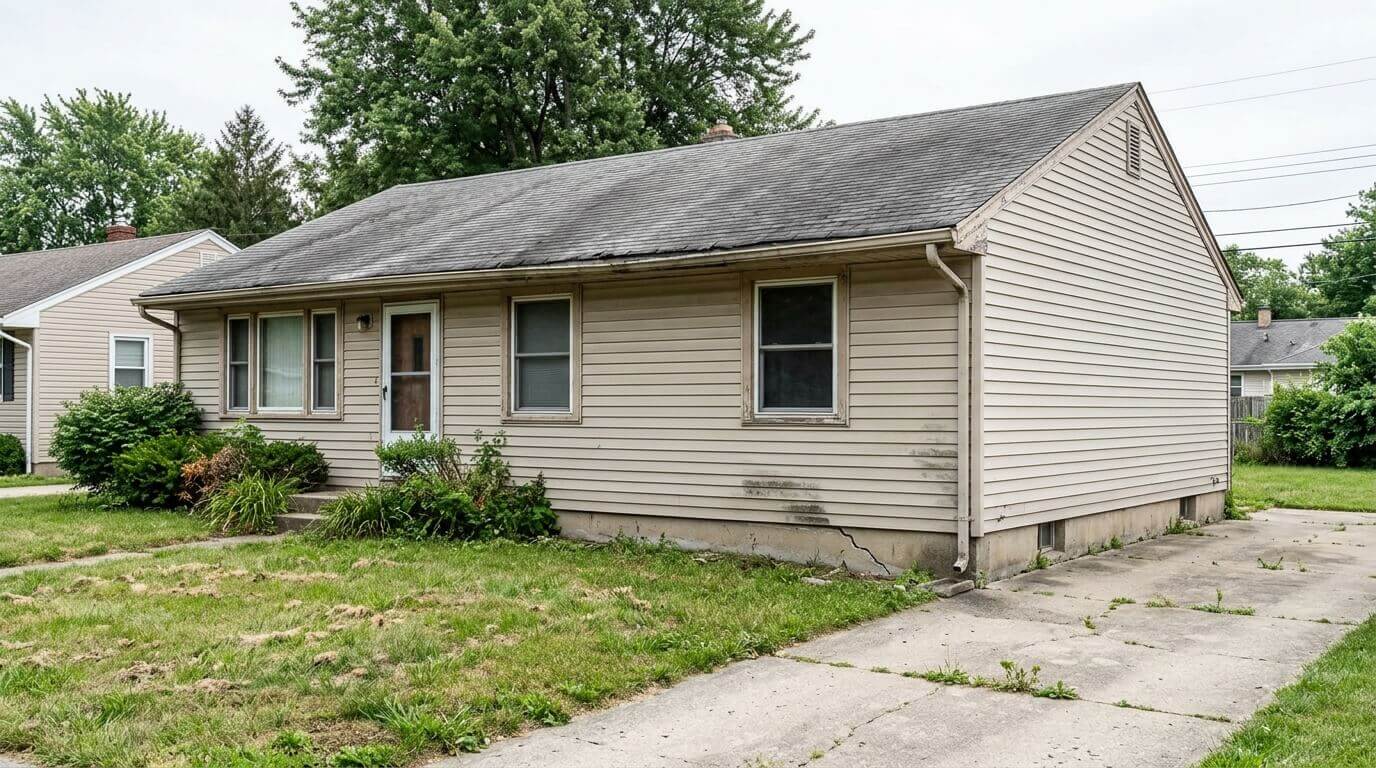
Most home-selling advice assumes a house needs a coat of paint and a tidy garage. But some sellers face bigger issues, such as a cracked foundation, an aging roof, or water damage that has led to mold. These problems affect who can buy the house, what lenders will approve, what sellers must disclose, and what the property is worth.
Houses with serious problems can still sell. The key is understanding the condition and comparing the available options before making a decision. This article explains how foundation, roof, and water damage can affect a sale and outlines three common ways to sell a property that needs major work.
Why Major Defects Are Different From Cosmetic Ones
A dated kitchen or worn carpet is usually a matter of preference. Buyers may accept these issues and update the property later. Major defects are different for three reasons.
They affect financing, not just appeal
Many buyers rely on mortgages, and lenders consider a property’s condition as well as its value. FHA and VA loans have minimum property requirements for safety, security, and soundness, so an active roof leak, serious foundation problem, or significant water damage may delay approval until the issue is addressed. Conventional lenders may also raise concerns about substantial defects.
As a result, a property with major problems may attract fewer financed buyers and more interest from cash buyers or people using renovation loans.
They carry disclosure obligations
Many states require sellers to disclose known material defects. Even where disclosure rules differ, concealing a known problem may expose a seller to legal claims after closing. Selling a property “as-is” does not automatically remove disclosure obligations.
Review your state’s disclosure requirements and consult a real estate attorney if you are unsure what must be reported.
They make repair costs uncertain
A buyer can estimate the cost of replacing flooring fairly easily. A foundation problem, however, may require a specialist to determine its cause and scope. Uncertainty can cause buyers to withdraw or submit lower offers to account for potential costs.
The Three Problems That Stall the Most Sales
Foundation and structural issues
Some hairline cracks are harmless, but stair-step cracks in brick or block, doors and windows that suddenly stick, sloping floors, and gaps where walls meet ceilings can indicate movement.
Repair costs vary depending on the cause and severity. Minor stabilization may cost a few thousand dollars, while extensive work involving piers or wall bracing can cost tens of thousands.
Before listing, consider obtaining a structural engineer’s written assessment. It can identify the likely cause, recommend further investigation if needed, and give buyers a clearer understanding of the work involved.
Roofs at the end of their life
An asphalt shingle roof may last around 20 to 30 years, depending on materials, installation, and climate. Curling shingles, granules collecting in gutters, damaged flashing, and active leaks may indicate that repairs or replacement are needed.
Roof condition can also affect insurance availability. Some insurers may be reluctant to cover a property with an old or damaged roof. Replacement costs vary by roof size, materials, location, and underlying damage.
A roofer’s written assessment can help establish whether a repair is sufficient or a replacement is more appropriate. Reviewing what to check before roof replacement can also help clarify the areas that may need inspection.
Water damage and mold
Water damage can make buyers worry about hidden problems. Ceiling stains, musty basements, warped flooring, and visible mold may indicate moisture that needs investigation.
The source is important. A plumbing leak repaired years ago is different from recurring basement flooding or an ongoing roof leak. If water damage has been repaired, keep invoices, photographs, inspection findings, and remediation records where available. These documents help explain what happened and what work was completed.
Your Three Main Options
Once you understand the problem, compare the available selling methods. Each involves a different balance of price, time, expense, and certainty.
Option 1: Repair before listing
Repairing the problem before listing may attract a wider pool of buyers, including those relying on mortgage financing, and may support a higher sale price. This option is worth considering when:
- The repair scope is clear and you have written estimates.
- You have the money or financing to cover the work.
- You can wait for repairs and marketing to be completed.
- Local property values support the investment.
Get at least two written estimates from qualified contractors and retain invoices, permits, warranties, and related documents. Buyers and inspectors may ask what was repaired and who completed the work.
Option 2: List as-is with a price adjustment or credit
If repairing the property first is impractical, you may be able to list it as-is, disclose known problems, and set a price that reflects its condition. Depending on the agreement, a seller may also negotiate a credit at closing.
This approach avoids managing extensive repairs before the sale, but it can involve longer negotiations and a smaller pool of buyers. Inspection findings may lead to additional requests if the extent of the problem was unclear.
Having reports and repair estimates available can reduce uncertainty. For more detail, see this guide to selling a home as-is.
Option 3: Sell to a cash buyer
Some investors and home-buying companies purchase properties in need of major repairs. A cash transaction may avoid certain lender-related condition requirements and can sometimes close faster than a conventional sale. The actual timeline depends on title checks, the contract, and the buyer’s ability to complete the purchase.
The trade-off is price. A buyer may account for repair expenses, holding costs, resale risks, and profit when calculating an offer. The amount may be lower than what a repaired property could sell for.
For sellers facing substantial repair costs, limited time, or a property they no longer occupy, comparing a cash offer with other options may still be useful. For example, a homeowner in Missouri could ask a St. Louis cash home buyer to assess the property and provide an offer. Wherever you are, compare more than one offer, confirm any fees or closing costs, and review the purchase agreement carefully before signing.
How to Compare Your Options Side by Side
Comparing estimated net proceeds is more useful than comparing sale prices alone. Consider this simplified example, which is illustrative rather than a quote for a specific property.
Imagine a home worth $250,000 in good condition that needs $30,000 in foundation and drainage work.
- Repair first: The home sells for about $250,000, less the $30,000 repair cost, applicable selling and closing costs, and the additional mortgage, tax, insurance, and utility expenses incurred while waiting for the work and sale.
- List as-is: A buyer might offer $205,000 to $215,000, depending on the property’s condition and local market, with selling costs and a potentially less predictable timeline.
- Cash sale: The offer may be lower, but the seller might avoid certain repair expenses, showings, or agent commissions, depending on the terms.
Use actual estimates and written offers to calculate your own figures. Include costs that are easy to overlook, such as ongoing property expenses, possible delays, and the risk of a transaction falling through.
A Simple Plan to Get Started
- Diagnose the problem. Obtain a written assessment from an appropriate specialist, such as a structural engineer, roofer, or water-damage professional.
- Gather estimates. Request at least two repair quotes from qualified contractors.
- Review disclosure duties. Complete the required state forms honestly and retain copies of relevant reports.
- Estimate the property’s value. Ask a local real estate professional to assess its likely value in repaired and current condition.
- Get a cash offer. Even if you do not accept it, an offer gives you another option to compare.
- Compare proceeds and timelines. Consider the likely amount you will receive, the time required, and the risks involved.
You can also review what to check when selling a house fast to help organize the financial and paperwork side of the transaction.
The Bottom Line
Selling a house with foundation, roof, or water problems can be more complicated, but it is still possible. Sellers can make better decisions by understanding the defects, documenting repairs, disclosing known issues, and comparing realistic costs and offers.
Repairing first, listing as-is, and accepting a cash offer each have advantages and trade-offs. A clear assessment and a comparison of net proceeds can help you choose the approach that best fits your budget and timeline.

