
Key Takeaways
- Low-maintenance Tampa Bay landscaping starts with choosing plants, turf, irrigation, and hardscape suited to Florida’s heat, humidity, heavy rainfall, and coastal conditions.
- Assess sunlight, soil, drainage, wind exposure, and existing features before selecting plants or redesigning the yard.
- Native, drought-tolerant, salt-tolerant, and shade-appropriate plants can reduce maintenance when matched to the conditions of each planting area.
- Reduce mowing by keeping turf where it serves a purpose and using mulched beds, ground covers, and defined planting areas elsewhere.
- Improve irrigation efficiency by checking sprinkler coverage, watering according to soil and plant needs, and adjusting schedules after rainfall and local restrictions.
- Address drainage problems early with appropriate grading, swales, soil improvements, or permeable surfaces to help prevent erosion and standing water.
- Prepare for storm season by clearing drains, inspecting trees and fences, securing outdoor items, and maintaining safe drainage paths.
- A balanced landscape with practical outdoor spaces, suitable plants, and a seasonal maintenance routine can preserve curb appeal without constant upkeep.
Tampa and Riverview homeowners need landscapes that can look polished through hot afternoons, humid summers, sudden downpours, and storm season. A thoughtful plan reduces unnecessary mowing, watering, and replacement planting while still creating an inviting outdoor space. Local providers such as Elite Eagle Landscaping understand that successful Tampa Bay landscapes must fit both the property and Florida’s demanding growing conditions.
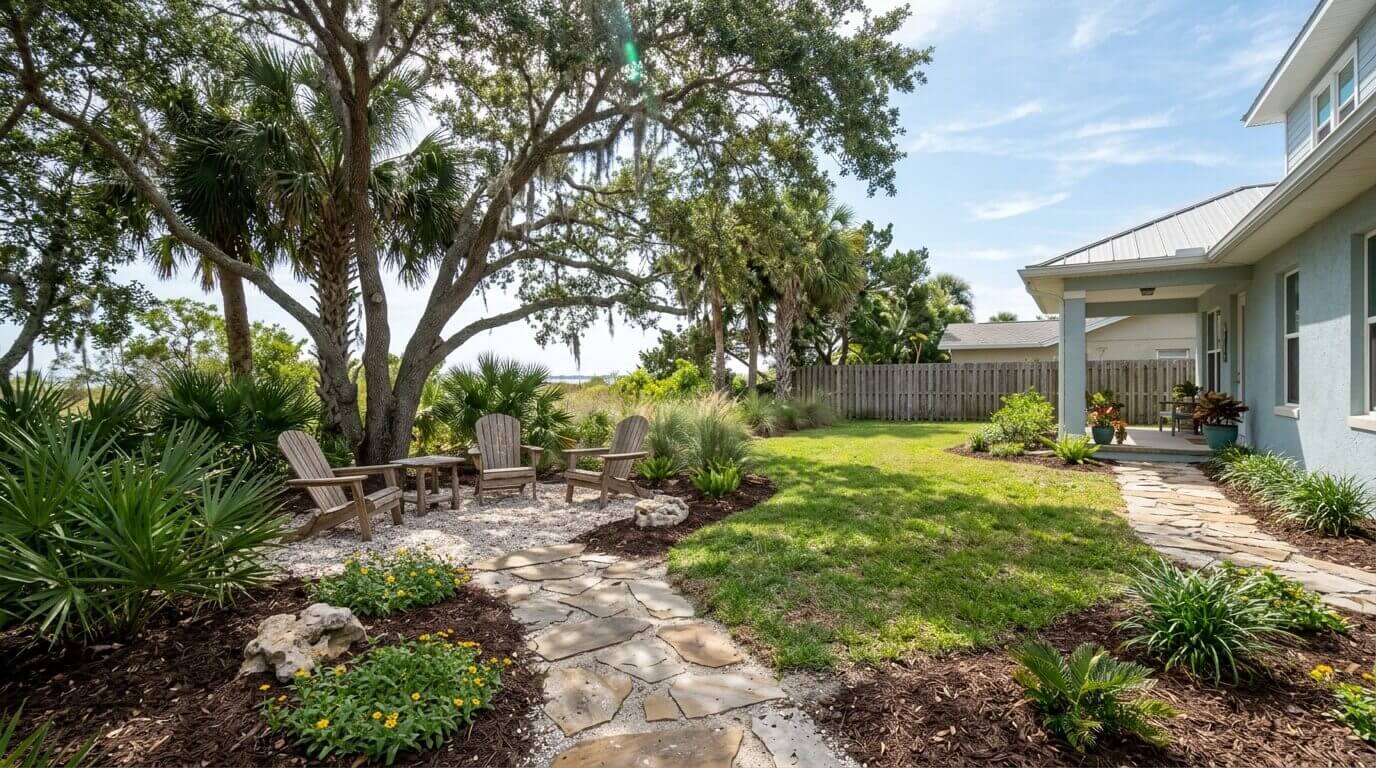
A low-maintenance coastal yard does not mean a bare yard. It means selecting the right turf, plants, mulch, irrigation approach, and hardscape so each part of the property has a practical purpose. Whether the home is in Riverview, Tampa, Apollo Beach, or another nearby community, the best results come from working with the climate rather than constantly fighting it. These low-maintenance backyard landscaping ideas can also help homeowners plan practical outdoor spaces with less ongoing work.
Why Coastal Yards Need a Different Plan
Properties around Tampa Bay often face a mix of intense sun, high humidity, sandy or disturbed soil, heavy rain, and, in more exposed locations, salt air. Soil may dry quickly in one bed while compacted ground near a driveway holds water after a storm. Humidity can also encourage lawn and plant disease when air circulation is poor or irrigation keeps foliage wet for too long.
Coastal planning is increasingly focused on using natural systems where they fit the site. For waterfront properties, Florida coastal resilience efforts have highlighted native vegetation and living shoreline approaches that can complement appropriate engineered protections. Most residential yards do not require a shoreline project, but they can still benefit from plant choices suited to local weather and water movement.
Start With a Simple Site Check
Before removing turf or buying plants, spend time observing the property. A simple site check can prevent the common mistake of putting a sun-loving shrub in deep shade or installing grass where water routinely collects.
- Mark areas that receive full sun, partial sun, and shade.
- Notice where puddles remain after a strong rain.
- Watch how water moves away from the home, patio, and driveway.
- Identify spots exposed to wind or salt spray.
- Locate utilities, mature trees, walkways, and property lines.
- Consider a soil test before applying fertilizer or amendments.
Choose Plants That Fit Florida Conditions
Plant selection should guide the design, not follow it. Choose plants based on their expected mature size, light needs, moisture needs, and tolerance for the conditions in that exact part of the yard. Grouping plants with similar watering requirements also makes irrigation easier to manage.
Plant Groups to Consider
- Native shrubs for structure, seasonal interest, and habitat value.
- Salt-tolerant selections for exposed waterfront or coastal locations.
- Drought-tolerant ground covers for difficult sunny areas.
- Shade-tolerant plants beneath established trees or beside buildings.
- Low-growing border plants that keep walkways clear.
- Ornamental grasses that add texture without requiring frequent shaping.
Reduce Lawn Work Without Losing Curb Appeal
Turf is useful for play areas, pets, and open gathering space, but every square foot of lawn also needs mowing, edging, and seasonal attention. Keep grass where it serves a purpose, then use mulched beds, ground covers, or well-defined planting areas in awkward corners, narrow side yards, and deeply shaded spaces. Homeowners can also explore these low-maintenance front yard landscaping ideas when deciding where grass is useful and where alternative ground covers may work better.
Clean edges make a smaller lawn look intentional. Mulch around trees and shrubs helps define beds, while simple borders can limit grass spread into planting areas. Avoid piling mulch against trunks or stems, as it can trap excess moisture against plant tissue.
Build a Smarter Watering Plan
Efficient irrigation is about responding to conditions, not watering on the same schedule every week of the year. In many landscapes, deep and less frequent watering supports deeper root growth when soil, turf type, and plant needs allow it. Watering early in the day can also reduce the time foliage stays wet.
- Inspect sprinkler heads for leaks, clogs, and overspray onto pavement.
- Confirm water reaches the root zone instead of only wetting the surface.
- Adjust irrigation after meaningful rainfall.
- Use drip irrigation where appropriate for beds and containers.
- Check plants and soil before adding water.
Watering restrictions can vary by location and may change, so homeowners should check current county or municipal guidance before adjusting an irrigation schedule.
Improve Drainage and Soil Health
Sandy soil can drain quickly, yet low or compacted areas may still hold water. Warning signs include recurring puddles, washed-out mulch, thin turf in the same location, exposed roots, algae, and repeated plant loss. These problems are often easier to address before a new landscape installation.
Possible solutions include adding compost where appropriate, improving grading, creating a shallow swale, using permeable materials, or planting moisture-tolerant species in wet areas. Major drainage work should be carefully evaluated to ensure it does not direct water toward a home or neighboring property. Driveway and yard layouts should also account for runoff, as explained in this guide to smart driveway planning.
Use Hardscape to Lower Maintenance
Paths, patios, seating areas, and gravel sections can make a yard more functional while reducing the lawn that needs weekly work. Plan hardscape with drainage in mind. Surfaces should be stable for walking after rain, allow enough room for surrounding plants, and direct water away from structures.
A balanced design is important. Too much pavement can increase heat and runoff, while a mix of usable surfaces, shade, planting beds, and open space usually feels more comfortable in the Tampa Bay climate.
Prepare the Yard for Storm Season
Routine maintenance before storm season can reduce preventable yard damage. Remove dead or weak branches, clear leaves from drains and low points, inspect downspouts, and secure pots, furniture, umbrellas, and decorations. Check gates, fences, edging, and loose pavers before high winds arrive.
Waterfront homeowners should avoid disturbing dunes or coastal vegetation without proper direction. Local projects may follow guidance for protecting coastal dunes, as these natural features help stabilize coastal areas and support native habitats.
Follow a Seasonal Maintenance Checklist
Spring and Early Summer
- Inspect irrigation and refresh thin mulch.
- Check plants for pest damage or disease symptoms.
- Trim shrubs before they crowd paths and windows.
Summer Through Winter
- Watch for heat stress, storm debris, and drainage issues.
- Mow at a suitable height for the grass type.
- Reduce irrigation when weather is cooler or naturally wetter.
- Replace failed plants and plan major changes before the next growing season.
Avoid Common Landscaping Mistakes
Common problems include choosing plants only for appearance, watering by the calendar, installing turf in deep shade, ignoring small irrigation leaks, planting trees too close to structures, and adding hardscape without considering runoff. A simpler plant palette, clear bed lines, appropriate irrigation, and a seasonal care routine can prevent much of this extra work.
A successful Tampa or Riverview yard is not the one with the most plants or the largest lawn. It is the one that fits the property, handles Florida weather, and remains enjoyable without demanding constant attention.

