
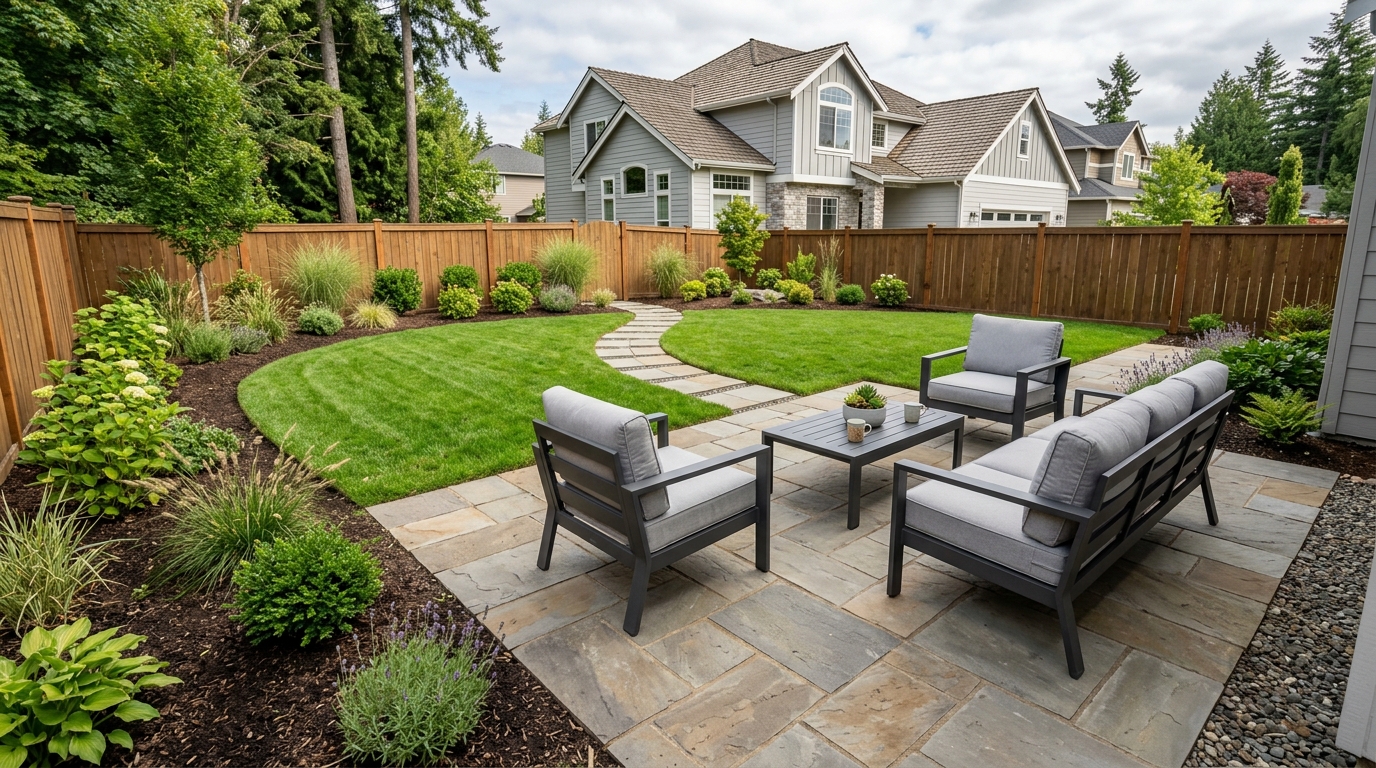
Key Takeaways
- Plan around how your household will use the yard before choosing plants or materials.
- Map sun, shade, drainage, and slopes so the design works with the site.
- Use the lawn where it provides useful open space, not in narrow or difficult-to-mow strips.
- Choose durable surfaces, manageable plantings, and practical storage from the start.
- Address drainage, irrigation, and lighting early, then build larger improvements in phases if needed.
Low-maintenance backyard landscaping can make an outdoor space more comfortable, practical, and easier to care for throughout the year. A well-planned backyard can support everyday activities such as morning coffee, family dinners, children’s play, gardening, or quiet time outdoors without creating unnecessary maintenance.
Thoughtful backyard hardscaping can establish durable gathering areas, improve circulation, and reduce the work required to keep the property looking well-cared for. The key is to create a landscape where every lawn area, planting bed, patio, and outdoor feature has a clear purpose.
In Northern Virginia, a backyard often needs to withstand warm, humid summers, periods of heavy rain, the shade of mature trees, and active use year-round. By considering sun exposure, drainage, plant selection, lawn placement, hardscape materials, and outdoor comfort from the beginning, homeowners can create a backyard that looks inviting without becoming difficult to maintain.
Why Low-Maintenance Design Is Worth Planning
A yard designed only for appearance can create a long list of recurring chores: edging tiny turf areas, pruning plants that have outgrown their space, moving furniture across muddy ground, and repairing surfaces affected by runoff. A practical layout reduces those friction points. It also makes the backyard more likely to be used on ordinary weekdays instead of only for special occasions.
Low maintenance does not mean removing all personality. Evergreen shrubs can provide structure, flowering perennials can add seasonal interest, and a simple patio can become an inviting outdoor room. The goal is to use a smaller number of well-chosen elements that suit the property and remain realistic to maintain.
Start With How the Space Should Work
Before choosing pavers, furniture, or plants, identify the three primary uses for the space, which may vary among households, such as dining, children’s play, or dog access for one and a quiet sitting area, raised beds, or hosting friends for another.Some families may prioritize open lawns, shaded areas, secure storage, and seating over ornamental gardens, while others may want to reserve a manageable section for starting a backyard vegetable garden. Begin by sketching the backyard layout, dedicating specific zones for each intended use. Ensure the main seating or dining area is conveniently located near the house. By reserving open areas for games, pets, or gatherings, this planning process avoids the common pitfall of placing attractive features that ultimately hinder daily routines and compete for space.
Study Sun, Soil, and Water Before Building
Spend time observing the site before making permanent decisions. Note which areas receive morning or afternoon sun, where tree shade remains longest, and where water gathers after a heavy rain. Also identify slopes, compacted soil, exposed roots, utility access, and established trees worth protecting.
Site conditions can change within a single backyard, particularly where a patio, lawn, and tree-covered edge meet. The water-smart landscaping principles recommended by the EPA emphasize matching plants to local conditions, supporting healthy soil, and grouping plants with similar water needs. Those steps can reduce avoidable plant losses and simplify watering.
Choose Plants and Lawn Areas With Purpose
Favor native or climate-adapted plants that fit the available light, soil moisture, and mature space, and consider these low-maintenance landscaping strategies when deciding which areas of the yard should use plants, mulch, or hardscape. Combine shrubs or evergreens for year-round structure with perennials and ornamental grasses for texture and seasonal color. Avoid filling every open spot, especially areas that are difficult to reach for weeding or pruning.
Lawn still has a role when it supports play, pets, or an informal gathering space. The better approach is to remove awkward strips along fences, tight corners, and small isolated patches that require more trimming than mowing. Replace those areas with mulched beds, ground covers, or a path. Clear borders between turf and planting beds make both mowing and edging more manageable.
Select Hardscape Materials That Handle Daily Use
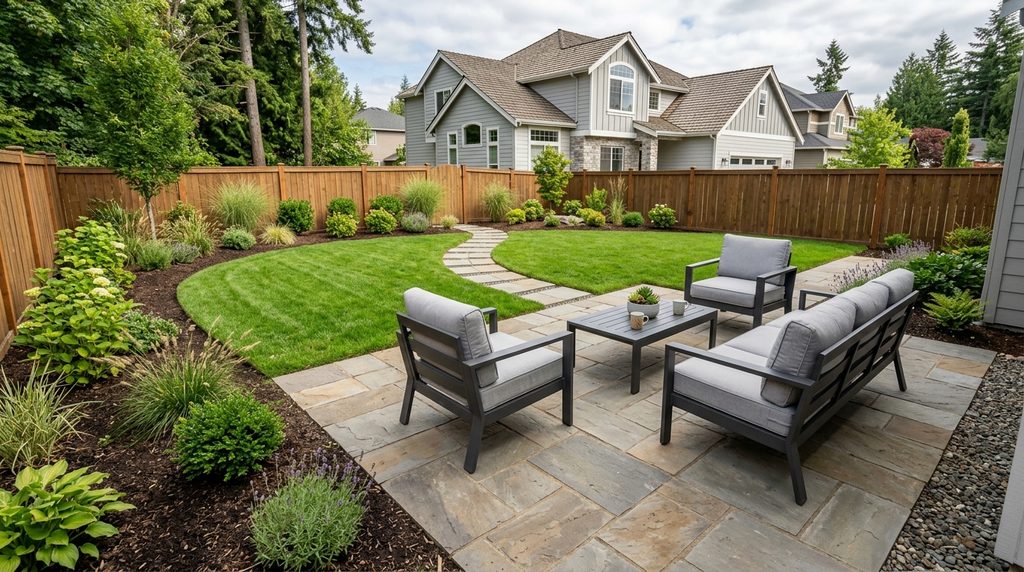
Patios, walkways, steps, retaining walls, and seating areas should be selected for comfort as well as appearance. Choose a surface appropriate for expected foot traffic, prioritize slip resistance near wet areas, and limit the design to a cohesive material palette. A patio should be large enough for its intended furniture, plus room to walk around chairs and tables.
Where site conditions allow, permeable materials can help rainwater soak into the ground rather than quickly moving across a hard surface. Keep edges simple to sweep, mow beside, and repair, especially when combining pathways, planting beds, and other landscaping ideas for managing drainage and lawn maintenance. If a future grill, lighting system, or outdoor kitchen is possible, consider utility lines and access routes before installing permanent surfaces.
Build Comfort Into the Layout
A beautiful backyard will see limited use if it lacks shade, storage, or easy circulation. Add shade near places where people sit and eat, using a tree canopy, an umbrella, a pergola, or another suitable structure. Position seating to create a view and give people a clear route from the home to the yard.
Storage is equally important. A weather-resistant bench, cabinet, or designated shed area can hold cushions, toys, garden tools, and cooking supplies. Wind screening can improve comfort, but leave enough openness for air movement. One or two high-use features, such as a patio and shade structure, usually provide more value than a yard crowded with features that need constant care.
Plan Lighting, Drainage, and Irrigation Early
Lighting should prioritize main paths and cooking areas, adding subtle accent illumination to guide movement without glare, much like the outdoor lighting approaches used for patios and landscape accents. Timers can optimize usage. Drainage management is crucial; redirect runoff, check downspouts, and use mulch for absorption. In certain locations, swales and rain gardens may be beneficial, while standing water or erosion issues require professional assessment. Irrigation must align with plant needs, be zoned by type, and include regular leak inspections and schedule adjustments based on weather. The EPA’s guidance for smarter watering also recommends directing sprinklers onto landscaping rather than pavement and using microirrigation where it suits gardens, trees, and shrubs.

