
Key Takeaways
- Put personal safety ahead of cleanup, especially around electricity, sagging ceilings, and contaminated water.
- Stop the source only if the shutoff or appliance can be reached without entering a hazardous area.
- Photograph damage before discarding items or beginning major cleanup work.
- Visible water is only part of the problem. Floors, walls, and contents may hold hidden moisture.
- Sewage, outdoor floodwater, major leaks, and structural concerns usually call for trained help.
- Keep receipts, notes, photos, and communications related to emergency work and insurance.
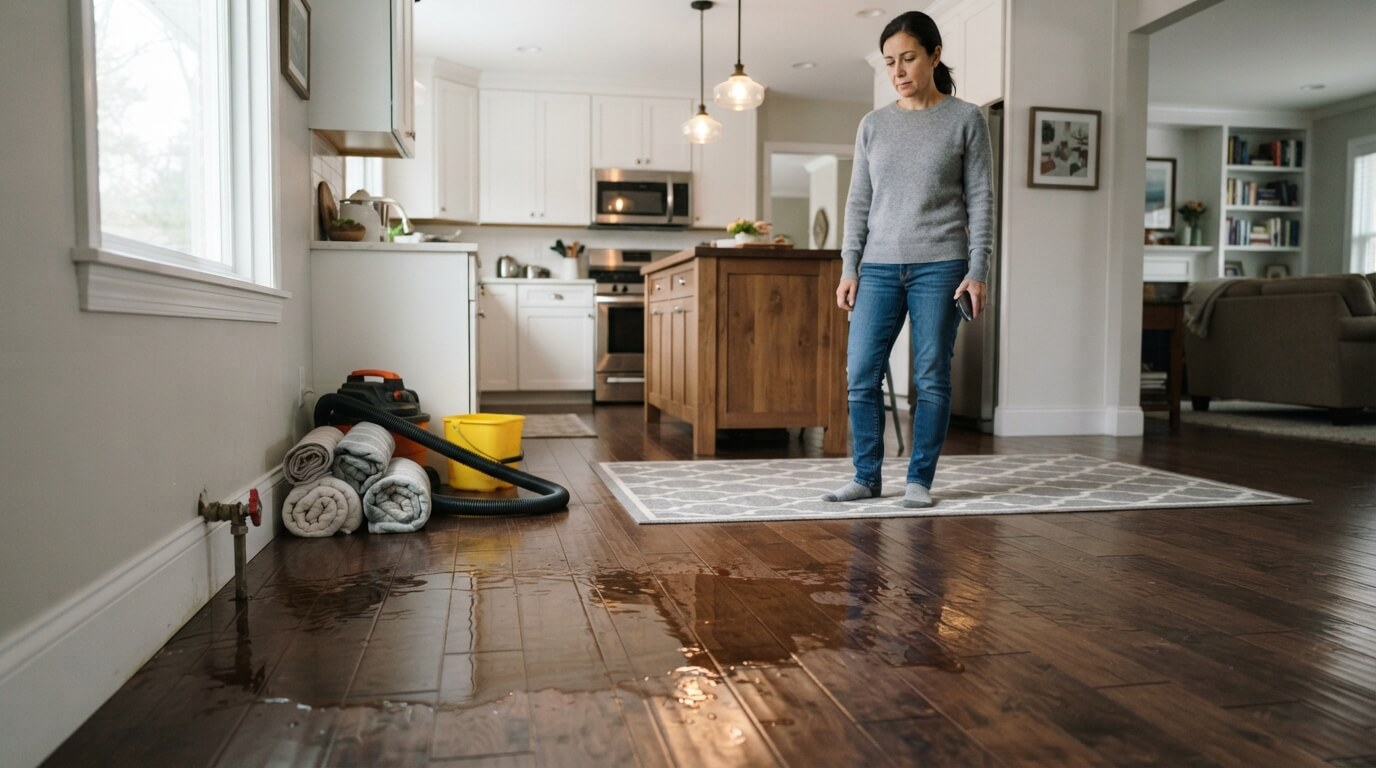
A water damage emergency response can begin with a burst pipe, water from a failed appliance, or storm-driven rain entering a basement, and the first few decisions can affect how much damage develops. The first day is not about restoring every surface to normal. It is about protecting people, stopping further damage when it is safe, and starting a careful recovery process.
For local support with extraction and drying, visit here after immediate safety concerns have been addressed.
Water can travel beneath flooring, behind baseboards, through insulation, and into cabinets or wall cavities. A calm, methodical response can help homeowners and property managers document conditions, preserve information for an insurance claim, and reduce the chance that trapped moisture leads to additional damage.
Why the First Day Matters
Water does not always remain where it first appears. It may seep into carpet padding, subfloors, drywall, insulation, and the space beneath kitchen or bathroom cabinets. Prompt action can reduce the spread, but rushing into an unsafe space can make an emergency worse.
- First 15 minutes: Look for electrical, structural, gas, and contamination hazards.
- First hour: Stop the source if safe, move dry valuables away from the area, and record the damage.
- First 24 hours: Begin appropriate water removal, drying, cleaning, and claim documentation.
Check for Danger Before Entering
Do not walk through standing water near outlets, extension cords, appliances, or an electrical panel. If the panel is wet or can only be reached by entering water, leave it alone and seek qualified help.
Also watch for sagging ceilings, soft flooring, broken glass, strong odors, or signs of a gas leak. Keep children, pets, and anyone with respiratory concerns away from the affected area until it is safe.
Stop the Water Source
If it can be done safely, close the valve serving a leaking toilet, washing machine, dishwasher, or sink. For a burst supply line, the main water shutoff may be necessary.
Do not climb onto a wet roof during a storm, enter a damaged ceiling area, or attempt plumbing repairs near energized equipment. If the source remains active and cannot be reached safely, leave the area and review the signs of emergency plumbing problems that require prompt professional attention.
Document the Damage
Before moving large belongings or throwing anything away, take wide photos of each room and close-up images of the waterline, suspected source, damaged materials, and personal property.
Record the date and time of discovery, rooms affected, steps taken, emergency calls, and items moved or discarded. Save receipts for supplies, temporary repairs, lodging, and cleanup services.
This documentation can provide a useful record when discussing the loss with an insurer or contractor.
Identify the Type of Water
Water from a clean supply pipe presents different concerns than water that has passed through a drain, toilet, washing machine, soil, or sewage system.
Treat sewage and outdoor floodwater as contaminated. Avoid bare-hand contact, keep the area isolated, and do not use household fans that could spread pollutants through the home.
The EPA outlines hazards, protective measures, and safer cleanup steps for flooded homes with contaminated water.
Remove Standing Water Carefully
Small amounts of clean water may be manageable with appropriate equipment if there is no electrical or structural hazard. Do not use an ordinary household vacuum to collect water.
A wet/dry vacuum is different, but it should only be used according to its instructions and in a safe area.
Large losses can require pumps, extraction equipment, and moisture checks because water may already be beneath the flooring or inside wall assemblies.
Dry the Home and Contents
Wiping the floor dry does not confirm that the structure is dry.
Open doors and windows when conditions allow, use dehumidification and controlled air movement where appropriate, and monitor materials regularly. Wet drywall, carpet padding, insulation, cabinetry, and porous belongings may not always be salvageable.
Guidance for cleaning mold and drying affected materials stresses correcting the moisture problem and drying items completely before cosmetic repairs, such as painting.
Do not cover damp materials with paint or new finishes simply to hide visible stains. Moisture needs to be addressed first.
Contact the Insurance Company
Report the loss promptly, then ask what information, photos, estimates, and receipts are needed.
Coverage depends on the cause of damage, the policy language, deductibles, exclusions, and optional endorsements. A burst pipe, sewer backup, sump pump failure, groundwater event, and regional storm flooding may be handled differently.
Avoid assuming coverage, and do not authorize unnecessary permanent repairs before understanding the claim process, unless emergency work is needed to prevent additional damage.
Mistakes That Can Make Damage Worse
- Entering water near electrical equipment or a wet breaker panel.
- Using a regular vacuum to remove water.
- Cutting into a sagging ceiling or moving furniture across a weakened floor.
- Running fans before determining whether sewage or floodwater is involved.
- Throwing out damaged property before photographing and listing it.
- Painting over stains or musty materials before they are cleaned and dry.
- Mixing cleaning products or ignoring product safety directions.
When to Call for Professional Help
Professional assistance is a sensible choice when the water source is unknown or active, water is near electrical systems, several rooms are affected, or ceilings, walls, insulation, cabinets, and flooring are saturated.
Call for help when sewage, outdoor floodwater, strong odors, visible mold, suspected structural damage, or unsafe entry conditions are involved.
Professional drying can also be valuable when moisture may be concealed behind finished surfaces, while non-invasive plumbing repair methods may be relevant when the underlying problem involves certain buried or hard-to-access pipes.
The appropriate type of professional depends on the source and extent of the damage. Plumbing problems may require a licensed plumber, while electrical hazards, structural concerns, contaminated water, or extensive moisture may require other qualified specialists.
Prepare for Future Water Problems
Once recovery is complete, use the experience to strengthen your home emergency plan before the next heavy rain, freeze, or appliance failure.
Test the main water shutoff so household members know how it works. Inspect supply hoses and the areas beneath sinks, keep gutters and downspouts clear, test sump pumps before wet weather, and store important documents and valuables above basement floors.
Review insurance options before an emergency, not after one. It can also help to keep the locations of the main water shutoff, electrical panel, gas shutoff, and important utility contacts written down somewhere accessible.
Conclusion
The first 24 hours after water damage can influence the entire recovery process.
Focus on safety first, stop the source only when safe, document the conditions thoroughly, and begin appropriate drying as soon as possible. When contamination, electricity, structural instability, or extensive moisture is involved, qualified help can reduce the risks associated with cleanup and hidden moisture.
A clear response plan also makes it easier to distinguish between what can be handled safely at home and what requires professional assessment.

