
You cooked a big pot of spaghetti last night, and now there’s half of it sitting in the fridge. You’re wondering: is this still good? Can I eat it tomorrow? What about the day after that?
It’s a question almost everyone has faced. And honestly, getting the answer wrong can lead to a wasted meal — or worse, a stomachache you didn’t see coming.
This guide breaks down everything you need to know about storing spaghetti safely. Whether it’s plain pasta, spaghetti with meat sauce, leftovers with ground beef, or a whole pot you forgot to transfer — you’ll know exactly what to do after reading this.
How Long Is Spaghetti Good for in the Fridge?
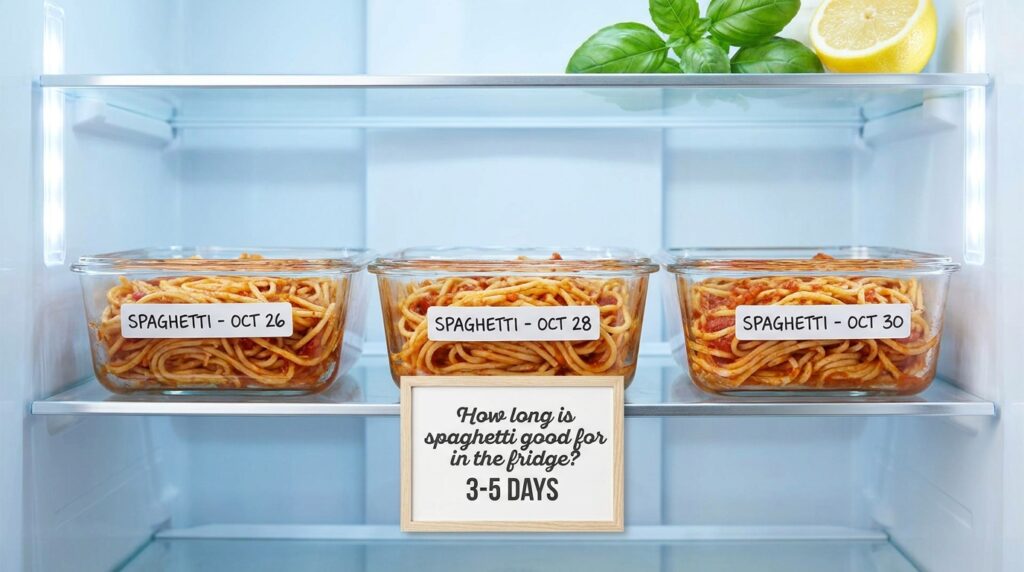
The short answer: cooked spaghetti lasts 3 to 5 days in the refrigerator when stored properly. That window applies to plain, cooked pasta stored in an airtight container at or below 40°F (4°C).
The USDA food safety guidelines confirm that most cooked foods — including pasta — fall into this 3–5 day safe zone. After that point, bacterial growth becomes a real concern, even if the pasta doesn’t smell bad yet.
Here’s a quick reference table:
| Type of Spaghetti | Fridge Life |
|---|---|
| Plain cooked spaghetti | 3–5 days |
| Spaghetti with tomato sauce | 3–5 days |
| Spaghetti with meat sauce | 3–4 days |
| Spaghetti with ground beef | 3–4 days |
| Spaghetti in a pot (covered) | 2–3 days |
| Spaghetti with cream sauce | 2–3 days |
The exact shelf life depends on a few key things: what’s mixed in with the pasta, how it was stored, and how quickly it was refrigerated after cooking.
How Long Is Spaghetti Good for in the Fridge After Cooking?
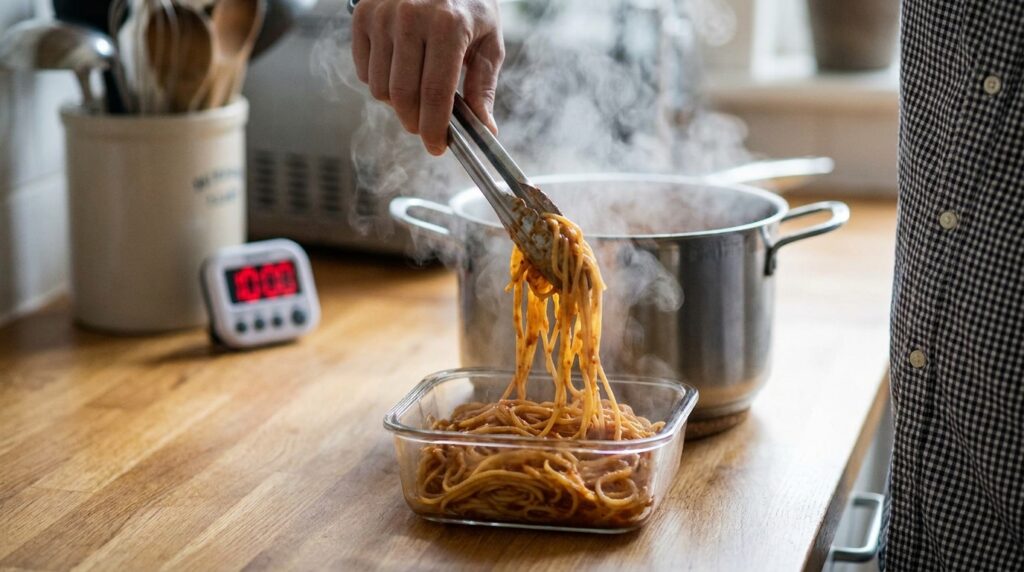
The clock starts the moment your pasta finishes cooking. How long is spaghetti good for in the fridge after cooking comes down to one critical factor: how fast it was cooled and stored.
Food safety experts recommend that cooked foods should not sit out at room temperature for more than 2 hours. If your kitchen is especially warm (above 90°F), that window drops to just 1 hour.
Why? Because bacteria like Salmonella, Listeria, and Staphylococcus aureus thrive between 40°F and 140°F — what food scientists call the “danger zone.”
So if you cooked spaghetti at 7 PM and it sat on the counter until 10 PM, it’s already at higher risk — even before it goes in the fridge.
Best Practice After Cooking:
- Let the pasta cool for no more than 30 minutes at room temperature.
- Transfer it into shallow, airtight containers to speed up chilling.
- Place it in the fridge within 2 hours of cooking.
- Use within 3–5 days.
Stored correctly, plain cooked spaghetti after cooking will stay safe and tasty for up to 5 days.
How Long Is Spaghetti Good for in the Fridge with Sauce?
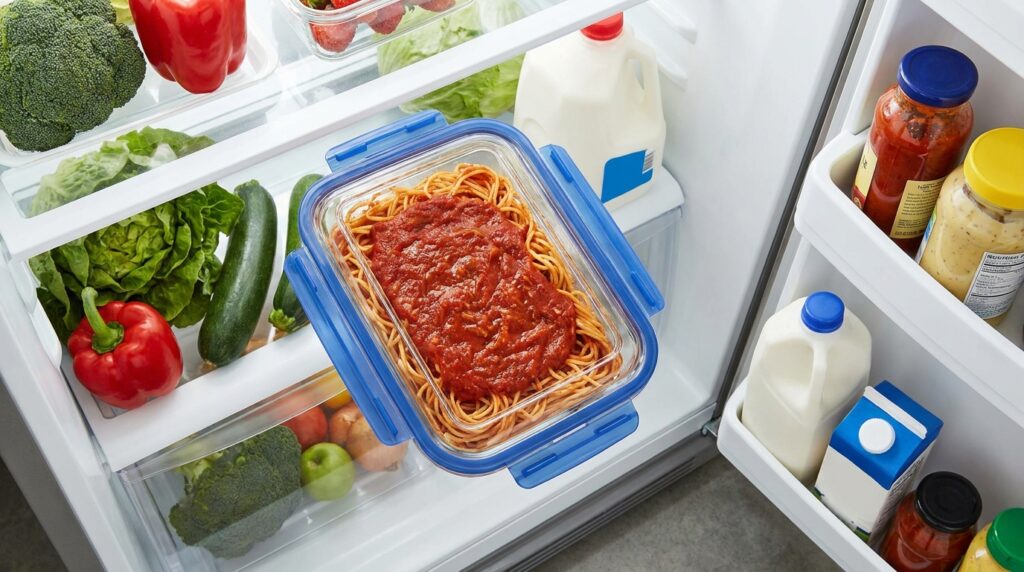
Wondering how long is spaghetti good for in the fridge with sauce? The answer is still within the 3 to 5 day window, but there’s a nuance worth knowing.
Tomato-based sauces are acidic, which actually helps slow bacterial growth to a small degree. But it doesn’t eliminate the risk. After day 5, the pasta starts to break down, absorb too much moisture from the sauce, and the quality takes a real nosedive.
Here’s what happens when pasta sits in sauce too long:
- Day 1–2: Tastes nearly as good as fresh. Pasta absorbs sauce flavors nicely.
- Day 3–4: Still safe to eat. Pasta is softer but reheats well.
- Day 5: Borderline. Use your senses — smell, look, and taste carefully.
- Day 6+: Toss it. The risk of spoilage outweighs the savings.
Pro tip: If you can, store your pasta and sauce separately. This keeps the pasta from going mushy and extends the quality — even if the safety window stays the same.
How Long Is Spaghetti Good for in the Fridge with Meat Sauce?
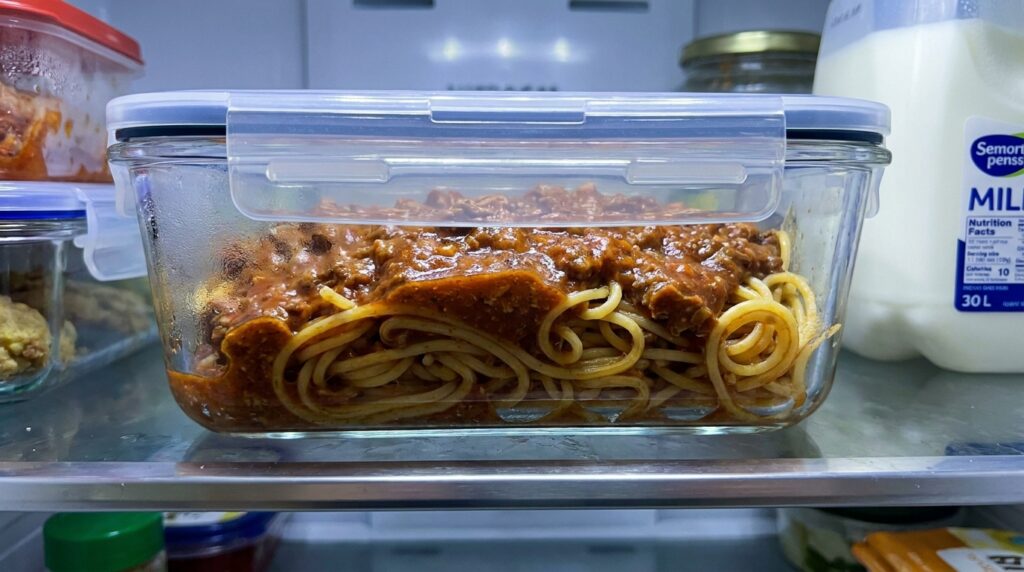
This is one of the most common leftover combinations — and one of the most important to get right.
How long is spaghetti good for in the fridge with meat sauce? The answer: 3 to 4 days — slightly shorter than plain pasta.
The reason is simple: meat introduces a higher risk of bacterial contamination compared to plain pasta or even tomato sauce alone. Ground beef, sausage, and other proteins are prime environments for bacteria if temperatures fluctuate at all.
The CDC notes that improperly stored meat-based leftovers are among the leading causes of food poisoning at home.
Signs Your Meat Sauce Spaghetti Has Gone Bad:
- Sour or “off” smell — not just a strong tomato smell, but something sharp or rotten
- Discoloration — grayish meat or greenish tinge on pasta
- Slimy texture — pasta or sauce feels unusually slick
- Mold — visible fuzzy growth (toss it immediately)
When in doubt, the classic rule applies: when in doubt, throw it out.
How Long Is Spaghetti Good for in the Fridge with Meat?
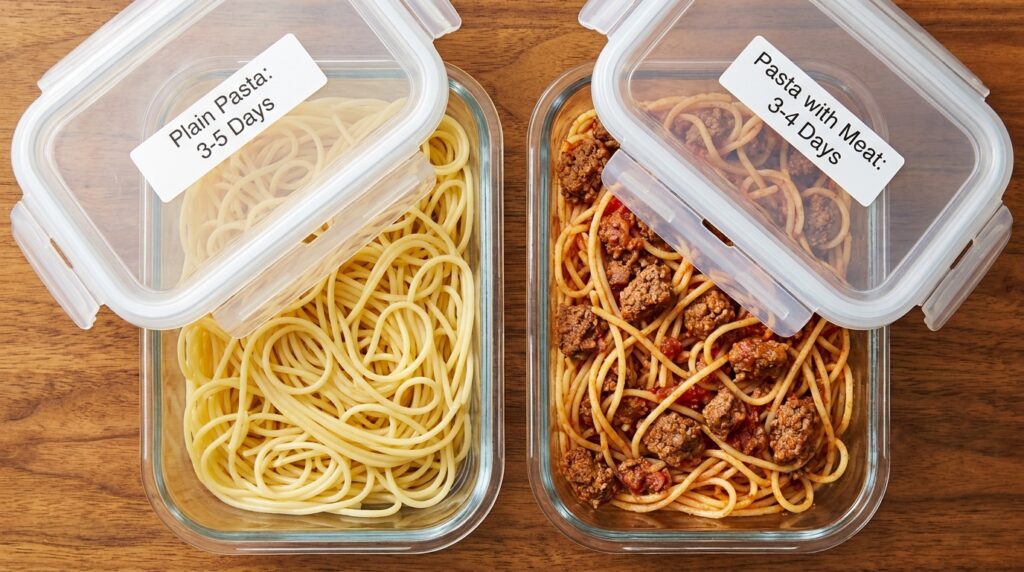
Whether it’s ground beef, Italian sausage, turkey meatballs, or chicken, mixing protein into your spaghetti shortens the safe storage window.
How long is spaghetti good for in the fridge with meat follows the same 3–4 day rule as meat sauce. The protein component is the determining factor here.
Different meats, same rule:
| Protein Added | Fridge Life |
|---|---|
| Ground beef | 3–4 days |
| Italian sausage | 3–4 days |
| Chicken | 3–4 days |
| Turkey | 3–4 days |
| Meatballs | 3–4 days |
Important: These timelines assume the meat was fully cooked before being combined with the pasta and that the entire dish was stored within 2 hours of cooking.
If you’re reheating spaghetti with meat, always heat it to an internal temperature of 165°F (74°C) before eating. This kills any bacteria that may have grown during storage.
How Long Is Spaghetti Good for in the Fridge with Ground Beef?
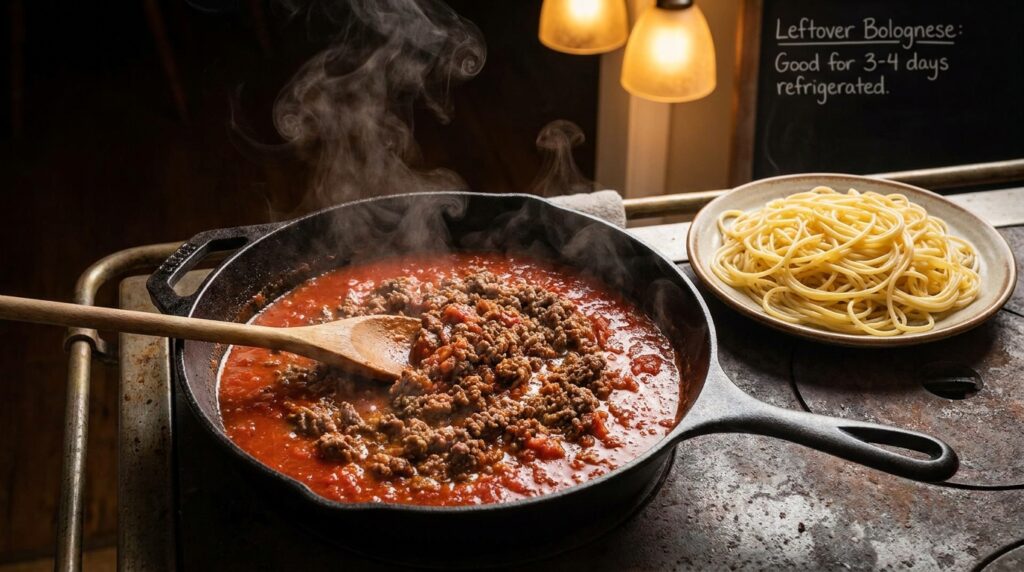
Ground beef is one of the most popular proteins for pasta dishes — from classic Bolognese to simple meat sauce. And how long is spaghetti good for in the fridge with ground beef is a question worth knowing the clear answer to.
The safe window: 3 to 4 days in the refrigerator.
Ground beef has a larger surface area than whole cuts of meat, which makes it more susceptible to bacterial growth. This is why ground beef on its own only lasts 1–2 days in the fridge — but once it’s fully cooked and mixed into a sauce, it extends slightly to that 3–4 day range.
Quick Ground Beef Pasta Storage Checklist:
- Fully cook ground beef to 160°F before mixing with pasta
- Cool the finished dish within 2 hours of cooking
- Store in an airtight container
- Refrigerate at or below 40°F
- Use within 3–4 days
- Reheat to 165°F before eating
How Long Is Spaghetti Good for in the Fridge in a Pot?
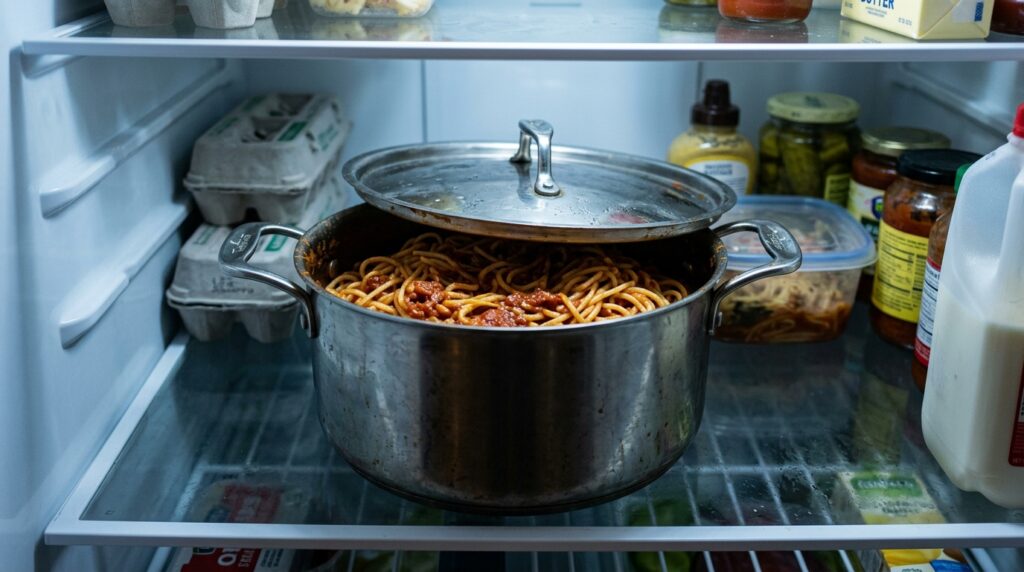
Let’s be honest — sometimes after a long dinner, nobody wants to deal with transferring everything into smaller containers. The pot goes straight into the fridge. It happens.
But how long is spaghetti good for in the fridge in a pot? The answer is a bit shorter: 2 to 3 days, rather than the full 3–5 days.
Here’s why:
- Pots don’t seal airtight. Even with a lid, there are tiny gaps. Air exposure speeds up drying and bacterial growth.
- Large volumes cool slower. A full pot of pasta takes much longer to reach safe fridge temperatures than a thin layer in a container, giving bacteria more time to grow.
- Condensation builds. The moisture from the hot pasta collects under the lid and drips back in, creating a wetter environment that promotes spoilage.
If you absolutely must store pasta in a pot, make sure it’s cooled as much as possible before refrigerating — and plan to eat it within 2 days for best safety.
Better alternative: Transfer spaghetti into flat, shallow airtight containers. It cools faster and lasts longer.
How Long Is Pasta Good for in the Fridge?
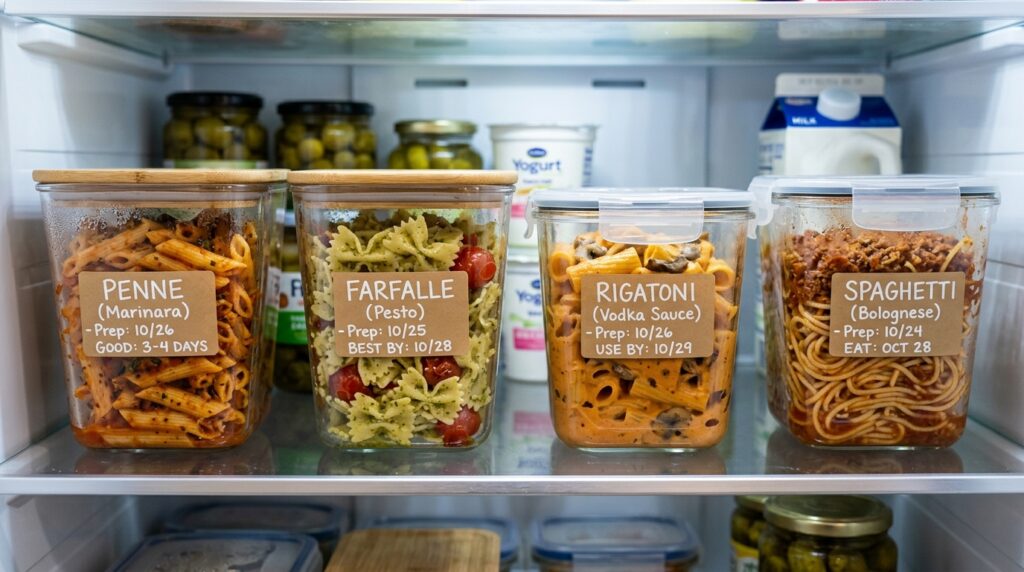
While this guide focuses on spaghetti, the principles apply to all pasta shapes. How long is pasta good for in the fridge really comes down to one consistent answer: 3 to 5 days for plain cooked pasta.
The shape doesn’t change the safety timeline much. Penne, rigatoni, fusilli, linguine — they all follow the same rule.
What does change the timeline:
| Factor | Impact on Shelf Life |
|---|---|
| Added protein (meat, seafood) | Shortens to 3–4 days |
| Cream-based sauce | Shortens to 2–3 days |
| Oil-dressed pasta | 3–5 days |
| Plain pasta, no sauce | 3–5 days |
| Pasta salad (acidic dressing) | 3–5 days |
Note on dry pasta: Uncooked dry pasta in a sealed package lasts up to 2 years in the pantry. Once opened and stored properly, it stays good for about 1 year. There’s no need to refrigerate dry pasta.
Proper Storage Tips for Leftover Spaghetti
Knowing the safe window is only half the battle. How you store the pasta matters just as much as when you eat it.
Use the Right Container
The best containers for leftover spaghetti are:
- Glass containers with airtight lids — don’t absorb odors, easy to see contents
- BPA-free plastic containers — lightweight and space-efficient
- Zip-lock bags — great for flat storage, squeeze out excess air
Avoid storing spaghetti in the pot it was cooked in, or loosely covered with plastic wrap. Both options allow too much air contact.
Cool Before You Refrigerate
Never put a steaming pot of pasta directly into the fridge. The heat raises the internal temperature of the refrigerator, putting other foods at risk. Let the pasta cool for 20–30 minutes at room temperature first — but no longer than 2 hours total.
Separate Sauce from Pasta When Possible
Mixing pasta and sauce before storing leads to soggy, overcooked pasta by day 2. If you have the chance, store them separately and combine only when reheating. Your future self will thank you.
Label Your Containers
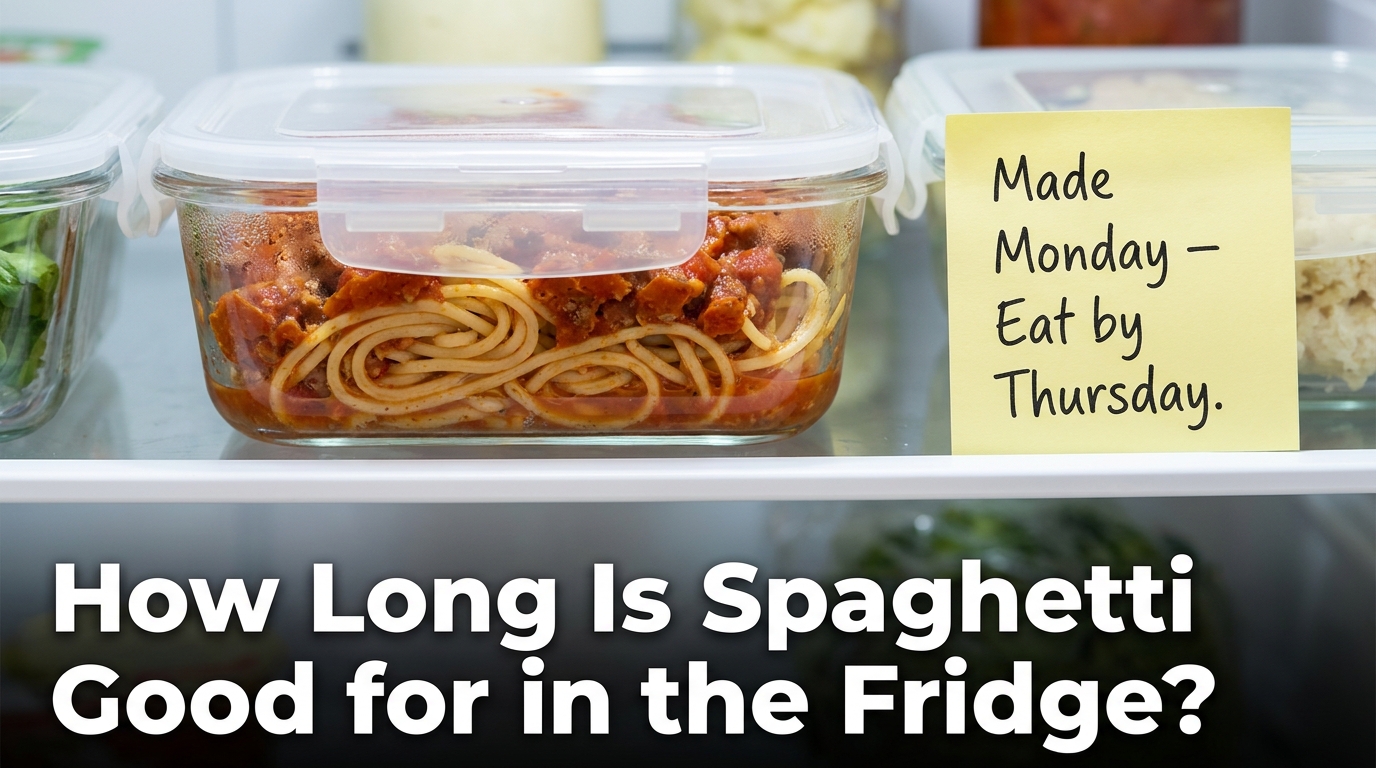
It sounds simple, but labeling containers with the date you made the food is a game-changer. A piece of tape and a marker is all you need. “Made Monday” or “Use by Thursday” eliminates guesswork entirely.
How to Tell If Leftover Spaghetti Has Gone Bad
Even within the 3–5 day window, spaghetti can go bad if it wasn’t stored correctly. Here are the clear warning signs to watch for:
1. Smell
This is your first and most reliable indicator. Fresh leftover pasta smells like pasta. Spoiled pasta smells sour, musty, or just plain “off.” Trust your nose.
2. Texture
Good leftover pasta is soft but cohesive. Spoiled pasta often feels slimy or unusually wet, even after draining.
3. Color
Look for discoloration — grayish meat, yellowing pasta, or any green/black spots that indicate mold.
4. Mold
Visible mold means the entire container should be tossed. Don’t try to scoop around it. Mold spreads invisibly through food.
5. Taste
If everything else seems fine but the first bite tastes sour or off, don’t continue eating. Stop and discard.
Can You Freeze Leftover Spaghetti?
Yes — and it’s a great option if you’ve made a large batch. Freezing cooked pasta extends the shelf life to 2–3 months while maintaining good quality.
How to freeze spaghetti correctly:
- Cool completely before freezing — never freeze hot food.
- Portion into serving sizes — freeze what you’ll eat at one time, not one giant block.
- Use freezer-safe bags or containers — regular zip-lock bags work if you press out air; freezer bags are better for long-term storage.
- Lay flat in the freezer — this helps the pasta freeze evenly and takes up less space.
- Label with date — use within 2–3 months for best quality.
Freezing tips by type:
| Spaghetti Type | Freezer Life |
|---|---|
| Plain pasta | 1–2 months (quality drops faster) |
| Pasta with tomato sauce | 2–3 months |
| Pasta with meat sauce | 2–3 months |
| Pasta with cream sauce | 1–2 months (cream sauces separate) |
To thaw: Move from freezer to fridge the night before. Reheat on the stovetop with a splash of water or broth to loosen the sauce.
How to Reheat Leftover Spaghetti Properly
Reheating spaghetti the right way makes it taste nearly as good as fresh. The microwave works in a pinch, but there are better methods.
Method 1: Stovetop (Best Method)
- Add pasta to a skillet over medium heat.
- Add a splash of water, broth, or pasta water.
- Stir frequently for 2–3 minutes until heated through.
- For meat sauce: stir until internal temp reaches 165°F.
Method 2: Microwave (Quickest Method)
- Place pasta in a microwave-safe bowl.
- Add 1–2 tablespoons of water on top.
- Cover loosely with a microwave-safe lid or damp paper towel.
- Heat in 1-minute intervals, stirring between each, until hot.
Method 3: Oven (Best for Large Batches)
- Preheat oven to 350°F.
- Place pasta in an oven-safe dish with a bit of added sauce or water.
- Cover tightly with foil.
- Bake for 15–20 minutes until heated through.
Important safety reminder: Always reheat leftover spaghetti — especially with meat — to an internal temperature of 165°F (74°C). Use a food thermometer to be sure.
Expert Tips for Storing Spaghetti Like a Pro
Here are some practical, real-world tips that go beyond the basics:
Tip 1: Use shallow containers, not deep ones. The less depth, the faster the pasta cools down to safe temperatures. Shallow containers (2 inches or less) chill much faster in the fridge than deep ones.
Tip 2: Add a drizzle of olive oil to plain pasta before storing. This prevents the strands from clumping together into one solid mass. A teaspoon of olive oil tossed through plain cooked pasta before storage makes a big difference by Day 2.
Tip 3: Don’t leave pasta in the colander. Some people drain pasta and forget about it. A colander isn’t a storage vessel — get it into a sealed container promptly.
Tip 4: Keep your fridge at the right temperature. Your refrigerator should be set to 40°F (4°C) or below. Anything warmer accelerates bacterial growth and shortens shelf life for everything inside. A simple appliance thermometer (available at any kitchen store) lets you verify this.
Tip 5: First in, first out. When you have multiple leftovers, eat the oldest ones first. Push new containers to the back and bring older ones to the front. It’s a simple habit that prevents a lot of food waste.
Common Spaghetti Storage Mistakes to Avoid
Even people who cook regularly make these mistakes:
Leaving it out too long
This is the most common mistake. Pasta sitting on the counter for 3+ hours before refrigerating is already compromised — even if it looks fine.
Putting hot food straight into the fridge
Plunging a hot pot into the fridge raises the temperature inside, which can affect other stored food and slow the cooling of the pasta itself.
Storing pasta in the cooking pot
Pots don’t seal, cool slowly, and create condensation. Always transfer to a proper storage container.
Not labeling containers
“Is this from Monday or Wednesday?” is a question you should never have to ask. Always label with the date.
Reheating more than once
Try not to reheat the same pasta multiple times. Each reheat-and-cool cycle increases the risk of bacterial growth. Take out only what you plan to eat.
Trusting smell alone
Not all harmful bacteria change the smell of food. Some bacteria, like Staphylococcus aureus, produce toxins that survive cooking — and these don’t smell. The safest rule is to follow the timeline, not just your nose.
FAQs: How Long Is Spaghetti Good for in the Fridge?
Can I eat spaghetti that’s been in the fridge for 7 days?
No — this is not recommended. After 5 days, even properly stored cooked pasta carries a significant risk of bacterial contamination. Seven days is well past the safe window for any type of cooked pasta. It’s better to freeze it if you need to keep it beyond 5 days.
Does spaghetti last longer if I store the sauce separately?
Yes — in terms of quality, storing sauce and pasta separately helps a lot. The pasta stays firmer and doesn’t become waterlogged. However, the safety window remains the same: 3–5 days for both components. Separate storage mainly improves texture and taste.
Is it safe to eat leftover spaghetti cold, straight from the fridge?
Yes, as long as it’s within the 3–5 day window and was stored properly. Cold pasta is perfectly safe to eat. Many people enjoy cold pasta salad. If there’s meat in the dish, some prefer to reheat it to 165°F as an extra safety measure, though cold storage alone doesn’t make it unsafe.
How do I know if my spaghetti went bad before 5 days?
Watch for these signs: sour or “off” smell, slimy texture, visible mold, or unusual discoloration (gray meat, green pasta). Any one of these signs means you should discard it — regardless of how many days have passed.
Can I freeze spaghetti with cream sauce?
You can, but cream sauces don’t freeze as well as tomato-based ones. They tend to separate when thawed, leaving a grainy or watery texture. If you do freeze it, use within 1–2 months and stir vigorously when reheating. Adding a small splash of cream or milk while reheating can help restore the consistency.
Conclusion
Knowing how long is spaghetti good for in the fridge isn’t just about avoiding food waste — it’s about keeping yourself and your family safe.
To recap:
- Plain cooked pasta: 3–5 days
- Pasta with tomato sauce: 3–5 days
- Pasta with meat sauce or ground beef: 3–4 days
- Pasta stored in a pot: 2–3 days
- Frozen pasta: 2–3 months
The keys are simple: cool it quickly, seal it properly, label it with a date, and reheat it to 165°F when it has meat in it.
Good food storage habits don’t require expensive equipment or extra effort — just a little consistency. A glass container, a piece of tape, and a marker are all you need to confidently eat your leftovers without any guesswork.
Now go enjoy that leftover spaghetti — while it’s still good.
This article is for informational purposes only. For specific concerns about food safety or illness related to food, consult a medical or food safety professional.

