
Overcooked chicken tenders are dry and tough. Undercooked ones are a safety risk. So how long to fry chicken tenders to land right in the sweet spot between the two?
The honest answer depends on the method you’re using and how thick your tenders are, but there’s a reliable range for each approach, and one number that matters more than any timer: internal temperature.
The Short Answer
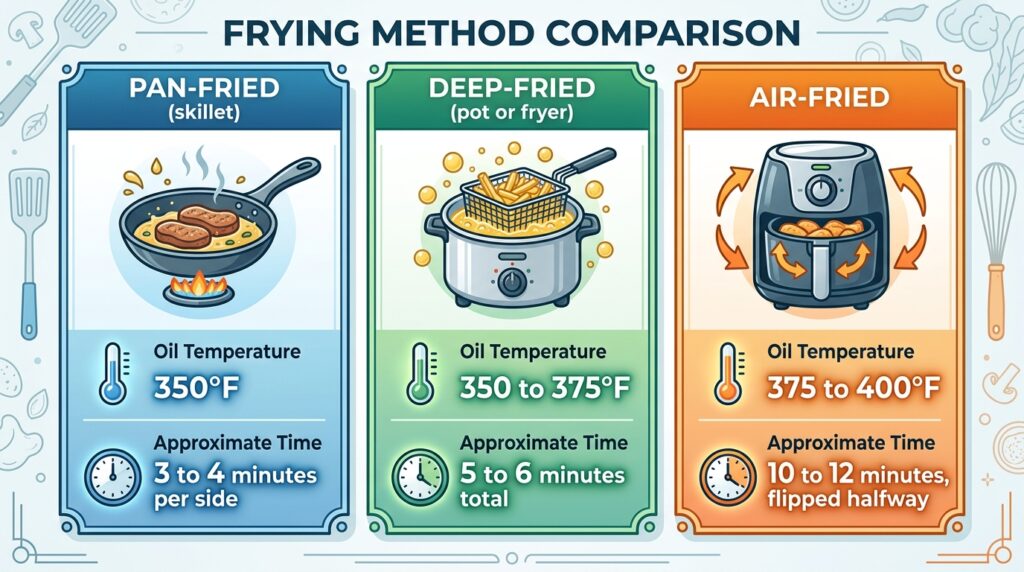
For most home cooks using a skillet or pot of oil, chicken tenders typically need 3 to 6 minutes total, depending on thickness and oil temperature. Here’s a quick breakdown by method.
| Frying Method | Oil Temperature | Approximate Time |
|---|---|---|
| Pan-fried (skillet) | 350°F | 3 to 4 minutes per side |
| Deep-fried (pot or fryer) | 350 to 375°F | 5 to 6 minutes total |
| Air-fried | 375 to 400°F | 10 to 12 minutes, flipped halfway |
None of these numbers replace a thermometer. Chicken is only done when it hits a safe internal temperature, not when a timer goes off.
Why Internal Temperature Matters More Than Time
Cook times are estimates. Every stove, every batch of oil, and every cut of chicken behaves a little differently. What doesn’t change is the safe minimum internal temperature for poultry, which sits at 165°F.
At that temperature, harmful bacteria like salmonella are destroyed almost instantly, regardless of how the chicken looks on the outside. A golden, crispy coating can trick you into thinking the inside is done when it isn’t, especially with thicker tenders.
The only reliable way to check is with an instant-read food thermometer, inserted into the thickest part of the tender. Color, texture, or how long something’s been in the oil are all secondary indicators at best.
Pan-Frying Chicken Tenders
Pan-frying uses less oil than deep frying and works well on a stovetop with a heavy skillet, cast iron holds heat especially well for this.
Heat about half an inch of oil to roughly 350°F. Peanut, canola, and vegetable oil all work fine since they have high smoke points and won’t add much flavor of their own.
Place the tenders in the hot oil without crowding the pan, then cook for about 3 to 4 minutes per side. Flip once the underside is golden brown, and finish the second side until the coating matches and the internal temperature reaches 165°F.
Deep-Frying Chicken Tenders
Deep frying submerges the tenders fully, which cooks them more evenly and usually shaves a little time off the total.
Heat oil to 350 to 375°F in a deep pot, Dutch oven, or dedicated fryer. Lower the tenders in a few at a time so the oil temperature doesn’t drop too fast, overcrowding is one of the most common reasons fried chicken turns out greasy instead of crisp.
Most tenders are done in about 5 to 6 minutes total, without needing to flip, since they’re fully surrounded by oil. Pull one out and check the internal temperature before assuming the batch is finished.
Air-Frying Chicken Tenders
Air frying uses far less oil and works by circulating hot air around the food instead of submerging it, which changes both the texture and the timing.
Preheat the air fryer to 375 to 400°F, then arrange breaded tenders in a single layer without overlapping. Cook for about 10 to 12 minutes, flipping halfway through so both sides crisp evenly.
The coating won’t be quite as crunchy as a traditional deep fry, but it’s a solid option for a lighter version with less mess and cleanup.
Factors That Change Your Frying Time
A few variables push cook times up or down from the ranges above.
- Thickness of the chicken. Thicker tenders or larger tenderloins take a minute or two longer than thin strips.
- Starting temperature. Chicken straight from the fridge takes longer to cook through than chicken that’s rested at room temperature for 15 to 20 minutes first.
- Batch size. Adding too many pieces at once drops the oil temperature and extends cook time while also making the coating soggy.
- Type of coating. A thick, wet batter often needs slightly more time than a light flour dredge to fully cook the exterior.
- Frozen chicken. Frying from frozen isn’t recommended, since the outside can brown well before the inside reaches a safe temperature.
Signs Your Chicken Tenders Are Actually Done
Beyond the thermometer reading, a few visual and textural cues back up doneness.
- The coating is a deep golden brown, not pale or greasy looking
- Juices run clear when a tender is cut open, with no pink liquid
- The meat itself is opaque all the way through, with no translucent or glassy spots near the center
- The tender feels firm but still has a slight give, not rock hard
None of these should replace a thermometer check, but they’re useful backup signals, especially with thinner cuts where a quick temperature check on every single piece isn’t practical.
Expert Tips for Better Fried Chicken Tenders
- Let breaded tenders rest for 5 minutes before frying; this helps the coating adhere instead of sliding off in the oil
- Use a splash of water dropped into the oil to test readiness if you don’t have a thermometer for the oil itself, it should sizzle immediately
- Keep finished tenders warm on a wire rack over a baking sheet in a low oven, stacking them on paper towels traps steam and softens the crust
- Strain and reuse frying oil up to a few times if it wasn’t used for strongly flavored foods, straining out crumbs extends its usable life
- Season with salt immediately after frying, while the coating is still warm and slightly oily, so it actually sticks
Pros and Cons of Each Frying Method
Pan-Frying
- Pro: Uses less oil, easy stovetop cleanup
- Con: Requires flipping and closer attention
Deep-Frying
- Pro: Most even cook, classic crispy texture
- Con: Uses more oil, higher mess and cost
Air-Frying
- Pro: Minimal oil, fastest cleanup
- Con: Slightly less crunch than traditional frying
Frequently Asked Questions
How long does it take to fry chicken tenders in oil?
In a skillet, plan on about 3 to 4 minutes per side at 350°F. In a deeper pot or fryer at 350 to 375°F, most tenders finish in roughly 5 to 6 minutes total without flipping.
What temperature should chicken tenders be fried at?
Somewhere between 350°F and 375°F works well for both pan-frying and deep-frying. Oil that’s too cool leads to greasy, soggy coating, while oil that’s too hot can burn the outside before the inside cooks through.
How do I know when chicken tenders are done frying?
The only fully reliable method is checking the internal temperature with a food thermometer, which should read 165°F in the thickest part. Golden color and clear juices are helpful secondary signs but shouldn’t replace an actual temperature check.
Can you fry chicken tenders from frozen?
It’s not recommended. Frozen tenders tend to brown on the outside well before the inside reaches a safe temperature, which increases the risk of undercooked chicken. Thawing fully in the refrigerator first gives a much more even result.
Why do my fried chicken tenders turn out soggy instead of crispy?
Soggy coating is almost always caused by oil that’s not hot enough or a pan that’s too crowded, both of which drop the oil temperature and let the breading absorb oil instead of crisping. Frying in smaller batches and confirming oil temperature before adding chicken usually fixes it.
Wrapping Up
Getting chicken tenders right comes down to two things: matching your cook time to your method, and never skipping the thermometer check. Once you’ve got that rhythm down, whether it’s a quick skillet fry or a full deep fry, the results come out consistent every time.
Keep a thermometer within reach next time you’re frying, and you’ll stop guessing and start landing perfectly cooked tenders on the first try.

