

You’re driving through a neighborhood and you notice one house that just pops. The siding is clean, the trim looks fresh, and the whole place radiates curb appeal. Then you glance at the house next door — dull, streaked, with green algae creeping up from the foundation. Both houses were probably built around the same time. The difference? One owner knows how often to wash their house exterior. The other doesn’t.
If you’ve ever wondered whether that greenish film on your siding is something to worry about, or whether pressure washing is just an aesthetic luxury, this guide is for you.
We’re going to cover everything — how frequently you should wash your home’s exterior, what factors change that schedule, which surfaces need special attention, and how to actually do it right without damaging your paint or siding.
Let’s get into it.
Why Washing Your House Exterior Actually Matters
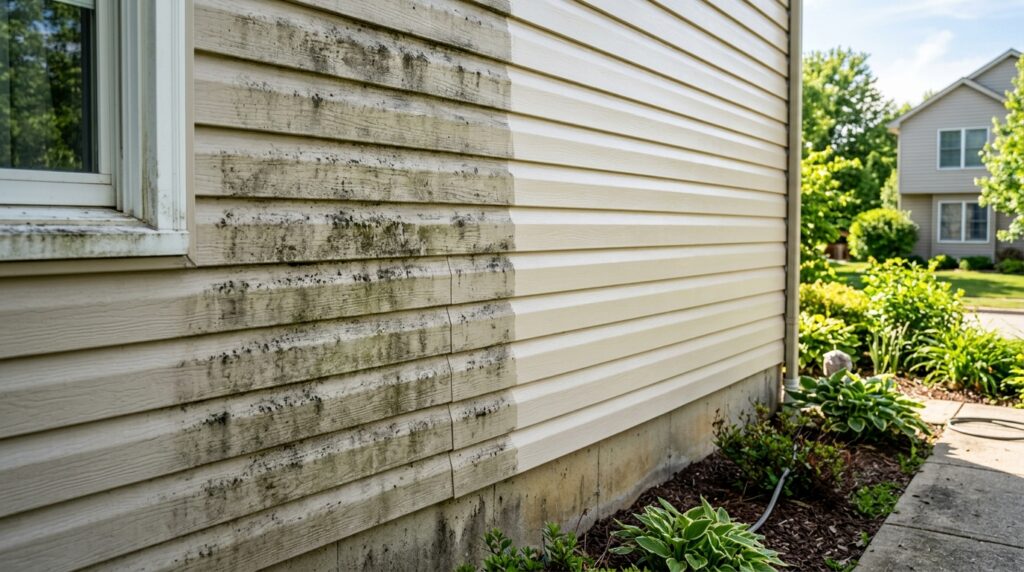
Most homeowners think of house washing as purely cosmetic. It’s not.
Your home’s exterior is constantly under attack — from UV rays, moisture, dirt, pollen, bird droppings, mold spores, and algae. Over time, these elements don’t just make your house look bad. They can actively degrade your siding, rot wood trim, stain concrete, and even void certain manufacturer warranties.
A regular exterior cleaning can extend the life of your paint by several years and prevent expensive repairs down the line.
Here’s what the buildup is actually doing to your home:
- Algae and mold trap moisture against your siding, which can lead to rot (especially in wood and fiber cement siding).
- Dirt and grime cause paint to peel and fade faster than normal.
- Pollen and pollution leave acidic residue that slowly breaks down surface coatings.
- Bird droppings are highly acidic and can etch into paint and metal within days if left untreated.
- Green mildew near the foundation can indicate excess moisture — a red flag for basement leaks and structural issues.
In short, washing your house isn’t just about looks. It’s preventive maintenance that saves you money in the long run.
How Often Should You Wash Your House Exterior?
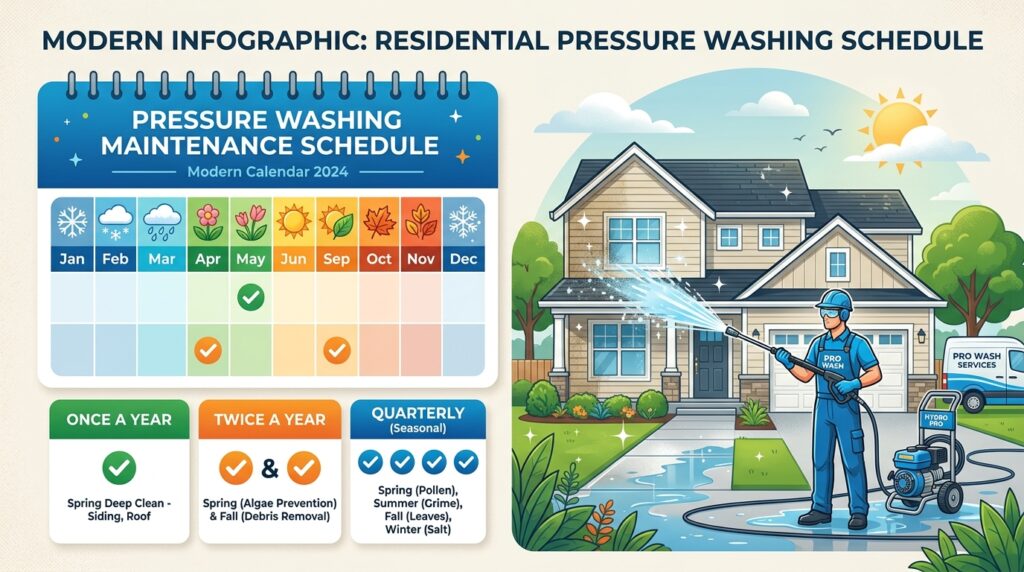
The short, direct answer: most homes should be washed at least once a year. But that’s the baseline — not the rule for everyone.
Depending on your home’s location, climate, surrounding environment, and exterior material, you might need to wash it anywhere from once every two years to twice per year.
Here’s a simple breakdown:
| Situation | Recommended Washing Frequency |
|---|---|
| Dry climate, low humidity | Every 1–2 years |
| Humid or coastal climate | Once or twice per year |
| Near trees or wooded areas | Once or twice per year |
| Urban/high-pollution area | Once a year minimum |
| Home with history of mold/algae | Every 6–12 months |
| Before repainting the exterior | Always (regardless of schedule) |
Homeowners routinely inspect and clean exterior surfaces as part of their standard home maintenance plan.
Homes That Need More Frequent Washing

Some homes genuinely need washing more often than average. If any of these apply to you, consider bumping up your schedule:
You live near the coast. Salt air is incredibly corrosive. It deposits salt crystals on your siding, which attract moisture and can accelerate rusting, paint peeling, and even damage to windows and frames. Coastal homeowners should wash their exteriors at least twice a year.
You’re surrounded by trees. Overhanging branches drop sap, leaves, and pollen directly onto your siding and roof. They also create shaded, moist conditions — the perfect environment for mold and algae to flourish. If you have trees close to your house, plan on washing once or twice a year.
Your area has high humidity. Warm, humid climates (think the Southeast, Gulf Coast, or Pacific Northwest) accelerate mold and mildew growth dramatically. Homes in these regions often need washing every 6 to 12 months.
Your home is light-colored. Light siding like white or cream shows dirt, stains, and algae far more quickly than darker colors. Even if structural damage isn’t occurring, the appearance may require more frequent washing.
Homes That Can Go Longer Between Washes

Not every home needs a yearly wash. If these conditions apply, you may be able to stretch your schedule to every 18–24 months:
- You live in a dry, arid climate with low humidity and little rainfall
- Your home has a dark exterior that hides dirt and minor staining
- Your home is surrounded by open space (not heavily shaded by trees)
- You’ve recently installed new siding or had an exterior repaint with mold-resistant paint
That said, even in the cleanest environments, a periodic wash every two years is still worthwhile. A professional can spot issues — like hairline cracks, early rot, or failing caulk — that you might miss on a casual glance.
The Best Time of Year to Wash Your House Exterior

Timing your wash matters. Most professionals recommend washing in late spring or early summer for a few key reasons:
Spring is the sweet spot. After a long winter, your home has accumulated months of dirt, salt (if you live in a snowy region), mold spores, and bird mess. Washing in late spring clears all of that out before summer heat causes stains to bake in. It also preps your home for summer entertaining and curb appeal season.
Fall is the second-best time. Washing before winter removes the pollen, insects, and organic debris of summer. A clean exterior holds up better through freezing temperatures, and you reduce the risk of trapped moisture freezing inside cracks.
Avoid washing in freezing temperatures. Water trapped inside siding seams can freeze, expand, and cause cracking. If you live somewhere with harsh winters, don’t schedule a wash between November and March.
Avoid washing on extremely hot, sunny days. Cleaning solutions can dry too fast on sun-baked surfaces, leaving streaks and residue. Early morning or overcast days are ideal.
Different Siding Materials — Different Washing Needs

Not all siding is created equal. The material on your home’s exterior significantly affects how often — and how — you should wash it.
Vinyl Siding
Vinyl is one of the most forgiving siding materials when it comes to washing. It doesn’t absorb water, doesn’t rot, and handles both pressure washing and hand washing well.
Recommended frequency: Once a year, or twice in humid climates.
Best method: Pressure washing on a low to medium setting (1,200–1,500 PSI), or a soft wash with a garden hose, siding brush, and a solution of water and mild dish soap. For mold and mildew, a diluted bleach solution (one cup bleach per gallon of water) works well.
The Vinyl Siding Institute recommends always spraying downward — never upward — to avoid forcing water behind the panels.
Wood Siding
Wood siding is beautiful but high-maintenance. It’s vulnerable to moisture, rot, and paint failure — which means washing technique is critical.
Recommended frequency: Once a year, with close attention to areas near the ground and in shaded spots.
Best method: Low-pressure washing only (under 1,200 PSI). High pressure can strip paint, raise the grain, and drive water into seams. Use a mild detergent solution and a soft-bristle brush. Always spray in the direction of the wood grain. After washing, inspect for any signs of rot, peeling paint, or failed caulk.
Brick Exterior
Brick is durable, but it’s not maintenance-free. Mortar joints can absorb moisture and harbor moss and algae, and white chalky stains (called efflorescence) can appear when minerals leach out of the brick.
Recommended frequency: Every 1–2 years, depending on exposure to moisture and organic growth.
Best method: Low-pressure washing (under 1,000 PSI) with a mild detergent. Avoid high pressure, which can damage mortar joints. For efflorescence, a diluted acid wash may be needed — but always test in a hidden area first and wear protective equipment. Consider applying a breathable masonry sealant after cleaning.
Stucco Exterior
Stucco looks great but requires a gentle touch. It’s porous and can crack if hit with high-pressure water.
Recommended frequency: Every 1–2 years. More frequently in areas with heavy dust, pollution, or algae growth.
Best method: Soft washing only — which uses low water pressure combined with a cleaning solution to lift dirt and kill organic growth. Avoid pressure washing above 500–800 PSI. Always inspect for cracks before washing; water forced into cracks can cause serious interior damage.
Fiber Cement Siding (James Hardie and Similar)
Fiber cement siding like James Hardie is engineered to be low-maintenance, but it still collects dirt, pollen, and mildew over time.
Recommended frequency: Once a year is ideal.
Best method: Soft wash or low-pressure rinse with a mild detergent. Avoid high pressure that could damage the surface coating or force water into seams. James Hardie specifically recommends against harsh chemical cleaners that could affect the factory finish.
Pressure Washing vs. Soft Washing — Which Is Right for Your Home?

This is one of the most common questions homeowners ask, and the answer isn’t always straightforward.
Pressure washing uses high-pressure water (typically 1,200–3,000+ PSI) to blast dirt off surfaces. It’s fast, effective, and great for hard surfaces like concrete driveways and patios. However, on softer materials — wood, stucco, older painted surfaces — it can cause real damage.
Soft washing uses low water pressure (often under 500 PSI) combined with a biodegradable cleaning solution. The chemicals do the heavy lifting, killing mold, algae, and bacteria at the source rather than just blasting them off the surface. The result often lasts longer than pressure washing because the organisms are killed, not just moved.
Here’s a quick guide:
| Surface | Recommended Method | PSI Range |
|---|---|---|
| Concrete driveway | Pressure wash | 2,000–3,000 PSI |
| Vinyl siding | Pressure or soft wash | 1,200–1,500 PSI |
| Wood siding | Soft wash or low-pressure | Under 1,200 PSI |
| Brick | Low-pressure wash | 500–1,000 PSI |
| Stucco | Soft wash only | Under 800 PSI |
| Fiber cement | Soft wash or low-pressure | Under 1,500 PSI |
| Painted surfaces | Soft wash preferred | Under 1,500 PSI |
DIY vs. Hiring a Professional — What’s the Right Call?
Both options have merit. Let’s be honest about the tradeoffs.
Doing It Yourself
Pros:
- Saves money on labor
- You control the timing and products used
- Good for single-story homes with accessible surfaces
Cons:
- Risk of damage if you use too much pressure or wrong cleaning solutions
- Pressure washer rental ($50–$150/day) plus detergents
- Physical labor, especially for multi-story homes
- Safety risk working at heights with high-pressure equipment
If you’re going the DIY route, start with the lowest pressure setting and work up from there. Never stand on a ladder while operating a pressure washer — the recoil is stronger than most people expect.
Hiring a Professional
Pros:
- Experience with different materials and stain types
- Professional-grade equipment and commercial-strength cleaners
- Liability insurance in case of accidental damage
- Can inspect your home for other maintenance issues while they’re there
Cons:
- Higher upfront cost ($250–$600+ depending on home size and region)
- Need to vet contractors and check reviews
For multi-story homes, delicate siding materials, or homes with significant mold/algae problems, a professional soft wash company is almost always the better investment.
Signs Your House Exterior Needs Washing Right Now

Don’t wait for your scheduled wash date if you notice any of these signs. They indicate that biological or environmental damage is actively occurring:
Green or black streaks on siding — this is algae or mold growing on your home’s surface. Left untreated, it will spread and trap moisture.
Chalky residue on painted surfaces — this is called chalking, and it means your paint’s binders are breaking down from UV exposure and dirt accumulation. Washing removes the chalky layer and can extend the paint’s life before a full repaint is needed.
Visible dirt or cobwebs in corners and under eaves — insects love these sheltered spots, and over time, the debris and webs trap moisture and attract more pests.
Staining near windows or gutters — this often indicates gutter overflow, which is depositing dirty water directly on your siding. Clean your gutters first, then wash the staining.
Your neighbors just had their house washed — okay, this one is optional, but neighborhood pride is a real motivator, and keeping your home looking well-maintained protects property values for everyone on the street.
Step-by-Step: How to Wash Your House Exterior the Right Way

Ready to tackle it yourself? Here’s the process professionals follow, simplified for homeowners.
What you’ll need:
- Pressure washer or garden hose with high-flow nozzle
- Soft-bristle brush (for stubborn spots)
- Exterior house washing detergent (look for biodegradable options)
- Garden hose
- Plastic sheeting or tarps (to protect plants and outdoor furniture)
- Safety glasses and rubber gloves
Step 1 — Prep Your Property
Before you start, close all windows and doors. Cover electrical outlets, light fixtures, and any exposed wiring with plastic bags secured with tape. Move outdoor furniture away from the house. Cover garden beds and delicate plants with tarps — even mild detergents can stress vegetation if applied directly.
Wet down any plants and grass that might be near the wash zone. This dilutes any chemical runoff.
Step 2 — Apply Detergent from Bottom to Top
This part surprises a lot of people. You want to apply your cleaning solution starting at the bottom of the wall and working up. This prevents streaking — if you start at the top, the detergent drips down onto already-dirty sections and creates hard-to-remove streaks.
Allow the detergent to dwell on the surface for 5–10 minutes. Don’t let it dry.
Step 3 — Rinse from Top to Bottom
Now switch to rinsing, and go from top to bottom this time. You’re using gravity to your advantage — clean water washes dirt and detergent down and off the surface, rather than back onto already-cleaned areas.
Use a wide-angle nozzle (40–65 degrees) for the rinse, which gives a gentle, broad spray rather than a damaging pinpoint stream. Keep the nozzle at least 12–18 inches from the surface at all times.
Step 4 — Pay Extra Attention to Problem Areas
Under eaves, around window frames, near the foundation, and in shaded areas — these spots collect the most moisture and organic growth. Give them an extra pass with your soft-bristle brush if needed.
For persistent mold or algae, a diluted bleach solution (one part bleach to four parts water) applied with a soft brush and rinsed thoroughly usually does the trick. For very stubborn growth, consider an oxygen bleach product like OxiClean which is effective without being as harsh on vegetation and surfaces.
Step 5 — Inspect While You Work
This is the hidden bonus of washing your own house: you see every square inch of it up close. As you work, keep an eye out for:
- Peeling or bubbling paint (sign of moisture intrusion)
- Cracks in siding or stucco
- Gaps in caulking around windows, doors, and trim
- Soft or spongy wood (early sign of rot)
- Rust stains around metal fasteners
Make notes and deal with these repairs before your next exterior painting or winter season arrives. Catching these issues during a routine wash can prevent repairs that cost ten times more if left unchecked.
Expert Tips for a Better, Longer-Lasting Wash
Here are the things experienced contractors and long-time homeowners do that casual washers miss:
Use a mold-inhibiting detergent additive. Regular soap removes what’s there. A product with sodium hypochlorite or a dedicated exterior mold inhibitor kills spores at the root, slowing regrowth significantly. Wet & Forget is a popular option for this that you can apply with a garden sprayer and leave to rinse off with rain over time.
Always test pressure in an inconspicuous spot first. Before starting on a visible section, test your pressure setting and nozzle angle on a hidden area (under a deck, behind a bush). This tells you immediately if you’re going to cause damage — before it’s visible from the street.
Don’t forget the roof overhang. Soffit and fascia boards collect grime, mold, and wasp nests. A soft wash of these areas makes a huge visual difference and protects the wood from rot.
Rinse your gutters as you work. If your gutters are clogged with debris, water from your washing will just pour back down the siding and undo your work. A quick hose-down of the gutters before you wash the walls makes a big difference.
Seal after washing. On surfaces like brick, concrete, and stucco, applying a quality masonry sealant after washing helps repel future staining and biological growth. This step extends the time between washes by a year or more in many climates.
Don’t cut corners on the foundation. The bottom 12–18 inches of your exterior takes the most abuse — splash-back from rain, lawn mowers kicking up debris, soil contact. Give this area extra attention and consider applying a mildew-resistant paint or sealant after washing.
How Washing Fits Into Your Overall Home Maintenance Calendar
House washing doesn’t exist in isolation — it fits into a broader seasonal maintenance routine. Here’s how to think about it:
Spring Maintenance Checklist:
- Wash house exterior (remove winter grime and pollen)
- Clean gutters (remove winter debris)
- Inspect roof for winter damage
- Check caulking around windows and doors
- Touch up any peeling exterior paint
Fall Maintenance Checklist:
- Wash house exterior (remove summer buildup before winter)
- Clean gutters (remove leaves before they freeze)
- Inspect siding and foundation for cracks
- Seal any gaps with exterior caulk
- Trim any tree branches close to the house
Integrating your house wash into these existing seasonal tasks makes it easy to remember and ensures it actually gets done. The National Association of Realtors and their home maintenance resources reinforce that regular exterior cleaning is one of the highest ROI home maintenance activities in terms of preserving property value.
What Happens If You Never Wash Your House Exterior?
Let’s be honest about the consequences of completely ignoring your home’s exterior.
Year 1–2: Dirt and pollen accumulate. Your home looks dull but there’s no structural damage yet. A simple wash would restore it fully.
Year 3–4: Algae and mold begin establishing themselves, especially in shaded areas and near the roofline. You can see green streaks. Some paint may begin to chalk or fade noticeably.
Year 5–7: Mold is now embedded in siding materials. On wood siding, moisture trapped by organic growth is beginning to cause rot. Paint failure accelerates. Caulking around windows dries out and cracks, allowing water intrusion.
Year 8+: Significant structural damage is possible. Rot in wood framing, water damage to sheathing behind the siding, and mold inside walls become real possibilities. At this point, you’re looking at repairs that can cost thousands — not hundreds.
The cost difference between a $300 annual wash and a $5,000+ siding replacement is stark. Preventive maintenance always wins.
Frequently Asked Questions
Can I wash my house exterior with just a garden hose?
Yes, for light dirt and pollen a garden hose with a high-flow spray nozzle and mild soap is often enough. However, for mold, algae, or embedded grime, you’ll get far better results with a pressure washer or soft wash system. A hose is a good option for homes that were recently washed and just need a quick rinse.
Will pressure washing damage my siding?
It can — if you use too much pressure or get too close to the surface. Vinyl siding can warp or crack, wood siding can have its paint stripped, and stucco can develop micro-cracks. Always use the lowest effective pressure for the job, keep the nozzle 12–18 inches away, and use a wide-angle nozzle rather than a pinpoint stream.
How much does it cost to have your house exterior washed professionally?
According to HomeAdvisor, the national average cost for professional house washing ranges from $250 to $600, with most homeowners paying around $300–$400 for a typical single-family home. Larger homes, two-story structures, or homes with heavy mold and algae can cost more. Soft washing services may be slightly more expensive than standard pressure washing due to the chemical treatments involved.
Is bleach safe to use on my house exterior?
Diluted household bleach (sodium hypochlorite) is widely used by professionals for killing mold, mildew, and algae on siding. For most hard surfaces — vinyl, brick, concrete — a dilution of 1 cup of bleach per gallon of water is safe and effective. However, bleach can lighten wood stain, may damage some painted surfaces, and can harm vegetation. Always rinse nearby plants thoroughly before and after use, and avoid using bleach on naturally finished wood.
How do I get rid of green algae on my house siding?
Green algae are one of the most common exterior complaints. The most effective solution is a soft wash using a diluted sodium hypochlorite (bleach) solution, applied with a low-pressure sprayer and left to dwell for 5–10 minutes before rinsing. For long-term prevention, products like Wet & Forget Outdoor can be applied annually to inhibit regrowth without requiring scrubbing or pressure washing.
Conclusion
Here’s the bottom line: washing your house exterior once a year is the minimum most homes need, with twice a year being ideal for humid climates, coastal regions, or homes surrounded by trees.
This single act of maintenance protects your paint, your siding, your home’s structure, and yes — your property value. It costs a fraction of what repairs cost. And once you get into the habit of doing it seasonally (spring cleaning is the obvious time), it becomes just another part of taking care of your home rather than something you only think about when things look bad.
Whether you rent a pressure washer and tackle it yourself on a Saturday morning, or hire a local soft wash crew for a couple hundred dollars once a year — do it. Your house will thank you. Your wallet will thank you. And your neighbors will too.
Ready to give your house exterior the attention it deserves? Start by walking the perimeter of your home this weekend and taking stock of what you’re working with. A fresh eye and a clean hose are all it takes to get started.

