
Moving into a new home is a strange kind of happy chaos. You finally have the keys. The boxes are piled up in every corner. And somewhere between the excitement and the exhaustion, a question creeps in: where do I even start with furniture?
If you’ve ever stood in an empty living room trying to picture where a couch should go, you already know this isn’t as simple as walking into a store and pointing at things. Furnishing a home well takes a plan — not a complicated one, just a smart one.
This guide walks you through exactly how to choose furniture for a new home, room by room, without overspending, overbuying, or ending up with a couch that doesn’t fit through the door. (Yes, that happens more often than you’d think.)
Why Furnishing a New Home Feels So Overwhelming

There’s a reason empty rooms feel paralyzing instead of exciting. You’re making dozens of decisions at once — style, size, budget, timing — and most people have never had to furnish an entire home in one go before.
The good news? You don’t have to. In fact, rushing is one of the biggest mistakes new homeowners make. Spend a little time living in the space first. Notice which door you actually use, where the morning light hits, which room ends up being the “everyone hangs out here” room.
That awareness will save you from buying furniture that looks great in a showroom but makes zero sense in your actual life.
Step 1: Get to Know Your Space Before You Shop
Before you open a single browser tab or walk into a store, spend a few days actually living in your new home. Pay attention to:
- Which rooms you naturally gravitate toward
- Where natural light falls throughout the day
- Which entrance you use most (front door vs. garage or back door)
- How sound travels between rooms
- Where outlets and switches are located
This sounds basic, but it changes everything. A lot of furniture regret comes from buying for the home you imagined instead of the home you actually live in.
Measure Everything (Seriously, Everything)
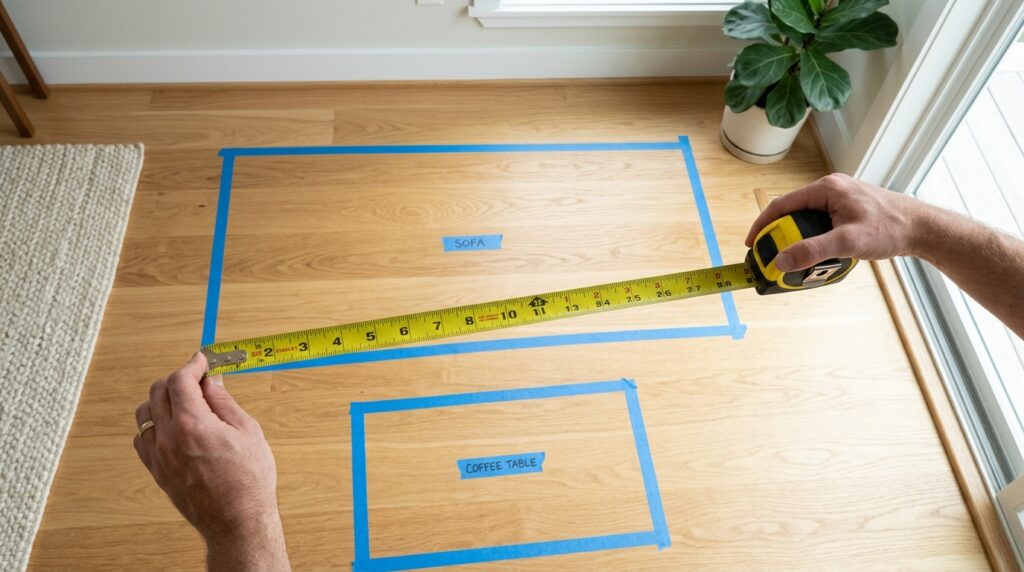
This is the step people skip and regret. Measure your rooms, doorways, hallways, stairwells, and ceiling heights before you buy anything. A sofa that looks modest in a showroom can become an immovable object the moment it hits a narrow stairwell or a tight hallway turn.
A simple rule that designers use: leave roughly 30 to 36 inches of walking space in main pathways, and about 14 to 18 inches between a sofa and a coffee table so there’s room for legs and movement. Use painter’s tape on the floor to mark out furniture dimensions — it sounds old-fashioned, but it works better than any app.
Step 2: Set a Realistic Furniture Budget
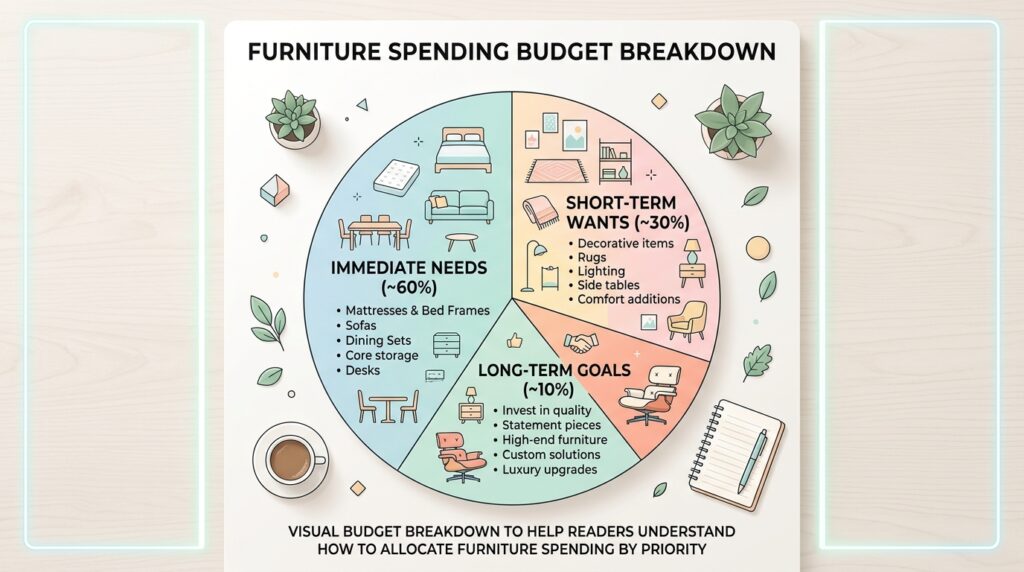
Furnishing an entire home at once is expensive, and very few people actually do it all in one trip. Instead, treat your furniture budget like a project budget — broken into priorities, not just a single lump sum.
A practical approach many designers recommend is the 80/20 rule: spend roughly 80% of your budget on foundational pieces you’ll use daily and want to last for years — your bed, your main sofa, your dining table. Save the remaining 20% for decorative or trend-driven pieces that are cheaper to replace later, like accent chairs, throw pillows, or wall art.
Here’s a simple way to break your budget down by priority:
| Priority Level | What It Covers | Example Items |
|---|---|---|
| Immediate needs | Function basics for daily life | Bed, mattress, sofa, dining table |
| Short-term wants | Comfort and usability upgrades | Extra seating, storage, desk |
| Long-term goals | Style and personality pieces | Accent furniture, art, statement lighting |
If money is tight right now, that’s completely normal. Most homeowners furnish in phases over months, not days. Buying secondhand, watching for seasonal sales events like Black Friday or end-of-season clearances, and asking family for hand-me-downs are all legitimate ways to stretch a budget without sacrificing comfort.
Step 3: Decide What You Actually Need First
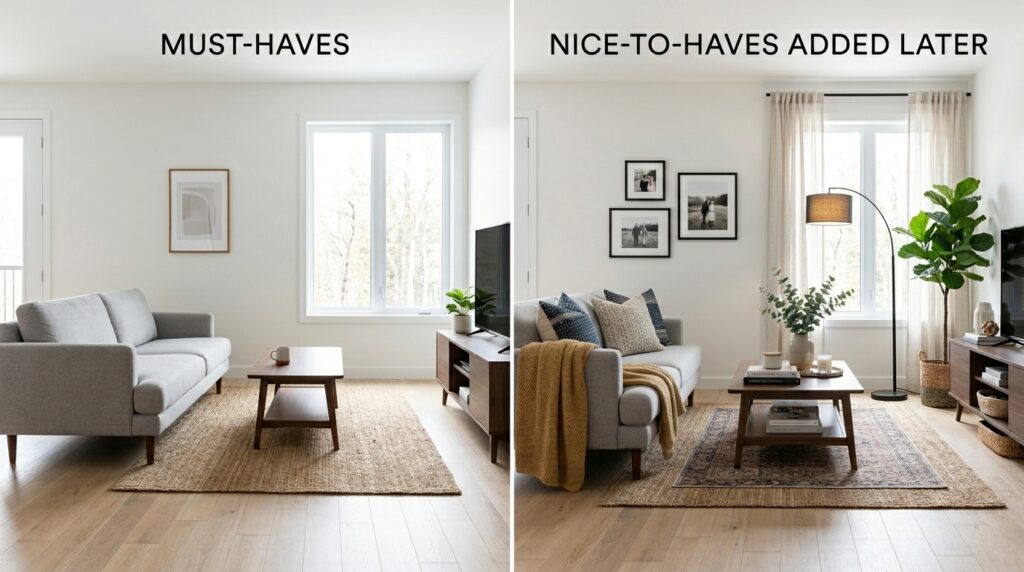
Once you understand your space and your budget, the next step in choosing furniture for a new home is figuring out what’s truly essential versus what can wait.
Most people don’t need everything on day one. You need enough to function comfortably — a place to sleep, a place to sit, a place to eat — and everything else can be added gradually as your taste and budget allow.
The “Must-Have First” List
These are the pieces that affect your daily comfort the most, so they deserve priority and a bigger chunk of your budget:
- A comfortable bed frame and mattress
- A sofa or main seating piece for the living room
- A dining table with enough seating for your household
- Basic storage (dresser, closet system, or shelving)
- Adequate lighting in every room
What Can Wait
- Accent chairs and statement furniture
- Decorative rugs and curtains
- Wall art and mirrors
- A dedicated home office setup (unless you work from home)
- Guest room furniture
If you work from home, move the desk and an ergonomic chair up to the “must-have” list immediately — you’ll be using that space for hours every day, and a poor setup can affect both your posture and your productivity.
Step 4: Choose Furniture Room by Room
Trying to furnish your entire home at once is how people end up overwhelmed in a showroom, buying things that don’t match or don’t fit. Breaking it down by room makes the whole process far less stressful — and it’s the best way to buy furniture for a new house without decision fatigue.
Living Room
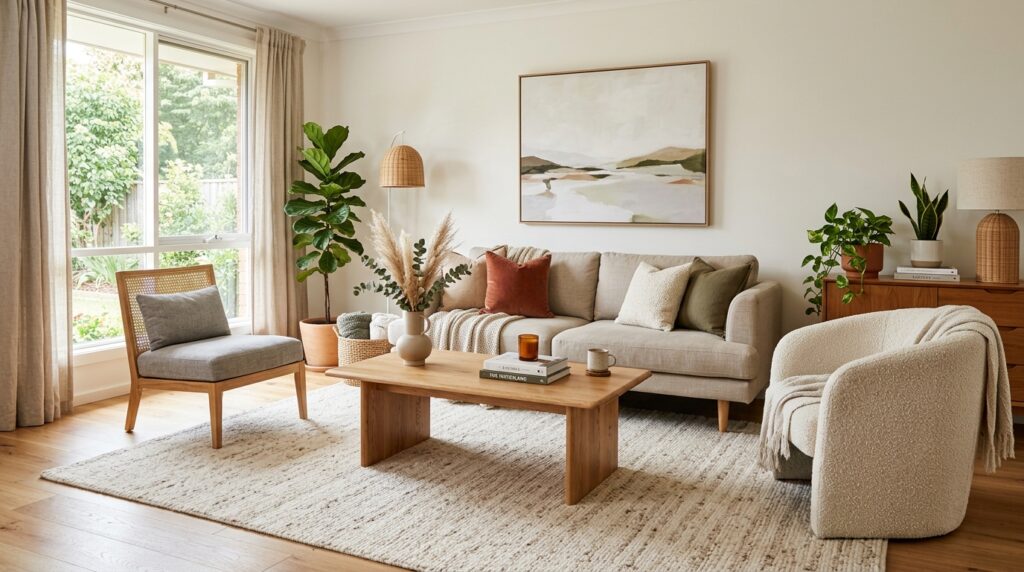
The living room usually sets the tone for your whole home, since it’s where you relax, watch TV, and host guests. Start by deciding how you actually want to use the space: is it built around a TV, or is it more of a conversation-focused gathering spot?
Core pieces to prioritize:
- A sofa sized appropriately for the room (measure twice!)
- A coffee table, leaving 14–18 inches of clearance around it
- Side or end tables for lamps and drinks
- Adequate seating for your household size, plus a couple of guests
For smaller living rooms, a loveseat-and-accent-chair combination or a compact sectional with a chaise can keep the room feeling open instead of cramped.
Bedroom
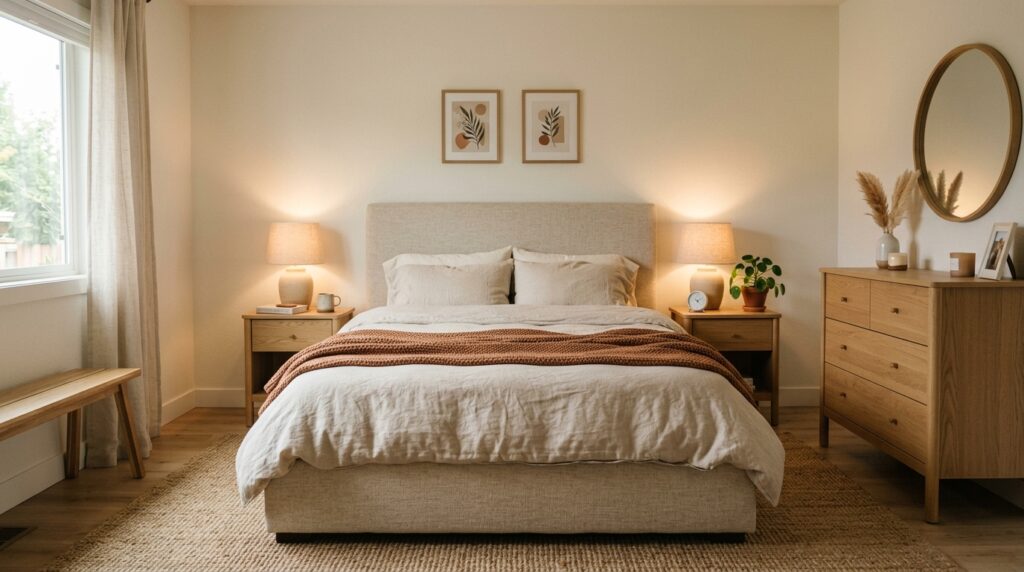
After the chaos of moving day, having a finished bedroom is genuinely a game-changer for how quickly your house starts to feel like home. Prioritize sleep essentials first, then layer in storage and style.
Core pieces:
- Bed frame and mattress suited to your sleep needs
- Nightstands for both sides of the bed, if space allows
- A dresser or wardrobe for clothing storage
- Soft, adequate lighting (a bedside lamp works better than a single overhead light for winding down)
If the bedroom is on the smaller side, multifunctional furniture — like a storage bed or a dresser with a built-in mirror — helps you avoid clutter without sacrificing function.
Dining Room or Kitchen Nook
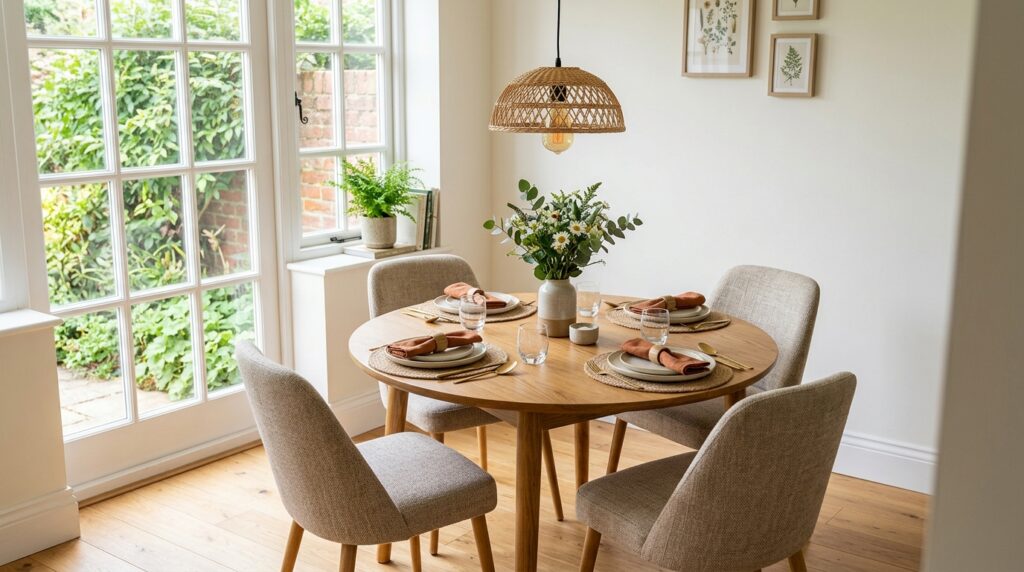
Whether you have a formal dining room, a kitchen nook, or both, this space deserves early attention because it’s where daily meals and conversations happen.
Ask yourself: is this table for quick weekday breakfasts, or do you regularly host larger gatherings? That answer determines the size, shape, and seating capacity you need. A round table tends to work well in smaller spaces since it has no sharp corners to navigate, while a rectangular table suits larger rooms and bigger groups.
It’s generally a good idea to buy a matching table-and-chair set rather than mixing pieces from different collections — it keeps the proportions consistent and saves you the guesswork of matching heights and finishes later.
Home Office
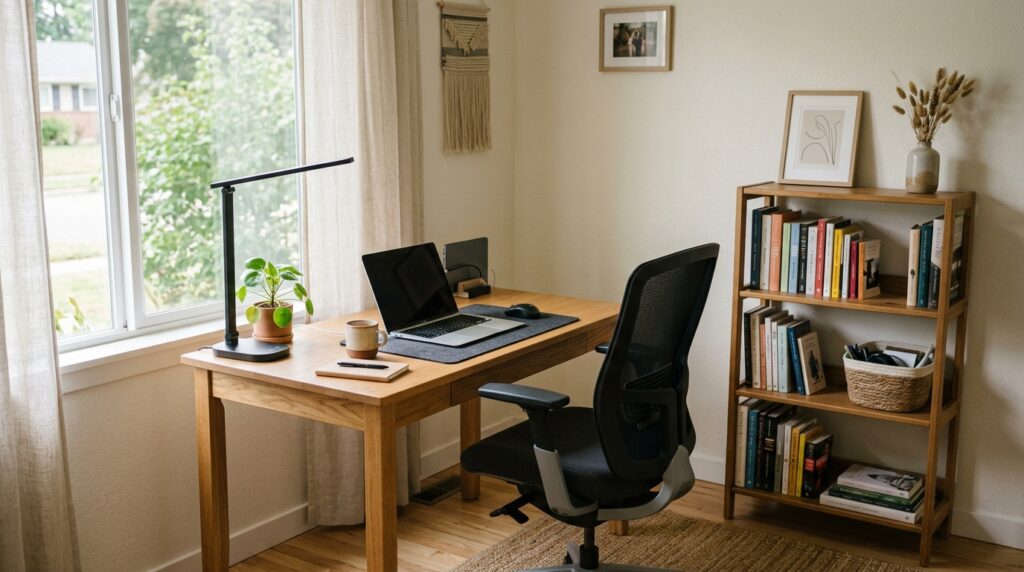
With so many people working remotely or in hybrid roles, a dedicated workspace has gone from a “nice extra” to a near-necessity for a lot of households. If that’s you, this deserves a spot near the top of your list.
Core pieces:
- An ergonomic chair that supports good posture during long work hours
- A desk sized for how you actually work (a large dual-monitor setup needs more surface area than a simple laptop station)
- Adequate task lighting, ideally paired with natural light
- Storage for files, cables, and office supplies
Posture and comfort matter more than people expect here. There’s helpful guidance on setting up a home workstation that reduces strain on your back, wrists, and neck — worth a quick look if you’re spending several hours a day at a desk.
Entryway and Smaller Spaces
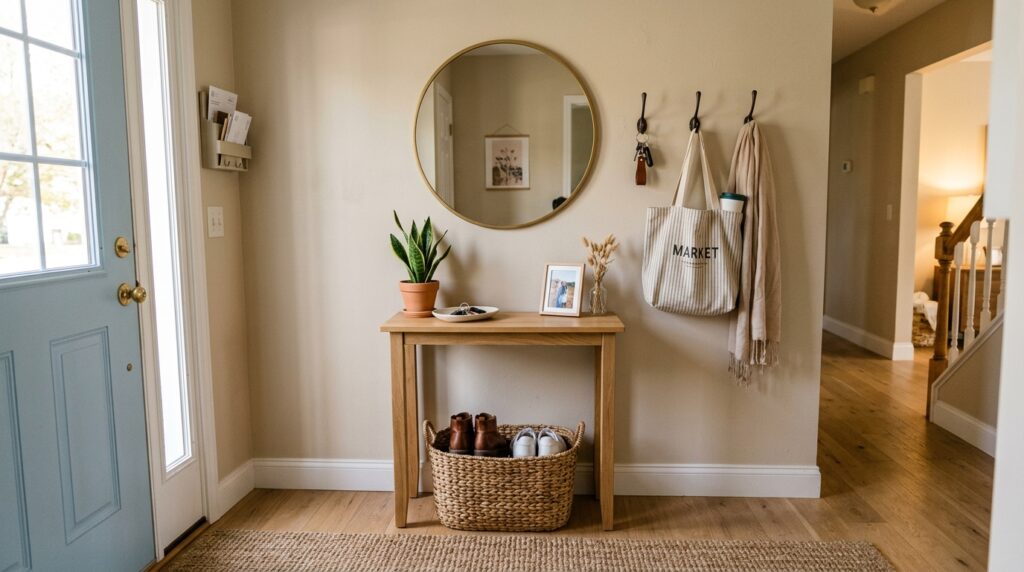
It’s easy to forget the entryway when you’re focused on bigger rooms, but a small console table, a bench, or even just a wall hook system for keys and bags can make daily life noticeably smoother. People often find they use a side or back door more than the front entrance, so plan accordingly based on your own habits rather than assumptions.
Step 5: Match Furniture to Your Lifestyle, Not Just Your Style
It’s tempting to choose furniture purely based on what looks good in photos. But the best way to buy furniture for a new house is to filter every choice through your actual daily life first, and aesthetics second.
Ask yourself:
- Do I have kids or pets? (Durability and stain-resistant fabrics matter more than delicate finishes.)
- Do I entertain often? (Flexible or expandable seating and tables are worth the investment.)
- Do I work from home? (Comfort and ergonomics should outrank trendiness.)
- Am I likely to move again soon? (Modular or lightweight furniture is easier to relocate.)
A beautiful linen sofa might be a design magazine favorite, but if you have a large dog or toddlers in the house, a performance fabric or leather option will likely serve you far better in the long run.
Step 6: Think About Materials, Durability, and Indoor Air Quality
This part rarely gets enough attention, but it matters more than most people realize. New furniture — especially items with pressed wood, foam cushioning, or fresh upholstery — can release volatile organic compounds (VOCs) into your indoor air for some time after purchase, a process commonly called off-gassing.
A few practical habits can reduce your exposure:
- Look for furniture labeled low-VOC or formaldehyde-free, especially for pressed-wood items
- Where possible, let new furniture air out in a well-ventilated space like a garage for a few days before bringing it indoors
- Keep windows open and use fans for extra airflow during the first week after a big furniture delivery
If indoor air quality is a priority for you — especially in a nursery or bedroom — look for products that carry a low chemical emissions certification, which verifies that an item has been independently tested for low VOC output. For solid wood pieces, responsibly sourced wood certification indicates the material came from sustainably managed forests.
Quick Certification Cheat Sheet
| Certification | What It Verifies | Best For |
|---|---|---|
| Low-emission air quality certification | Low chemical (VOC) emissions | Bedrooms, nurseries, sensitive households |
| Responsible forestry certification | Responsible forestry sourcing | Solid wood furniture, sustainability-focused buyers |
| Foam content and safety certification | Foam content and emissions standards | Sofas, mattresses, cushioned furniture |
Step 7: Don’t Skip Furniture Safety (Especially With Kids or Pets at Home)
This step is easy to overlook in the excitement of decorating, but it genuinely matters. Furniture tip-overs are a real and well-documented household hazard, and official tip-over injury statistics show that furniture is responsible for the large majority of tip-over-related injuries each year, with dressers, bookcases, and other furniture with drawers or shelving among the most common culprits.
The fix is simple and inexpensive: anchor tall or heavy furniture — dressers, bookshelves, wardrobes — directly to the wall using anti-tip brackets or straps. This is especially important in homes with young children, who may be tempted to climb open drawers like steps.
Step 8: Decide Where to Buy (And When)
There’s no single “best” place to buy furniture — it depends on your budget, timeline, and how hands-on you want the experience to be.
In-Store Shopping
Walking into a physical store lets you sit on the sofa, open the drawers, and actually feel the fabric — which is hard to replicate online. It’s especially useful for big-ticket items like sofas and mattresses, where comfort is subjective and personal.
Online Shopping
Online retailers often have a wider selection and more competitive pricing, plus the convenience of browsing on your own schedule. The tradeoff is that you’re relying on photos and reviews rather than firsthand experience, so read return policies carefully before committing to larger pieces.
Secondhand and Marketplace Options
Buying gently used furniture — through local marketplaces, estate sales, or thrift stores — is one of the most underrated ways to stretch a furniture budget. It’s also a more sustainable option, since it keeps usable furniture out of landfills.
Timing Your Purchases
Furniture retailers tend to run their biggest sales around major holidays — Memorial Day, Labor Day, and especially Black Friday — as well as during end-of-season clearance periods when new inventory is coming in. If you’re not in a rush, timing a big purchase around one of these windows can lead to meaningful savings.
Step 9: Build a Cohesive Look Without Overthinking It
You don’t need a professional interior design background to make a home feel pulled-together. A few simple principles go a long way.
- Pick one anchor color palette and let it guide your bigger pieces (sofa, rug, bed frame), then add personality through smaller, cheaper accents like pillows and art.
- Mix textures, not chaos. Pairing a wood table with a woven rug and a soft fabric sofa creates warmth without looking mismatched.
- Leave breathing room. Empty space isn’t a failure — overcrowded rooms tend to feel smaller and more stressful than sparsely furnished ones.
- Buy slowly on purpose. Living with a space for a few weeks before adding the next piece often leads to better decisions than filling every corner immediately.
As the old design saying goes: buy well, buy once. A few well-chosen pieces you genuinely love will always beat a room full of “good enough for now” furniture.
Expert Tips for First-Time Furniture Buyers
- Always read the return policy before buying big-ticket items. Some retailers offer price matching or extended return windows on sofas and mattresses — ask before you commit.
- Order fabric swatches when shopping online. Colors look different under your home’s lighting than they do on a screen.
- Don’t furnish a room around a TV by default. Consider whether you actually want a conversation-focused layout instead.
- Buy your sofa early if you’re hosting guests soon. Sofas often have longer lead times than other furniture, sometimes several weeks, so order ahead if you’re on a deadline.
- Keep all furniture manuals and hardware bags somewhere central in case you need to disassemble and move pieces again later.
Pros and Cons of Common Furniture Buying Approaches
| Approach | Pros | Cons |
|---|---|---|
| Buying everything at once | Instant cohesive look, less decision fatigue | Higher upfront cost, higher risk of regretted purchases |
| Phased furnishing over months | More thoughtful choices, spreads out cost | Home feels unfinished longer |
| Buying secondhand | Budget-friendly, more sustainable | Limited selection, no warranty |
| Matching furniture sets | Easy coordination, consistent proportions | Less personalized, can feel showroom-like |
Frequently Asked Questions
What furniture should I buy first for a new home?
Start with the essentials that affect daily comfort: a bed and mattress, a sofa, a dining table, and basic storage like a dresser. Everything decorative — rugs, art, accent chairs — can be added later once you’ve settled into the space.
How much should I budget for furnishing a new home?
There’s no universal number, since it depends heavily on your home size and style preferences, but a practical approach is to allocate roughly 80% of your budget to foundational pieces you’ll use daily, and the remaining 20% to decorative or trend-based items that are cheaper to replace later.
Should I buy furniture before or after moving in?
It’s generally better to wait until after you’ve moved in and spent some time in the space. Living in the home first helps you understand traffic patterns, lighting, and actual furniture needs — buying too early often leads to pieces that don’t quite fit the space or your routine.
How do I know if a sofa or table will fit through my doorway?
Measure your doorways, hallways, and stairwells before purchasing, and compare those measurements to the furniture’s dimensions, including diagonal depth for tight turns. Many retailers list a “boxed dimension” for delivery, which is useful for this comparison.
Is it safe to buy secondhand furniture?
Yes, in most cases, especially for solid wood pieces, which tend to be durable and easy to inspect for quality. Be more cautious with upholstered furniture or mattresses, since they can harbor wear, odors, or allergens that aren’t always visible. Always anchor any tall secondhand furniture to the wall using anti-tip hardware, regardless of where it came from.
Final Thoughts
Furnishing a new home isn’t a race, even though it can feel that way when you’re staring at empty rooms surrounded by boxes. The homes that feel the most “you” are almost always built gradually — one thoughtful piece at a time, chosen because it actually fits your life, not just a saved inspiration photo.
Start with the essentials. Measure twice. Set a budget you can actually stick to. And give yourself permission to live in a room for a little while before deciding what it really needs.
If you’re standing in an empty living room right now wondering where to start, start small: pick one room, pick one must-have piece, and go from there. The rest will follow naturally — and a lot less stressfully than you think.

