
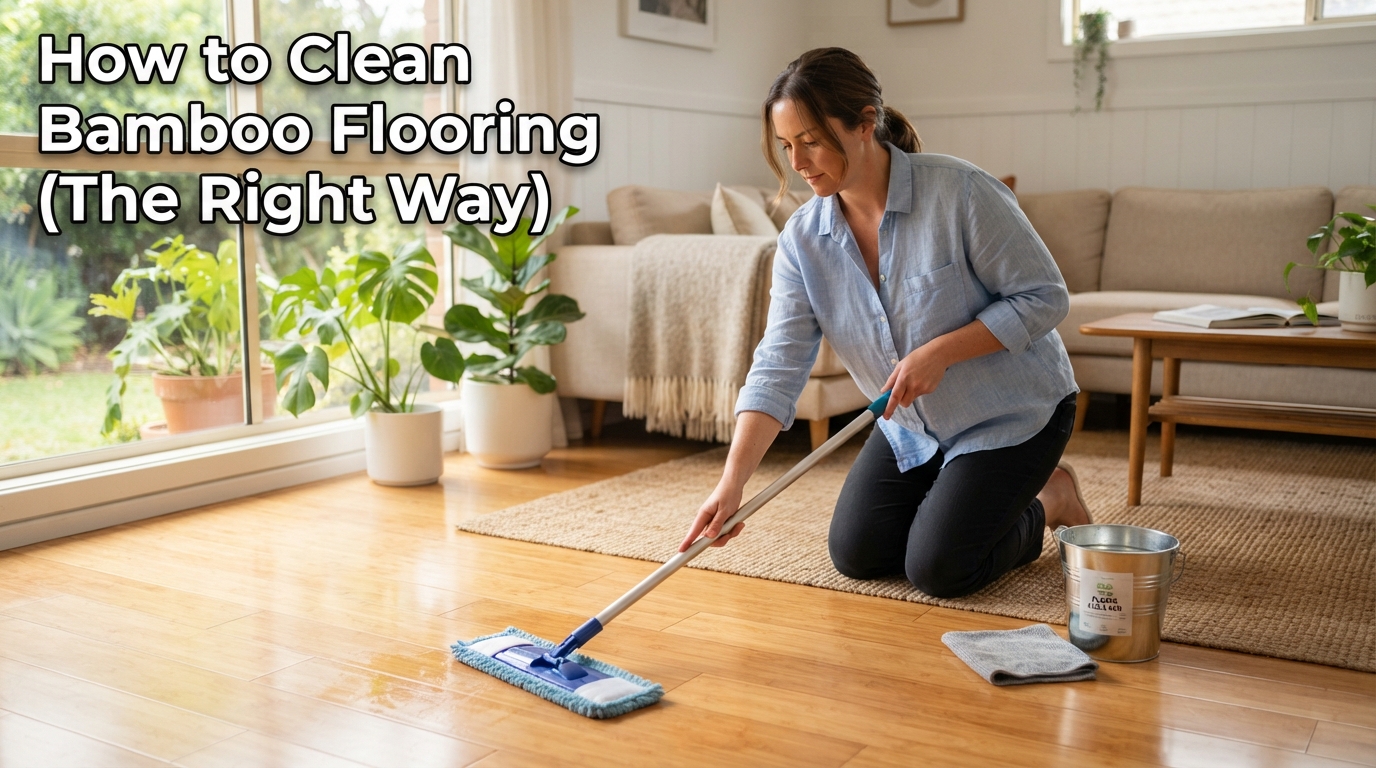
Bamboo floors have a way of making a room feel warmer the moment you walk in. That golden, grainy finish looks close to hardwood, but it doesn’t behave exactly like hardwood, and that’s where a lot of people run into trouble. If you’re wondering how to clean bamboo flooring without dulling the shine, warping the boards, or leaving cloudy streaks behind, you’re not alone. It’s one of the most common questions new bamboo floor owners search for in the first few months after installation.
The good news is that once you understand what bamboo floors actually need, keeping them clean becomes a quick, almost mindless part of your weekly routine. This guide walks through the tools, the techniques, and the mistakes to avoid, so your floors keep that fresh-installed look for years instead of months.
Why Bamboo Floors Need Different Care Than Regular Hardwood
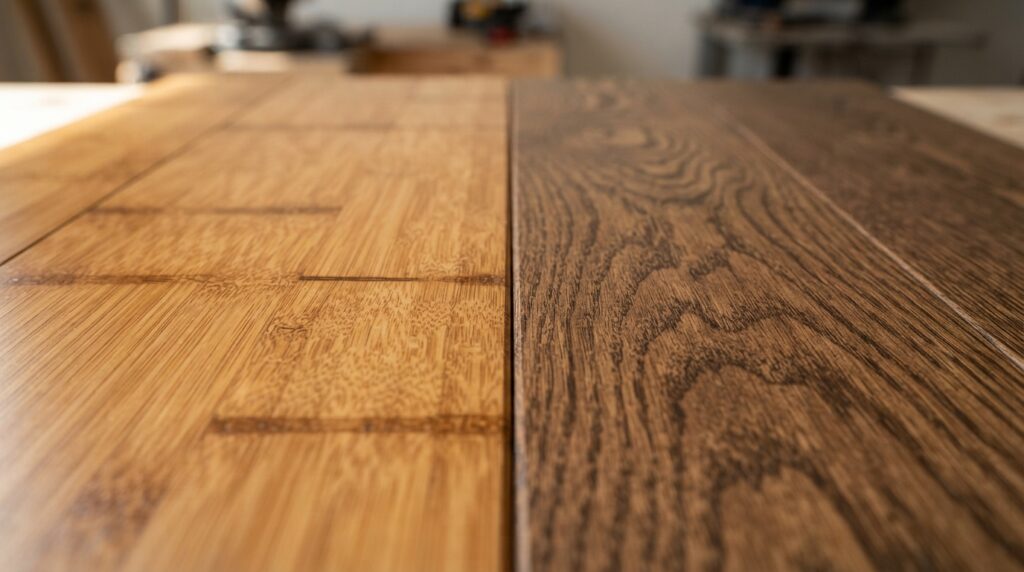
Bamboo is technically a grass, not a wood, even though it’s milled and finished to look and perform like hardwood. That distinction matters more than people expect. Bamboo fibers absorb moisture faster than most hardwood species, and the protective finish on top is what’s actually doing the work of keeping water, dirt, and grit from reaching the fibers underneath.
That’s why so many bamboo floor problems, cupping, discoloration, dull patches, trace back to cleaning habits rather than the material itself. Too much water, the wrong cleaning product, or a scrubby mop head can wear through that finish faster than you’d think. Once the finish is compromised, the bamboo underneath is exposed, and that’s when real damage starts.
The upside is that bamboo is also naturally harder than many traditional hardwoods, particularly strand-woven varieties. On the Janka hardness scale used to compare flooring materials, strand-woven bamboo can score two to three times higher than the natural or carbonized versions, which is part of why it handles daily foot traffic so well. It just needs cleaning methods that respect the finish rather than fight it.
Does the Type of Bamboo Flooring Change How You Clean It?
Not all bamboo flooring is built the same way, and the construction method affects how cautious you need to be with water and cleaning products.
Solid bamboo is milled from strips of the plant pressed together under heat and pressure. It’s the most traditional option and tends to be the most sensitive to moisture, since there’s no engineered core buffering the fibers.
Engineered bamboo has a bamboo veneer layered over a plywood or fiberboard core. It’s generally more dimensionally stable, meaning it handles humidity swings a little better, but the core material can still be vulnerable if water gets underneath the surface layer, so the “barely damp mop” rule still applies.
Strand-woven bamboo is made by compressing shredded bamboo fibers under extreme pressure, which is what gives it that noticeably higher hardness rating mentioned earlier. It’s more scratch-resistant day to day, but it’s not more water-resistant, so don’t let the added durability tempt you into using more liquid when you clean it.
Water-resistant or waterproof bamboo composite products have become more common in recent years, often marketed for kitchens and bathrooms. Even these still benefit from the same basic care approach, dry mopping regularly and avoiding pooled water, since “water-resistant” and “waterproof” describe how long the floor can tolerate exposure, not permission to skip good habits.
If you’re not sure which type you have, check any paperwork from the installation, or look at the edge of a board near a doorway or vent, solid bamboo will look uniform all the way through, while engineered bamboo will show a thin veneer layer over a different core material underneath.
What You’ll Need Before You Start Cleaning
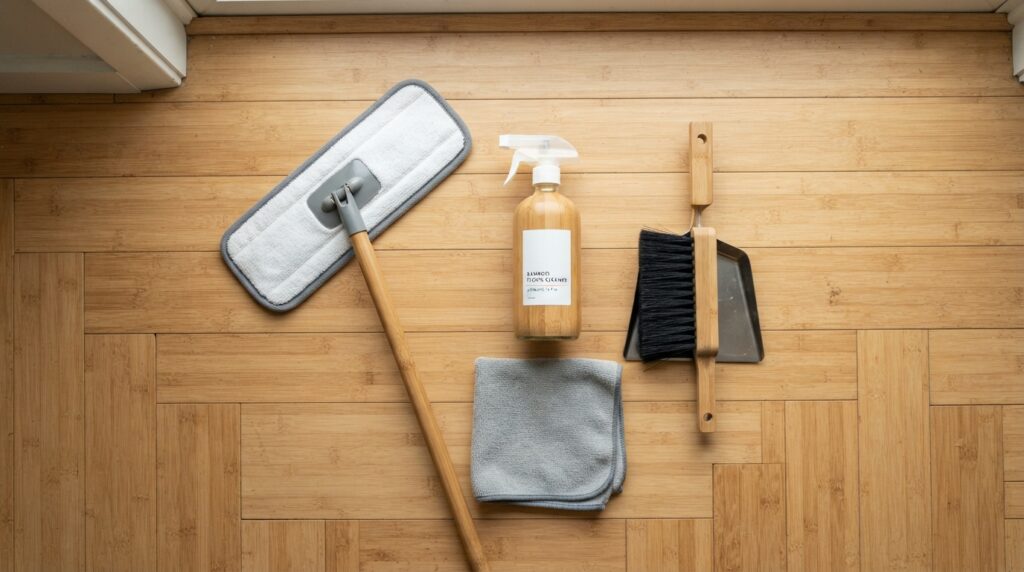
You don’t need a cabinet full of specialty products to keep bamboo floors looking good. In fact, the fewer products you use, the better off your finish usually is.
Tools worth keeping on hand
- A soft-bristle broom or a vacuum with a felt or brush attachment (skip the beater bar, it can scratch the finish)
- A microfiber dust mop for daily dry cleaning
- A microfiber wet mop or spray mop with a removable, washable pad
- A soft microfiber cloth for spot cleaning and drying
- A bucket, if you’re mixing your own diluted solution instead of using a spray bottle
Cleaning solutions that are actually safe for bamboo
Not every “wood floor” cleaner on the shelf is formulated the same way, and this is where a lot of people accidentally damage their floors. Look for a cleaner made specifically for bamboo floors that’s labeled pH-neutral and wax-free, since gentler formulas skip the acids, abrasives, and waxes that gradually eat away at a factory finish.
Avoid anything with:
- Ammonia
- Bleach
- Oil-based soaps in heavy concentrations
- Wax or polish additives (these build up over time and turn floors slippery and hazy)
If you’d rather skip the store-bought bottle entirely, a simple homemade mix of a few drops of dish soap in a bucket of warm water works for most light cleaning jobs, as long as you keep your mop nearly dry.
Daily and Weekly Maintenance Routine
Most of the “damage” people worry about with bamboo floors actually comes from skipped basic maintenance, not from a single big spill. Grit and sand are the real enemy here because they act like sandpaper every time someone walks across the room.
Daily habits that make the biggest difference
- Dry mop or dust with a microfiber head to pick up loose dirt and hair
- Wipe up spills immediately, bamboo doesn’t tolerate standing liquid well
- Keep doormats at entrances to trap grit before it reaches the floor
Weekly routine
- Vacuum with a soft brush attachment or sweep thoroughly
- Damp mop using a well-wrung microfiber mop and a pH-neutral cleaner
- Dry any remaining moisture with a soft towel if the floor feels even slightly wet after mopping
This two-step rhythm, dry cleaning daily and a light damp mop weekly, is what most flooring specialists actually recommend, since it’s the buildup of grit and moisture over time, not one bad mopping session, that shortens a bamboo floor’s lifespan.
How to Clean Bamboo Flooring Naturally (Step-by-Step)
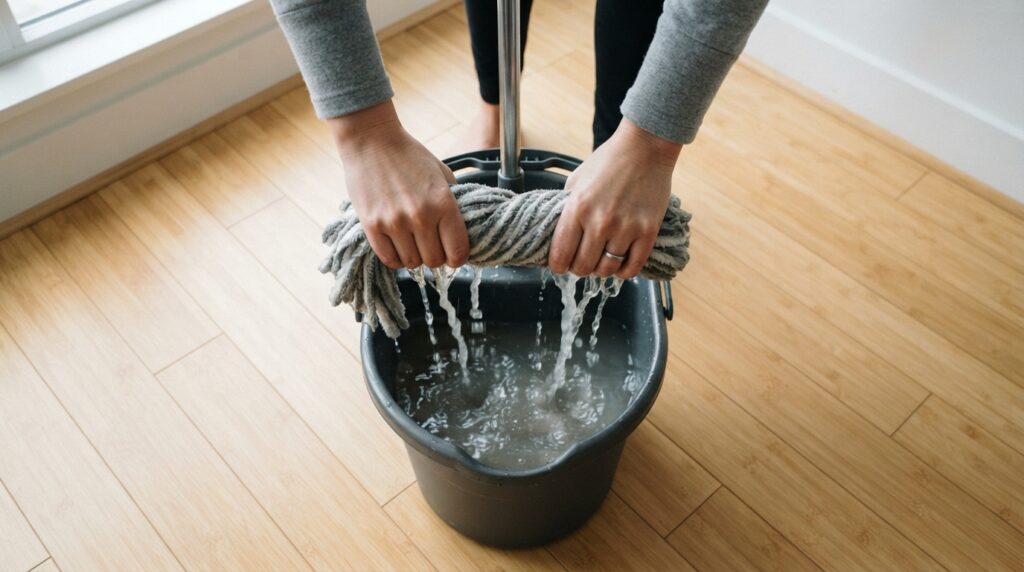
If you’d rather avoid commercial chemical cleaners altogether, there’s a simple method that works well for most sealed bamboo floors. This is the version most people mean when they search for how to clean bamboo flooring naturally.
- Sweep or vacuum first. Never skip this step. Mopping over loose grit just drags it across the finish and creates fine scratches you won’t notice until the light hits them a certain way.
- Mix a mild solution. A few drops of a gentle, unscented dish soap in a bucket of warm water is usually enough for routine cleaning.
- Wring the mop until it’s barely damp. This is the step people get wrong most often. The mop should feel almost dry to the touch, not wet.
- Mop in the direction of the grain, working in small sections so no area sits wet for long.
- Follow immediately with a dry microfiber cloth to catch any leftover moisture, especially along seams between boards.
This method is gentle enough for weekly use and avoids introducing anything that could strip or dull the factory finish.
How to Clean Bamboo Floors With Vinegar: Should You?
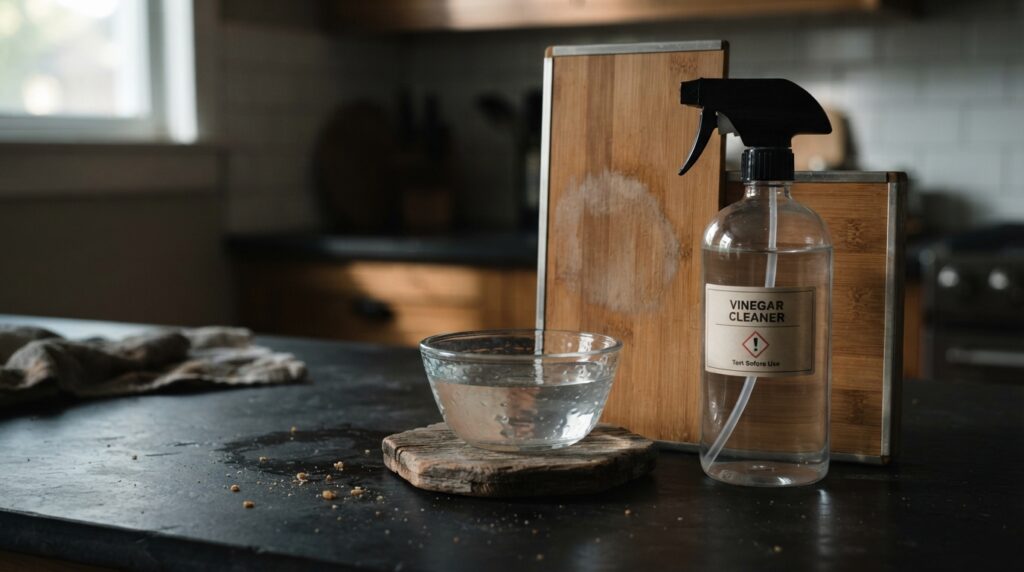
Vinegar comes up constantly in home cleaning advice, and it’s a fair question to ask whether it works here too. The honest answer is that it’s genuinely divided opinion among flooring experts.
On one side, some general hardwood cleaning guides mention diluted vinegar as an option for light cleaning. On the other, most flooring specialists actively warn against it, pointing out that acidic cleaning agents like vinegar can discolor bamboo or gradually wear down its finish, leaving it more vulnerable to other damage down the line. Several bamboo flooring manufacturers go a step further and list vinegar as a product to avoid entirely, alongside mineral spirits and paint thinner.
If you still want to try a vinegar-based approach, treat it as an occasional, heavily diluted option rather than a regular routine:
- Use no more than a tablespoon of white vinegar per gallon of warm water
- Never use it on floors with visible finish wear, hairline cracks, or an unsealed surface
- Test it in a hidden corner first and check back after 24 hours for any dulling or discoloration
- Rinse the mop with plain water afterward and dry the floor immediately
If your floor already looks slightly hazy or the finish feels worn in spots, skip vinegar entirely and stick with a pH-neutral bamboo or hardwood cleaner instead. It’s simply the lower-risk choice.
How to Clean Bamboo Floors Without Streaks
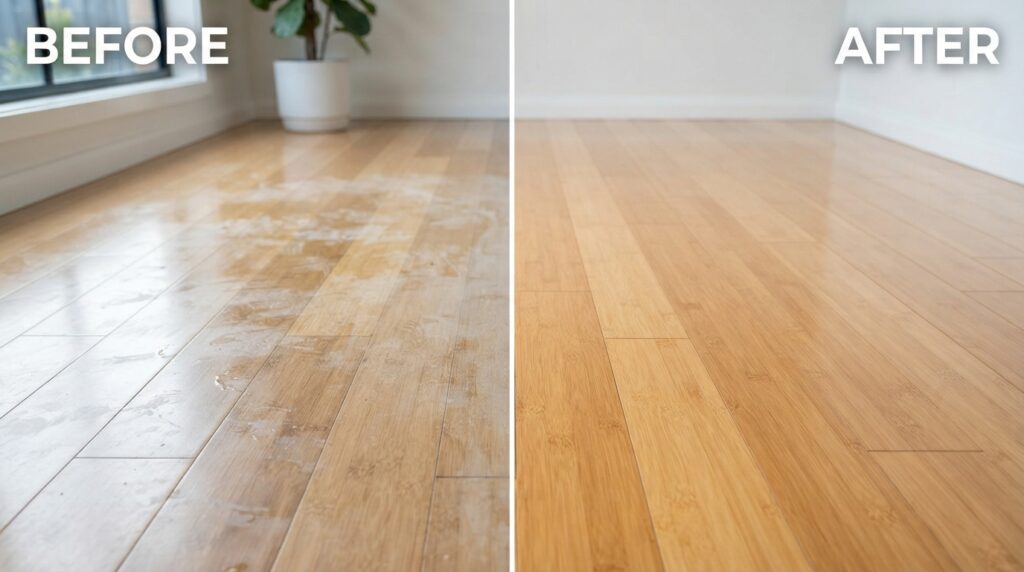
Streaky floors are almost always a sign of one of three things: too much cleaner, too much water, or the wrong type of mop pad. Here’s how to avoid all three.
- Use less product than you think you need. A light misting over a small section is enough; heavy spraying just leaves excess residue behind as it dries.
- Switch to a clean mop pad regularly. A pad that’s already loaded with old residue will just redistribute streaks instead of lifting them.
- Mop in straight, overlapping lines rather than random circles, which tends to push dirty water around instead of picking it up.
- Buff dry spots with a soft cloth right after mopping, particularly in areas that get direct sunlight, since streaks show up more obviously where light hits the floor.
- Avoid mixing different cleaning products on the same floor without fully rinsing between uses. Layering an oil soap over a wax-based product, for example, is a common cause of that permanent cloudy look.
If your floor already has streaking from a previous cleaning mistake, a single pass with a proper pH-neutral cleaner and a completely clean mop pad usually resolves it within one or two cleanings.
Deep Cleaning Bamboo Floor Boards (Monthly Care)
Weekly maintenance handles surface dirt, but bamboo floor boards benefit from a slightly deeper clean once a month, especially in high-traffic rooms like kitchens and entryways.
Here’s what a monthly deep clean typically involves:
- Move furniture and rugs to reach areas that don’t get touched during regular cleaning
- Vacuum thoroughly, including corners and along baseboards where dust collects
- Mop with a slightly more concentrated (but still manufacturer-approved) cleaning solution
- Check seams between boards for any trapped grit or moisture and clean those spots by hand with a soft cloth
- Inspect for early signs of wear, dull patches, small scratches, or slight gaps, so you can address them before they get worse
This is also a good time to check humidity levels in the room. Bamboo boards expand and contract with moisture in the air, and keeping indoor humidity in a moderate range, generally between 40% and 60%, using a humidifier or dehumidifier as needed helps prevent the gapping or cupping that shows up when conditions swing too far in either direction.
How to Clean a Bamboo Floor Mat
Bamboo floor mats, the woven roll-up kind often used in kitchens, bathrooms, or entryways, need a slightly different approach than the solid flooring itself, mostly because they trap moisture and debris between the slats.
- Shake it out first. Take the mat outside and shake off loose crumbs, dirt, and dust before cleaning.
- Vacuum both sides with a brush attachment to pull debris out from between the slats.
- Wipe with a barely damp cloth using the same pH-neutral cleaner you’d use on the flooring, never soak it.
- Dry it flat and fully before putting it back down. Rolling or storing it while even slightly damp is the most common cause of mold and mildew on bamboo mats.
- Avoid machine washing or submerging it in water, since the woven construction can warp or crack if it’s oversaturated.
If your mat is already showing black or green spots, it’s likely mildew rather than dirt, and that requires a different approach than routine cleaning. If you’ve ever dealt with a stubborn sticky spill on a mat or nearby flooring, the same patience-over-scrubbing principle applies as it does with removing sticky honey stains from other home surfaces: work the moisture out gently rather than rubbing it in deeper.
Removing Tough Stains and Spills
Spills happen, and how quickly you respond matters more than what product you eventually use.
| Stain Type | Recommended Approach |
|---|---|
| Water rings or watermarks | Wipe dry immediately, then buff gently with a dry microfiber cloth |
| Grease or oil | Blot (don’t rub) with a cloth and a small amount of dish soap solution |
| Ink or marker | Dab gently with a cloth dampened in a pH-neutral cleaner, avoid rubbing alcohol on finished bamboo |
| Scuff marks | Rub gently with a soft, dry cloth; avoid abrasive sponges |
| Sticky residue (juice, syrup, tape) | Loosen with a warm, barely damp cloth first, then wipe clean |
For any stain, the same core rule applies: blot and lift rather than scrub. Scrubbing pushes grit around and can leave fine scratches in the finish, especially on lighter or matte-finished bamboo where marks show up more easily.
Common Mistakes That Damage Bamboo Floors
A lot of the wear people blame on “cheap bamboo” is actually the result of a handful of avoidable habits.
- Using a steam mop. This is probably the single most common mistake. Bamboo floors need special handling around moisture, and spills need attention right away, so steam is the opposite of what the material wants, it forces heat and moisture directly into the seams and can cause damage that isn’t reversible.
- Letting water pool on the surface. Even a small puddle left overnight can seep between boards and cause swelling.
- Using wax, oil soap, or “shine” products. These build up residue over time and eventually make floors look duller, not shinier.
- Skipping the felt pads on furniture legs. Dragging chairs and tables across bamboo is a fast way to introduce deep scratches.
- Vacuuming with a beater bar attachment. Standard upright vacuum heads designed for carpet can scuff and scratch a bamboo finish.
- Ignoring humidity swings. Dry winter air or a humid summer without climate control puts real stress on the boards over time.
- Cleaning with a dirty mop pad. Reusing a pad that’s already loaded with old dirt just grinds fine grit back into the finish instead of lifting it away, which is a sneaky cause of scratches people often blame on something else entirely.
- Using too much cleaning product “to be safe.” More product doesn’t mean cleaner floors. It usually means more residue left behind once the water evaporates, which is one of the biggest contributors to that dull, cloudy look over time.
- Waiting too long to address pet accidents. Urine is acidic and can stain and warp bamboo quickly if it isn’t cleaned up and dried within a short window, so this is one spill that genuinely can’t wait until later in the day.
Choosing the Right Everyday Cleaning Products
With so many “wood floor safe” labels on store shelves, it helps to know what to actually check before you buy.
- Read the label for “pH-neutral” and “no wax.” These two phrases matter more than any brand name.
- Skip anything marketed as an all-purpose cleaner. General household cleaners are often formulated for tile or laminate and can be too harsh or too alkaline for a bamboo finish.
- Concentrated versus ready-to-use formulas both work fine, concentrates are usually more economical over time, but you’ll need to measure dilution carefully rather than eyeballing it.
- Refillable spray mop systems cut down on how much liquid touches the floor at once, which naturally helps prevent over-wetting.
- When in doubt, check your flooring’s warranty documentation. Some manufacturers specifically name approved cleaning products, and using something outside that list can, in rare cases, affect warranty coverage if damage occurs later.
A small investment in the right cleaner up front tends to save a lot of frustration, and money, down the road compared to trying to fix a dulled or damaged finish after the fact.
Pros and Cons of Bamboo Flooring Maintenance
It’s worth being realistic about what bamboo asks of you compared to other flooring types before you commit to a routine.
| Pros | Cons |
|---|---|
| Naturally harder and more scratch-resistant than many hardwoods, especially strand-woven types | More sensitive to standing water than some engineered hardwood options |
| Simple weekly routine once you know the right products | Wrong cleaners (wax, ammonia, oil soaps) can permanently dull the finish |
| Long lifespan with proper care, often decades | Humidity swings can cause gapping or cupping if not managed |
| Doesn’t require waxing or polishing like some older hardwood finishes | Can’t be steam cleaned, unlike tile or some laminate |
Overall, the maintenance load is genuinely manageable. Most of the “cons” here are really just things to avoid rather than extra work to take on.
Expert Tips for Keeping Bamboo Floors Looking New Longer
- Place rugs in high-traffic zones like hallways and in front of sinks, but choose rugs with breathable, non-rubber backing since rubber-backed mats can trap moisture and discolor the finish underneath.
- Rotate furniture placement occasionally so the same boards aren’t carrying all the weight and foot traffic year after year.
- Keep pet nails trimmed. Bamboo resists scratching better than many hardwoods, but nothing is fully scratch-proof against repeated claw contact.
- Refresh the finish with a manufacturer-approved polish only when needed, not on a fixed schedule, and always test it in a small hidden area first.
- Read the specific care instructions that came with your flooring, since different styles and finishes often carry their own unique guidelines, and what works for one bamboo product isn’t automatically safe for another.
How Seasonal Changes Affect Bamboo Floor Cleaning
Cleaning bamboo flooring isn’t quite the same job in every season, mostly because humidity shifts change how the boards behave.
In winter, indoor heating dries out the air significantly, which can cause bamboo boards to contract slightly and create small gaps between planks. During this stretch, it’s worth being extra careful about how much moisture you introduce while mopping, since dry wood absorbs liquid faster than wood that’s already holding some ambient moisture. A humidifier set to maintain moderate indoor humidity can also reduce how noticeable seasonal gapping becomes.
In summer, especially in more humid climates, bamboo tends to expand slightly as it absorbs ambient moisture from the air. Floors can feel a little tighter underfoot, and this is when it’s most important to dry mop frequently, since any grit tracked in on humid days combines with ambient moisture to create a grittier paste that’s harder to remove later.
During rainy seasons or wet months, doormats earn their keep. A huge share of the dirt and moisture that ends up ground into bamboo flooring comes in on shoes during just a handful of wet weeks each year. A simple boot tray or absorbent mat at every entrance meaningfully cuts down how often you need to deep clean.
Around the holidays or during parties, when foot traffic spikes and spills become more likely, it helps to do a quick dry mop pass at the end of each day rather than waiting for the weekly cleaning slot. Catching spills and crumbs the same day prevents them from being ground into the finish overnight.
None of this means you need a different cleaning product for each season, the core routine stays the same. It just means paying a little closer attention to water use and grit buildup as conditions change throughout the year.
Frequently Asked Questions
How often should I clean bamboo flooring?
Dry mop or sweep daily to catch loose grit, and do a proper damp mop with a pH-neutral cleaner once a week. High-traffic rooms may need the damp mop step twice a week.
Can I use a steam mop on bamboo floors?
No. Steam forces heat and moisture into the seams between boards, which can cause warping or permanent damage that isn’t easily fixed.
Is vinegar safe for cleaning bamboo floors?
Most flooring specialists recommend avoiding it, since the acidity can dull or discolor the finish over time. If you choose to use it anyway, dilute it heavily and use it sparingly rather than as a regular cleaner.
Why does my bamboo floor look streaky after mopping?
Streaks usually come from using too much cleaner, too much water, or a mop pad that’s already saturated with old residue. Switching to a clean pad and a lighter misting of cleaner typically fixes it within a cleaning or two.
How long does bamboo flooring last with proper care?
With consistent, gentle cleaning and the right products, bamboo flooring can realistically last for decades, with well-maintained floors sometimes reaching up to 50 years of service before they need refinishing or replacement.
Final Thoughts
Cleaning bamboo flooring really comes down to a short list of habits: sweep before you mop, keep your mop nearly dry, skip the harsh chemicals, and deal with spills the moment they happen. None of that requires special equipment or a complicated routine, it just requires a little consistency. Once those habits become second nature, bamboo floors are genuinely one of the lower-maintenance options you can have in a home, and they’ll keep that warm, natural look for a long time.
If you’re setting up a broader home cleaning routine and want to keep every surface, not just your floors, looking its best, it’s worth building out a simple weekly checklist so nothing gets missed between deep cleans.

