

Putting the sofa against the biggest wall and finding somewhere opposite for the TV doesn’t sound like something that should make a living room difficult to use. Neither does adding another chair if there’s enough space for it. But after you have finished the room with final touches you may feel like now there isn’t enough space to walk through comfortably. Or you found a home for the TV that looked right to begin with, until you actually sat down to watch it that is.
The furniture does all fit technically, but that doesn’t mean that it works where you put it. Before replacing everything, you may be surprised how moving things around could fix the problem first. In this article we’re going to look at how to fix living room layout mistakes instead of starting from scratch again.
Pushing Every Sofa Against the Wall
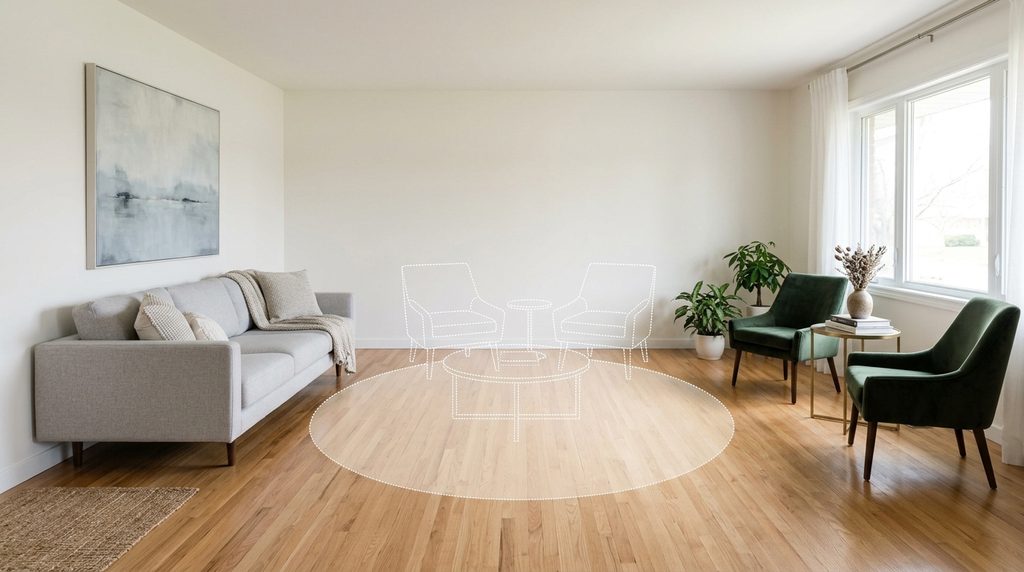
Putting the sofa against a wall probably feels like the obvious place for it in a living room. It keeps it out of the way and gives you as much open floor space as possible. In some rooms that is exactly where it needs to go, but not every sofa has to be pushed right back against the edge of the room.
Say you have a larger living room and the sofa is against one wall with two chairs sitting against the wall opposite. You’ve technically created plenty of space, but now there’s a large empty area in the middle and everybody is sitting quite far away from each other.
Moving the chairs forward or bringing the sofa a little farther into the room can make the living room furniture feel less spread out. You don’t need to move it several feet either, sometimes a small change is enough.
Not Thinking About Where People Actually Walk
You can arrange a room and think it looks completely fine, then after living with it for a few days realize you’re constantly walking around the same chair. Once you’ve got your furniture in it may look good, but if you’re constantly bumping your leg on the coffee table, or you have to squeeze to get out the living room door, then you may need to reevaluate.
Your room can’t just be pleasing to the eye, it has to be functional too, which is an important part of interior design. Afterall it’s called a ‘living’ room for a reason – you’ll be spending the majority of your time in there, so you’ll need to be able to move around freely without obstructions.
Buying Furniture That Is Too Big
A sofa can look a lot smaller when it’s sitting in the middle of a furniture showroom, which is why furniture design and scale matter when choosing pieces for your room. Then it arrives at home and suddenly you’re wondering how something that definitely fit the measurements is taking up so much space.
That’s because fitting against the wall and fitting comfortably in the room are two different things when choosing furniture. You might measure an eight-foot wall and buy a sofa that is seven feet wide. There’s technically plenty of room for it, but you also have to think about how far it comes into the room and what else needs to sit around it. Once the coffee table and another chair are added, there may not be much space left.
Before buying something large, mark out the full size of it on the floor with painter’s tape. It gives you a much better idea of how much of the room the furniture will actually take up rather than only looking at the measurements online.
Putting the TV in the Most Obvious Place
There is usually one wall that looks like it should have the TV on it. It’s empty, there’s an outlet nearby and putting it there means the sofa can go directly opposite. That seems like the obvious choice.
But then the afternoon sun starts coming through the window and you can hardly see the screen. Or you put the TV in a corner because that’s where it fits, only to realize the sofa is now facing slightly away from it and you have to turn every time you watch something.
The TV doesn’t need to control the whole room, but you do need to think about what it will be like from where you’re actually sitting. Look at where the windows are and whether the position still works once the other furniture has been added.
Forgetting About the Things That Can’t Move
A blank wall might look like the perfect place for a large piece of furniture until you remember there’s a radiator halfway along it. Or a cabinet fits nicely beside the window but once it’s there, it blocks more light than you expected.
Doors can cause the same problem. A chair might not physically stop the door from opening, but if everyone has to step around it when they come into the room, it probably isn’t the best place for it.
These things aren’t going anywhere, so it makes more sense to work around them before deciding where the furniture should go.
Try the Layout Before You Move Everything
None of this means you have to get the living room right the first time. Quite the opposite. Moving things around is usually how you find out what works. Try the sofa on another wall. Turn the chairs slightly. See whether a smaller coffee table gives you more room to walk through.
The only problem is doing that with the actual furniture can become a lot of work, especially when you decide after moving everything that you preferred it where it was.
This is where the Arcadium 3D room designer can be useful. You can build the room to scale, add furniture and move things around before physically changing anything. You can then move through the room in 3D and see whether there’s enough space around the sofa, if the walkway feels too tight or whether the furniture works better somewhere else. It gives you a chance to try different ideas while changing your mind still only means moving something on a screen.

