

That first smear of chocolate on a sleeve always looks worse than it actually is. The good news is that knowing how to get chocolate out of clothes doesn’t require anything exotic, just the right order of steps and a little patience before the item goes anywhere near a dryer.
It’s the kind of stain that shows up at the worst possible moments too, a melted candy bar in a jacket pocket, a toddler’s fudge-covered fingers on a work shirt, a chocolate cake mishap right before guests arrive. None of those situations call for panic. A few minutes of the right first response usually decides whether the mark disappears completely or turns into a permanent shadow.
Chocolate is stubborn because it’s really two stains in one: an oily fat from the cocoa butter and a dark pigment from the cocoa solids. Treat only one half of that equation and the other half lingers behind, which is why so many people end up with a faint shadow even after a full wash cycle.
That combination is exactly what makes chocolate different from a simple grease spot or a plain berry stain. A national cleaning organization’s dedicated guidance on treating chocolate marks points out that scraping off the excess first, then soaking in cool water, prevents the fat from spreading further before any detergent even gets involved.
Why Chocolate Stains Are Trickier Than They Look
A grass stain is just pigment. A butter stain is just oil. Chocolate combines both, plus a bit of milk protein if it’s milk chocolate, which is exactly why a single cleaning product rarely finishes the job on its own.
Heat is the real enemy here. Warm water melts the cocoa butter and pushes it deeper into the weave of the fabric instead of lifting it out, and running a stained item through the dryer can bake the stain in permanently. Cold water and patience beat speed every time.
What You’ll Need Before You Start
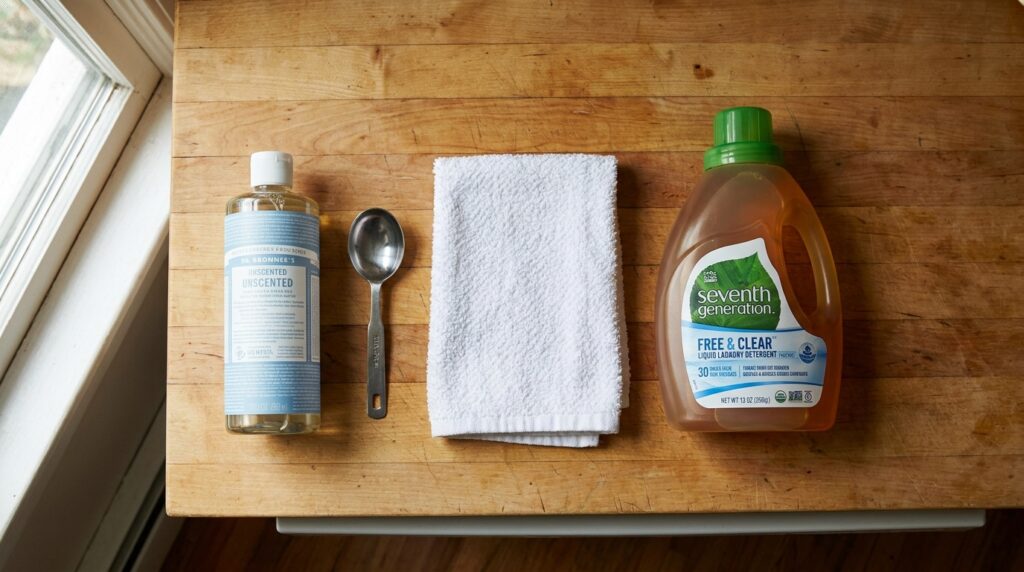
Nothing on this list requires a special trip to the store. Most of it is probably already sitting under the kitchen sink.
- A dull knife or spoon for scraping
- Liquid dish soap, ideally a grease-cutting formula
- Cool or cold water
- A clean white cloth or old towel
- Liquid laundry detergent, preferably one containing enzymes
- White vinegar or hydrogen peroxide, for stubborn or dark chocolate stains
Keeping the process simple matters more than reaching for a specialty product. A general stain removal chart from a national cleaning organization confirms that most fabric stains, chocolate included, respond well to basic household detergent when it’s applied correctly and promptly.
How to Get Chocolate Out of Clothes When the Stain Is Still Fresh
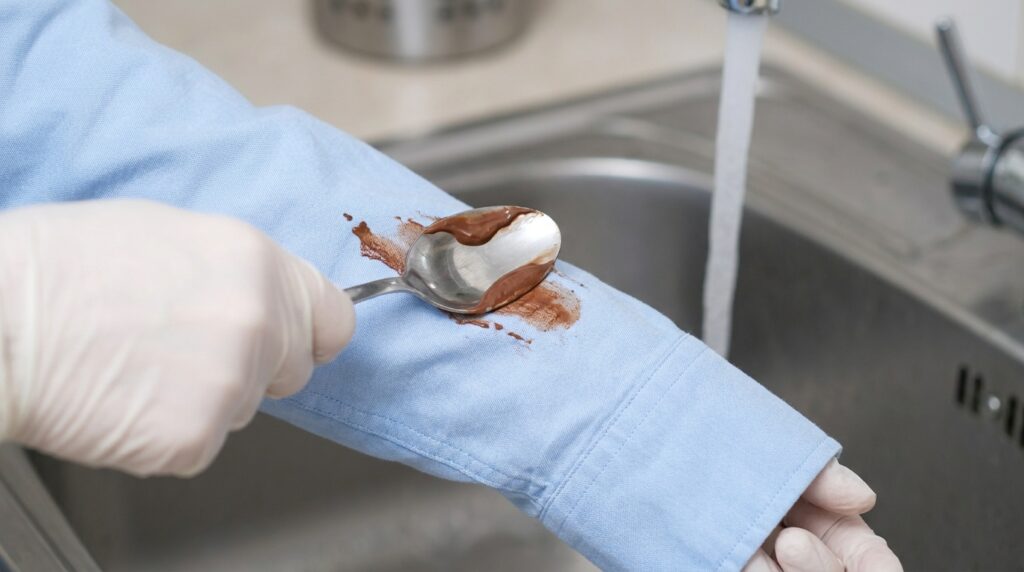
Fresh stains are the easiest kind to deal with, and speed matters more than force here. Resist the urge to rub, since rubbing just grinds the chocolate solids further into the fibers.
Step-by-step for a fresh stain:
- Scrape off any excess chocolate gently with a spoon or dull knife, working from the outside of the stain inward.
- Turn the garment inside out and run cool water through the back of the fabric to push the stain out rather than deeper in.
- Apply a small amount of liquid dish soap directly to the stain and work it in gently with your fingers.
- Let it sit for about ten to fifteen minutes.
- Rinse thoroughly with cool water and check the spot before laundering.
- Wash as usual in the coolest water the fabric care label allows.
If any color still lingers after washing, do not put the item in the dryer. Repeat the treatment first, since heat will lock in whatever pigment remains.
A common real-world example makes this easier to picture. Say a chocolate ice cream cone drips onto a cotton shirt at a summer barbecue. Scraping off the melted portion right away, rinsing from the back of the fabric, and dabbing in dish soap before the shirt ever goes in a laundry bag makes the difference between a stain that vanishes in one wash and one that needs three attempts a week later. The earlier the intervention, the less work every later step requires.
Cotton, polyester blends, and most everyday fabrics respond well to this fresh-stain method without needing anything stronger. Save the more aggressive treatments described below for stains that have already had time to dry and bond with the fibers.
Removing Dried or Set-In Chocolate Stains
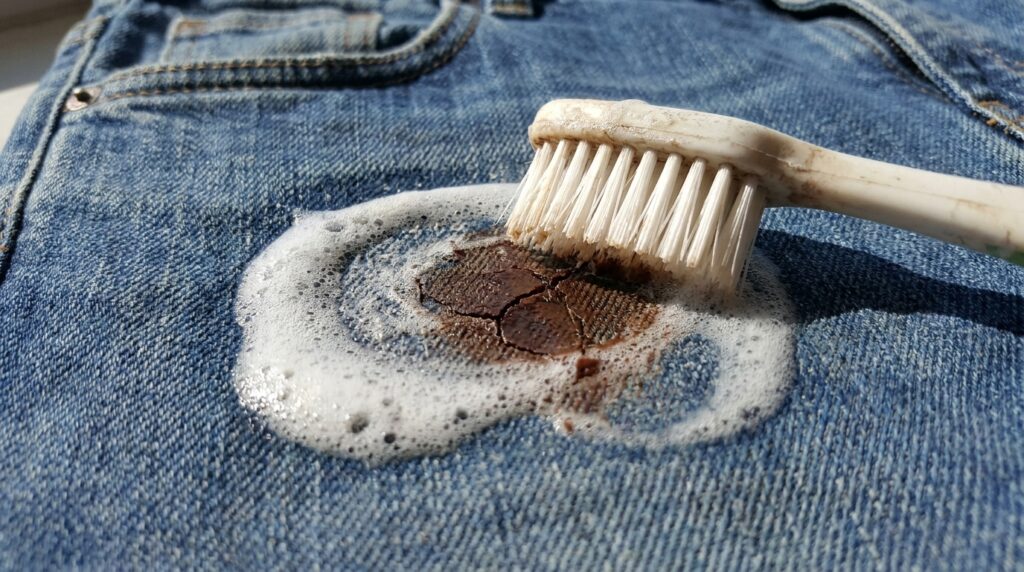
Dried chocolate stains take a bit more patience, but they’re rarely a lost cause. The chocolate has had time to bond with the fabric fibers, so soaking becomes the most important step.
Step-by-step for a dried stain:
- Gently scrape off any hardened chocolate flakes with a dull knife.
- Soak the garment in cool water for 20 to 30 minutes to loosen the set stain.
- Apply liquid detergent directly to the stain and work it in with a soft toothbrush using small circles.
- Let it sit for 15 to 20 minutes, longer than you would for a fresh stain.
- Rinse and check the spot under natural light before laundering, since dried stains can be subtle once damp.
- Launder in the warmest water safe for the fabric, checking the label first.
Extension research on treating chocolate and cocoa stains recommends pretreating the fabric with an enzyme-based detergent before laundering, which is especially useful once a stain has already dried and set into the weave.
When a Chocolate Stain Slips Through the Wash Unnoticed
Sometimes a stain isn’t caught until after the item has already been through a full wash and dry cycle, which sets the pigment far more stubbornly than a fresh spill ever would. This situation calls for patience rather than force.
Start with the same dried-stain method described above, but expect to repeat it. A heat-set stain rarely lifts in a single soak, and pushing too hard with scrubbing or hot water at this stage tends to spread the discoloration rather than shrink it.
Steps for a heat-set stain:
- Soak the garment in cool water for at least an hour, longer for particularly stubborn marks.
- Apply a paste of enzyme detergent and a small amount of water directly to the stain.
- Let the paste sit for 30 minutes, checking periodically that the fabric isn’t drying out.
- Rinse and inspect closely under natural light.
- If color remains and the fabric allows it, follow with a diluted hydrogen peroxide or oxygen bleach treatment.
- Repeat the entire process before drying again, since another trip through the dryer will make the stain permanent.
Patience matters more here than in almost any other stage. Some heat-set chocolate stains take three or four rounds of treatment before they fully disappear, and that’s a normal part of the process rather than a sign something’s gone wrong.
Getting Chocolate Stains Out of White Clothes
White fabric shows every trace of a stain, which makes it worth taking a slightly more careful approach. The core steps stay the same, scrape, cold rinse, detergent, but white clothing tolerates a couple of extra options that colored fabric doesn’t.
Follow the standard fresh or dried stain method first, then check the spot closely once it’s dry. If a faint shadow remains, a small amount of hydrogen peroxide diluted with water can often finish the job on white, bleach-safe cotton. Always check the care label before using any bleaching agent, and test on an inconspicuous seam first, since not every white fabric handles it the same way.
White cotton, the kind used in most everyday t-shirts and button-downs, generally tolerates diluted hydrogen peroxide well. Blends containing spandex or synthetic fibers can react differently, sometimes yellowing instead of brightening, so a small test patch on an inside seam is worth the extra thirty seconds before treating the whole visible stain. If the fabric passes the test, apply the diluted peroxide directly to the remaining shadow, let it sit for five to ten minutes, then rinse thoroughly and check again before laundering as usual.
Milk Chocolate vs Dark Chocolate: Does It Matter?
The type of chocolate does change the treatment slightly, mostly because of how much cocoa solid pigment each one carries.
| Chocolate type | Main challenge | Best approach |
|---|---|---|
| Milk chocolate | Higher fat and milk protein content | Dish soap plus a small amount of ammonia for the greasy residue |
| White chocolate | Mostly fat, minimal pigment | Dish soap alone usually clears it |
| Dark chocolate | Heavier cocoa pigment, harder to fully lift | Dish soap followed by white vinegar or diluted hydrogen peroxide for color |
Milk chocolate stains tend to leave a slightly greasier ring because of the added milk fat, while dark chocolate leaves more of a pigmented shadow even after the oil is gone. Adjusting the follow-up treatment based on which one you’re dealing with saves a repeat trip through the wash.
Using Enzyme Detergents and Why They Work
Enzyme-based laundry detergents are worth calling out on their own, since they solve the protein half of a chocolate stain that plain soap sometimes misses, especially with milk or white chocolate.
These detergents contain proteases and lipases, biological compounds that break down protein and fat molecules into smaller pieces that rinse away more easily. Extension guidance on treating stubborn fabric stains notes that enzyme-based detergents work by breaking apart protein stains at a molecular level, which is exactly the kind of stain milk chocolate leaves behind thanks to its dairy content.
Look for the word “enzyme” or “bio” somewhere on the detergent label. Working a small amount directly into the stain before a full wash cycle, rather than relying on the wash cycle alone, tends to produce noticeably better results on set-in stains.
Temperature plays a role here too. Enzymes work within a specific range and actually lose effectiveness in water that’s too hot, which is one more reason cold or lukewarm water outperforms a hot wash when chocolate is involved. Letting the pretreated detergent sit against the stain for the full recommended time before rinsing gives the enzymes enough contact time to fully break down the fat and protein bonds holding the stain in place.
What to Avoid When Treating a Chocolate Stain
A few common instincts actually make chocolate stains worse instead of better.
- Don’t use hot water on a fresh stain. Heat melts the cocoa butter and drives it deeper into the fabric.
- Don’t scrub aggressively. Scrubbing grinds solid particles further into the weave rather than lifting them out.
- Don’t dry the item until you’ve confirmed the stain is fully gone. A dryer’s heat can set any remaining pigment permanently.
- Don’t skip the care label. Some fabrics, especially wool and silk, react poorly to vinegar, ammonia, or peroxide.
- Don’t mix cleaning agents. Combining ammonia and bleach-based products in particular can create harmful fumes.
Chocolate Stains on Delicate Fabrics
Silk, wool, and other delicate materials need a gentler hand than cotton or polyester. Skip the vinegar, ammonia, and peroxide entirely on these fabrics unless the care label specifically allows it.
For delicate items, a cool water rinse followed by a small amount of mild dish soap, worked in gently with fingertips rather than a brush, is usually the safest starting point. If a stain persists on a genuinely delicate or expensive garment, professional cleaning is often the better call over experimenting with stronger home treatments.
Dry-clean-only garments deserve a slightly different plan altogether. Rather than attempting a home treatment that could void the fabric’s finish or set the stain permanently, blot the excess chocolate gently with a dry cloth, avoid adding any water or soap, and take the item to a professional as soon as possible. Mentioning the stain type when you drop it off, rather than letting the cleaner discover it cold, also tends to produce better results, since they can choose a solvent suited specifically to a combination oil-and-pigment stain.
Pros and Cons of Common Removal Methods
| Method | Pros | Cons |
|---|---|---|
| Dish soap and cold water | Gentle, works on most fabrics, no special products needed | Slower on dark chocolate pigment |
| Enzyme detergent pretreatment | Breaks down protein and fat effectively | Needs dwell time to work well |
| White vinegar | Helps lift pigment on colored fabric | Strong smell, not ideal for delicates |
| Diluted hydrogen peroxide | Effective on white, bleach-safe fabric | Can affect color on non-white items |
| Commercial pretreatment spray | Convenient, fast-acting | Some formulas contain solvents unsafe for delicate fibers |
Expert Tips for Preventing Chocolate Stains From Setting
A few small habits make the difference between a stain that disappears completely and one that leaves a faint ghost behind.
- Treat the spot as soon as possible rather than waiting until laundry day.
- Always rinse from the back of the fabric, not the front, to push the stain out instead of through.
- Keep a small stain-treatment pen or wipe on hand for situations away from home, since dried chocolate is harder to fully remove than fresh chocolate.
- Recheck the spot in natural daylight before drying, since indoor lighting can hide a faint remaining shadow.
- For frequent spills, such as with young kids, pairing a quick pretreatment habit with the same food-stain logic used for sticky spills like honey keeps both types of stains from setting before they reach the wash.
Frequently Asked Questions
Can toothpaste really remove chocolate stains?
Toothpaste is a popular home remedy, but it isn’t reliably effective on chocolate specifically, since it’s formulated for different kinds of residue. Liquid dish soap or an enzyme detergent consistently outperforms it for both the oil and pigment components of a chocolate stain.
Is it too late to remove a chocolate stain after it’s been through the dryer?
It’s harder, but not always impossible. Repeat the soak and detergent treatment several times, checking closely after each attempt, since heat-set stains sometimes respond to persistent, repeated treatment even when a single pass doesn’t fully clear it.
Does chocolate stain white clothes worse than colored clothes?
Not technically worse, but it’s more visible, which makes it feel that way. White fabric also tolerates a few extra tools, like diluted hydrogen peroxide, that aren’t safe to use on colored garments without risking fading.
What’s the fastest way to treat a chocolate stain when I’m not at home?
Scrape off any excess chocolate immediately and blot, don’t rub, with a damp cloth or wet wipe. A full treatment can wait until you’re home, but preventing the stain from drying and setting in the meantime makes a real difference.
Why does my chocolate stain leave a greasy ring even after washing?
That ring usually means the fat from the cocoa butter wasn’t fully broken down before the wash cycle. A dish soap pretreatment specifically targets that oily residue, and going back over the spot before rewashing typically clears it.
Can I use bleach on a chocolate stain?
Chlorine bleach is generally not the first choice, since it can react unpredictably with the tannins in cocoa and sometimes turns a stain a stubborn yellowish tint instead of removing it. Oxygen-based bleach or diluted hydrogen peroxide, used only on fabrics that tolerate them, are the safer options for lifting leftover pigment.
Final Notes
Getting chocolate out of clothes really comes down to acting early, sticking with cold water, and giving detergent enough time to break the stain down before anything goes near heat. Most stains, fresh or dried, respond well to the same basic scrape, rinse, and treat routine.
This article is intended for general informational purposes only and isn’t a substitute for professional advice on fabric care or dry cleaning. Always check a garment’s care label and test any cleaning method on a hidden area first.

