
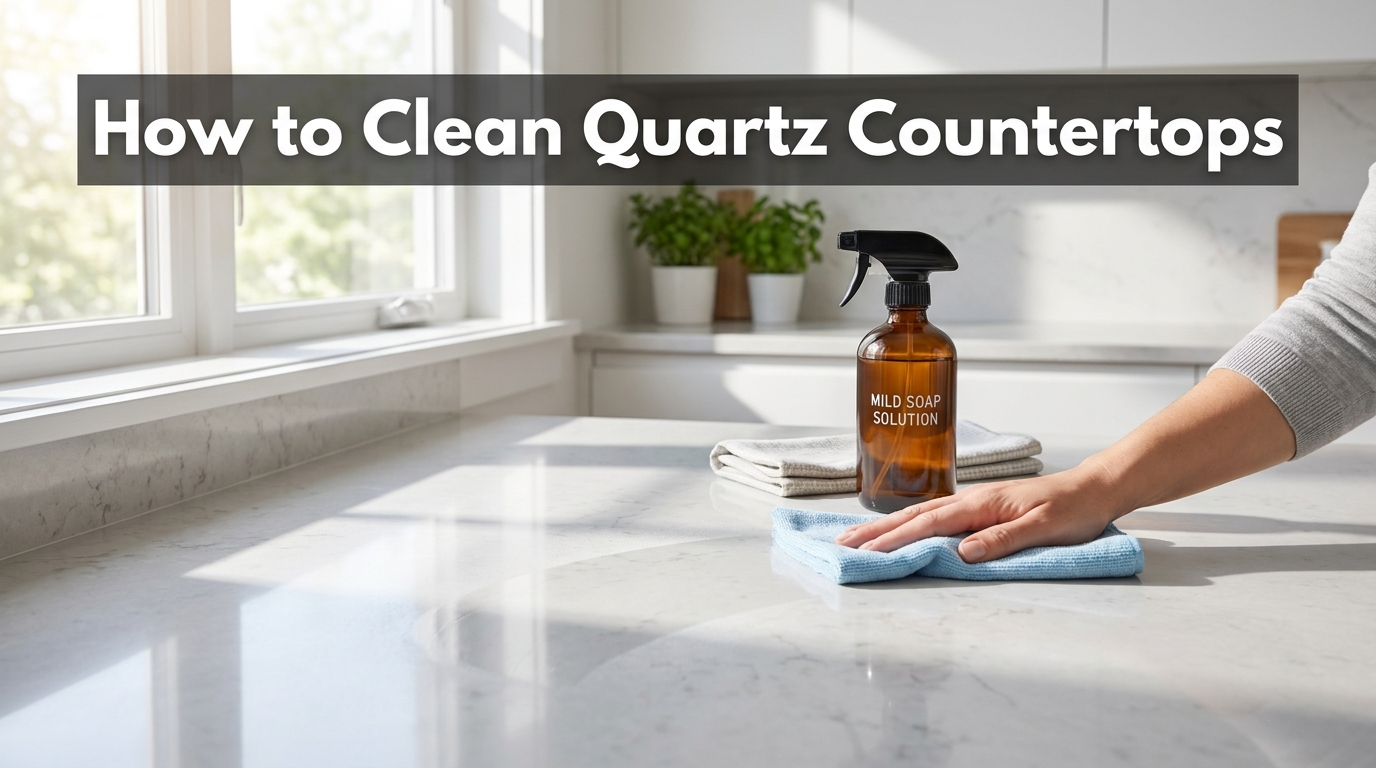
A quartz counter looks flawless on installation day, then a few weeks in, water rings show up near the sink and a coffee ring refuses to budge no matter how hard you scrub. If you’re wondering how to clean quartz countertops without scratching them or breaking down the finish, the good news is that the process is simpler than most people assume. Quartz is engineered stone, made from crushed natural quartz bound with resin, and that composition is exactly why it reacts differently to cleaning products than granite or marble does.
This piece walks through daily cleaning, stain removal, what to avoid, and a few habits that keep the surface looking new for years instead of months.
What Makes Quartz Different From Other Countertop Materials
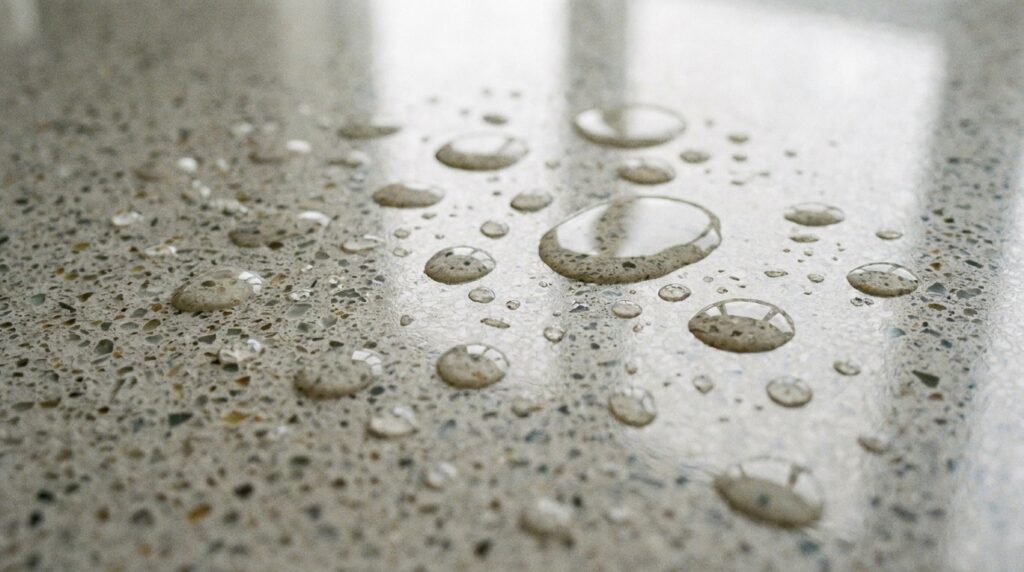
Quartz countertops aren’t solid slabs of natural stone. They’re manufactured surfaces, typically around 90 percent ground quartz mixed with polymer resins and pigments, which is why the material is so consistent in color and pattern compared to granite. That resin content is also the reason quartz doesn’t need sealing the way natural stone does, but it’s also more sensitive to heat and certain chemicals.
Engineered quartz surfaces are built to be non-porous, meaning liquids sit on top of the surface instead of soaking in. That’s a huge advantage for everyday spills, but it also means the wrong cleaner can leave a dull film instead of a streak-free shine.
Daily Cleaning Routine for Quartz Countertops
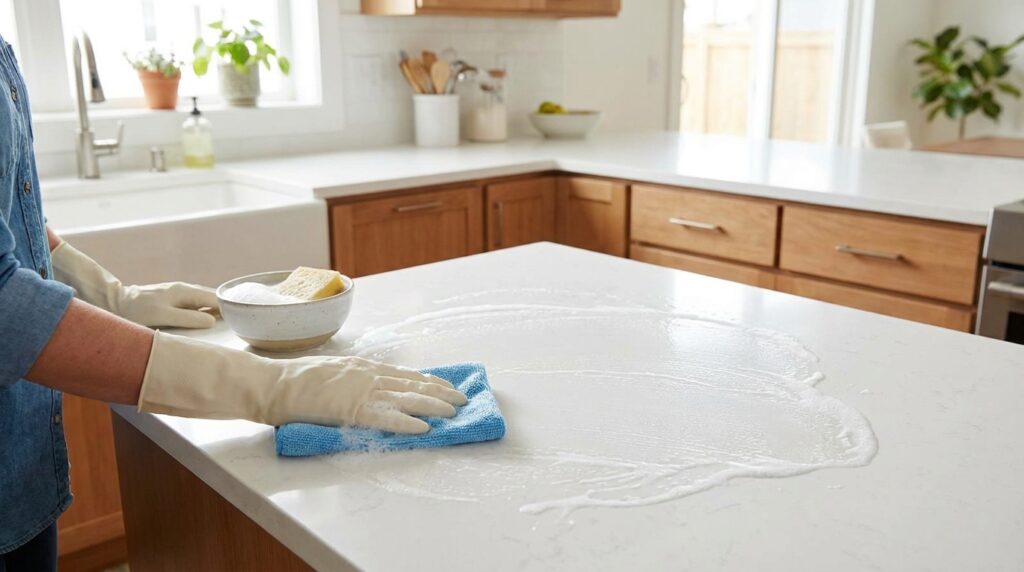
Most quartz maintenance is just consistency. A quick wipe-down after cooking prevents the buildup that eventually needs scrubbing.
What you’ll need:
- Warm water
- A few drops of mild dish soap
- A soft microfiber cloth or non-abrasive sponge
- A second dry cloth for buffing
Steps:
- Mix a small amount of dish soap into warm water.
- Wipe the entire surface with the soapy cloth, paying extra attention to areas near the stove and sink.
- Rinse with a clean, damp cloth to remove soap residue.
- Dry immediately with a microfiber towel to prevent water spots.
This same soap-and-water approach is echoed across nearly every countertop care resource, including general countertop cleaning tips for stone and engineered surfaces, because it’s gentle enough for daily use without wearing down the finish.
How Often Should You Clean Quartz Countertops
For a kitchen that sees regular cooking, a light wipe after each meal prep session is enough. A deeper clean, using the same soap and water method but with a bit more scrubbing around edges and seams, once a week keeps grime from settling into corners.
Bathroom quartz vanities need less frequent attention since they’re not exposed to food, oils, or grease. A couple of times a week is usually sufficient there.
Removing Tough Stains From Quartz Countertops
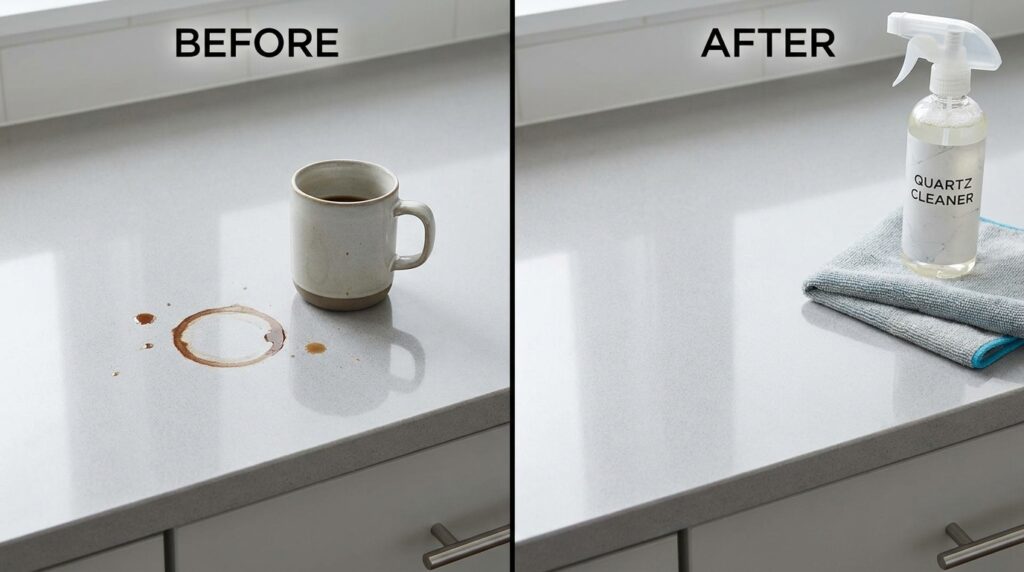
Coffee rings, wine drips, tomato sauce, and turmeric are the most common offenders. Because quartz resists staining but isn’t completely stain-proof, catching spills early makes a real difference.
| Stain Type | Best Method | Tools Needed |
|---|---|---|
| Coffee or tea rings | Soapy water, let sit 5 minutes, wipe | Soft cloth |
| Wine or juice | Baking soda paste, gentle rub | Baking soda, damp cloth |
| Grease or oil | Degreasing dish soap | Sponge, warm water |
| Dried food | Plastic scraper, then soap and water | Plastic putty knife |
| Hard water spots | White vinegar diluted 1:1 with water, brief contact only | Spray bottle, cloth |
For a stubborn stain, make a paste using baking soda and a small amount of water. Apply it directly to the spot, let it sit for 5 to 10 minutes, then wipe with a damp cloth. Avoid scrubbing too hard since even non-abrasive pressure applied repeatedly in one spot can dull the finish over time.
If a spill happens on clothing instead of the counter, the same “act fast” principle applies. A resource on removing stubborn stains from fabric covers a similar approach for kitchen accidents that land somewhere other than the counter.
Dealing With Hard Water Stains and Mineral Buildup
Homes with hard water often see a chalky residue build up near sinks and faucets on quartz surfaces. A light vinegar-and-water solution can cut through this, but it needs to be rinsed off within a minute or two of application. Leaving acidic solutions on the surface for extended periods is one of the more common mistakes that leads to a dulled patch.
What Not to Use on Quartz Countertops
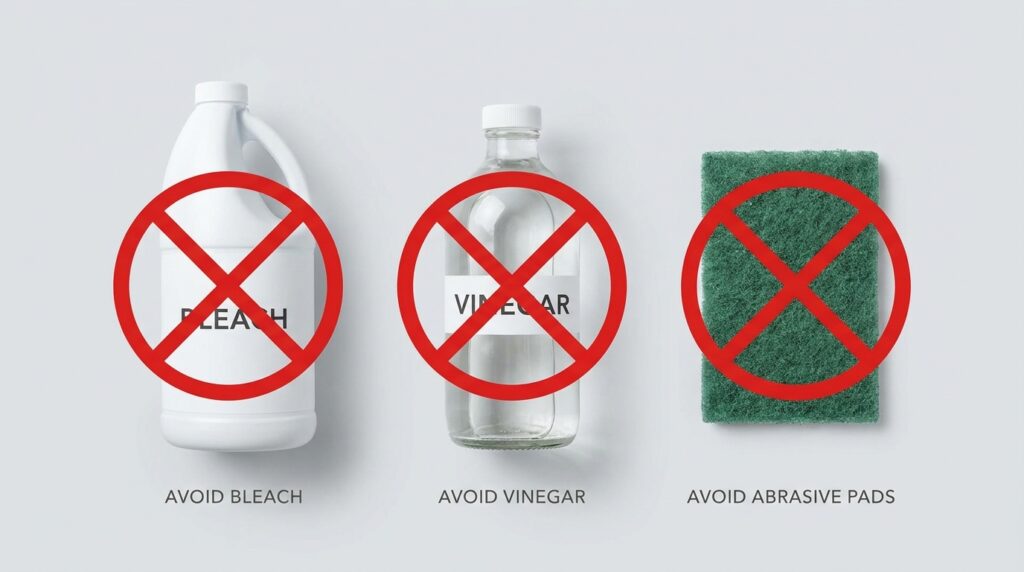
This is where most damage happens, not from daily wear, but from using the wrong product once and not knowing why the surface looks different afterward.
Avoid these on quartz:
- Bleach and bleach-based cleaners
- Undiluted vinegar or other strong acids left sitting on the surface
- Ammonia-based glass cleaners used repeatedly
- Abrasive powders or scouring pads
- Oven cleaners or degreasers not labeled safe for stone
- Nail polish remover or solvents containing acetone
Manufacturers are consistent on this point. Silestone and Dekton care guidelines both warn against harsh chemical exposure because the resin binding the quartz particles together can weaken over repeated contact with strong solvents, leading to a chalky or uneven appearance.
Why Heat Is a Bigger Risk Than Most People Realize
Quartz handles moderate heat better than laminate, but it’s not immune to thermal shock. Setting a hot pan directly off the stove onto the surface can cause micro-cracking in the resin over time, even if no visible damage appears right away. A trivet or cooling rack is a small habit that protects the surface long term.
Restoring Shine to a Dull Quartz Surface
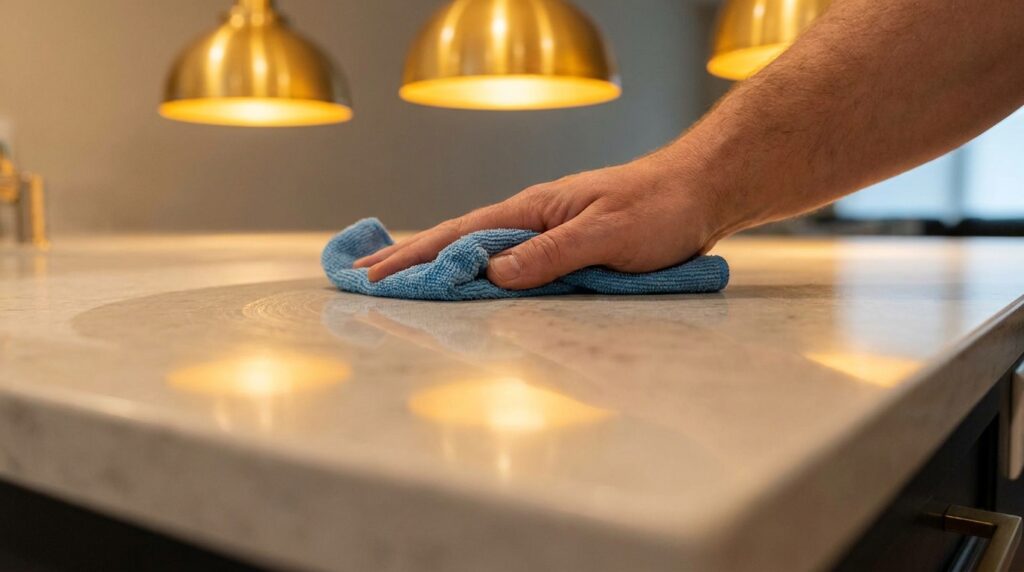
If a countertop looks streaky or slightly hazy despite regular cleaning, the cause is usually soap residue buildup rather than actual damage to the material. Here’s how to bring back the shine:
- Wipe the entire surface with plain warm water first to remove any film.
- Follow with a small amount of glass cleaner, applied sparingly.
- Buff dry immediately with a microfiber cloth in circular motions.
- Avoid oil-based polishes marketed for granite, since these can leave quartz looking greasy rather than glossy.
Manufacturing details also explain why quartz holds its shine so well in the first place. During quartz slab manufacturing, the surface is compressed and polished at the factory, which is a big part of why quartz doesn’t need the periodic re-polishing that natural stone sometimes requires.
Expert Tips for Long-Term Quartz Countertop Care
- Use cutting boards every time. Quartz resists scratches better than laminate, but knives can still leave marks over years of direct contact.
- Rotate small appliances like toasters and coffee makers occasionally so heat and moisture don’t concentrate on one spot.
- Wipe up citrus juice, wine, and tomato-based sauces within a few minutes rather than letting them sit.
- Keep a dedicated soft cloth just for countertop cleaning so abrasive residue from other tasks doesn’t transfer onto the surface.
- If the countertop came with manufacturer documentation, check for any brand-specific instructions, since some finishes (like matte or textured quartz) have slightly different care recommendations than polished finishes.
Pros and Cons of Quartz Countertop Maintenance
| Pros | Cons |
|---|---|
| No sealing required, ever | Not fully heat-proof despite durability |
| Resists staining better than most natural stone | Direct sunlight over years can cause slight fading in some colors |
| Easy soap-and-water daily care | Wrong cleaners can dull the resin finish |
| Consistent color and pattern | Repairs are harder to blend than natural stone |
| Naturally resists bacteria growth on the surface | Edges can chip if struck hard enough |
Details on cost, edge profiles, and overall durability are covered well in this breakdown of edge profiles and installation costs for quartz, which is useful context if you’re still deciding between quartz and other materials before installation.
When to Call a Professional Cleaning Service
For move-out cleans, post-renovation dust, or if a countertop has years of buildup from previous owners, a deeper clean than the standard routine might be needed. A professional cleaning service can assess whether a stain is on the surface or has genuinely affected the resin, which isn’t always obvious to an untrained eye.
Frequently Asked Questions
Can I use vinegar to clean quartz countertops?
Diluted vinegar in small amounts and for brief contact is generally fine for mineral deposits, but it shouldn’t be a daily cleaner. Repeated or prolonged acid exposure can wear down the resin binding the quartz particles together.
Is Windex safe for quartz countertops?
Occasional use is typically fine for restoring shine, but frequent use of ammonia-based glass cleaners can gradually dull the surface. Soap and water should remain the everyday go-to.
Why does my quartz countertop have a dull spot?
Dull spots are usually caused by soap film buildup, hard water residue, or contact with a harsh chemical like bleach or an abrasive scrubber. Most of the time this can be improved with a thorough cleaning, though chemical etching can sometimes be permanent.
Can quartz countertops get water stains?
Yes, especially near sinks in hard water areas. Wiping the surface dry after each use prevents mineral deposits from settling and forming visible rings.
How do I get scratches out of a quartz countertop?
Light surface scuffs can often be buffed out with a non-abrasive cleaner and a soft cloth. Deeper scratches usually require a professional polishing kit or a technician, since quartz is harder to sand and refinish than solid surface materials.
Final Thoughts
Keeping a quartz countertop looking new mostly comes down to two habits: cleaning with mild soap and water regularly, and avoiding the handful of harsh products that slowly wear down the resin finish. Spills wiped up quickly, a trivet under hot pans, and a soft cloth instead of an abrasive scrubber will keep the surface looking close to installation day for years. If a stain or dull patch doesn’t respond to basic cleaning, it may be worth reaching out to the countertop’s original installer or manufacturer for guidance specific to that particular quartz line.

