
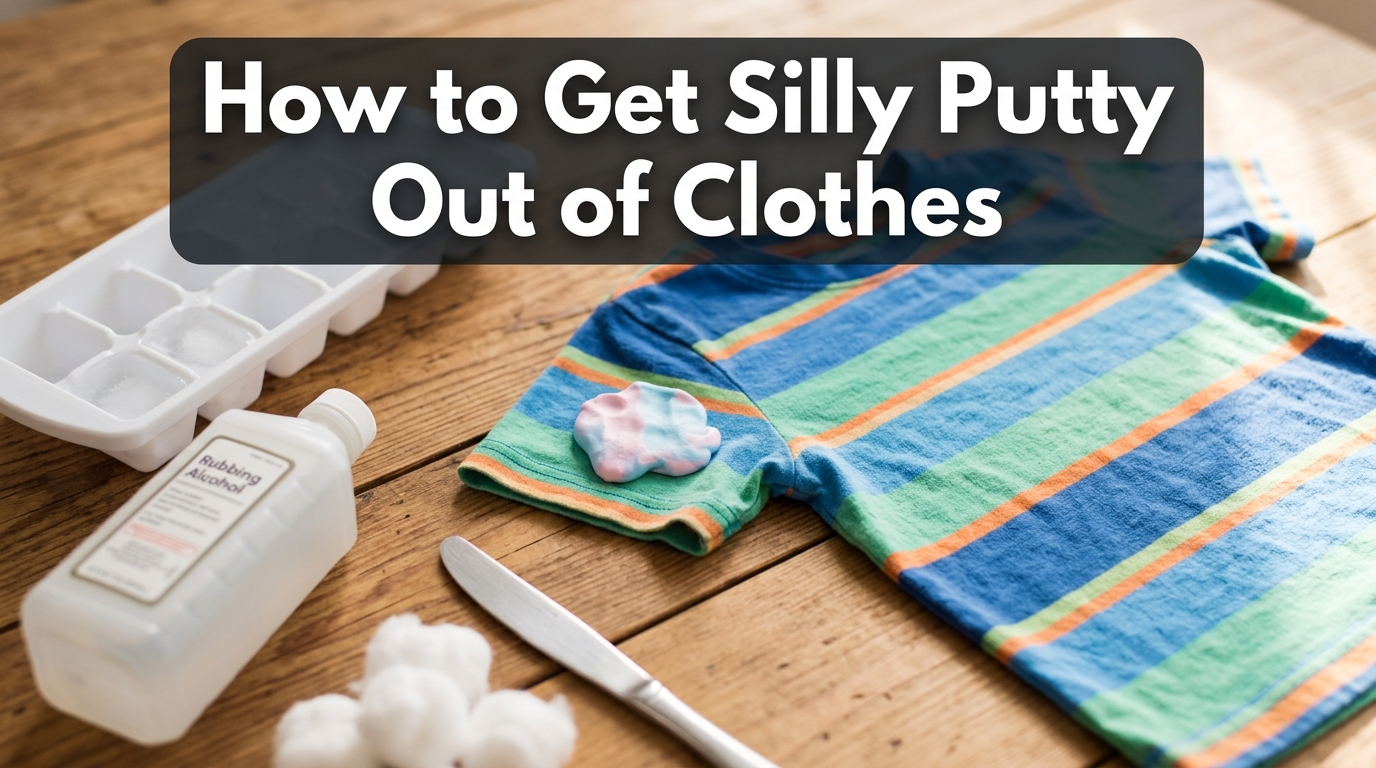
That squishy, stretchy toy your kid loves has a way of ending up somewhere it shouldn’t — usually pressed into a school uniform or a favorite hoodie. If you’re trying to figure out how to get silly putty out of clothes, the good news is that it almost never has to end in a ruined garment. With the right order of steps, most putty stains lift out in under fifteen minutes.
The trick is resisting the urge to scrub. Silly putty behaves differently from a typical food or grease stain, and treating it the wrong way can actually push it deeper into the weave of the fabric instead of pulling it out.
This article is for general household reference only. Fabric types and care labels vary, so always check the garment’s tag and spot-test any product before applying it to a visible area.
Why Silly Putty Sticks So Stubbornly to Fabric
Silly putty is made from a silicone-based polymer, not a wax or oil-based compound like most things that stain clothing. That silicone structure is what gives it its bounce and stretch, but it also means it behaves like a hybrid of a liquid and a solid depending on temperature and pressure. Press it into a cotton shirt and it works its way between the individual fibers rather than just sitting on the surface.
Body heat makes the problem worse. The longer putty stays against warm skin or a warm garment, the softer and more spreadable it becomes, which is why a small blob can turn into a smeared mess if it’s left in a pocket or rubbed against a car seat. Cooling it back down is actually the first move in almost every removal method that works.
What You’ll Need Before You Start
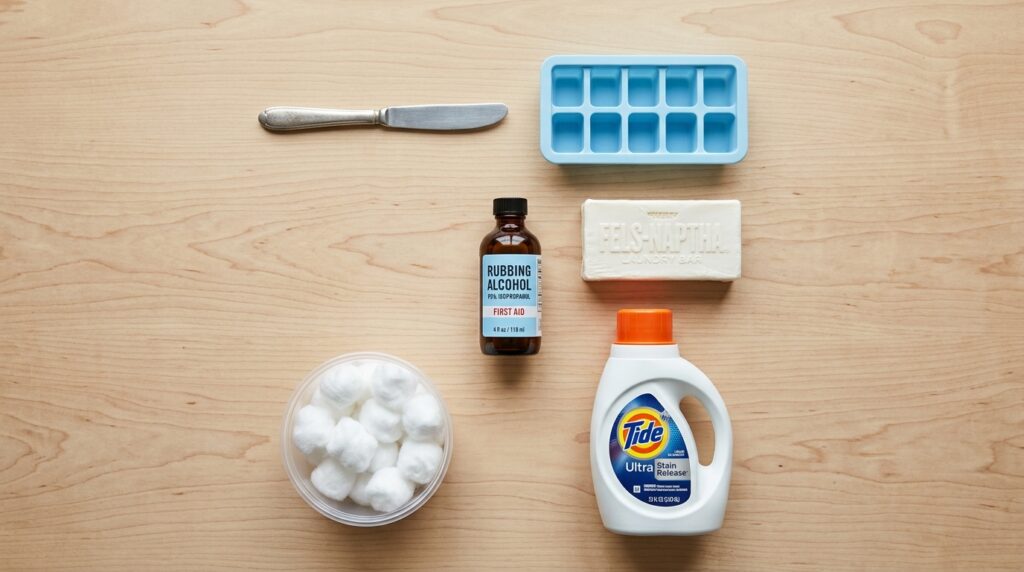
You don’t need anything specialized. Most of these items are already sitting in a bathroom cabinet or kitchen drawer:
- A butter knife, spoon, or old credit card for scraping
- Ice cubes or a bag of frozen vegetables
- Rubbing alcohol or hand sanitizer with a high alcohol content
- Dish soap
- A clean white cloth or a few cotton balls
- Regular laundry detergent
A quick note before diving in: skip anything with added moisturizers, like scented or “gel” hand sanitizers, since the extra oils can leave their own residue behind.
Step-by-Step: Removing Fresh Silly Putty from Clothes
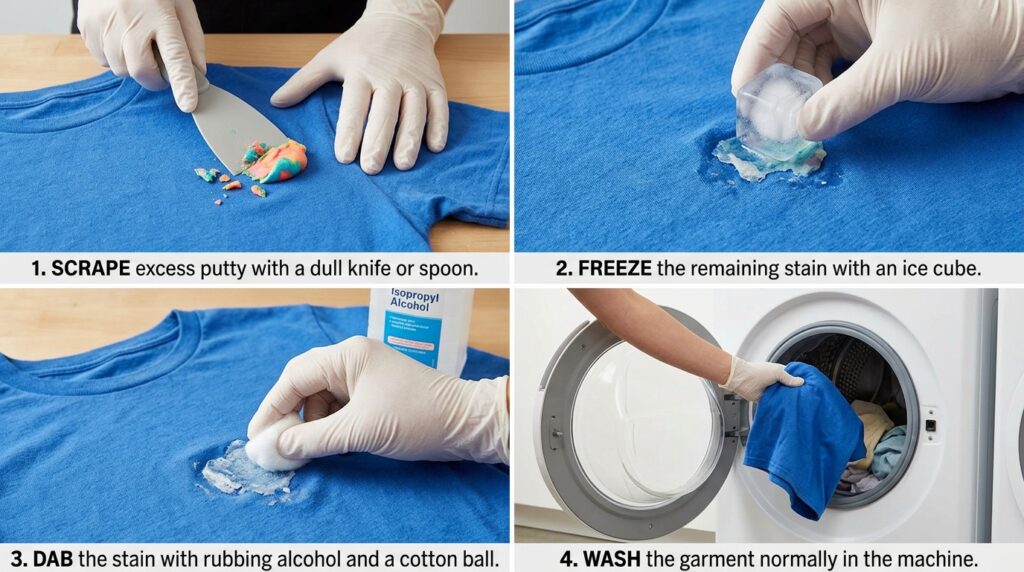
Fresh putty — meaning it just got stuck a few minutes ago — is by far the easiest to deal with. Work through these steps in order and resist any urge to skip straight to washing the item.
Step 1: Scrape Off the Excess
Before anything else, gently lift away as much of the visible putty as you can with a dull knife or the edge of a spoon. Work from the outside edges of the blob inward so you’re not pressing it wider into clean fabric. Don’t dig or scrape hard against the threads — you’re aiming to lift, not scrub.
Step 2: Freeze It Out
Silly putty firms up when it’s cold, which makes it far less likely to smear. Press an ice cube directly against the remaining residue for two or three minutes, or slide the garment into a zip-top bag and pop it in the freezer for about fifteen minutes if the stain is small enough to fit.
Once it’s stiff, go back in with the knife or your fingernail and pick away the hardened bits. A lot of it will flake off in small chunks at this stage.
Step 3: Break Down the Residue
Whatever putty is still clinging to the fibers needs something that dissolves silicone. Silicone-based compounds soften on contact with alcohol, which is why rubbing alcohol or a high-alcohol hand sanitizer is the go-to fix here.
Soak a cotton ball in rubbing alcohol and dab it onto the stain rather than pouring it directly on the fabric — direct pouring can spread the softened putty into a wider smear. Let it sit for a minute, then blot with a clean part of the cloth. Repeat two or three times, switching to a fresh cotton ball each round so you’re not just rubbing dissolved putty back into the weave.
If the item is a delicate or dark-colored fabric, test the alcohol on a hidden seam first, since it can occasionally lighten certain dyes.
Step 4: Launder as Usual
Once the residue is gone, treat the area with a small amount of liquid dish soap or your regular laundry detergent, work it in gently with your fingers, and wash the garment as you normally would. Skip the dryer until you’ve confirmed the mark is completely gone — heat can set any faint residue permanently, turning a fixable smudge into a lasting stain.
Removing Dried or Set-In Silly Putty
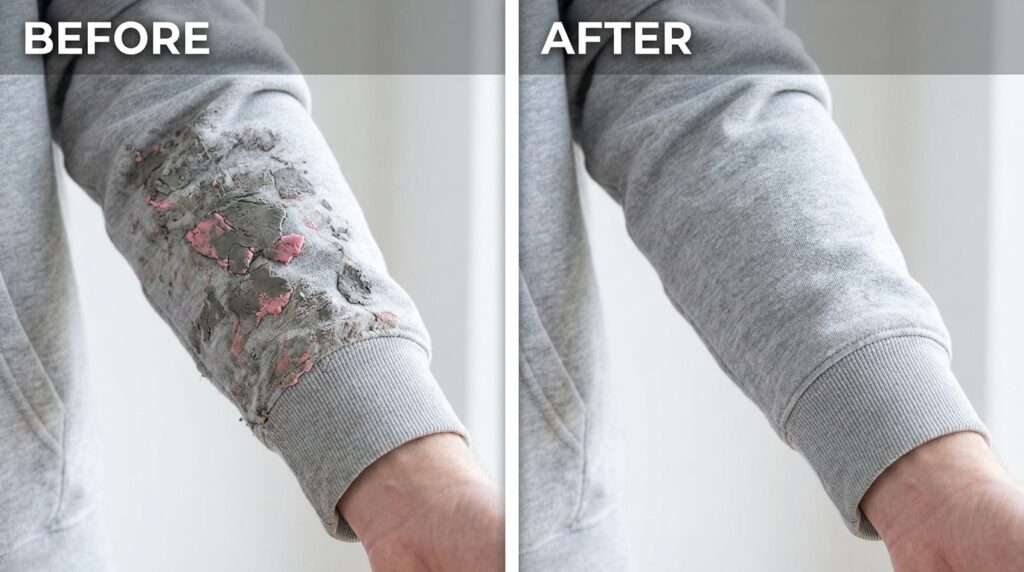
Putty that’s been sitting for a day or has already been through a dryer cycle takes a bit more patience, but it’s usually still salvageable.
Start the same way — freeze first, then scrape. Dried putty tends to be brittle rather than stretchy, so it often comes away in flakes more easily than fresh putty does. For any leftover haze or discoloration left behind, acetone or nail polish remover can help break down stubborn residue on sturdier fabrics like denim or heavy cotton, though it should never be used on acetate, triacetate, or modacrylic fabrics since it can dissolve the material itself.
If a faint mark is still visible after alcohol treatment, work a small amount of liquid dish soap into the spot, let it sit for ten minutes, and rinse with warm water before laundering.
Household Products That Work (And How They Compare)
| Product | Best For | How It Works | Watch Out For |
|---|---|---|---|
| Ice cubes | Any fabric | Hardens putty so it lifts off in pieces | Wet spots left behind |
| Rubbing alcohol | Cotton, denim, polyester blends | Dissolves silicone bonds | Can lighten some dyes |
| Hand sanitizer | Delicate cottons | Milder alcohol content, gentler on color | Avoid gel or moisturizing formulas |
| Dish soap | Finishing touch after scraping | Lifts oily residue and haze | Rinse thoroughly to avoid soap marks |
| Acetone / nail polish remover | Heavy-duty fabrics like denim | Breaks down stubborn dried residue | Never use on acetate or triacetate |
Every method on this list is meant to be used one at a time, not layered together, since mixing chemicals like alcohol and acetone offers no extra benefit and increases the risk of fabric damage.
What NOT to Do
A few instincts make sense in the moment but usually backfire:
- Don’t use hot water. Heat softens putty further and can push it deeper into the fibers instead of loosening it.
- Don’t scrub hard with a brush. This tends to smear the putty across a wider area and can fray delicate fabrics.
- Don’t put the item in the dryer before the stain is fully gone. Dryer heat can bond any leftover residue permanently to the fibers.
- Don’t mix multiple solvents at once. Combining products doesn’t speed things up and can weaken or discolor fabric.
- Don’t peel putty off in one hard pull. A slow, gentle lift causes far less fiber damage than yanking it free.
Silly Putty on Delicate or Special-Care Fabrics
Silk, wool, and other delicate materials need a gentler touch. Skip the alcohol step entirely on silk and instead rely on the freeze-and-scrape method, followed by a small amount of mild soap diluted in cool water. For wool, work slowly and avoid rubbing the fibers together, since wool can felt and shrink if agitated while wet.
If you’re dealing with a garment that’s dry-clean only, it’s worth removing as much putty as possible with the ice-and-scrape method at home, then letting a professional cleaner handle the rest rather than risking a chemical solvent on fabric you’re not familiar with.
For anyone who deals with this kind of mess regularly — especially with kids who wear the same few play outfits on repeat — choosing more durable, easy-care clothing built for messy activities can save a lot of after-the-fact cleanup down the road.
Preventing Future Silly Putty Stains
A little prevention goes a long way with a toy this messy:
- Keep silly putty in its original container between uses instead of letting it sit loose in a pocket or bag.
- Set a designated “putty table” with a placemat or tray so kids play with it away from clothing and upholstery.
- Store containers away from direct sunlight or heat vents, since warmth makes the putty softer and more prone to smearing.
- Do a quick pocket check before laundry day — a forgotten piece of putty in a pocket can transfer onto an entire load of wash.
Expert Tips for Faster, Safer Removal
- Treat the stain as soon as you notice it. Every extra hour makes the putty bond more tightly to the fibers.
- Always work from the back of the fabric when possible, pushing the softened putty out rather than further in.
- Test any solvent on an inside seam or hem first, especially with colored or printed fabric.
- Keep a small bottle of rubbing alcohol in a diaper bag or car glovebox if silly putty is a frequent visitor in your house — catching the stain within minutes of it happening makes the whole process faster.
- If a faint shadow remains after washing, don’t dry the item yet. Repeat the treatment and rewash before giving up on it.
Pros and Cons of the Main Removal Methods
Ice and Scraping
- Pros: Free, safe for every fabric type, no chemical risk
- Cons: Time-consuming on larger or deeply pressed stains
Rubbing Alcohol or Hand Sanitizer
- Pros: Fast-acting, breaks down silicone bonds effectively
- Cons: Can lighten some dyes if left on too long
Acetone or Nail Polish Remover
- Pros: Very effective on dried, stubborn residue
- Cons: Unsafe for acetate, triacetate, and some synthetic blends
Dish Soap
- Pros: Gentle, good for a final cleanup pass
- Cons: Rarely effective as a standalone solution for fresh putty
Frequently Asked Questions
Does silly putty stain clothes permanently?
Rarely, if it’s treated before the item goes through a hot dryer cycle. Fresh putty responds well to freezing and alcohol treatment, and even dried putty usually comes out with a bit of extra patience. The biggest risk to permanence is heat setting the residue in before it’s fully removed.
Can I use vinegar to remove silly putty from clothes?
Vinegar isn’t particularly effective on silicone-based putty since it’s formulated to break down mineral deposits and some dyes rather than silicone. Rubbing alcohol or a similar high-proof spirit works far better for this specific type of stain.
Is it safe to put silly putty in the washing machine without pretreating it?
It’s best to remove as much putty as possible by hand first. Sending a garment through the wash with visible putty still attached can transfer residue onto other items in the same load, and the washer’s agitation alone usually isn’t enough to fully dissolve it.
What if silly putty gets stuck in a pocket seam?
Seams and pockets are trickier because the putty settles into tight stitching. Freeze the area thoroughly, then use a toothpick or the tip of a knife to work along the seam line before applying rubbing alcohol with a cotton swab rather than a full cotton ball.
Will hairspray remove silly putty from clothes?
Hairspray can work in a pinch because many formulas contain alcohol, but it’s not the most reliable option since alcohol content varies widely between brands. Straight rubbing alcohol or a high-alcohol hand sanitizer gives more predictable, consistent results.
Getting Clothes Back to Normal
Silly putty feels like a disaster in the moment, but it’s one of the more forgiving messes a household deals with once you know the right order of steps: scrape, freeze, dissolve, and wash. Keep a small stash of rubbing alcohol and an ice tray handy, and the next putty mishap will take minutes instead of ruining a favorite outfit. If you’ve got a stain sitting in the laundry pile right now, grab an ice cube and get started — the sooner it’s treated, the easier it comes out.

