
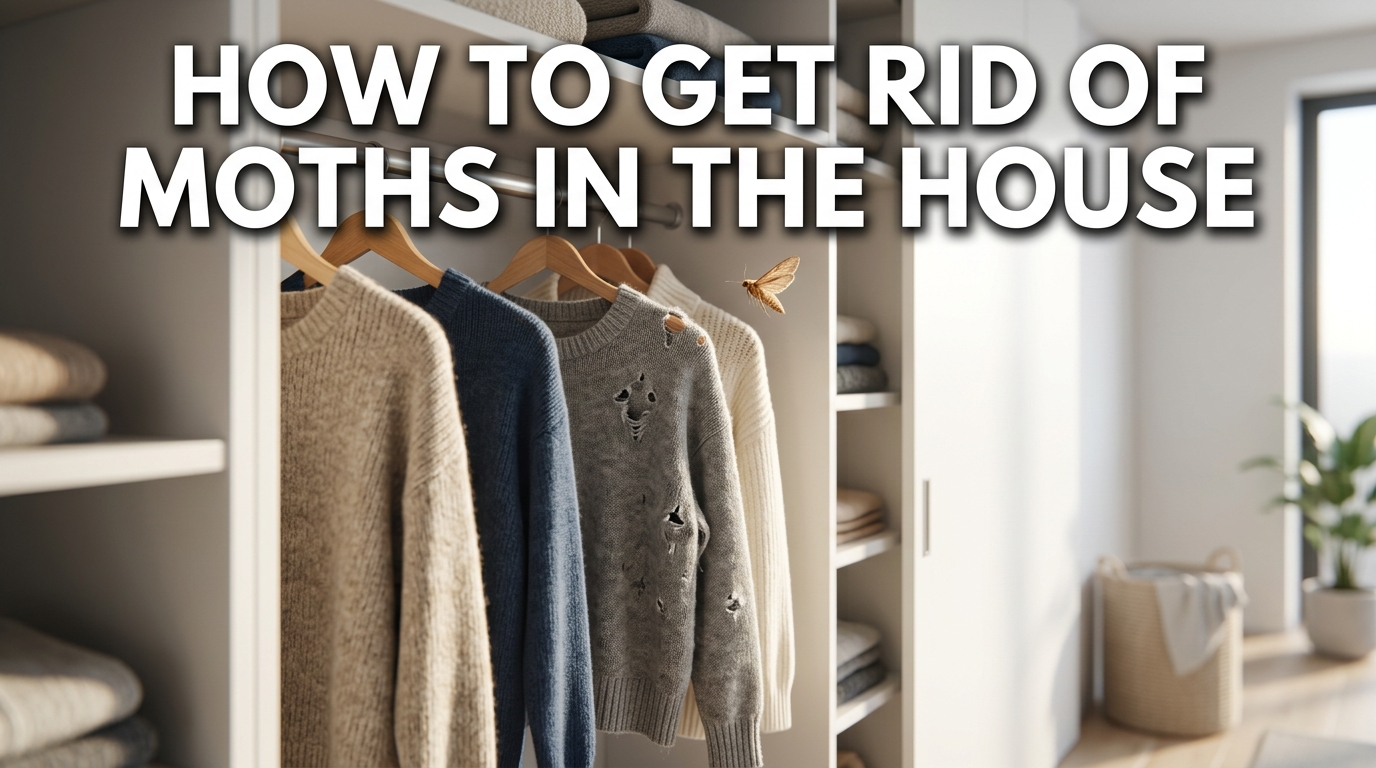
You open your closet, reach for a sweater you haven’t worn since last winter, and there it is — a small hole right through the shoulder. A few seconds later, a tiny tan-colored moth flutters out from behind the hanging clothes. If this sounds familiar, you’re dealing with one of the most common indoor pest problems in American homes, and the good news is that figuring out how to get rid of moths in the house is a lot more manageable than it feels in that first frustrating moment.
Moths aren’t just an aesthetic nuisance. Left alone, they can chew through wool coats, cashmere sweaters, silk scarves, wool rugs, and even stored pet food or pantry staples. But once you understand where they’re coming from and how they reproduce, the process of clearing them out becomes a straightforward, if slightly tedious, cleaning project rather than a mystery.
This guide walks through everything, from identifying which type of moth you actually have, to what causes moths in the house in the first place, to the cleaning and storage routine that keeps them from returning.
What Causes Moths in the House?
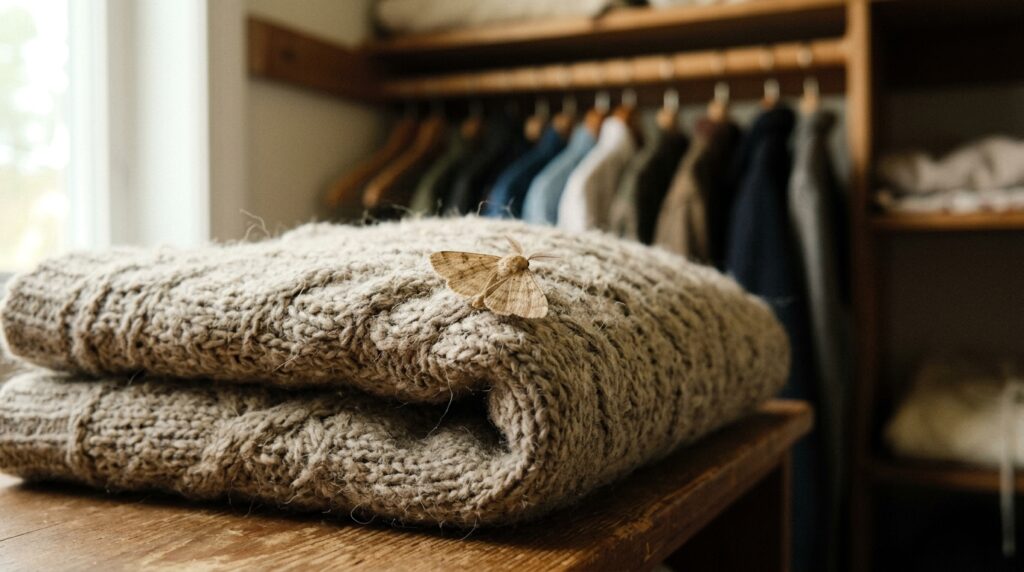
Before you can get rid of moths for good, it helps to understand what causes moths in the house to begin with. Moths don’t just appear randomly. They’re drawn indoors by specific conditions and food sources, and once inside, they look for dark, undisturbed spots to lay eggs.
There are two general categories of house moths, and each one is attracted to something different:
- Fabric (clothes) moths feed on keratin, a protein found in animal-based fibers like wool, fur, silk, feathers, and leather. They’re especially drawn to fabrics that carry traces of sweat, body oil, food residue, or urine, which is why an unwashed wool sweater is more likely to get chewed through than a freshly cleaned one.
- Pantry moths feed on dry food, including flour, cereal, rice, nuts, birdseed, pet food, and dried fruit. They often hitch a ride into the house inside a bag of groceries that already contains eggs or larvae from the store or warehouse.
A few common entry points and conditions tend to invite both types in:
- Used clothing, rugs, or furniture brought into the house without being inspected first (thrift store finds are a frequent source)
- Small gaps around windows, doors, vents, or foundation cracks that let adult moths fly or crawl inside
- Warm, dark, and rarely disturbed areas like the backs of closets, storage bins, or attics, which give moths the undisturbed environment they need to lay eggs
- Stored food that’s kept in its original cardboard or thin plastic packaging, which moth larvae can chew through easily
- Clutter that limits airflow and makes it harder to notice an early infestation before it spreads
Understanding this is genuinely half the battle. Once you know what’s attracting them, the cleanup steps later in this guide will make a lot more sense, because you’re not just killing what you can see, you’re removing the reasons they showed up in the first place.
Types of House Moths (And How to Tell Them Apart)
Not every small flying insect in your house is the same kind of moth, and correctly identifying which one you’re dealing with matters because the treatment is different for each.
| Moth Type | Common Name | What It Eats | Where You’ll Find It |
|---|---|---|---|
| Tineola bisselliella | Webbing clothes moth | Wool, silk, fur, feathers | Closets, drawers, under furniture |
| Tinea pellionella | Casemaking clothes moth | Same as above, but larvae carry a visible silk case | Closets, carpets, upholstered furniture |
| Plodia interpunctella | Indian meal moth (pantry moth) | Flour, grains, cereal, dried fruit, pet food | Pantry shelves, cabinets, near stored food |
A quick way to tell them apart at a glance: clothes moths are usually a plain golden-tan color and tend to scurry away from light rather than toward it, while pantry moths often have a distinctive two-toned wing pattern, reddish-bronze on the outer half and pale gray near the body.
If you’re not sure which one you’re looking at, your regional Cooperative Extension office is a reliable, free resource for identification, and many will accept a clear photo submitted online.
Signs You Actually Have a Moth Infestation
Adult moths themselves rarely cause damage. It’s the larvae, the worm-like stage that hatches from eggs, that actually eats through fabric or food. That’s part of why infestations often go unnoticed until real damage has already happened. Watch for these signs:
- Small, irregular holes in wool, cashmere, silk, or fur items
- Thin silky tunnels, webbing, or small case-like tubes stuck to fabric
- Fine, sand-like debris (frass) near the base of a closet or on a shelf
- Shed larval skins, which look like tiny translucent husks
- A musty or slightly sour smell in a closet or pantry
- Small, slow-flying moths that seem to avoid light and hide in corners when disturbed
If you’re seeing more than one of these signs, it’s time to move into full cleanup mode rather than just spot-treating one item.
How to Get Rid of Moths in the House: Step-by-Step
This is the core process. It takes some time, mostly because moth eggs and larvae can survive in places you wouldn’t normally clean, but each step below narrows down where they can hide.
Step 1: Find the Source
Start by looking closely at the area where you first noticed damage or moths flying around. Check:
- The backs and undersides of shelves
- Corners and seams of drawers
- Folds of stored blankets, coats, and rugs
- Cracks where the wall meets the floor
- Areas behind furniture that rarely gets moved
You’re looking for the “nest,” meaning the specific item or spot where eggs were laid, since that’s usually the origin point for the rest of the infestation.
Step 2: Remove and Sort Everything
Take every item out of the closet, drawer, or pantry shelf. This sounds excessive, but partial cleaning is one of the most common reasons infestations come back within a few weeks. Sort items into three piles: things to wash or dry-clean, things to freeze, and things that are too damaged to save.
Step 3: Wash, Dry-Clean, or Freeze Infested Items
Heat and cold are both effective at killing moth eggs and larvae, but each method suits different materials.
- Hot water wash: For washable fabrics, launder on the hottest setting the item’s care label allows, ideally with a wash-and-dry cycle that keeps the item at high heat for at least 20 to 30 minutes.
- Dryer heat treatment: For items that can tolerate a dryer, running them on high heat for about 30 minutes at temperatures above 120°F is generally enough to kill eggs and larvae.
- Dry cleaning: For delicate wool, silk, or fur pieces that can’t go in a washer or dryer, professional dry cleaning is one of the most reliable options, since the solvents used also kill eggs and larvae.
- Freezing: For items that can’t be washed or dry-cleaned, seal them in a plastic bag and place them in the freezer for at least two weeks. Let the item return to room temperature before unsealing the bag, since condensation can damage some fabrics if opened too soon.
Step 4: Deep Clean the Space Itself
Once items are out of the closet or pantry, clean the empty space thoroughly:
- Vacuum every surface, including corners, baseboards, shelf undersides, and any cracks or seams, since larvae and eggs can be tiny enough to hide in carpet fibers or wood grain.
- Empty the vacuum bag or canister immediately into an outdoor trash bin, not one inside the house, so nothing has a chance to crawl back out.
- Wipe down shelves, walls, and drawer interiors with warm, soapy water.
- For carpeted closets, consider a steam clean, since heat penetrates deeper into fibers than vacuuming alone.
Step 5: Deal With Anything Too Damaged to Keep
If an item is heavily infested and not worth restoring, seal it in a garbage bag before throwing it away. This keeps larvae or eggs from falling out and reinfesting the area on their way to the trash.
Step 6: Set Traps to Monitor Activity
Pheromone traps, widely available at hardware and home stores, use a scent that attracts male moths and traps them on a sticky surface. They won’t eliminate an infestation on their own, but they’re genuinely useful for two things: confirming whether your cleanup worked, and catching a new problem early before it spreads.
Natural and Non-Toxic Moth Control Methods
If you’d rather avoid chemical treatments, especially with kids or pets in the house, several natural methods can help deter moths, though it’s worth being upfront that none of them kill an existing infestation on their own. They work best as prevention, used after you’ve already cleaned and treated the space.
- Cedar: Cedar blocks or hangers release oils that repel adult moths. The scent fades over time, so the surface needs to be lightly sanded every few months to refresh it.
- Lavender: Dried lavender sachets tucked into drawers and closets have a mild repellent effect and smell far better than mothballs.
- Essential oils: Cedarwood, lavender, and clove oil, diluted and applied to cotton balls or sachets, are commonly used as a gentler alternative to synthetic repellents.
- Airtight storage: This isn’t exactly a “natural remedy,” but it’s arguably the single most effective non-chemical step. Storing off-season clothing in sealed, hard-sided plastic or metal bins physically blocks adult moths from laying eggs on the fabric in the first place. Note that moths can chew through thin or soft plastic, so look for containers with a tight, rigid seal.
If you’re also dealing with stubborn marks on stored fabric, like an old food or oil stain that’s been sitting for a while, treating tough fabric stains before you store an item is worth doing at the same time, since soiled fabric is more attractive to moths than clean fabric.
Chemical Treatments: What to Know Before You Use Them
For larger or repeat infestations, some households turn to insecticides labeled specifically for clothes moths or pantry moths. A few important guidelines apply here regardless of which product you choose:
- Only use products registered with the EPA and labeled for the specific pest and location (indoor fabric use versus pantry use are treated differently).
- Read the entire label before use, including precautions around ventilation, contact with skin, and how long to keep pets or children out of the treated area.
- Avoid spraying insecticide directly onto delicate fabrics, since it can cause staining or damage.
- Mothballs must be used in a sealed, airtight container along with the items being protected. Left loose in an open closet, they’re both less effective and more likely to create a lingering odor problem or expose people and pets to unnecessary fumes.
Federal indoor air quality guidance recommends storing moth-repellent products in a well-ventilated area like an attic or garage when possible, rather than in living spaces, to reduce indoor air exposure.
Expert tip: Pest control professionals generally treat chemical products as a last resort for moths, not a first step, because thorough cleaning and proper storage solve the vast majority of infestations without any insecticide at all.
Pros and Cons of Common Moth Control Methods
| Method | Pros | Cons |
|---|---|---|
| Deep cleaning + laundering | Free, non-toxic, addresses root cause | Time-consuming, needs to be thorough |
| Freezing | Safe for delicate items, no chemicals | Requires freezer space, slower process |
| Dry cleaning | Very effective on wool and silk | Costs money, not practical for everything |
| Cedar or lavender | Pleasant smell, safe around kids/pets | Prevention only, needs regular refreshing |
| Pheromone traps | Good for monitoring, no chemical exposure | Only attracts males, won’t stop larvae |
| Insecticides/mothballs | Can handle larger infestations | Odor, ventilation needs, care around pets/kids |
| Professional pest control | Thorough, handles severe cases | Most expensive option |
When to Call a Pest Control Professional
Most moth problems can be handled with the cleaning routine above, but a few situations are worth bringing in a professional for:
- The infestation has spread across multiple rooms rather than staying in one closet or pantry
- You’ve done a full cleanout and moths keep coming back within a few weeks
- The source of the infestation is inside a wall cavity, subfloor, or another spot you can’t access yourself
- You’re dealing with valuable items, like an antique rug or fur coat, where DIY treatment risks causing damage
A professional can also help confirm whether you’re actually dealing with moths at all, since carpet beetle larvae cause very similar fabric damage and are sometimes mistaken for clothes moths.
How to Prevent Moths From Coming Back
Prevention is genuinely easier than another round of cleanup, and most of it comes down to a few consistent habits:
- Wash or dry-clean clothing before long-term storage, even if it looks clean, since sweat and body oils that aren’t visible are still enough to attract larvae.
- Store off-season items in airtight, rigid containers rather than cardboard boxes or soft garment bags.
- Vacuum closets and rugs regularly, particularly along edges and under furniture where lint and hair tend to collect.
- Inspect secondhand clothing, rugs, or furniture before bringing them inside, and consider a quick freezer treatment for anything that seems questionable.
- Keep closets and pantries well ventilated and avoid excessive clutter that limits airflow and makes early signs harder to spot.
- Check window and door screens periodically for gaps that could let adult moths inside.
- Rotate stored pantry goods and keep dry foods in sealed glass or hard plastic containers instead of their original packaging.
Expert Tips for Long-Term Moth Control
- Check stored items at least twice a year, ideally at the change of seasons, rather than waiting until damage is already visible.
- If you use cedar, remember that its oils fade. A light sanding every two to three months keeps the scent, and the repellent effect, active.
- Keep a small supply of unused pheromone traps on hand so you can catch a new problem early instead of discovering it months later.
- Don’t mix storage of clean and worn items in the same bin, since a single soiled garment can be enough to attract moths to an entire container.
Frequently Asked Questions
How do I know if I have moths or carpet beetles?
Both pests damage wool and other natural fibers, but the larvae look different. Moth larvae are pale, worm-like, and sometimes carry a visible silk case, while carpet beetle larvae are shorter, bristly, and often described as looking like tiny hairy ovals. If you’re unsure, a clear photo sent to your local extension office can usually settle the question.
Can moths in the house spread to other rooms?
Yes. Adult moths can fly short distances, and larvae can be carried unintentionally on clothing, vacuum attachments, or furniture that gets moved between rooms. This is why a full room-by-room check is worth doing even if you’ve only noticed damage in one closet so far.
Do mothballs actually work?
Mothballs can kill moths and their eggs, but only when used correctly, sealed in an airtight container along with the items being protected. Left out in the open, they’re far less effective and mostly just produce a strong, lingering odor.
How long does it take to get rid of a moth infestation?
For a single closet, a thorough cleanout usually resolves the visible problem within a day, though it’s smart to keep monitoring with traps for a few more weeks, since a missed egg cluster can hatch later. Larger or whole-house infestations can take several weeks of consistent cleaning to fully resolve.
Are moths in the house dangerous to my health?
Moths themselves aren’t considered a health hazard the way some other household pests are, and they don’t bite or sting. The main concern is property damage to fabrics and, in the case of pantry moths, contaminated food.
Final Thoughts
Getting rid of moths in the house isn’t complicated, but it does reward thoroughness over shortcuts. The process really comes down to three things: finding where they’re coming from, cleaning that space (and everything in it) properly, and storing items in a way that doesn’t give a new generation the chance to start over. Do those three things consistently, and most households never deal with a serious infestation again.
If you’re still noticing activity after a full cleanout, or the damage has spread further than a single closet, it’s a reasonable point to bring in a licensed pest control provider rather than repeating the same steps indefinitely.

