
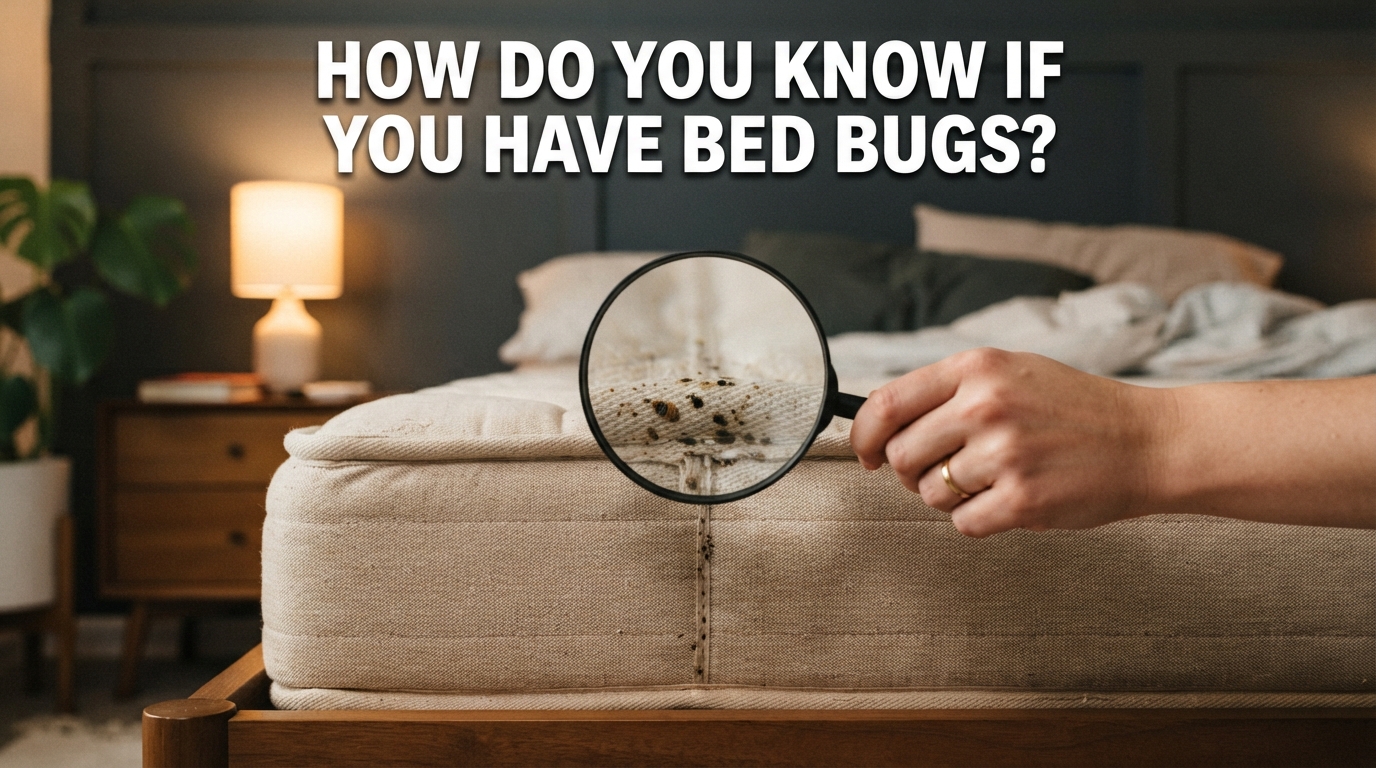
It usually starts with an itch you can’t explain.
Maybe you woke up with three small bumps in a neat little row on your arm. Maybe you just got back from a trip and now you’re side-eyeing your suitcase like it’s a ticking time bomb. Either way, you’re here because something feels off, and you want a straight answer to a simple question: how do you know if you have bed bugs?
The honest answer is that bed bugs rarely announce themselves. They’re nocturnal, they’re fast at hiding, and in the early stages of an infestation, you might go weeks without seeing a single live insect. But they do leave behind a trail of small, specific clues, and once you know what to look for, spotting them gets a lot easier.
This guide walks through the actual physical evidence, what the bites look like, where these insects hide on your body and in your home, and what to do the moment you confirm you’re dealing with an infestation.
What Bed Bugs Actually Are (So You Know What You’re Looking For)
Bed bugs are small, flat, reddish-brown insects that feed exclusively on blood, usually while you’re asleep. Adults are about the size and shape of an apple seed, roughly a quarter-inch long, with an oval body that flattens out further when they haven’t eaten and swells up after a blood meal. These insects range from about 1mm to 7mm in size and are not known to spread disease to people, though they can cause significant itching, sleep disruption, and secondary skin infections from scratching.
They don’t fly and they don’t jump. What they’re extremely good at is hiding in tight cracks and crevices during the day, then coming out to feed at night while you’re still and warm. That combination of nocturnal feeding and daytime hiding is exactly why so many people don’t realize they have an infestation until it’s already established.
How Do You Know If You Have Bed Bugs? The Core Physical Signs
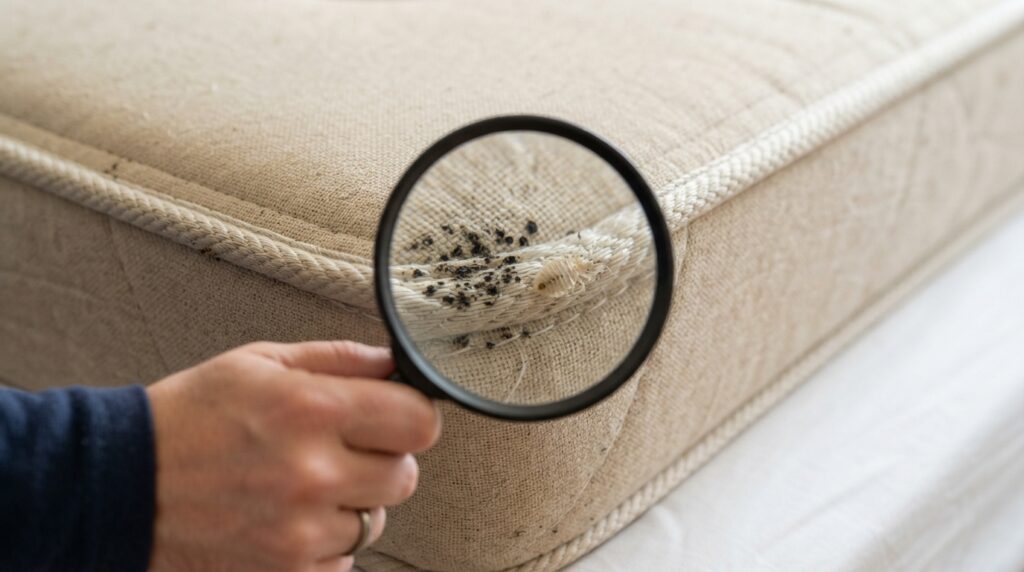
If you’re wondering how do you know if you have bed bugs, start with these five categories of evidence. You rarely need all five to confirm an infestation, but finding two or more together is a strong signal.
- Rust or reddish stains on sheets. These come from bed bugs being crushed while you sleep, or from their fecal matter, which looks like small dark ink spots that can bleed into fabric.
- Tiny dark spots clustered along seams. Fecal spots often show up in rows along mattress seams, box spring edges, and the corners of furniture.
- Eggs and eggshells. Bed bug eggs are pale yellow, about 1mm long, and often found in clusters tucked into crevices.
- Shed skins. As nymphs grow, they molt several times, leaving behind pale, hollow exoskeletons that look like translucent versions of the insect.
- A musty, sweet odor. Heavy infestations sometimes produce a faint, unpleasant smell described as similar to a wet towel or coriander, caused by pheromones the insects release.
Identifying these pests correctly, based on physical evidence rather than assumption, is the first and most important step in getting rid of them, since misidentifying the pest often leads to wasted time and money on the wrong treatment.
How Do You Know If You Have Bed Bugs in Your Bed?
Your bed is ground zero for almost every infestation, because it’s where you spend hours completely still and within easy reach. So how do you know if you have bed bugs in your bed specifically?
Strip the sheets and check the following spots in order:
- Piping and seams of the mattress. Run your fingers along the edge seams, checking for dark spotting or live insects tucked into the stitching.
- The mattress tag and corners. Bed bugs like folded fabric and tight pockets, so tags and corner folds are common hiding spots.
- The box spring, underneath and inside. If your box spring has a fabric dust cover on the bottom, this is one of the most overlooked hiding places in the entire house.
- The bed frame, especially wood joints and screw holes. Wooden frames with joints or drilled holes give bed bugs plenty of narrow gaps to disappear into.
- The headboard, if it’s mounted to the wall. Behind a wall-mounted headboard is dark, close to your pillow, and almost never checked.
If you find live bugs or fresh fecal spotting concentrated in these areas, that’s about as direct a confirmation as you’ll get without a professional inspection.
How Do You Know If You Have Bed Bugs in Your House Beyond the Bedroom?
A lot of people assume bed bugs only live in beds, but that’s not accurate once an infestation has had time to spread. So how do you know if you have bed bugs in your house more broadly, outside the bedroom?
Bed bugs will follow you to wherever you sit or rest for long periods. Check:
- Upholstered furniture, especially couches and recliners, along seams and under cushions.
- Curtains and drapery folds, particularly near windows adjacent to a bed.
- Carpet edges along baseboards, where bugs sometimes travel between rooms.
- Electrical outlets and wall hangings close to sleeping areas, since bed bugs can flatten themselves into remarkably thin gaps.
- Luggage, backpacks, and closets, especially if you’ve recently traveled or brought home secondhand furniture.
Entomologists who study household pests point out that bed bugs commonly hide along seams of mattresses, within box springs, and in cracks and crevices in furniture and personal belongings near sleeping and resting sites, which is why a thorough inspection has to extend well past the mattress itself.
If bed bugs have spread to multiple rooms, that usually points to a more established infestation rather than something you brought home last week, and it’s a strong reason to call in professional help sooner rather than later.
How Do You Know If You Have Bed Bugs in Your Mattress Specifically?
The mattress deserves its own closer look, because it’s often where an infestation is confirmed or ruled out. How do you know if you have bed bugs in your mattress rather than somewhere else in the room?
Pull the fitted sheet completely off and inspect the mattress under bright light, ideally natural daylight or a flashlight held at a low angle so shadows make small marks more visible.
Focus on:
- The piping seam running around the entire perimeter of the mattress.
- Tufted buttons or quilted stitching, which create tiny pockets bugs can wedge into.
- The underside of the mattress, particularly if it’s ever been leaned against a wall.
- Any existing tears, rips, or worn fabric, since damaged mattresses give bed bugs direct access to the interior padding.
A magnifying glass and a flashlight make this process significantly easier. If you see live insects, shed skins, or a cluster of dark spotting concentrated along one section of the seam, that’s a strong indicator the mattress itself is infested, not just the surrounding furniture.
How Do You Know If You Have Bed Bugs in Your Clothes?
Clothing is one of the main ways bed bugs travel from place to place, which is why how do you know if you have bed bugs in your clothes is such a common concern, especially after a hotel stay or visiting a home with a known infestation.
Bed bugs don’t live on your clothing the way lice attach to hair, but they will hide inside folded fabric, seams, pockets, and the creases of stored clothing if it’s kept near an infested area. Signs to check for include:
- Small dark spotting on light-colored fabric, particularly around collars, cuffs, and seams.
- Tiny eggs stuck to fabric fibers, which can be mistaken for lint until examined closely.
- Live insects hiding in folded areas of stored or packed clothing.
If you’re returning from travel, the safest approach is to unpack directly into a washing machine rather than a closet or dresser. Wash items on the hottest setting the fabric allows, then dry on high heat for at least 30 minutes, since heat above roughly 120°F is lethal to bed bugs at every life stage. Anything that can’t be washed, like shoes or bags, can be sealed in a plastic bag and left in direct sun or a hot car for several hours as an alternative.
How Do You Know If You Have Bed Bugs, Can You See Them?
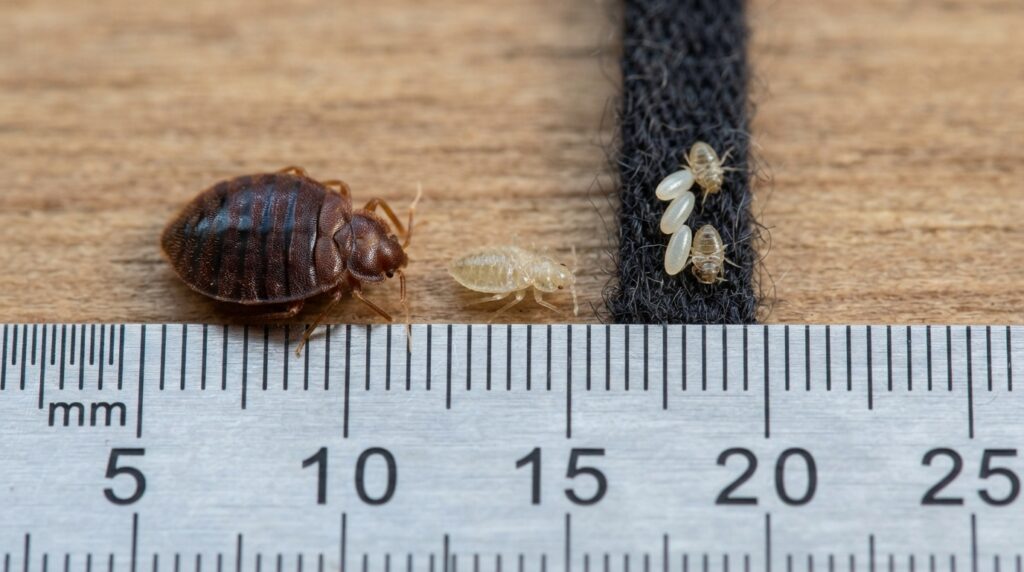
This is one of the most searched versions of the question, and the answer is genuinely mixed. Adult bed bugs are visible to the naked eye. At roughly a quarter-inch long with a reddish-brown, oval body, an adult isn’t microscopic, and most people can spot one if it’s out in the open on a light-colored sheet.
The problem is timing and behavior, not size. Bed bugs are nocturnal and instinctively avoid light, so during the day they retreat into cracks, seams, and gaps where you’re unlikely to see them without deliberately looking. Nymphs, the immature stage, are smaller and lighter colored, sometimes almost translucent right after hatching, which makes them genuinely hard to spot even when you know where to look.
So yes, you can see them, but usually only if you inspect the right spots at the right time, such as checking mattress seams first thing in the morning or using a flashlight to check dark crevices at night when the bugs are more likely to be active.
Early Signs of Bed Bugs You Might Be Overlooking
Before an infestation becomes obvious, there are usually early signs of bed bugs that get dismissed as something else entirely. Catching these early can save you weeks of frustration and a much larger treatment bill later.
- Unexplained itchy bumps that appear overnight, especially if a partner or family member isn’t affected at all, since reactions to bites vary significantly from person to person.
- A faint musty odor in the bedroom that wasn’t there before.
- Small rust-colored smears on bedding that look like they could be from a pen leak but wipe or wash out differently.
- Waking up with fresh bites you didn’t have before bed, particularly in a line or cluster pattern.
- Finding tiny, pale, almost see-through insect skins in bedding folds, which are shed nymph exoskeletons.
Catching even one of these early and investigating further, rather than assuming it’s a one-off mosquito bite or a random stain, is often the difference between a quick, contained treatment and a full-blown infestation that spreads through multiple rooms.
No Signs of Bed Bugs but I Have Bites: What’s Going On?
This is a genuinely confusing situation, and it’s more common than people expect. If there are no signs of bed bugs but I have bites, a few explanations are worth ruling out before assuming an infestation.
Other biting insects. Mosquitoes, fleas, and even some spider bites can leave marks that resemble bed bug bites. Fleas tend to bite around the ankles and lower legs, while bed bugs typically bite exposed skin anywhere during sleep.
Skin conditions unrelated to insects. Contact dermatitis, heat rash, and certain allergic reactions can mimic bite marks closely enough to cause confusion.
A very early or very light infestation. Bed bugs can be present in small numbers for weeks before physical evidence builds up enough to notice. A handful of bugs hiding deep in a box spring might feed occasionally without leaving much visible trace yet.
Bites from a previous location. Reactions to bed bug bites don’t always appear immediately. It’s possible to pick up a bite at a hotel, friend’s house, or workplace, and not notice the reaction until you’re back in your own bed, which naturally points suspicion at your own home first.
If you genuinely can’t find any physical evidence after a thorough inspection but the bites keep appearing, it’s reasonable to bring in a professional pest inspector, since trained technicians and detection dogs can sometimes confirm or rule out a low-level infestation far more reliably than a visual check alone.
What Does Bed Bug Bites Look Like?
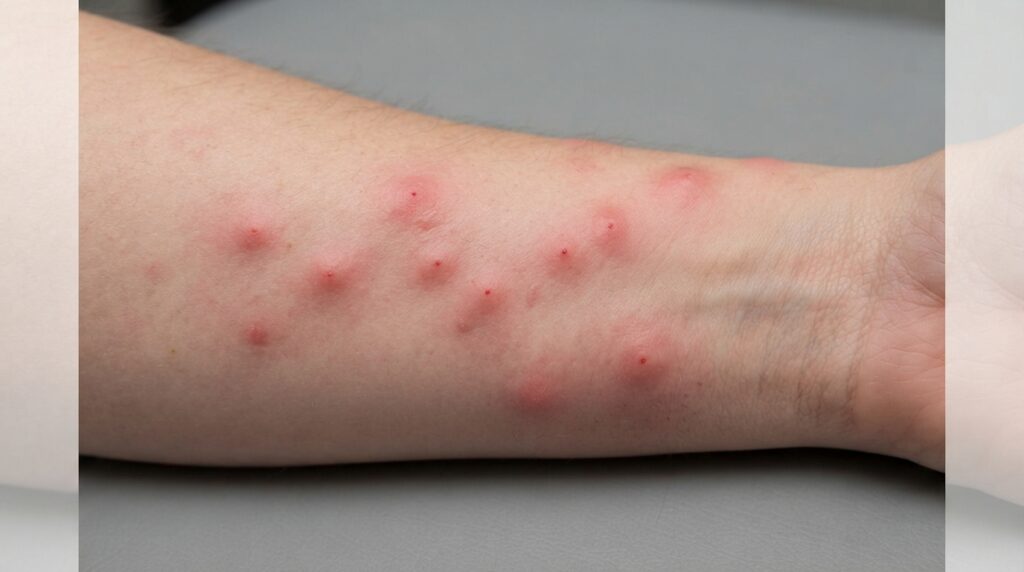
Knowing what does bed bug bites look like helps you compare your own symptoms against a reliable baseline, though it’s worth noting upfront that reactions vary a lot from person to person.
Typical characteristics include:
- Small, red, raised welts, often with a slightly darker red center.
- A tendency to appear in a line or a tight cluster of three or more, sometimes described informally as a “breakfast, lunch, dinner” pattern, since bed bugs may bite the same area multiple times in one feeding session.
- Bites usually show up on exposed skin during sleep, such as the arms, shoulders, neck, and face.
- Itching that can range from mild to intense, and typically develops one to several days after the actual bite, according to the CDC’s overview of bed bug symptoms.
Some people show no visible reaction at all, even with a confirmed infestation, which is part of why relying on bites alone as your only evidence is risky. The CDC notes that bed bug bites can look similar to mosquito or flea bites, appearing as a slightly swollen, red, and itchy area, which is exactly why physical inspection of your sleeping area matters just as much as symptoms on your skin.
Where Do Bed Bugs Hide on Your Body?
This is a common misconception worth clearing up directly. Where do bed bugs hide on your body is a question with a short answer: they don’t. Bed bugs are not like lice or scabies mites, which live on or in the skin. Bed bugs feed and then retreat to a hiding spot away from your body entirely, usually within a few feet of where you sleep.
Do Bed Bugs Stay on Your Body?
No. Do bed bugs stay on your body is another version of the same misunderstanding, and the answer is consistently no under normal circumstances. A bed bug feeds for roughly three to ten minutes, then moves off the skin and back into a nearby hiding spot to digest and hide from light. They are not designed to cling to hair, clothing worn on the body, or skin the way some other parasites are. The exception is very brief transport, such as a bug crawling onto a sleeve and being carried a short distance before dropping off, but they don’t set up residence on a person the way fleas or lice do.
Bed Bug Spray and Treatment Options
Once you’ve confirmed an infestation, the next question is usually what actually works. Bed bug spray products fall into a few different categories, and understanding the difference matters before you buy anything.
| Treatment type | How it works | Best for |
|---|---|---|
| Contact insecticide sprays | Kill bugs on direct contact | Small, localized infestations |
| Residual sprays | Leave a treated barrier that keeps working over time | Preventing bugs from crossing treated zones |
| Steam treatment | Uses high heat to kill bugs and eggs on contact | Mattresses, upholstery, baseboards |
| Diatomaceous earth | Physically damages the bug’s exoskeleton | Cracks, crevices, and long-term prevention |
| Professional heat treatment | Raises entire room temperature to a lethal level | Full-room or whole-home infestations |
The EPA maintains a searchable database of pesticides specifically registered for bed bug control, and strongly recommends checking that any product you buy is actually EPA-registered for indoor bed bug use before applying it, since not every insecticide on a store shelf is labeled for this purpose or safe to use around beds and sleeping areas.
It’s also worth knowing that bed bugs in many parts of the country have developed resistance to some common pesticide classes, which is one reason a single spray treatment often isn’t enough on its own for anything beyond a very small, early-stage problem.
How to Check for Bed Bugs Properly
If you want a repeatable process rather than a random glance at your sheets, here’s how to check for bed bugs the way a pest professional would approach a first inspection.
- Start with the bed. Strip all bedding and inspect the mattress seams, tags, and piping under bright light.
- Move to the box spring. Flip it if possible and check the underside fabric and any staples or seams.
- Check the frame. Look closely at joints, screw holes, and any areas where wood pieces meet.
- Inspect nearby furniture. Nightstands, headboards, and any upholstered chairs within a few feet of the bed.
- Use a flashlight at a low angle. This creates shadows that make small fecal spots and shed skins easier to spot than overhead lighting alone.
- Consider interceptor traps. These small devices sit under bed legs and physically catch bugs trying to climb up or down, giving you a passive, ongoing way to monitor for activity over several nights.
Doing this check every few weeks, especially after travel or having overnight guests, catches most infestations while they’re still small and far easier to treat.
How to Prevent Bed Bugs From Moving In
Prevention is genuinely easier than treatment, and most of it comes down to a handful of consistent habits. Here’s how to prevent bed bugs before you ever have to deal with an active infestation.
- Inspect hotel rooms before unpacking. Check the mattress seams and headboard area before putting your luggage on the bed.
- Keep luggage off the bed and floor when traveling. Use a luggage rack when one’s available, since it’s harder for bugs to climb onto elevated, smooth surfaces.
- Wash and dry travel clothing on high heat immediately after a trip, rather than letting it sit in a suitcase or hamper for days.
- Inspect secondhand furniture thoroughly before bringing it inside, particularly upholstered pieces, mattresses, and box springs.
- Use a mattress and box spring encasement. A tightly zipped encasement removes many of the hiding spots bugs rely on and makes any future infestation far easier to spot and contain.
- Reduce clutter near the bed. Fewer piles of clothing and fewer stacked items near sleeping areas mean fewer places for bugs to hide undetected.
Reducing clutter and making physical repairs to gaps and cracks in a home are core parts of both prevention and successful treatment, since bed bugs rely heavily on tight, undisturbed hiding spots to establish themselves. These same layered habits show up across nearly every method for how to get rid of bed bugs and other stubborn household pests, from clearing food sources to sealing off entry points.
How Do You Know If You Have Bed Bugs on Your Skin?
This ties back to the earlier point about bites, but it’s worth addressing directly. How do you know if you have bed bugs on your skin usually comes down to two things: the bite pattern itself, and ruling out other causes.
Look for:
- Bites appearing after a night’s sleep that weren’t there before bed.
- A clustered or linear pattern rather than random single bites scattered across the whole body.
- Bites concentrated on skin that was exposed while sleeping, such as arms, shoulders, and neck, rather than areas covered by tight clothing or bedding.
- No visible insect actually on the skin when you wake up, since bed bugs feed and then retreat rather than remaining attached.
If the pattern matches and you’re also finding physical evidence in the bedding, that combination is a much stronger confirmation than bites alone. Skin symptoms by themselves are genuinely unreliable, since so many people show delayed or minimal reactions even with an active infestation nearby.
What to Do If You Have Bed Bugs
Confirming an infestation is stressful, but panicking rarely helps. Here’s a practical, step-by-step answer to what to do if you have bed bugs, based on the general guidance pest management professionals and public health agencies recommend.
- Confirm the identification first. If possible, capture a sample insect in a sealed bag or jar so a professional or extension office can verify it’s actually a bed bug and not a similar-looking insect.
- Contact a licensed, certified pest control provider rather than relying on a single store-bought treatment for anything beyond a very minor, contained problem.
- Reduce clutter, but don’t move items around the house yet. Moving infested items into other rooms is one of the most common ways an infestation spreads further before treatment begins.
- Wash and heat-dry all washable bedding, clothing, and curtains from the affected room on the highest safe setting.
- Vacuum thoroughly, including mattress seams, baseboards, and carpet edges, then seal and dispose of the vacuum bag immediately outside the home.
- Use mattress and box spring encasements to trap any remaining bugs inside and stop them from spreading to new hiding spots.
- Follow through on the full treatment plan, since most treatment methods require more than one visit or application to fully break the life cycle, including eggs that hatch after the first treatment.
The joint guidance from the CDC and EPA specifically recommends against relying on do-it-yourself pesticide treatments alone for anything beyond a very minor, early-stage problem, since improper pesticide use indoors has led to documented cases of exposure incidents when people apply products not labeled for indoor or bed bug use.
Expert Tips for Getting Ahead of an Infestation
A few extra habits can make a meaningful difference, especially in shared housing like apartments or dorms where infestations can move between units.
- Talk to neighbors or building management early. In multi-unit housing, bed bugs frequently move between adjoining units through shared walls and plumbing chases, so isolated treatment in just one apartment often fails.
- Don’t discard furniture without marking it. Furniture left on a curb without any label is often picked up by someone else, spreading the problem to a new home. Some public health departments recommend marking infested items clearly before disposal.
- Keep a simple log. Note the dates and locations of any bites or evidence you find. This helps a pest control technician identify patterns and hot spots faster during inspection.
- Be patient with heat and steam treatments. These non-chemical methods are effective specifically because they reach the temperatures needed to kill eggs, not just adult bugs, but they require careful, thorough application to actually reach every hiding spot.
Pros and Cons of DIY vs. Professional Bed Bug Treatment
| Pros | Cons | |
|---|---|---|
| DIY treatment | Lower upfront cost, immediate action possible, good for very early detection | Easy to miss hidden pockets, pesticide resistance reduces effectiveness, risk of improper product use |
| Professional treatment | Trained inspection finds hidden infestations, access to heat treatment and stronger tools, follow-up visits included | Higher cost, scheduling delays, some prep work still required from the homeowner |
For a handful of bugs caught extremely early, with clear physical evidence in a single, contained spot, a careful DIY approach paired with encasements and thorough cleaning can work. For anything beyond that, especially once bites have spread to more than one household member or evidence appears in more than one room, professional treatment is generally the more reliable path.
Frequently Asked Questions
How do you know if you have bed bugs without seeing one?
Look for physical evidence instead of relying on spotting a live insect. Dark fecal spots along mattress seams, rust-colored stains on sheets, tiny pale shed skins, and a cluster of bites appearing overnight are all strong indicators even without a visual confirmation of a live bug.
How long can bed bugs live without feeding?
Adult bed bugs can survive for several months without a blood meal, which is part of why an empty room or vacant apartment doesn’t guarantee an infestation has died out on its own.
Can bed bugs live in your hair?
No. Unlike head lice, bed bugs are not adapted to cling to hair or skin. They feed briefly and then retreat to a nearby hiding spot rather than remaining on a person’s body or in their hair.
Do bed bugs spread disease?
According to the CDC, bed bugs are not known to transmit disease to humans. The main health concerns are itching, sleep disruption, and the risk of secondary skin infection from scratching bite sites.
How many treatments does it usually take to get rid of bed bugs?
Most professional treatment plans involve two to three visits spaced a couple of weeks apart, since a single treatment often misses eggs that haven’t hatched yet. Full resolution can take several weeks depending on the size of the infestation.
Final Word
Figuring out how do you know if you have bed bugs really comes down to combining a few different types of evidence rather than relying on just one sign. Physical proof in your bedding, a bite pattern that matches, and a careful inspection of the usual hiding spots together give you a much clearer picture than any single clue on its own.
If you’ve gone through this checklist and you’re still unsure, that uncertainty itself is a good enough reason to bring in a licensed pest control professional for a proper inspection. Catching an infestation early, before it spreads past one room, makes treatment faster, cheaper, and considerably less stressful.

