
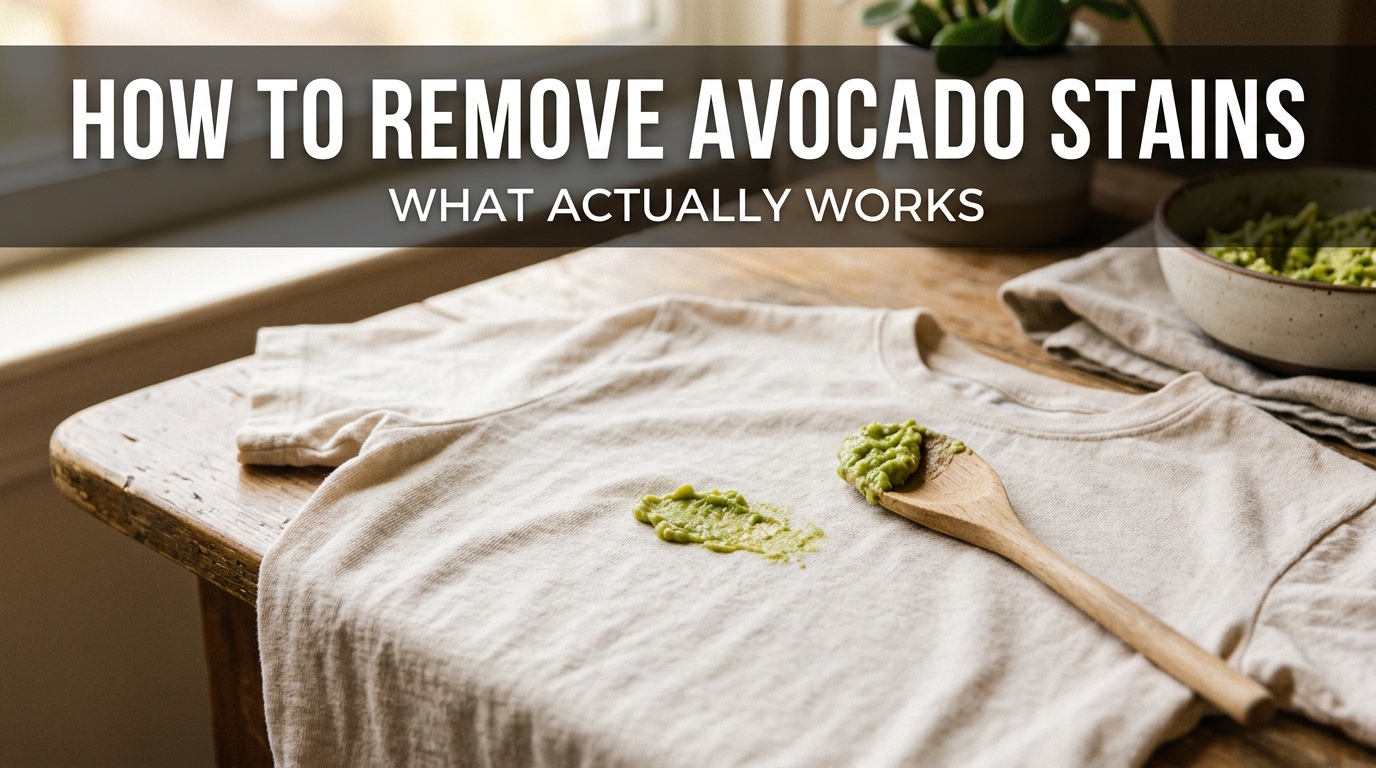
Avocado toast has a way of ending up somewhere other than your plate. A slice slips off the fork, guacamole drips off a chip, or a toddler’s hand finds your shirt mid-bite, and suddenly there’s a greasy green mark that wasn’t there a minute ago.
Learning how to remove avocado stains comes down to understanding what’s actually in that mark. Avocado is unusually high in natural oils compared to most fruit, and it also browns quickly once it’s exposed to air, which means you’re really fighting two problems at once: a grease stain and a slow-forming discoloration.
The upside is that neither of those problems is complicated to solve, as long as you treat the stain before it fully sets and use the right order of steps.
Why Avocado Leaves Such a Stubborn Mark
Avocado flesh is roughly 15% fat, which is high for produce. That fat is what makes the fruit creamy, and it’s also what makes the stain cling to fabric instead of rinsing away like a berry or tomato stain would.
There’s a second layer to the problem. Avocado contains an enzyme that reacts with oxygen the moment the flesh is cut or mashed, the same reaction that turns a leftover half avocado brown on the counter. On fabric, that same browning process keeps working after the stain lands, which is why a spot that looked pale green a minute ago can look darker and more set in ten minutes later.
That combination, oil plus ongoing oxidation, is why speed matters more with avocado than with most food stains. The oil needs to be broken down before it bonds with the fibers, and the discoloration needs to be treated before it fully darkens.
Compared with other common food stains, avocado sits in an unusual middle ground. It doesn’t dye fabric the way berries or tomato sauce can, since there’s no strong pigment involved, but it also doesn’t rinse away easily like sugar-based spills. A general breakdown of treating fruit-based stains on fabric notes that avocado’s higher fat content specifically calls for a direct detergent pretreatment rather than the cold-water-only approach that works for most other produce.
The texture of the spill matters too. Mashed or blended avocado, the kind you’d find in guacamole, tends to release more surface oil than a plain slice, which is part of why guacamole stains often feel greasier and spread more easily than a stray chunk of avocado from a salad.
What You’ll Need Before You Start
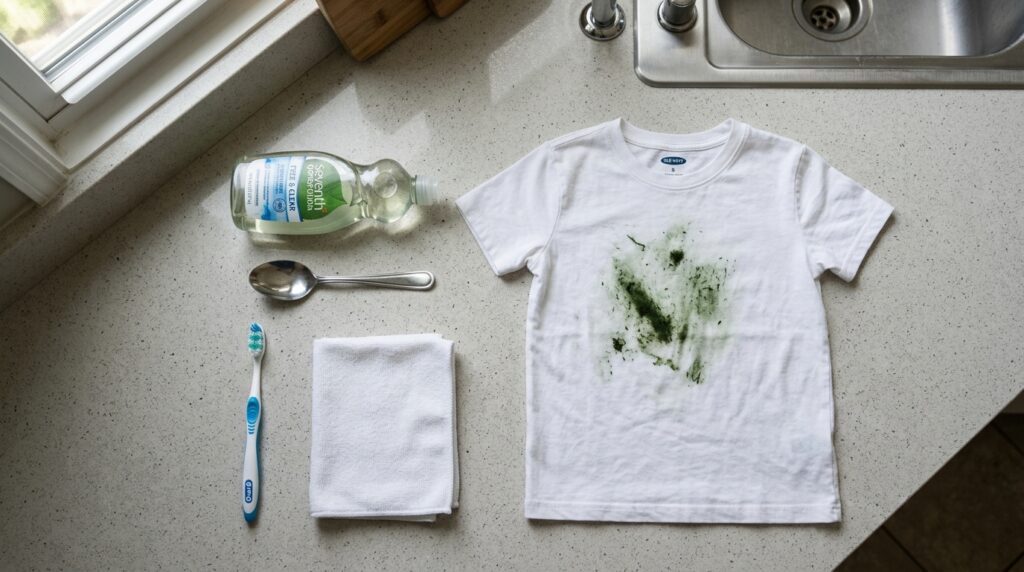
Nothing here requires a specialty product. Most of it is already sitting in a kitchen drawer or laundry closet.
- A spoon or dull butter knife for scraping
- Liquid dish soap or liquid laundry detergent
- Cool water (not hot, since heat can set the stain permanently)
- A soft toothbrush for gently working the detergent into fibers
- White vinegar, useful for any lingering discoloration
- Clean white cloths, since colored towels can transfer dye onto a damp stain
Keep the stained item away from direct heat, including a warm dashboard or a sunny windowsill, until the mark is fully treated. Warmth speeds up both the oxidation and the oil setting into the weave.
How to Remove Avocado Stains From Clothes
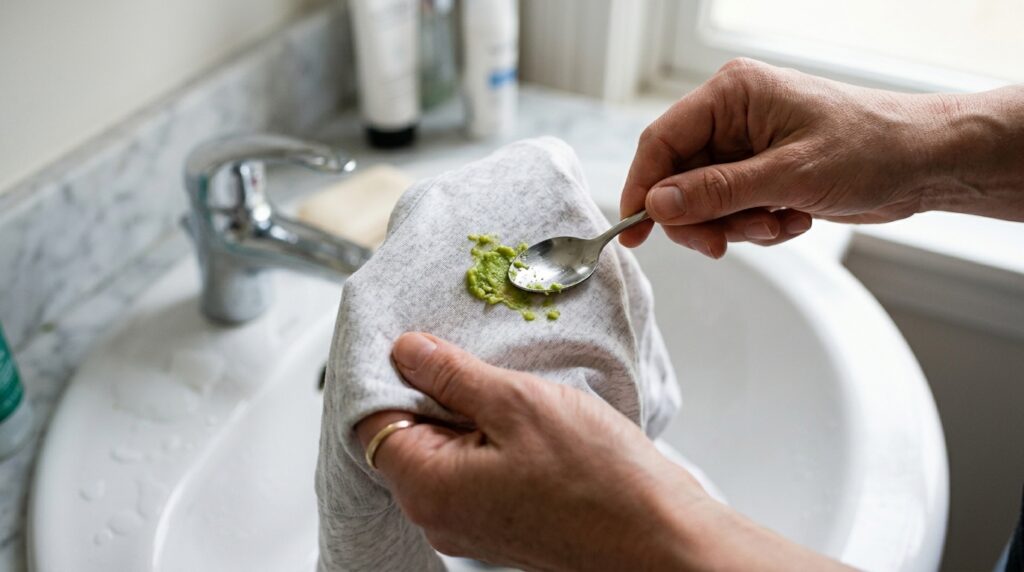
For a fresh spill, speed and gentle handling matter more than any specific product. Here’s the sequence that works on most washable fabrics.
- Use a spoon or dull knife to lift off any excess avocado, working from the outer edge of the stain toward the center so you don’t spread it further.
- Turn the garment inside out and run cool water through the back of the stain. This pushes the oil and pigment out of the fabric rather than driving it deeper in.
- Apply liquid dish soap or laundry detergent directly to the stain and gently work it in with your fingers or a soft toothbrush.
- Let the detergent sit for 5 to 10 minutes so it has time to break down the fat.
- Soak the item in warm water for about 30 minutes.
- Launder as usual, following the care instructions on the garment’s label, and check the spot before it goes anywhere near a dryer.
Detergent works here because it’s built to break emulsified fats apart, which is exactly what avocado oil is. A step-by-step method for lifting avocado oil out of the weave recommended by a professional laundry expert follows this same core order: scrape, treat, soak, wash.
How to Remove Old Avocado Stains
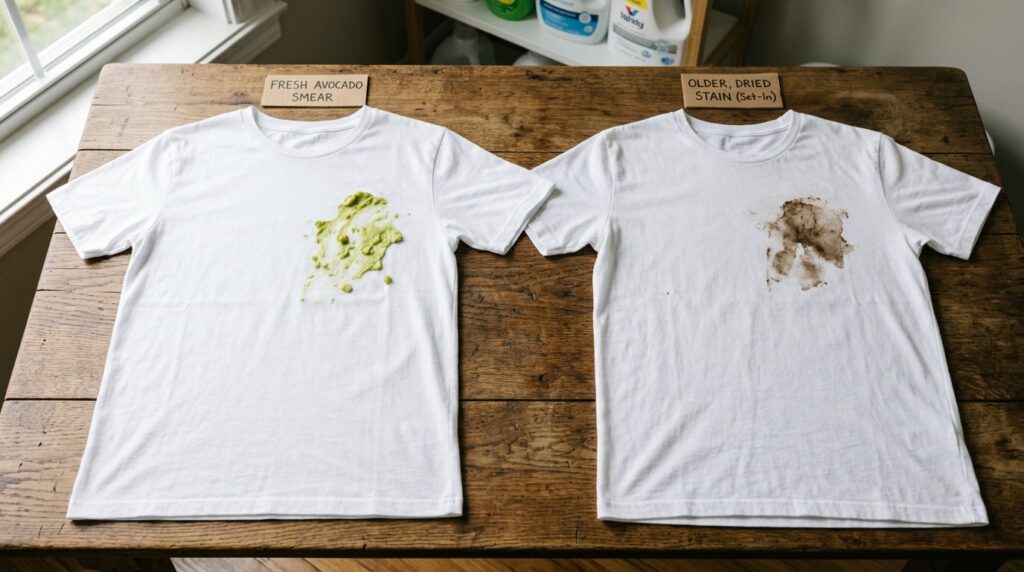
A stain that’s already gone through the dryer, or one you’re only just noticing days later, behaves differently than a fresh spill. The oil has had time to bond with the fibers, and the oxidation has usually finished darkening the mark into a brownish-green shadow. Here’s how to remove old avocado stains without giving up on the garment.
- Soak the item in cool water for 20 to 30 minutes to loosen the set-in oil.
- Apply liquid detergent directly to the stain and rub it in with a toothbrush in small circles.
- Let it sit for 15 minutes this time, longer than you would for a fresh stain, since the fat has had more time to settle in.
- Rinse thoroughly, then check the fabric under good light before washing.
- If a shadow remains, launder in the hottest water the fabric allows, adding an oxygen-based bleach alternative for extra lift on tougher spots.
- Repeat the treatment before drying if any trace is still visible. Heat locks in whatever’s left.
Old stains sometimes need two full cycles of treat-and-wash rather than one. That’s normal, and it’s still worth the effort before writing the garment off.
How to Get Avocado Stain Out of White Clothes
White fabric shows every trace of a stain, which makes patience worth it here more than almost anywhere else. Here’s how to get avocado stain out of white clothes specifically.
- Follow the same scrape, cold rinse, and detergent steps used for any fabric, but check the spot closely under natural light before deciding it’s gone. Discoloration can be subtle on white fabric until it’s fully dry.
- For cotton or other bleach-safe whites, a small amount of chlorine bleach diluted in water can finish off a stubborn shadow after the oil has already been broken down with detergent. Always check the care label first, since not every white fabric tolerates chlorine bleach.
- On delicate whites that can’t handle bleach, a paste of baking soda and water dabbed onto the spot and left for 15 minutes offers a gentler way to lift residual color.
- Sunlight is genuinely useful on white cotton. Laying a damp, treated garment flat in direct sun for an hour or two after washing can fade any faint remaining mark naturally.
Avoid skipping straight to bleach before treating the oil underneath. Bleach handles pigment, not fat, so a stain treated with bleach alone often looks gone at first and then reappears as the oil oxidizes further.
Does Avocado Stain White Clothes? What to Expect
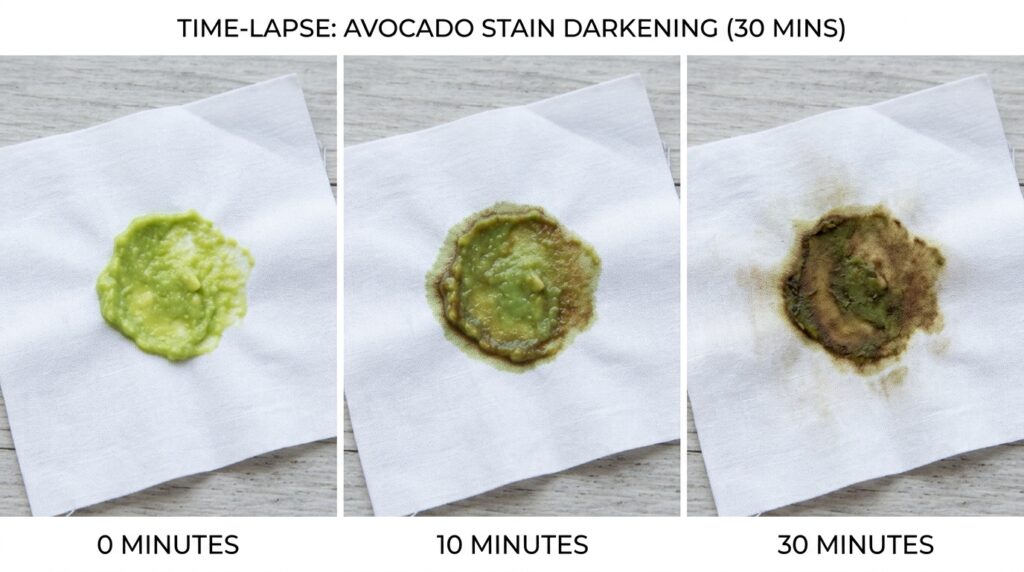
Yes, and it tends to show up faster and more visibly on white or light-colored fabric than on darker clothing. If you’re wondering, does avocado stain white clothes more noticeably, the short answer is that the oil and the browning pigment are the same regardless of fabric color, but there’s nothing on a white shirt to camouflage the contrast.
The good news is that white fabric also tends to be more forgiving to treat aggressively. Chlorine bleach, hot water, and direct sunlight are all tools you can reach for on sturdy white cotton that you’d want to avoid on colored or delicate garments, which often makes a fully successful outcome more likely on whites than people expect.
Does Avocado Stain Jeans? Denim-Specific Tips
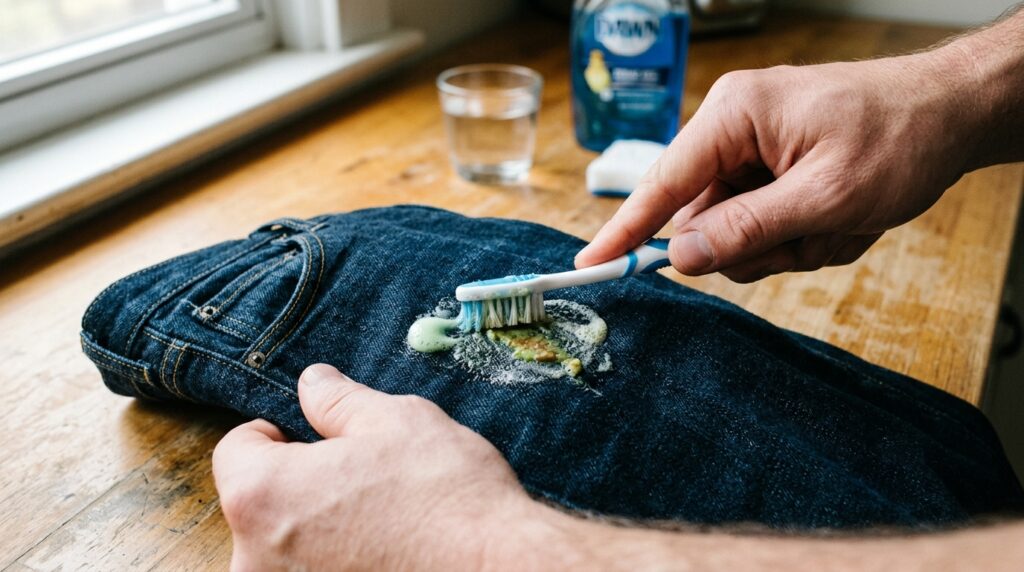
Denim handles avocado differently than a lighter cotton shirt. Does avocado stain jeans the same way it stains other fabric? Mostly yes, though the weave and dye of denim change how the treatment plays out.
- Denim’s tight weave means the oil sits closer to the surface at first, which actually gives you a slightly wider window to treat a fresh spill before it fully penetrates.
- Dark denim hides the greenish tint of the stain more easily than a light wash, but the greasy texture is still there even if the color isn’t obvious, so don’t skip the detergent step just because you can’t see much.
- Avoid hot water on colored or dark denim until you’ve confirmed the stain is gone, since heat can set both the oil and any dye transfer at the same time.
- Because denim is thicker than most cotton blends, plan on letting the detergent sit closer to 10 to 15 minutes rather than the shorter window used for thin fabric, so it has time to work through the weave.
Because dark denim can mask how much oil is actually still there, run a hand over the treated spot once it’s dry. A slightly stiff or shiny patch usually means a trace of oil is still sitting in the weave and needs one more round of detergent before you consider the job finished.
Removing Avocado From Carpet and Upholstery
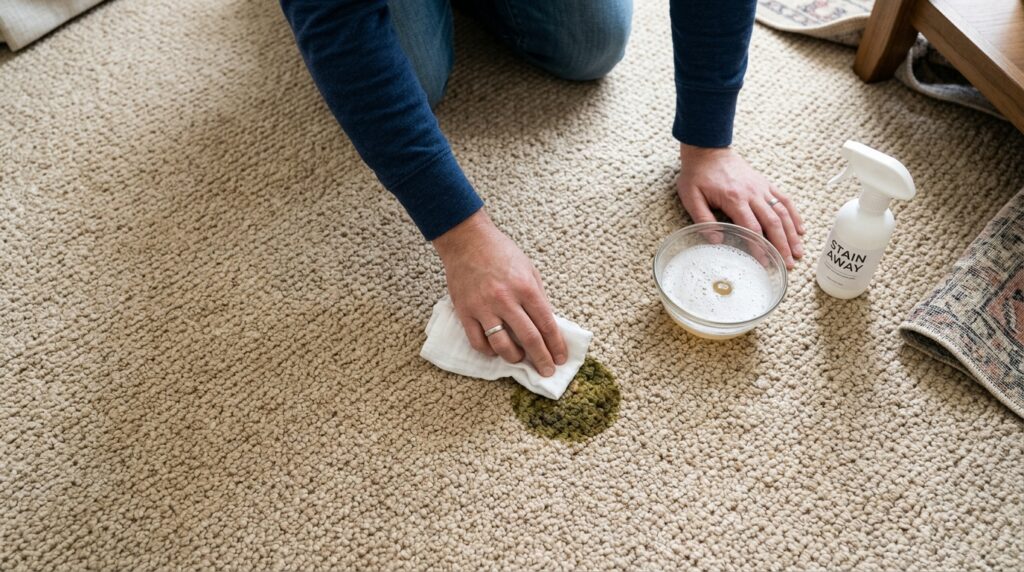
Fabric that can’t go into a washing machine needs a slightly different approach, since you can’t rely on a full soak or spin cycle to finish the job.
- Scrape off as much avocado as possible with a spoon before adding any liquid.
- Mix two cups of cool water with a tablespoon of dish soap.
- Dip a clean white cloth into the solution and blot the stain, working from the outer edge inward, switching to a clean section of cloth as it picks up color.
- Rinse by blotting with a cloth dampened in plain water to lift any leftover soap, since soap residue can attract dirt over time.
- Press dry towels into the spot to absorb moisture, then let the area air dry completely.
Avocado isn’t the only sticky, food-based stain that behaves this way on carpet. If you’re dealing with more than one kind of kitchen spill in the same week, this breakdown of removing sticky food stains like honey from carpet covers the same lift-treat-rinse logic for a different but related mess.
Spot-Treating Avocado Oil vs the Green Pigment
It helps to think of an avocado stain as two separate problems layered on top of each other, since treating only one half often leaves the other behind.
| Problem | What It Looks Like | What Actually Removes It |
|---|---|---|
| Oil residue | Greasy, slightly translucent mark, may darken fabric | Dish soap or detergent worked directly into the spot |
| Green-brown pigment | Visible tint from oxidation | Sunlight, diluted bleach on whites, or repeated wash cycles |
Most home methods handle both at once without you realizing it, since detergent breaks down the oil while the wash cycle and drying process fade the leftover pigment. Stubborn cases usually mean one half of that pair got missed, most often the oil, which is why a stain that looked clean out of the wash reappears faintly a day later as trapped oil continues to oxidize.
Pros and Cons of Common Avocado Stain Removal Methods
| Method | Pros | Cons |
|---|---|---|
| Dish soap and cold water | Gentle, inexpensive, works on most fabrics | Needs a few repeat applications on old stains |
| Enzyme-based stain remover | Effective on set-in oil and browning | Requires sitting time before washing |
| Diluted chlorine bleach | Very effective on white cotton | Not safe for colored or delicate fabric |
| White vinegar rinse | Helps with leftover discoloration | Weaker on straight oil residue alone |
| Sunlight drying | Free, gentle way to fade faint marks | Slow, only reliable on light fabric |
Weighing these against the fabric type in front of you takes a minute but usually saves a garment that would otherwise get written off as ruined.
Expert Tips for Better Results
- Treat it within the first few minutes if you can. The oxidation that darkens avocado stains keeps working the longer the spot sits untreated, so speed genuinely changes the outcome.
- Never rub a fresh stain. Rubbing pushes oil deeper into the weave. Scraping and blotting keep the mark from spreading.
- Check before drying, every time. Dryer heat can permanently set both the oil and the pigment, turning a treatable stain into a lasting one.
- Match your cleaner to the fabric, not just the stain. What works on sturdy cotton can be too harsh for silk, wool, or delicate blends, so read the care label before reaching for bleach or hot water.
- Keep a small kit near the kitchen table. A travel-size bottle of dish soap and a soft toothbrush tucked in a drawer means you can start treating a spill within a minute instead of after the meal.
Mistakes to Avoid
- Rubbing the stain instead of blotting. This spreads the oil and pigment across a wider area of fabric.
- Using hot water before the stain is gone. Heat can set both the fat and the discoloration permanently.
- Skipping the cold rinse from the back of the fabric. This step pushes trapped particles out instead of further in.
- Reaching for bleach before detergent. Bleach handles color, not oil, so treating pigment first often leaves the greasy residue behind to darken again later.
- Drying the item before confirming the stain is gone. Always check the spot in good light before it goes into a dryer.
- Waiting until after the meal to treat a spill. Even a five or ten minute delay while you finish eating gives the oxidation process more time to darken the mark.
- Assuming a dark stain means the fabric is ruined. Many stains that look permanently set are actually just untreated oil that hasn’t oxidized fully yet, and still respond well to a proper soak.
Preventing Avocado Stains Before They Happen
The easiest avocado stain to deal with is the one that never lands on fabric in the first place. A few small habits cut down on accidents without requiring much extra thought.
- Keep a napkin within reach whenever avocado is on the menu, whether that’s toast, a salad, or a bowl of guacamole at a gathering.
- Cut avocado over a cutting board rather than over your lap or a counter edge, since a slippery pit or an off-center knife stroke is a common way slices end up airborne.
- Serve guacamole with sturdier chips if breakage during dipping is a recurring problem in your household, since a snapped chip is one of the most common causes of a guacamole-related stain.
- Treat clothing immediately if a spill happens, rather than waiting until after the meal, since the oxidation clock starts the moment the flesh is exposed to air.
- Keep a small stain kit near the dining table during avocado-heavy meals, so treatment can start within a minute instead of after the dishes are cleared.
None of these habits take more than a few seconds, but they meaningfully cut down on how often you’re reaching for a spot treatment in the first place.
Frequently Asked Questions About Avocado Stains
Can avocado stains be removed after they’ve dried completely?
Yes, in most cases. Dried stains take longer and may need a soak plus a repeat treatment, but the same detergent and cold water approach still works. The key difference is patience: give the detergent more time to sit before rinsing.
What actually causes an avocado stain to turn brown over time?
An enzyme in the avocado reacts with oxygen once the flesh is exposed to air, the same process that browns a cut avocado on the counter. On fabric, that reaction keeps darkening the pigment for several minutes after the spill, which is why quick treatment matters.
Is it safe to use bleach on an avocado stain?
Diluted chlorine bleach works well on sturdy white cotton once the oil has already been treated with detergent, but it should be avoided on colored fabric, wool, silk, or anything the care label doesn’t specifically allow.
Does avocado stain jeans differently than a cotton shirt?
The tight weave of denim gives a slightly wider window before oil fully sets, but the treatment steps are largely the same. Dark denim just hides the greenish tint more easily than lighter fabric, even though the greasy texture is still there.
How long can an avocado stain sit before it becomes permanent?
There’s no single fixed cutoff, but treatment within the first hour has a noticeably higher success rate than waiting a full day. Stains that have gone through a hot dryer cycle are the hardest to fully remove, since the heat sets both the oil and the pigment.
Final Thoughts
An avocado stain looks worse than it usually is, mostly because the discoloration keeps darkening in the minutes after it happens. Scrape off the excess, treat with cold water and detergent before reaching for anything stronger, and give the fabric a real check under good light before it goes anywhere near heat. Handled that way, most avocado stains come out clean without needing a specialty product or a trip to the dry cleaner.

