
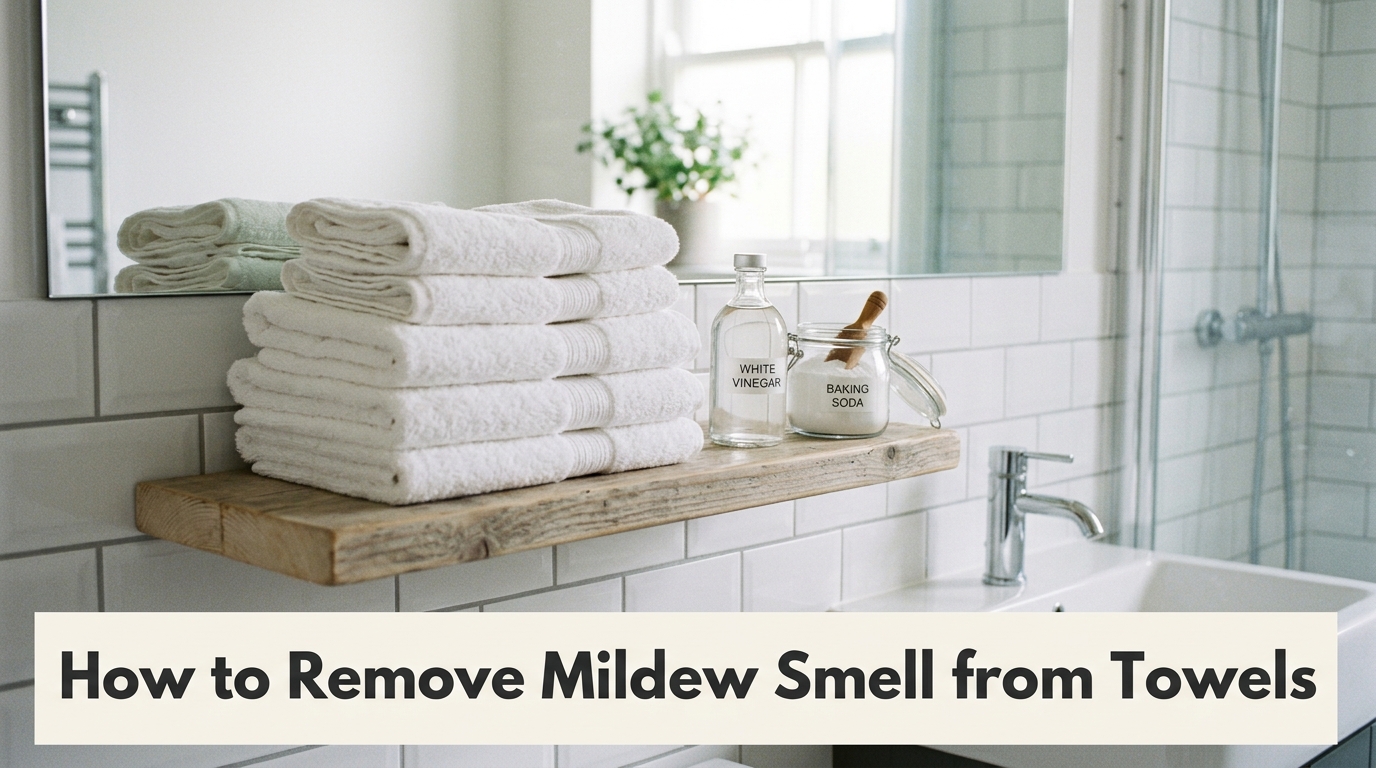
You pull a freshly washed towel out of the dryer, press it to your face, and — ugh. That sour, musty odor hits you like a wall. Your towel smells like mildew again, even though you just washed it.
Sound familiar?
You’re not alone. Millions of people deal with musty-smelling towels every week, and the frustrating part is that regular washing alone doesn’t always fix it. The smell keeps coming back, and over time, it gets worse.
The good news? There are real, proven solutions — and once you understand why your towels smell like mildew, fixing it becomes surprisingly simple.
This guide covers everything: the science behind the smell, the most effective home remedies, expert laundry tips, and how to prevent the problem from coming back. Whether you’re dealing with a slightly musty towel or a full-blown moldy towel situation, you’ll find the answer here.
Why Do My Towels Smell Musty? The Real Cause
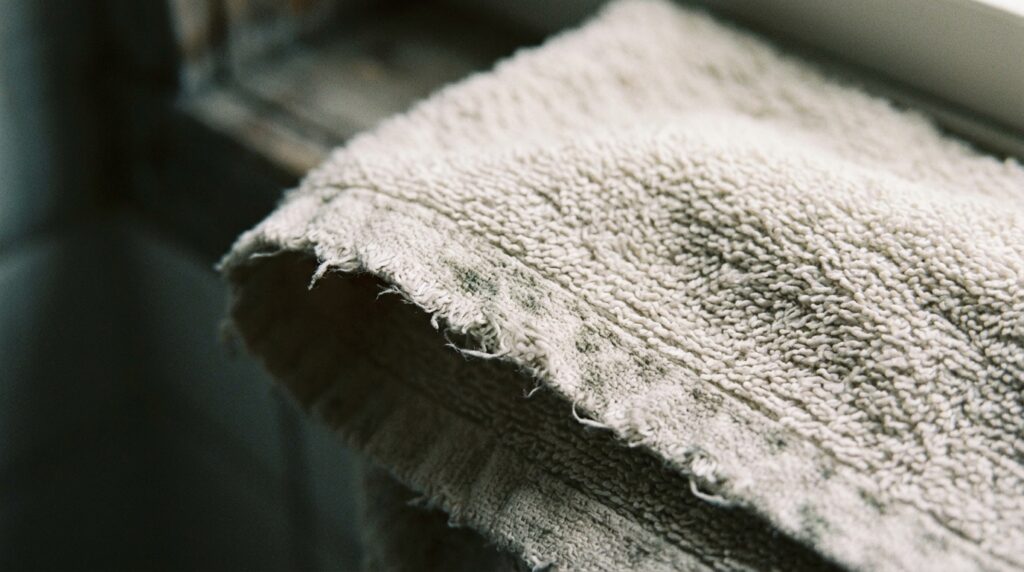
Before you can fix the smell, you need to understand what’s actually causing it. The answer comes down to one thing: moisture + microorganisms + time.
The Science Behind That Musty Odor
When towels stay damp for too long — even for just 30 to 60 minutes — bacteria and mildew spores that naturally exist in your environment start to multiply inside the fabric fibers. These microorganisms produce waste byproducts called volatile organic compounds (VOCs), which are what you’re actually smelling.
Mildew is a surface form of mold — a flat, powdery fungus that thrives on moist, organic materials like cotton fabric. It’s the primary culprit behind that signature musty towel smell.
The odor is often described as:
- Sour or sour-milk-like
- Earthy and damp
- Musty or stale
- Similar to a wet dog or gym locker
Why Does the Smell Persist After Washing?
Here’s the tricky part: regular hot water washing doesn’t always eliminate mildew and bacteria buried deep in towel fibers. Over time, towels can build up a layer of:
- Detergent residue (from using too much soap)
- Fabric softener coating (which traps moisture inside fibers)
- Mineral deposits from hard water
- Dead skin cells and body oils
This buildup creates the perfect feeding ground for bacteria. Even after a full wash cycle, enough microbial life remains to restart the smell within a few uses.
What Does Mold on Towels Look Like?
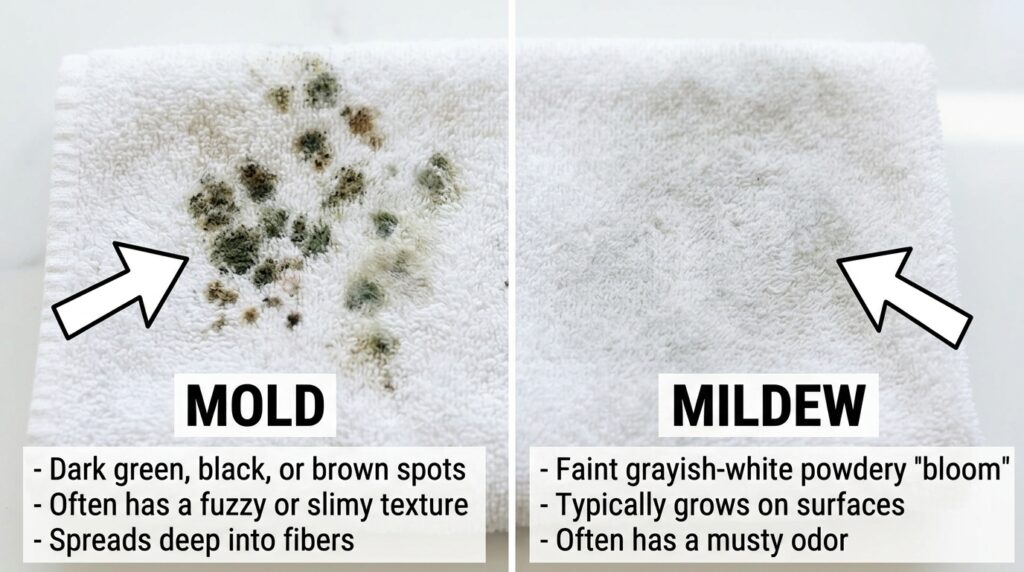
Not sure if you’re dealing with mildew or something worse? Here’s how to tell.
Mildew on towels typically looks like:
- Flat, powdery patches
- Gray, white, or light tan in color
- Found on the surface of the fabric
- Comes off with cleaning
Mold on towels typically looks like:
- Fuzzy or raised growth
- Dark green, black, or brown spots
- Often penetrates deeper into fibers
- Harder to remove; may require disposal of the towel
According to the CDC, mold exposure can cause respiratory symptoms, skin irritation, and allergic reactions — especially in people with asthma or sensitivities. If your towels have dark, fuzzy patches that don’t come out after treatment, it may be safest to replace them.
Quick check: If the spots brush off and the smell is musty (not deeply rotten), you’re likely dealing with mildew. That’s very treatable.
How to Remove Mildew Smell from Towels: 7 Proven Methods
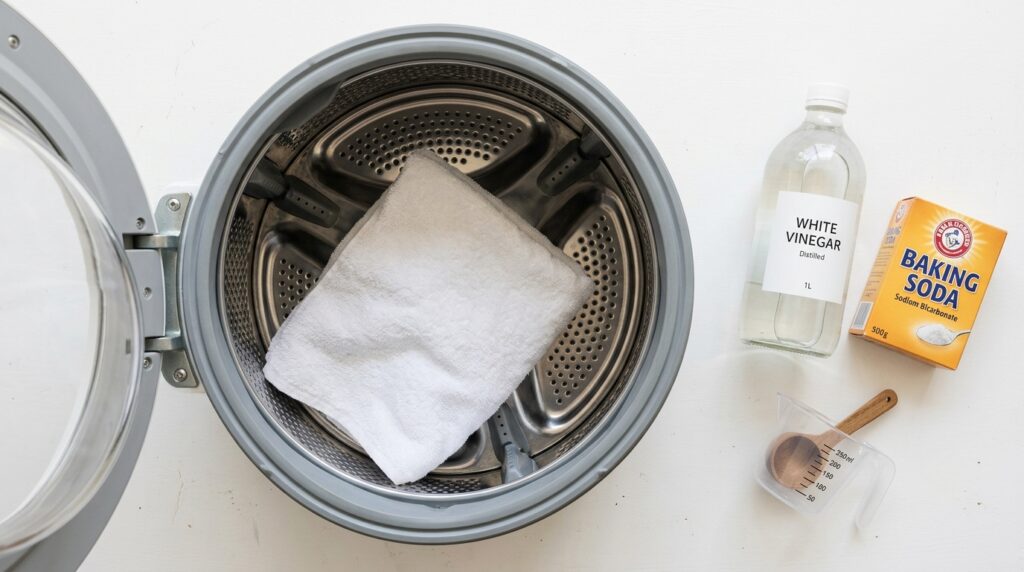
Let’s get into the solutions. These methods range from a quick same-day fix to a deep deodorizing treatment for severely musty towels.
Method 1: White Vinegar Wash (Most Recommended)
White distilled vinegar is the gold standard for removing mildew smell from towels. Its acetic acid content kills bacteria and mildew while dissolving the detergent buildup that traps odors.
How to do it:
- Place smelly towels in the washing machine — no detergent yet.
- Add 1 to 2 cups of white distilled vinegar directly to the drum or the detergent compartment.
- Set to the hottest water setting safe for the fabric.
- Run a full wash cycle.
- Do NOT add fabric softener.
- Immediately move towels to the dryer or hang in the sun.
White vinegar is safe for most cotton fabrics and won’t damage colors in typical concentrations. The vinegar smell dissipates completely once towels are dry.
Expert Tip: For heavily musty towels, let them soak in the washing machine with the vinegar for 30 minutes before starting the cycle.
Method 2: Baking Soda Boost
Baking soda (sodium bicarbonate) is a natural deodorizer and mild abrasive that neutralizes acidic odor compounds. It works best when combined with the vinegar method in a two-step process.
How to do it:
- Wash towels once with white vinegar (Method 1).
- Without drying, run a second wash cycle with ½ cup of baking soda added to the drum.
- Use the hottest water setting.
- Dry thoroughly immediately after.
This two-cycle method — vinegar first, baking soda second — is widely considered the most effective DIY treatment for stubborn mildew smell in towels.
Method 3: Borax Treatment
Borax (sodium borate) is a naturally occurring mineral compound and powerful laundry booster. It kills mold spores, deodorizes fabric, and softens hard water.
How to do it:
- Add your regular detergent to the washing machine.
- Add ½ cup of borax directly to the drum.
- Wash on hot.
- Dry immediately.
Borax is particularly effective in areas with hard water, where mineral buildup contributes to musty odors. Look for it in the laundry aisle under brands like 20 Mule Team Borax.
Method 4: Oxygen-Based Bleach (OxiClean Method)
Oxygen bleach — the kind found in products like OxiClean — uses hydrogen peroxide chemistry to break down organic compounds, killing bacteria and mildew without damaging fabric color.
How to do it:
- Fill a large basin or bathtub with hot water.
- Add the recommended amount of oxygen bleach per product label (typically 1–2 scoops).
- Submerge towels and soak for 1–6 hours.
- Wash in the machine on hot.
- Dry immediately.
Unlike chlorine bleach, oxygen bleach is color-safe and gentler on fibers. It’s ideal for colored or patterned towels where you can’t use regular bleach.
Method 5: Chlorine Bleach (For White Towels Only)
For white cotton towels with visible mildew stains, chlorine bleach is highly effective. It kills mold and mildew at the root level and removes discoloration.
How to do it:
- Check the care label to confirm bleach is safe.
- Add ½ cup of chlorine bleach to the bleach dispenser (not directly on fabric).
- Wash on hot.
- Run an extra rinse cycle.
- Dry completely.
Never mix chlorine bleach with vinegar — this produces toxic chlorine gas. Use one or the other, not both.
Method 6: Lemon Juice + Sun Method
This is the most natural approach and works well for mild cases of mildew smell and light staining.
How to do it:
- Squeeze fresh lemon juice or add ½ cup of bottled lemon juice to the washing machine.
- Wash on hot.
- Hang towels outside in direct sunlight to dry.
UV radiation from sunlight is a natural disinfectant that kills mold and bacteria on fabric surfaces. The combination of citric acid and sun exposure is surprisingly powerful for mild mildew odor.
Method 7: Tea Tree Oil Treatment
Tea tree oil is a natural antimicrobial essential oil with proven antifungal and antibacterial properties. It’s a great option for people who prefer chemical-free solutions.
How to do it:
- Add 10–15 drops of tea tree essential oil to a cup of water.
- Add this mixture to your washing machine along with detergent.
- Wash on warm or hot.
- Dry thoroughly.
Tea tree oil leaves a mild herbal scent that fades as towels dry. It’s safe for colored fabrics and won’t cause discoloration.
Method Comparison Table
| Method | Best For | Fabric Safe? | Cost |
|---|---|---|---|
| White Vinegar | General musty smell | Yes | Very Low |
| Baking Soda | Odor neutralizing | Yes | Very Low |
| Borax | Hard water areas | Yes | Low |
| Oxygen Bleach | Deep deodorizing | Yes (color-safe) | Medium |
| Chlorine Bleach | White towels only | White only | Low |
| Lemon + Sun | Mild cases, eco-friendly | Yes | Very Low |
| Tea Tree Oil | Chemical-sensitive users | Yes | Medium |
Why Do My Towels Smell Like Mildew Even After Washing?
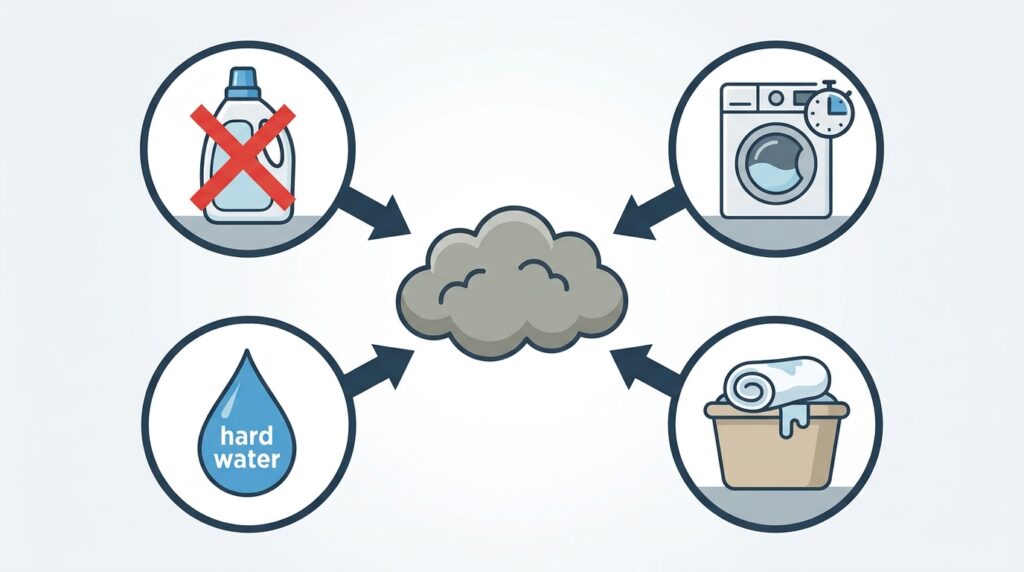
If your towels still smell after washing, one of these four things is almost certainly happening:
1. You’re Using Too Much Detergent
This is the most common culprit. Extra detergent doesn’t mean cleaner towels — it means more residue left behind in the fibers. This residue holds moisture and feeds bacterial growth.
Fix: Cut your detergent to half the recommended amount for towels. You’ll likely get better results.
2. Towels Sat in the Washer Too Long
If wet towels sit in the washing machine for more than 30–60 minutes after the cycle ends, mildew can begin growing before the towels are even dried. Most washing machines now have a reminder alert for this reason.
Fix: Move towels to the dryer or hang them immediately when the wash cycle ends.
3. Fabric Softener Is Coating the Fibers
Fabric softeners coat fibers with a waxy layer that reduces absorbency and traps moisture — exactly the opposite of what you want for towels. Over time, this creates a perfect bacterial habitat.
Fix: Stop using fabric softener on towels entirely. Use white vinegar in the rinse cycle instead — it naturally softens fabric without leaving residue.
4. Hard Water Mineral Buildup
If you live in an area with hard water, mineral deposits (calcium and magnesium) accumulate in towel fibers over time, reducing their ability to be truly cleaned. This makes towels stiff, scratchy, and prone to musty odors.
Fix: Use a water softening product in your wash, or add borax to help neutralize minerals.
Expert Tips: What Laundry Professionals Recommend
Here’s what laundry professionals and textile care experts consistently recommend:
- Wash towels every 3–4 uses — not less frequently. Bacteria and oils accumulate faster than most people realize. The American Cleaning Institute recommends washing bath towels after every three to four uses.
- Always dry towels completely before folding and storing. Even slightly damp towels in a closed cabinet or drawer will develop mildew within 24–48 hours.
- Don’t leave wet towels in a pile on the floor or in a hamper. A single wet towel in a pile can transfer mildew spores to surrounding items.
- Shake towels before drying to fluff the fibers and allow heat to penetrate more evenly in the dryer.
- Use the high-heat dryer setting for cotton towels — heat kills bacteria and mildew. Add wool dryer balls to speed drying time and fluff fibers naturally.
- Clean your washing machine regularly. Front-loader washing machines in particular are notorious for developing mildew in the gasket seal. Run a monthly cleaning cycle with a product like Affresh or two cups of white vinegar.
- Leave the washer door open between loads to let the drum air out and dry.
How to Store Towels to Prevent Mildew

Proper storage is just as important as proper washing. Here’s how to store towels so they stay fresh:
Do:
- Hang towels on a towel bar or hook after every use — never fold them damp
- Store clean towels in a well-ventilated linen closet or open shelf
- Allow towels to dry fully (at least 2–3 hours) before folding
- Leave bathroom doors slightly open after showering to reduce humidity
- Use a bathroom exhaust fan during and after showers for 15–20 minutes
Don’t:
- Fold towels while still warm from the dryer (moisture can be trapped inside)
- Store towels in a closed hamper with other damp items
- Stack too many towels in an enclosed cabinet without airflow
- Hang towels in a humid bathroom with no ventilation
When to Replace Your Towels
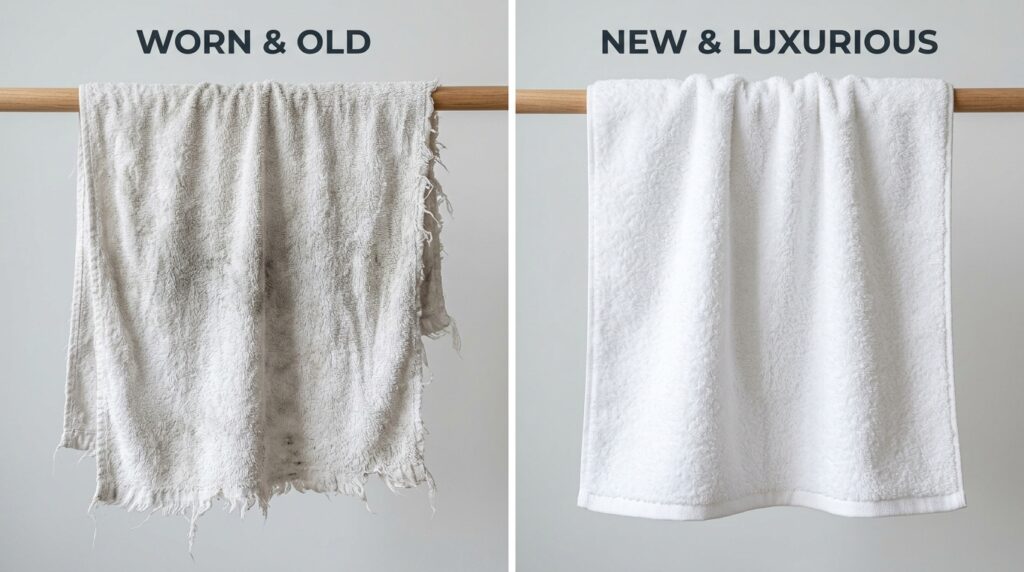
Sometimes the mildew problem has gone too far and no amount of washing will fix it. Here are the signs it’s time to buy new towels:
- Persistent smell after two or three deep-cleaning treatments — at this point, the mildew is deeply embedded in the fiber structure
- Visible dark stains that don’t come out — black or green spots that remain after washing may indicate black mold
- Fibers feel permanently stiff or rough — heavy mineral and residue buildup has degraded the fabric
- Towels are visibly falling apart — fraying, thinning, or losing pile significantly
Most quality cotton towels last 2–5 years with proper care, according to textile care guidelines. If yours are older and consistently smelly, replacement is the most practical solution.
When replacing, look for:
- 100% Egyptian or Turkish cotton for high absorbency and durability
- Loop/pile density (higher GSM = thicker, more absorbent)
- OEKO-TEX certified fabrics for safety and quality assurance (learn more at oeko-tex.com)
Moldy Towels and Health: Should You Be Worried?
Using a mildew-contaminated towel means pressing mold spores directly against your skin and face — not ideal. For most healthy people, a slightly musty towel causes minor irritation. But the risks can be more significant for some.
Potential health effects of mold/mildew exposure on skin and airways include:
- Skin rashes or irritation
- Worsening of eczema or dermatitis
- Nasal congestion or runny nose
- Eye irritation
- Respiratory symptoms (especially for those with asthma or mold allergies)
The American Academy of Allergy, Asthma & Immunology (AAAAI) notes that mold sensitivity varies widely from person to person, but even mild mold exposure can cause symptoms in sensitive individuals.
For households with children, elderly members, or immunocompromised individuals, musty towels should be treated or replaced promptly.
Step-by-Step: The Deep Reset Method (For Severely Musty Towels)
If your towels are severely musty and you want to do a full reset, here’s the complete process professionals recommend:
Step 1: Pre-treat (optional for very bad odors) Soak towels in a bucket of hot water mixed with 1 cup of white vinegar for 30 minutes before washing.
Step 2: First wash — Vinegar cycle
- Load towels into the washing machine (don’t overfill)
- Add 1–2 cups of white vinegar to the drum
- Set to hot water, long cycle
- No detergent, no fabric softener
- Run the full cycle
Step 3: Second wash — Baking soda cycle
- Keep towels in the machine (don’t dry between cycles)
- Add ½ cup of baking soda to the drum
- Run another hot wash cycle
- No detergent or additives
Step 4: Dry immediately and thoroughly
- Transfer towels immediately to the dryer
- Use the high-heat setting
- Add 2–3 wool dryer balls
- Run for the full cycle until completely dry
Step 5: Air out if needed
- If any faint smell remains, hang towels outside in sunlight for 2–4 hours
- The UV light and fresh air will finish the job
After this process, towels should smell completely neutral. Going forward, follow the prevention tips below to keep them that way.
Frequently Asked Questions
How do I get the mildew smell out of towels that are already dry?
If your towels smell musty even when dry, the mildew and bacteria are already embedded in the fibers. The best approach is the vinegar wash method — place dry towels directly into the machine with 1–2 cups of white vinegar and wash on hot. This works even on towels that have been dried and stored. Follow with a baking soda wash for best results.
Is it safe to use towels that smell like mildew?
For healthy adults, occasional use of a mildew-smelling towel is unlikely to cause serious harm. However, it’s not ideal — mildew means live fungal growth on your towel, and pressing that against your skin or face isn’t hygienic. For people with allergies, asthma, or sensitive skin, it can cause irritation or respiratory symptoms. Treat or replace musty towels as soon as possible.
Why do my towels smell like mildew right after washing?
If towels smell musty right out of the wash, one of three things is likely happening: (1) they sat in the washer too long after the cycle ended, (2) your washing machine itself has mold buildup, or (3) there’s significant detergent or fabric softener residue in the fibers that regular washing can’t cut through. Try cleaning your machine with Affresh tablets and use the vinegar treatment on your towels.
Can I put vinegar and baking soda in the washer at the same time?
No — and this is important. Adding vinegar and baking soda together neutralizes both compounds through an acid-base reaction, leaving you with water and CO₂. They work best as a two-cycle treatment: vinegar in the first wash, baking soda in the second. Never add them to the same wash load.
How often should I wash my towels to prevent mildew smell?
The American Cleaning Institute recommends washing bath towels after every three to four uses. If your bathroom is particularly humid, or if you tend to leave towels damp on the floor, consider washing every 2–3 uses. Hand towels, which get more contact with multiple people, should be washed more frequently — every 1–2 days.
Conclusion: Fresh Towels Are a Simple Fix Away
Dealing with mildew smell in towels is one of those nagging household problems that feels harder than it actually is. Once you understand the cause — moisture, bacteria, mildew, and residue buildup — the solution becomes straightforward.
Start with the white vinegar method. For stubborn cases, follow it up with a baking soda wash. Then commit to a few simple habits: hang towels after every use, dry them completely before storing, and skip the fabric softener.
Your towels will smell fresh, feel softer, and last longer. And you’ll never have to do the awkward “sniff test” before stepping out of the shower again.
Ready to freshen up your towels? Start with what you already have — white vinegar and baking soda are all you need. Try the two-cycle method this weekend and see the difference for yourself.
If you found this guide helpful, share it with someone who’s been complaining about musty towels — it’s a quick fix they’ll thank you for.

