
Picture this: you’ve just bought a bag of fertilizer, you’re excited to feed your struggling tomato plants, and you think — more is more, right?
Wrong. That’s actually the number one mistake most gardeners make.
Over-fertilizing is just as harmful as not fertilizing at all. It causes leaf burn, root damage, and can even kill your plants. Under-fertilizing leaves your plants weak and stunted.
The sweet spot? It comes down to knowing how to dose fertilizer correctly — and that’s exactly what this guide is for.
Whether you’re growing vegetables in your backyard, houseplants on a windowsill, or flowers in raised beds, this article will walk you through everything you need to know — in plain, practical language.
What Is Fertilizer and Why Does Dosing Matter?
Fertilizer is essentially plant food. It delivers essential nutrients that soil alone often can’t provide in sufficient quantities — particularly nitrogen (N), phosphorus (P), and potassium (K), the three macronutrients shown on every fertilizer label as the NPK ratio.
But plants also need micronutrients like calcium, magnesium, iron, and zinc. Too little, and growth suffers. Too much, and you cause nutrient toxicity or lock out other minerals.
According to the Royal Horticultural Society’s guide on feeding plants, proper fertilizer application is one of the most impactful things a gardener can do — but only when the right type, amount, and frequency are used together.
Think of it like medication: the right dose heals. The wrong dose harms.
Understanding the NPK Ratio Before You Dose Anything
Before you measure a single drop or scoop, you need to understand what’s in your fertilizer.
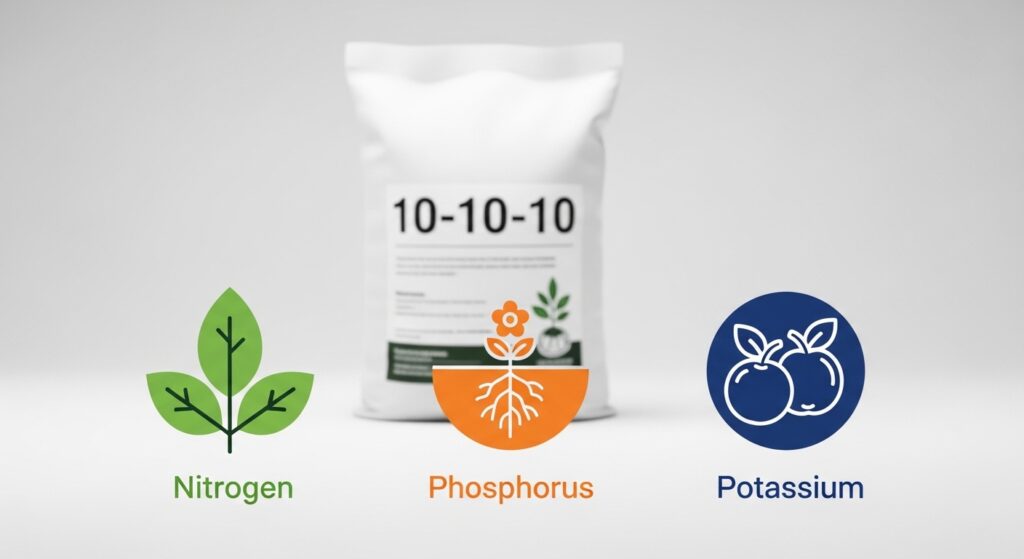
Every fertilizer package shows three numbers — for example, 10-10-10 or 5-10-5. These represent the percentage by weight of:
- N (Nitrogen): Drives leafy, green growth
- P (Phosphorus): Supports root development and flowering
- K (Potassium): Boosts fruit production and disease resistance
A balanced fertilizer like 10-10-10 is a general-purpose option. A high-nitrogen formula like 30-0-4 is better for lawns or leafy greens. A high-phosphorus blend like 5-10-5 suits flowering plants or root vegetables.
The University of Minnesota Extension’s quick guide to fertilizing plants recommends performing a soil test before choosing any fertilizer — so you’re only adding what’s genuinely missing, not guessing.
How to Read Fertilizer Labels for the Right Dose
Most fertilizers come with dosing instructions printed on the label — but they’re not always easy to interpret.
The RHS fertilizer labels explained guide covers exactly what each term means. Here’s a quick reference:
| Label Term | What It Means |
|---|---|
| Application Rate | How much to apply per square foot or gallon of water |
| Frequency | How often to apply (weekly, monthly, etc.) |
| Dilution Ratio | For liquid fertilizers — how much to mix with water |
| Coverage Area | How many sq. ft. the bag/bottle covers |
Always start at the lower end of the recommended range. You can always add more in the next feeding cycle — you can’t undo over-fertilization.
How to Dose Fertilizer for Different Plant Types
Not all plants eat the same. Here’s how to approach dosing based on what you’re growing:
Vegetables and Edible Plants
Vegetables are heavy feeders — especially crops like tomatoes, peppers, squash, and corn.
- Tomatoes: Apply a balanced fertilizer (like 10-10-10) at transplanting, then switch to a low-nitrogen, high-phosphorus blend once flowering begins. A general starting dose is 1 tablespoon per gallon of water for liquid formulas, applied weekly or biweekly.
- Leafy greens (lettuce, spinach, kale): Prefer nitrogen-heavy feeding — roughly ½ lb of 10-10-10 per 100 sq ft every 4–6 weeks.
- Root vegetables (carrots, beets): Need more phosphorus than nitrogen. Too much nitrogen causes leafy tops and poor root development.
According to Penn State Extension’s vegetable soil fertility resource, the best way to fertilize your vegetable garden is always by starting with a soil test — it allows you to apply fertilizers based on what’s actually lacking in your soil.
Flowering Plants and Ornamentals
Flowering plants need a phosphorus boost to produce blooms, but gardeners should first understand the specific growing requirements of plants such as Bird of Paradise, including planting Bird of Paradise seeds.
- Roses: Feed every 4–6 weeks during the growing season with a rose-specific fertilizer, typically at 1 tablespoon per gallon or per label instructions.
- Annuals (petunias, marigolds): Benefit from a balanced slow-release fertilizer applied once at planting, then light liquid feeding every 2–3 weeks.
Houseplants
Houseplants have slower metabolism than outdoor plants — especially in low-light environments.
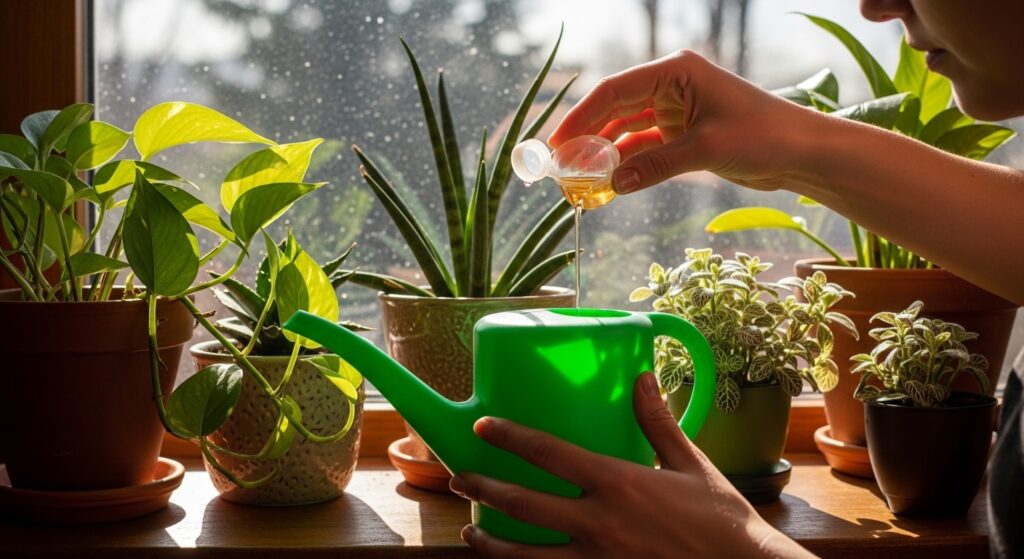
- General rule: Feed every 2–4 weeks during spring and summer with a diluted liquid fertilizer (half the recommended dose is usually safer).
- During winter: Most houseplants go semi-dormant — reduce or stop feeding entirely.
- Succulents and cacti: Feed once a month during growing season at ¼ strength max. These are lean feeders.
Trees and Shrubs
Trees are slow feeders. Over-fertilizing them causes fast, weak growth that’s more susceptible to pests and disease.
- Established trees: Apply 1–2 lbs of nitrogen per 1,000 sq ft of root zone area per year (typically in early spring).
- Young trees: Use less — roughly 0.1 lb of nitrogen per inch of trunk diameter.
- The Clemson Extension HGIC guide to fertilizing trees and shrubs recommends broadcasting granular fertilizer evenly across the entire root zone, and notes that water — not fertilizer — is the most critical factor for newly planted trees.
Liquid vs. Granular Fertilizer: How the Dosing Differs
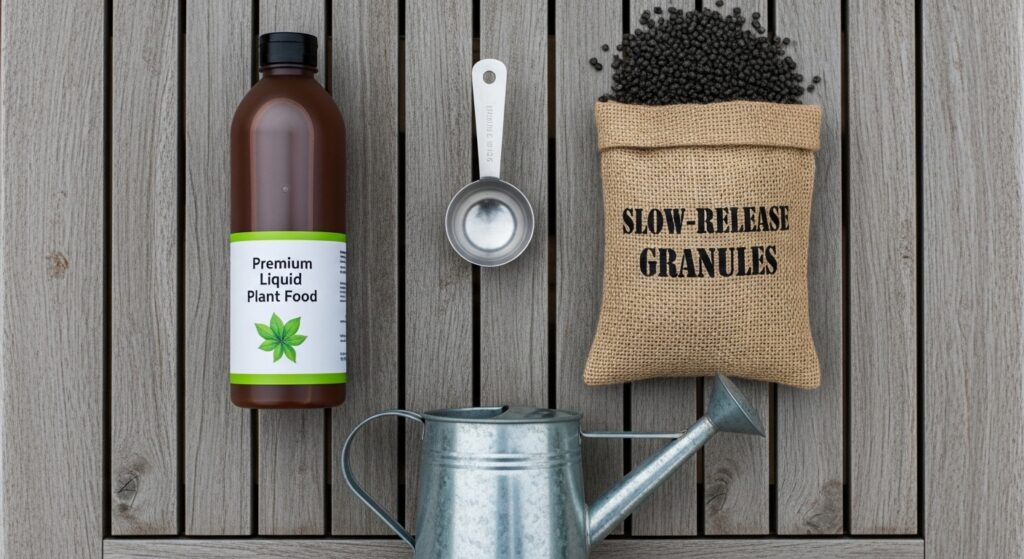
The form of fertilizer you use significantly changes how you dose it:
Liquid Fertilizers
These are fast-acting and easy to control. They’re dissolved in water and delivered directly to the roots or sprayed as foliar feeds.
How to dose:
- Check the label for the dilution ratio (e.g., 1 tsp per gallon)
- Always measure — never eyeball it
- Water the soil before applying to avoid root burn
- Apply every 1–2 weeks during active growth
Popular liquid options include fish emulsion, seaweed extract, and synthetic liquid concentrates.
Granular Fertilizers
These are slow-release and longer lasting. They break down gradually over weeks or months.
How to dose:
- Measure by weight or volume as instructed (e.g., ½ cup per 10 sq ft)
- Scatter evenly and work lightly into the soil surface
- Water thoroughly after application
- Reapply every 6–8 weeks, or per label
Slow-release granular fertilizers like those coated with polymer resin (e.g., Osmocote) are especially forgiving for beginners since they reduce the risk of over-application.
How to Calculate the Right Fertilizer Dose (Step-by-Step)
Here’s a simple method for calculating how much fertilizer you actually need:
Step 1: Get a Soil Test
Visit your local cooperative extension office or use an at-home kit. The USDA Cooperative Extension System has offices in or near most of the nation’s 3,000 counties — they connect you to state-specific soil testing labs for as little as $15–$30.
Step 2: Know Your Area
Measure your planting area in square feet. For containers, know the pot size in gallons.
Step 3: Match the Nutrient Need
Based on your soil test, find a fertilizer formula that fills the gap. For example, if your soil lacks phosphorus, choose a 5-10-5 or 0-20-0 formula.
Step 4: Apply by the Label Rate
Use the application rate on the package as your starting point, but use ½ to ¾ of the recommended dose on your first application if you’re unsure of your soil’s current levels.
Step 5: Monitor and Adjust
Watch your plants for 1–2 weeks. Look for:
- Signs of under-fertilizing: Yellowing leaves, slow growth, pale color
- Signs of over-fertilizing: Leaf tip burn, wilting despite watering, crust forming on soil surface
Timing Your Fertilizer Applications
When you apply fertilizer matters just as much as how much you use.
| Growth Stage | Best Time to Fertilize |
|---|---|
| Early spring | Apply as plants emerge from dormancy |
| Pre-flowering | Switch to higher phosphorus blend |
| Fruiting stage | Use potassium-rich formula |
| Late fall/winter | Stop fertilizing most plants |
| After repotting | Wait 6–8 weeks before feeding |
As Penn State Extension notes in their vegetable gardening guide, timing fertilizer around your planting schedule — and matching it to your soil test results — gives your garden the best possible foundation from the very start.
Expert Tips: Getting Fertilizer Dosing Right Every Time
Here’s what experienced horticulturists consistently recommend:
- Always water before liquid feeding — dry soil + fertilizer = root burn
- Dilute more than you think you need — especially for sensitive plants
- Use a measuring spoon or scale — never pour directly from the bottle
- Keep a feeding log — note what you applied, when, and how the plant responded
- Flush the soil occasionally — run plain water through the pot to prevent salt buildup from granular fertilizers
- Read the label twice — some fertilizers are highly concentrated and require significant dilution
- Organic vs. synthetic: Organic fertilizers (compost, fish meal) release nutrients slowly and are far more forgiving with dosing; synthetic fertilizers are faster but require more precision
Common Fertilizer Dosing Mistakes to Avoid
Even experienced gardeners slip up. Here are the most common errors:
1. More Isn’t Better
Plants can only absorb so many nutrients at once. Excess fertilizer sits in the soil and can cause salt toxicity. Symptoms include leaf scorch, brown leaf margins, and wilting.
2. Fertilizing Stressed Plants
Never fertilize a plant that’s wilting from drought, disease, or transplant shock. The roots are compromised and can’t process nutrients properly.
3. Ignoring Seasonal Needs
Plants in dormancy don’t need food. Fertilizing in winter is a waste at best, harmful at worst.
4. Using the Wrong Formula
Feeding a flowering plant with a high-nitrogen formula will make it leafy — and suppress blooms. Match the NPK to the growth stage.
5. Skipping the Soil Test
Fertilizing blindly can lead to nutrient imbalances. As the University of Minnesota Extension advises, a simple soil test removes the guesswork entirely — and protects you from both deficiency and costly over-application.
Pros and Cons of Fertilizing Plants
Pros
- Supports faster, stronger growth
- Corrects nutrient deficiencies
- Increases yields in edible crops
- Boosts disease resistance (K)
- Easily customizable by formula
Cons
- Easy to over-apply and cause damage
- Can lead to soil salt buildup over time
- Some synthetic fertilizers harm soil microbes
- Requires ongoing monitoring and adjustment
- Cost adds up, especially for large gardens
FAQs: How to Dose Fertilizer for Plants
1. How often should I fertilize my plants?
It depends on the fertilizer type and the plant. Liquid fertilizers are typically applied every 1–2 weeks during active growth. Granular slow-release fertilizers last 6–8 weeks. Houseplants in winter may need no feeding at all.
2. Can I over-fertilize plants?
Yes — and it’s called fertilizer burn. Signs include brown leaf tips, wilting, and crusty white deposits on the soil. If you’ve over-applied, flush the soil immediately with large amounts of plain water.
3. What’s the best fertilizer dosage for potted plants?
For most potted plants, use liquid fertilizer at half the recommended dose every two weeks during the growing season. Containers don’t have the buffering capacity of garden soil, making them more sensitive to nutrient excess. The University of Minnesota Extension recommends half-strength application and flushing pots with plain water every couple of months to prevent salt accumulation.
4. Should I fertilize new transplants?
Wait at least 2–4 weeks after transplanting before fertilizing. Newly transplanted plants are focused on root establishment and can be easily burned by fertilizer. A gentle starter solution with higher phosphorus can assist with root development, but always apply at reduced strength.
5. Is organic fertilizer safer to dose than synthetic?
Generally, yes. Organic fertilizers release nutrients slowly through microbial activity, making it much harder to over-apply. Synthetic fertilizers are more concentrated and precise — great for targeted corrections but require more careful measurement. The RHS guide on feeding plants notes that mulching with organic matter is one of the most sustainable and low-risk ways to maintain long-term soil fertility.
Conclusion: Feed Smart, Not Heavy
Learning how to dose fertilizer for plants isn’t complicated — it just takes a bit of intention and observation.
Start with a soil test. Choose the right NPK formula for your plant’s needs. Measure carefully, apply at the right time, and keep an eye on how your plants respond. Adjust as you go.
The best gardeners aren’t the ones who use the most fertilizer — they’re the ones who use it wisely.
Ready to take the guesswork out of plant feeding? Start with a soil test from your local cooperative extension office, pick up a balanced fertilizer suited to your plants, and use this guide as your go-to reference every growing season.
Your plants will thank you — with deeper green, bigger blooms, and a better harvest.

