
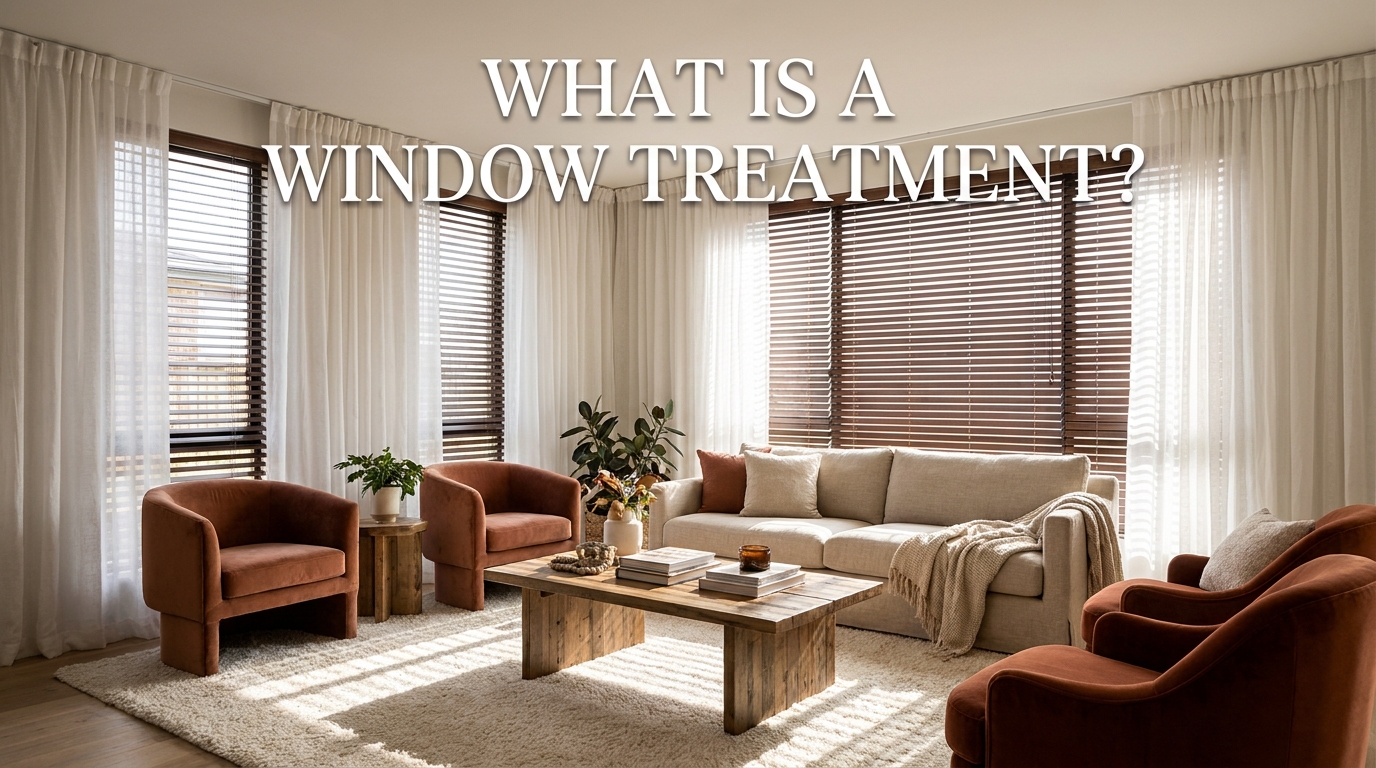
You just moved into a new home, or maybe you’re finally tackling that one room you’ve been ignoring. You pull up an interior design blog, and suddenly you’re drowning in terms — valances, drapery panels, cellular shades, Roman blinds. What does any of it mean?
Here’s the short answer: all of it falls under the umbrella of window treatments.
But the longer answer is where it gets interesting — because choosing the right window treatment can completely transform how a room feels, how much light it lets in, and even how much energy your home uses. Whether you’re decorating on a budget or going all-out with custom drapes, understanding your options is the first step.
This guide breaks everything down from scratch: what window treatments are, the major types, how to compare blinds vs curtains vs shades, and how to pick the right one for every room in your home.
What Is a Window Treatment?
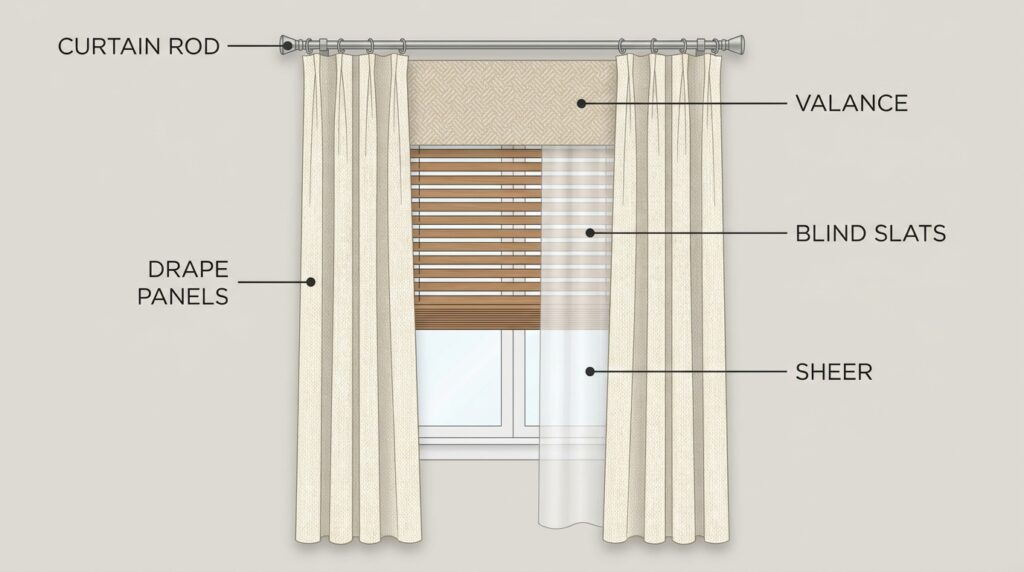
A window treatment is any covering, decoration, or functional element applied to a window — either on the inside or outside. It’s an umbrella term that includes everything from simple roller shades to elaborate custom drapery panels with cornices and valances.
Window treatments serve two main purposes:
- Functional: Controlling light, privacy, insulation, and noise
- Decorative: Enhancing the style and aesthetic of a room
Think of a window treatment the same way you’d think of clothing for your windows. Just like an outfit can be casual or formal, simple or layered, window treatments range from bare-minimum basics to highly designed, architectural statements.
The term covers:
- Curtains and drapes
- Blinds (vertical and horizontal)
- Shades (roller, Roman, cellular, etc.)
- Shutters (interior and exterior)
- Valances and cornices
- Sheers and panels
According to the American Society of Interior Designers (ASID), window treatments are one of the most impactful design decisions in any residential space — affecting ambiance, comfort, and energy performance simultaneously.
Why Window Treatments Matter More Than You Think
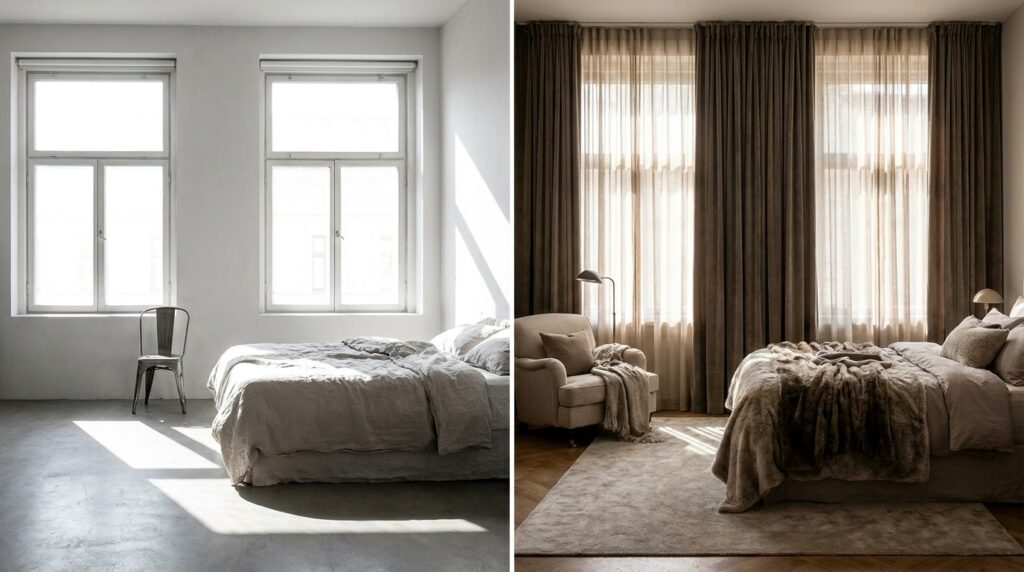
Most people treat window coverings as an afterthought. They paint the walls, buy the furniture, and then — weeks later — realize the windows are still bare and the room feels unfinished.
But here’s what the research says: window treatments do more than look nice.
Energy Efficiency
Poorly insulated windows are one of the top sources of energy loss in homes. The U.S. Department of Energy reports that heat gain and loss through windows account for 25–30% of residential heating and cooling energy use. The right window treatment — like cellular (honeycomb) shades — can reduce heat loss significantly by trapping air in insulating pockets.
Light Control
Natural light is beautiful, but too much of it fades furniture, overheats rooms, and makes it impossible to watch TV. Window treatments give you precise control — from blackout curtains that block 99% of light to sheer panels that diffuse it softly.
Privacy Without Sacrifice
Living in a neighborhood means your windows face other windows. The right treatment — like top-down/bottom-up shades — lets you open the top for sky views while keeping the bottom covered for privacy.
Room Acoustics
Heavy drapes absorb sound, reducing echo in hardwood-floored rooms. This is why you’ll often see thick velvet curtains in home theaters and music rooms.
Resale Value
According to Houzz’s interior design research, window treatments consistently rank among the top home updates that improve first impressions and perceived home value during real estate showings.
Types of Window Treatments: The Full Breakdown
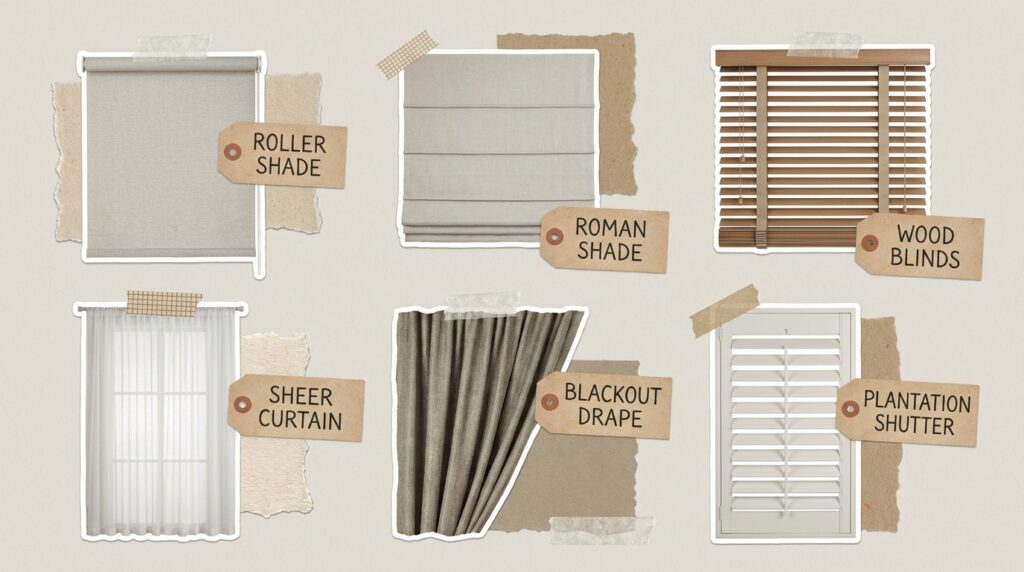
Window treatments fall into two broad categories: hard treatments and soft treatments. Within each, there are dozens of subcategories. Here’s a complete overview.
Curtains
Curtains are fabric panels that hang from a rod above the window. They’re among the most versatile and affordable window treatments available.
- Available in countless fabrics, colors, and patterns
- Can be sheer (light-filtering) or blackout
- Typically sold in pairs as panels
- Hung on a curtain rod with rings, grommets, tab tops, or rod pockets
Curtains tend to be lighter weight and more casual than drapes. They work well in living rooms, bedrooms, and kitchens.
Drapes
Drapes are the formal, lined cousins of curtains. The key difference is that drapes are typically:
- Lined or interlined (extra layer of fabric for insulation)
- Floor-length and often pool slightly on the floor
- Made of heavier fabrics like velvet, silk, or jacquard
- More structured — often with pleats (pinch pleat, box pleat, goblet pleat)
Drapes are a hallmark of traditional and transitional interior design. They add gravitas and architectural weight to a room. You’ll often see them in formal dining rooms, master bedrooms, and grand living rooms.
Blinds
Blinds are hard window coverings with slats that can be tilted, raised, or lowered to control light and privacy.
Types of blinds include:
- Horizontal blinds – Classic mini blinds or 2-inch slat blinds (vinyl, aluminum, or wood)
- Wood blinds – Warm, natural aesthetic; great for traditional or rustic homes
- Faux wood blinds – More affordable and moisture-resistant than real wood
- Vertical blinds – Ideal for sliding glass doors and large windows
- Micro blinds – Very narrow slats for a sleek, modern look
Blinds offer excellent light control and are easy to clean. They’re practical, durable, and widely available at retailers like Home Depot and Lowe’s.
Shades
Shades are single-piece soft coverings that pull up or roll up — unlike blinds, they don’t have individual slats.
Common types of shades:
- Roller shades – Clean and minimal; available in light-filtering or blackout
- Roman shades – Fabric that folds into horizontal pleats when raised; elegant and tailored
- Cellular (honeycomb) shades – Accordion-like cells that trap air for insulation; Energy Star certified options available
- Woven wood shades – Natural materials like bamboo, jute, and reeds; bohemian or organic aesthetic
- Solar shades – Screen-like fabric that blocks UV rays while maintaining an outward view
- Pleated shades – Lightweight and affordable; a simpler version of cellular shades
Shutters
Interior shutters — particularly plantation shutters — are hinged wood or composite panels mounted inside the window frame. They offer:
- Exceptional durability (lasting decades)
- Excellent light and privacy control
- A clean, architectural look
- Strong resale value
Plantation shutters are common in coastal, farmhouse, and traditional design styles. They’re more of a permanent installation than other window treatments.
Valances and Cornices
These are decorative top treatments — they sit at the top of the window and are often paired with blinds or shades underneath.
- Valance: A soft, fabric top treatment; can be ruffled, tailored, or swag-style
- Cornice: A hard, structured box (often wood or foam) upholstered in fabric; gives a built-in, architectural look
They add a finishing touch and help tie together a layered window treatment look.
Sheers
Sheers are lightweight, translucent fabric panels. They let in diffused natural light while providing a soft privacy layer. Sheers are almost always layered with heavier curtains or drapes — they’re rarely used alone except in very casual, airy spaces.
Blinds vs Curtains vs Shades: What’s the Difference?
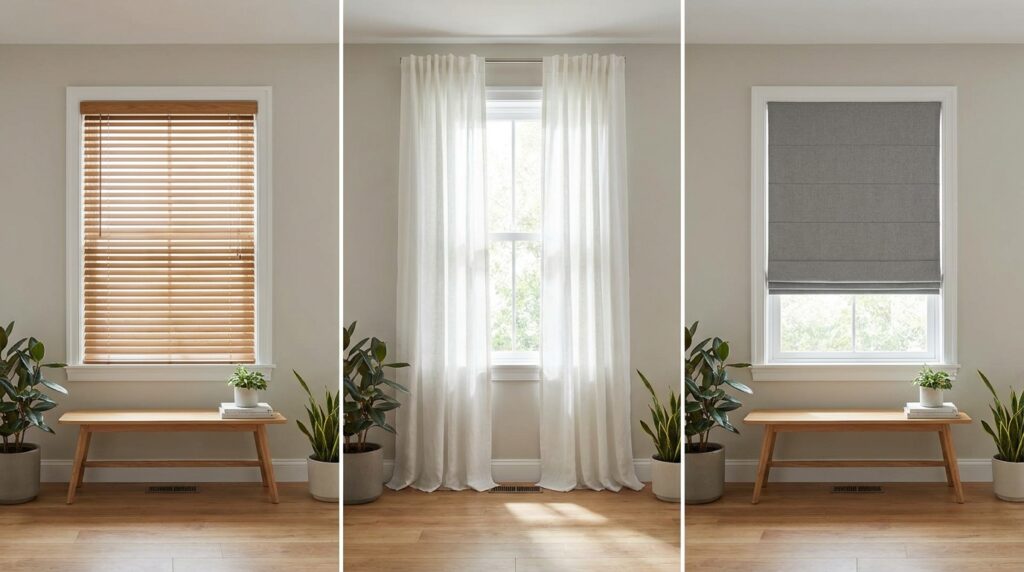
This is the most common question people have when shopping for window treatments. Here’s the honest breakdown:
| Feature | Blinds | Curtains | Shades |
|---|---|---|---|
| Material | Hard (wood, vinyl, aluminum) | Soft (fabric) | Soft (fabric, woven) |
| Light Control | Excellent (adjustable slats) | Good (depends on fabric) | Good to Excellent |
| Privacy | Excellent | Good to Excellent | Good to Excellent |
| Insulation | Moderate | Good (lined drapes) | Excellent (cellular) |
| Style Range | Modern to Traditional | Casual to Formal | Minimal to Elegant |
| Ease of Cleaning | Easy (wipe down) | Moderate (dry clean/wash) | Moderate |
| Cost Range | $15–$300+ | $20–$500+ per panel | $30–$400+ |
| Best For | Kitchens, offices, bathrooms | Living rooms, bedrooms | All rooms |
When to Choose Blinds
Choose blinds when you want:
- Easy maintenance (especially in kitchens and bathrooms)
- Precise, adjustable light control
- A clean, modern, or utilitarian look
- Budget-friendly options (vinyl mini blinds start under $20)
When to Choose Curtains
Choose curtains when you want:
- Softness and warmth in a space
- Bold color, pattern, or texture as a design statement
- Sound absorption
- A layered, high-end look
When to Choose Shades
Choose shades when you want:
- A streamlined, uncluttered look
- Strong energy efficiency (cellular shades)
- A natural or organic aesthetic (woven wood shades)
- Child-safe, cordless options for nurseries
Drapes vs Curtains vs Blinds: A Side-by-Side Comparison
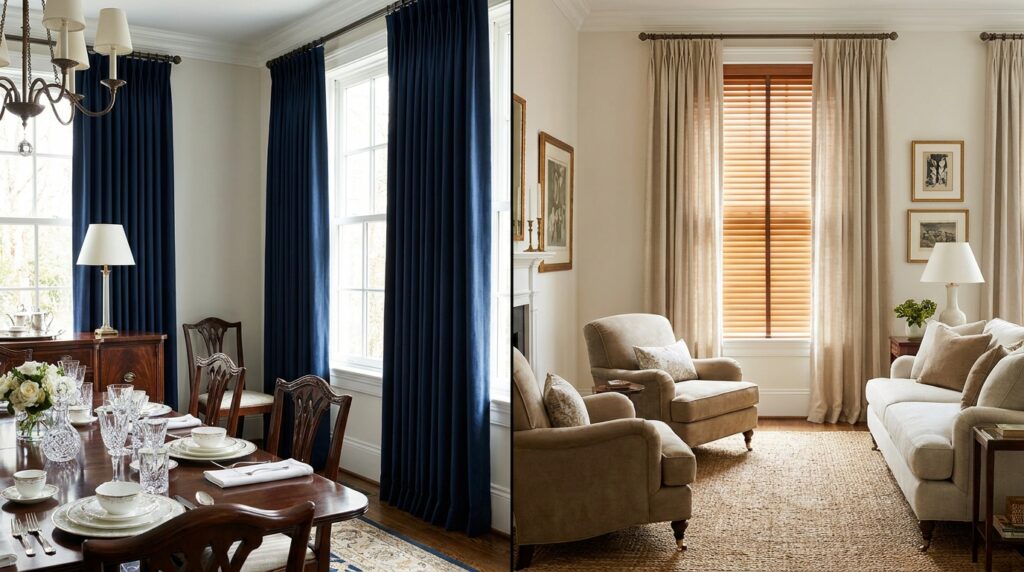
People often use “drapes” and “curtains” interchangeably, but they’re meaningfully different. Here’s how all three stack up:
Curtains vs Drapes: Key Differences
| Curtains | Drapes | |
|---|---|---|
| Weight | Light to medium | Heavy |
| Lining | Usually unlined | Lined or interlined |
| Length | Sill, apron, or floor | Floor length (often pools) |
| Formality | Casual to semi-formal | Formal |
| Cost | Lower | Higher |
| Insulation | Limited | Good (due to lining) |
| Typical Use | Most rooms | Formal rooms, master bedrooms |
Adding Blinds to the Mix
When you layer curtains or drapes over blinds, you get the best of both worlds:
- Blinds handle light control and daytime privacy
- Curtains/drapes add softness, color, and nighttime privacy
- The combination creates a designer, layered look
This layered approach is popular in living rooms and bedrooms where both aesthetics and functionality matter. Design experts at House Beautiful frequently recommend layering as the gold standard for window treatments.
Hard vs Soft Window Treatments Explained
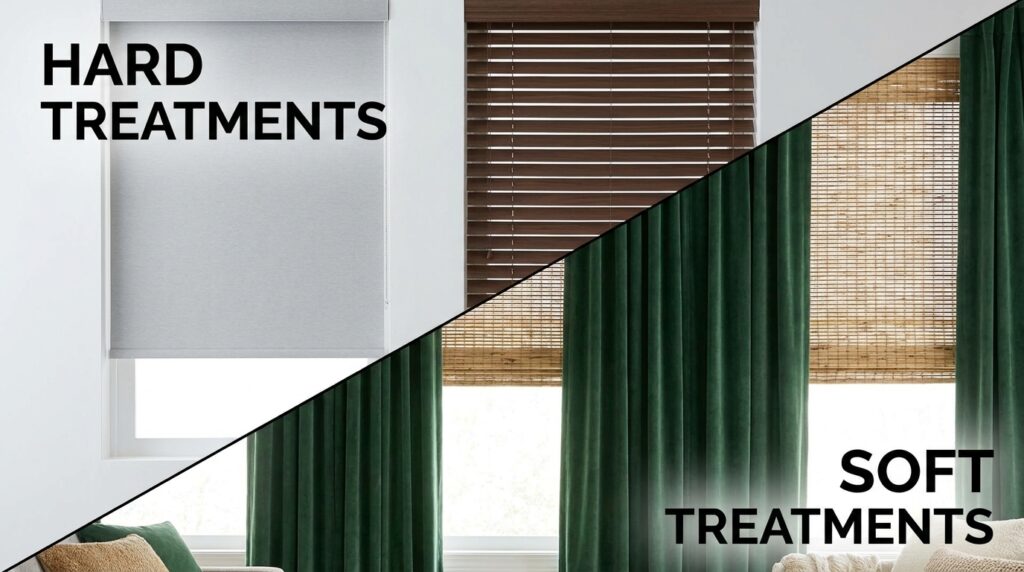
This is a useful organizing framework:
Hard window treatments include blinds, shutters, cornices, and rigid shades. They’re:
- Durable and easy to clean
- Best for high-humidity rooms (bathrooms, kitchens)
- More structured and architectural in appearance
Soft window treatments include curtains, drapes, fabric shades, and sheers. They’re:
- Warmer and more decorative
- Better for sound absorption
- More customizable in terms of fabric and color
- Generally better insulators when lined
Most well-designed rooms use a combination of both — a hard treatment for function, a soft treatment for warmth and style.
How to Choose the Right Window Treatment for Each Room
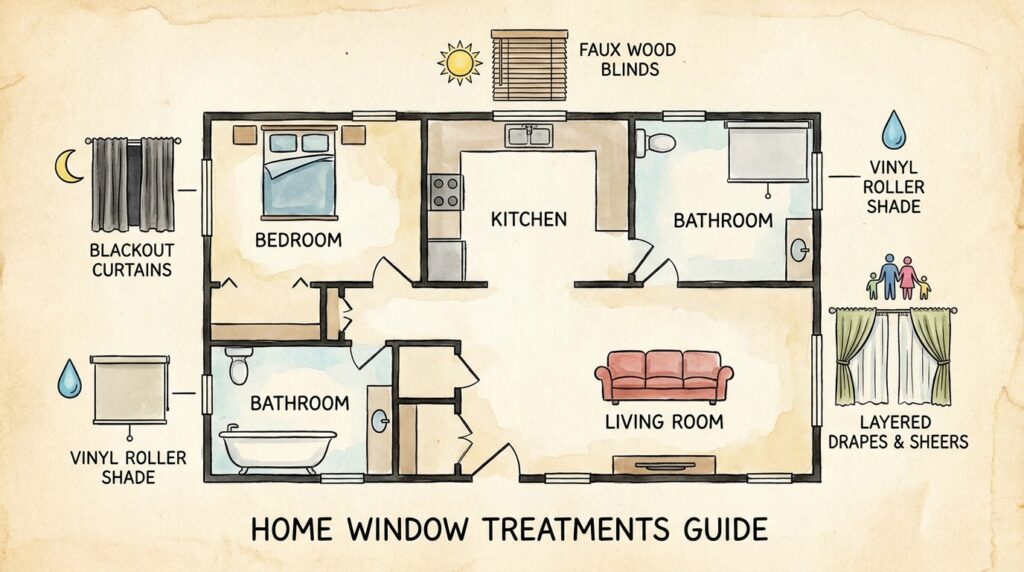
Choosing window treatments isn’t one-size-fits-all. Here’s what works best in each space:
Living Room
The living room is your showcase space — it needs to look good AND function well.
Best options:
- Layered curtains or drapes over blinds or roller shades
- Roman shades for a tailored, elegant look
- Plantation shutters for a timeless, architectural feel
Key considerations: Light control for TV viewing, privacy from the street, and making a style statement.
Bedroom
Sleep quality depends on darkness and comfort.
Best options:
- Blackout curtains or blackout roller shades (blocks 95–100% of light)
- Layered sheers + blackout drapes for flexible light control
- Cellular shades for insulation in cold climates
Key considerations: Light-blocking capability, thermal comfort, and sound dampening.
Kitchen
Kitchens need window treatments that can handle moisture, grease, and frequent cleaning.
Best options:
- Faux wood blinds (moisture-resistant, easy to wipe)
- Vinyl roller shades (waterproof, minimal)
- Café-style curtains (cover only the lower half for privacy while letting light in)
Key considerations: Easy cleaning, moisture resistance, and not hanging over the sink or stove.
Bathroom
Privacy is the primary concern, but so is humidity resistance.
Best options:
- Faux wood or aluminum blinds
- Moisture-resistant roller shades
- Privacy glass film (not technically a treatment, but worth mentioning)
Avoid real wood blinds and fabric drapes — they warp and mold in high-humidity environments.
Home Office
You need to reduce glare on screens without blocking all natural light.
Best options:
- Solar shades (reduce glare while maintaining view)
- Light-filtering roller shades
- Adjustable wood or faux wood blinds
Key consideration: Anti-glare capability for monitors and natural light for mood and productivity.
Nursery / Kid’s Room
Safety is paramount — no cords, no choking hazards.
Best options:
- Cordless cellular shades (safe, insulating)
- Cordless roller shades
- Blackout curtains (essential for nap time)
The Window Covering Safety Council recommends cordless or motorized window treatments in any room where children are present.
Dining Room
Formal dining rooms benefit from theatrical, layered looks.
Best options:
- Floor-length drapes in rich fabrics (velvet, linen, silk blends)
- Roman shades for a tailored, modern alternative
- Layered sheers + drapes for elegant diffused light during dinner
Window Treatment Materials: What to Know
The fabric or material you choose affects everything: durability, maintenance, light filtering, and aesthetic.
Fabric Options for Soft Treatments
- Linen: Breathable, natural, casual elegance; light-filtering
- Velvet: Luxurious, heavy, excellent insulator and light blocker
- Cotton: Versatile, affordable, easy to wash
- Silk/Faux Silk: Elegant and formal; real silk is delicate and dry-clean only
- Polyester: Durable, affordable, fade-resistant; great for budget-friendly options
- Sheer/Voile: Lightweight, translucent; used for layering
Material Options for Hard Treatments
- Real wood: Warm, natural look; not suitable for high humidity
- Faux wood (composite/PVC): Moisture-resistant, looks like real wood; great for kitchens and baths
- Aluminum: Lightweight, affordable; best for minimalist or utilitarian spaces
- Vinyl: Most affordable and moisture-resistant; often used in rental properties
- Bamboo/Woven grass: Natural, organic; perfect for coastal or bohemian interiors
Expert Tips for Buying Window Treatments
These tips come from interior design professionals and frequent mistakes made by first-time buyers.
1. Measure Twice, Order Once
The biggest mistake people make is measuring incorrectly. Always measure:
- Width: From outside edge to outside edge of the window frame (for outside mount) OR inside the frame (for inside mount)
- Length: From the rod location to where you want the treatment to end (sill, apron, or floor)
2. Hang Rods Higher and Wider
A universal design trick: mount your curtain rod 4–6 inches above the window frame and extend it 6–12 inches beyond the frame on each side. This makes windows look taller and wider — and makes the room feel more spacious.
3. Go Floor-Length in Living and Dining Rooms
For an elevated, designer look, always go floor-length in formal spaces. Curtains that hit the sill or stop mid-wall look unfinished. The standard recommendation is panels that either just kiss the floor or pool slightly (1–3 inches) for a romantic effect.
4. Layer for Depth
Layering is what separates DIY-looking rooms from magazine-worthy ones. Combine:
- Roller shade or blind (functional base layer)
- Sheer panels (soft, diffused light layer)
- Drapes or curtains (finishing, decorative top layer)
5. Consider Motorization
Smart home integration is increasingly accessible. Brands like Lutron, Hunter Douglas, and IKEA offer motorized blinds and shades that connect to Alexa, Google Home, or Apple HomeKit. This is especially useful for hard-to-reach windows.
6. Don’t Ignore the Rod
The curtain rod is part of the design. A cheap, chrome tension rod looks out of place under $150-a-panel linen drapes. Choose a rod that matches the room’s hardware finishes — matte black, brushed brass, antique bronze, etc.
7. Test Fabric Samples First
Always order fabric samples before committing to custom drapes. Colors look different in natural vs. artificial light, and texture matters more than you think in person.
Pros and Cons of Popular Window Treatments
Blinds
Pros:
- Affordable and widely available
- Easy to clean
- Excellent light control via adjustable slats
- Durable and long-lasting
Cons:
- Can look utilitarian or “rental-grade” if not chosen carefully
- Cords can be a safety hazard (choose cordless)
- Real wood blinds not suitable for humid rooms
Curtains
Pros:
- Huge range of fabrics, colors, and styles
- Soft and warm; add texture and personality
- Can be DIY or custom
- Easy to change and update seasonally
Cons:
- Collect dust more than hard treatments
- Require more maintenance (washing/dry cleaning)
- Can overwhelm small rooms if too heavy
Roman Shades
Pros:
- Elegant, tailored look
- Space-efficient when raised
- Available in hundreds of fabrics
- Works in both casual and formal spaces
Cons:
- More expensive than roller shades
- Fabric can yellow or fade over time
- Harder to clean than hard treatments
Cellular Shades
Pros:
- Best energy efficiency of any shade type
- Energy Star certified options available
- Available in single, double, and triple cell
- Clean, modern appearance
Cons:
- Dust accumulates in the cells
- Limited design variety compared to Roman shades
Plantation Shutters
Pros:
- Extremely durable — can last the life of the home
- Adds significant home value
- Timeless aesthetic
- Excellent light and privacy control
Cons:
- Most expensive option ($200–$350+ per window installed)
- Permanent installation — not easy to change
- Can look heavy in small windows
FAQs About Window Treatments
What is the difference between a window treatment and a window covering?
The terms are often used interchangeably, but technically:
- Window covering refers to any product that covers a window for functional purposes (blinds, shades, shutters)
- Window treatment is the broader design term that includes both functional coverings AND decorative elements like valances, cornices, and decorative hardware
In everyday use, they mean the same thing. Interior designers tend to use “window treatment” as it encompasses the full design intent.
What are the most popular window treatments right now?
According to Houzz’s 2024 U.S. Houzz & Home Study, the most popular window treatments in renovated homes include:
- Cellular shades (for energy efficiency)
- Roller shades (for clean, modern look)
- Wood or faux wood blinds
- Layered linen curtains
- Roman shades
Motorized treatments are also growing rapidly as smart home adoption increases.
Are window treatments worth the investment?
Yes — especially for energy savings, home value, and quality of life improvements. The U.S. Department of Energy confirms that properly selected window treatments can reduce heating/cooling costs noticeably, particularly in regions with extreme climates.
For resale value, plantation shutters and custom drapes consistently add perceived value during home showings.
How do I make a small room look bigger with window treatments?
Several strategies work well:
- Hang rods close to the ceiling — draws the eye up and makes ceilings feel taller
- Extend the rod beyond the window frame — makes windows (and the room) feel wider
- Use light, airy fabrics — heavy drapes in small rooms create visual weight
- Go floor-length — even in small rooms, floor-length panels elongate the space
- Choose lighter colors — whites, creams, and soft neutrals keep the room feeling open
What window treatment is best for privacy without blocking light?
Several options offer privacy while maintaining light:
- Sheer curtains – Soft, diffused light; visible from outside at night
- Solar shades – Block UV and glare; maintain outward view; good daytime privacy
- Top-down/bottom-up shades – Lower the shade from the top for sky light with bottom coverage
- Privacy sheers – Specialized fabric that is harder to see through from outside in daylight
- Frosted or textured glass inserts — A more permanent but effective solution
For bedrooms, blackout cellular shades with a sheer or light-filtering layer on the interior is the gold standard combination.
Final Thoughts
Window treatments are one of the most powerful — and most underestimated — tools in interior design. The right choice doesn’t just make a room look better. It controls how you experience light every morning, how well you sleep at night, how much energy your home consumes, and how private and comfortable your space feels day-to-day.
Here’s a simple decision framework to take with you:
- Start with function — What problem does this window need to solve? (Light control, privacy, insulation, safety)
- Choose your treatment type — Hard (blinds, shutters) or soft (curtains, drapes, shades) or both
- Match the room — Kitchen gets faux wood blinds, bedroom gets blackout shades, living room gets layered drapes
- Set your budget — Quality matters, but good options exist at every price point
- Think long-term — A $30 vinyl blind and a $300 plantation shutter both “cover the window,” but they create very different homes
Whether you’re furnishing your first apartment or redesigning a forever home, the right window treatment is out there — and now you know exactly what to look for.

