

If you’ve ever owned a prayer plant, you know the magic moment: as evening falls, its leaves slowly fold upward like hands clasped in prayer. It’s one of nature’s quietest little shows, and it’s exactly why this plant has become a favorite among houseplant lovers.
But prayer plants also have a reputation for being a bit dramatic. Crispy edges, curling leaves, faded patterns — sound familiar? The good news is that once you understand what this plant actually wants, it’s not nearly as fussy as people make it out to be.
This guide walks you through everything: light, water, humidity, soil, feeding, propagation, common problems, and more. By the end, you’ll know exactly how to keep your prayer plant looking lush and vibrant.
What Is a Prayer Plant?
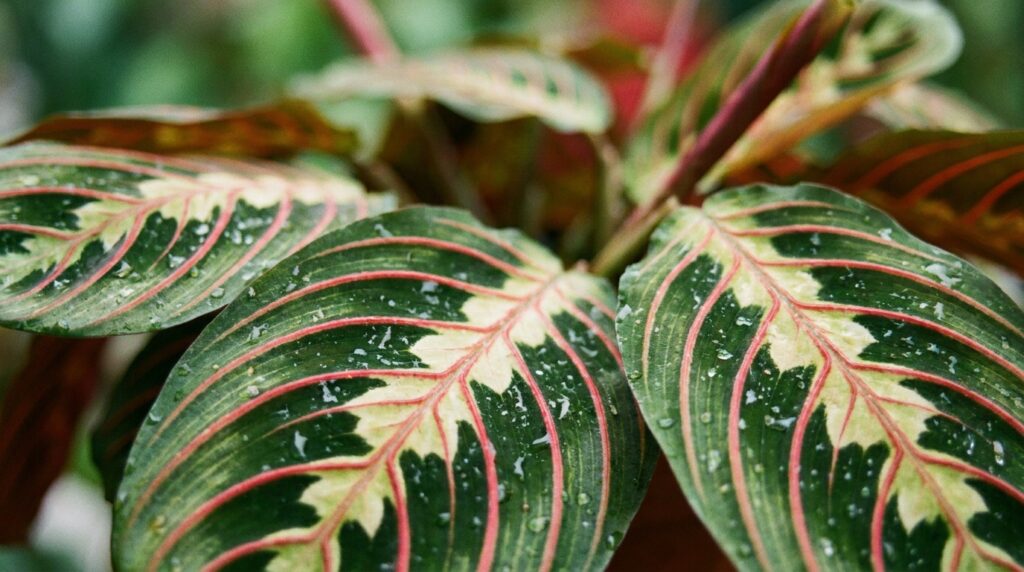
The prayer plant, scientifically known as Maranta leuconeura, is a tropical perennial native to the rainforests of Brazil. According to the Missouri Botanical Garden, it belongs to the Marantaceae family and is prized for its strikingly patterned foliage.
The “praying” behavior — where leaves fold up at night and flatten during the day — is called nyctinasty, a natural response to light changes that helps the plant regulate moisture loss.
There are several popular varieties, including:
- Maranta leuconeura ‘Erythroneura’ (Red Prayer Plant) — deep green leaves with red veins
- Maranta leuconeura ‘Kerchoveana’ — green leaves with dark blotches
- Maranta leuconeura ‘Fascinator Tricolor’ — tricolor leaves with red, green, and yellow
Ideal Light Requirements for Prayer Plants
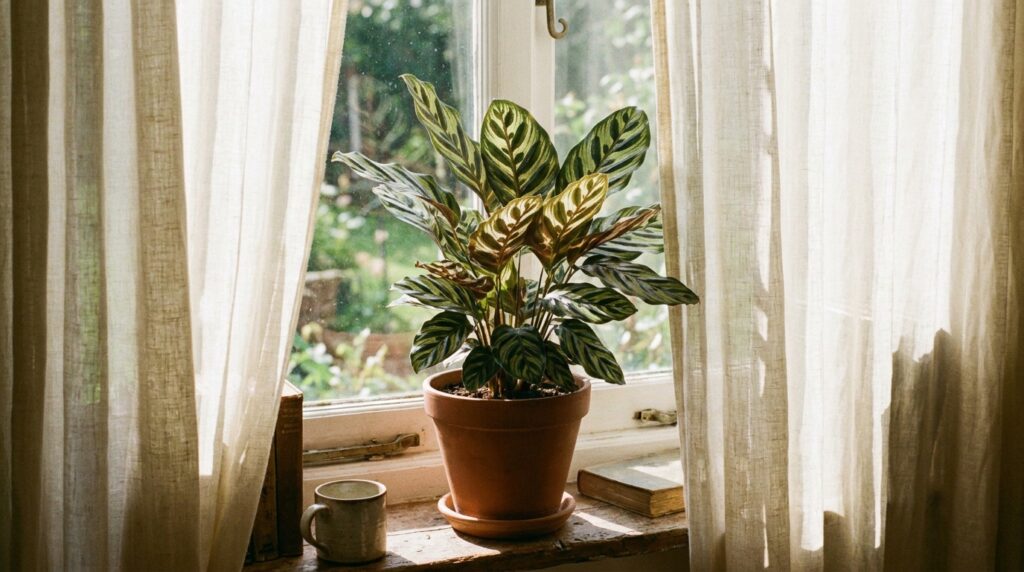
Prayer plants thrive in bright, indirect light. Direct sunlight can scorch their delicate leaves and cause the colorful patterns to fade.
Best Window Placements
- East-facing windows (gentle morning sun)
- A few feet back from south or west-facing windows
- Under sheer curtains for diffused light
Signs of Improper Lighting
| Symptom | Likely Cause |
|---|---|
| Faded or washed-out leaves | Too much direct sun |
| Leggy growth, small leaves | Not enough light |
| Brown, crispy patches | Sunburn |
If natural light is limited, a basic grow light can help maintain healthy growth, especially during winter months.
Watering Your Prayer Plant the Right Way
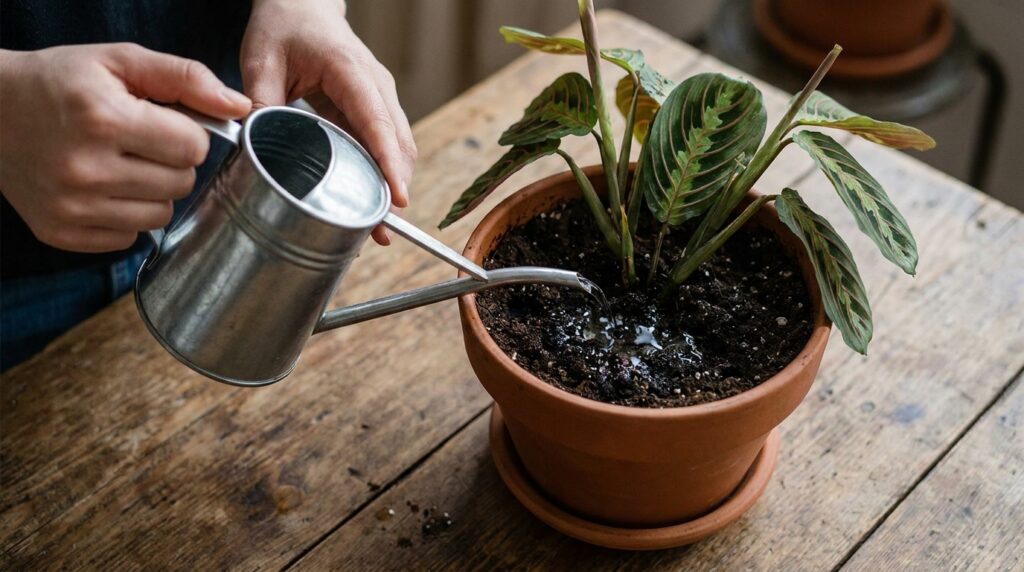
Prayer plants like their soil consistently moist but never soggy. Both underwatering and overwatering can cause problems, so consistency is key.
Watering Tips
- Water when the top inch of soil feels dry
- Use room-temperature water
- Avoid letting the plant sit in standing water
Why Tap Water Sometimes Causes Issues
Many growers notice brown leaf tips, which is often linked to sensitivity to fluoride and chlorine found in tap water. The University of Florida IFAS Extension notes that allowing tap water to sit overnight, or using filtered/distilled water, can reduce mineral buildup in sensitive plants.
Humidity and Temperature Needs
As a tropical plant, prayer plants love humidity levels above 50%. Dry indoor air — especially from heating systems in winter — is one of the most common causes of crispy leaf edges.
Ways to Increase Humidity
- Use a humidifier near your plant
- Place the pot on a pebble tray with water
- Group plants together to create a microclimate
- Avoid placing near radiators or AC vents
Ideal Temperature Range
Prayer plants prefer temperatures between 65°F and 80°F (18°C–27°C). Sudden temperature drops or cold drafts can cause leaf drop and stress.
Best Soil and Potting Mix for Prayer Plants
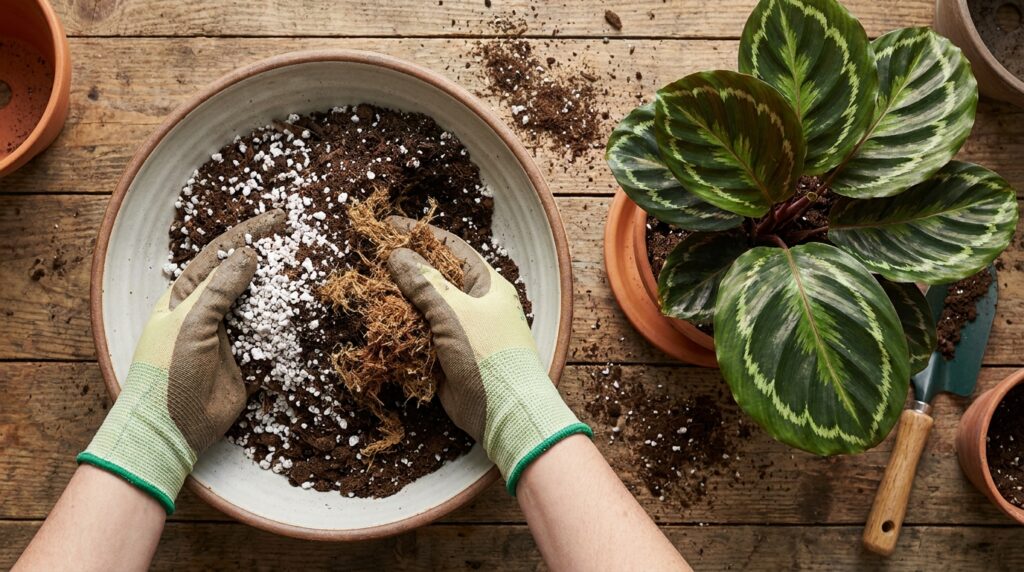
Prayer plants need soil that is well-draining yet moisture-retentive — a balance that mimics the rainforest floor.
DIY Soil Mix Recipe
- 2 parts peat-free potting mix or coco coir
- 1 part perlite
- 1 part orchid bark (optional, improves aeration)
You can also use a pre-made African violet potting mix, which has similar moisture and drainage properties.
Repotting Tips
- Repot every 1–2 years, ideally in spring
- Choose a pot with drainage holes
- Size up gradually — avoid oversized pots that hold excess moisture
Feeding and Fertilizing Prayer Plants
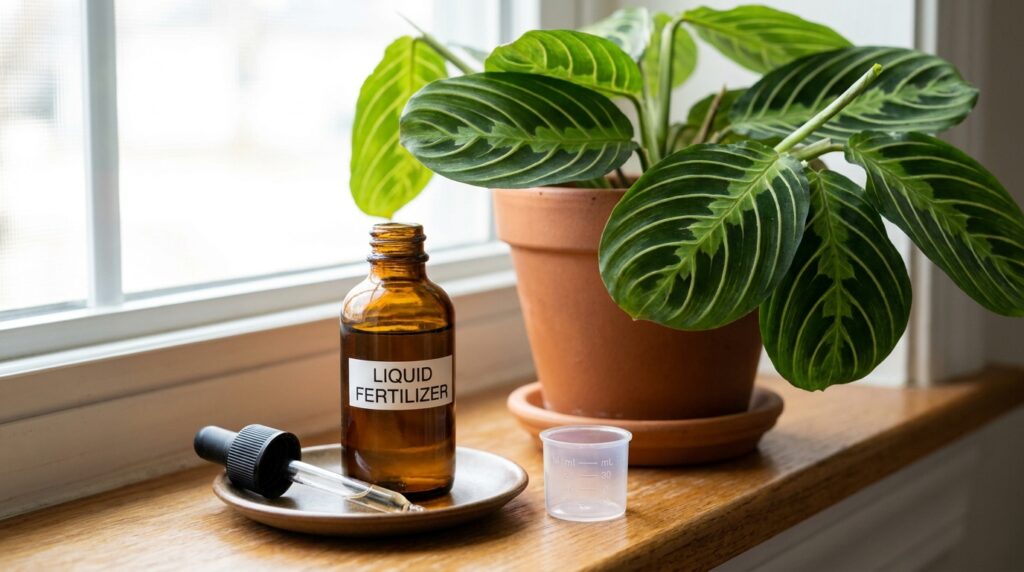
During the active growing season (spring through summer), feed your prayer plant every 4–6 weeks with a balanced, diluted liquid fertilizer.
Fertilizing Guidelines
- Use a fertilizer diluted to half strength
- Avoid feeding in fall and winter
- Flush soil occasionally to prevent salt buildup
Over-fertilizing is a common mistake — it can cause brown leaf tips and root burn, similar to the effects of mineral-heavy tap water.
How Prayer Plants Move: The Science Behind “Praying” Leaves
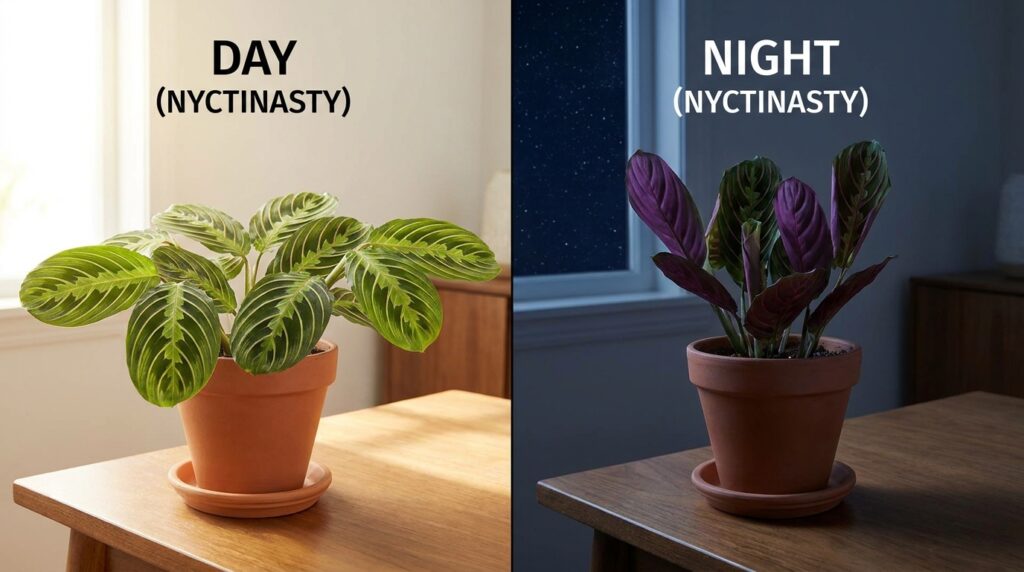
This nyctinastic movement happens because of small joints at the base of each leaf called pulvini. These structures respond to light and dark cycles by adjusting water pressure within their cells, causing the leaves to rise or lower.
Researchers believe this movement helps the plant capture more light during the day and reduce water loss at night — a fascinating example of how plants adapt to their environment, as explained by Missouri Botanical Garden.
How to Propagate a Prayer Plant
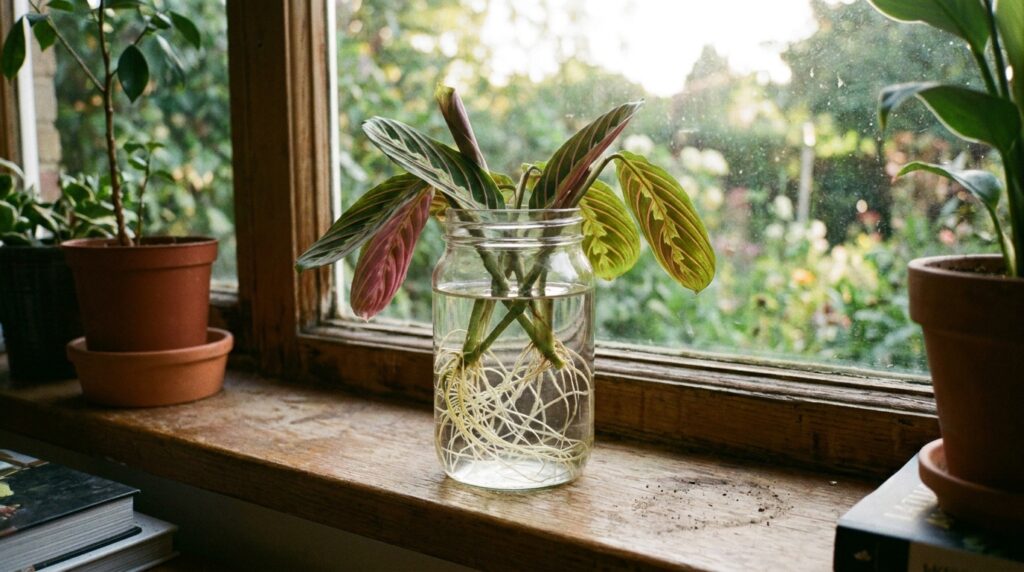
Propagating prayer plants is simple and a great way to multiply your collection or share with friends.
Propagation by Stem Cuttings (Water Method)
- Cut a healthy stem just below a node, including 1–2 leaves
- Place the cutting in a jar of water
- Keep in bright, indirect light
- Roots typically appear within 2–4 weeks
- Transplant into soil once roots are 1–2 inches long
Propagation by Division
When repotting, you can gently separate the root ball into smaller sections, each with its own stems and roots, and plant them in separate pots.
Common Prayer Plant Problems and How to Fix Them
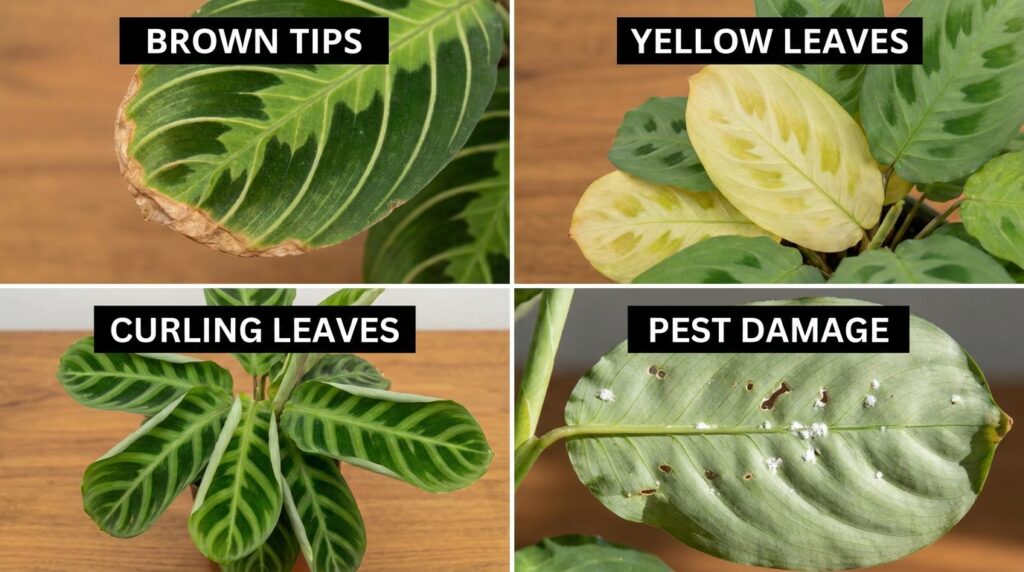
Brown, Crispy Leaf Edges
Cause: Low humidity, mineral buildup from tap water, or underwatering Fix: Increase humidity, switch to filtered water, water more consistently
Yellow Leaves
Cause: Overwatering or natural aging of older leaves Fix: Check soil moisture before watering; remove yellow leaves at the base
Curling Leaves
Cause: Underwatering, low humidity, or temperature stress Fix: Adjust watering schedule and increase ambient humidity
Pests
Prayer plants can occasionally attract spider mites, especially in dry conditions. The Royal Horticultural Society recommends increasing humidity and wiping leaves regularly to prevent infestations.
Pros and Cons of Growing a Prayer Plant
| Pros | Cons |
|---|---|
| Stunning, ornamental foliage | Sensitive to tap water minerals |
| Unique nighttime leaf movement | Requires consistent humidity |
| Relatively easy propagation | Can be fussy with inconsistent care |
| Non-toxic to pets (per ASPCA) | Slow grower compared to other houseplants |
Expert Tips for Thriving Prayer Plants
- Rotate your plant weekly so it grows evenly toward light
- Wipe leaves with a damp cloth monthly to remove dust and improve photosynthesis
- Avoid cold drafts near windows and doors in winter
- Watch the leaves — they’re a great indicator of what your plant needs before problems become severe
Frequently Asked Questions
1. Why are my prayer plant leaves curling?
Curling is usually a sign of underwatering, low humidity, or temperature stress. Check soil moisture and consider increasing humidity around the plant.
2. Is a prayer plant safe for pets?
Yes, according to the ASPCA, prayer plants are non-toxic to cats and dogs.
3. How often should I water a prayer plant?
Water when the top inch of soil feels dry — typically once a week, but this varies based on humidity and temperature.
4. Why does my prayer plant fold its leaves at night?
This is a natural process called nyctinasty, where specialized joints called pulvini respond to light changes, causing leaves to fold upward in the evening.
5. Can prayer plants grow in low light?
They can survive in low light but won’t thrive. Bright, indirect light produces the best leaf color and growth.
Conclusion
Prayer plants reward attentive care with some of the most beautiful foliage you can grow indoors. Once you dial in the right balance of light, humidity, and watering, you’ll find this plant is far more forgiving than its reputation suggests.
Got a prayer plant of your own? Try adjusting one thing from this guide this week — whether it’s switching to filtered water or adding a humidity tray — and watch how your plant responds.
Have questions about your specific prayer plant? Drop them in the comments below!

