
There’s something deeply satisfying about a rose bush that’s thriving — loaded with blooms, standing tall, and practically glowing in the morning light. But here’s the truth most beginners don’t realize: that beautiful display doesn’t happen by accident. Behind every spectacular rose is someone who knew exactly when and how to prune it.
Pruning rose bushes is one of those gardening tasks that sounds intimidating at first. Sharp tools, living plants, the fear of cutting too much — it’s enough to make even an enthusiastic gardener hesitate. But once you understand the why behind pruning, the when, and the how, it stops feeling like a chore and starts feeling like the most rewarding thing you do in your garden all year.
This guide covers everything from choosing the right tools to making the perfect cut. Whether you’re dealing with a classic hybrid tea rose, a rambling climber, or a compact shrub rose, you’ll find everything you need here.
Let’s get started.
What Is Pruning and Why Does It Matter?
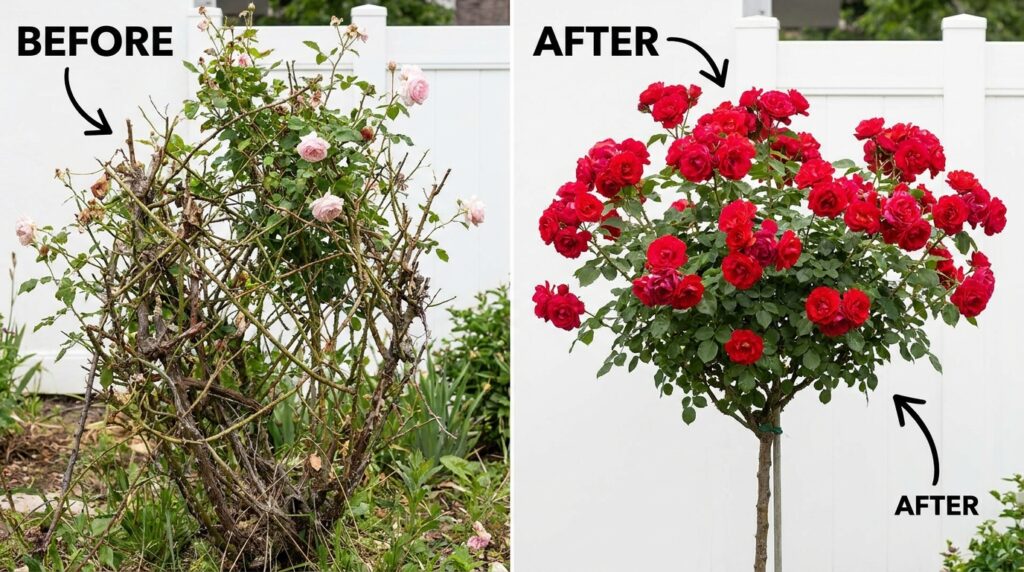
Pruning is the intentional removal of specific parts of a plant — dead wood, weak stems, spent blooms — to direct energy where you want it to go. When you prune a rose bush, you’re not hurting it. You’re actually doing it a favor.
Here’s what proper pruning accomplishes:
- Removes dead, diseased, or damaged canes that drain the plant’s resources
- Improves air circulation, which reduces the risk of fungal diseases like black spot and powdery mildew
- Encourages new growth and more abundant flowering
- Controls the size and shape of the plant to keep it manageable
- Stimulates the development of new basal canes from the base of the plant, which are the most productive
According to the American Rose Society, regular pruning is one of the single most impactful things you can do to improve the health and bloom count of your roses. Without it, bushes become overcrowded, disease-prone, and produce smaller, fewer flowers over time.
When Is the Best Time to Prune Rose Bushes?
Timing is everything when it comes to pruning roses. Cut too early and a late frost can damage the fresh new growth. Cut too late and you’re robbing the plant of its early blooming potential.
Spring Pruning (Primary Pruning Season)
For most rose varieties, the best time for major pruning is late winter to early spring — right when forsythia begins to bloom in your region, or when you see the first red buds beginning to swell on the canes.
This typically falls between late February and April, depending on your local climate. The goal is to prune after the last hard freeze but before the plant puts significant energy into new growth.
A reliable rule of thumb: when daytime temperatures are consistently above 32°F and you notice those tiny, reddish growth buds emerging at the joints of the canes, it’s time.
Summer Deadheading
This is lighter work — simply removing spent blooms to encourage reblooming in repeat-flowering varieties. Deadheading keeps the plant looking tidy and tells it to produce more flowers rather than setting seed.
Fall Light Pruning
In fall, resist the urge to do heavy pruning. You can tidy up a bit — cut back any excessively long canes that might whip around in winter winds — but save the major work for spring. Heavy fall pruning can stimulate tender new growth that gets killed by frost, weakening the plant.
Winter Dormancy
Leave the plant mostly alone. Some gardeners in colder climates mound soil or mulch around the base for protection. The USDA Plant Hardiness Zone Map is a great reference for understanding your local frost dates and planning your pruning schedule accordingly.
Tools You Need to Prune Rose Bushes Properly
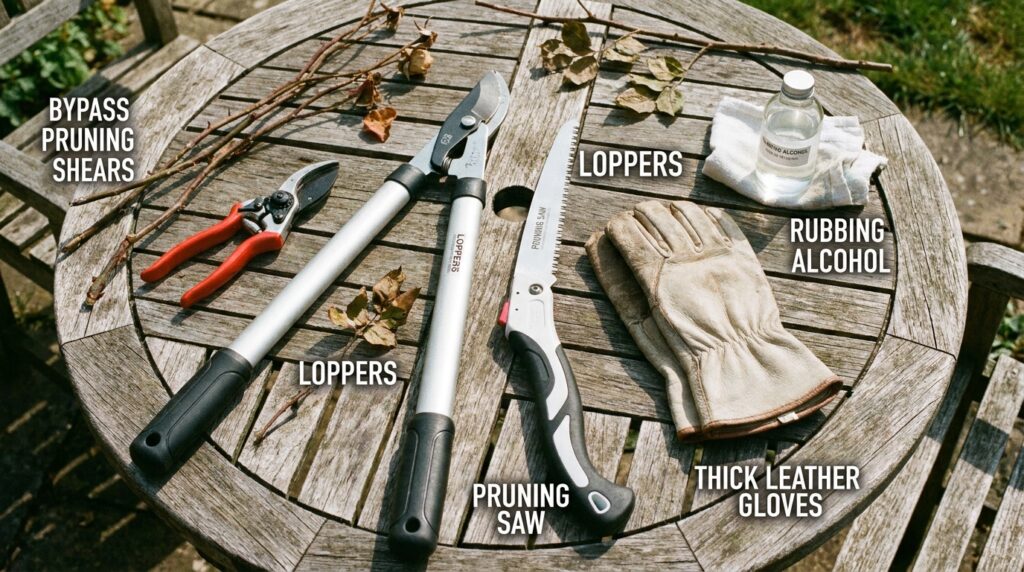
Using the wrong tools — or dull ones — is one of the most common pruning mistakes. Dull blades crush canes instead of cutting cleanly, leaving ragged wounds that are slow to heal and prone to disease. Here’s what you need:
Essential Tools
| Tool | Purpose | Best For |
|---|---|---|
| Bypass pruning shears | Clean cuts on canes up to ¾ inch thick | Most pruning tasks |
| Loppers | Cutting thicker canes (¾ to 1½ inches) | Larger, established bushes |
| Pruning saw | Removing very thick old wood | Old garden roses, climbers |
| Thick leather gloves | Hand protection from thorns | All pruning tasks |
| Safety glasses | Eye protection from snapping canes | All pruning tasks |
| Isopropyl alcohol or bleach solution | Tool sterilization between plants | Preventing disease spread |
Bypass vs. Anvil Pruners: What’s the Difference?
Always choose bypass pruners over anvil pruners for roses. Bypass pruners work like scissors — two sharp blades pass each other — producing a clean, precise cut. Anvil pruners have one blade that presses against a flat surface, which can crush and damage plant tissue.
Keeping Tools Sharp and Clean
Dull blades are more dangerous (you have to force them) and more damaging to the plant. Sharpen your shears at the start of each season with a whetstone or a dedicated pruner sharpener.
Between plants — especially if you’re dealing with any diseased canes — wipe blades with 70% isopropyl alcohol or a 10% bleach solution to prevent spreading pathogens from one plant to another.
Step-by-Step: How to Prune Rose Bushes Properly
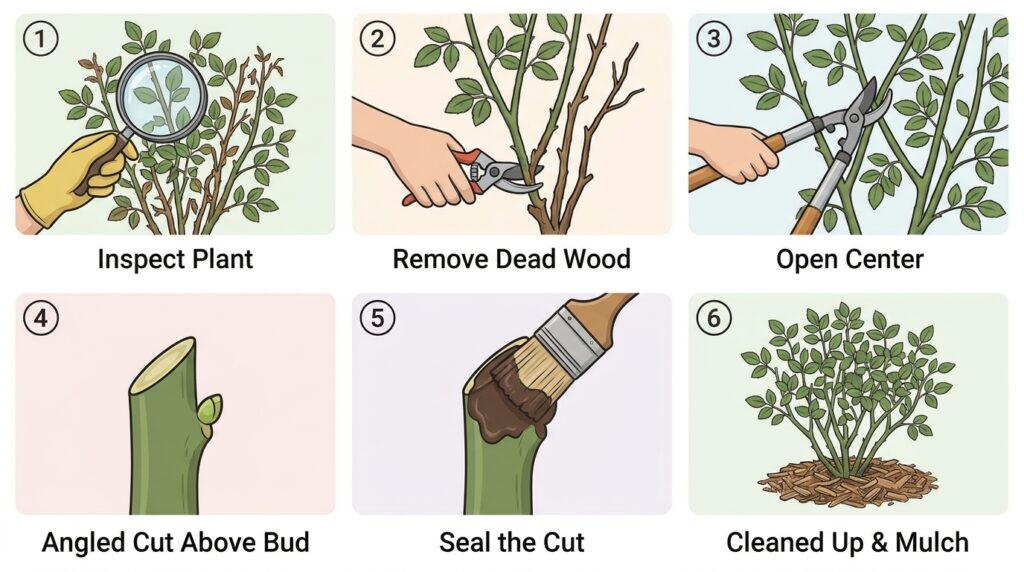
Step 1: Assess the Plant Before You Cut Anything
Before you pick up your shears, spend a few minutes studying the plant. Walk around it. Look at it from all angles.
You’re identifying:
- Dead canes (brown, shriveled, hollow inside when cut)
- Diseased canes (black spots, cankers, unusual discoloration)
- Crossing or rubbing canes that damage each other with every breeze
- Suckers growing from below the graft union (these should always be removed)
- The overall structure — where is the center? Where is the new growth coming from?
This assessment phase helps you prune with intention rather than randomly snipping away.
Step 2: Remove Dead, Diseased, and Damaged Wood First
Start with the obvious: anything dead, diseased, or damaged comes out completely. Cut all the way down to healthy tissue — look for white or cream-colored pith inside the cane. Brown or black pith means the disease or damage extends further. Keep cutting until you reach clean, healthy wood.
Make these cuts at the base of the cane or at a healthy outward-facing bud, depending on how far down the damage extends.
Dispose of diseased cuttings properly. Don’t add them to your compost pile. Put them in the trash or burn them (where permitted) to prevent reinfection.
Step 3: Remove Crossing and Rubbing Canes
Any cane that crosses through the center of the plant or rubs against another cane creates two problems: it wounds both canes (entry points for disease) and it clogs the center with unproductive wood.
Choose which of the two crossing canes to remove — typically the thinner, weaker one — and cut it at its base or at a bud union below the crossing point.
Step 4: Open Up the Center
This is one of the most important concepts in rose pruning. You want the center of the bush to be open — like a vase or goblet shape — so air and light can reach every cane.
Good airflow is your best defense against fungal diseases. A congested, closed center stays damp and dark, which is exactly what black spot fungus loves.
Remove any thin, spindly canes growing toward the center of the plant. The goal is to keep 3–7 strong, healthy canes that arch gracefully outward.
Step 5: Make the Right Cut
This is the technique that separates a good pruning job from a great one:
- Cut at a 45-degree angle, slanting away from the bud eye
- Make the cut ¼ inch (about 6mm) above an outward-facing bud eye — a small, reddish swelling on the cane
- The angle should slope downward away from the bud, allowing water to run off rather than pool on the cut
Why outward-facing? Because the new shoot that grows from the bud will grow in the direction the bud is pointing. Cutting above an outward-facing bud directs new growth away from the center of the plant, maintaining that open vase shape.
Common Mistakes to Avoid:
- Cutting too close to the bud (can damage it)
- Cutting too far above the bud (leaves a stub that dies back)
- Making a straight horizontal cut (water pools and promotes rot)
- Cutting above an inward-facing bud (sends new growth into the center)
Step 6: Seal Large Cuts (Optional but Helpful)
For large cuts (canes thicker than ¾ inch), some experienced gardeners apply a thin coat of white glue or a commercial pruning sealant to the cut end. This discourages cane borers — small wasps that tunnel into freshly cut canes — from establishing.
This practice is debated among experts. The Royal Horticultural Society notes that most healthy plants will seal themselves naturally, but it doesn’t hurt in borer-prone regions.
Step 7: Clean Up and Mulch
Rake up all pruned cuttings from around the base of the plant. Even if the cuttings look healthy, fallen leaves and stems can harbor fungal spores over winter that reinfect the plant in spring.
After pruning, apply 2–3 inches of fresh organic mulch — wood chips, shredded bark, or aged compost — around the base of the plant (but not touching the canes). This:
- Conserves soil moisture
- Moderates soil temperature
- Suppresses weeds
- Adds organic matter as it breaks down
How to Prune Different Types of Rose Bushes
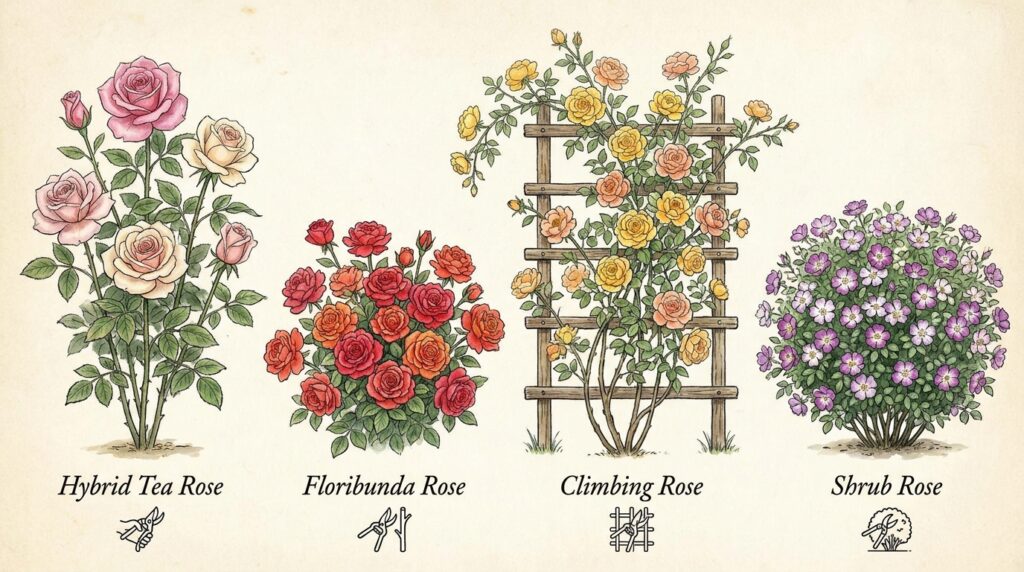
Not all roses are pruned the same way. Understanding your rose type before you start is critical.
Hybrid Tea and Grandiflora Roses
These are the classic, long-stemmed roses. They bloom on new wood (growth produced that season), so aggressive spring pruning is actually beneficial.
- Reduce the plant to 3–7 strong, healthy canes
- Cut canes back to 12–24 inches from the ground, or by about one-third to one-half of the plant’s height
- Remove all thin, weak canes smaller than pencil-thickness
Floribunda and Polyantha Roses
These produce clusters of blooms and can handle a similar approach to hybrid teas, though you can be slightly less aggressive.
- Remove dead and crossing canes first
- Cut remaining canes back by about one-third
- Deadhead regularly during the season to encourage continuous blooming
Climbing Roses
Climbers are different because most of them bloom on old wood or on lateral shoots growing from established main canes. Aggressively cutting them back like a hybrid tea is the fastest way to eliminate all your blooms.
- Don’t prune heavily in the first 2–3 years. Let the plant establish its main structural canes.
- Once established, prune in early spring by cutting lateral (side) shoots back to 2–4 buds from the main cane
- Remove one or two of the oldest, least productive main canes each year at the base to encourage fresh new canes
- Train new canes horizontally along a support structure — horizontal canes produce more lateral bloom shoots than vertical ones
Some climbers bloom only once per year on wood from the previous season. Check your specific variety: once-blooming climbers should be pruned after flowering, not before.
Shrub and Old Garden Roses
These are the most forgiving of the rose world. Many are once-blooming varieties that flower on old wood, so heavy spring pruning removes the bloom buds.
- Remove dead, diseased, and crossing wood
- Lightly shape and thin to improve airflow
- For once-blooming varieties, major pruning should happen shortly after flowering, not in spring
Miniature Roses
Miniature roses respond well to pruning and can be treated similarly to floribundas. Use fine-tipped snips or small bypass pruners appropriate for their smaller scale, and deadhead frequently to keep them blooming.
How Much Should You Cut Back Rose Bushes?
A question almost every beginner asks. The answer depends on the rose type, your climate, and the plant’s current health.
General Guidelines:
| Rose Type | How Much to Cut Back |
|---|---|
| Hybrid Tea / Grandiflora | One-third to one-half of plant height |
| Floribunda / Polyantha | One-quarter to one-third |
| Climbing (once-blooming) | Only dead wood + laterals back to 2-4 buds |
| Climbing (repeat-blooming) | Laterals back to 2-4 buds; remove 1-2 old canes |
| Shrub / Old Garden Roses | Light thinning; major prune after bloom |
| Miniature | One-third to one-half |
In colder climates where winter dieback is significant, you may not have a choice — cut back to wherever healthy white pith begins, even if that’s very low on the plant. In mild climates, you can be more conservative.
Common Rose Pruning Mistakes (And How to Avoid Them)
Even well-meaning gardeners damage their roses with small but impactful errors. Here’s what to watch out for:
1. Using Dull Tools Dull blades crush canes and leave ragged wounds. Sharpen your pruners before every season and touch them up during the season if you’re doing a lot of cutting.
2. Cutting Too Late in Spring If you wait until the plant is already several inches into new growth, you’re wasting energy the plant already invested. Prune when buds are just beginning to swell.
3. Skipping Tool Sterilization If you prune a plant with rose mosaic virus or fungal disease and then move to the next plant with dirty blades, you spread the problem. Wipe blades between plants.
4. Leaving Stubs Cutting too far above a bud leaves a stub of dead wood that eventually becomes an entry point for disease. Cut cleanly ¼ inch above the bud, no more.
5. Pruning Climbers Like Bush Roses Aggressively cutting back a once-blooming climber in spring removes every bloom you’d get that season. Know your variety before you cut.
6. Ignoring Suckers Suckers are shoots that emerge from below the graft union (the knobby swelling near the soil line). They grow from the rootstock, not the named variety, and if left unchecked, the rootstock can eventually take over the entire plant. Trace them to their origin and pull or cut them from the root.
Expert Tips for Better Rose Pruning Results
Beyond the basics, here are professional-level strategies that can dramatically improve your results:
Follow the “One-Third Rule” for Established Plants Never remove more than one-third of the plant’s total healthy mass in a single pruning session (except in early spring when more aggressive cuts are standard for hybrid teas). This reduces transplant shock-like stress and keeps the plant’s energy reserves intact.
Look for the Bud Union — Then Prune Above It The bud union (graft union) is where the rose variety was grafted onto the rootstock. Keep this structure intact. All your canes should originate above this point.
Consider Cane Thickness as a Guide Keep canes that are at least pencil-thickness or larger. Thinner canes rarely produce blooms and mostly just compete for resources.
Apply Fertilizer After Pruning Rose-specific fertilizer applied after spring pruning gives the plant the nutrients it needs to fuel the surge of new growth. Look for formulas with higher phosphorus (middle number) for better bloom development. According to PennState Extension, balanced feeding after pruning significantly impacts bloom quality and quantity.
Water Deeply After Major Pruning A deep watering after pruning helps the plant begin recovery and supports the metabolic processes behind new growth. At the soil surface, aim for 1–1.5 inches of water per week during the growing season, delivered slowly and deeply rather than via frequent shallow sprinkles.
Use the Color of the Pith as Your Guide When you make any cut and look at the cross-section of the cane, healthy pith is white or cream-colored. If you see brown or black, the cane has experienced winter kill or disease. Keep cutting lower until you reach white pith.
How to Care for Rose Bushes After Pruning
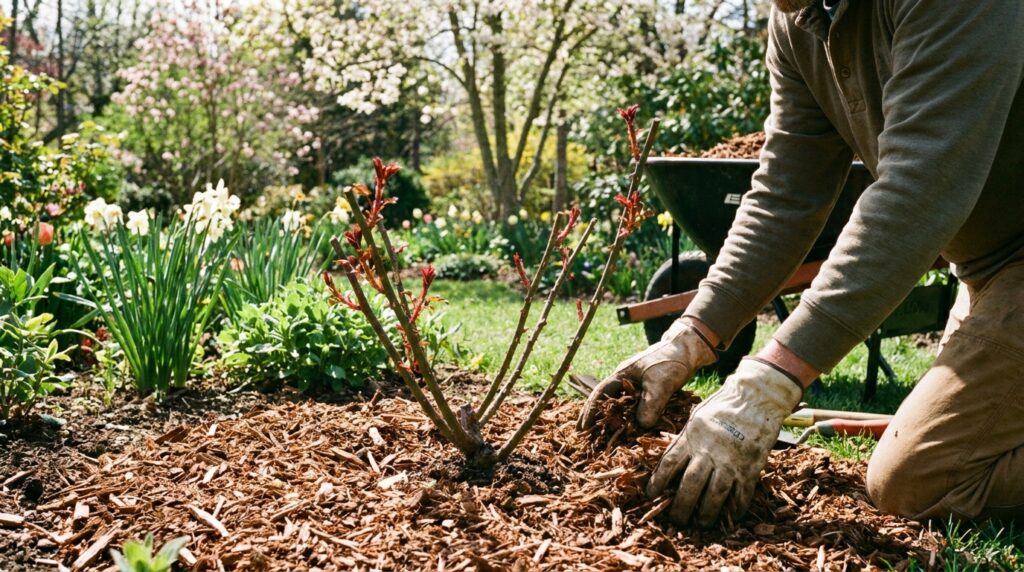
The work doesn’t stop once you put the pruners away. What you do in the days and weeks after pruning sets the stage for the whole season.
Mulch the Base As mentioned, 2–3 inches of organic mulch conserves moisture, regulates temperature, and reduces disease pressure from soil-borne spores. Keep mulch 2 inches away from the base of the canes to prevent crown rot.
Begin a Fertilization Schedule Start feeding once you see 2–3 inches of new growth following pruning. Use a slow-release rose fertilizer or a balanced granular fertilizer with a formulation like 10-10-10, applied every 4–6 weeks through midsummer. Stop fertilizing 6–8 weeks before your first expected frost to avoid pushing tender new growth into cold weather.
Begin a Fungal Disease Prevention Program Black spot is the most common and damaging rose disease. It spreads via water splashing spores from the soil onto leaves. You can address it with:
- Organic options: neem oil, copper fungicide, or baking soda sprays
- Conventional options: fungicides containing myclobutanil or trifloxystrobin
- Cultural control: always water at the base (not overhead), remove fallen leaves promptly
Monitor for Pests Aphids, Japanese beetles, rose midges, and sawfly larvae are the most common culprits. A weekly 10-minute inspection of the new growth, undersides of leaves, and bud clusters catches most infestations before they become serious.
FAQs: How to Prune Rose Bushes Properly
1: How far back should I cut my rose bushes in spring?
For hybrid tea and grandiflora roses, cutting back to 12–24 inches, or reducing the plant by one-third to one-half of its total height, is the standard spring approach. The key is to cut to a healthy outward-facing bud above white, healthy pith. In climates with severe winter dieback, cut back to wherever the pith turns white — even if that’s close to the ground. Roses are remarkably resilient and can regrow from very low cuts.
2: Can I prune rose bushes in summer?
Yes, but summer pruning is light work — primarily deadheading (removing spent blooms) and cutting back any excessively long, unproductive canes. Deadhead by cutting the spent bloom back to a leaflet with 5 leaves, which is where productive new growth originates. Avoid major structural pruning in summer as it stresses the plant during active growing season.
3: What happens if I don’t prune my rose bushes?
Without pruning, rose bushes become increasingly congested, producing more wood and fewer blooms. Dead and diseased canes accumulate. The dense canopy traps moisture, creating ideal conditions for fungal diseases like black spot and powdery mildew. Within a few years, an unpruned rose can decline significantly in health and bloom production. Vigorous varieties may still bloom, but you’ll see a noticeable drop in flower size, quantity, and overall plant health.
Q4: Should I seal the cut ends after pruning roses?
The practice of sealing pruning cuts with products like white glue or pruning sealant is most useful in regions where rose stem borers are prevalent. These small insects tunnel into freshly cut canes and can cause significant damage. A dab of white Elmer’s glue on each cut end is a common and inexpensive prevention method. In areas where borers aren’t an issue, the plant will naturally callous over the cut on its own.
5: Can I prune roses in fall?
Light fall pruning — removing dead blooms, cutting back excessively long canes by no more than one-third — is fine. However, avoid heavy fall pruning because it stimulates tender new growth that can be killed by frost, weakening the plant going into winter. The primary purpose of fall rose care is winterization: cleaning up debris, mounding mulch around the base, and in very cold climates, wrapping or mounding the crown for protection. Save major pruning for early spring.
Conclusion: Prune With Confidence
Pruning rose bushes properly isn’t complicated once you understand the logic behind it. Every cut you make is purposeful — to remove what’s weak, protect what’s healthy, and guide the plant toward its best performance.
To recap the essentials:
- Timing: Prune hybrid teas and floribundas in late winter to early spring when buds are just swelling
- Tools: Use sharp, clean bypass pruners appropriate for the cane thickness
- Technique: Cut at a 45-degree angle, ¼ inch above an outward-facing bud eye
- Structure: Aim for an open, vase-shaped plant with 3–7 strong main canes
- Rose type matters: Climbers and once-blooming shrub roses need different approaches than hybrid teas
- After pruning: Mulch, fertilize, water, and begin a disease prevention routine
The first time you prune your roses and then watch those new shoots unfurl and the first buds set, you’ll understand why experienced rose gardeners look forward to pruning day. It’s not an ending — it’s the beginning of the whole season.
Ready to take your rose garden to the next level? Bookmark this guide, grab a good pair of bypass pruners, and head into the garden this spring with confidence. Your roses will thank you in blooms.

