
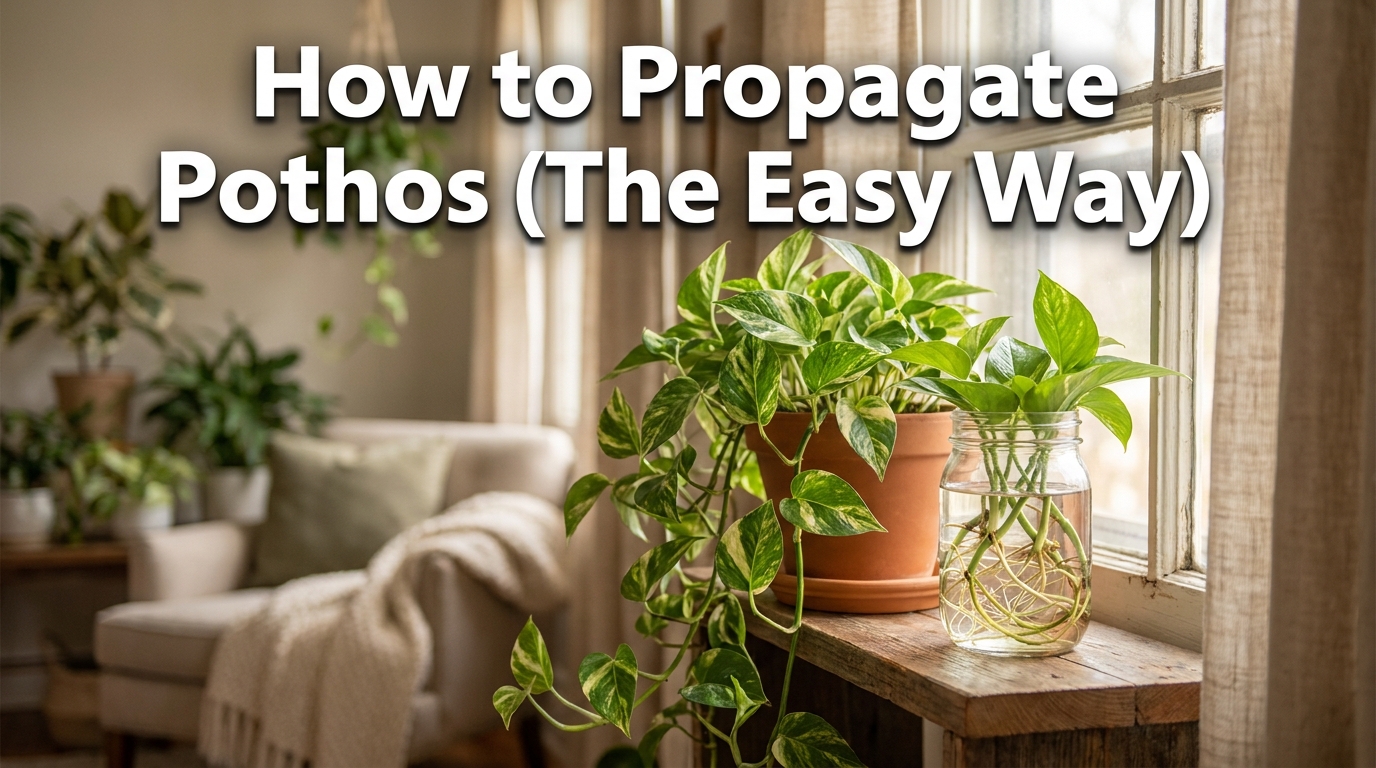
If you’ve ever looked at a leggy, half-bare pothos vine and thought “surely I can turn this into more plants,” you’re right, and you’re in good company. Learning how to propagate pothos is one of the first skills most houseplant owners pick up, mostly because the plant is so forgiving that it’s almost hard to fail. But “almost” isn’t “never,” and a surprising number of cuttings rot in a jar or sit still in soil for months because of one small, fixable mistake near the base of the stem.
This guide walks through every realistic way people actually try to multiply their pothos: in water, in soil, in perlite, even in a fish tank, plus what happens when you’re working with a cutting that has no leaves or hasn’t grown roots yet. None of it requires special tools, a greenhouse, or a green thumb you were born with.
Why Pothos Is the Plant Everyone Recommends for Beginners
Pothos (Epipremnum aureum) earned its reputation the honest way: it tolerates inconsistent watering, low light, dry apartments, and the kind of benign neglect that kills more delicate houseplants. The same traits that make it easy to keep alive also make it easy to multiply. Pothos has been grown as a houseplant commercially for more than a century precisely because it roots and adapts so readily.
That resilience matters here because propagation is essentially controlled stress. You’re removing a piece of a plant and asking it to survive without an established root system while it grows a new one. A fussier plant might sulk or die in the process. Pothos usually just gets on with it.
The One Thing You Actually Need to Understand First: Nodes
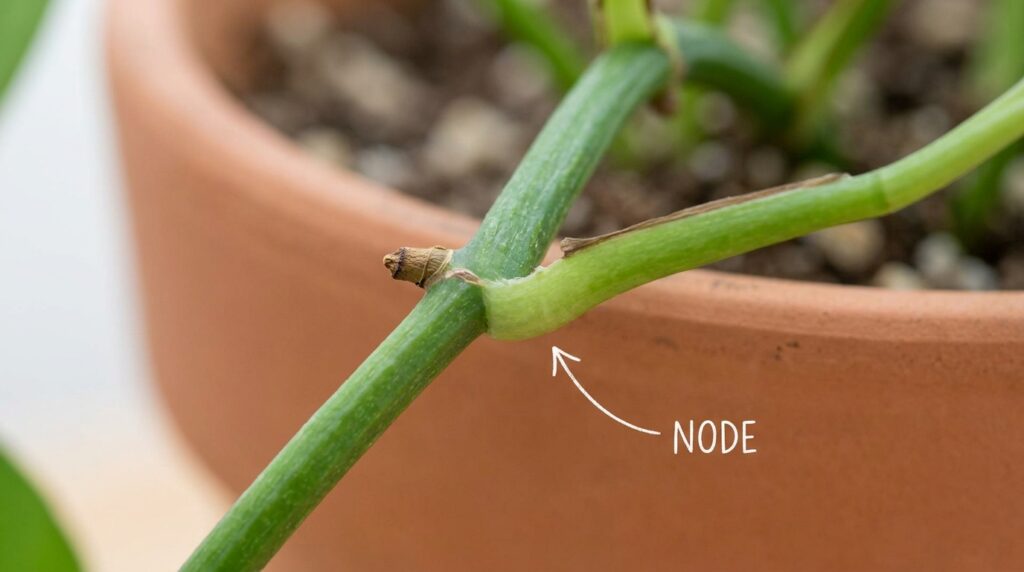
Before touching any secondary keyword or method, there’s a single concept that decides whether a cutting will root at all: the node.
A node is the small bump or joint on the stem where a leaf attaches, and it’s also where new roots and new stems originate. Cut a piece of vine that has no node, and it doesn’t matter how long you leave it in water or how perfect your soil mix is; it simply cannot grow roots. This is the part most failed-cutting stories trace back to.
Look closely at a pothos stem and you’ll usually spot a small brown or tan nub near where each leaf meets the vine. Sometimes it already has a tiny aerial root growing from it. That nub is the node, and every cutting you take needs at least one.
Where to Cut Pothos to Propagate
Figuring out where to cut pothos to propagate is mostly about counting nodes, not measuring inches. A useful rule of thumb:
- Choose a healthy vine, not one that’s yellowing, mushy, or pest-damaged.
- Cut about a quarter inch below a node, using clean, sharp scissors or pruning snips.
- Aim for a cutting with two to four nodes and at least one or two leaves.
- Longer cuttings root fine too, but if you have a very long vine, it’s more efficient to cut it into several smaller node cuttings instead of one giant one.
Pothos and related Epipremnum species are known to root readily from stem cuttings with healthy nodes, which lines up with what most home growers experience.
A quick note on tools: disinfecting your scissors with rubbing alcohol before cutting isn’t just fussiness. A dirty blade can introduce bacteria or fungus into the cut, which is a common, boring, entirely preventable reason a cutting turns mushy a week later.
How to Propagate Pothos in Water (The Classic Method)
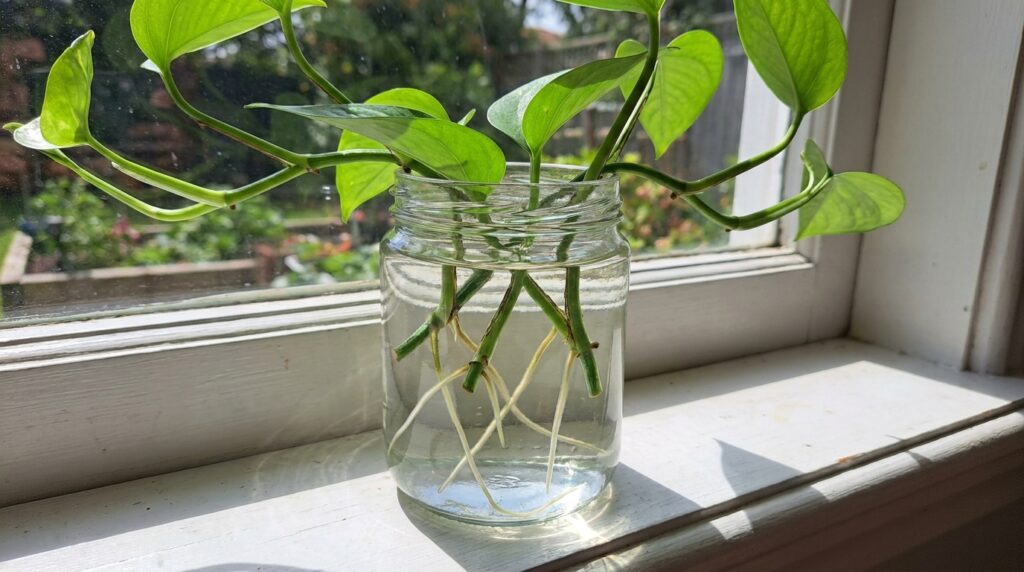
Water propagation is where most people start, and for good reason: it’s cheap, it requires nothing you don’t already own, and you get to watch the whole process happen through glass.
Here’s how to propagate pothos in water step by step:
- Take a cutting with at least one node, following the guidance above.
- Remove any leaves that would sit below the waterline. Submerged leaves rot and cloud the water fast.
- Place the cutting in a clean glass or jar of room-temperature water, making sure at least one node is underwater.
- Set the jar somewhere with bright, indirect light. Direct sun overheats the water and encourages algae.
- Change the water every five to seven days, or sooner if it looks cloudy.
Roots typically start appearing within one to two weeks, though it can take up to a month depending on temperature and light. Once roots are two to three inches long and branching, the cutting is ready to move into soil if you’d like a permanent planted specimen, or you can simply leave it growing in water indefinitely; pothos is genuinely happy either way.
How to Propagate Pothos in Soil
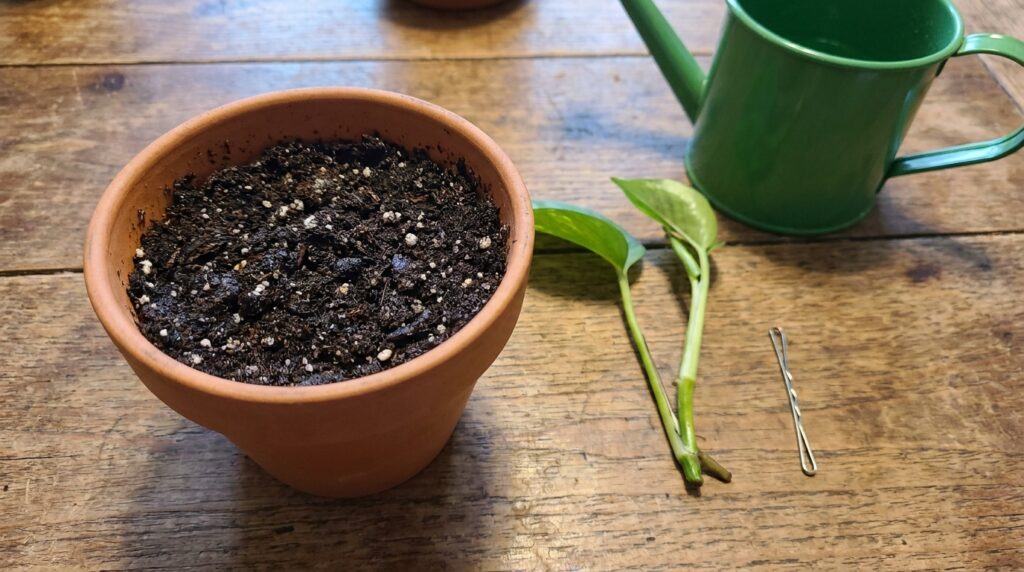
Some growers skip water entirely and root cuttings directly in soil, which skips the later transplant shock of moving a water-adapted root system into a new medium.
To learn how to propagate pothos in soil, follow this approach:
- Take a cutting with two or three nodes and strip the leaves from the lower nodes, leaving one or two leaves at the top.
- Fill a small pot with well-draining potting mix and moisten it thoroughly beforehand.
- Poke a hole and insert the stripped end so the bare nodes are buried, but keep the remaining leaves above the soil line.
- Firm the soil gently around the stem. A bobby pin or small stake can help hold a floppy cutting upright.
- Keep the soil consistently moist (not soggy) for the first few weeks, then ease into a normal watering routine once you feel resistance when you gently tug the stem, a sign roots have formed.
Soil propagation is slower to show visible progress since you can’t see the roots forming, but the resulting plant often skips the acclimation dip that sometimes happens when a water-rooted cutting is transplanted later.
How to Propagate Pothos in Perlite
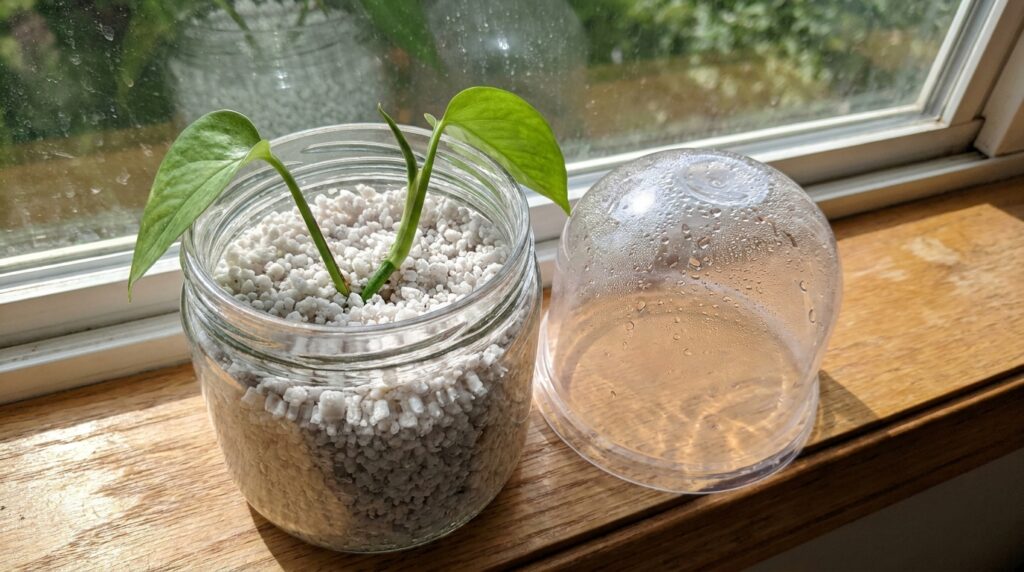
Perlite sits in an interesting middle ground between water and soil. It holds moisture without staying waterlogged, and its airy structure means developing roots get plenty of oxygen, which can mean faster, sturdier root growth than either water or dense potting soil alone.
If you want to try how to propagate pothos in perlite:
- Moisten perlite thoroughly, then let excess water drain off so it’s damp, not dripping.
- Insert a node cutting so the node sits below the surface.
- Keep the perlite consistently moist and covered loosely with a clear bag or dome for the first week or two to maintain humidity, venting it occasionally.
- Check for root development after two to three weeks by gently tugging the stem.
Because perlite doesn’t hold nutrients the way soil does, plan to transplant into potting mix once roots are established, usually within three to four weeks.
Can You Propagate Pothos in a Fish Tank?
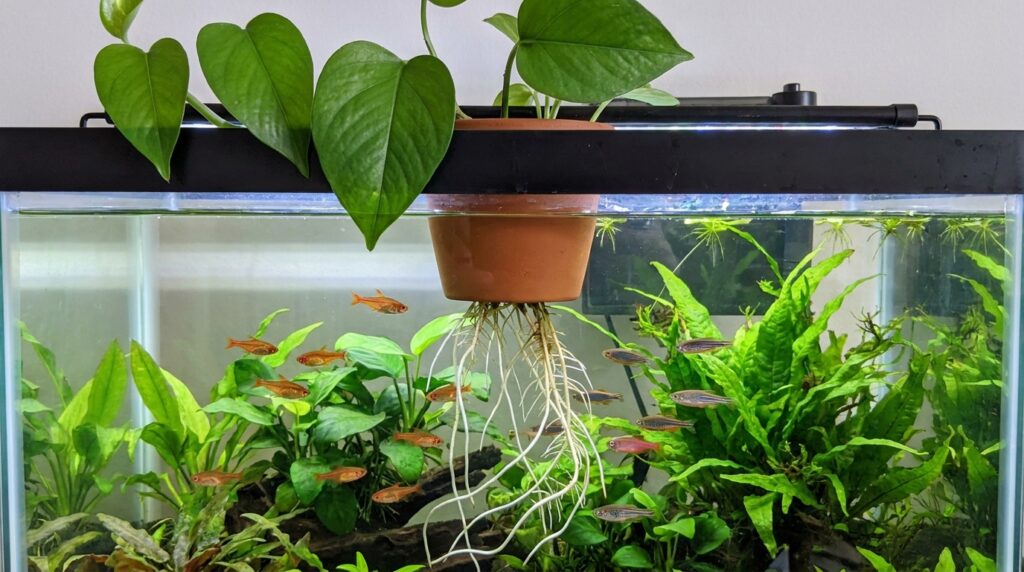
This one comes up more than you’d expect, and the short answer is yes, with a couple of caveats.
Growing pothos roots directly in an aquarium is popular in the planted-tank and betta-keeping community because the roots help absorb excess nitrates from fish waste, essentially acting as a mild natural filter, while the plant grows happily above the waterline.
To try how to propagate pothos in fish tank setups:
- Use a cutting with at least one node and let only the node and roots sit in the water; keep leaves above the surface so they don’t rot or block light to the tank.
- A floating planter, a hole in the tank lid, or simply resting the cutting across the rim works.
- Avoid adding fertilizer directly to the tank water for the plant’s sake; the fish waste usually provides enough nutrients, and extra fertilizer can harm fish.
- Check that your fish species doesn’t nibble on roots aggressively, which can stress the cutting.
This method works because it’s functionally the same as water propagation, just with a live aquatic ecosystem instead of plain tap water.
How to Propagate Pothos from a Stem Cutting (Step by Step Recap)
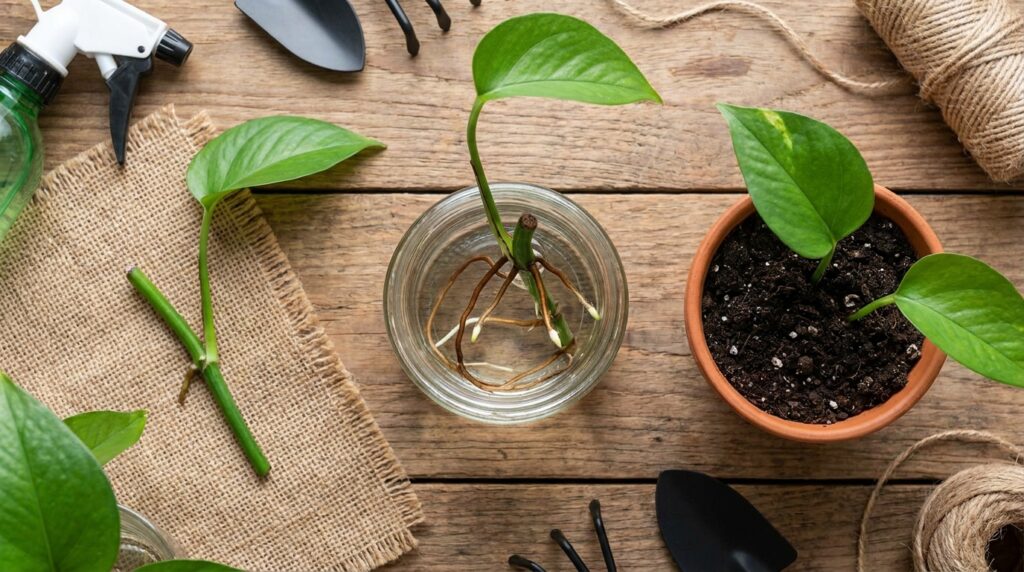
Since several of the methods above are variations on the same core skill, here’s the condensed version of how to propagate pothos from stem cuttings, regardless of which medium you choose:
| Step | What to Do |
|---|---|
| 1 | Identify a healthy vine with visible nodes |
| 2 | Cut just below a node with clean, sharp scissors |
| 3 | Remove lower leaves that would sit below water or soil |
| 4 | Place the node in water, soil, or perlite |
| 5 | Keep in bright, indirect light |
| 6 | Wait for roots (1–4 weeks depending on method) |
| 7 | Transplant into potting soil once roots are established |
This table is worth bookmarking if you’re propagating multiple cuttings using different methods at once, which is a genuinely good way to compare results side by side in your own home’s specific light and humidity conditions.
Can You Propagate a Pothos Leaf Without a Stem?
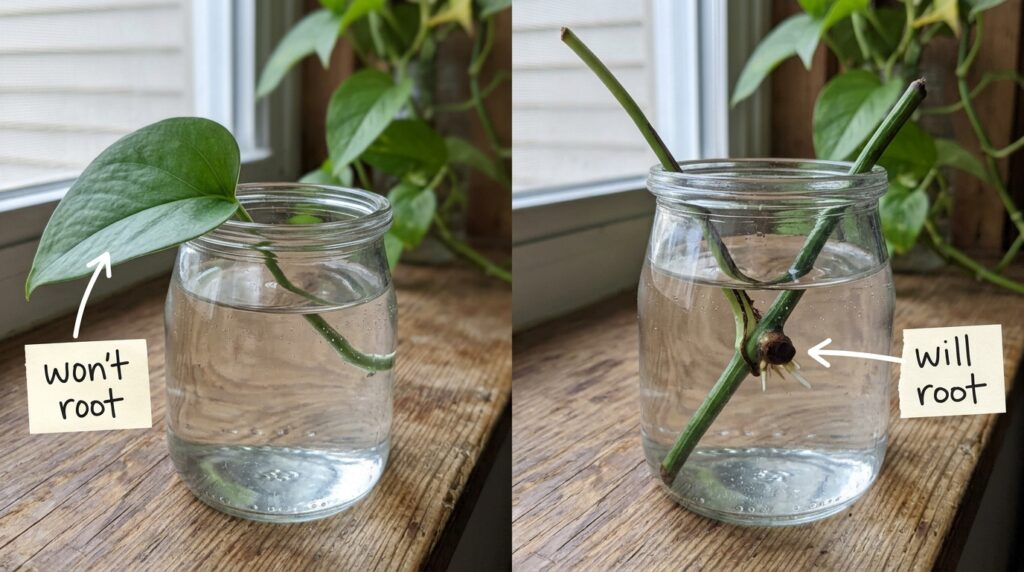
This is where expectations and plant biology sometimes disagree.
A single pothos leaf with just a bit of petiole but no node attached can survive in water for weeks, staying green and looking alive. What it cannot do is grow into a new plant. Without a node, there’s no tissue capable of producing roots or new shoots, no matter how long you wait.
So if you’re wondering how to propagate pothos without leaves, the useful reframe is this: leaves are optional, nodes are not. A bare stem section with a node and no leaves at all can absolutely root and eventually sprout new growth, since the node is where all the necessary structures come from. A leaf without a node, on the other hand, is decorative at best.
This also answers a related question people ask: how to propagate pothos stems without leaves. It works the same way as any node cutting, just skip worrying about leaf count entirely. Bury or submerge the node, keep it in decent light, and give it time. New leaves typically emerge from the node itself once roots are underway.
What to Do With a Cutting That Has No Roots Yet
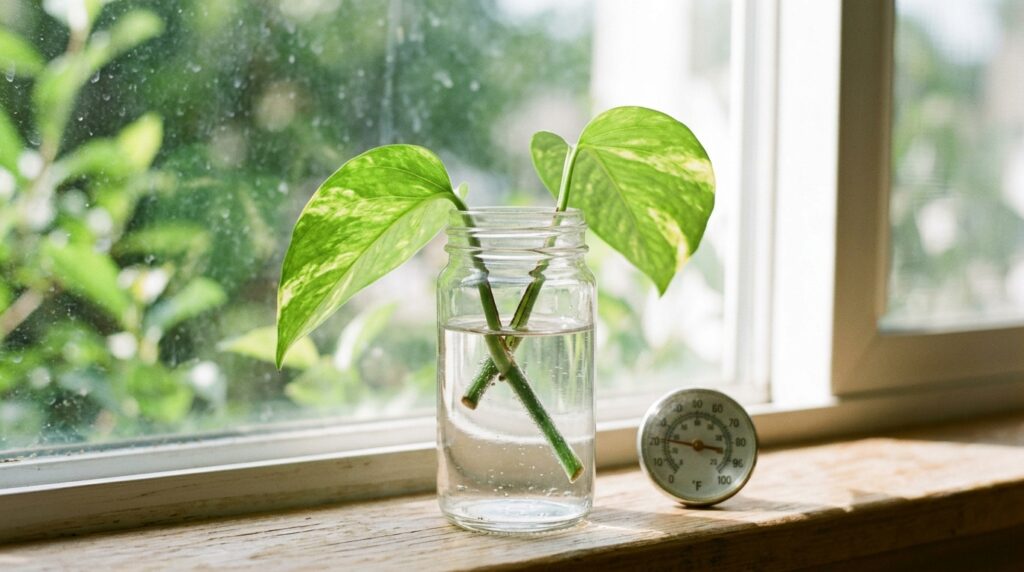
If you’re a few weeks in and staring at a cutting that looks exactly the same as the day you took it, don’t panic and don’t toss it. Figuring out how to propagate pothos without roots already showing usually comes down to patience plus one or two environmental adjustments:
- Check the light. Too little light slows rooting dramatically. Bright, indirect light (not direct sun) speeds things along.
- Check the temperature. Pothos roots slower in cold rooms. Warmth close to typical indoor room temperature or slightly above helps.
- Check the water. Cloudy, stagnant water can suffocate a developing node before roots even start. Fresh water every few days matters more than people expect.
- Check the cut itself. If the node was damaged, crushed, or wasn’t actually a true node, no amount of waiting will produce roots. It may be worth taking a fresh cutting.
Most of the time, a cutting with no visible roots after two to three weeks just needs more warmth and light, not a different method entirely.
Common Mistakes That Slow Down or Kill Cuttings
A few patterns show up again and again in failed propagation attempts, and almost all of them are avoidable:
- Cutting without a node, which makes rooting biologically impossible regardless of method.
- Leaving leaves submerged in water, which causes rot and clouds the water quickly.
- Using dirty, dull scissors, which crushes the stem and invites bacteria.
- Placing cuttings in direct sun, which can overheat water or dry out soil too fast.
- Forgetting to change water for weeks at a time, starving the node of oxygen.
- Transplanting water roots into soil too late, after they’ve become fragile and specialized for water uptake, which can cause transplant shock.
None of these mistakes are dramatic. They’re small habits, and fixing even one or two usually turns a stalled cutting into a thriving one.
Expert Tips for Faster, Healthier Roots
A handful of small adjustments tend to make a noticeable difference:
- Take multiple cuttings at once. Not every cutting roots at the same pace, and having three or four gives you a buffer if one struggles.
- Rooting hormone is optional, not essential. It can speed things up slightly for soil or perlite propagation, but pothos generally roots fine without it in water.
- Warmth matters more than most people assume. A spot near, but not directly on, a heating vent or a gentle heat mat can meaningfully speed root development in cooler months.
- Don’t rush the transplant. Wait until water roots are a couple of inches long and visibly branching before moving to soil, giving the plant a better shot at adjusting without stress.
Pros and Cons of Each Propagation Method
| Method | Pros | Cons |
|---|---|---|
| Water | Easy to monitor, no special supplies | Roots need adjusting when moved to soil |
| Soil | No transplant shock later | Can’t see root progress directly |
| Perlite | Great oxygen flow, strong roots | Needs eventual transplant into soil |
| Fish tank | Doubles as mild natural filtration | Not ideal for fertilizing or fast-growing setups |
There’s no single “best” method here; it mostly comes down to what you enjoy monitoring and what setup fits your space.
Caring for a New Pothos Cutting After It Roots
Once your cutting has a healthy root system, whether you’ve kept it in water or moved it into soil, care is straightforward and mirrors general pothos care recommendations:
- Bright, indirect light keeps growth steady without scorching leaves.
- Let soil dry out somewhat between waterings; pothos tolerates underwatering far better than overwatering.
- A diluted general houseplant fertilizer every four to six weeks during spring and summer supports new growth.
- Repot into a slightly larger container once roots fill the current pot, usually after six months to a year for a young cutting.
Frequently Asked Questions
How long does it take to propagate pothos?
Most water cuttings show the first visible roots within one to two weeks, with a good root system ready for transplant around three to four weeks. Soil and perlite propagation can take a similar amount of time, though progress is harder to see without digging up the cutting.
Do I need rooting hormone to propagate pothos?
No. Pothos roots readily in plain water without any additives. Rooting hormone can modestly speed things up for soil or perlite propagation, but it’s a convenience, not a requirement.
Why is my pothos cutting turning yellow or mushy in water?
This usually points to a submerged leaf rotting, water that hasn’t been changed recently enough, or a cut that wasn’t clean. Removing any submerged leaves and refreshing the water every few days typically resolves it.
Can I propagate pothos any time of year?
Yes, though growth and rooting speed slow down somewhat in colder months due to lower light and cooler indoor temperatures. Spring and summer tend to produce faster results.
Should I move my pothos cutting from water into soil, or can it stay in water forever?
Both are fine long term. Many people keep pothos growing indefinitely in water with occasional fertilizer drops added. Moving to soil simply gives a more traditional potted plant and, over time, typically supports larger growth.
Final Thoughts
Once you’ve propagated one pothos cutting successfully, the whole process stops feeling like a gamble and starts feeling like a routine you can repeat any time a vine gets a little too long. The plant does most of the actual work; your job is really just giving it a clean cut at the right spot and a bit of patience while it figures out the rest.
If you’ve got an overgrown pothos sitting around right now, that’s not a problem to fix by trimming and tossing the cuttings. It’s a handful of free plants waiting to happen.

