
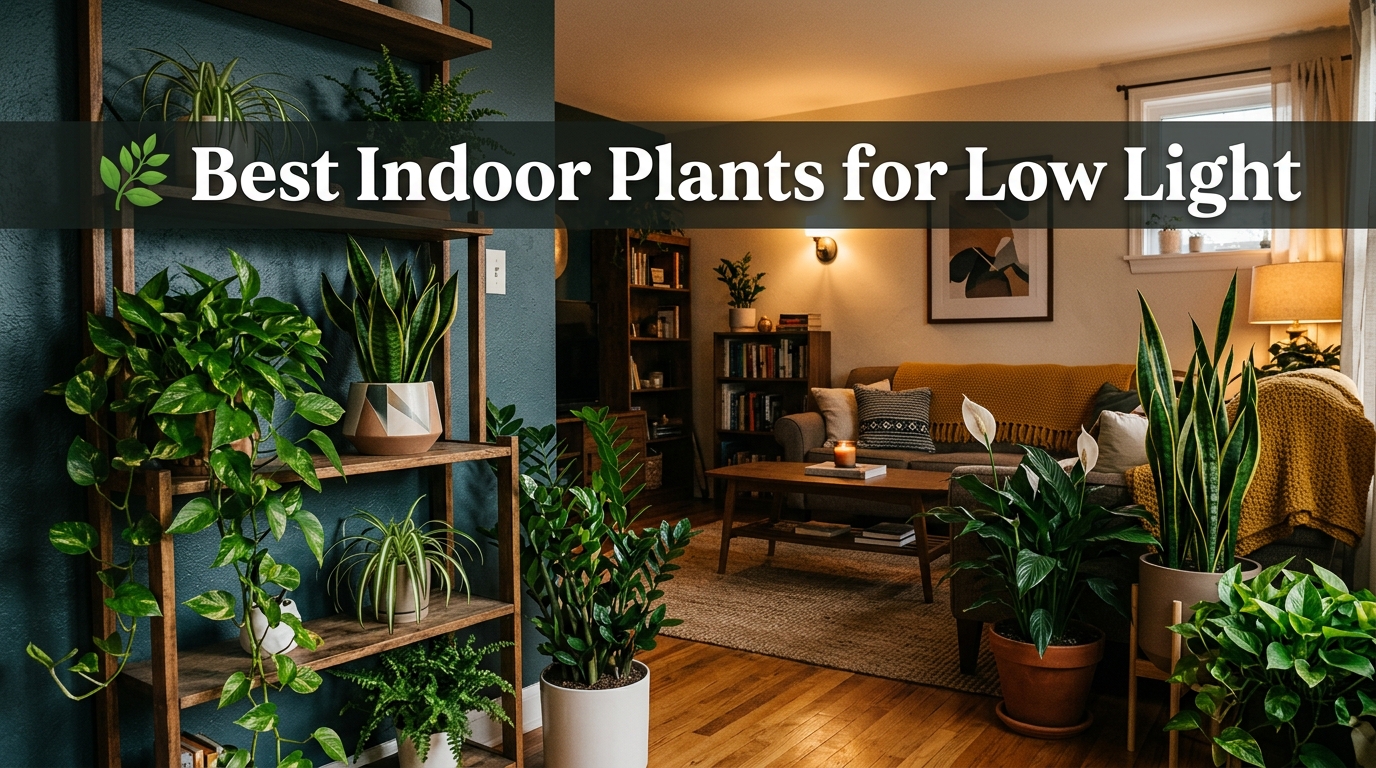
There’s a myth that won’t die: “You need a sun-drenched window to keep houseplants alive.”
It’s simply not true.
Millions of people live in apartments, basements, north-facing rooms, or office spaces where direct sunlight is a luxury. And yet, their plants are thriving. How? Because the right selection matters more than the brightest window.
Whether you’re a beginner who’s killed every plant you’ve ever owned or someone just moving into a darker home, this guide will walk you through everything you need to know about indoor plants for low light — which ones actually work, how to care for them, and how to make your dim space feel like a lush, living room garden.
Let’s dig in.
What Does “Low Light” Actually Mean for Plants?
Before we get to plant lists, let’s clear up a common confusion.
“Low light” doesn’t mean no light. It means your space receives indirect sunlight — ambient brightness without direct sun rays hitting the plant. According to the University of Vermont Extension, low light for indoor plants typically refers to about 25–75 foot-candles of illumination, which is roughly the brightness of a hallway or a room lit by a north-facing window.
Here’s a quick breakdown:
| Light Level | Description | Foot-Candles |
|---|---|---|
| Bright Direct | Sunlight hits the plant | 1,000+ fc |
| Bright Indirect | Near a sunny window, no direct rays | 200–1,000 fc |
| Medium Light | A few feet from a window | 75–200 fc |
| Low Light | No direct sun, ambient room light | 25–75 fc |
| Very Low Light | Hallways, basements | <25 fc |
Most low light indoor plants thrive in the 25–200 fc range. They’ve evolved in forest understories where they receive dappled light filtered through a canopy — not direct sun.
Understanding this helps you set realistic expectations. A low-light plant won’t die in a dim corner, but it also won’t explode with growth the way it might near a window. It will survive, grow slowly, and stay beautiful with minimal effort.
Why Growing Low Light Indoor Plants Is Worth It
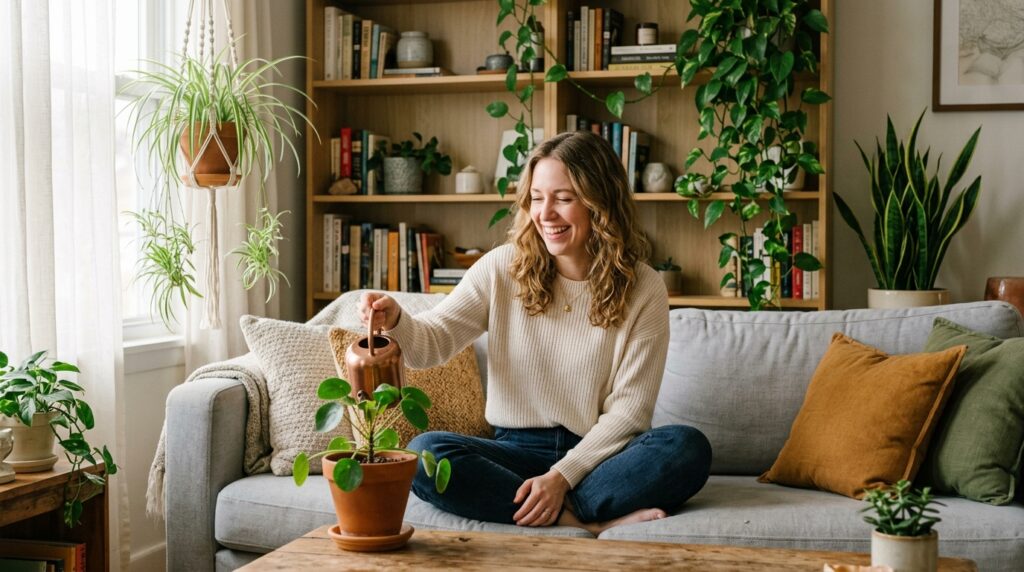
Before diving into the best picks, let’s talk about why you should bother.
1. They’re nearly indestructible. Low-light plants are typically slow growers with hardier constitutions. They’ve adapted to less ideal conditions. That means they’re more forgiving of missed waterings, forgotten fertilizing, and beginner mistakes.
2. They purify air in the rooms that need it most. A NASA Clean Air Study famously tested houseplants’ ability to remove toxins like formaldehyde and benzene from indoor air. Many of the high-performers — including snake plants, peace lilies, and spider plants — are also excellent low-light options.
3. They fit real homes. Most rooms in real houses and apartments don’t have perfect south-facing windows. Low light plants work where people actually live — in bedrooms, bathrooms, offices, and corridors.
4. They’re low maintenance. Slow growth means less pruning, fewer repottings, and less fertilizer. For busy people, that’s a gift.
The 15 Best Indoor Plants for Low Light
Here are the tried-and-true champions — each one capable of thriving in rooms with indirect sunlight or minimal natural light.
1. Snake Plant (Sansevieria trifasciata)
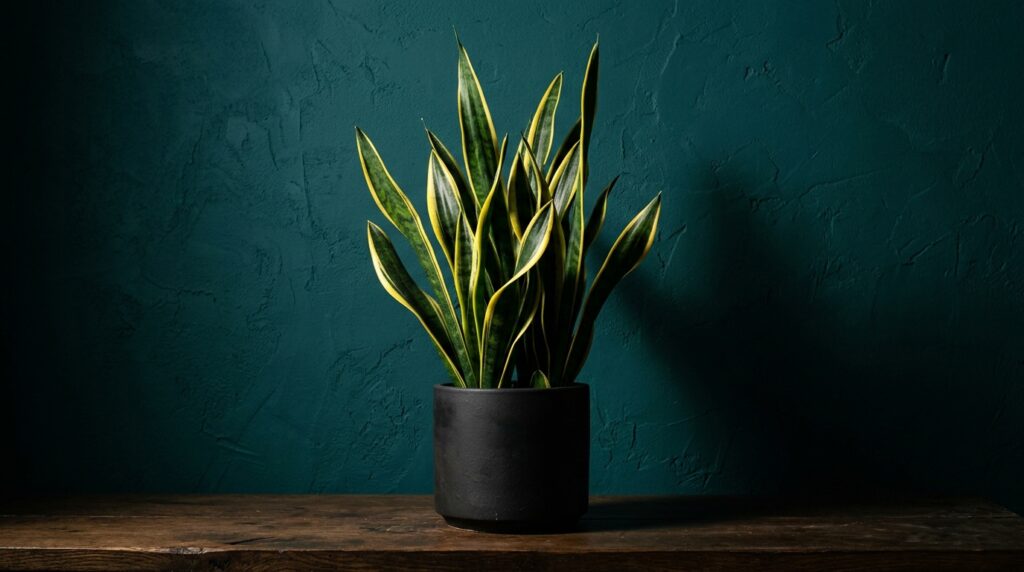
Also known as: Mother-in-law’s tongue
If there were a hall of fame for low-light indoor plants, the snake plant would be its founding member.
This architectural beauty tolerates near-dark conditions better than almost any other houseplant. Its stiff, upright leaves with yellow or white edges can reach up to four feet tall indoors, making it a dramatic statement piece in corners or beside furniture.
- Light: Can survive in very low light; does best in indirect light
- Water: Every 2–6 weeks depending on season — overwatering is its main enemy
- Soil: Well-draining cactus or succulent mix
- Why we love it: Near-impossible to kill; filters air toxins overnight
According to The Sill, snake plants are one of the few plants that convert CO₂ to oxygen at night, making them ideal for bedrooms.
Expert Tip: If your snake plant’s leaves start to flop outward, it’s usually a sign of overwatering, not too little light.
2. Pothos (Epipremnum aureum)
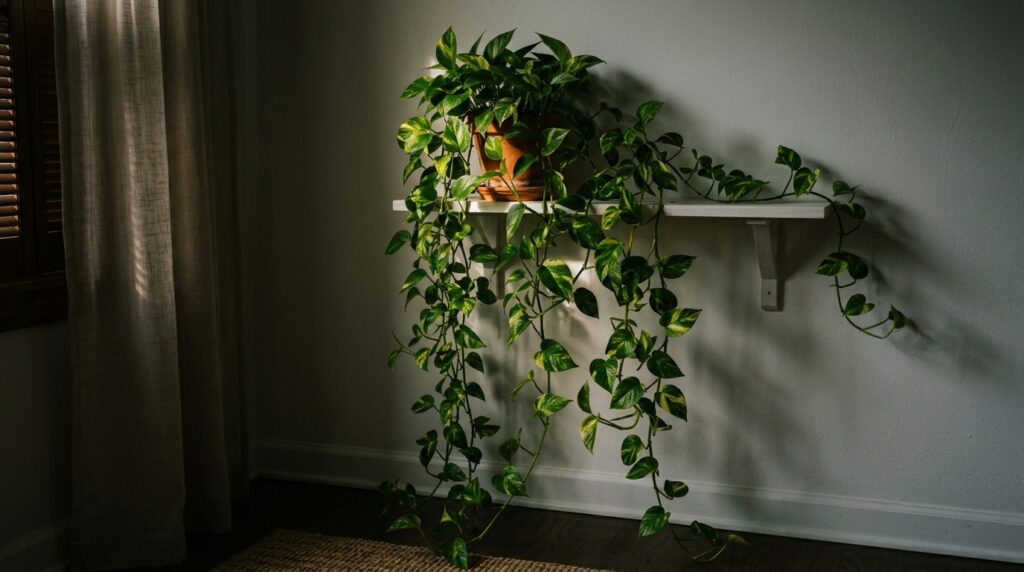
The pothos is the ultimate beginner’s plant — and it thrives in low light like a champ.
Its heart-shaped, glossy leaves trail beautifully from shelves and hanging baskets. The golden pothos variety has yellow-streaked green leaves; the marble queen has cream-and-green variegation (though the more variegated the leaf, the more light it needs).
- Light: Tolerates very low light; variegated types need slightly more
- Water: When the top inch of soil feels dry
- Growth: Can grow several feet per year even in dim conditions
- Propagation: Impossibly easy — cut a node and place in water
Pothos is often recommended by The American Horticultural Society as one of the most adaptable houseplants for indoor growing.
Expert Tip: In low light, pothos leaves may revert to solid green. This is normal — the plant is maximizing chlorophyll to capture more light.
3. ZZ Plant (Zamioculcas zamiifolia)
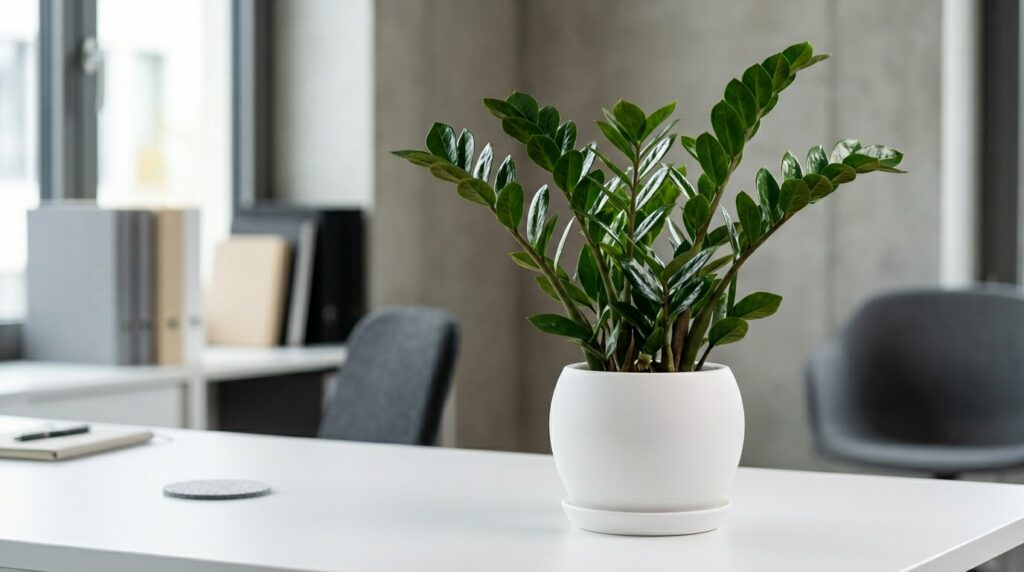
The ZZ plant looks like it belongs in a glossy interior design magazine — and it practically thrives on neglect.
Its waxy, dark green leaves grow in elegant arching stems. The plant stores water in its rhizomes (underground stems), meaning it can go weeks without watering. It’s one of the few truly low light indoor plants that seems to prefer being forgotten.
- Light: Handles low to very low light
- Water: Every 2–3 weeks; let soil dry completely
- Toxicity: Mildly toxic to pets and humans if ingested — keep out of reach
- Growth Rate: Slow but steady
4. Peace Lily (Spathiphyllum wallisii)
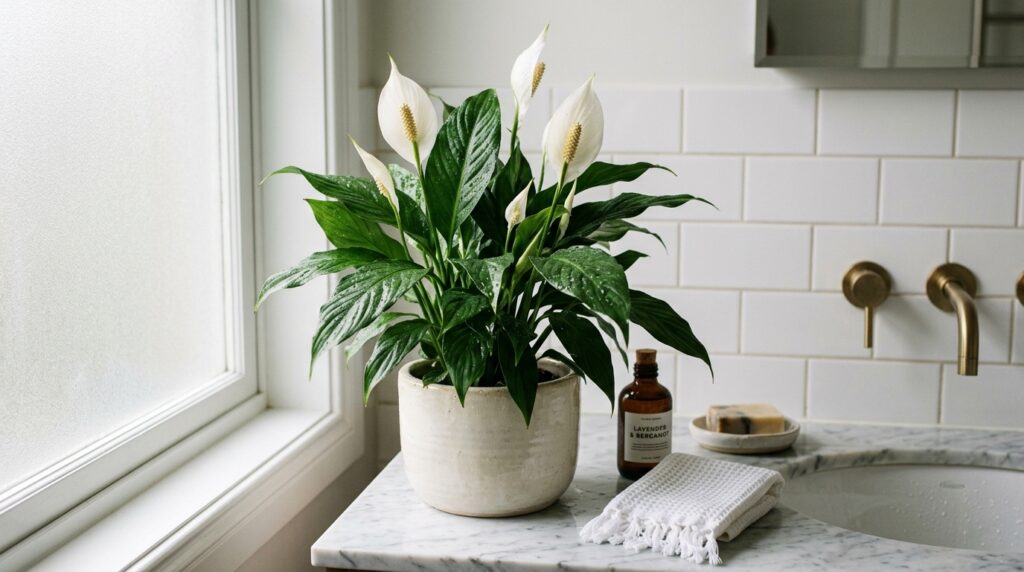
The peace lily is one of the rare low-light plants that actually blooms indoors.
Its elegant white flowers (technically spathes) appear in spring and sometimes again in fall. Beyond the blooms, it has glossy, deep green leaves that droop dramatically when it’s thirsty — a helpful signal for beginners.
- Light: Low to medium indirect light; avoid direct sun
- Water: When leaves just begin to droop; about once a week
- Humidity: Loves higher humidity — great for bathrooms
- Air Purifying: NASA’s clean air study found it removes acetone, benzene, and formaldehyde
Expert Tip: Don’t panic when the peace lily droops — it’s just thirsty. Water it, and it will perk back up within hours.
5. Cast Iron Plant (Aspidistra elatior)
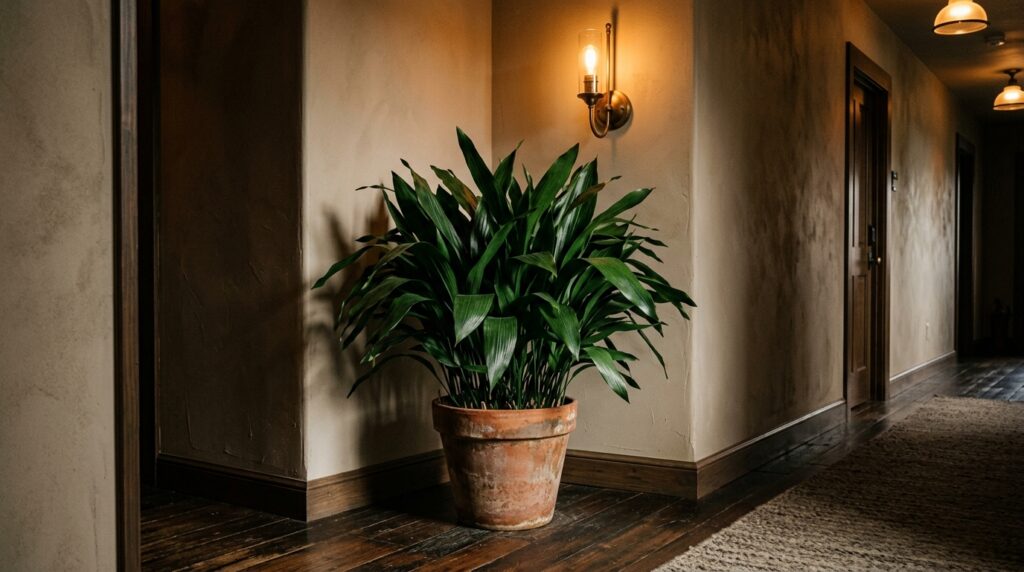
True to its name, this plant is nearly indestructible.
The cast iron plant earned its name from Victorian-era gardeners who grew it in gas-lit parlors with terrible air quality and almost no natural light. If it survived gas lighting, it can survive your dim apartment.
- Light: One of the lowest light tolerances of any houseplant
- Water: Once every 1–2 weeks; extremely drought tolerant
- Growth: Very slow — but long-lived (decades with proper care)
- Leaves: Long, dark, sword-shaped; some varieties have cream spots
The Royal Horticultural Society rates it as one of the most shade-tolerant houseplants available.
6. Chinese Evergreen (Aglaonema)
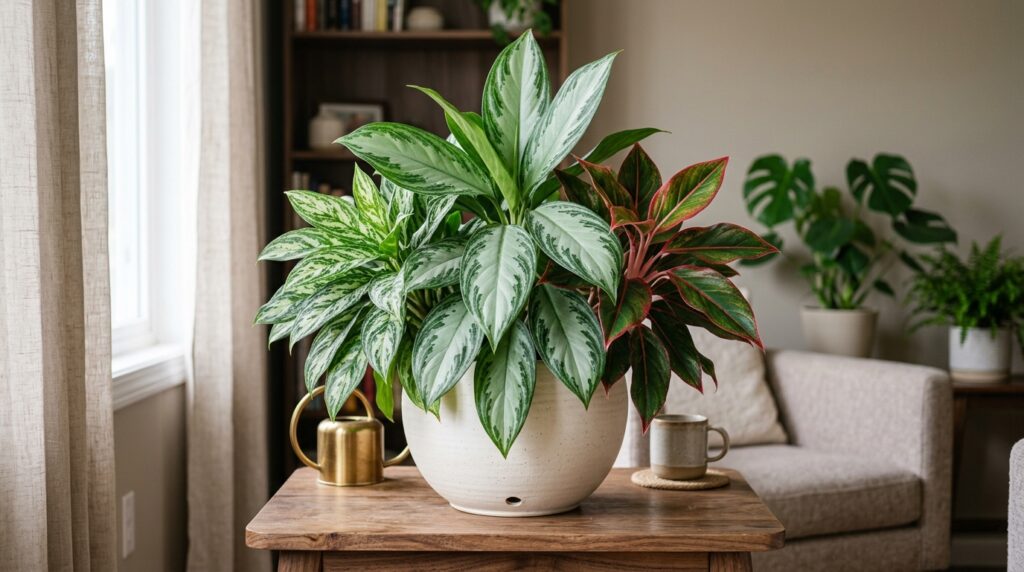
Chinese evergreens are some of the most colorful low-light plants available — with varieties in red, pink, silver, and green.
They’re incredibly adaptable and slow-growing, making them ideal for offices and rooms with only overhead lighting. A general rule: the darker the leaf, the lower the light it can tolerate.
- Light: Low to medium indirect light; darker varieties handle lowest light
- Water: Every 1–2 weeks; let soil partially dry
- Varieties: Red Siam (needs more light), Silver Bay (handles very low light)
- Care Level: Very easy
The Spruce notes that Chinese evergreens are among the most forgiving houseplants for beginner indoor gardeners.
7. Dracaena (Dracaena marginata / D. fragrans)
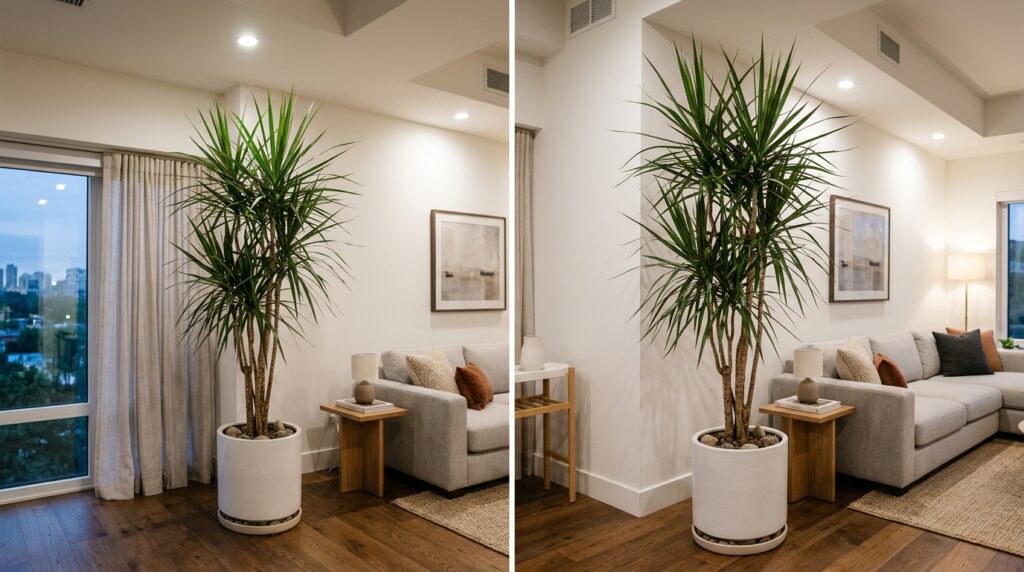
Dracaenas come in dozens of varieties and most do very well in low light.
The corn plant (Dracaena fragrans) and the red-edged dracaena (Dracaena marginata) are especially popular. Their dramatic strap-like leaves and upright, tree-like form make them excellent statement plants for dim corners.
- Light: Indirect to low light; avoid direct sun (scorches leaves)
- Water: Every 1–2 weeks; sensitive to fluoride in tap water — use filtered
- Height: Can reach 6 feet indoors
- Toxicity: Toxic to dogs and cats
8. Heartleaf Philodendron (Philodendron hederaceum)
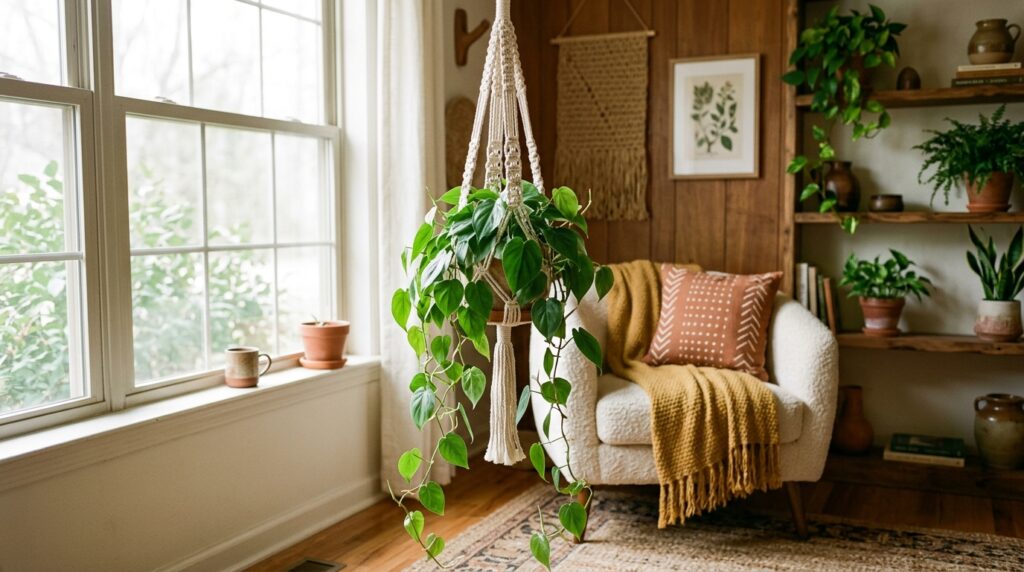
Often confused with pothos, the heartleaf philodendron is a separate species with softer, velvety leaves and a similarly vigorous trailing habit.
It adapts quickly to low light and grows faster than most plants on this list. It’s a great choice for bookshelves, window ledges (no direct sun needed), or trailing from high shelves.
- Light: Low to bright indirect
- Water: When the top inch of soil is dry
- Growth: Fast — can trail several feet in a season
- Air Quality: Studies published in HortScience confirm philodendrons are effective at removing VOCs from indoor air
9. Spider Plant (Chlorophytum comosum)
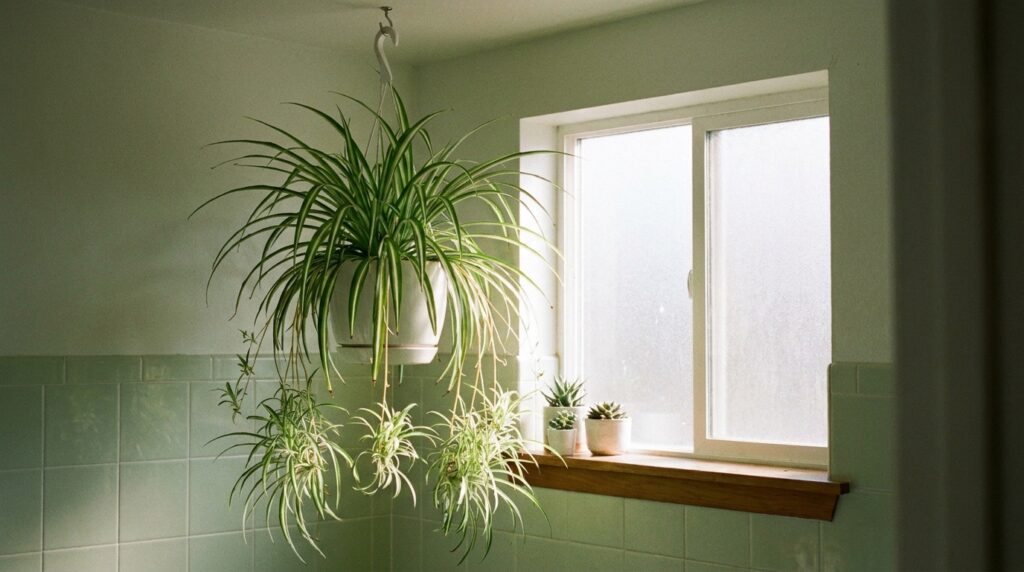
Spider plants are resilient, cheerful, and nearly impossible to kill — perfect for beginners who want something a little more interesting than a basic green.
They produce trailing runners with “spiderettes” (baby plants) that dangle from the mother plant, which is part of what makes them so charming. They’re comfortable in a wide range of light conditions, including low light.
- Light: Indirect to low; avoid direct sun
- Water: Once a week; tolerates some drought
- Propagation: The spiderettes root easily in water or soil
- Safe for Pets: Non-toxic to cats and dogs — a bonus compared to many houseplants
10. Parlor Palm (Chamaedorea elegans)
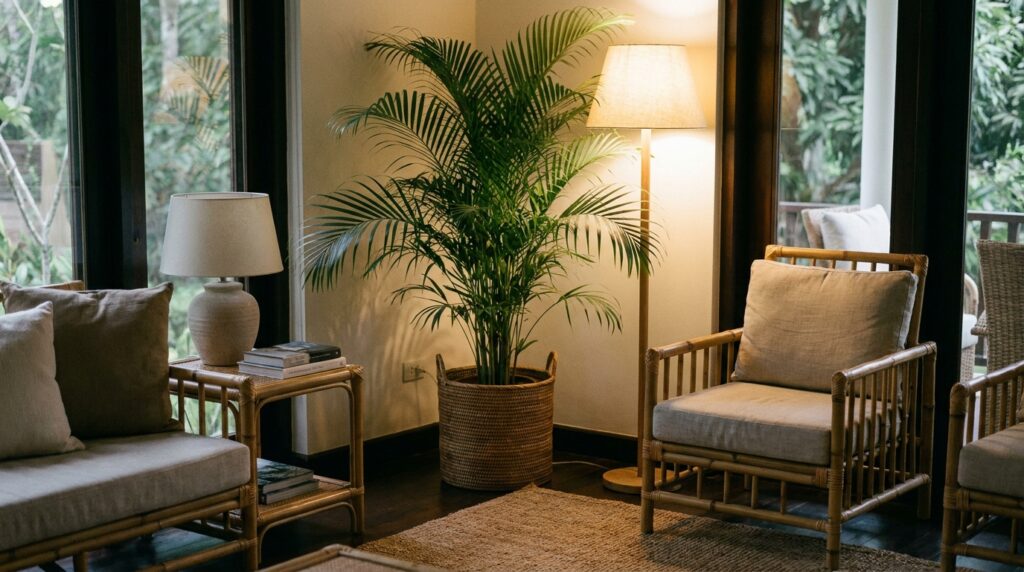
Most palms demand blazing sunlight. The parlor palm is the exception.
Native to the rainforest floor of Mexico and Guatemala, it evolved under dense canopy — meaning it genuinely prefers filtered, low light. It adds a tropical feel to dim rooms without the drama of high-maintenance tropical plants.
- Light: Low to medium indirect
- Water: When top inch of soil is dry; don’t overwater
- Height: Grows slowly to about 4 feet indoors
- Pet-Safe: Non-toxic to cats and dogs per the ASPCA
11. English Ivy (Hedera helix)
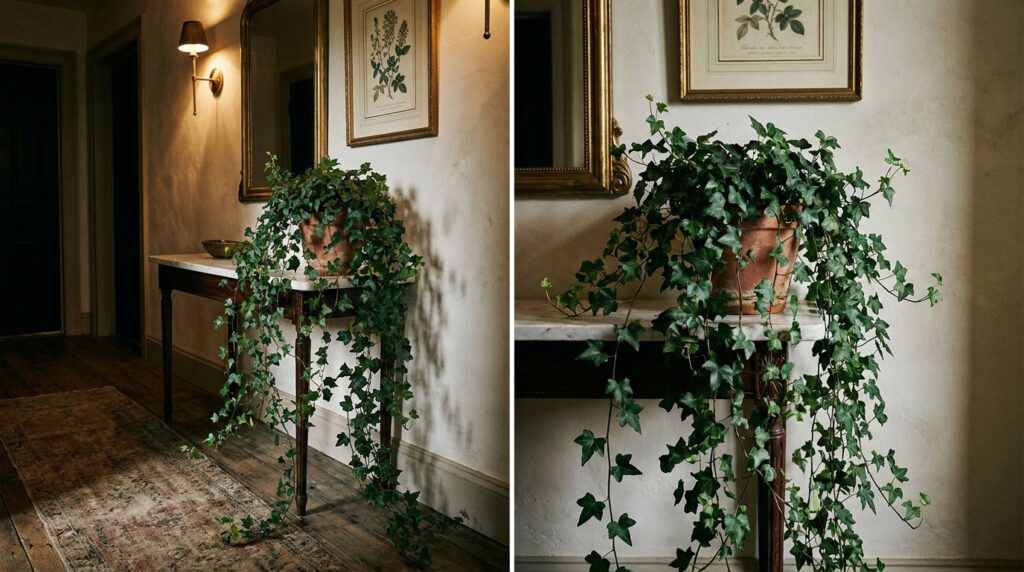
English ivy is a classic trailing vine that brings a cottage-garden feel to any space.
While it grows faster with more light, it adapts to low-light conditions and is especially gorgeous in hanging pots or trailing over a shelf edge. Keep it slightly cooler (it prefers temperatures under 70°F) for the best results.
- Light: Low to medium indirect light
- Water: When top half of soil is dry
- Humidity: Prefers moderate humidity; occasional misting helps
- Note: Mildly toxic to pets and children if ingested
12. Bird’s Nest Fern (Asplenium nidus)
Not all ferns demand high humidity and constant moisture — the bird’s nest fern is significantly more forgiving.
Its wavy, tongue-shaped fronds unfurl from a central rosette and give it a uniquely sculptural look. It’s more tolerant of low humidity and lower light than most ferns, though it still appreciates an occasional mist.
- Light: Low to medium indirect; no direct sun
- Water: Keep soil moist but not soggy
- Humidity: Moderate to high; great for bathrooms
- Growth: Slow; new fronds emerge from the center “nest”
13. Rubber Plant (Ficus elastica)
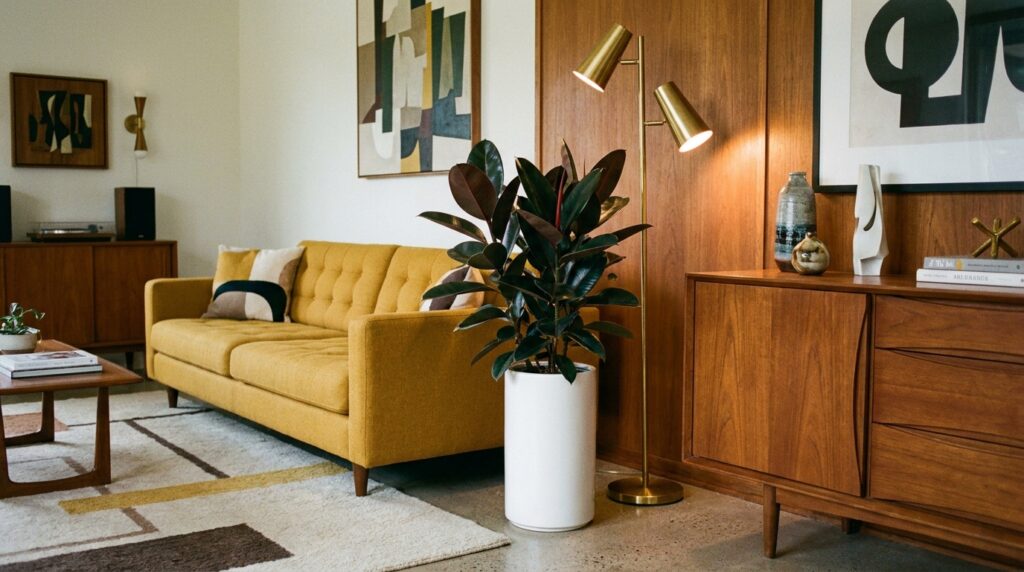
Rubber plants are bold and dramatic — with large, glossy leaves in deep green, burgundy, or variegated patterns. They tolerate lower light than their name suggests.
The solid green varieties handle the dimmest conditions; variegated forms need more light to maintain their patterns.
- Light: Medium to low indirect; darker varieties tolerate less
- Water: Every 1–2 weeks; reduce in winter
- Height: Can reach ceiling height over time indoors
- Note: Sap can irritate skin; wear gloves when pruning
14. Lucky Bamboo (Dracaena sanderiana)
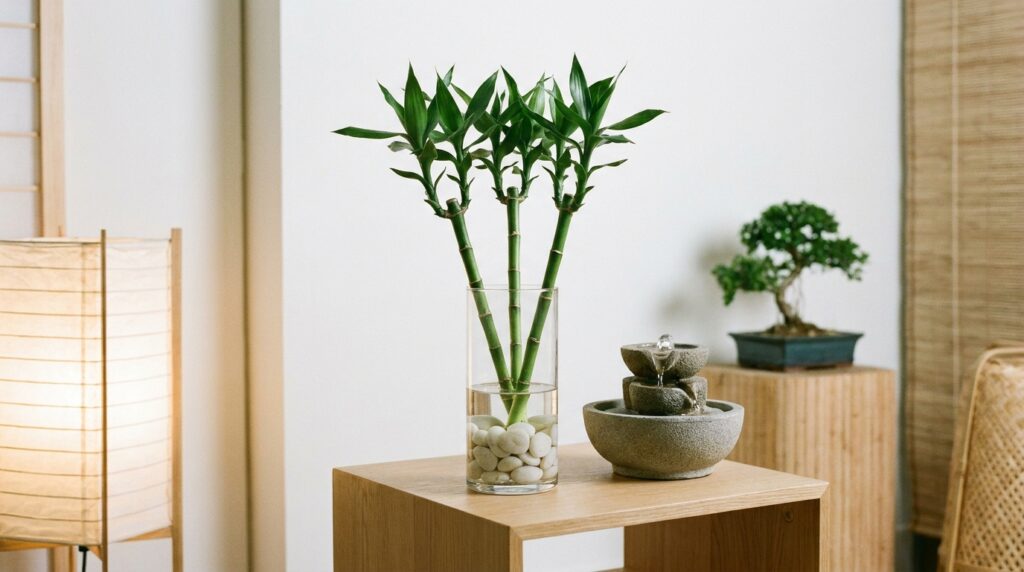
Technically not a bamboo at all — it’s a member of the Dracaena family — lucky bamboo is a popular choice for dim desks and shelves.
It can grow in water alone (with occasional liquid fertilizer) or in well-draining soil. Its architectural form and easy care make it a go-to for office environments.
- Light: Low to indirect light; direct sun burns the leaves
- Water: Keep roots submerged in clean water; refresh weekly
- Cultural Significance: Popular in feng shui as a symbol of good fortune
- Growth: Slow; minimal maintenance required
15. Monstera deliciosa (in Low Light)
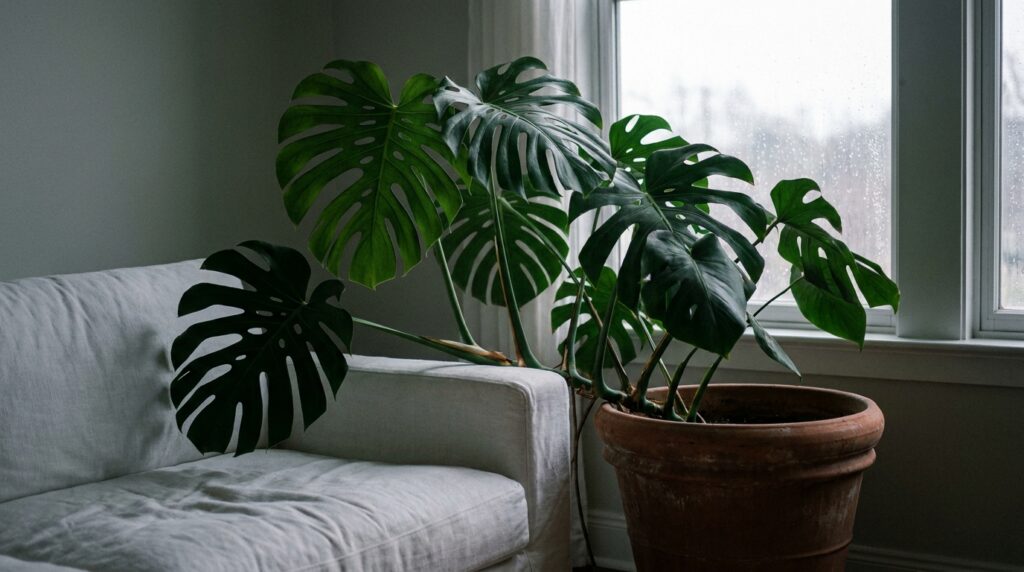
Yes, the famous Swiss cheese plant can handle lower light than many people think.
While it grows fastest with bright indirect light, a Monstera placed in a low-light corner will still grow — just more slowly and with fewer fenestrations (the signature holes in its leaves). It’s a great option if you want bold tropical vibes but only have dim light to offer.
- Light: Tolerates low to medium indirect; grows slower with less light
- Water: Every 1–2 weeks; let top 2 inches of soil dry
- Leaf Fenestrations: Develop more with brighter light; may be absent in very low light
- Support: Benefits from a moss pole for climbing
How to Care for Low Light Indoor Plants: Core Principles
Choosing the right plant is only half the equation. Here’s what keeps low light indoor plants healthy long-term.
Watering: The #1 Mistake to Avoid
In low light, plants photosynthesize more slowly. This means they use water more slowly too. Overwatering is the most common cause of death in low-light houseplants — not under-lighting.
Golden rule: When in doubt, don’t water. Check by pushing your finger 1–2 inches into the soil. If it’s moist, wait.
Most low-light plants prefer watering schedules like:
- Snake plant / ZZ plant: Every 2–6 weeks
- Pothos / Philodendron: Every 7–10 days
- Peace lily / Fern: Every 5–7 days
Maximizing Indirect Sunlight for Plants
Even low-light plants benefit from the right placement.
- North-facing windows provide consistent but dim indirect light — ideal for very tolerant species like ZZ plants and cast iron plants.
- East-facing windows deliver gentle morning sun — good for pothos, philodendrons, and Chinese evergreens.
- Reflected light from white walls or light-colored furniture can significantly increase ambient brightness.
- Keep leaves clean. Dust on leaves blocks light absorption. Wipe them monthly with a damp cloth.
A study from The Ohio State University Extension found that interior plants placed near reflective surfaces received up to 30% more usable light.
Should You Use Grow Lights?
If your space truly has no natural light — like a basement or interior office — grow lights are a legitimate solution.
Full-spectrum LED grow lights have become incredibly affordable and energy-efficient. Brands like Spider Farmer and Mars Hydro offer compact options suitable for indoor houseplant use.
For low-light plants, 12–14 hours of grow light per day at low intensity is sufficient. Use a timer to automate it.
Quick setup tip: Mount an LED grow light on a bookshelf above your plants. A clip-on grow light near a plant for 12 hours/day can mimic medium indirect light.
Fertilizing Low Light Plants
Low-light plants grow slowly. Fertilizing too often can cause fertilizer burn and a build-up of salts in the soil.
Rule of thumb: Fertilize low-light plants once a month during the growing season (spring and summer) and not at all in fall and winter. Use a balanced liquid fertilizer diluted to half strength.
The American Society for Horticultural Science recommends avoiding high-nitrogen fertilizers for low-light plants, as they encourage leafy growth the plant can’t sustain without adequate light.
Choosing the Right Pot and Soil
- Drainage is everything. Use pots with drainage holes. Root rot — caused by sitting water — kills more low-light plants than darkness.
- Well-draining soil: A standard potting mix with added perlite (1:4 ratio) works for most low-light plants.
- Pot sizing: Don’t over-pot. A pot that’s too large holds excess moisture and invites rot. Choose a pot only 1–2 inches larger than the root ball.
Low Light Plants for Specific Spaces
Different rooms have different needs. Here’s how to match your plant to your space.
Living Room
Best picks: Monstera, Dracaena, Snake Plant, Rubber Plant
Living rooms often have the largest windows but may have furniture blocking light. Tall architectural plants like snake plants and dracaenas work beautifully in corners, while a trailing pothos on a bookshelf adds lush softness.
Bathroom
Best picks: Peace Lily, Bird’s Nest Fern, Spider Plant, Heartleaf Philodendron
Bathrooms often have frosted windows or no windows at all — but they have one advantage: high humidity. Humidity-loving plants like ferns and peace lilies absolutely thrive in bathroom environments.
Office / Desk
Best picks: ZZ Plant, Lucky Bamboo, Chinese Evergreen, Pothos
For desks and workspaces with fluorescent lighting or small windows, you want low-maintenance plants that look polished. ZZ plants and Chinese evergreens are practically maintenance-free under office conditions.
Bedroom
Best picks: Snake Plant, Peace Lily, Lavender (if some light available), Pothos
Bedrooms typically have medium to low light and are used for rest. Snake plants are especially suitable because they produce oxygen at night. Peace lilies can bloom beautifully even in dim bedrooms.
Office Lobby or Hallway
Best picks: Cast Iron Plant, ZZ Plant, Chinese Evergreen
These are typically the darkest spaces in any home or building. Stick to the most tolerant species — cast iron plants and ZZ plants were practically built for these conditions.
Low Light Indoor Plants: Pros and Cons
Pros
- Versatile placement — fit into almost any room
- Low maintenance — slow growth means less pruning and repotting
- Beginner-friendly — more forgiving of watering mistakes
- Cost-effective — no grow lights needed in most homes
- Air-purifying — many are top performers in toxin removal
- Long-lived — many low-light plants can live for decades
Cons
- Slow growth — rewarding if patient, frustrating if not
- Limited flowering — most low-light plants are foliage-based, not flowering
- Variegation loss — some variegated varieties revert to solid green in low light
- Pest vulnerability — stagnant air in dark rooms can encourage pests like fungus gnats
- Not for all plant lovers — if you love dramatic tropical blooms, you’ll need supplemental light
Expert Tips for Thriving Low Light Plants
Here’s what experienced plant keepers know that beginners often don’t:
1. Rotate your plants. Rotate pots a quarter turn every month so all sides receive equal light exposure. This prevents lopsided growth.
2. Don’t be fooled by “tolerates low light.” “Tolerates” doesn’t mean “prefers.” Most plants on this list will grow more vigorously near a north or east-facing window than in a dark corner. Low light is survivable; medium indirect light is ideal.
3. Seasonal shifts matter. Light levels change dramatically with the seasons. A spot that’s perfect in summer may be too dim in winter. Move plants closer to windows from November to February.
4. Check roots, not leaves. Yellowing lower leaves in low light can be normal leaf cycling — not necessarily a distress signal. Check soil moisture and root health before panicking.
5. Clean your windows. According to University of Minnesota Extension, dirty windows can reduce light transmission by up to 40%. Clean windows = more light for your plants, for free.
6. Group plants together. Plants grouped together raise local humidity through transpiration. This benefits moisture-loving species like ferns and peace lilies.
Frequently Asked Questions
What is the best indoor plant for low light with no natural sunlight?
The ZZ plant and cast iron plant are your best bets if you have zero natural sunlight. Both tolerate artificial fluorescent lighting and can survive in hallways, offices, and windowless rooms. Add a simple LED grow light on a timer (12–14 hours/day) to help them thrive rather than just survive.
Can low light indoor plants survive in an office with only fluorescent lighting?
Yes. Many low light indoor plants adapt surprisingly well to office fluorescent lighting, which provides about 50–100 foot-candles — sufficient for species like pothos, Chinese evergreens, ZZ plants, and snake plants. Cornell University’s Department of Horticulture notes that broad-spectrum fluorescent tubes are reasonably effective for shade-tolerant houseplants.
How do I know if my plant is getting too little light?
Watch for these signs: yellowing or pale leaves, leggy growth (long stems between leaves), smaller-than-normal new leaves, leaning toward light sources, and very slow or no growth. These indicate your plant needs to move closer to a light source or benefit from a grow light.
Is indirect sunlight good enough for most houseplants?
Indirect sunlight for plants is excellent for a wide range of houseplant species — especially those on this list. Most tropical houseplants evolved under forest canopies where they received bright indirect light rather than direct sun. Direct sun through glass can actually burn many indoor plants, causing brown scorch marks on leaves.
How often should I water low light indoor plants?
Less often than you think. Because photosynthesis is slower in low light, plants use water more slowly. A general guide: water when the top 1–2 inches of soil are dry. For very drought-tolerant species like snake plants and ZZ plants, you can let the soil dry out completely between waterings. In winter, reduce watering frequency for all indoor plants.
Top 15 Low Light Plants at a Glance
| Plant | Light Tolerance | Watering | Pet-Safe | Skill Level |
|---|---|---|---|---|
| Snake Plant | Very Low | Every 2–6 wks | No | Beginner |
| Pothos | Low–Medium | Every 7–10 days | No | Beginner |
| ZZ Plant | Very Low | Every 2–3 wks | No | Beginner |
| Peace Lily | Low | Weekly | No | Beginner |
| Cast Iron Plant | Very Low | Every 1–2 wks | Yes | Beginner |
| Chinese Evergreen | Low–Medium | Every 1–2 wks | No | Beginner |
| Dracaena | Low–Medium | Every 1–2 wks | No | Beginner |
| Heartleaf Philodendron | Low–Medium | Every 7–10 days | No | Beginner |
| Spider Plant | Low–Medium | Weekly | Yes | Beginner |
| Parlor Palm | Low | When dry | Yes | Beginner |
| English Ivy | Low–Medium | When half-dry | No | Intermediate |
| Bird’s Nest Fern | Low | Keep moist | Yes | Intermediate |
| Rubber Plant | Low–Medium | Every 1–2 wks | No | Intermediate |
| Lucky Bamboo | Low | Water weekly | No | Beginner |
| Monstera | Low–Medium | Every 1–2 wks | No | Intermediate |
Final Thoughts:
There’s something genuinely satisfying about a houseplant growing in a space where you thought nothing could survive.
The truth is, your north-facing apartment, your dim home office, your basement laundry room — none of these have to be plant-free zones. With the right selection of indoor plants for low light, even the darkest corners can come alive.
Start simple. Pick one or two plants from this list — a pothos, a snake plant, a ZZ plant. Learn what they look like when they’re happy, understand their minimal watering needs, and resist the urge to over-love them with water and fertilizer. Low-light plants reward patience.
Then, once you’ve got the hang of it, add more. Build a shelfie. Create a lush hallway installation. Turn that dim bathroom corner into a spa-like retreat with a bird’s nest fern.
The light in your home may not be perfect. But your plants will be.
Ready to Start Your Low Light Plant Journey?
Browse reputable plant retailers like The Sill, Bloomscape, or your local nursery for high-quality, healthy low-light plants. Look for compact, well-rooted specimens — avoid leggy or yellowed plants on the shelf.
For ongoing care tips and plant community support, explore resources from the American Horticultural Society or join communities like r/houseplants on Reddit for real-world advice from thousands of indoor plant enthusiasts.
Your dimly lit space is waiting to be transformed. Start with one plant. You’ve got this.

