
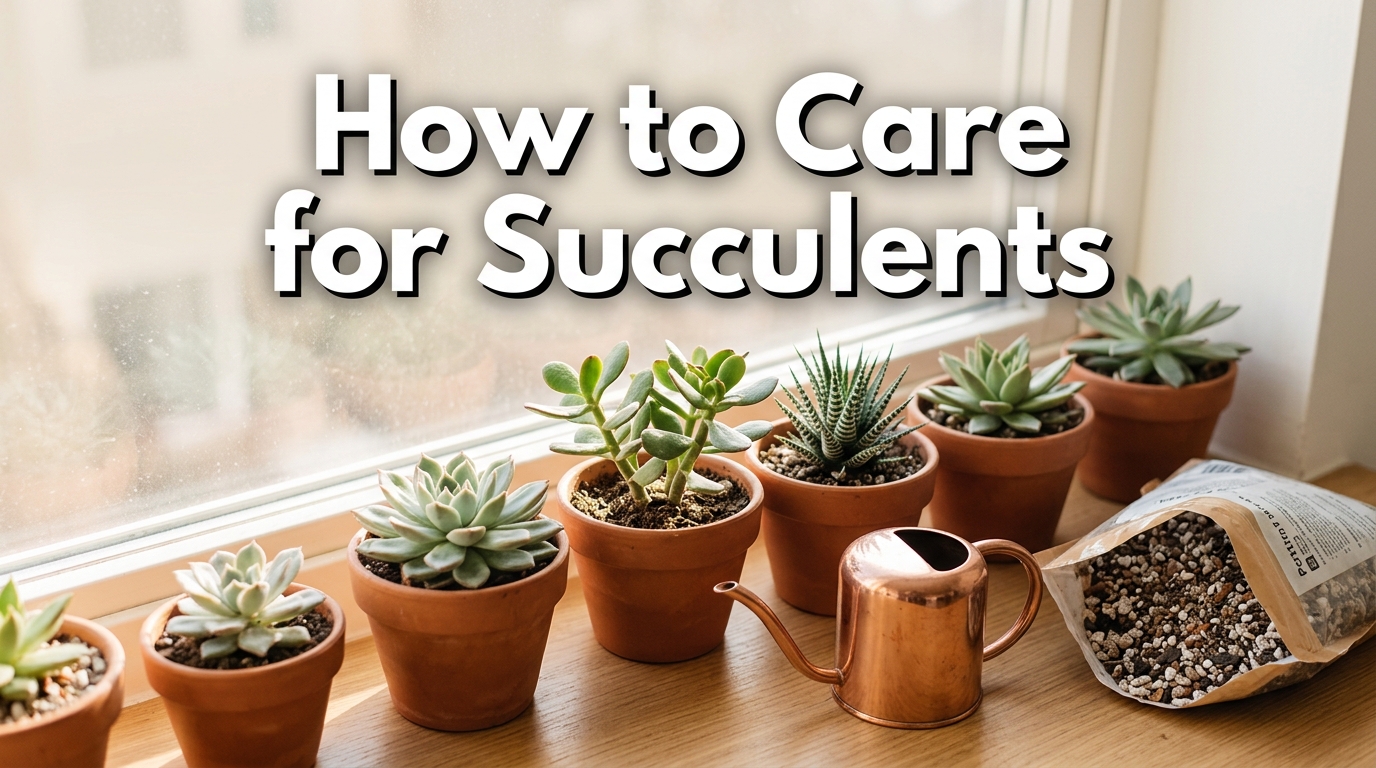
Succulents have a reputation for being nearly indestructible, which is exactly why so many of them end up mushy, yellow, or shriveled within a few months of coming home from the nursery. Learning how to care for succulents isn’t complicated, but it does mean unlearning a few habits that work fine for other houseplants and actively hurt these ones.
The short version: succulents store water in their leaves and stems, which means they need far less watering than people assume, plenty of bright light, and soil that drains almost as fast as you pour it. Get those three things right and nearly any succulent will settle in and start putting out new growth within weeks.
We walk through the real mechanics of succulent care — light, water, soil, containers, feeding, seasonal changes, and the mistakes that quietly kill more plants than any pest ever does.
What Actually Makes Succulents Different
Succulents belong to more than 60 plant families, including cacti, jade plants, aloe, and stonecrop varieties like sedum and echeveria. What ties them together isn’t appearance — it’s function. Their leaves, stems, or roots have evolved to hold onto water so the plant can survive stretches of drought in its native habitat.
That water-storage trait is the reason nearly every succulent care mistake traces back to overwatering. A cactus or jade plant sitting in damp soil isn’t drinking that extra moisture; it’s drowning in it, because the roots were never built to sit in wet conditions for long. Once you understand that single fact, most of the rest of succulent care starts to make sense on its own.
Light: The One Thing Succulents Never Compromise On
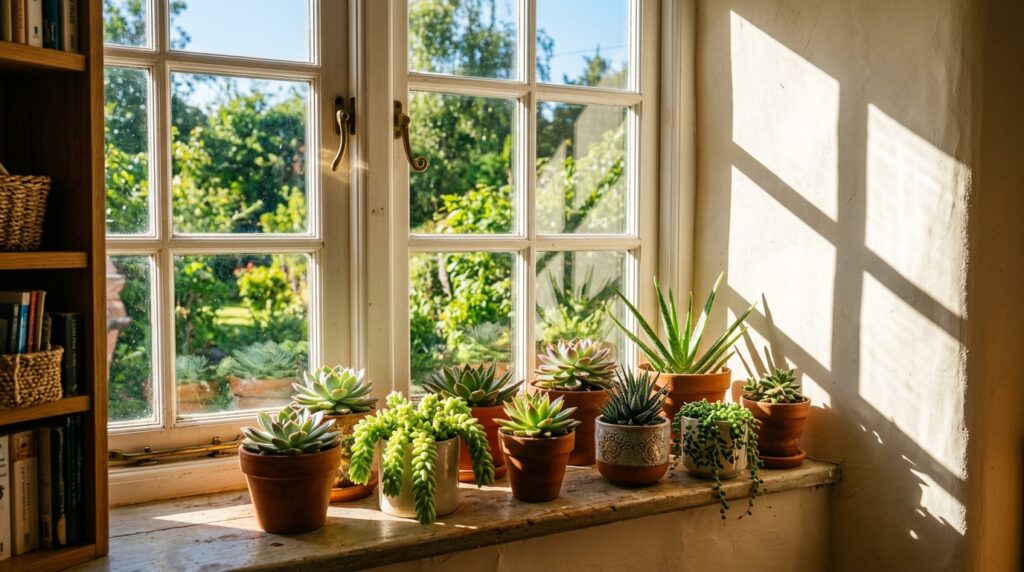
Succulents are sun-hungry plants, and light is usually where indoor growers go wrong before watering even enters the picture.
How to Care for Succulents Indoors When It Comes to Light
Most succulents need at least six hours of bright light a day, and a south- or west-facing window is usually the best spot in a home. If a succulent starts stretching upward with more space between leaves, or its color fades to a washed-out green, that’s called etiolation, and it’s a clear sign the plant isn’t getting enough light. Moving it closer to a window, or adding a grow light during darker months, usually fixes the problem within a few weeks.
Learning how to care for succulents inside a home with limited natural light often comes down to supplementing with an inexpensive LED grow light rather than forcing a plant to survive in a dim corner. It’s a small investment that solves the single biggest reason indoor succulents fail to thrive.
How to Care for Succulents Outdoors With Sunlight
Outdoors, most succulents tolerate full sun once they’re acclimated, though a few thin-leaved varieties like haworthia prefer partial shade during the hottest part of the day to avoid leaf scorch. If you’re transitioning a succulent from an indoor spot to an outdoor bed or patio, ease it into full sun gradually over one to two weeks rather than moving it straight from a shaded windowsill into midday sun, since moving houseplants outdoors too quickly can cause sunburned, bleached patches on the leaves.
A rule of thumb that works across most varieties: if the leaves are leaning, stretching, or losing their color, they want more light. If they’re developing brown or white scorch marks, they’re getting too much too fast.
Watering Succulents Without Overdoing It
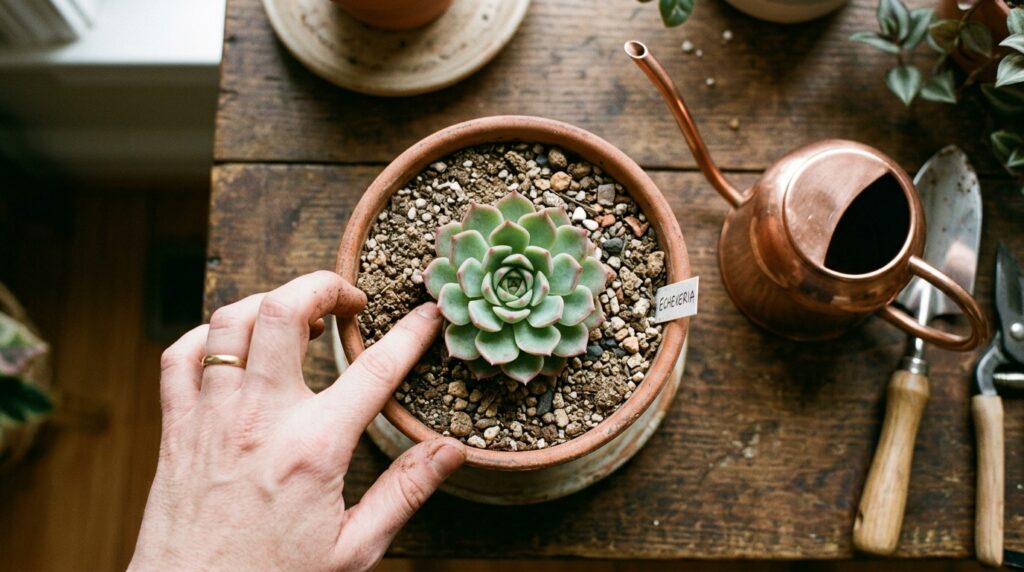
If there’s one habit that separates thriving succulents from mushy ones, it’s this: water thoroughly, then wait until the soil is completely dry before watering again.
That “soak and dry” approach mimics how succulents experience rainfall in the wild — infrequent but heavy downpours followed by long dry stretches. A good way to check readiness is to push a finger about an inch and a half into the soil. If it still feels cool or damp, wait a few more days.
A few practical watering guidelines:
- During active growth (spring and summer), most succulents want water roughly every one to two weeks, adjusted for pot size, material, and indoor humidity.
- Water until it runs freely from the drainage hole, then let the pot drain completely. Never let a succulent sit in a saucer of standing water.
- Terracotta and unglazed clay pots dry out faster than plastic or ceramic, so watering frequency should shift depending on the container.
- Signs of overwatering include translucent, mushy, or yellowing leaves and a soft, water-logged stem base.
- Signs of underwatering include wrinkled, puckered leaves that plump back up within a day or two after a good soak.
The most common mistake home gardeners make with succulents is overwatering rather than underwatering, so when in doubt, it’s almost always safer to wait another few days than to add more water.
Soil and Pots: Getting the Foundation Right
How to Care for Succulents in Pots
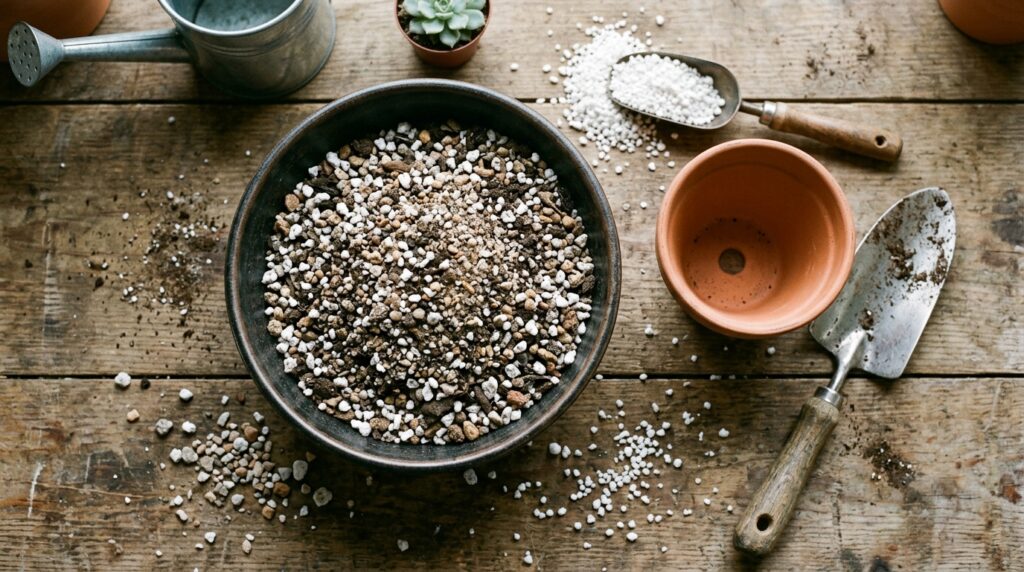
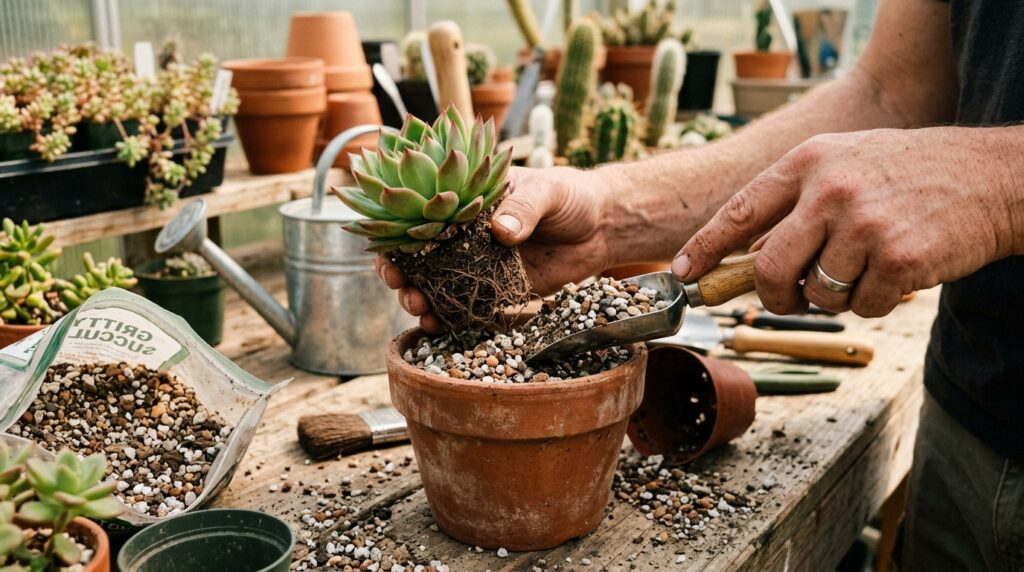
A succulent’s soil needs to drain almost as fast as water hits it. Regular potting soil holds far too much moisture and will eventually suffocate the roots. Instead, look for a cactus or succulent-specific mix, or make your own by combining regular potting soil with coarse sand, perlite, or pumice at roughly a one-to-one ratio.
Every pot should have a drainage hole. Without one, excess water has nowhere to go, and even careful watering habits won’t prevent root rot over time. If you love a decorative pot without drainage, use it as an outer cachepot and keep the succulent in a properly drained nursery pot inside it.
How to Care for Succulents in Small Pots
Small pots dry out faster than large ones, which is actually an advantage for succulents, since it naturally reduces the risk of soggy soil. That said, small pots also need more frequent attention because they hold so little soil volume. Check them every few days during warm months rather than assuming the same watering schedule that works for a larger container.
When a succulent starts to outgrow a small pot, roots pushing out of the drainage hole or circling the surface are the clearest signal it’s time to size up, typically by no more than one to two inches in diameter at a time.
How to Care for Succulents in a Terrarium
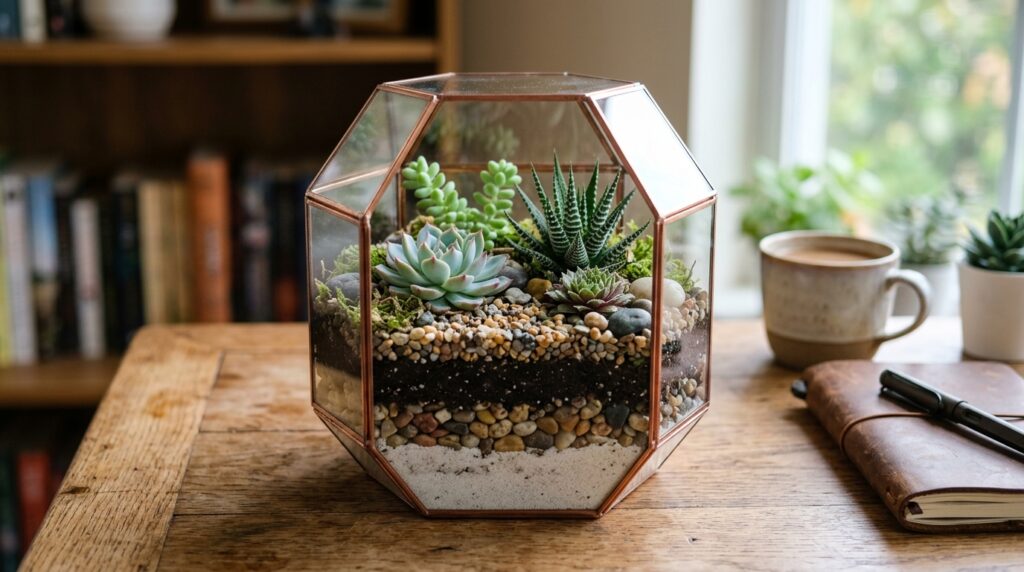
Terrariums look beautiful, but closed or shallow glass containers are one of the trickiest environments for succulent care because most of them lack drainage entirely. Glass containers without drainage holes trap moisture and reduce airflow around the roots, which is precisely what succulents are least equipped to handle.
If you want to keep succulents in a terrarium successfully:
- Choose an open-top or shallow glass container rather than a fully sealed one, since succulents (unlike tropical terrarium plants) need airflow, not humidity.
- Build a bottom layer of gravel or pumice beneath the soil to give excess water somewhere to collect away from the roots.
- Water sparingly, using a small spray bottle or turkey baster to control the exact amount going in.
- Keep the terrarium in bright, indirect light, since glass can intensify heat and scorch leaves in direct sun.
Terrarium succulents are more of a decorative, short-to-medium-term display than a permanent housing solution. Many growers rotate plants out every several months once they outgrow the space or start showing signs of stress from limited drainage.
Feeding Succulents the Right Way
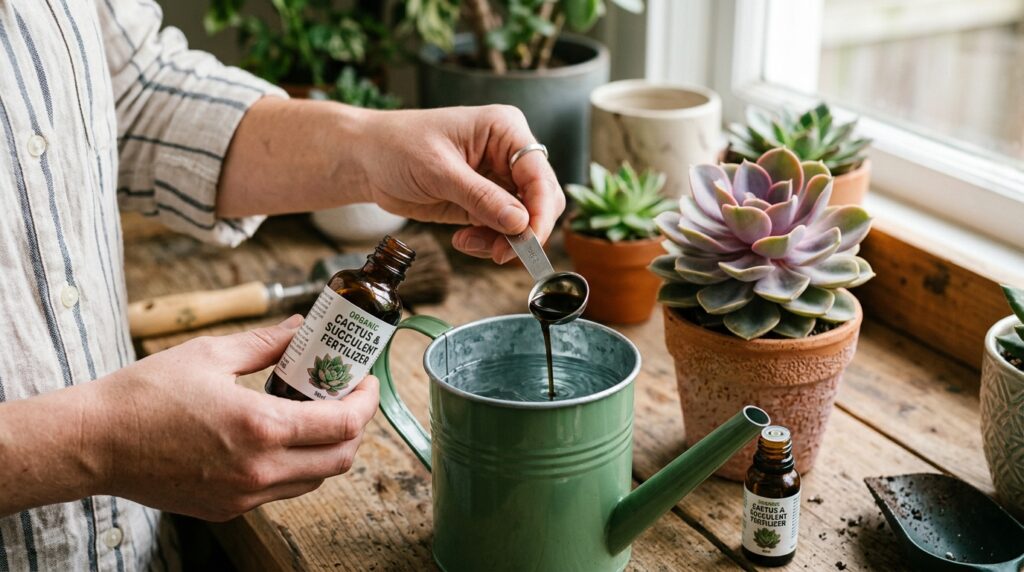
Succulents are lean feeders compared to most houseplants, and heavy fertilizing does more harm than good. A diluted, balanced liquid fertilizer applied once a month during the active growing season is typically enough, and most guidance suggests cutting the recommended dose down to around a quarter strength since succulents are especially sensitive to salt buildup in the soil. If you want the specifics on ratios, dilution, and how dosing fertilizer correctly changes for slow-growing plants like these, it’s worth reading through before your next feeding.
Skip fertilizer entirely during dormancy, and always feed after watering rather than on dry soil, since applying fertilizer to parched roots increases the risk of burning them.
How to Care for Succulents in Winter
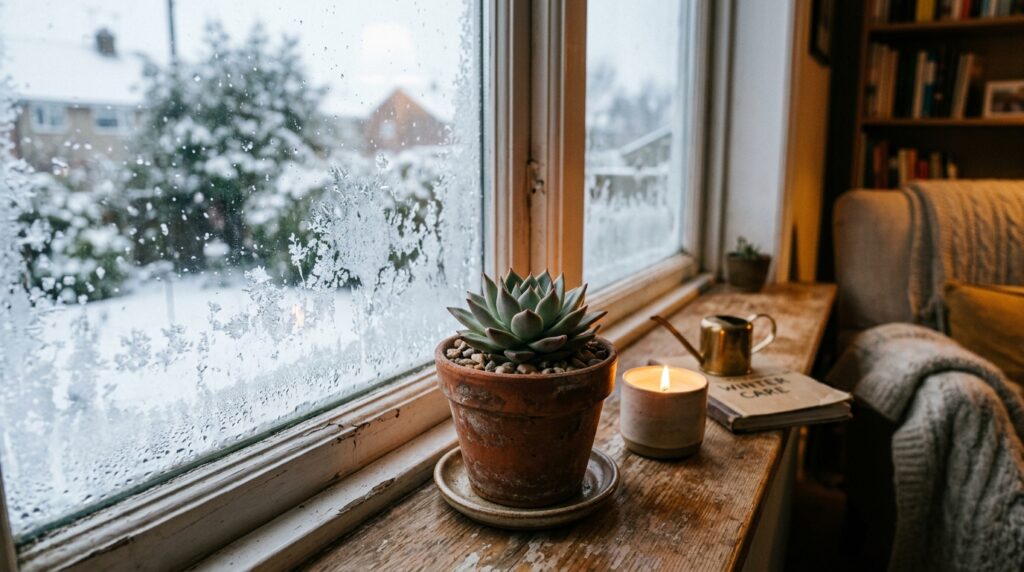
Most succulents slow down significantly once temperatures drop and daylight hours shorten. This dormant period changes nearly every part of their care routine.
| Care Factor | Growing Season | Winter Dormancy |
|---|---|---|
| Watering | Every 1–2 weeks | Every 3–4 weeks or less |
| Fertilizing | Monthly, diluted | Skip entirely |
| Light | 6+ hours, natural sun | Supplement with grow lights if days are short |
| Temperature | Room temperature | Avoid drafty windows and cold glass contact |
| Growth | Active, visible new leaves | Little to no visible growth |
The biggest risk in winter isn’t cold exposure for most indoor succulents — it’s overwatering a plant that has effectively gone dormant and doesn’t need much water at all. Cutting back watering frequency during these months is one of the simplest ways to prevent root rot from creeping in over winter.
For succulents kept outdoors in colder climates, check the specific cold hardiness of the variety before leaving it exposed to frost. Many popular succulents, including most echeveria and aloe types, aren’t frost-tolerant and need to come indoors or into a greenhouse before temperatures dip near freezing.
How to Care for Succulents Plants When Something Goes Wrong
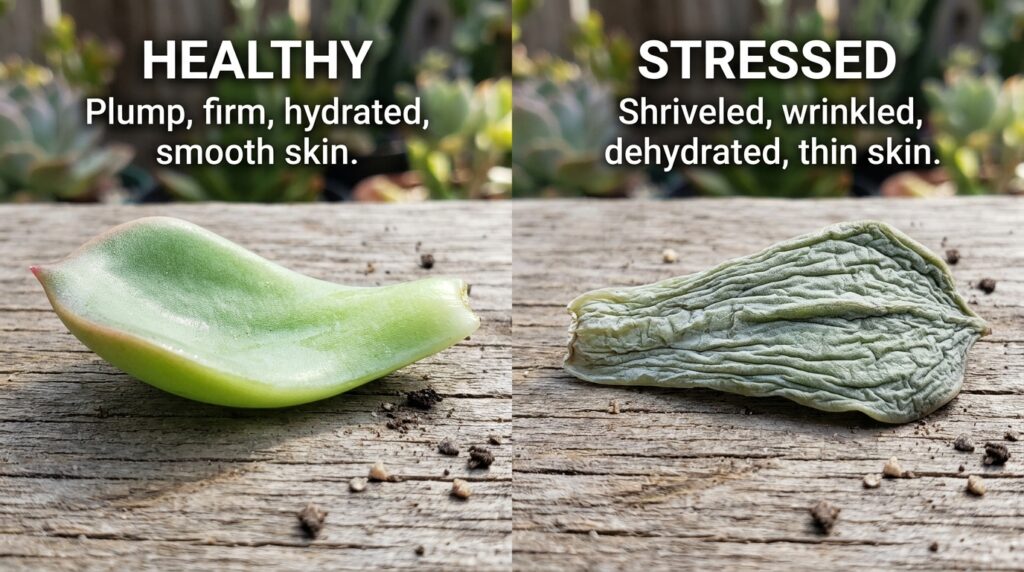
Even with good habits, succulents occasionally run into trouble. Here’s a quick troubleshooting reference for the most common issues:
- Mushy, translucent, or blackened leaves: Almost always overwatering or root rot. Stop watering immediately, check the roots, and trim away any black or mushy sections.
- Wrinkled or shriveled leaves that don’t plump up after watering: Could indicate root damage preventing water absorption, or a pot that’s drying out unusually fast.
- Stretching toward light with wide gaps between leaves: Insufficient light. Move to a brighter spot or add supplemental lighting.
- Brown, crispy patches on leaves: Sunburn, usually from moving a plant into direct sun too quickly.
- Small cottony white clusters near leaf joints: Likely mealybugs, treatable with isolation and diluted insecticidal soap applied directly to the pests.
Catching these signs early makes almost all of them reversible, which is part of why succulents have such a forgiving reputation despite being easy to overwater.
Expert Tips for Long-Term Succulent Care
- Rotate potted succulents every week or two so all sides get even light exposure and the plant grows symmetrically instead of leaning toward one window.
- Let cuttings and freshly divided succulents callus over for a day or two before planting, which reduces the risk of rot at the cut site.
- Use a well-draining, gritty mix even for varieties like jade plants, which are technically more forgiving than cacti but still suffer in soggy soil over time.
- Wipe dust off leaves occasionally with a soft, dry brush, since heavy dust buildup can reduce the amount of light reaching the plant.
- When choosing new varieties for a collection, mix and match different types of succulents with similar light and water needs so a single care routine works for the whole group.
Pros and Cons of Growing Succulents
| Pros | Cons |
|---|---|
| Low water requirements once established | Very sensitive to overwatering |
| Wide variety of shapes, colors, and sizes | Some varieties are toxic to pets if ingested |
| Easy to propagate from leaves or cuttings | Slow growers compared to many houseplants |
| Tolerant of neglect during travel or busy weeks | Require bright light that not every room provides |
| Long lifespan with minimal ongoing cost | Can rot quickly if drainage isn’t right |
Frequently Asked Questions
How often should I water my succulents?
It depends on the season, pot material, and indoor conditions, but a general starting point is every one to two weeks during active growth and far less during winter dormancy. Always check that the soil is completely dry before watering again rather than sticking to a fixed calendar schedule.
Can succulents survive without direct sunlight?
Some low-light-tolerant varieties can survive in bright, indirect light, but nearly all succulents need strong light to thrive rather than merely survive. A plant kept in a dim room will likely stretch, fade in color, and grow weaker over time even if it doesn’t die outright.
Why are the leaves on my succulent turning mushy?
Mushy, translucent leaves are the clearest sign of overwatering or early root rot. Stop watering, let the soil dry out completely, and check the roots for blackened or slimy sections that need to be trimmed away.
Do succulents need a specific type of pot?
They need a pot with a drainage hole and, ideally, a fast-draining gritty soil mix inside it. The material of the pot itself, whether terracotta, ceramic, or plastic, matters less than making sure excess water has somewhere to escape.
Is it normal for succulents to lose leaves?
Some natural leaf drop, especially from the bottom of the plant, is normal as it grows and matures. Rapid, widespread leaf loss combined with mushy texture or a soft stem usually points to overwatering rather than a normal growth cycle.
Bringing It All Together
Succulent care really comes down to a short list of habits: strong light, infrequent watering, fast-draining soil, and a little patience during the slower winter months. Once those basics are in place, most succulents are genuinely low-maintenance and will reward consistent care with steady growth for years.
Start with one or two plants, get comfortable reading their signals, and expand a collection from there. If a leaf wrinkles or a pot feels too damp, treat it as information rather than a failure. That’s really all succulent care is: paying attention and adjusting in small ways over time.

