
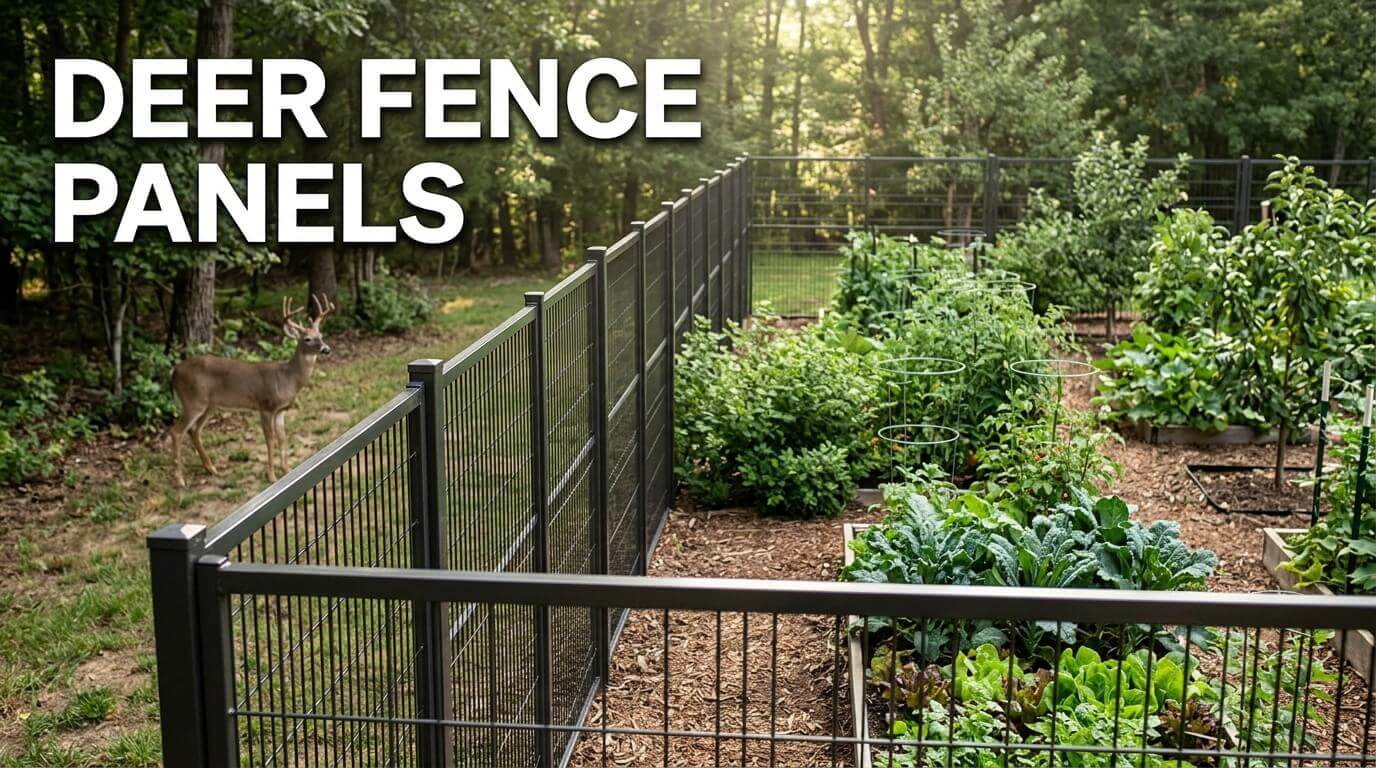
Deer can damage vegetable gardens, fruit trees, flower beds, and young landscaping in a surprisingly short time. Choosing the right deer fence panels helps create a physical barrier that protects plants while allowing you to maintain an attractive and functional outdoor space.
The best option depends on more than appearance. Fence height, material strength, ground clearance, property size, and the amount of deer activity in your area all affect how well a barrier performs. Understanding these factors before purchasing materials can help you avoid a fence that looks sturdy but fails to keep deer out.
What Are Deer Fence Panels?

Deer fence panels are sections of fencing or connected barrier materials designed to prevent deer from entering a protected area. Depending on the design, they may consist of welded wire, woven wire, metal framing, or strong synthetic mesh supported by posts.
Some systems use rigid, preassembled panels, while others use flexible fencing installed along a perimeter. Panels can be convenient for smaller enclosures, but larger gardens and properties may benefit from continuous fencing that follows the site’s shape.
The goal is to create a barrier that deer cannot easily jump over, push through, or pass beneath. A successful installation must account for the entire perimeter rather than just the visible height of the fence.
How Tall Should Deer Fence Panels Be?
Height is one of the most important considerations when choosing deer fencing. Deer are capable jumpers, and a conventional garden fence that works for smaller animals may offer little protection against them.
For substantial deer pressure, an upright fence around 8 feet tall is a common recommendation. The deer management guidance from university extension specialists explains that fencing around 8 to 10 feet can provide effective exclusion, although results depend on the design and conditions.
A lower fence may discourage deer in some situations, particularly around small enclosed spaces, but it is less dependable. Before settling on a height, consider the size of the protected area, local deer activity, and any neighborhood or municipal restrictions.
Why Fence Height Is Not the Only Factor
Even a tall fence can fail if the bottom edge leaves a gap or the structure has weak connections. Deer may exploit loose mesh, damaged panels, uneven ground, or an open gate instead of attempting to jump the main barrier.
Pay attention to these details:
- Keep the lower edge close to the ground.
- Secure panel joints and mesh connections.
- Account for slopes and changes in ground level.
- Make gates tall enough to match the surrounding fence.
- Inspect the enclosure for gaps after heavy rain, wind, or ground movement.
Which Deer Fence Panel Material Is Best?
Different materials offer different balances of strength, visibility, installation effort, and maintenance. The right choice depends on whether you are protecting a few plants, a backyard garden, or a larger property.
| Fence Material | Main Advantages | Potential Drawbacks | Best Suited For |
|---|---|---|---|
| Welded wire | Rigid structure and consistent openings | Heavier and more difficult to handle | Permanent garden enclosures |
| Woven wire | Flexible construction and strong perimeter protection | Requires suitable posts and tensioning | Larger gardens and orchards |
| Metal panels | Defined structure and a finished appearance | Panel height, weight, and cost can limit suitability | Smaller, structured enclosures |
| Synthetic mesh | Lightweight and often less visually intrusive | Can tear, sag, or deteriorate depending on quality | Temporary or lower-impact installations |
| Electric fencing | Can deter deer through conditioning | Requires electrical equipment and ongoing checks | Selected agricultural and garden applications |
No material is automatically best for every property. A sturdy, well-installed mesh system may be more practical for a seasonal garden, while a permanent wire enclosure may make more sense where deer repeatedly damage valuable trees or crops.
For longer-term protection, compare the complete installation rather than the panel price alone. Posts, braces, gates, fasteners, ground anchors, and repairs can substantially affect the overall cost.
How to Choose Deer Fence Panels for Your Garden
Before buying fencing, identify exactly what needs protection and how deer currently enter the property. A small vegetable bed may need a different solution from a large orchard, especially if the ground slopes or the enclosure includes several entrances.
Use the following steps to plan a suitable installation.
- Measure the Entire Perimeter. Measure each side of the proposed enclosure and add the lengths together. Include gate openings, corners, and any additional sections needed to connect the fence to existing structures.
- Choose the Appropriate Fence Height. For a permanent enclosure exposed to regular deer activity, consider an 8-foot barrier as a starting point. If the area has particularly persistent deer pressure, review the design with a fencing professional before choosing a shorter system.
- Check Panel Strength and Support. Examine the material, frame construction, connection points, and manufacturer’s installation specifications. A tall panel needs suitable support, especially in exposed locations where wind can place additional stress on posts and fixings.
- Plan Gates and Difficult Sections. Every entrance creates a potential weak point. Choose a gate that fits the fence height, closes securely, and leaves minimal space beneath it.
Walk the full boundary before installation to identify drainage channels, tree roots, steep slopes, and areas where the ground may shift. Planning around these features is easier than trying to correct gaps after the fence is installed.
How Much Do Deer Fence Panels Cost?
The total cost depends on the fence material, enclosure size, required height, site conditions, and installation method. Rigid metal panels may cost more than lightweight mesh, but the comparison should include the expected service life and maintenance requirements.
Rather than relying on a single price estimate, request an itemized quotation covering the complete project. This makes it easier to compare systems that may have very different material and labor requirements.
| Cost Factor | What to Check |
|---|---|
| Panels or mesh | Material grade, height, strength, and coverage |
| Posts and bracing | Post length, spacing, corner support, and soil conditions |
| Gates | Width, frame strength, hinges, and latches |
| Installation | Ground preparation, slope adjustments, and labor |
| Accessories | Fasteners, tensioning components, and ground anchors |
| Maintenance | Repairs, corrosion protection, and replacement parts |
DIY installation can reduce labor expenses when the terrain is manageable and the homeowner has suitable tools. However, heavy panels, difficult ground conditions, and tall fencing may justify professional installation.
For accurate budgeting, obtain quotes based on the same fence height, material specification, gate count, and perimeter length. This prevents an apparently cheaper option from becoming more expensive after missing components are added.
Should You Choose Permanent or Temporary Deer Fencing?
Permanent fencing is usually more suitable when deer repeatedly damage established landscaping, fruit trees, or productive gardens. Temporary systems can make sense when protecting seasonal crops or young plants that need time to become established.
The choice also depends on how much maintenance you can manage. Lightweight fencing may be easier to move, while a permanent metal or wire system can provide a more durable boundary when installed and maintained correctly.
When Is Electric Fencing Worth Considering?
Electric fencing works differently from a rigid physical barrier. It is intended to discourage animals through an unpleasant electrical stimulus rather than relying entirely on height and physical strength.
Proper installation and regular maintenance are essential. Vegetation touching the wires can interfere with performance, and the system must be designed, installed, and marked with applicable electrical and safety requirements in mind.
The university extension overview of electric and physical deer fencing provides further information on their respective advantages and limitations. For a typical residential garden, a non-electric enclosure may be the simpler choice.
How to Install Deer Fence Panels Properly
A good installation begins with a stable perimeter and carefully planned supports. Always follow the fence manufacturer’s instructions for post spacing, anchoring, panel connections, and any required bracing.
The following process provides a general planning framework. Exact installation methods will vary according to the material and ground conditions.
- Mark the boundary. Use stakes and string to outline the enclosure, including gates and corners. Check property boundaries before digging or placing permanent posts.
- Prepare the ground. Remove loose branches, unwanted vegetation, and obstructions that could prevent the fence from sitting close to the soil. Avoid disturbing drainage features unnecessarily.
- Install the posts. Position and secure posts according to the fencing system’s specifications. Corner and gate posts may require additional support because they experience different loads from intermediate posts.
- Attach the panels or mesh. Secure each section using suitable fasteners. Check alignment as you progress, and avoid leaving loose joints or openings between adjoining sections.
- Fit the gate. Make sure it opens and closes smoothly, aligns with the fence, and does not leave a substantial gap at the bottom or sides.
- Inspect the complete enclosure. Walk the boundary and check for loose fittings, low points, damaged mesh, and unsupported sections. Recheck the installation after the first significant storm.
Common Mistakes That Make Deer Fencing Less Effective
A fence can be made from good materials and still fail because of small installation problems. The most useful approach is to inspect the entire enclosure as a system rather than focusing only on the height of the panels.
Watch for these common mistakes:
- Choosing a fence that is too short: A low decorative panel may define a garden border without providing dependable deer exclusion.
- Leaving gaps underneath: Uneven terrain can create openings that are easy to overlook from a distance.
- Using weak supports: Tall fencing needs posts and connections suited to its height and exposure.
- Ignoring gates: A poorly fitted entrance can undermine an otherwise effective enclosure.
- Underestimating the perimeter: An incomplete material order can lead to makeshift joins or unfinished sections.
- Neglecting inspections: Broken fasteners, fallen branches, sagging mesh, and damaged posts can create new entry points.
The extension guidance on protecting fruit plantings from deer emphasizes the importance of a properly constructed fence that stays close to ground level. This is especially relevant when protecting fruit trees and other plants that can suffer repeated browsing damage.
How to Maintain Deer Fence Panels
Regular inspections help preserve the fence’s effectiveness and can prevent minor damage from becoming a larger repair. The ideal inspection frequency depends on the material, weather exposure, wildlife activity, and the amount of vegetation growing along the boundary.
Check the enclosure after storms, heavy snowfall where applicable, landscaping work, or any sign that deer have entered the protected area. Look for loose posts, corrosion, torn mesh, damaged panel joints, and changes in ground level.
For metal fencing, repair damaged protective coatings when the manufacturer’s instructions recommend it. For synthetic mesh, check for fraying, sagging, and deterioration, particularly near the ground where contact with vegetation and debris may occur.
Keep vegetation from obstructing gates or putting pressure on the fence. A tidy perimeter also makes gaps and damage easier to spot during routine checks.
For broader outdoor planning, consider how fencing fits into your overall landscape design. These corner lot landscaping ideas can help you think through boundaries, planting areas, privacy, and the appearance of your yard. If an older enclosure must be replaced, preparing a yard for landscaping can also help you plan the cleanup before installation begins.
How to Protect Plants When a Full Fence Is Not Practical
Fencing an entire property may not be necessary when the damage is limited to a few vulnerable plants. Individual cages around young trees and shrubs can provide targeted protection, while smaller enclosures may be sufficient for selected beds.
Choose a barrier that leaves enough room for plants to grow without rubbing against the mesh or wire. Inspect individual guards regularly so branches do not become trapped and trunks are not damaged as they expand.
Repellents may provide additional short-term protection, but they generally require repeat applications and can become less effective when deer are hungry. The guidance on protecting trees and shrubs from deer damage discusses physical barriers and other measures, including their limitations.
A combined approach can be useful when different parts of the landscape face different risks. For example, a permanent enclosure may protect a vegetable garden, while individual guards protect newly planted trees elsewhere in the yard.
Where to Find Suitable Deer Fence Panels
Before purchasing, compare fencing options based on the dimensions of your enclosure, required height, construction material, and installation needs. Product descriptions should clearly identify panel dimensions, material specifications, compatible posts, connection hardware, and any installation limitations.
You can compare deer fence panels and fencing options as part of your research. Check that the available system matches your site’s requirements rather than selecting an option based on appearance or advertised coverage alone.
For a larger property or a site with uneven terrain, consider obtaining professional advice before ordering materials. A well-planned system should account for corners, slopes, entrances, drainage, and long-term maintenance from the beginning.
Frequently Asked Questions
What are the best deer fence panels for a garden?
Welded wire, woven wire, rigid metal panels, and synthetic mesh can all be suitable, depending on the size of the garden and the level of deer activity. For frequent deer pressure, prioritize adequate height, reliable connections, and a secure ground-level edge over decorative features.
How tall should deer fence panels be to keep deer out?
An upright fence around 8 feet tall is a common starting point for effective deer exclusion. Some situations may require a different design, and no particular height guarantees success under every condition.
Can deer jump over a 6-foot fence?
Yes, deer can clear a 6-foot fence, so it should not be treated as a dependable barrier in areas with persistent deer activity. Lower or angled designs may discourage entry in certain circumstances, but their effectiveness depends on the layout and local conditions.
Are metal deer fence panels better than plastic mesh?
Metal fencing generally offers a more rigid physical structure, while synthetic mesh is lighter and can be less visually prominent. The better option depends on the required strength, expected service life, installation conditions, and maintenance budget.
Can I install deer fence panels myself?
DIY installation may be practical for a small enclosure with manageable ground conditions and suitable tools. Taller fences, heavy panels, difficult slopes, and complex gates may require professional assistance to achieve a stable and secure installation.
How do I stop deer from getting under a fence?
Keep the lower edge close to the ground and inspect dips, drainage channels, and uneven sections for openings. Secure the base using a method compatible with the fencing system, and recheck it after soil movement or severe weather.
Are temporary deer fences effective?
Temporary mesh or electric systems can help protect gardens and seasonal plantings when properly designed and maintained. Their performance varies with deer pressure, installation quality, and the specific system used, so they should not automatically be considered equivalent to a permanent exclusion fence.
Do deer fence panels need regular maintenance?
Yes. Inspect posts, fasteners, panel joints, gates, and ground-level gaps regularly, particularly after severe weather or landscaping work. Repair damage promptly so small openings do not become entry points.
Can I protect fruit trees without fencing the whole yard?
Yes. Individual wire guards or protective cages can help shield young trees and selected shrubs from browsing. They must be large enough to accommodate growth and secured so they do not damage trunks or branches.
What should I check before buying deer fencing?
Measure the complete perimeter and confirm the required height, material strength, post specifications, gate dimensions, and installation hardware. Also check local restrictions, property boundaries, and site conditions before purchasing permanent fencing.
Conclusion: Choose Deer Fence Panels That Fit Your Needs
The right deer fence panels can help protect a garden, orchard, or landscaped yard without creating unnecessary maintenance work. Focus on suitable height, durable materials, secure gates, reliable ground coverage, and support posts that match the site conditions.
Before committing to a system, compare the full installation requirements and check local rules for fence height and placement. The technical guidance on deer management and fencing options can also help you understand alternative designs and their limitations.
Start by measuring the area you need to protect, then compare materials and installation options against your priorities. With careful planning and regular inspections, you can choose a fencing solution that offers practical protection while keeping your outdoor space attractive and usable.

