
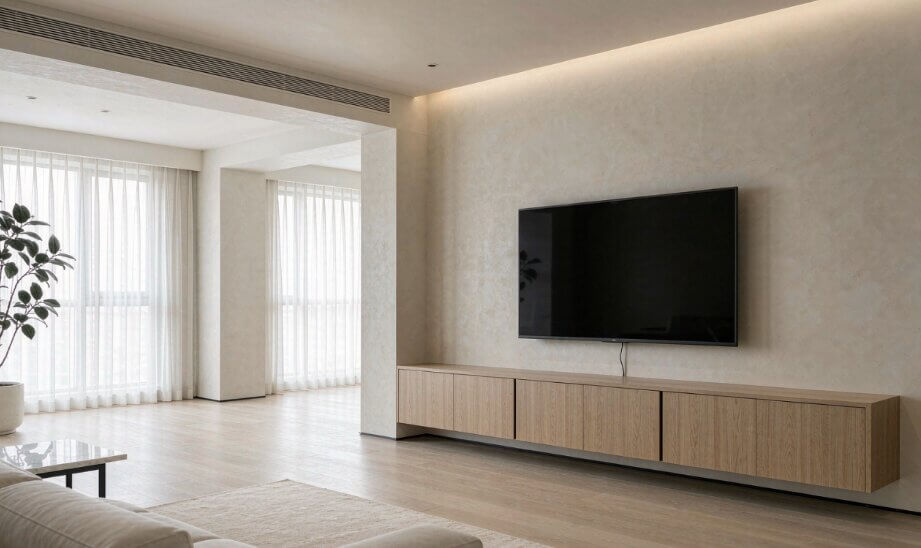
A television should anchor the room, not bury it under a tangle of boxes, and wall-mounted tv stands turn that idea into reality by lifting the screen and tucking the gear into a slim frame. The result is a wall that reads as calm instead of crowded.
I have helped friends reconsider their entire lounge after one visit to a home with a clean mounted setup. The change is immediate and a little addictive. You stop seeing the equipment and start seeing the space the equipment used to block. A wall mounted stand does the heavy lifting without a bulky cabinet underneath.
Clear the Floor for Good
A mounted television with a slim stand finally frees the floor that a bulky cabinet used to claim in the room. I have watched small lounges double in perceived size the moment the old unit left and the wall took the load instead. The space below becomes room to breathe, to walk, and to let the dog settle without bumping a hard edge on the way. Choosing the right furniture arrangement can also help you fix common living room layout mistakes and make better use of the available space. This matters most in apartments where the living area pulls double duty as a passage to other rooms through the day. Clear floors also mean safer nights when the lights are low and someone crosses the room half awake. The gear stays put, the screen stays high, and the clutter that once gathered around the base simply has no home anymore. You gain a cleaner line from wall to rug that the eye can travel without snagging on a box.
Choose the Right Mount Type
Not every mount suits every screen or every wall, and picking wrong turns a clean idea into a wobble you notice daily. Fixed mounts sit flat and tidy, best when you watch from one spot and never angle the view in the room. Tilting mounts drop the glare when the set sits high above the sofa and the window fights the picture. Full motion arms let you pull the screen out and swing it toward the kitchen while you cook, a small luxury in open plans that flow together. I weigh the room first, then match the hardware to the way the household actually moves through the space. Check the weight rating against your model with a real margin, because a cheap arm rated to the limit is a risk you feel every time the kids brush past. The wall type decides the fix, studs for timber and proper anchors for masonry that holds firm.
Hide the Wires Properly
Wires are the one thing that ruins an otherwise clean mounted setup, and hiding them is easier than most people fear at the start. I run the cables through the wall where building rules allow, dropping them to a low plate that meets the floor with a calm finish. In rentals, a slim raceway painted to match the wall does the job without a permanent cut through the plaster. The aim is one unbroken line from screen to socket that the eye never has to follow or question in the room. Label each cable as you feed it, so a future device swap takes minutes rather than a full afternoon of guessing. Keep the power separate from the signal where you can, because interference is a nuisance that good routing avoids with a little care. A tidy wire path is what separates a styled wall from a hacked one that betrays the effort you put in.
Balance the Screen Height
Height decides comfort more than people admit, and a screen mounted too high becomes a neck ache by the end of a film. I set the center at roughly eye level when seated, so the view stays relaxed through a long session in the room. Above a fireplace the set often rides too high, and a tilting mount plus a lower seating plan saves the day there. Measure from the sofa, not from the floor, because the seated eye is the one that watches the picture for hours on end. A stand with a shelf lets the gear sit just below the screen at a height that feels natural to the body. Too low and you strain downward, too high and you crane upward, so the middle is the sweet spot worth finding. Mark the spot with tape and sit down before you drill a single hole in the wall.
Build a Focal Point Around It
A mounted screen naturally becomes the anchor of the room, and the decor around it should support that role with intention rather than noise. I keep the wall above the set calm, a single piece of art or a restrained shelf that does not fight the picture for attention. Side lighting in a warm tone frames the area and softens the black glass when the screen is off for the night. A low console or a couple of plants below grounds the composition so the eye rests instead of roams the room. The trick is balance, enough around the TV to make it feel placed, never so much that the wall reads as busy or cluttered. A gallery wall behind a mounted set usually fails, because the movement competes with the viewing and tires the eye by evening. Choose restraint and the screen reads as the hero of a composed space you are proud to show.
Pair With Minimal Storage
A wall mounted setup removes the old cabinet, and with it the storage you may have relied on for the room. I replace it with a slim sideboard or a pair of baskets that hold the essentials without rebuilding the bulk you just cleared away. The remote, the games, and the manuals find a home within reach but out of sight when guests arrive for the night. Open shelving in small doses works too, as long as you resist filling every slot with objects that clutter the eye and the space. The point is to keep the floor lean while the function stays close at hand for daily use. A floating drawer under the screen can hide the odds and ends that used to live in the cabinet below it. Less furniture means less to clean and less to bump into during a dim evening at home.
Why the Clean Look Lasts
The appeal of a mounted setup is not a fad, it is the simple logic of putting the screen where it belongs and clearing the rest away for good. I have revisited homes a year after the install and the owners still love the openness the change brought to their daily life. Trends in stands come and go, but a clean wall ages better than any fashionable cabinet that dates the room within a season. The look also adapts, swap a frame or a finish and the wall stays current without a full overhaul of the furniture. Guests read the space as considered, and you stop apologizing for the tangle that used to live behind the old box. Maintenance stays light, with no cabinet to vacuum around or dust behind on a schedule. The clean look lasts because it rests on good sense rather than a passing style you saw online.
Mount the screen and the room changes in a way that survives the first thrill of the new setup. The floor clears, the wires vanish, and the wall becomes a calm focal point rather than a tangle you apologize for.

