
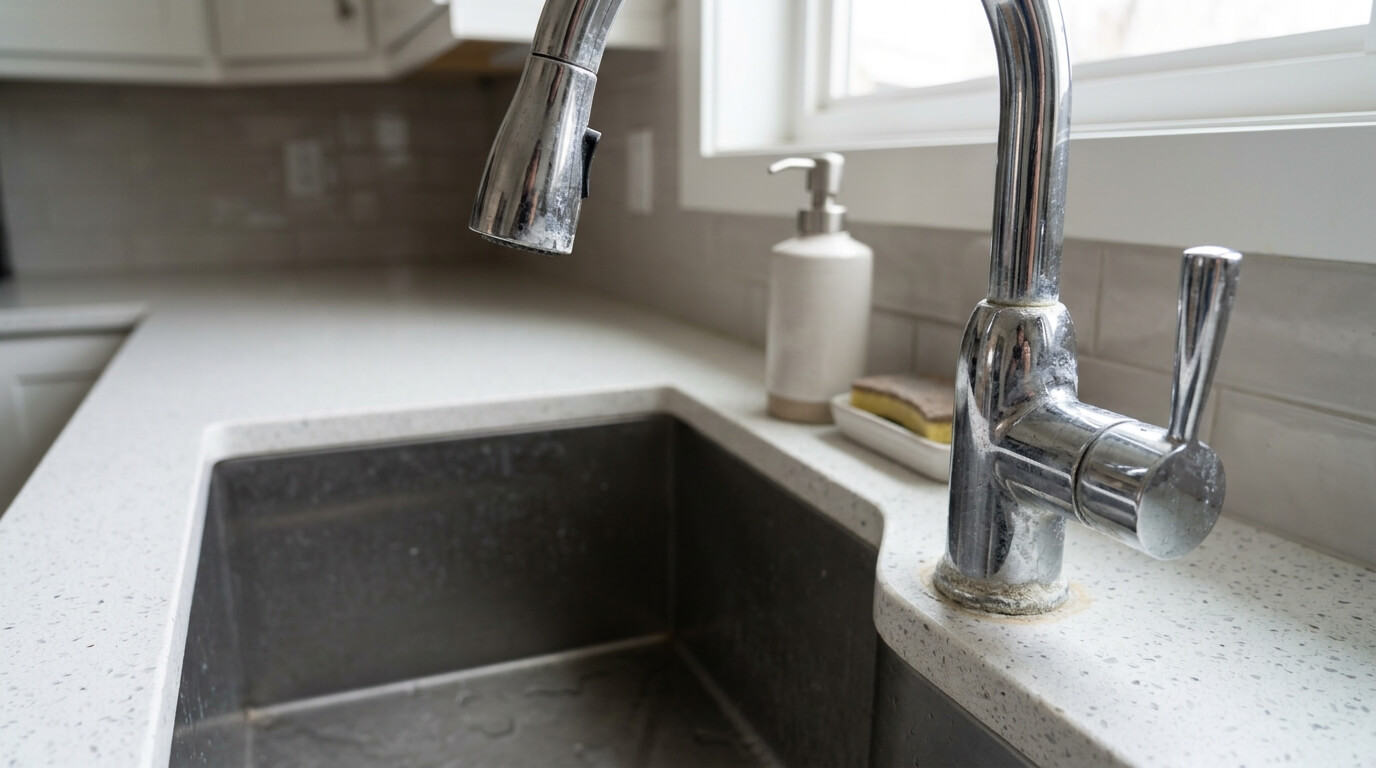
Hard water plumbing damage can develop gradually, affecting pipes, fixtures and household appliances. According to the U.S. Geological Survey, hard water is common across the United States, with approximately 85 percent of homes receiving it. Because calcium and magnesium are regulated as secondary drinking water contaminants rather than primary health-based standards, water suppliers are not generally required to soften water. As a result, many households experience mineral buildup that can affect plumbing performance and increase maintenance needs.
Recognizing the Early Warning Signs
Before pipes become restricted or appliances lose efficiency, hard water often leaves visible clues. White deposits may collect around bathroom faucets, showerheads and sink drains. Glassware may emerge from the dishwasher with cloudy spots, while mineral residue can accumulate on fixtures. Some people also notice dry skin or hair after showering, although these symptoms can have several causes.
Recognizing these signs early can help prevent more serious problems. Searching for water softener dealers near me can help homeowners find professionals who offer water testing and treatment advice. Testing establishes the water’s mineral content and helps determine whether treatment is appropriate.
The Mechanics of Mineral Accumulation
Water hardness is measured in milligrams per liter (mg/L) or grains per gallon (GPG). The U.S. Geological Survey classifies water above 60 mg/L as moderately hard and above 120 mg/L as hard. Although calcium and magnesium are not generally health hazards at typical drinking-water concentrations, they can contribute to scale inside plumbing systems.
Heat encourages mineral deposits to form, particularly inside water heaters. As water is heated, dissolved minerals can precipitate and accumulate on internal surfaces, valves and heating components. This residue, known as limescale, may gradually restrict water flow and reduce heating efficiency. Homeowners may notice these effects as reduced hot-water pressure or longer heating times. Regular water heater maintenance can help identify sediment buildup and other performance issues.
The True Cost to Your Appliances
Unchecked mineral buildup can reduce appliance efficiency and increase operating costs. Scale inside water heaters can interfere with heat transfer, forcing equipment to use more energy to heat water. The actual impact depends on water hardness, appliance design, usage and maintenance.
Mineral deposits can also contribute to premature wear when maintenance is neglected. Tank water heaters may accumulate sediment, while tankless models can develop scale inside their heat exchangers. Regular servicing and appropriate descaling can help maintain performance and reduce the risk of avoidable breakdowns.
Essential Steps for Protecting Your Plumbing
A proactive maintenance routine can help limit mineral-related damage and extend the service life of plumbing equipment.
- Test your water supply: Use a suitable testing kit or consult a professional to measure water hardness.
- Maintain your water heater: Follow the manufacturer’s instructions for flushing, inspection and descaling.
- Clean fixtures with vinegar: Where the manufacturer permits, soak removable showerheads and faucet aerators in white vinegar to help dissolve mineral deposits.
- Consider water treatment: A suitable water softener can reduce calcium and magnesium levels and help limit scale formation.
Hard water can contribute to restricted pipes and costly plumbing repairs over time. If you notice persistent pressure changes or signs of deterioration, arrange a professional assessment. Guidance on when to repipe an older home can help homeowners understand when pipe condition may require further investigation.
Testing water hardness, maintaining appliances and choosing suitable treatment methods can help protect plumbing systems, improve efficiency and reduce avoidable repair costs.

