

When should you repipe an older home? Older homes, while rich in character, often come with plumbing systems that have surpassed their intended lifespan. Recognizing the signs of an aging system is the first step toward preventing costly damage and ensuring a healthy living environment. Many homes built before the 1980s, for instance, might still contain galvanized steel pipes, which are notorious for corroding from the inside out. This internal rust buildup restricts water flow, leading to low pressure and, eventually, complete blockages. Similarly, homes constructed between the late 1970s and mid-1990s might have polybutylene pipes, a material now widely recognized as failure-prone due to its tendency to degrade when exposed to common disinfectants in municipal water supplies, resulting in sudden, catastrophic leaks. Even older copper pipes, while generally durable, can develop issues like pinhole leaks and corrosion over decades of use, particularly in areas with aggressive water chemistry.
Common indicators that your home’s plumbing needs attention include water discoloration (brown, yellow, or rusty water), persistently low pressure throughout the house, and frequent pinhole leaks or drips. A metallic taste or odor in your water can also signal internal pipe corrosion. Addressing these plumbing problems proactively can save homeowners from significant inconvenience and expense down the line.
Evaluating Pipe Deterioration vs Spot Repairs
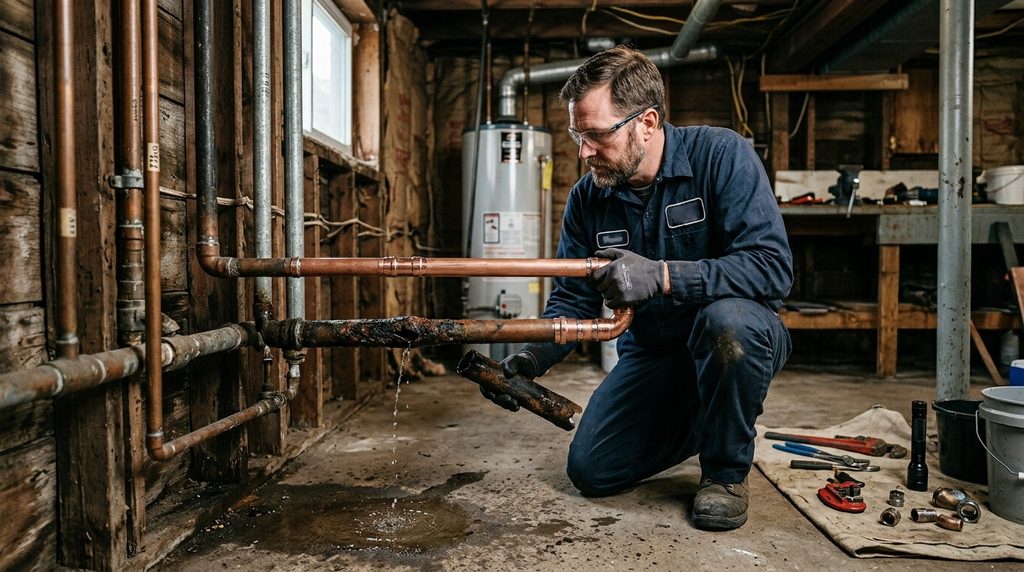
When faced with plumbing problems, homeowners often wonder whether a small repair will suffice or if a full repipe is necessary. Spot repairs, such as patching a single leak or replacing a short section of pipe, can be a temporary solution for isolated issues, while emergency plumbing services may be necessary when a serious leak requires immediate attention. However, if problems like low water pressure, discolored water, or recurring leaks are systemic—affecting multiple fixtures or appearing in different locations—it often indicates widespread pipe deterioration.
Considering the typical pipe lifespan, galvanized steel pipes generally last 20 to 50 years, while polybutylene pipes are considered failure-prone and often require replacement much sooner. Even copper pipes, with an expected lifespan of 50 years or more, can reach a point where widespread corrosion makes spot repairs inefficient and uneconomical. Attempting to fix individual leaks in a system with advanced corrosion can be like playing “whack-a-mole,” with new leaks appearing shortly after old ones are repaired. Furthermore, hidden leaks within walls or under floors can go undetected for extended periods, leading to significant structural damage and considerable water waste, with the average household losing over 10,000 gallons of water annually to leaks. A comprehensive assessment by a qualified plumbing professional can help determine if your system has reached the point where a whole-house repipe is the most prudent and cost-effective long-term solution.
Water Quality Impact on Pipe Longevity
The chemical composition of your local water supply plays a critical role in the longevity and performance of your home’s plumbing system. Hard water, characterized by high mineral content (calcium and magnesium), can lead to mineral buildup inside pipes, reducing their internal diameter and restricting water flow. This “scaling” can be particularly problematic in older pipes, exacerbating low pressure issues. Conversely, acidic pH water (soft water) can be corrosive, slowly eating away at metallic pipes like copper and galvanized steel. This corrosion can lead to pinhole leaks, premature pipe failure, and the leaching of metals into your drinking water, affecting taste and potentially health.
While copper is known for its bacteriostatic properties, meaning it inhibits bacterial growth, it can still corrode and leach metallic flavors in acidic conditions. PEX, on the other hand, is highly corrosion-resistant and does not add minerals to the water, though it lacks the natural antimicrobial properties of copper. Understanding your local water chemistry through professional water testing is crucial before selecting a repiping material, as it can significantly influence the long-term performance and maintenance requirements of your new plumbing system.
Core Strategies for Maintaining Residential Plumbing and Water Heaters
Beyond addressing aging pipes, proactive routine home maintenance of your entire plumbing and water heating system is essential for optimal performance and longevity. Regular attention to your water heater, in particular, can prevent common issues and extend its service life. Strategies include a periodic sediment flush to remove mineral deposits that accumulate at the bottom of the tank, which can reduce efficiency and lead to premature failure. Checking and testing the pressure relief valve (TPRV) ensures it operates correctly, preventing dangerous pressure buildup. Additionally, considering a thermal expansion tank can protect your system from excess pressure caused by water heating. Annual maintenance, including inspection of connections, valves, and the anode rod (which sacrificialy corrodes to protect the tank lining), can identify potential problems before they escalate. Proper temperature regulation also plays a role, as excessively hot water can accelerate corrosion and scale formation.
Routine Checks for Residential Plumbing and Water Heaters
Implementing a routine maintenance schedule for your plumbing and water heater can save you from unexpected breakdowns and costly repairs. For water heaters, annually inspecting and potentially replacing the anode rod is vital for tank protection. Testing the TPR valve (Temperature and Pressure Relief valve) ensures it’s not seized and can release pressure if necessary. For the broader plumbing system, regular plumbing maintenance and checking for leaks around fixture supply lines, under sinks, and around toilets can catch small drips before they become major problems. Familiarize yourself with the location of your main shutoff valves—both for individual fixtures and the entire house—so you can quickly stop water flow in an emergency. Simple practices like not overtightening faucet handles and addressing running toilets promptly contribute to the overall health of your plumbing infrastructure.
Upgrading Residential Plumbing and Water Heaters in Older Homes
Upgrading the plumbing and water heating systems in an older home presents an opportunity to enhance efficiency, reliability, and comfort. When considering a repipe, homeowners might explore hybrid systems, which cleverly combine different pipe materials to leverage their unique strengths. For example, copper might be used for visible runs or high-heat areas near a water heater, while PEX is utilized for long, hidden runs due to its flexibility and ease of installation. Using appropriate transition fittings is key to safely connecting different pipe materials.
Beyond pipes, upgrading your water heater can significantly improve efficiency. A tankless conversion, for instance, provides on-demand hot water, eliminating standby heat loss and potentially reducing energy consumption. Modern water heaters also come with improved efficiency standards that can offer long-term savings. For homeowners looking to improve their home’s infrastructure, exploring these options can lead to a more reliable, efficient, and comfortable living space. For those seeking comprehensive plumbing services, including expert advice on repiping materials and water heater upgrades, it’s always wise to consult with experienced professionals who can tailor solutions to your specific needs and local building codes.
Best Pipe Materials for Whole-House Repiping: Copper vs PEX vs CPVC
Choosing the best pipe material for a whole-house repipe is a critical decision that impacts your home’s long-term plumbing performance, water quality, and overall value. The primary contenders in today’s market are Cross-Linked Polyethylene (PEX), copper, and CPVC (Chlorinated Polyvinyl Chloride). Each material offers distinct advantages and disadvantages concerning installation cost, durability, freeze resistance, and compatibility with local building codes. Understanding these differences is key to making an informed choice for your older home.
Here’s a general comparison of these materials:
| Feature | PEX (Cross-Linked Polyethylene) | Copper | CPVC (Chlorinated Polyvinyl Chloride) |
|---|---|---|---|
| Durability | Very durable, flexible, resistant to corrosion | Highly durable, rigid, long lifespan | Durable, rigid, resistant to corrosion and chemicals |
| Lifespan | Typically 30–50 years (some estimates up to 50+) | Often 50 years or more (can exceed 70 years) | Typically 50–75 years |
| Cost | Generally the most budget-friendly for material and labor | Most expensive for material and labor | Mid-range cost, often more than PEX but less than copper |
| Installation | Fast, flexible, fewer fittings, less invasive | Slower, requires soldering, more invasive | Faster than copper, requires solvent cement, rigid |
| Freeze Resist. | Excellent; expands without bursting in most freeze conditions | Poor; rigid, prone to bursting | Good; can withstand some freezing without bursting |
| Water Quality | No corrosion, no leaching of metals | Bacteriostatic, but can leach metals in acidic water | No corrosion, no leaching of metals |
| UV Exposure | Poor; degrades with direct sunlight | Excellent; unaffected by UV | Poor; degrades with direct sunlight |
| Heat Resist. | Good for hot water lines | Excellent for high-heat applications | Good for hot water lines, but has temperature limits |
| Noise | Quieter due to flexibility | Can be noisier (water hammer) | Can be noisier (water hammer) |
| Recyclability | Not widely recyclable in municipal programs | 100% recyclable | Limited recyclability |
PEX, or Cross-Linked Polyethylene, has rapidly gained popularity for repiping projects, especially in older homes. Its primary advantages stem from its flexibility and resilience. PEX tubing is available in long coils, allowing for fewer connections and significantly reducing the potential for leaks. This flexibility also makes flexible routing through existing wall cavities much easier, often minimizing the need for extensive drywall removal during installation.
One of PEX’s standout features is its freeze expansion capability. Unlike rigid pipes that burst when water freezes and expands, PEX can expand significantly—up to three times its diameter—to accommodate frozen water without rupturing. This makes it an excellent choice for homes in freeze-prone climates. PEX-A, a specific type of PEX, offers superior thermal memory, allowing it to return to its original shape after expansion. Modern PEX systems often utilize manifold systems, which supply individual fixtures directly from a central location, providing better water pressure and individual shut-off control. PEX is also highly resistant to corrosion and scale buildup, contributing to cleaner water delivery and a longer lifespan, typically ranging from 30 to 50 years. However, PEX is susceptible to degradation from prolonged exposure to direct sunlight or UV rays, making it less suitable for exposed outdoor runs.
Copper Pipe Longevity and Applications
Copper has been a trusted plumbing material for decades, known for its exceptional lifespan longevity and reliability. Many copper plumbing systems installed 50 to 70 years ago are still functioning effectively today. Its inherent rigidity provides a very stable and durable plumbing system. Copper is naturally bacteriostatic, meaning it helps inhibit the growth of bacteria within the pipes, contributing to good water quality.
For applications requiring high heat resistance, such as connections to water heaters or boilers, copper remains an excellent choice. It is also highly resistant to UV degradation, making it suitable for exposed outdoor runs where PEX would not be ideal. The material is 100% recyclable, making it an environmentally conscious option. However, copper installation is more labor-intensive, requiring soldering at every joint, which can be a lengthier and more disruptive process than PEX installation. It is also more susceptible to corrosion in highly acidic water conditions, which can lead to pinhole leaks over time. Despite its higher material and installation costs, copper is often chosen for its proven track record, premium feel, and suitability for specific, demanding applications.
CPVC Considerations and Limitations
CPVC, or Chlorinated Polyvinyl Chloride, is another plastic piping option often considered for repiping older homes. It is a rigid plastic pipe, similar in appearance to PVC, but engineered to withstand higher temperatures and pressures, making it suitable for hot and cold potable water lines. CPVC offers good chemical resistance and is not susceptible to corrosion or scale buildup like metallic pipes. Its material cost is generally more budget-friendly than copper, often falling between PEX and copper.
Installation of CPVC involves cutting pipes to length and joining them with fittings using solvent cement, a process that is quicker than soldering copper but less flexible than PEX. While CPVC is durable and has a respectable lifespan, typically around 50 to 75 years, it does have certain limitations. It can become brittle over time, especially when exposed to extreme temperature fluctuations, making it more prone to cracking or breaking upon impact compared to the more flexible PEX. CPVC also has specific temperature limits and can degrade if exposed to certain chemicals, such as those found in some fire-stopping foams or pipe thread sealants. Like PEX, CPVC is generally not recommended for direct outdoor exposure due to UV degradation. While it presents a cost-effective alternative to copper, its rigidity and potential for brittleness in specific conditions are important factors to consider.
Frequently Asked Questions About Residential Plumbing and Repiping
Undertaking a repiping project can raise many questions for homeowners, from understanding the project costs to the practicalities of the installation process. We’ve compiled answers to some of the most common inquiries to help you navigate this important home improvement.
How long does a whole-house repiping project typically take?
The project duration for a whole-house repipe can vary significantly based on the size and complexity of your home, the chosen pipe material, and the number of plumbers on the job. Generally, most projects for an average-sized home can be completed within 2 to 5 days. PEX installations tend to be faster due to the material’s flexibility and fewer required connections, often taking 1 to 3 days. Copper repipes, with their more involved soldering process, typically require 3 to 5 days.
During the process, homeowners should expect some disruption, including temporary water shutoff periods, usually for several hours each day. The extent of wall drywall removal will depend on the installation method and the accessibility of existing pipes. Minimally invasive techniques aim to reduce this, but some patching and painting will almost always be necessary afterward. Obtaining the necessary inspection permits from local authorities is also a crucial step, ensuring the work meets safety and code standards.
Is PEX or copper better for freeze-prone climates?
For homes in freeze-prone climates, PEX generally holds a significant advantage over copper in terms of freeze tolerance and preventing burst pipes. As mentioned, PEX has a remarkable ability to expand without bursting when water inside it freezes. This diameter expansion can absorb the pressure of freezing water, preventing catastrophic pipe failure.
Copper, being a rigid material, does not share this flexibility. When water freezes inside a copper pipe, the immense pressure can easily exceed the pipe’s burst pressure, leading to cracks, especially at joints or weaker points. While proper insulation can help protect both materials, PEX offers an inherent burst resistance that provides an extra layer of protection against unexpected freezes or power outages that might compromise insulation. Therefore, for homeowners prioritizing freeze protection, PEX is often the preferred choice.
What are the average costs associated with repiping an older home?
While specific figures are not discussed, the overall project costs for repiping an older home are influenced by several key factors. These include the size of the home, which dictates the total linear footage of piping required, and the fixture count (number of bathrooms, kitchens, laundry rooms, etc.). The chosen pipe material (PEX, copper, or CPVC) will significantly impact material costs, with PEX generally being the most economical option, followed by CPVC, and then copper as the premium choice.
Labor rates from licensed plumbers constitute a substantial portion of the total expense. Additionally, permits and inspections are mandatory and add to the initial cost. Finally, homeowners should budget for finish repair, which includes patching and painting any walls or ceilings that were opened during the repiping process. Some plumbing companies offer to bundle drywall repair into their services, which can simplify the project management for homeowners. It’s always advisable to obtain multiple detailed quotes to understand the scope and cost breakdown for your specific home.
Conclusion
Repiping an older home is a significant investment, but one that yields substantial returns in terms of improved water quality, pressure, and the prevention of costly water damage. By understanding the characteristics of PEX, copper, and CPVC, and considering factors like your local water chemistry and climate, you can make an informed decision that aligns with your home’s unique needs and your budget. Proactive plumbing maintenance and timely upgrades contribute not only to your home’s system longevity but also to its overall asset value and your peace of mind. Engaging in preventative care and thoughtful future planning for your plumbing infrastructure ensures a reliable, efficient, and healthy living environment for years to come.

