
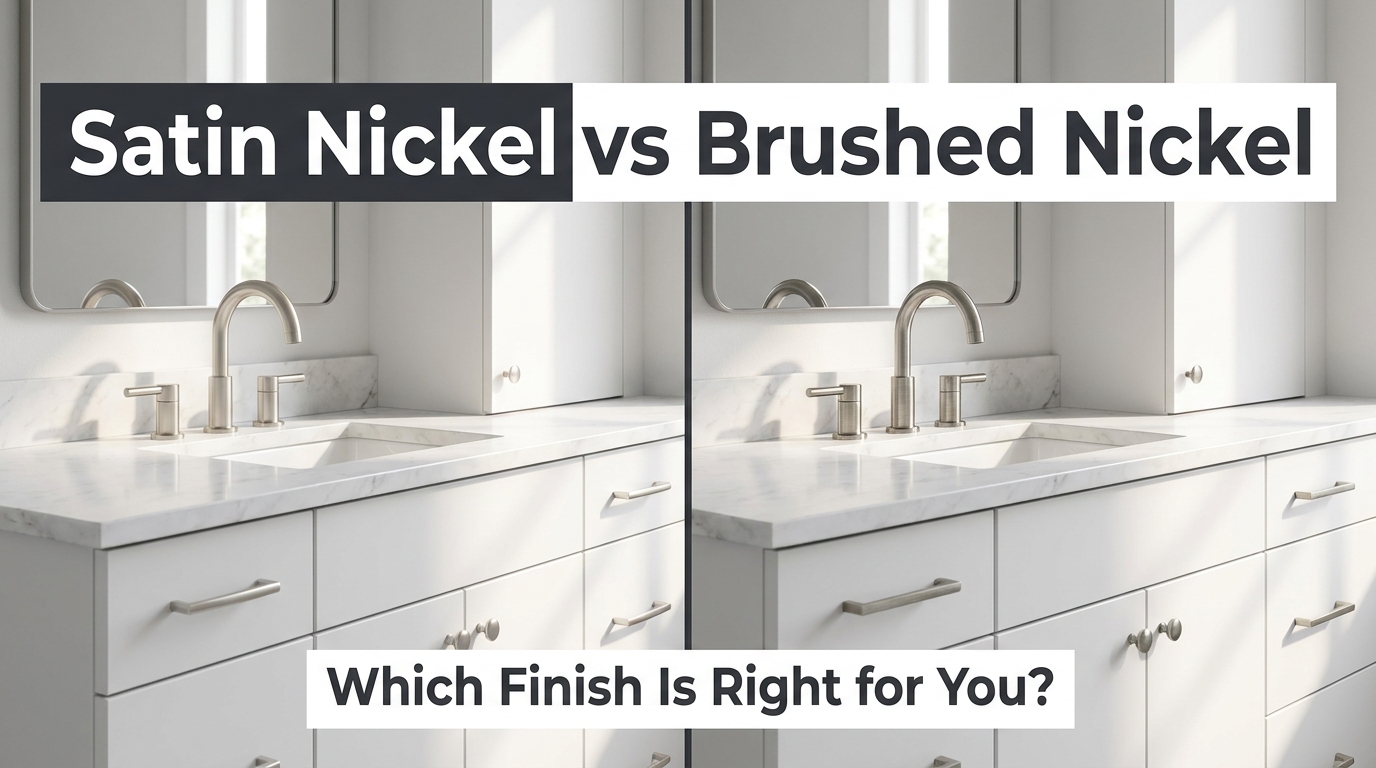
If you’ve ever stood in the hardware aisle holding two cabinet pulls that look almost identical but have different price tags and different names, you’re not alone. Satin nickel and brushed nickel are two of the most commonly confused finishes in home design, and honestly, even some salespeople mix them up.
The good news? Once you know what to look for, the difference becomes pretty easy to spot — and choosing between them gets a lot less stressful.
In this guide, we’ll break down exactly what separates satin nickel from brushed nickel, how each one performs in real homes, what they cost, and how to pick the right one for your kitchen, bathroom, or living space. No fluff, just the practical info you actually need.
What Is Satin Nickel?
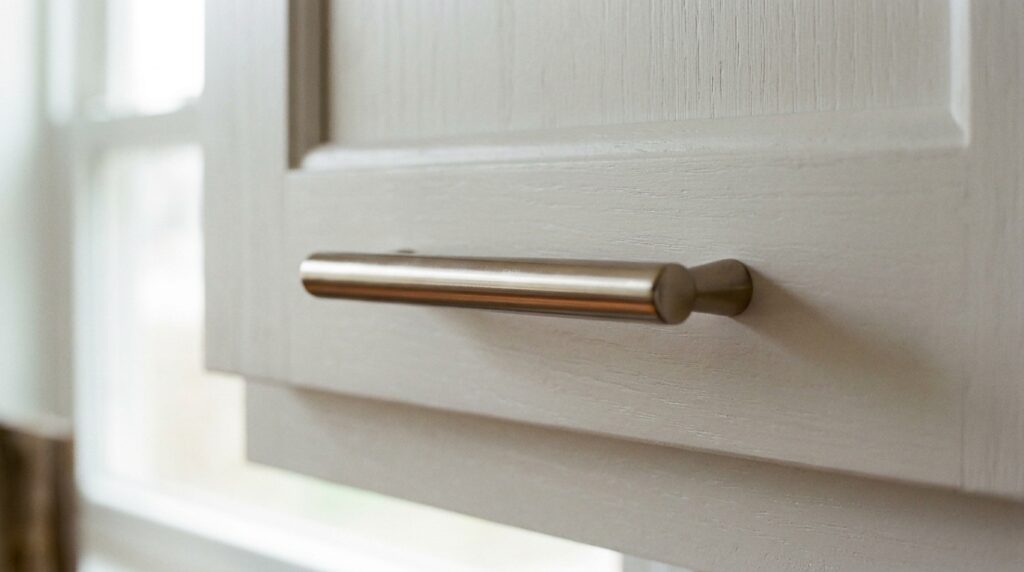
Satin nickel is created through an electroplating process, where a thin layer of nickel is applied over a base metal (usually brass or zinc), and then finished with a soft lacquer or satin coating that mutes the shine.
The result is a finish that feels smooth to the touch, with a gentle, warm glow rather than a sharp shine. It’s often described as having a slightly golden or warm silver undertone, which is why it blends so well with traditional, transitional, and farmhouse-style spaces.
According to Apartment Therapy’s interview with interior design experts, both satin and brushed nickel share a similar manufacturing foundation — they’re electroplated and then lacquered with a soft-sheen topcoat. The real difference comes down to what happens after that base step.
Key Characteristics of Satin Nickel
- Smooth, soft texture with no visible grain lines
- Slightly glossier and more reflective than brushed nickel
- Warmer tone — often reads as a soft silver-gold
- Works well in traditional, transitional, and farmhouse interiors
- Slightly more prone to fingerprints than brushed nickel due to its smoother surface
What Is Brushed Nickel?
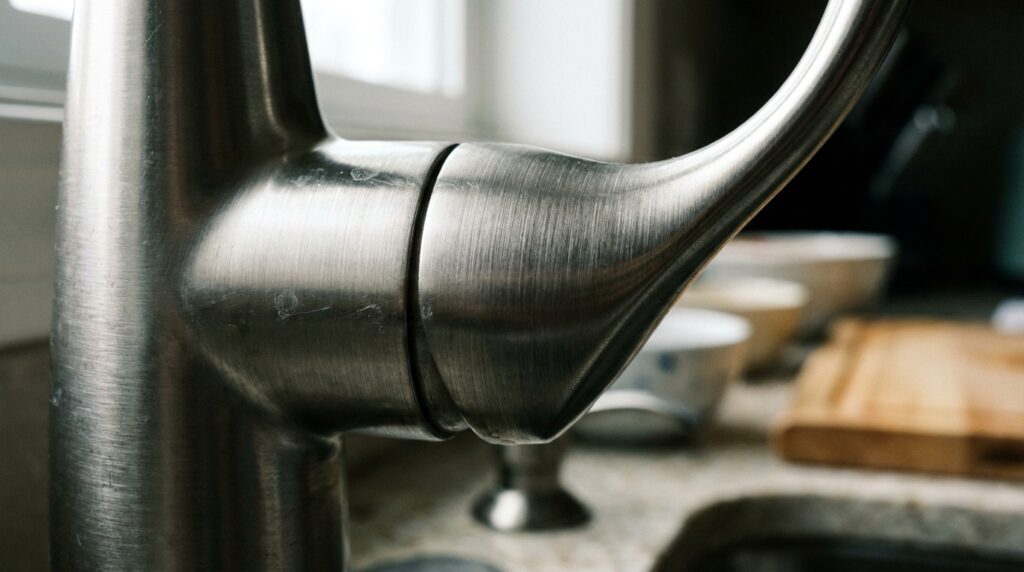
Brushed nickel starts the same way — nickel is plated onto the base metal — but then the surface is mechanically brushed using a fine-bristled tool, creating a linear, textured pattern across the surface.
This brushing process is what gives brushed nickel its signature look: a matte, slightly grainy finish with visible directional lines. It’s cooler in tone compared to satin nickel and tends to feel a bit more industrial or modern.
How to Nest for Less describes brushed nickel as having a matte, dull appearance with one-directional abrasive treatment — which is exactly why it photographs and feels so different from its satin cousin.
Key Characteristics of Brushed Nickel
- Matte finish with visible directional brush lines
- Cooler gray tone compared to satin nickel’s warmth
- Excellent at hiding fingerprints, water spots, and minor scratches
- Pairs well with modern, contemporary, and industrial design styles
- Widely available across nearly every major fixture brand
Satin Nickel vs Brushed Nickel: The Core Differences
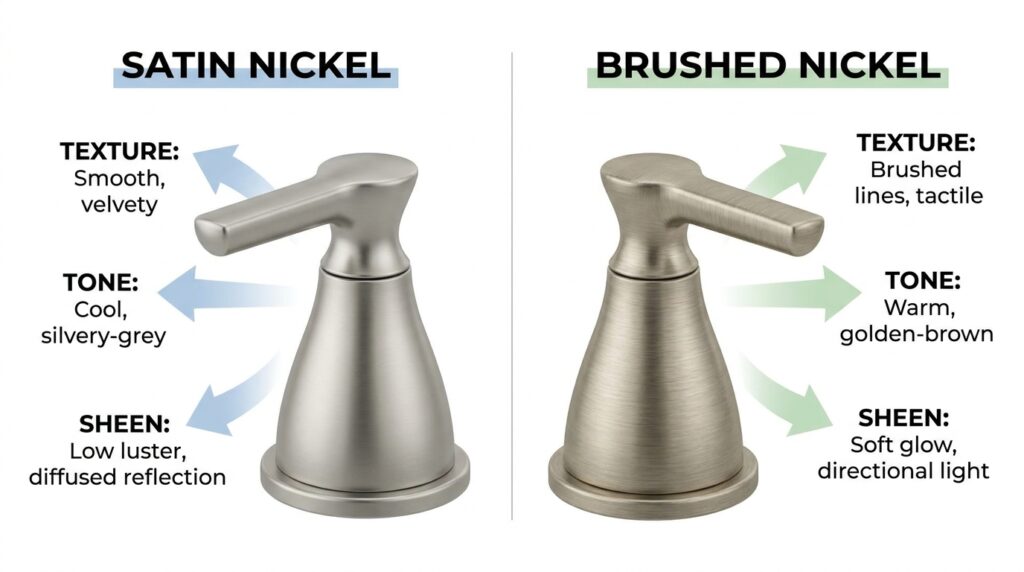
Here’s where most people get tripped up — at a glance, these two finishes can look nearly identical, especially in photos or under bright store lighting. But Apartment Therapy notes that the real distinctions show up in texture, sheen, and how each one wears over time.
Let’s break it down into a simple comparison.
| Feature | Satin Nickel | Brushed Nickel |
|---|---|---|
| Texture | Smooth, no visible lines | Visible linear brush marks |
| Sheen | Slight gloss, soft glow | Matte, diffused look |
| Tone | Warmer, slightly golden-silver | Cooler, grayish tone |
| Best for | Traditional, transitional, farmhouse | Modern, industrial, contemporary |
| Fingerprint resistance | Moderate | High |
| Availability | More limited, especially in newer lines | Widely available across brands |
| Typical cost | Slightly higher in some product lines | Generally more cost-effective |
Texture Is the Biggest Giveaway
If you run your finger across both finishes, satin nickel will feel smooth and uniform, almost like brushed cotton fabric ironed flat. Brushed nickel, on the other hand, has a subtle ridged texture you can sometimes feel as well as see — like the grain on a piece of wood.
Southern Living’s interior design coverage confirms this is the primary distinguishing factor: satin nickel is smoother and slightly glossier, while brushed nickel is recognizable by its rougher feel and appearance.
Color Tone Differences
Satin nickel tends to lean warmer — almost like it has a touch of gold mixed into the silver. Brushed nickel leans cooler and grayer, which is part of why it pairs so naturally with cool-toned materials like stainless steel appliances, gray cabinetry, and concrete countertops.
Durability: Which Finish Holds Up Better?
This is one of the most practical questions homeowners ask, and the honest answer is: both finishes are quite durable, but they shine in slightly different ways.
Brushed Nickel’s Durability Edge
Because of its textured surface, brushed nickel does a better job of camouflaging everyday wear — think small scratches, nicks, and water spots. The Southern Living piece notes that the rougher texture of brushed nickel is better at disguising long-term signs of use compared to satin nickel’s smoother surface.
Satin Nickel’s Maintenance Edge
Interestingly, satin nickel can have a slight edge in day-to-day maintenance. Because the surface is smoother, wiping it down tends to leave a cleaner, more even result — though buildup can occasionally be slightly more visible in high-traffic areas, as noted by Apartment Therapy.
The Role of PVD Coating
One factor that affects durability more than the base finish itself is whether the product has a PVD (Physical Vapor Deposition) coating. According to California Faucets, PVD creates a molecular bond to the faucet’s surface, resulting in a finish that resists corrosion, discoloration, and tarnishing far better than standard plating.
Many major brands now offer PVD versions of both satin and brushed nickel — for example, Moen’s LifeShine finishes are built specifically to resist corrosion and water spots over the long haul. If durability is your top priority, look for “PVD,” “LifeShine,” or “Vibrant” branding (Kohler’s term) on the product label rather than focusing purely on whether it’s satin or brushed.
Cost Comparison: Is One Pricier Than the Other?
Generally speaking, brushed nickel tends to be the more budget-friendly and widely available option, simply because it’s manufactured at a larger scale across nearly every fixture brand.
Satin nickel, by contrast, is sometimes described as more limited in availability, especially in newer product lines, which can occasionally make it slightly pricier or harder to match across different brands.
That said, the price difference is usually small — often just a few dollars per fixture — and depends far more on the brand, collection, and whether the item has a PVD coating than on whether it’s labeled “satin” or “brushed.”
Quick Cost Snapshot
- Brushed nickel: Widely stocked, competitive pricing, easy to find matching pieces (towel bars, faucets, cabinet hardware) from the same brand
- Satin nickel: Slightly less common in big-box stores, may require shopping specialty or higher-end collections to find matching sets
Which Finish Fits Your Design Style?
This is really the heart of the decision for most people. Both finishes are timeless and versatile, but they lean toward different aesthetics.
Choose Satin Nickel If You Want:
- A warmer, more polished look
- A finish that complements traditional or farmhouse kitchens
- Subtle shine without going full chrome
- A cohesive look with warm-toned woods, brass accents, or cream cabinetry
Choose Brushed Nickel If You Want:
- A cooler, more modern or industrial vibe
- A finish that hides fingerprints and water spots exceptionally well
- Easy matching across multiple brands and product lines
- A look that pairs naturally with stainless steel appliances and gray tones
LARK+PALM Interiors’ founder Ansley Majit points out that in homes where materials and finishes are intentionally layered — think natural stone, aged wood, and textured fabrics — brushed nickel can add real depth and character rather than just functioning as background hardware.
Where Each Finish Works Best in Your Home
Kitchens
In the kitchen, satin finishes are often described as elegant and understated — a good fit if you want your hardware to blend in rather than stand out. Brushed nickel, with its grain pattern and slight shine, tends to fit “almost any kitchen design,” according to the same source, and is particularly good at hiding water spots near sinks.
Bathrooms
Bathrooms see a lot of water exposure, so the fingerprint and water-spot resistance of brushed nickel often makes it the more practical pick for faucets, showerheads, and towel bars in high-use bathrooms. Satin nickel can still work beautifully here, especially in powder rooms or guest bathrooms that see less daily traffic.
Cabinet Hardware and Lighting
For cabinet knobs, pulls, and light fixtures, the choice often comes down purely to style preference since these surfaces aren’t handled as constantly as faucets. If you’re matching hardware to existing fixtures, Kohler’s mix-and-match guide suggests sticking within the same “finish family” — for example, pairing brushed nickel with another brushed finish like champagne bronze for intentional variety rather than mismatched contrast.
How to Tell Them Apart When Shopping
Hardware store lighting can make both finishes look almost identical, so here’s a quick checklist to use in person:
- Run your finger across the surface. Smooth = satin nickel. Slightly textured with directional grain = brushed nickel.
- Tilt it under the light. Satin nickel reflects a soft, even glow. Brushed nickel scatters light along the brush lines, creating a more matte appearance.
- Check the color temperature. Hold both side by side — satin nickel typically looks slightly warmer/yellower, while brushed nickel looks cooler/grayer.
- Read the product label carefully. Brand naming conventions vary — Kohler uses “Vibrant Brushed Nickel,” Moen uses “LifeShine Brushed Nickel,” and Brizo and California Faucets often label their warmer finish as “Satin Nickel.” A finish-matching guide can help if you’re trying to match across brands.
Expert Tips for Choosing Between Satin and Brushed Nickel
Based on insights from interior designers and finish manufacturers, here are some practical tips to keep in mind:
- Match your existing fixtures first. If you already have brushed nickel appliances or lighting, introducing satin nickel hardware can create a jarring contrast. Stick to one finish family per room when possible.
- Think about cleaning habits. If you don’t love wiping down fixtures daily, brushed nickel’s texture will be more forgiving of fingerprints and water spots.
- Check for PVD or LifeShine labeling if longevity matters more than the exact finish name — these coatings, as explained by American Faucet and Coatings Corporation, create a bonded layer that resists wear far better than standard plating.
- Don’t rely on photos alone. Lighting and camera settings can make satin and brushed nickel look nearly identical online. Order a sample or visit a showroom if you’re unsure.
- Consider the room’s overall palette. Warmer rooms with wood tones, cream walls, or brass accents tend to pair better with satin nickel’s warmth. Cooler rooms with grays, whites, and stainless steel lean toward brushed nickel.
Pros and Cons at a Glance
Satin Nickel
Pros:
- Warm, refined appearance that suits classic and transitional spaces
- Smooth texture feels premium to the touch
- Subtle shine adds visual interest without being flashy
Cons:
- Slightly more visible fingerprints on smooth surfaces
- Less widely available than brushed nickel in some product lines
- Can be harder to match exactly across different brands
Brushed Nickel
Pros:
- Excellent at hiding fingerprints, smudges, and water spots
- Widely available and easy to match across brands
- Versatile across modern, traditional, and industrial styles
Cons:
- Cooler tone may feel less “warm” in traditional spaces
- Textured surface can occasionally trap dust in grooves
- Some lower-cost versions can look plasticky rather than metallic
Frequently Asked Questions
Is satin nickel the same as brushed nickel?
No. While they look similar at a glance, satin nickel has a smoother, slightly glossier finish, while brushed nickel has a visibly textured, matte surface created by mechanically brushing the metal.
Can you mix satin nickel and brushed nickel in the same room?
It’s generally best to avoid mixing them in the same fixture group (like a kitchen sink area), since the subtle tone difference can look mismatched up close. However, using one finish for plumbing fixtures and a complementary finish for lighting or hardware can work if done intentionally.
Which finish is more popular right now?
Brushed nickel has historically been more widely used across modern hardware and fixtures, making it easier to find matching pieces. Satin nickel remains popular in traditional and transitional design but is somewhat more limited in newer product collections.
Does brushed nickel scratch easily?
Brushed nickel is generally durable and, thanks to its textured surface, tends to hide minor scratches and wear better than smoother finishes. However, deep scratches can still be visible on any metal finish over time.
What’s the difference between satin nickel and stainless steel?
Satin nickel is a plated finish applied over a base metal like brass, while stainless steel is typically the actual material the fixture is made from. Stainless steel tends to have a cooler, brighter tone and is generally more resistant to corrosion since the finish is the material itself.
Final Thoughts: Making Your Choice
At the end of the day, satin nickel and brushed nickel are both excellent, durable, low-maintenance finishes — the “right” choice really comes down to the look and feel you’re going for.
If you love a warm, refined glow that pairs beautifully with traditional and farmhouse styles, satin nickel is hard to beat. If you want a cooler, more practical finish that hides everyday wear and matches easily across brands, brushed nickel is the safer bet.
Whatever you choose, try to get a physical sample before committing — texture and tone are nearly impossible to judge accurately from photos alone. And if you’re renovating a whole room, start with your largest fixture (usually the faucet) and build your hardware choices around it for a cohesive, polished result.
Have a specific room you’re working on? Take a photo of your space, compare it against both finishes in natural daylight, and you’ll likely find the answer becomes obvious pretty quickly.

