
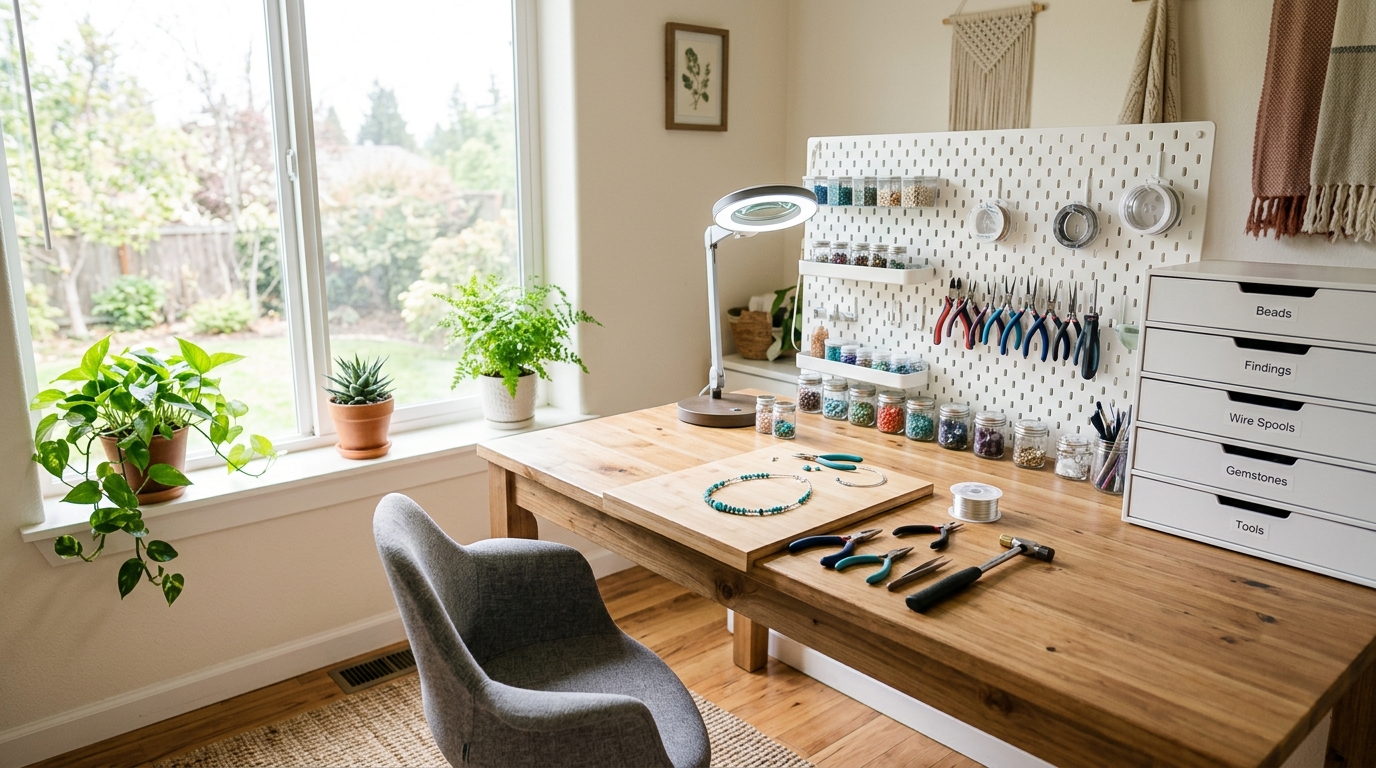
For many DIY enthusiasts and independent designers, the idea of walking straight into a personal creative space is the ultimate dream. However, establishing a functional jewelry production space in a residential home requires far more than just setting up a sturdy desk.
Designing a jewelry studio within a residential environment introduces a unique set of physical, electrical, and environmental challenges. As a jeweler, you are handling hazardous chemical fumes, extreme heat sources, and microscopic metal dust daily.
To build a workspace that is both creatively inspiring and structurally secure, you must prioritize industrial-grade safety standards. By implementing strategic layout planning and upgrading your home’s infrastructure, you can create a highly efficient home sanctuary.
The Reality of Home-Based Crafting vs. Professional Production
Transforming a spare room into a jewelry studio is an exciting project for any independent designer. However, it is crucial to recognize the limitations of residential spaces.
While a home studio is perfect for designing, prototyping, and assembling small batches, bringing heavy industrial casting equipment or massive kilns into your house can compromise your property’s infrastructure and safety.
As your hobby transitions into a scalable business, the smartest spatial decision is to keep your home strictly as a design hub. For bulk production, you can outsource the heavy lifting to professional Azone who have the proper industrial facilities, allowing you to maintain a clean, safe, and stress-free home environment.
Assessing Your Home’s Spatial and Ventilation Needs
Jewelry making involves soldering, chemical cleaning, and polishing, all of which release harmful fumes and airborne particulates. Without proper ventilation systems, these hazardous byproducts can quickly spread throughout your home’s HVAC system.
If you are planning a basement or garage renovation to accommodate your workspace, prioritize a dedicated exhaust framework. Never rely on standard central air conditioning to filter out toxic soldering smoke.
- Fume Extractors: Install an active fume extractor directly above your soldering station to pull smoke immediately away from your face.
- HEPA Filtration: Use an air purifier with both HEPA and activated carbon filters to trap microscopic metal dust and neutralize chemical odors.
- Cross-Ventilation: Position your primary workbench near a window fitted with a dual-fan exhaust system to continuously cycle fresh air into the room.
Setting Up the Proper Workbench and Ergonomics
A standard office desk is entirely inadequate for intricate metalwork. You need a dedicated jeweler’s bench, which is specifically designed to sit higher than a regular desk. This brings your intricate work closer to eye level, preventing severe neck and back strain.
Underneath the bench, floor protection is an absolute necessity. Hot metal shavings and dropped tools will permanently ruin standard hardwood or residential carpet.
- Fire-Retardant Mats: Place heavy-duty, heat-resistant industrial rubber mats under your chair and bench area.
- Sweep Pans: Ensure your workbench features a lined catch tray (sweep pan) to capture precious metal dust for future recycling.
- Ergonomic Seating: Invest in a height-adjustable, armless drafting stool to maintain maximum arm mobility and proper posture during long crafting sessions.
Fire Safety and Lighting Upgrades
Working with micro-torches and kilns inside a home elevates your fire risk significantly. Your studio must be upgraded to meet strict fire safety standards to prevent catastrophic accidents. Never operate an open flame near exposed drywall or wallpaper.
Install fireproof cement backer boards or heavy ceramic tiles directly behind and beneath your soldering station. Additionally, always keep a Class ABC fire extinguisher securely mounted within arm’s reach of your bench.
Essential Lighting for Detail Work
Precision crafting requires exceptional illumination. Relying on standard warm-toned residential ceiling bulbs will cause severe eye fatigue and color distortion when working with metals and gemstones.
- Shadowless Task Lighting: Mount a fully adjustable, multi-angle LED desk lamp directly over your bench pin to eliminate distracting shadows.
- High CRI: Choose bulbs with a Color Rendering Index (CRI) of 95 or higher to guarantee perfectly accurate color matching.
- Ambient Balance: Balance your intense task lights with soft, diffused overhead lighting to reduce harsh contrast in the room.
Organizing Small Tools and Raw Materials
A cluttered bench inevitably leads to lost materials, delayed projects, and serious safety hazards. Implementing smart micro-storage solutions is vital for maintaining a highly functional and focused workspace.
By utilizing your vertical wall space, you keep sharp tools safely out of the way but immediately accessible when needed. Categorizing your inventory meticulously ensures your creative flow remains uninterrupted.
- Wall-Mounted Pegboards: Ideal for hanging pliers, raw hide mallets, and jeweler’s saws in plain sight.
- Magnetic Tool Strips: Perfect for safely holding steel burrs, drill bits, and needle files without dulling their edges.
- Multi-Tiered Drawers: Use labeled, anti-static acrylic drawer towers to separate delicate wire gauges, jump rings, and loose gemstones.
Securing Your Creative Space and Assets
Once your home studio is fully operational, you will likely be storing highly valuable tools, raw silver or gold, and finished bespoke pieces. Upgrading your home security system with motion sensors, glass-break detectors, and heavy-duty floor safes is step one.
Consider bolting a heavy-duty safe directly into the concrete foundation of your garage or basement for maximum security. Step two is evaluating your financial protection. Do not assume your standard homeowner’s policy will replace stolen or damaged business assets.
According to Forbes, securing specifichome-based business insurance is essential to cover specialized equipment and valuable inventory that exceed the typical coverage limits of a standard residential policy.
Home Studio Safety & Setup Checklist
| Category | Setup Requirement | Safety & Functionality Benefit |
| Ventilation | Fume extractor & HEPA/Carbon filters | Removes toxic soldering fumes and hazardous metal dust |
| Workstation | Jeweler’s bench & fire-retardant mats | Prevents back strain and permanently protects residential flooring |
| Fire Safety | Cement backer boards & Class ABC extinguisher | Prevents accidental residential fires from open-flame micro-torches |
| Lighting | Shadowless LED lamps (95+ CRI) | Reduces eye strain and ensures perfect gemstone color accuracy |
| Security | Bolted floor safe & business insurance | Protects raw precious metals and covers expensive specialized equipment |
Conclusion: A Space That Inspires Creativity
Building a home jewelry studio requires a careful balance between creative inspiration and uncompromising industrial safety. By respecting the limits of your residential space, you protect both your property and your personal health.
Upgrading your ventilation, lighting, and electrical systems transforms a basic spare room into a highly capable creative hub. Furthermore, properly securing your assets guarantees peace of mind as your hobby rapidly grows into a structured business.
Remember that as your production volume scales, delegating heavy manufacturing preserves your home’s integrity. When meticulously planned, your home studio will become a safe, efficient sanctuary where your finest designs come to life.

