
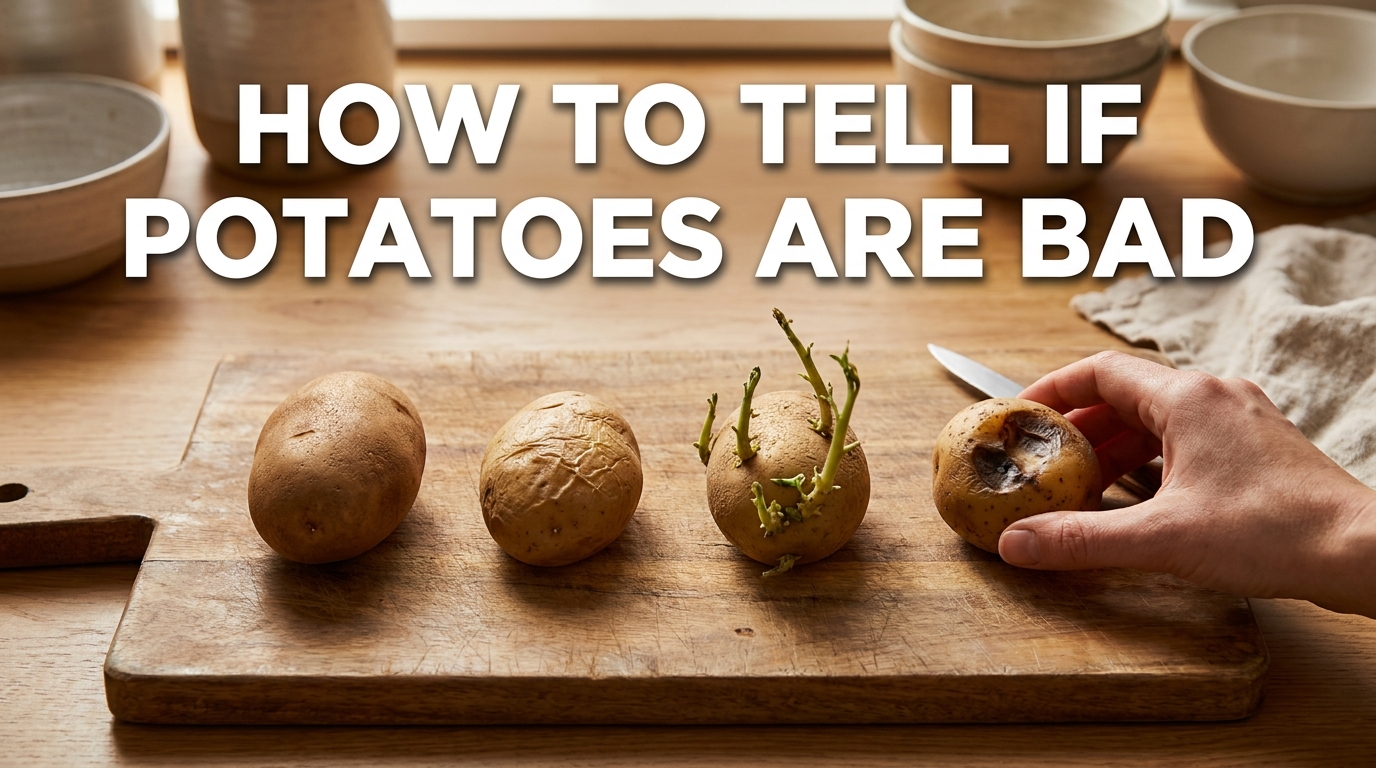
That bag of potatoes at the back of the pantry always seems to outlast your memory of buying it. By the time you finally reach for one, you’re left squinting at it under the kitchen light, wondering if it’s still dinner-worthy or destined for the trash.
Knowing how to tell if potatoes are bad comes down to a handful of physical clues you can check in seconds: texture, smell, color, and a few visual details most people overlook. Some of these signs mean “use it today,” while others mean “throw it out, no exceptions.” The trick is knowing which is which.
It helps to think of potato spoilage less as a single moment and more as a spectrum. A potato doesn’t flip from perfectly fine to inedible overnight. It moves gradually through stages, slight softening, a bit of wrinkling, maybe a sprout or two, and each stage tells you something different about whether it’s still worth cooking, worth trimming and cooking, or worth tossing entirely.
Why Potatoes Go Bad Faster Than You’d Expect
Potatoes are mostly water, somewhere around 80 percent, which is exactly why they don’t hold up the way canned goods or grains do. Once moisture starts escaping, or once the tuber gets exposed to warmth, light, or bruising, the clock starts ticking noticeably faster than most people assume.
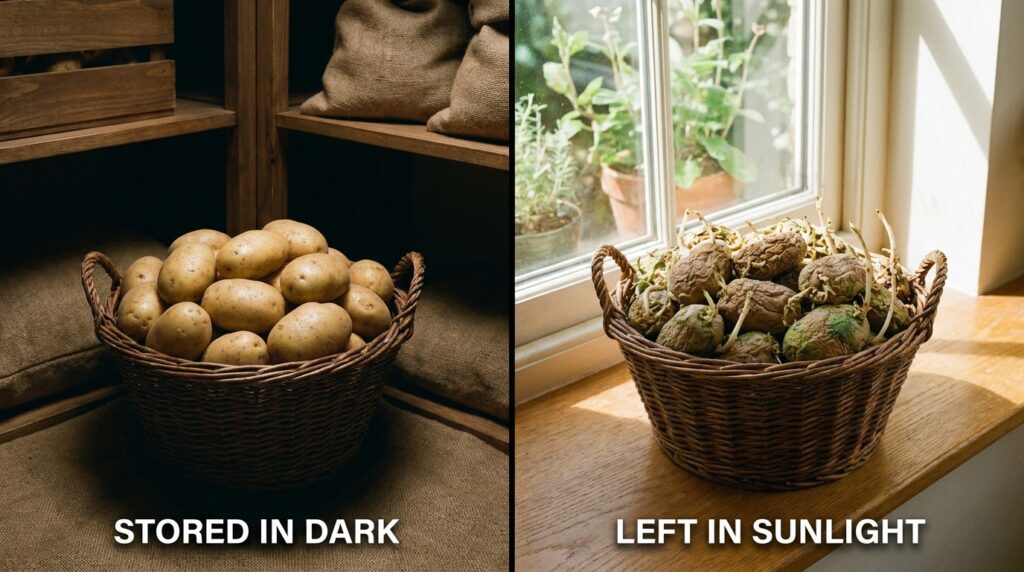
Storage conditions make an enormous difference here. University Extension has noted that proper storage is essential for preserving both taste and safety, and a potato kept somewhere cool and dark can last for months, while the same potato left out on a bright kitchen counter might only hold up for a week or two before it starts showing real trouble. That gap is why two people can have wildly different experiences with “how long potatoes last,” depending entirely on where they stashed the bag.
Understanding the Two Different Kinds of “Bad”
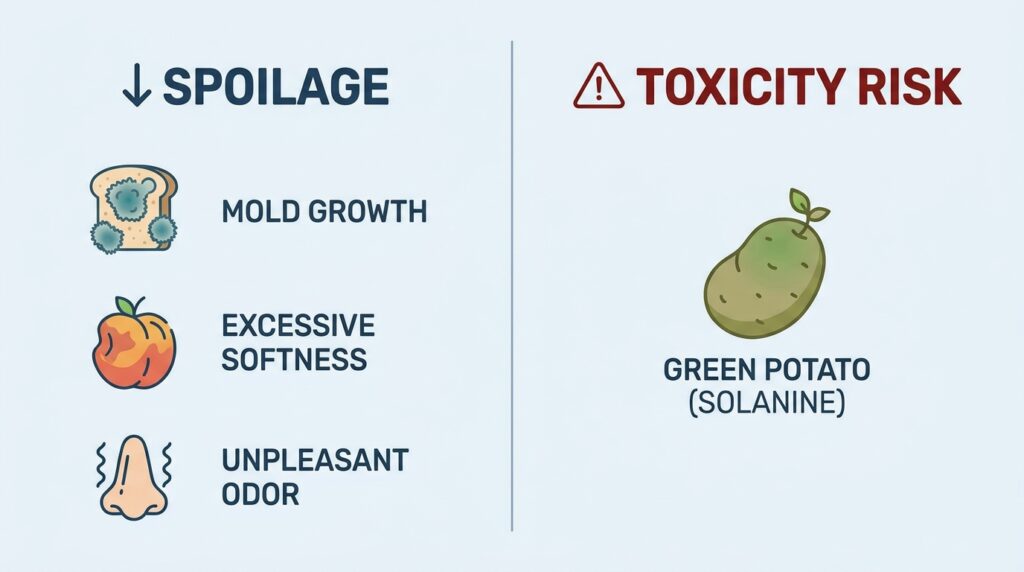
Before running through the individual warning signs, it’s worth separating potato problems into two distinct categories, because they call for different responses.
The first category is straightforward spoilage: softness, mold, rot, and bad smells. These are signs the potato is decaying, usually due to moisture, bacteria, or fungal growth, and eating a badly spoiled potato mostly risks an unpleasant taste or mild stomach upset rather than serious harm.
The second category is toxicity, specifically related to greening and solanine buildup. This isn’t really about decay at all; a green potato can otherwise look and feel perfectly fresh. It’s a chemical response the plant produces when exposed to light, and it deserves a slightly different level of caution than ordinary spoilage does. Keeping these two categories separate in your head makes the rest of this checklist much easier to apply with confidence.
Sign 1: A Soft, Mushy, or Squishy Texture
The very first thing worth checking is how the potato feels in your hand. A fresh, good potato should be firm all over, with no give when you press it gently.
If you notice soft spots, especially ones that feel spongy or squishy under light pressure, that’s usually the earliest and most reliable sign something has gone wrong internally. In fact, extreme mushiness is one of the clearest indicators that a potato has gone bad, even before any other symptoms show up. A potato with a mushy patch is well on its way toward full spoilage, even if the rest of it still looks fairly normal from the outside.
Texture changes tend to start small: a change in texture is often the very first clue experienced cooks notice, well before any visible mold or smell shows up. A slightly soft potato that’s still mostly firm can typically still be cooked, but one with genuine mushy patches should be discarded rather than trimmed and used.
Sign 2: Shriveled, Wrinkled Skin
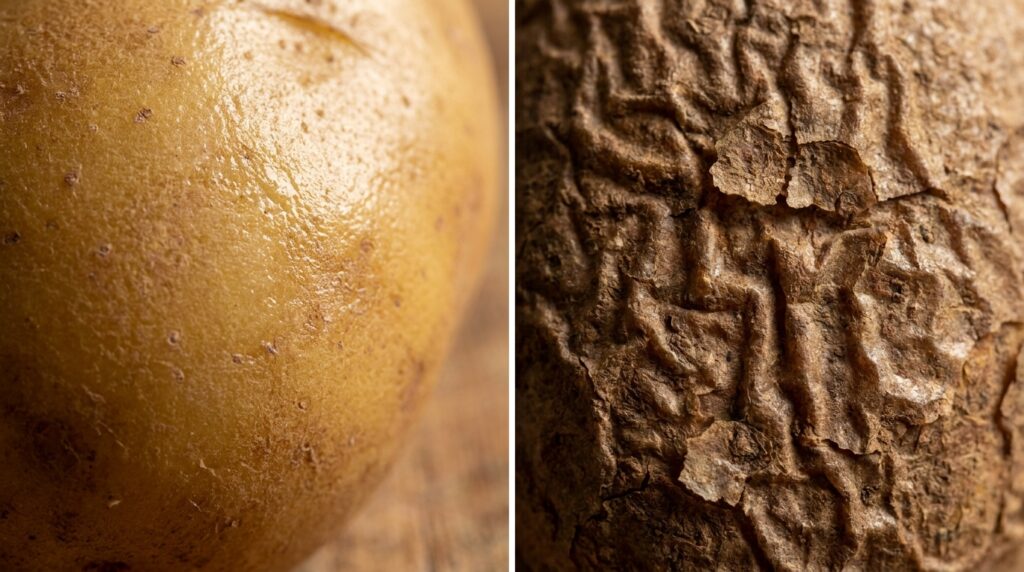
Healthy potato skin should be smooth and taut, almost like it’s stretched tightly over the flesh underneath. As potatoes lose moisture over time, that skin starts to wrinkle, sag, and pull away slightly from the interior.
A mildly wrinkled potato isn’t automatically unsafe; it’s mostly just lost water content and may cook up a little drier or less flavorful than usual. But when wrinkling is paired with softness, dark spots, or an unpleasant smell, that combination is a much stronger signal that it’s time to toss it.
Sign 3: Dark Spots, Bruising, or Discoloration
Dark spots on the surface or just beneath the skin usually point to bruising, rot, or bacterial growth, particularly if the spots feel soft when you press on them. A small, firm bruise near the surface can often be cut away safely, but widespread dark patches or spots that extend deep into the flesh are a different story entirely.
If you slice into a potato and see brown, black, or gray streaks running through the interior, that’s a sign of internal decay rather than a superficial mark, and the whole potato should be discarded rather than partially salvaged.
Sign 4: Visible Mold
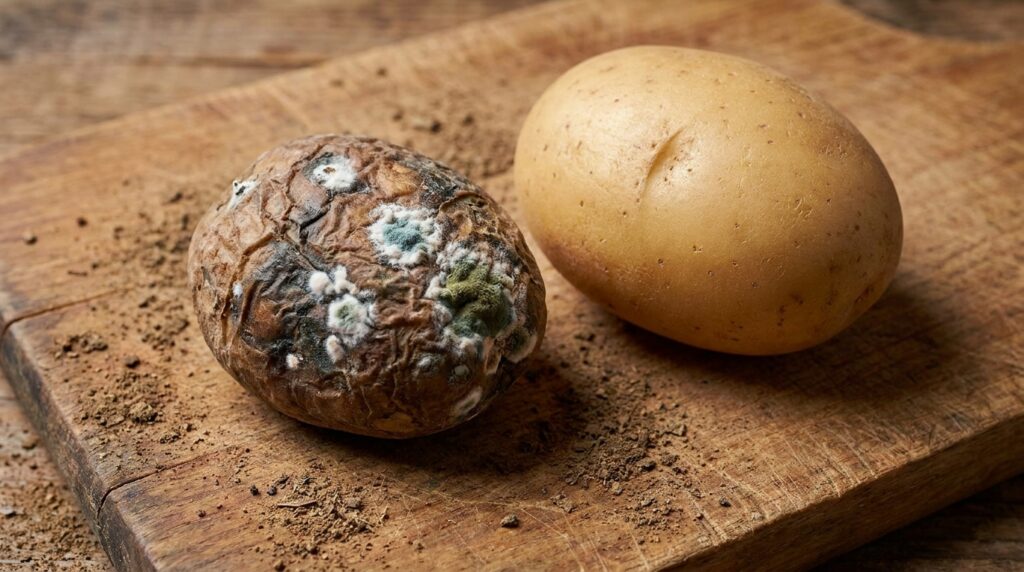
Mold on a potato is never something to work around. Unlike a firm cheese where you might trim away a moldy edge, potatoes are porous enough that mold spores can spread through the flesh in ways you can’t always see just by looking at the surface.
The United States Department of Agriculture has noted that mold on foods like this can pose real health risks, which is exactly why cutting off the visible fuzzy patch and eating the rest isn’t a reliable safety strategy. If you spot mold anywhere on a potato, whether it’s white, green, black, or that soft cottony gray, the safest move is to throw the whole thing away.
Mold tends to show up more often on potatoes that have been stored somewhere too humid or damp, which is part of why proper airflow during storage matters so much. If you notice mold on one potato in a batch, it’s worth checking the others nearby too, since spores can spread between potatoes that are touching or stored closely together in a sealed bag.
Sign 5: A Sour, Musty, or Unpleasant Smell
A fresh raw potato should have a mild, earthy scent, almost like the smell of fresh soil. That’s completely normal and not a cause for concern.
What you’re watching out for is anything that crosses into sour, musty, or outright rotten territory. If a potato smells noticeably “off” in any way beyond that faint earthiness, trust your nose. Smell is one of the more reliable early-warning signs, since it often shows up before visible signs of decay become obvious, especially with internal rot that hasn’t yet reached the surface.
This is particularly true for potatoes that are rotting from the inside out, sometimes called shell rot, where the outer skin can look mostly intact while the interior has already broken down into a soft, liquefied mess. A strong, unmistakably bad smell coming from an otherwise normal-looking potato is often your first and only clue that something is seriously wrong underneath the surface.
Sign 6: Sprouting Eyes
Sprouts, sometimes called “eyes,” are small buds that emerge from a potato’s surface once it starts trying to grow into a new plant. Seeing a few small sprouts doesn’t automatically mean the potato is unsafe, but it does mean it’s past its prime and should be used soon.
If the sprouts are small, you can typically cut them off along with a small surrounding area of flesh and still cook the potato safely, as long as the rest of it is firm and shows no other warning signs. Potatoes with long, extensive sprouting, especially combined with softness or wrinkling, are better off being tossed.
It’s worth knowing that sprouts themselves contain higher concentrations of solanine than the rest of the potato, which is one reason they’re removed rather than left on. A potato covered in numerous long, thick sprouts has usually also lost a fair amount of internal moisture and nutrients to fuel that growth, so even if it’s technically safe once trimmed, the texture and flavor are unlikely to be as good as a fresher potato would offer.
Sign 7: A Green Tint Beneath the Skin
Green patches on a potato’s skin are one of the more misunderstood warning signs, and they deserve extra attention because the risk here isn’t spoilage in the usual sense, it’s toxicity.
That green coloring comes from chlorophyll, which develops when a potato is exposed to light. On its own, chlorophyll is harmless. But its presence signals that the potato has likely also produced higher levels of a natural compound called solanine, a glycoalkaloid that can cause gastrointestinal symptoms like nausea, cramping, and diarrhea if consumed in large enough amounts.
The green color itself comes from harmless chlorophyll, but its presence indicates that the tubers have increased production of solanine, and cooking does not destroy this toxin, which is why the affected areas need to be physically removed rather than simply cooked through.
What to Do With a Slightly Green Potato
For potatoes with small, isolated green patches, most food safety guidance suggests cutting away the green portion generously, along with any sprouts, before cooking the rest. A potato that’s mostly or entirely green throughout, however, has likely accumulated enough solanine that it’s simply not worth the risk, and the whole thing should go in the trash.
Bitterness is another clue worth paying attention to here. A bitter taste, even in a potato that doesn’t look obviously green, can be another sign of elevated solanine levels, since the compound itself tastes unpleasant and slightly acrid.
A Quick Reference Table
| Sign | Safe to Use (With Caution) | Discard Completely |
|---|---|---|
| Texture | Slightly soft, still mostly firm | Mushy, squishy patches |
| Skin | Mildly wrinkled | Deeply shriveled plus other signs |
| Spots | Small, shallow, firm bruises | Deep, widespread dark spots |
| Mold | Never safe to trim around | Any visible mold |
| Smell | Mild, earthy | Sour, musty, or rotten |
| Sprouts | A few small sprouts, cut off | Extensive, long sprouting |
| Green tint | Small patch, cut away generously | Mostly or fully green |
How Long Do Potatoes Actually Last?
Shelf life depends heavily on storage conditions rather than a fixed expiration date. Potatoes kept in a cool, dark, well-ventilated spot, somewhere around 45 to 55 degrees Fahrenheit, can last for two to three months or longer. The same potatoes sitting at normal room temperature on a countertop typically only hold up for one to two weeks before showing real signs of decline.
Refrigeration might seem like an obvious fix, but it isn’t recommended for raw potatoes. Cold temperatures convert some of the potato’s starch into sugar, which affects both flavor and texture once cooked, and can even contribute to unwanted browning during frying or roasting.
Storing Potatoes to Prevent Spoilage in the First Place
A little prevention goes a long way with potatoes, and most of it comes down to controlling light, airflow, and temperature.
- Store potatoes in a breathable container like a paper bag, mesh bag, or open basket rather than a sealed plastic bag.
- Keep them somewhere dark, since light exposure is what triggers greening and solanine buildup in the first place.
- Aim for a cool spot, ideally in the 45 to 55 degree Fahrenheit range, such as a pantry, cellar, or unheated closet.
- Don’t wash potatoes before storing them, since excess moisture speeds up mold and rot.
- Keep potatoes away from onions, which release gases that can cause potatoes to sprout faster.
Good storage habits at home also apply well beyond potatoes; the same basic principles, cool temperatures, controlled moisture, and good airflow, extend the life of most fresh produce sitting in your kitchen, not just root vegetables.
What About Cooked Potatoes and Leftovers?
Everything covered so far applies mainly to raw potatoes, but cooked potatoes follow a slightly different timeline and set of warning signs. Once cooked, potatoes should generally be refrigerated within two hours and used within three to five days for the best quality and safety.
Signs that cooked potatoes have gone bad include a sour or off smell, a slimy texture on the surface, visible mold, or an unusual grayish discoloration that wasn’t there when they were freshly cooked. Unlike raw potatoes, where a little softness might still be workable, cooked potatoes showing any of these signs should be discarded without much debate, since bacterial growth on cooked food tends to progress faster than decay in a raw tuber.
If you’re not going to use leftover cooked potatoes within a few days, freezing is an option, though the texture can change somewhat, becoming slightly grainier once thawed. Mashed potatoes tend to freeze and reheat more successfully than roasted or boiled chunks, which can turn a bit watery after thawing.
Does Variety Matter? Sweet Potatoes, Red Potatoes, and Russets
Not every potato variety shows spoilage in exactly the same way, though the core warning signs overlap quite a bit across types.
- Russet and gold potatoes: More prone to visible greening under light due to their thinner, paler skin.
- Red potatoes: Follow largely the same texture, smell, and mold signals, though green discoloration is somewhat less common on their darker skin.
- Sweet potatoes: A different plant family entirely, so they don’t carry the same solanine risk, but they still spoil through softness, dark spots, and mold in a similar way.
Regardless of variety, the fundamentals stay consistent: firm texture, tight skin, an earthy smell, and no visible mold are the baseline for a potato that’s still good to cook.
Common Mistakes People Make When Checking Potatoes
- Judging only by appearance. A potato can look mostly fine on the outside while hiding significant softness or rot beneath the skin.
- Trimming around mold instead of discarding. Mold spores can spread through a potato’s flesh in ways that aren’t always visible.
- Assuming all sprouted potatoes are automatically unsafe. Small, early sprouts can usually just be trimmed away.
- Ignoring smell. A quick sniff test catches problems that texture and color checks sometimes miss.
- Storing potatoes in the fridge to “keep them fresh longer.” This backfires by altering starch content and texture rather than actually extending shelf life in a useful way.
Expert Tips for Buying and Handling Potatoes
- At the store, choose potatoes with smooth, unblemished skin and no visible cuts, cracks, or soft spots before you even bring them home.
- Buy only what you’ll realistically use within a few weeks unless you have proper cool, dark storage available.
- Check your stored potatoes every week or two, since one spoiling potato can speed up decay in the ones around it.
- If a potato has an unusually bitter taste after cooking, stop eating it, even if it looked fine beforehand.
- Keep a small flashlight or use your phone’s light to check the bottom of deep storage bins, where problem potatoes tend to hide.
Pros and Cons of Trying to Salvage a Questionable Potato
| Pros of Trimming and Using | Cons of Trimming and Using |
|---|---|
| Reduces food waste | Risk of missing hidden internal rot |
| Saves money on groceries | Mold spores may have spread beyond the visible patch |
| Works well for minor, superficial issues | Not worth the risk for mushy or moldy potatoes |
| Quick and simple for small green patches or sprouts | Bitterness can ruin the dish even if technically safe |
Frequently Asked Questions
Can you eat a potato with a few sprouts?
Yes, in most cases. Cut off the sprouts along with a small area of surrounding flesh, then check that the rest of the potato is still firm, smells normal, and shows no other warning signs before cooking it.
Is it safe to eat a potato with a small green spot?
Small, isolated green spots can usually be cut away generously before cooking. A potato that’s extensively or entirely green is better off being discarded, since it likely contains higher solanine levels throughout.
Why does my potato smell musty even though it looks fine?
A musty or sour smell often signals internal rot or bacterial growth that hasn’t fully reached the surface yet. Trust the smell over appearance in these cases and discard the potato rather than risk it.
Do bad potatoes make you sick if you eat them?
Potatoes with mold, extensive rot, or high solanine levels from significant greening can cause gastrointestinal symptoms like nausea, cramping, or diarrhea. Mild spoilage signs like slight softness are less risky but still affect taste and texture.
How can I make my potatoes last longer at home?
Store them in a cool, dark, well-ventilated spot around 45 to 55 degrees Fahrenheit, ideally in a breathable bag or basket rather than sealed plastic, and keep them away from direct sunlight and onions.
Bringing It All Together
Checking a potato before you cook with it takes less time than peeling one. A quick squeeze for firmness, a glance for green patches or mold, and a sniff for anything off the mark will tell you almost everything you need to know.
Most of the time, a potato that’s a little soft or slightly sprouted is still perfectly fine to trim and cook. It’s the combination of signs, mushiness plus smell, or mold plus discoloration, that really means it’s time to let it go.
Once you’ve run through this checklist a few times, it becomes second nature, a quick squeeze and sniff before you start peeling, rather than a conscious decision every single time. That small habit alone can save you from both an unpleasant meal and a fair amount of wasted food over the course of a year.

