
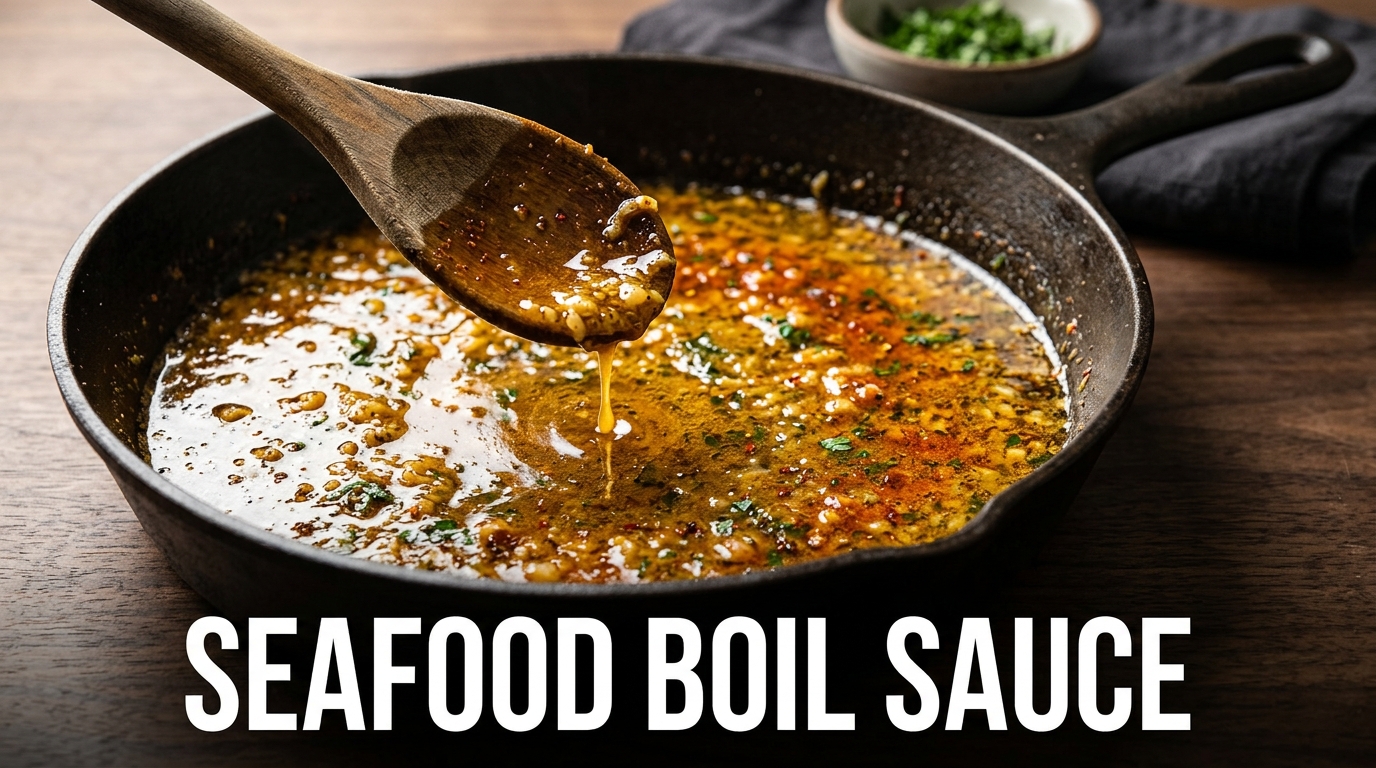
If you have ever eaten at a seafood boil restaurant and wondered how they get that glossy, deeply flavored butter sauce clinging to every shrimp and crab leg, the answer is simpler than you might think. Learning how to make seafood boil sauce at home comes down to five basic steps: melt butter, cook your aromatics, bloom your spices, add liquid, then finish with acid and herbs. The whole process takes about 15 to 20 minutes and uses ingredients most people already have in the pantry.
This guide walks through the exact method, ingredient choices, common mistakes, storage rules, and answers to the questions people search for most when they want to recreate this sauce at home. Whether you are pouring it over a full seafood boil bag or using it as a dipping sauce for shrimp and crab legs, this recipe gives you a restaurant-quality result without any guesswork.
What Is Seafood Boil Sauce Made Of

Seafood boil sauce is a butter-based sauce built around a handful of core ingredients: butter, garlic, onion or shallot, a Cajun-style seasoning blend, and a splash of acid such as lemon juice. Most versions also include a liquid like chicken stock or seafood stock to loosen the sauce and help it coat shellfish evenly instead of sitting as a thick paste.
The flavor profile leans savory, garlicky, and mildly spicy, with brightness from citrus cutting through the richness of the butter. It is closely tied to Louisiana and Gulf Coast cooking traditions, where boiled crawfish, shrimp, and crab are often finished or dipped in a similarly seasoned butter sauce.
Is Seafood Boil Sauce the Same as Cajun Butter Sauce
Not exactly, though the two overlap heavily. Cajun butter sauce is a broader category that can be used on steak, chicken, or vegetables. Seafood boil sauce is a specific application of that style, tuned with stock, extra acid, and sometimes a touch of sweetness to complement shellfish and corn. If a recipe calls for shellfish stock or Old Bay seasoning by name, it is almost always written specifically for a seafood boil.
Ingredients You’ll Need
Here is a standard batch that makes enough sauce for about 2 to 3 pounds of boiled seafood, plus corn and potatoes.
| Ingredient | Amount | Why It Matters |
|---|---|---|
| Unsalted or salted butter | 1 cup (2 sticks) | The base and body of the sauce |
| Garlic, minced | 6 to 8 cloves | Core aromatic flavor |
| Shallot or onion, minced | 1 small | Adds sweetness and depth |
| Old Bay or Cajun seasoning | 2 to 3 tablespoons | Signature seafood boil flavor |
| Smoked paprika | 1 teaspoon | Adds color and mild smokiness |
| Cayenne pepper | 1/4 to 1/2 teaspoon | Controls the heat level |
| Brown sugar | 1 tablespoon | Balances heat and acid |
| Chicken or seafood stock | 1/2 cup | Thins the sauce for even coating |
| Lemon juice | 1 to 2 tablespoons | Brightens the richness |
| Fresh parsley, chopped | 2 tablespoons | Fresh finish and color |
If you use unsalted butter, taste before adding extra salt, since Old Bay and Cajun blends are already sodium-heavy, while fresh garlic provides much of the sauce’s savory base; for another garlic-focused preparation, see how to make garlic confit. Salted butter usually needs no additional salt at all.
Step-by-Step: How to Make Seafood Boil Sauce

- Melt the butter slowly. Use medium-low heat in a saucepan or skillet. Melting it too fast can cause the butter to separate or brown unevenly.
- Sauté the aromatics. Add the minced shallot or onion first and cook for 2 to 3 minutes until softened. Add the garlic and cook for another 60 to 90 seconds, just until fragrant. Garlic burns quickly, so keep the heat moderate and stir often.
- Bloom the spices. Stir in the Old Bay or Cajun seasoning, smoked paprika, cayenne, and brown sugar. Let the spices cook in the butter for about 1 minute. This step wakes up the dried spices and deepens their flavor rather than leaving them tasting raw or dusty.
- Add the stock. Pour in the chicken or seafood stock and bring the mixture to a gentle simmer. Let it reduce slightly for 3 to 5 minutes until it thickens just enough to coat the back of a spoon.
- Finish with acid and herbs. Remove the pan from heat, then stir in the lemon juice and fresh parsley. Adding these off the heat keeps the lemon flavor bright instead of cooking it flat.
Pour the finished sauce directly over hot, drained seafood and toss to coat, or serve it warm in small bowls as a dipping sauce alongside shrimp, crab legs, and lobster tails.
Common Mistakes to Avoid
- Burning the garlic. Once garlic turns brown, it tastes bitter instead of savory. Keep heat at medium or medium-low and stir constantly during this step.
- Skipping the acid. A sauce without lemon juice tastes flat and overly rich. Even a small amount balances the butter.
- Using pre-ground, stale spices. Seasoning blends lose potency over time. If your Old Bay or Cajun seasoning is older than a year, use a bit more than the recipe calls for.
- Making the sauce too thick. If it is closer to a paste than a sauce, it will not coat shellfish evenly, so understanding how to thicken alfredo sauce can also help when working with sauce consistency and texture. Add stock a tablespoon at a time until it reaches a pourable consistency.
- Oversalting. Combining salted butter, a salty seasoning blend, and additional salt is the most common reason the sauce turns out too salty. Taste before you add more.
Seafood Boil Sauce Variations
| Style | Key Changes | Best For |
|---|---|---|
| Classic Cajun | Extra cayenne, smoked paprika, no sugar | Traditional boil flavor with more heat |
| Garlic-forward | Double the garlic, less spice | Garlic lovers, milder palates |
| Sweet and spicy | Extra brown sugar or honey plus hot sauce | Balancing bold heat with sweetness |
| Lighter version | Half butter, half olive oil | Reducing saturated fat without losing flavor |
| Herb-forward | Added fresh thyme and dill | Pairing with delicate fish or scallops |
Pros and Cons of Making Your Own Sauce
Pros
- Full control over spice level and salt content
- No preservatives or artificial thickeners
- Costs significantly less than bottled or restaurant versions
- Ready in under 20 minutes with basic pantry staples
Cons
- Butter-based sauces solidify quickly once cooled, so timing matters
- Not shelf-stable; must be refrigerated and used within a few days
- Requires last-minute preparation for best texture and flavor
How to Store and Reheat Seafood Boil Sauce
Let the sauce cool to room temperature before storing, but do not leave it out for more than two hours, since food held in the temperature danger zone between 40°F and 140°F allows bacteria to multiply quickly. Place it in an airtight container and refrigerate for up to 4 days. Because the sauce is mostly butter, it will solidify in the fridge, which is normal.
To freeze, pour cooled sauce into a freezer-safe container or ice cube tray for portioned servings, and store for up to 2 months. Thaw overnight in the refrigerator before reheating.
To reheat, warm it gently in a saucepan over low heat, stirring frequently so the butter re-emulsifies smoothly instead of separating. A microwave works in short 20 to 30 second bursts, but stovetop reheating gives a more consistent texture.
Food Safety Notes for Seafood Boils
Because seafood boil sauce is almost always served with cooked shellfish, a few food safety basics matter for the whole meal, not just the sauce itself.
Cook fin fish to an internal temperature of 145°F, and cook shrimp, crab, lobster, and scallops until the flesh turns pearly white or opaque throughout, following the safe minimum internal temperature chart for cooking seafood. Clams, mussels, and oysters should be cooked until their shells open; any that remain closed after cooking should be discarded.
Raw or undercooked shellfish, especially oysters, carries a risk of Vibrio infection, a bacterial illness that can be serious for people with liver disease or weakened immune systems. Cooking shellfish thoroughly is the most effective way to reduce this risk, and it is worth keeping raw seafood juices away from cooked food and other ingredients during prep.
If anyone at the table has a shellfish allergy, keep in mind that allergic reactions can range from mild hives to severe, life-threatening anaphylaxis, and shellfish allergies are among the more common food allergies in adults. Anyone with a known allergy should avoid shellfish entirely rather than relying on cooking temperature alone, since the allergy is triggered by proteins, not by whether the seafood is fully cooked.
This information is general food safety guidance and not a substitute for advice from a healthcare provider, particularly for anyone with food allergies or underlying health conditions.
What to Serve With Seafood Boil Sauce
This sauce pairs naturally with a full seafood boil bag of shrimp, crab legs, sausage, corn, and potatoes, but it works well beyond that too. Try it drizzled over grilled or baked fish fillets, such as mahi mahi, tossed with steamed mussels, or used as a dip for crusty bread. Leftover sauce can also be brushed onto corn on the cob before grilling, or stirred into rice for a quick side dish with serious flavor.
If you are building out a full seafood spread, pairing this sauce with well-sourced shellfish makes a noticeable difference in the final result, since fresh seafood absorbs the butter and spices far better than seafood that has been previously frozen and thawed multiple times.
Comparison Table: Butter Sauce vs. Other Seafood Boil Finishes
| Finish Type | Flavor Profile | Best Use Case |
|---|---|---|
| Garlic butter sauce | Rich, savory, mildly spicy | Classic seafood boils, dipping |
| Vinegar-based mignonette | Sharp, acidic, light | Raw oysters, delicate shellfish |
| Dry seasoning rub only | Concentrated spice, no fat | Grilled or baked seafood |
| Cocktail sauce | Tangy, sweet, tomato-based | Cold shrimp, appetizer trays |
Frequently Asked Questions
What is the best butter to use for seafood boil sauce?
Salted butter is the most common choice because it adds seasoning as the sauce builds. Unsalted butter works too and gives you more control over the final salt level, which is useful if your seasoning blend is already salty.
Can I make seafood boil sauce ahead of time?
Yes. You can make it up to 2 days in advance and store it in the refrigerator. Reheat it gently over low heat before serving, stirring until it becomes smooth and pourable again.
Why did my sauce separate?
Sauce separation usually happens when butter is melted too quickly over high heat or the sauce is reheated too fast. Slow, gentle heat and consistent stirring help the butter stay emulsified.
Is seafood boil sauce spicy?
It can be as mild or as spicy as you prefer. The cayenne pepper and Cajun seasoning control the heat level, so start with a smaller amount and add more to taste.
What can I use instead of Old Bay seasoning?
Cajun or Creole seasoning is the closest substitute. It has a similar base of paprika, garlic, and pepper, though it typically carries more heat and less sweetness than Old Bay.
Can I make this sauce dairy-free?
Yes. Substitute the butter with a plant-based butter alternative or a mix of olive oil and a dairy-free butter substitute. The texture will be slightly different but the seasoning profile stays the same.
How long does seafood boil sauce last in the fridge?
Properly stored in an airtight container, it stays fresh for up to 4 days in the refrigerator.
Does seafood boil sauce need seafood stock specifically?
No. Chicken stock is a common substitute and works well. Seafood or shellfish stock adds a slightly more pronounced ocean flavor, but it is not required for a good result.
Final Thoughts
Once you understand the basic structure behind seafood boil sauce, melted butter, aromatics, bloomed spices, stock, and a finishing hit of acid, you can adjust it endlessly to match your own taste, from a garlic-heavy version to one with real heat. It comes together faster than most people expect and turns a simple pot of boiled shrimp or crab into something that tastes like it came from a coastal seafood shack.
Try this recipe the next time you plan a seafood boil at home, and consider doubling the batch since leftovers rarely last long. If you give it a try, take note of how the spice level works for your household so you can fine-tune it exactly the way you like it the next time around.

