
You open your trash can on a hot summer afternoon, and there they are — dozens of pale, wriggling maggots crawling through the garbage. Your stomach turns. Your first instinct is to slam the lid shut and pretend you never saw it.
We’ve all been there.
Maggots are more than just gross. They’re fly larvae — specifically from blow flies or house flies — and they can appear seemingly overnight, especially in warm, humid conditions. Left unchecked, they multiply fast. A single housefly can lay up to 500 eggs in its lifetime, and those eggs hatch in as little as 8 to 24 hours.
The good news? Killing maggots isn’t complicated. Whether you’re dealing with them in a trash can, on your carpet, in a bin, or anywhere else, there are fast, proven methods to wipe them out — and steps you can take to make sure they never come back.
In this guide, you’ll learn exactly what kills maggots, how to get rid of maggots for good, and how to protect your home from future infestations. No fluff. Just real, actionable solutions that work.
What Are Maggots and Why Do They Appear?
Before we dive into killing them, it helps to understand what you’re dealing with.
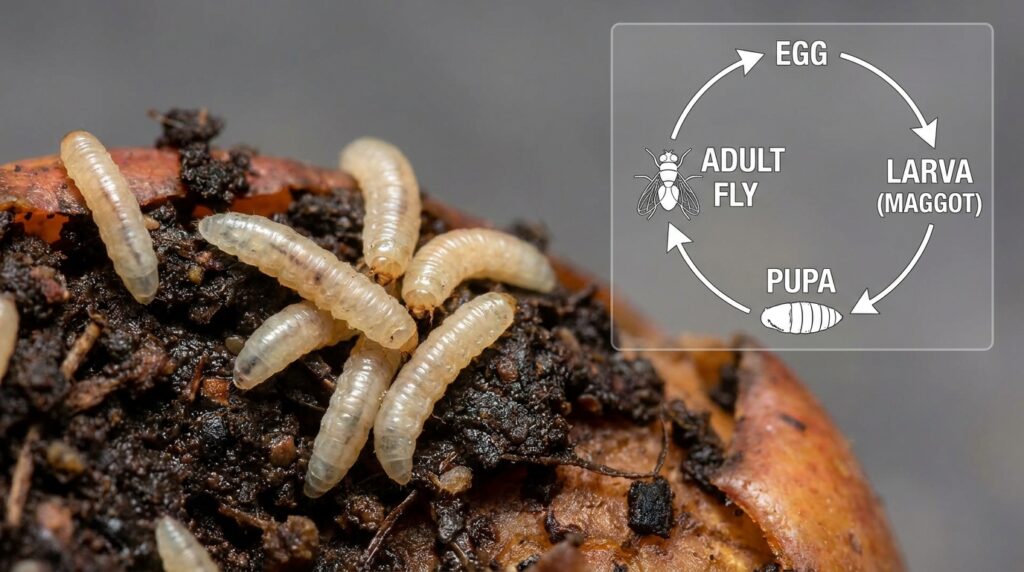
Maggots are the larval stage of flies — most commonly the common housefly (Musca domestica) or blow flies. After a fly lands on rotting food, meat, or organic waste, it lays its eggs there. Those eggs hatch into maggots, which feed on the decaying matter, grow, and eventually pupate into adult flies.
The whole cycle from egg to adult fly can take as little as 7 to 10 days in warm conditions — which is why a maggot problem can feel like it explodes overnight.
Common places you’ll find maggots:
- Garbage cans and trash bins
- Compost piles
- Pet food left out too long
- Dead animals (birds, rodents) around the home
- Carpets or floors near food spills
- Drain pipes and sewage areas
- Open wounds on animals (a condition called myiasis)
Understanding the source is key. You can kill every maggot you see, but if you don’t eliminate what’s attracting the flies in the first place, they’ll be back within days.
How to Kill Maggots: 12 Methods That Actually Work
Let’s get into the practical part. These methods range from immediate emergency fixes to long-term prevention strategies.
1. Boiling Water — The Fastest Free Method
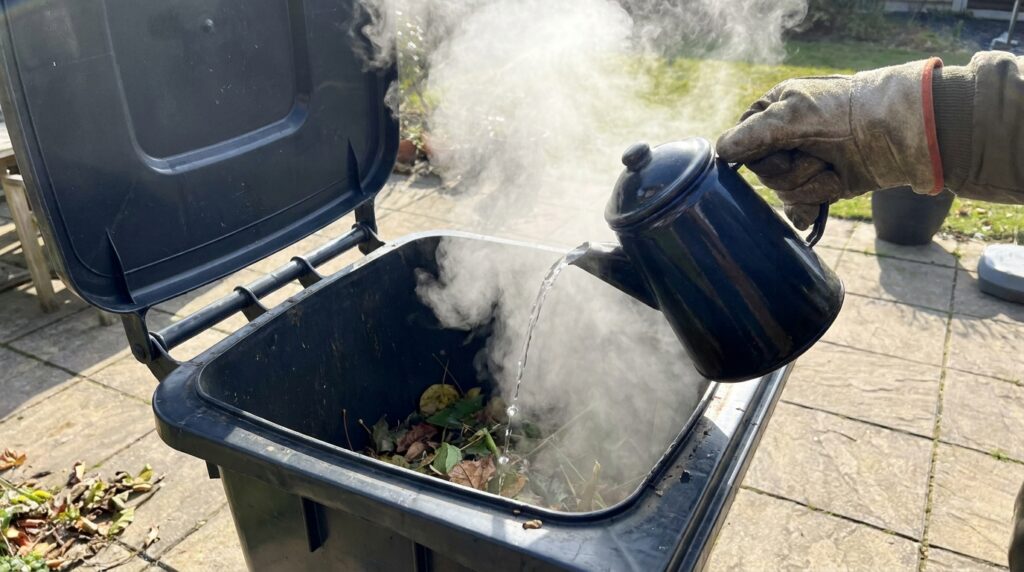
If you need to kill maggots right now and don’t have any products on hand, boiling water is your best friend.
Pouring boiling water directly onto maggots kills them almost instantly. The heat destroys their soft bodies and proteins, causing immediate death. This is especially effective for maggots in a trash can or on a hard surface.
How to do it:
- Boil a full kettle of water.
- Carefully pour it directly onto the maggot-infested area.
- Scoop up the dead maggots and dispose of them in a sealed bag.
- Rinse and disinfect the area with a cleaning solution.
Pro Tip: After using boiling water, sprinkle salt on the area. Salt dehydrates any surviving maggots or eggs.
Best for: Trash cans, outdoor surfaces, driveways, compost bins.
2. Does Bleach Kill Maggots? Yes — Here’s How to Use It
One of the most searched questions online is: does bleach kill maggots? The answer is yes — bleach is highly effective at killing maggots on contact.
Sodium hypochlorite, the active ingredient in household bleach, creates a toxic environment for maggots and destroys the proteins in their bodies. It also helps disinfect the surface and remove the odors that attract flies in the first place.
How to use bleach to kill maggots:
- Mix one part bleach with one part water in a bucket or spray bottle.
- Pour or spray it directly onto the maggots.
- Let it sit for 30 minutes.
- Scoop up the dead larvae and dispose of them in a sealed garbage bag.
- Rinse the area thoroughly with water.
Important: Never mix bleach with ammonia-based cleaners or vinegar — this creates toxic chlorine gas. Always wear gloves and work in a ventilated area.
Best for: Trash cans, outdoor bins, hard surfaces, drains.
| Method | Speed | Cost | Effectiveness |
|---|---|---|---|
| Boiling Water | Immediate | Free | ★★★★☆ |
| Bleach Solution | 10–30 min | Low | ★★★★★ |
| Salt | 30–60 min | Very Low | ★★★☆☆ |
| Insecticide Spray | Immediate | Medium | ★★★★★ |
| Diatomaceous Earth | Hours | Low | ★★★★☆ |
| Permethrin | Immediate | Medium | ★★★★★ |
3. Salt — A Simple Dehydration Method
Salt works by drawing moisture out of maggots, essentially dehydrating them to death. While it’s not as fast as bleach or boiling water, it’s a safe, non-toxic option and works well for smaller infestations.
How to use:
- Generously cover the maggots with table salt or rock salt.
- Leave it for at least 30–60 minutes.
- Sweep or vacuum up the dead maggots.
- Clean and disinfect the area.
Salt works particularly well as a follow-up treatment after using boiling water, ensuring any surviving eggs or larvae are dealt with.
Best for: Smaller infestations on flat surfaces, carpets, or floors.
4. Diatomaceous Earth — The Natural Killer
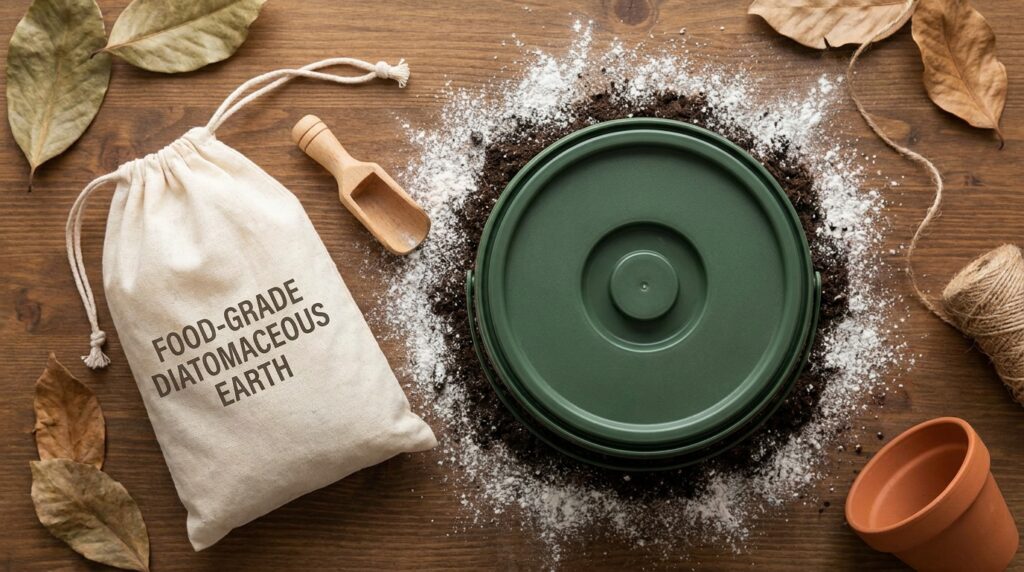
Diatomaceous earth (DE) is a naturally occurring powdery substance made from fossilized algae. It’s one of the safest, most effective natural insecticides available.
When maggots crawl across DE, the sharp microscopic particles pierce their soft exoskeletons, causing them to dehydrate and die. It’s non-toxic to humans and pets (use food-grade DE for safety indoors).
How to use:
- Dust a generous layer of food-grade diatomaceous earth over the infested area.
- Let it sit for several hours or overnight.
- Scoop up and dispose of the dead maggots.
- Reapply as needed.
DE is also an excellent preventive treatment — sprinkle it around the base of trash cans or compost bins to deter flies from laying eggs.
Best for: Carpets, soil, compost areas, and anywhere you want a chemical-free solution.
5. Insecticide Sprays — Commercial Killing Power
When you’re dealing with a large infestation, commercial insecticide sprays deliver the fastest results. Look for products containing permethrin, pyrethrin, or cyfluthrin — these are highly effective insecticides approved for household pest control by the EPA.
Recommended product types:
- Permethrin spray (e.g., Martin’s Permethrin 10%)
- Pyrethrin-based fly sprays (safer around pets when dry)
- Raid Flying Insect Killer — effective on maggots and flies
How to use:
- Clear the area of people and pets.
- Spray directly onto maggots and the surrounding surface.
- Allow the chemical to work for 15–30 minutes.
- Clean up the dead maggots and dispose of them.
- Ventilate the area after use.
Always read and follow the product label. Store insecticides safely away from children and food.
Best for: Large infestations, trash cans, outdoor areas, and drains.
6. Lime (Calcium Hydroxide) — Old Farmhouse Trick That Works
Agricultural or garden lime — also called calcium hydroxide — raises the pH of the environment to extremely high levels, which is lethal for maggots. Farmers and rural homeowners have used this method for generations.
How to use:
- Sprinkle powdered lime directly over the maggot-infested area.
- Add a small amount of water to activate it.
- Let it sit for 1–2 hours.
- Remove the dead maggots and rinse the area.
Caution: Wear gloves and avoid skin contact or inhalation. Lime can irritate skin, eyes, and lungs.
Best for: Outdoor trash cans, compost piles, soil, and large outdoor areas.
7. Vinegar and Water — A Gentler Option
White vinegar is a mild acid that can kill maggots when applied in concentration. While it’s not as powerful as bleach or insecticides, it’s a safer alternative for use around pets and children.
How to use:
- Mix one part white vinegar with one part hot water.
- Pour or spray it directly onto the maggots.
- Let it sit for 30 minutes.
- Clean and disinfect the area.
Adding a few drops of dish soap to the solution helps break down the protective coating of the larvae, making the vinegar more effective.
Best for: Indoor areas, carpets, pet areas, or anywhere you want to avoid harsh chemicals.
8. How to Kill Maggots in a Trash Can — Step-by-Step
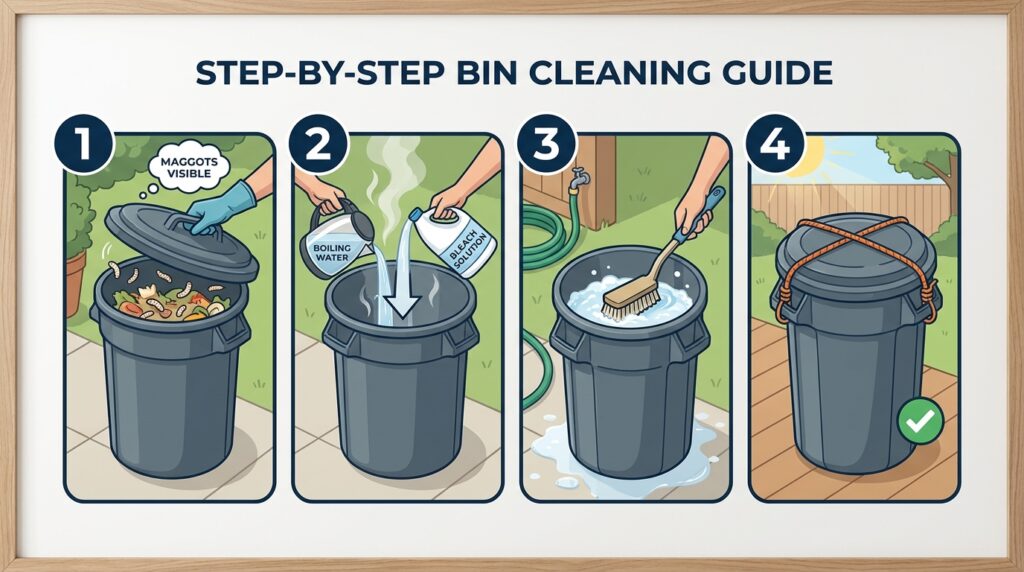
Maggots in a trash can are one of the most common infestations homeowners deal with. Here’s a complete, step-by-step method to eliminate them for good.
What you’ll need:
- Rubber gloves
- Boiling water or bleach solution
- Long-handled scrubbing brush
- Garbage bags
- Disinfectant spray or powder
- White vinegar (optional)
Step-by-step process:
Step 1 — Remove the contents. Bag all the trash and tie it tightly. Dispose of it immediately.
Step 2 — Kill the maggots. Pour boiling water into the empty can or spray a strong bleach solution (1:1 with water) directly on the maggots. Let it sit for 20–30 minutes.
Step 3 — Scrub the interior. Use a long-handled brush to scrub every surface inside the can, including the lid. Pay attention to the corners and crevices where eggs can hide.
Step 4 — Rinse thoroughly. Rinse the can with a hose. Make sure all residue is flushed away.
Step 5 — Deodorize and disinfect. Spray the interior with a disinfectant. You can also sprinkle baking soda or pour a small amount of white vinegar to neutralize odors.
Step 6 — Dry completely. Leave the can open in the sun for a few hours. Flies prefer moist environments, so drying the can reduces re-infestation risk.
Step 7 — Apply preventive treatment. Sprinkle diatomaceous earth or lime around the base and interior of the can as a deterrent.
Step 8 — Secure the lid. Use a bungee cord or heavy-duty clip to keep the lid tightly closed between pickups.
9. Fly Traps and Baits — Stop the Source
Killing the maggots you see is only half the battle. Adult flies need to be controlled too, or they’ll keep laying eggs and starting the cycle again.
Fly traps work by attracting flies with a bait (usually a pheromone or rotting-scent lure) and trapping them before they can lay eggs. Some reliable options include:
- RESCUE! TrapStik for Flies — sticky traps using visual lures
- Victor Fly Magnet — uses bait to draw flies into a bag trap
- UV light traps — attract flies with ultraviolet light, then trap or zap them
Place traps near trash cans, compost bins, and outdoor eating areas for best results. Replace them according to the package instructions.
Best for: Outdoor areas, garages, kitchens, and anywhere you want to reduce fly populations and prevent future maggot outbreaks.
10. Dish Soap and Water — Emergency Indoor Treatment
If you find maggots on your carpet or floor and need to act fast with what you already have, dish soap and water can work surprisingly well.
Dish soap contains surfactants that break down the waxy outer layer of insects, disrupting their ability to breathe and move. Combined with hot water, it becomes an effective on-the-spot treatment.
How to use:
- Add a generous squirt of dish soap to a bucket of hot water.
- Pour or spray the solution directly onto the maggots.
- Let it soak for 10–15 minutes.
- Blot up the solution and dead maggots with paper towels.
- Steam clean or shampoo the carpet afterward to remove residue.
Best for: Carpets, floors, indoor areas.
11. Cedar Oil — Natural Pest Repellent
Cedar oil is classified as a minimum-risk pesticide by the EPA and has been shown to kill and repel a range of insects including fly larvae. It works by disrupting the pest’s octopamine nervous system — something insects have but mammals don’t, making it safe around people and pets.
You can find cedar oil sprays at most garden or pet stores.
How to use:
- Dilute cedar oil per product instructions (usually 1–2 oz per gallon of water).
- Spray directly onto maggots and the surrounding area.
- Reapply every few days as a preventive measure.
Cedar wood chips can also be placed in trash cans or near compost bins to deter flies from landing.
Best for: Eco-conscious households, homes with pets, or anyone wanting a plant-based solution.
12. Professional Pest Control — When to Call the Experts
Sometimes a maggot infestation is a symptom of a larger pest problem. If you’re finding maggots repeatedly despite your best efforts, or if they’re appearing in walls, flooring, or areas you can’t easily access, it may be time to call a licensed pest control professional.
Look for companies certified by the National Pest Management Association (NPMA), which sets industry standards for pest control safety and effectiveness.
Signs you need professional help:
- Maggots keep returning within days despite treatment
- You can’t locate the fly entry point
- There’s a suspected dead animal inside your walls or crawl spaces
- You’re dealing with a very large infestation in a commercial space
Professionals have access to commercial-grade insecticides and inspection tools that can resolve persistent problems quickly.
Killing Maggots Instantly — The Best Methods Ranked
If you need results right now, here’s a quick-reference ranking of what kills maggots the fastest:
- Boiling water — kills on contact, within seconds
- Bleach solution (1:1) — kills within minutes, also sanitizes
- Permethrin insecticide spray — kills within 15–30 minutes
- Lime (calcium hydroxide) — effective within 1–2 hours
- Diatomaceous earth — works within a few hours
The combination of boiling water first + bleach second + diatomaceous earth as a preventive layer is the most thorough approach for serious infestations.
How to Get Rid of Maggots in Specific Locations
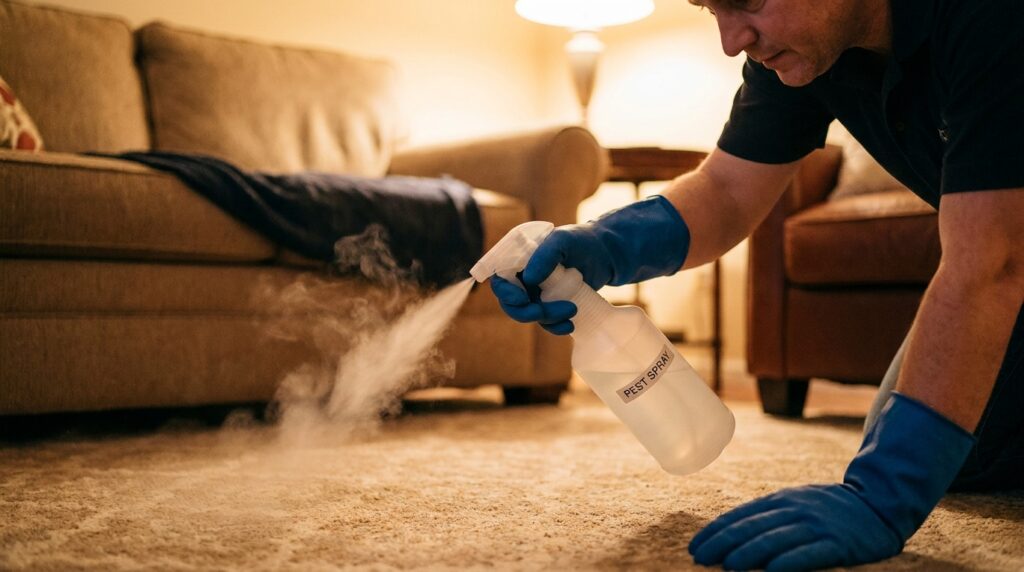
Different locations require slightly different approaches. Here’s a quick guide:
Maggots in Carpet or Flooring
Finding maggots on carpet usually means there’s a food spill, dead animal, or pet waste nearby that you may have missed. Start by finding and removing the source.
To treat:
- Vacuum up as many maggots as possible (seal and dispose of the bag immediately).
- Apply a dish soap and hot water solution or permethrin-based carpet spray.
- Steam clean the carpet after treatment.
- Sprinkle diatomaceous earth and let it sit overnight, then vacuum again.
Maggots in a Compost Bin
Some maggots — particularly black soldier fly larvae — are actually beneficial to composting and help break down organic matter. But if your bin is overrun with common housefly maggots, here’s what to do:
- Turn the compost to disturb the larvae and expose them.
- Add a thick layer of dry brown material (cardboard, dry leaves) to cover the wet waste.
- Sprinkle lime or diatomaceous earth throughout.
- Ensure your compost bin has a tight-fitting lid.
Maggots in a Drain or Garbage Disposal
Flies sometimes breed in the organic buildup inside drains. If you’re seeing small maggots near your sink, this is likely the source.
- Pour boiling water down the drain.
- Follow with a mixture of baking soda and white vinegar.
- After 15 minutes, flush with more boiling water.
- Use a drain cleaning brush to scrub the interior walls.
- Consider a biological drain cleaner that breaks down organic buildup over time, removing the fly’s food source.
How to Prevent Maggots from Coming Back
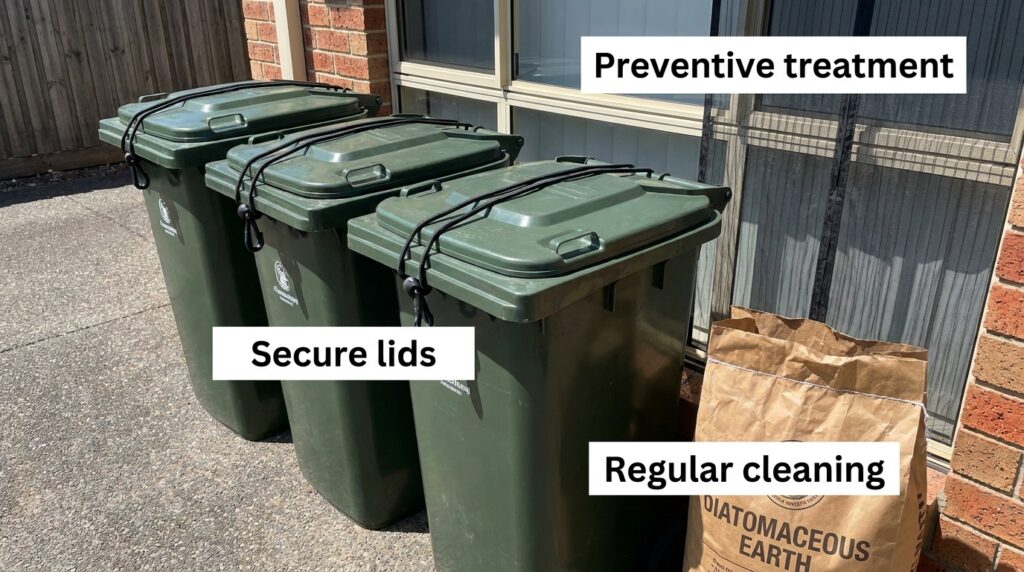
Getting rid of maggots is satisfying, but prevention is where you really win. Here’s how to make your home unattractive to egg-laying flies:
1. Secure all garbage bins. Use trash cans with tight-fitting lids. Bungee cords add extra security. Consider bins with locking mechanisms.
2. Clean your trash can regularly. Aim to rinse and disinfect your bins at least once a month. A quick spray of bleach solution goes a long way.
3. Double-bag meat and fish waste. Raw protein is the number-one attractant for blow flies. Bag it securely before throwing it away.
4. Take out trash frequently. Don’t let organic waste sit for more than a few days, especially in summer.
5. Use garbage bin deodorizers. Products like Arm & Hammer trash can deodorizers mask the smells that attract flies.
6. Install fine-mesh fly screens. Make sure all windows and doors have properly fitted fly screens to reduce the number of flies entering your home.
7. Eliminate standing water. Flies are also attracted to standing water. Regularly empty plant saucers, bird baths, and containers in your yard.
8. Sprinkle preventive treatments. Diatomaceous earth or lime around your trash area creates a hostile zone for newly hatched larvae.
Expert Tips for Killing Maggots Safely and Effectively
Treat in layers. Don’t rely on just one method. Use boiling water to kill visible maggots, then follow up with a disinfectant to sanitize, then apply a preventive barrier like diatomaceous earth. This three-layer approach eliminates the adults, eggs, and prevents re-infestation.
Timing matters. Maggots are most active and vulnerable in warm weather. Treat infestations in the morning when they tend to be congregated near the surface of their feeding area.
Always wear PPE. Maggots can carry bacteria including Salmonella and E. coli from the rotting material they feed on. Always wear disposable gloves when handling infested areas, and wash your hands thoroughly afterward.
Find the source first. Treating the maggots without removing their food source is like bailing water from a sinking boat. Before you start pouring bleach, locate and remove whatever is attracting the flies — rotting food, dead animal, or accumulated waste.
Use essential oils as a repellent. After cleaning, spray diluted peppermint essential oil or eucalyptus oil around bin areas. These scents are natural fly deterrents and leave your trash area smelling fresh.
Create a maintenance schedule. Pest professionals recommend a monthly bin-cleaning routine and a quarterly inspection of compost areas to catch infestations before they become serious.
Natural vs. Chemical Methods — Pros and Cons
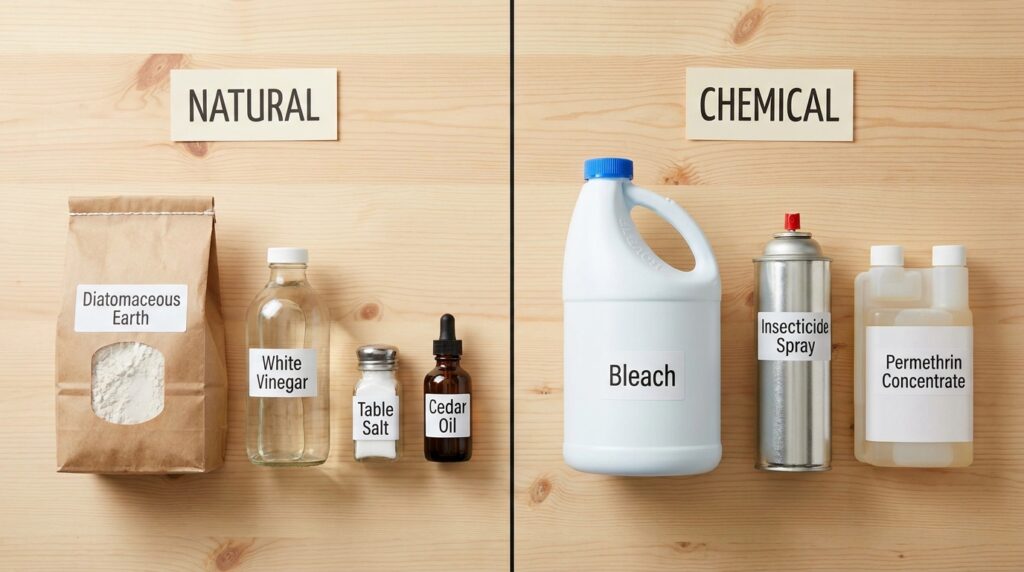
Not everyone wants to reach for a bottle of bleach or insecticide. Here’s an honest comparison:
| Category | Natural Methods | Chemical Methods |
|---|---|---|
| Examples | Boiling water, salt, vinegar, DE, cedar oil | Bleach, permethrin, pyrethrin sprays |
| Effectiveness | Moderate to high | High to very high |
| Speed | Minutes to hours | Seconds to minutes |
| Safety | Generally safe for pets/kids | Requires caution; PPE needed |
| Cost | Very low | Low to moderate |
| Environmental Impact | Minimal | Some environmental concerns |
| Best Used For | Small-medium infestations; eco-conscious users | Large infestations; urgent situations |
Verdict: For most household infestations, a combination of both approaches works best. Start with boiling water (natural, immediate), disinfect with bleach (chemical, preventive), and prevent recurrence with diatomaceous earth (natural, long-term).
Frequently Asked Questions About Killing Maggots
What kills maggots instantly?
The fastest ways to kill maggots instantly are boiling water and permethrin-based insecticide sprays. Boiling water works within seconds on contact, destroying the larvae’s soft tissue immediately. Chemical sprays like permethrin are equally fast and also have a residual effect that prevents re-infestation. For a chemical-free instant kill, boiling water is your best option.
Does bleach kill maggots?
Yes, bleach absolutely kills maggots. The sodium hypochlorite in standard household bleach creates a highly toxic environment for maggots and kills them within minutes of contact. Mix bleach 1:1 with water and apply directly to the infestation. As a bonus, bleach also disinfects the area and neutralizes the decaying odors that attract flies. Always wear gloves and ensure good ventilation when using bleach.
How do you kill maggots in a trash can without chemicals?
To kill maggots in a trash can without chemicals, use one or more of these approaches:
- Boiling water — pour it directly into the bin; kills instantly
- Salt — generously coat the maggots; dehydrates and kills within an hour
- White vinegar and hot water — spray directly on larvae; mildly acidic and effective
- Diatomaceous earth — dust the interior; pierces the larvae’s outer layer and dehydrates them
After killing the maggots, scrub the bin thoroughly, rinse, dry in sunlight, and apply a preventive layer of DE to discourage future infestations.
How long does it take to get rid of maggots?
With the right treatment, you can kill visible maggots within minutes to a few hours. However, fully getting rid of a maggot infestation — including eggs that may not have hatched yet — can take 2–5 days. Eggs typically hatch within 8–24 hours, so apply a follow-up treatment 24–48 hours after the initial one to catch any newly hatched larvae. Removing the food source and sealing entry points is essential to prevent the cycle from restarting.
Are maggots dangerous to humans?
Maggots themselves rarely cause direct harm to healthy adults, but they pose several risks:
- Bacterial transmission: Maggots feed on decomposing matter that may harbor dangerous bacteria including Salmonella and Listeria.
- Contamination: If maggots are in food storage areas, they can contaminate food supplies.
- Myiasis: In rare cases, fly larvae can infest open wounds or, in very unusual circumstances, affect humans — a condition known as myiasis. This is uncommon in healthy individuals.
- Allergic reactions: Some people may experience allergic reactions from contact with maggots or fly-infested areas.
Always wear gloves during cleanup and wash thoroughly afterward.
Conclusion
Dealing with a maggot infestation is genuinely unpleasant — but it’s completely solvable with the right approach. The key is to act fast, use the right method for the situation, and follow up with prevention to make sure it doesn’t happen again.
To recap:
- For instant results: Boiling water or bleach solution
- For natural treatment: Diatomaceous earth, salt, or vinegar
- For large infestations: Permethrin spray or professional pest control
- For prevention: Secured lids, regular cleaning, and DE as a barrier
The worst thing you can do is ignore the problem. Maggots don’t go away on their own — they become adult flies that go on to lay hundreds more eggs. Take action today, follow the steps in this guide, and you’ll have a clean, fly-free space in no time.

