
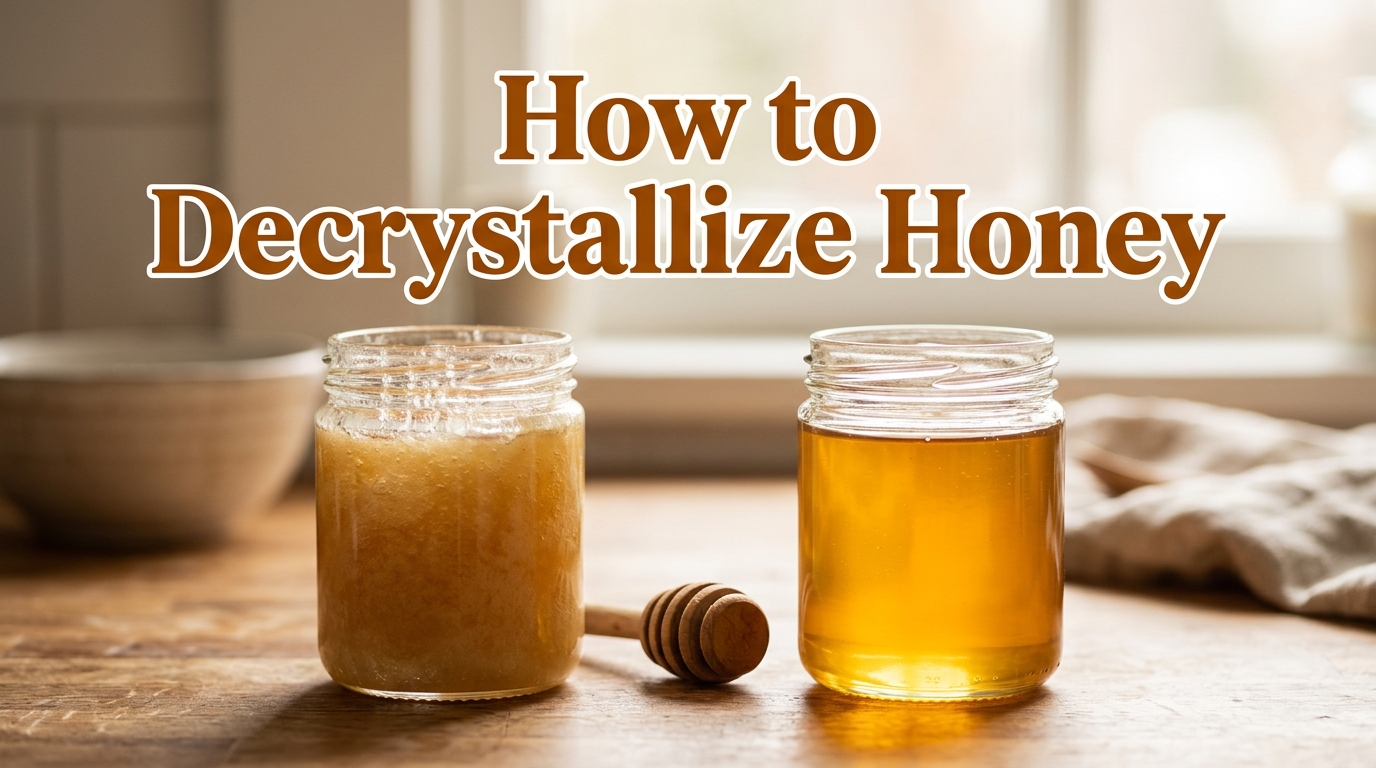
Honey turning cloudy and stiff in the cupboard catches a lot of people off guard. One week it’s pouring smoothly off a spoon, and the next it’s a solid block that won’t budge. If you’re wondering how to decrystallize honey without ruining its flavor or nutrients, the fix is usually a lot simpler than it looks, and it rarely involves throwing the jar away.
That thick, grainy texture isn’t spoilage. It’s just honey behaving exactly the way real, minimally processed honey behaves over time. Once you understand the small bit of chemistry behind it, bringing it back to a smooth, pourable state takes only a few minutes of gentle warmth.
Why Does Honey Crystallize
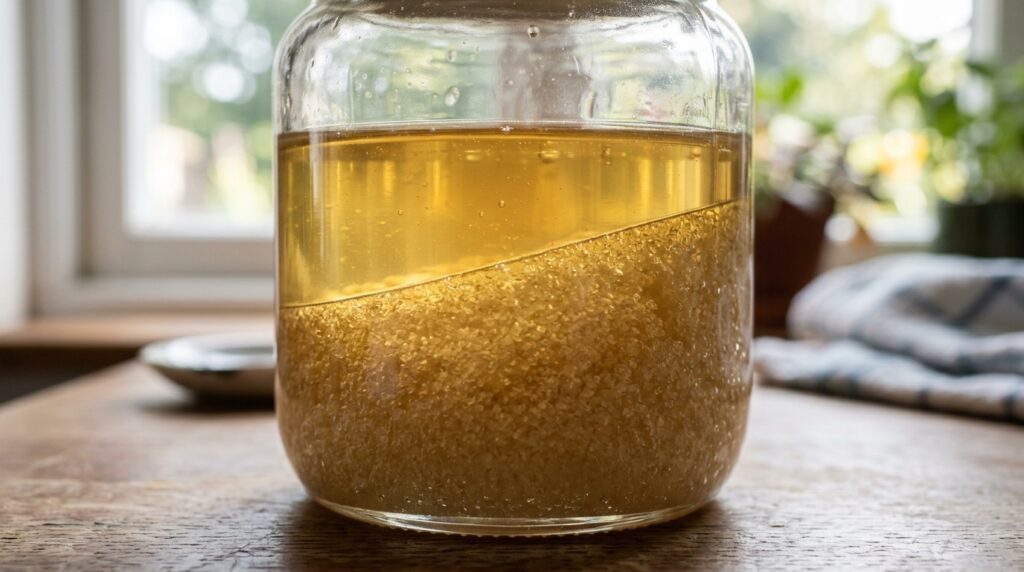
Honey is what food scientists call a supersaturated solution. It’s packed with more sugar, mostly glucose and fructose, than the small amount of water in the jar can permanently hold in a dissolved state. That imbalance is naturally unstable, so over time the glucose starts to separate from the water and settle into tiny solid crystals.
Those first crystals act like magnets for more glucose molecules, and the process spreads through the jar until the honey looks cloudy, grainy, or completely solid. Fructose, on the other hand, stays dissolved much more easily, which is part of why some honeys resist crystallizing longer than others.
A few things speed the process along:
- Floral source: honey with a higher glucose-to-fructose ratio, like clover or dandelion honey, crystallizes faster than honeys such as tupelo or acacia, which lean fructose-heavy.
- Storage temperature: crystallization happens fastest in that in-between zone, roughly 50 to 59°F, which happens to be about where a lot of pantries and garages sit.
- Tiny particles: pollen grains, bits of wax, or air bubbles introduced during bottling give the glucose something to latch onto and speed things up.
- Raw, unfiltered honey: because it hasn’t been heavily strained or pasteurized, it keeps the particles that trigger crystallization, which is one reason raw honey solidifies sooner than the ultra-filtered kind sold in some grocery aisles.
This is a completely natural process that doesn’t mean the honey has gone bad. If anything, honey that never crystallizes at all is more likely to have been heavily processed or blended with syrups that resist the change.
Is Crystallized Honey Still Safe to Eat
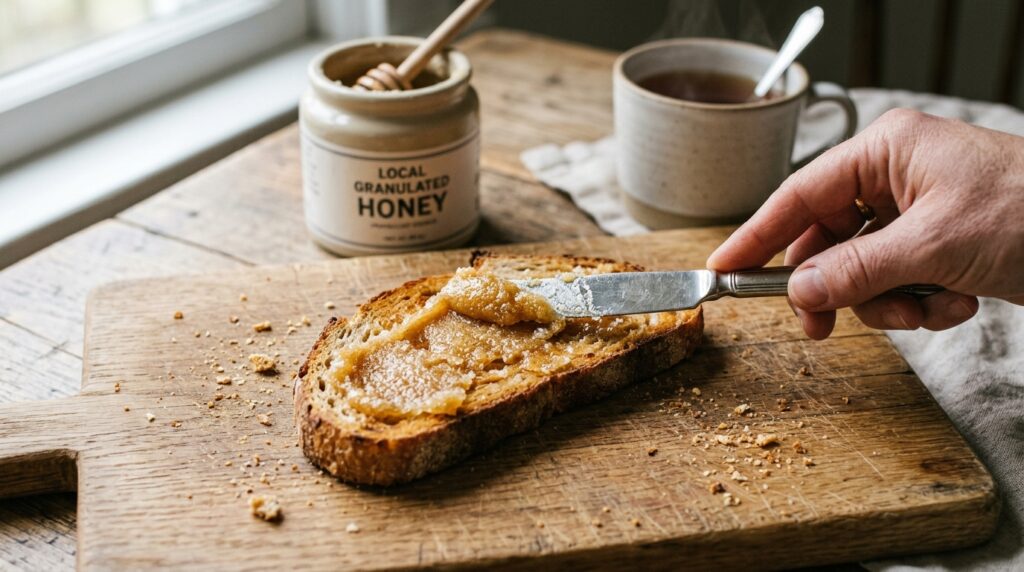
Yes, and this is one of the most common misunderstandings about honey. Crystallized honey has the same sugars, enzymes, and antioxidants as the liquid version, and the texture change doesn’t affect its safety or nutritional value.
Plenty of people actually prefer it once it firms up. It spreads on toast without dripping everywhere, holds its shape on a cheese board, and doesn’t run off a warm biscuit the way liquid honey does. Some producers even encourage the crystals on purpose, controlling the process to make a smooth, spreadable “creamed” honey.
The only time to be cautious is if the honey also smells sour, shows visible mold, or has separated with a layer of watery liquid on top, since that can point to fermentation rather than ordinary crystallization. In that case, it’s better to toss the jar than to eat it.
How to Decrystallize Honey the Right Way
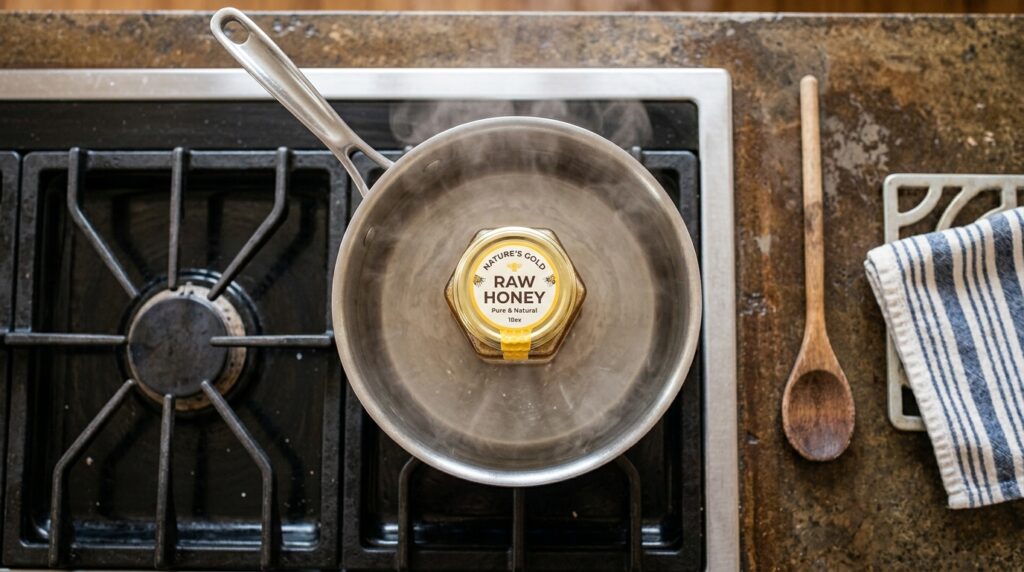
The general method for how to decrystallize honey is always some version of gentle, even heat. Honey scorches easily and loses some of its delicate flavor compounds above roughly 104 to 110°F, so the goal is warm, not hot.
The Warm Water Bath Method
This is the most reliable, lowest-risk approach for almost any container.
- Fill a saucepan or bowl with hot tap water or water that’s just been boiled and taken off the heat.
- Loosen the lid on the honey jar slightly, or remove it entirely if the container allows.
- Set the jar in the water so the level sits below the honey line, and let it sit.
- Stir every few minutes with a clean spoon to help distribute the heat evenly.
- Refresh the water once it cools, and repeat until the crystals fully dissolve.
Depending on how solid the honey has become, this can take anywhere from 15 minutes for a lightly crystallized jar to closer to an hour for a fully hardened one.
How to Decrystallize Honey in the Microwave
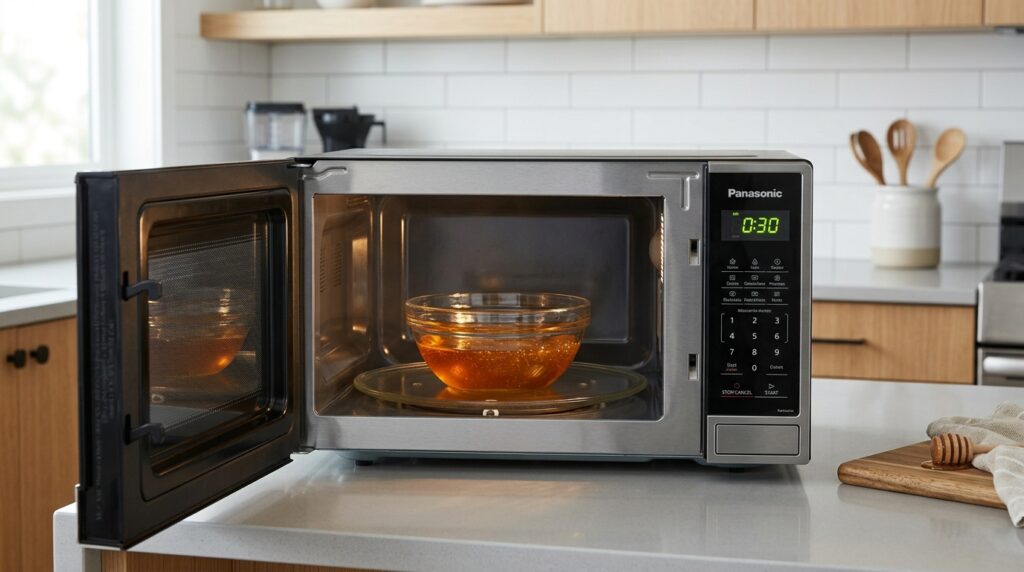
Microwaving honey works, but it needs a light touch because microwaves heat unevenly and can scorch honey in seconds if left unattended.
- Transfer the honey to a microwave-safe container if it’s currently in metal or a container with metallic trim.
- Remove the lid completely.
- Microwave in 30-second bursts on a medium or medium-low setting rather than full power.
- Stir thoroughly after every burst to redistribute the heat and check the texture.
- Stop as soon as the crystals are gone. Residual heat will keep softening it for a minute or two after it comes out.
This is the fastest route if you need a spoonful of smooth honey right away, but it’s not the best choice for honey you want to preserve long term, since repeated microwave sessions can degrade flavor and beneficial enzymes faster than a slow water bath would.
How to Decrystallize Honey Quickly
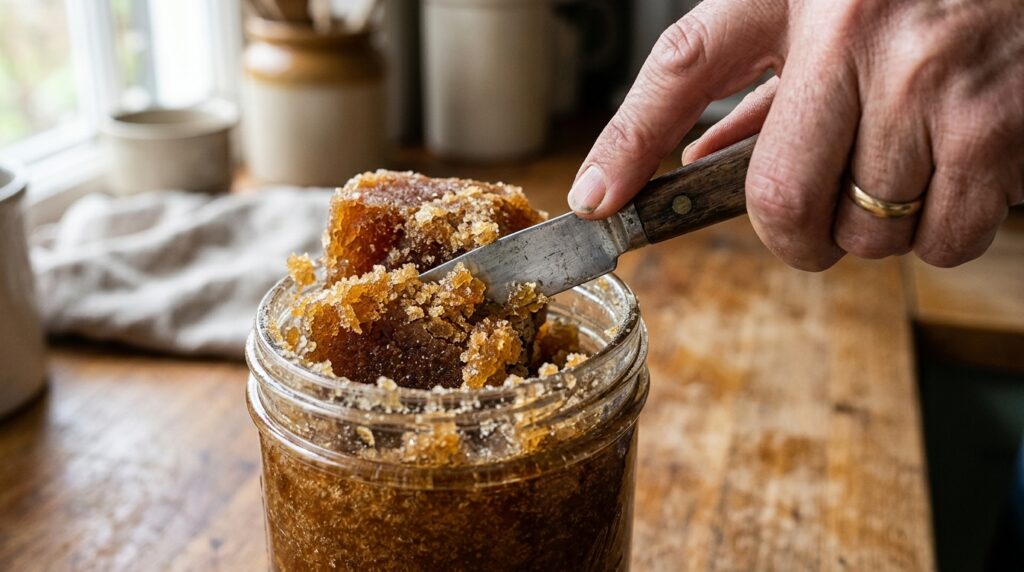
When time is tight, a few adjustments speed things up without pushing the temperature too high:
- Break the solid honey into smaller chunks with a clean butter knife before warming it, so heat reaches the center faster.
- Use hot water rather than lukewarm water for the bath, just short of boiling.
- Stir often. Movement helps redissolve crystals faster than heat alone.
- Warm only the amount you need in a small dish rather than the entire jar.
None of these shortcuts should involve direct stovetop heat or boiling water poured straight onto the honey, since that risks caramelizing the sugars and altering the taste.
How to Decrystallize Honey in a Glass Jar

Glass is the easiest and safest material to work with because it tolerates heat evenly and won’t warp or leach anything into the honey.
- Set the jar, lid loosened, into a pot of hot water on the stovetop over low heat, or into a bowl of hot tap water on the counter.
- If using the stovetop, keep the burner on its lowest setting and never let the water reach a rolling boil.
- Stir occasionally and swap in fresh hot water as it cools.
- Once the honey turns clear and pourable again, dry the outside of the jar before storing it.
A glass jar can also go into the oven for very stubborn crystallization: set the oven to its lowest setting (around 150 to 170°F), place the uncovered jar on a middle rack, and check it every 10 minutes until it’s smooth.
How to Decrystallize Honey in a Plastic Bottle
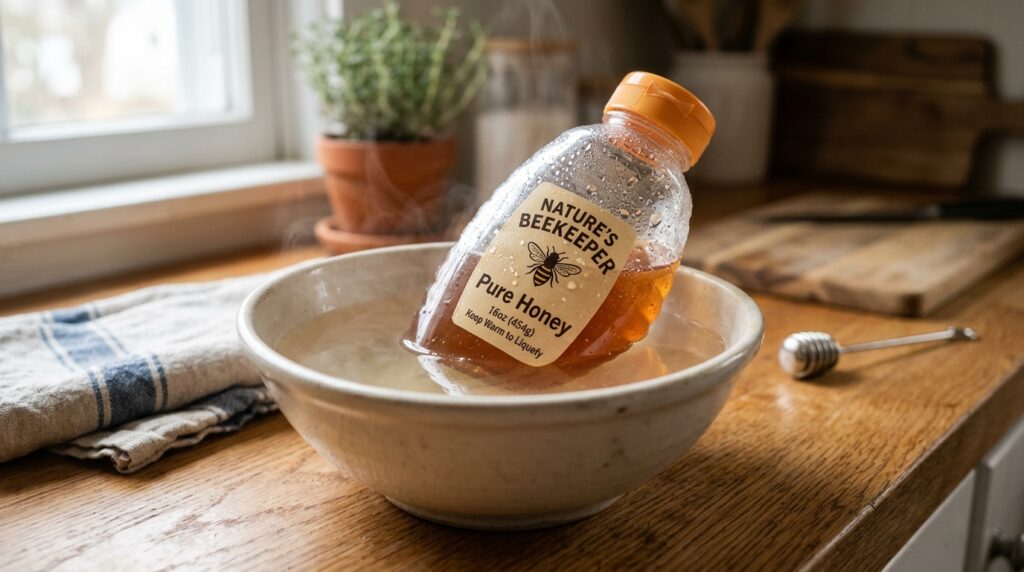
Plastic squeeze bottles are common for honey, but they need a gentler approach since plastic can warp or release compounds if it gets too hot.
- Skip direct stovetop contact entirely. Use a bowl of hot tap water instead of boiling water.
- Keep the bottle’s cap on but loosened slightly so pressure can escape as the honey warms.
- Submerge the bottle up to the honey’s fill line and let it sit for 10 to 15 minutes at a time.
- Massage or gently squeeze the bottle periodically to help move warmth through the honey.
- Refill with fresh hot water as needed until the honey flows smoothly again.
Never microwave honey while it’s still in a plastic bottle, since plastic isn’t built for microwave heat cycles the way glass is, and it can warp or release material into the food.
How to Decrystallize Honey in a Plastic Container or Jar
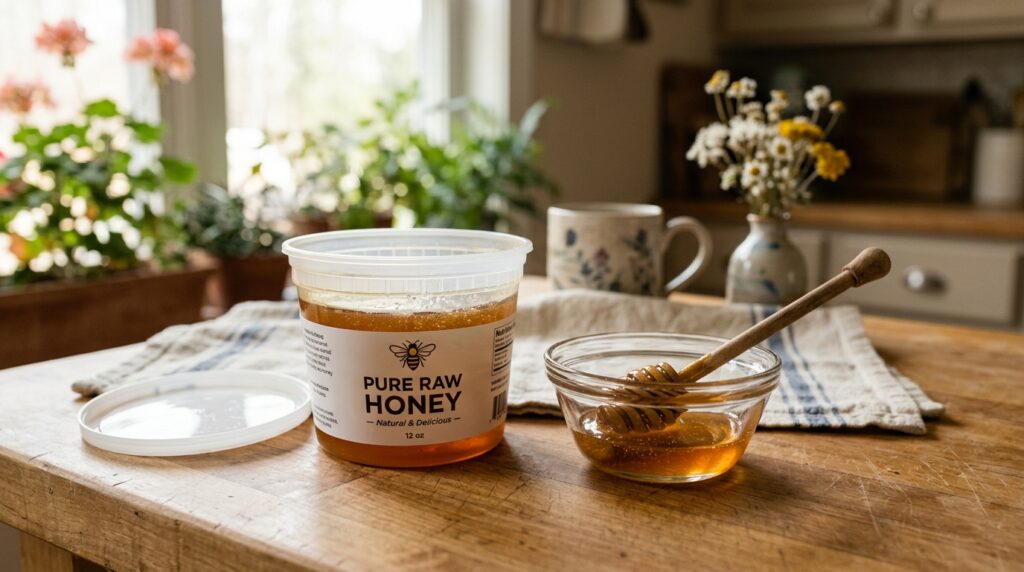
The same caution applies to tubs, squeeze jars, and other plastic packaging, whether it’s a wide-mouth container or a smaller travel-size jar.
- Always remove the lid before applying heat, since trapped steam can build pressure inside a sealed plastic container.
- Stick to a warm water bath rather than the microwave whenever possible, especially for containers not labeled microwave-safe.
- If the container is microwave-safe, use short 15 to 20 second bursts on a reduced power setting, stirring between each one.
- Transfer the honey to a glass bowl first if you plan to use higher heat, since it’s simply more forgiving than plastic.
If you regularly buy honey in bulk plastic jugs, it can help to portion some into a smaller glass jar for everyday use, since smaller amounts warm up and decrystallize far faster than a large container.
How to Decrystallize Honey Permanently
There’s no method that stops honey from ever crystallizing again, since it’s simply the nature of a supersaturated sugar solution. But a few habits can slow the process dramatically and keep a jar pourable for months at a time.
| Habit | Why it helps |
|---|---|
| Store at 70 to 80°F | This range keeps glucose dissolved longer than cooler pantry temperatures |
| Keep the lid tightly sealed | Limits moisture exchange, which can speed up crystallization |
| Avoid the refrigerator | Cold temperatures actually accelerate crystallization rather than prevent it |
| Use a clean, dry spoon | Introducing water or food particles gives crystals more surfaces to form on |
| Buy smaller jars if it’s used slowly | Less time sitting around means less opportunity to crystallize |
Some people also choose to buy honey that’s already been through a process called seeding, where a small amount of finely crystallized honey is blended in on purpose to create a smooth, spreadable texture that stays consistent, rather than developing large, gritty crystals over time.
Expert Tips for Handling Crystallized Honey
- Test small batches first. If you’re unsure how a container will hold up to heat, warm a spoonful in a separate dish rather than risking the whole jar.
- Don’t rush with high heat. Slow and steady beats fast and hot every time when it comes to preserving flavor and enzyme activity.
- Label older jars. Honey doesn’t spoil in the traditional sense, but keeping track of purchase dates helps you notice unusual changes like fermentation.
- Repurpose crystallized honey. It dissolves beautifully into warm tea, oatmeal, or marinades without needing to be fully liquefied first.
- Keep drips in mind. A jar that’s been repeatedly warmed and cooled can develop sticky residue on the outside; if it hardens onto a counter or tablecloth, a few simple steps can lift dried honey stains without spreading the mess further.
Pros and Cons of Decrystallizing Honey
Pros
- Restores the smooth, pourable texture many people prefer for baking and drizzling
- Doesn’t change the nutritional makeup of the honey
- Takes only household items: a pot, water, and a spoon
- Works on nearly any container with the right method
Cons
- Repeated heating cycles can gradually dull some of honey’s more delicate aromatic notes
- Overheating risks caramelizing sugars and altering flavor
- The process has to be repeated periodically, since crystallization returns over time
- Microwaving requires close attention to avoid hot spots or scorching
Common Mistakes to Avoid
- Boiling the honey directly. High heat breaks down flavor compounds and can create a burnt taste that doesn’t go away.
- Microwaving on full power. This is one of the fastest ways to end up with scorched pockets in an otherwise fine jar of honey.
- Sealing the lid tightly while heating. Trapped steam or pressure can cause splatters or, in rare cases, cracked glass from rapid temperature shifts.
- Refrigerating to “preserve” it. This backfires, since cold temperatures actually speed crystallization rather than slow it.
- Giving up too early. Fully solid honey can take longer than expected. Patience with lower, steady heat works better than cranking up the temperature.
Frequently Asked Questions
Does crystallized honey mean it has gone bad?
No. Crystallization is a normal physical change caused by glucose separating from water in the honey. It doesn’t affect safety, flavor quality, or nutrition, and the honey can be eaten crystallized or warmed back to a liquid state.
How long does it take to decrystallize honey?
A lightly crystallized jar can smooth out in 15 to 20 minutes in a warm water bath, while a fully solid jar may take 45 minutes to an hour, with the water refreshed a few times along the way.
Can I decrystallize honey without heat?
Not really. Some texture change is possible with prolonged room-temperature storage, but breaking down glucose crystals reliably requires warmth. Even gentle sunlight on a windowsill works by adding low-level heat over time.
Will decrystallizing honey more than once ruin it?
Occasional reheating is fine and won’t spoil the honey, though very frequent, high-heat sessions can gradually mute some of its aroma and flavor over months or years. Keeping the heat low and infrequent helps preserve quality.
Why does my honey crystallize faster than my friend’s honey?
It usually comes down to the floral source and how the honey was processed. Varieties like clover or dandelion crystallize quickly because of their glucose content, while raw, unfiltered honey crystallizes sooner than heavily filtered store-bought honey because it retains the tiny particles that kickstart the process.
Final Thoughts
A jar of solid, cloudy honey isn’t a lost cause. It’s a sign the honey is doing exactly what real honey does over time. A little patience with warm water, or a careful minute or two in the microwave, brings it right back to a smooth, drizzle-ready texture. Keep it stored somewhere warm and dry, reach for a dry spoon each time, and it’ll stay pourable for longer between touch-ups.
If your jar solidifies again in a few months, that’s completely normal too. Just repeat the same gentle warming process, and it’ll be back to normal in no time.

