
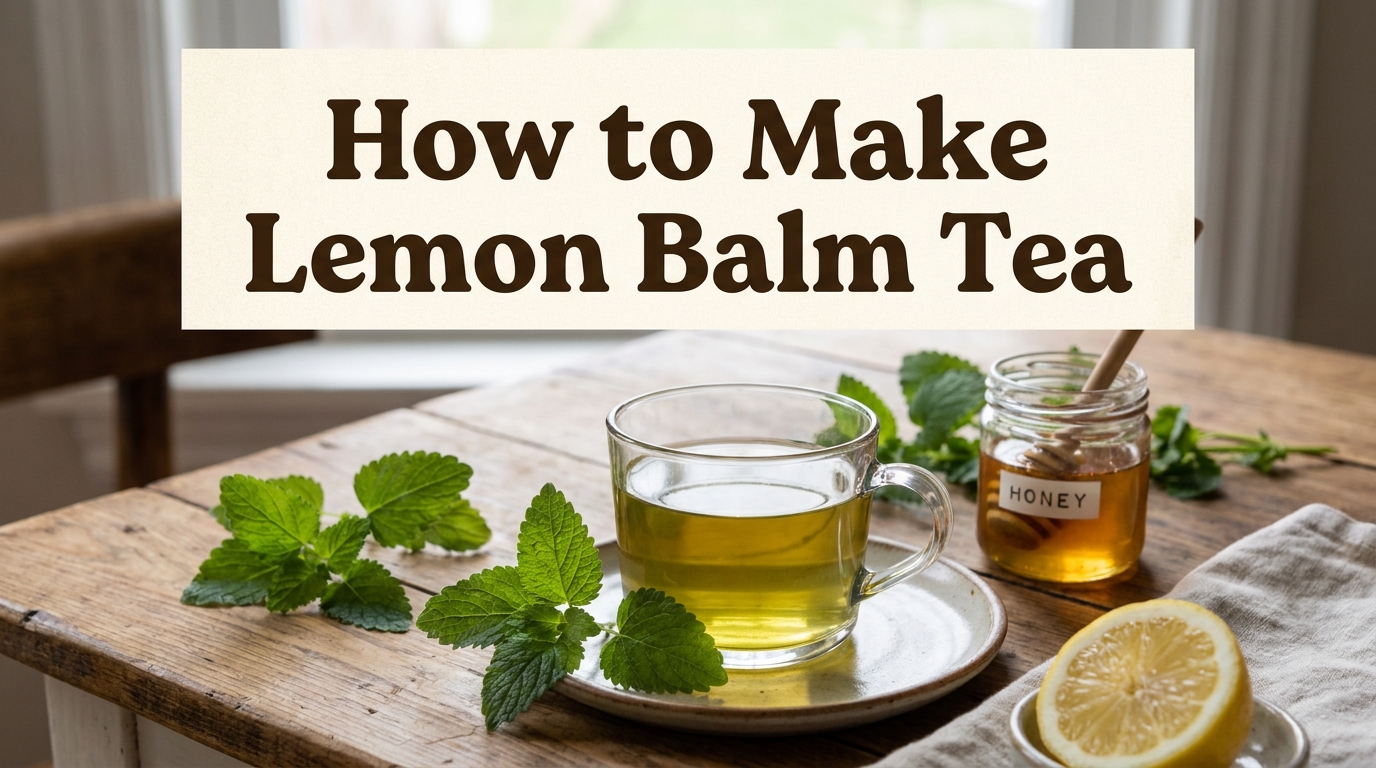
There’s a scraggly patch of lemon balm growing by my back steps that I never planted on purpose. A neighbor gave me a cutting three summers ago, warned me it would take over if I let it, and it has done exactly that. Which turned out to be the best kind of accident, because now I’ve got an endless supply of leaves for tea whenever the kettle’s on.
If you’re wondering how to make lemon balm tea, the short answer is that it’s one of the easiest herbal teas you can brew at home, and you don’t need a garden to do it. A handful of fresh leaves, or a spoonful of dried ones, hot water, and a few minutes of steeping is really all it takes. But there are a few small details that separate a flat, grassy cup from one that actually tastes like something you’d order again.
This guide walks through the whole process: picking leaves, drying them if you want to, brewing ratios, flavor combinations, when to drink it, and what to know before you make it a daily habit.
What Lemon Balm Actually Is
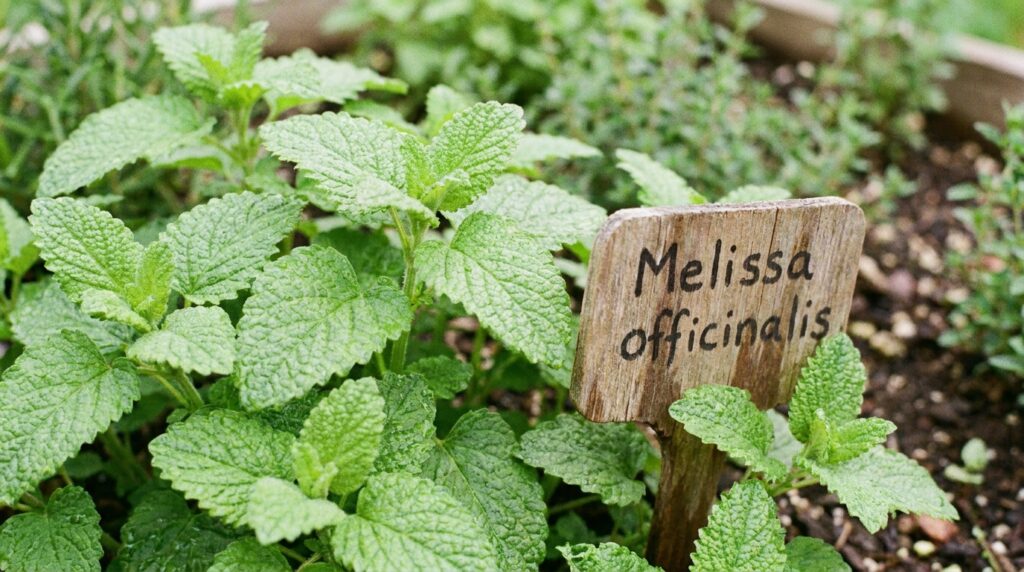
Lemon balm is a leafy plant in the mint family, and if you’ve ever grown mint and watched it spread further than you intended, you already have a sense of how this one behaves. Its botanical name is Melissa officinalis, and despite the citrus in its common name, there’s no lemon involved at all. The scent comes from natural oils in the leaves, chiefly citronellal, which give off a lemony smell the moment you brush against the plant or crush a leaf between your fingers.
The plant is originally from the eastern Mediterranean and parts of western Asia, though it’s now grown widely across home gardens in the United States, largely because it tolerates poor soil, needs little attention, and comes back reliably year after year. People have been drying and steeping the leaves for centuries, long before “herbal tea” was a section at the grocery store. Historical texts describe it being steeped in wine for stings and low spirits, and later brewed as a simple after-dinner tea to settle the stomach.
Today it shows up in three main forms: fresh leaves straight from the garden, dried leaves in bulk or tea bags, and concentrated extracts used in supplements. This guide focuses on the first two, since that’s what you’ll actually use to make a cup at home.
Why People Brew This Tea in the First Place
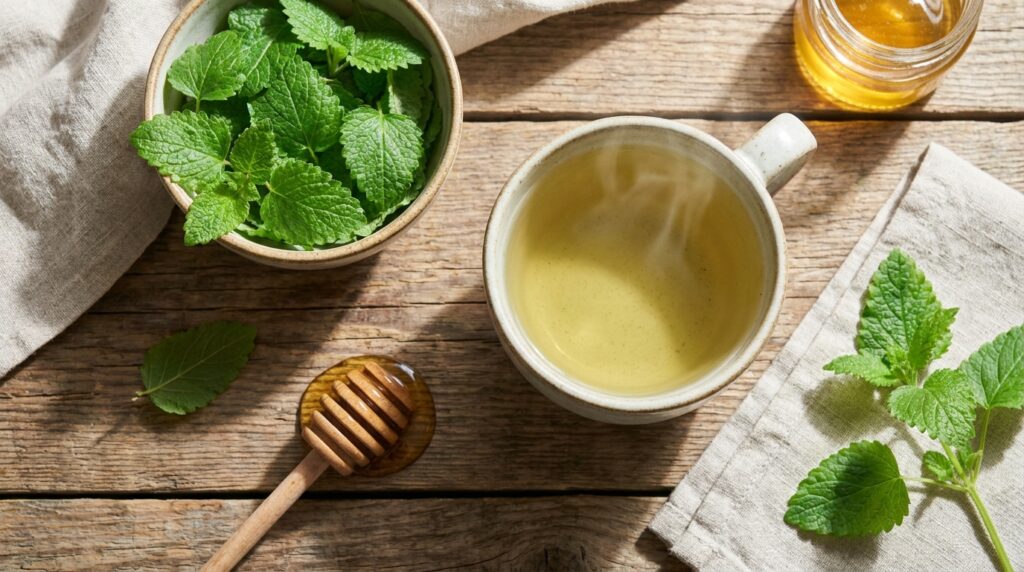
Most people don’t start drinking lemon balm tea for the flavor alone, though it is pleasant, mild, lemony, with a faint mintiness underneath. They start because someone told them it might help them unwind.
That reputation isn’t just folklore. Physicians who work with calming, anti-inflammatory herbs commonly point to lemon balm as something people reach for to support digestion, sleep, and general anxiety, noting it may ease occasional insomnia linked to mild stress without the grogginess associated with some sleep medications.
A more recent scientific review of lemon balm’s effect on psychological well-being found that pharmacological evidence from animal and cellular research suggests lemon balm and its components may act on several brain signaling pathways, including GABAergic, cholinergic, and serotonergic systems, and concluded there’s promise for lemon balm as a calming agent with both anxiety-easing and mood-lifting properties, though it also called for more robust human trials before anyone treats it as a proven remedy.
Beyond the calming reputation, lemon balm is also commonly used for:
- Occasional digestive discomfort such as bloating, gas, or a fussy stomach after eating
- Mild sleep support, often paired with other calming herbs like chamomile or valerian
- General relaxation during stressful stretches of the day
- Mood support, though the human research here is still fairly limited
It’s worth being honest about the state of the science. Fact sheets on individual medicinal herbs exist precisely because so many botanicals, lemon balm included, have long traditional use but a smaller body of rigorous human trials backing specific claims. None of this means the tea won’t help you personally relax after a long day. It just means it’s sensible to think of it as a pleasant, low-risk ritual rather than a medical treatment.
Fresh Leaves vs. Dried Leaves: Which Should You Use?
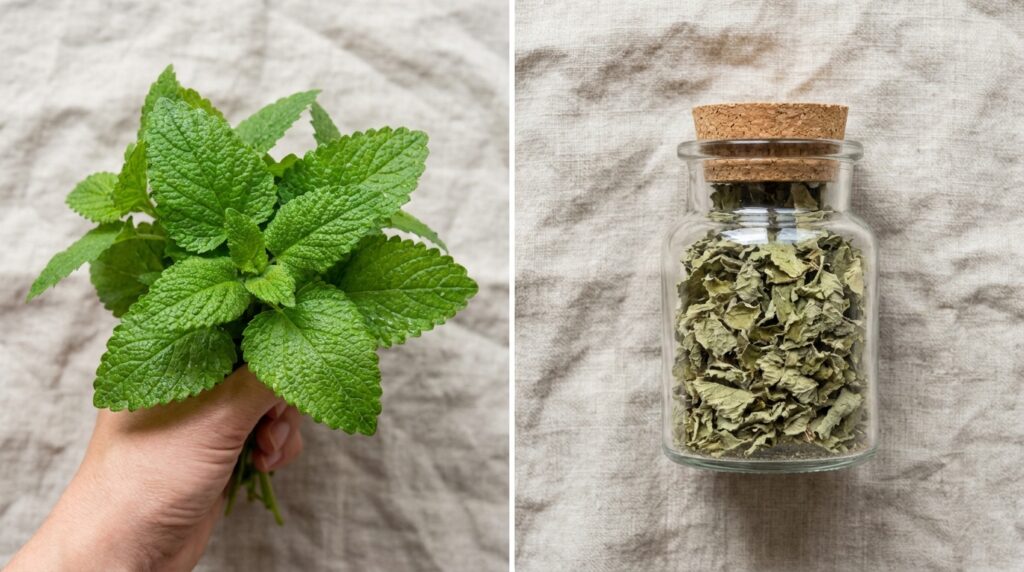
You can make a good cup either way, but the two versions taste noticeably different.
Fresh leaves give you a brighter, more citrusy cup with a slightly grassy edge. The flavor is lighter and the lemon scent is more pronounced, since you haven’t lost any volatile oils to drying. Fresh tea also needs a few more leaves per cup, since fresh leaves are mostly water weight.
Dried leaves are more concentrated in flavor per gram, which is why most recipes call for less of them. Drying does mellow some of that sharp lemon top note, but it also makes the tea more convenient. You can store dried lemon balm in a sealed jar for months and it will still smell like lemon balm when you open it, whereas fresh leaves wilt within a day or two on the counter.
If you’re growing your own plant, use fresh leaves in season and dry the extra for winter. If you’re buying, look for loose dried leaf rather than tea bags with fillers, since the quality and potency of pre-bagged herbal teas can vary quite a bit between brands.
How to Make Lemon Balm Tea From Fresh Leaves
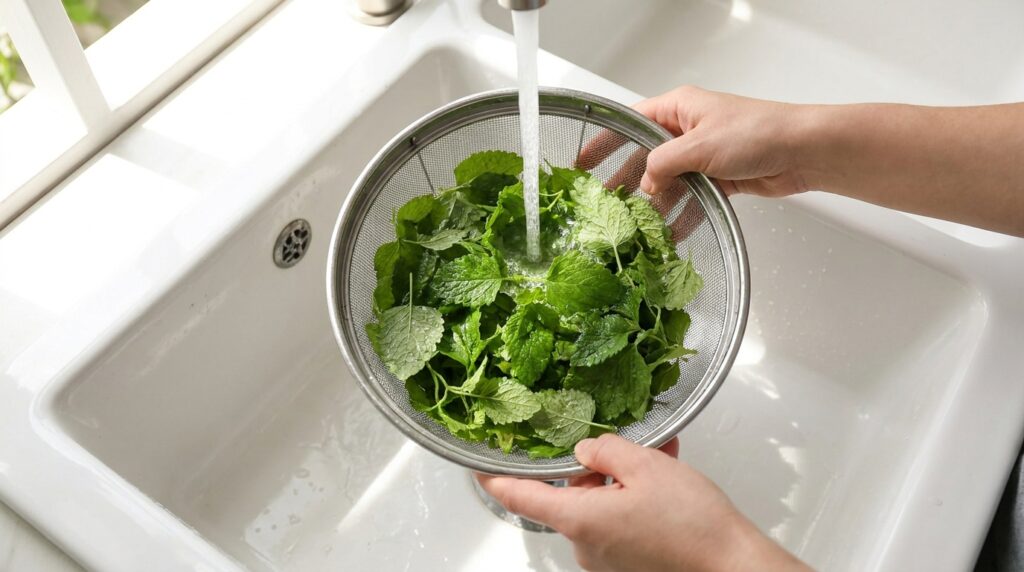
This is the version I make most often between late spring and early fall, whenever the plant is producing more leaves than I know what to do with.
- Snip a small handful of leaves. You want roughly 8 to 10 fresh leaves per cup of water. Pick leaves from the upper part of the plant, since younger growth tends to have a milder, less bitter flavor than older bottom leaves.
- Rinse them well. Even homegrown leaves can carry dust, dirt, or the occasional garden visitor. A quick rinse under cool water takes care of it.
- Bruise the leaves slightly. Roll them gently between your palms or give them a light press with the back of a spoon. This helps release the aromatic oils faster once hot water hits them.
- Boil water and let it cool for a moment. Bring water to a boil, then let it sit off heat for about 30 seconds. Water that’s just off a rolling boil, rather than boiling itself, is gentler on delicate leaves.
- Steep for 5 to 7 minutes. Pour the hot water over the leaves in a mug or teapot, cover to trap the aromatic steam, and let it steep.
- Strain and serve. Remove the leaves, add honey or lemon if you like, and drink while warm.
This lines up with the general process for making tea from fresh leaves: rinse the fresh leaves, then steep them in hot water, whether you’re using them straight off the plant or drying them first for later use.
A Simple Lemon Balm Tea Recipe You Can Make Tonight
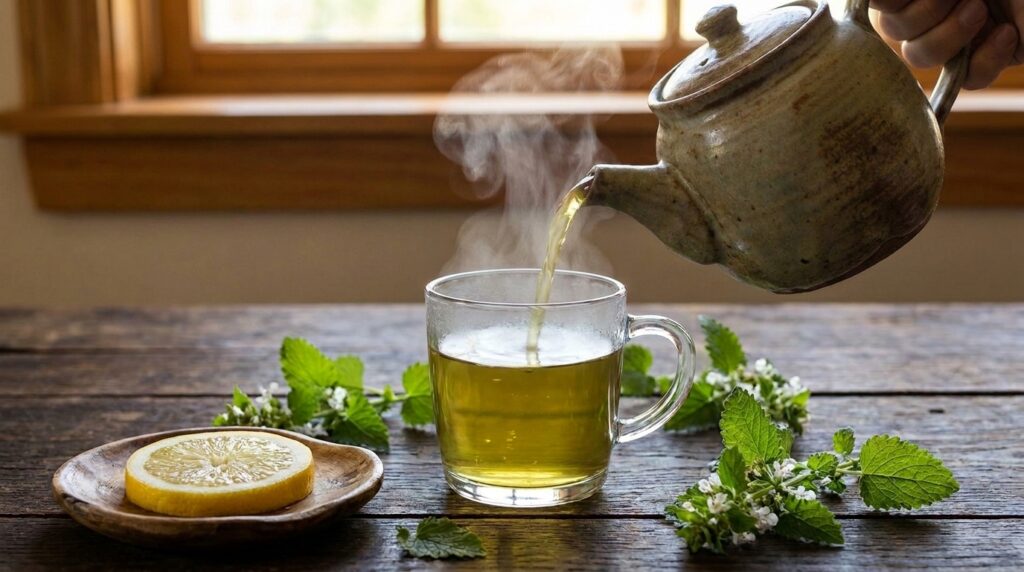
If you want exact measurements rather than a loose handful, this lemon balm tea recipe is the one I come back to most.
Ingredients (makes 1 cup):
- 1 tablespoon fresh lemon balm leaves, lightly chopped or bruised (or 1 teaspoon dried leaves)
- 1 cup (8 oz) hot water, just off the boil
- Honey or a thin slice of fresh lemon, optional
- A small sprig of mint, optional, for a cooler, more herbal finish
Instructions:
- Place the lemon balm leaves in a mug or a small teapot.
- Pour the hot water over the leaves.
- Cover the mug with a small plate or lid to hold in the aromatic oils, and steep for 5 minutes for fresh leaves or 7 to 10 minutes for dried.
- Strain out the leaves.
- Stir in honey and a squeeze of lemon if you’d like a little sweetness and brightness.
- Sip slowly. This isn’t a tea you want to gulp down.
Scale this up for a full pot: use roughly 1 tablespoon of fresh leaves for every 8 ounces of water, and adjust to taste from there. Some people prefer a stronger, more concentrated cup and simply use more leaves rather than steeping longer, since over-steeping can pull out more bitterness than flavor.
How to Dry Lemon Balm Leaves for Tea Later
If you’re growing lemon balm and want tea year round, drying your own leaves is straightforward and saves you from buying it later.
- Harvest in the morning, after the dew has dried but before the afternoon sun has drawn out too much of the essential oil.
- Rinse and pat dry thoroughly. Any leftover moisture will slow drying and can encourage mold.
- Lay leaves in a single layer on a baking sheet, a mesh drying rack, or hang small bundles upside down in a dry, well-ventilated spot out of direct sunlight.
- Wait it out. Air drying typically takes 5 to 10 days depending on humidity. Leaves are ready when they crumble easily rather than bend.
- Store in an airtight jar, away from heat and light. Dried lemon balm can hold its flavor for several months this way.
If you’re in a hurry, a food dehydrator set to a low temperature, or an oven on its lowest setting with the door slightly cracked, will dry the leaves in a few hours instead of days. Just watch closely, since lemon balm’s oils are delicate and too much heat will cook off the very thing that gives the tea its scent.
Flavor Pairings and Variations Worth Trying
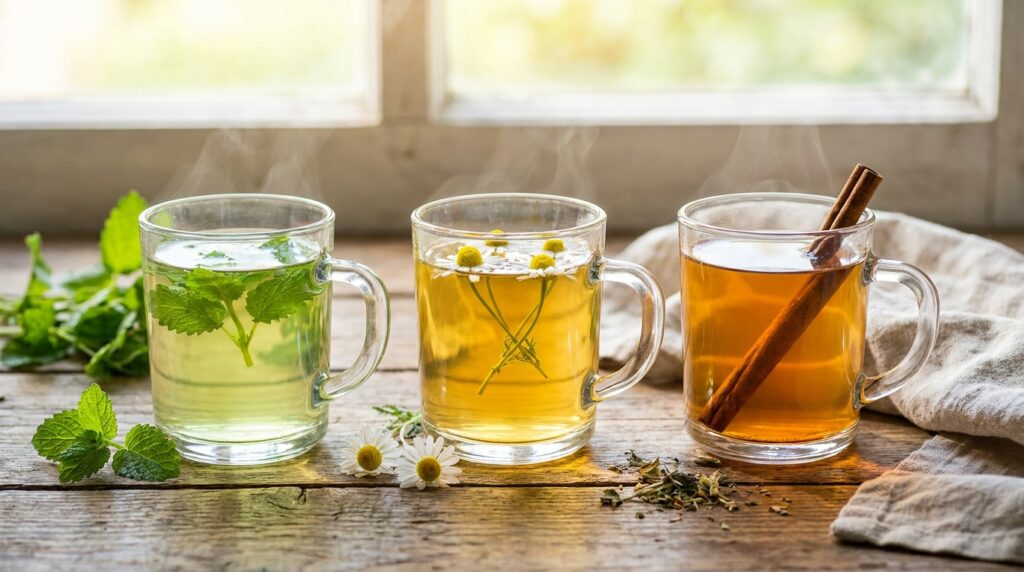
On its own, lemon balm tea is gentle and slightly sweet without any added sugar, which makes it a forgiving base for other flavors.
| Pairing | Effect on Flavor | Best For |
|---|---|---|
| Fresh mint | Cooler, brighter, more herbal | Afternoon iced tea |
| Chamomile flowers | Softer, floral, more classic “bedtime tea” taste | Evening wind-down |
| Fresh ginger slice | Warming, slightly spicy contrast | Cold weather or upset stomach |
| Honey and lemon slice | Rounds out bitterness, adds brightness | Anyone new to herbal teas |
| Cinnamon stick | Warm, cozy, dessert-like | Fall and winter evenings |
A common combination worth trying is lemon balm with chamomile, since both are traditionally used for relaxation and their flavors complement each other well. Herbalists frequently blend the two along with valerian or hops for a stronger evening tea, though for most people a simple lemon balm and chamomile pairing is plenty.
You can also serve lemon balm tea cold. Brew it double-strength, let it cool, strain, and pour over ice with a splash of lemon juice for a refreshing summer drink that doesn’t need any added sugar to taste good.
When to Drink It: Morning, Afternoon, or Bedtime?
There’s no strict rule here, but the timing does shift the experience a little.
Many people drink it in the evening, an hour or so before bed, as part of a broader wind-down routine. The idea is to give the calming effect time to settle in alongside other habits that support sleep, like dimming the lights, putting the phone away, and keeping the bedroom cool and comfortable. If your sleep struggles are more about an overheated room than an anxious mind, pairing an evening tea ritual with adjustments to your actual sleep environment, like a cooling blanket for hot sleepers, can address both sides of the problem at once.
Others prefer it earlier in the day, right after a meal, since the traditional use for digestive comfort doesn’t depend on bedtime at all. A cup after lunch or dinner is just as reasonable as one before bed.
The one thing worth avoiding is treating it like a substitute for actual rest and sleep hygiene. Herbal tea can be a nice part of a routine, but it isn’t a fix for chronic sleep problems on its own.
Safety, Side Effects, and Who Should Be Careful
Lemon balm has a long track record of safe use, and it’s generally recognized as safe as a food ingredient. A federal liver safety review of lemon balm extracts notes that they have not been linked to serum aminotransferase elevations during treatment or to instances of clinically apparent acute liver injury, and that in small trials the extract has been well tolerated, with only occasional minor effects like headache, dizziness, or bloating that occurred about as often in people taking a placebo.
Still, “generally safe” doesn’t mean “safe for absolutely everyone in every situation.” A few things worth knowing:
- Thyroid conditions. Some sources note lemon balm may interact with thyroid medications, so it’s worth checking with a doctor if you’re on thyroid treatment.
- Sedatives. Because lemon balm has mild calming effects, combining it with sedative medications could add to drowsiness.
- Pregnancy and breastfeeding. Data here is limited. General health guidance on lemon balm supplements recommends checking dosages with a doctor, and the same caution applies to regular tea drinking during pregnancy or while nursing.
- Driving or operating machinery. Since the tea can promote drowsiness in some people, it’s sensible to see how it affects you before relying on it right before an activity that requires full alertness.
- Glaucoma or certain eye conditions. A small number of sources mention possible interactions here, so it’s another reason to loop in a doctor if you have an existing eye condition.
If you’re taking prescription medication of any kind, it’s worth a quick conversation with a pharmacist or physician before making lemon balm tea a daily habit, not because it’s a dangerous herb, but because “natural” doesn’t automatically mean “no interactions.”
Expert Tips for a Better Cup
A few small adjustments make a noticeable difference in the finished cup:
- Don’t over-boil the water. Water straight off a hard boil can scald delicate leaves and pull out bitterness rather than flavor. Let it rest for 30 seconds first.
- Always cover while steeping. A lid or small plate over the mug traps the aromatic steam that carries most of the lemony scent, instead of letting it drift off into your kitchen.
- Crush, don’t chop finely. Bruising the leaves releases oils without turning your tea cloudy with fine plant matter.
- Taste before adding sweetener. Lemon balm is naturally mild and slightly sweet on its own. Try it plain first before reaching for honey.
- Use a French press for loose dried leaves. It makes straining effortless and works just as well as a dedicated tea infuser.
Pros and Cons
| Pros | Cons |
|---|---|
| Easy to grow and forgiving for beginner gardeners | Human research on specific benefits is still fairly limited |
| Mild, pleasant flavor that most people enjoy without added sugar | Can interact with thyroid or sedative medications |
| Naturally caffeine-free, suitable for evening drinking | Fresh leaves spoil quickly and need to be used or dried promptly |
| Long history of traditional use for calm and digestion | Not a substitute for treating diagnosed anxiety or sleep disorders |
| Inexpensive, especially if homegrown | Flavor and potency vary widely between store-bought brands |
Frequently Asked Questions
How long should you steep lemon balm tea?
Fresh leaves generally need about 5 to 7 minutes to release their flavor fully, while dried leaves benefit from a slightly longer steep of 7 to 10 minutes. Steeping much longer than that tends to bring out bitterness rather than more flavor, so it’s better to add an extra pinch of leaves than to oversteep.
Can you drink lemon balm tea every day?
Many people do drink it daily without issue, since it has a long history of everyday use and is generally recognized as safe. That said, if you’re on medication or managing a health condition, it’s worth checking with a doctor before making it a daily habit, simply to rule out any personal interactions.
Does lemon balm tea taste like lemon?
It has a mild, lemony brightness thanks to the natural oils in the leaves, but it isn’t sour or tart like actual lemon juice. The flavor sits somewhere between citrus and mint, and it mellows further once dried.
Can you use lemon balm tea bags instead of fresh leaves?
Yes, pre-packaged tea bags work fine and are a convenient option if you don’t have access to the fresh plant. Steep according to the package instructions, usually 5 to 10 minutes, and expect a slightly milder flavor than you’d get from fresh, homegrown leaves.
Is lemon balm the same as mint?
No, though they’re closely related. Lemon balm belongs to the same plant family as mint and can look similar in the garden, but it has a distinct lemony scent instead of a minty one, and the two herbs taste noticeably different when brewed.
Final Thoughts
Making lemon balm tea isn’t complicated, and that’s really the appeal. A few fresh leaves, hot water, and a handful of minutes is the whole process, whether you’re growing the plant yourself or working from a jar of dried leaves from the store. Start with the basic recipe above, adjust the steep time and leaf amount to your own taste, and experiment with pairings like mint or chamomile once you know what plain lemon balm tastes like on its own.
If you’ve got a lemon balm plant taking over a corner of your garden the way mine has, you’ll never run out of reasons to put the kettle on.

