
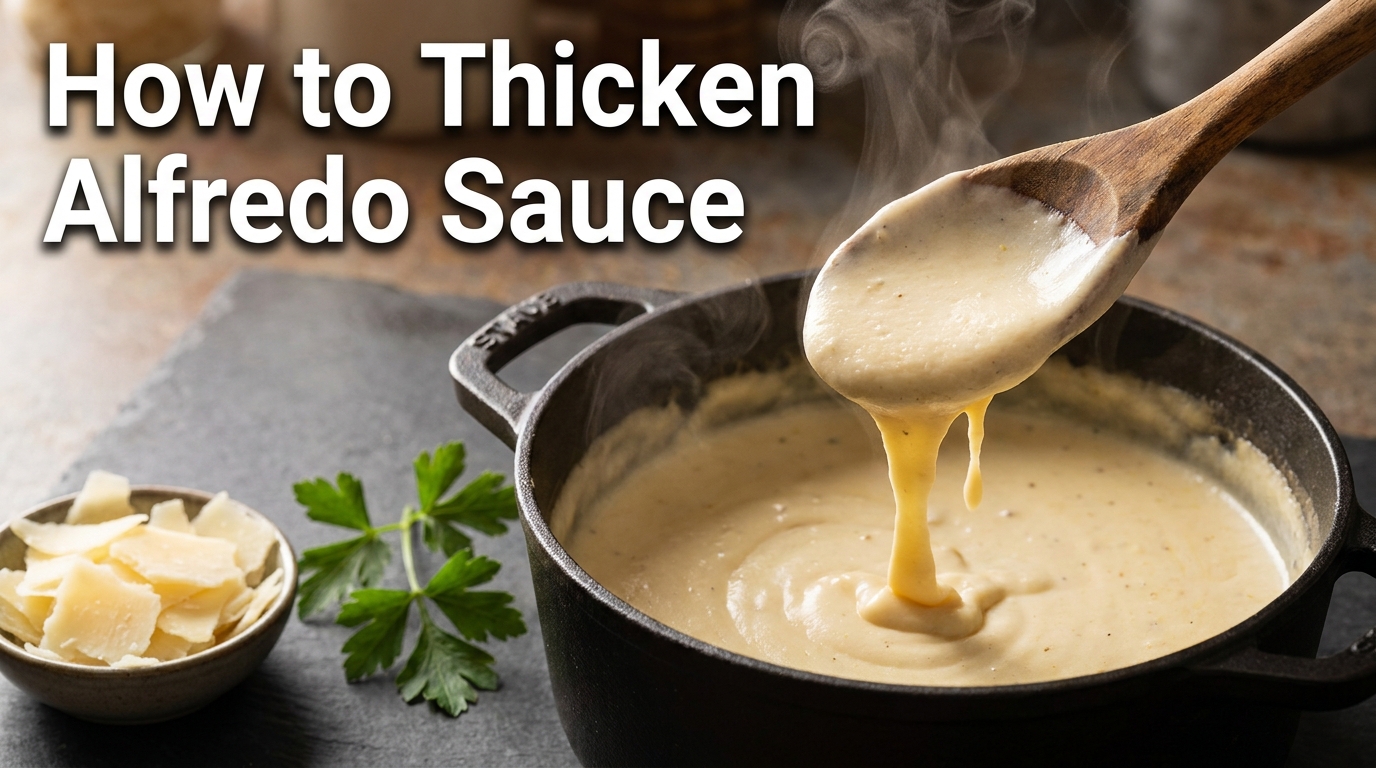
There’s a specific kind of disappointment that comes from pulling a pot off the stove, tasting your alfredo, and realizing it’s basically flavored cream soup. You followed the recipe. You used real butter. And yet the sauce is sliding right off the noodles instead of clinging to them like it’s supposed to.
If you’re searching for how to thicken alfredo sauce, you’re not doing anything wrong as a cook — this happens to people who’ve made the dish a hundred times. The good news is that a thin alfredo is one of the easiest kitchen problems to fix, and most of the solutions take less than five minutes.
Why Alfredo Sauce Turns Out Runny in the First Place

Before fixing the sauce, it helps to know why it went thin. Alfredo is a delicate balance of fat, dairy, and starch (from cheese and sometimes flour), and a few common missteps throw that balance off.
Too much liquid, not enough time. Heavy cream needs to reduce — meaning some of the water content needs to cook off — before it thickens naturally. If the cream goes straight from pot to plate, it never gets the chance.
Pre-shredded cheese. Bagged shredded cheese is coated in anti-caking agents like cellulose, which stop it from melting smoothly. Instead of blending into the sauce, it can clump or leave the liquid looking thin and grainy.
Cheese added off the heat, or too fast. Dumping cold cheese into hot cream all at once can cause it to seize instead of melt evenly.
Skipping the emulsion step. A proper alfredo relies on fat and dairy proteins binding together. If the sauce is rushed or boiled too hard, that structure breaks, and the sauce can separate or thin out.
Once you know which of these applies to your pot, picking the right fix becomes a lot easier.
1. Let It Reduce — The Simplest Fix
Reduction is the original way alfredo sauce gets its body, and it’s still the most reliable.
Keep the sauce at a gentle simmer, uncovered, and let the steam escape. As water evaporates, the remaining cream, butter, and cheese become more concentrated, and the sauce naturally clings to a spoon instead of running off it.
- Simmer on low to medium-low heat, never a hard boil
- Stir every minute or two so the bottom doesn’t scorch
- Expect it to take anywhere from 5 to 15 minutes depending on how thin it started
This method is slow but foolproof, and it doesn’t dilute the flavor the way adding extra liquid ingredients can.
2. Add More Freshly Grated Parmesan
Cheese isn’t just flavor in alfredo — it’s structure. Parmesan and Pecorino Romano are both low-moisture, high-fat cheeses, and they thicken sauce as they melt in.
The trick is to buy a block and grate it yourself rather than reaching for the pre-shredded bag. Freshly grated cheese melts into a silky texture, while bagged cheese tends to clump or stay grainy no matter how long you stir.
Add it in small handfuls off direct high heat, stirring constantly, and let each addition melt before adding more. Rushing this step is the number one reason cheese-based sauces break.
3. Make a Quick Roux
If you want a thicker alfredo without relying purely on cheese or reduction time, a small roux does the job fast. A roux is simply equal parts butter and flour cooked together until smooth, then whisked into the sauce.
| Amount of Sauce | Butter | Flour |
|---|---|---|
| 1 cup | 1 tbsp | 1 tbsp |
| 2 cups | 2 tbsp | 2 tbsp |
| 4 cups | 4 tbsp | 4 tbsp |
Cook the butter and flour together in a separate small pan for one to two minutes over medium heat, until it smells lightly toasted rather than raw. Whisk it into the simmering sauce a little at a time until you hit the texture you want.
This is a classic French technique, and it’s the same base used for béchamel and other mother sauces in traditional cooking.
4. Use a Cornstarch Slurry for a Gluten-Free Fix
Cornstarch works faster than flour and doesn’t add any wheat-based gluten, which makes it a solid choice if you’re cooking for someone with a gluten sensitivity.
Mix one teaspoon of cornstarch with one tablespoon of cold water until fully dissolved, then stir it into the simmering sauce. Let it cook for one to two minutes; cornstarch needs heat to activate, so don’t pull the pan off too soon.
Go slowly. Cornstarch thickens fast, and it’s much easier to add a second small batch than to fix a sauce that’s suddenly gone gluey.
5. Stir in Cream Cheese
A few tablespoons of softened cream cheese melts into alfredo sauce and adds body almost instantly, along with a slight tang that many people actually prefer.
Cut the cream cheese into small cubes so it melts evenly, and whisk continuously over low heat until fully incorporated. This method works especially well if your sauce is thin but you don’t want to wait for a long reduction.
6. Temper in an Egg Yolk
This is a restaurant-style trick that adds richness along with thickness. Egg yolks contain proteins and fats that bind into the sauce and give it a velvety texture, similar to how carbonara gets its creaminess.
The key step is tempering, so the egg doesn’t scramble:
- Whisk one egg yolk in a small bowl
- Slowly spoon in a few tablespoons of the hot sauce while whisking constantly
- Once the yolk mixture is warm, pour it back into the pot and stir over low heat until it thickens slightly
Never add a cold, raw yolk directly to a hot pan — it will curdle before it has a chance to work as a thickener.
7. Cut Back on Added Liquids
If a recipe calls for pasta water, broth, or milk on top of heavy cream, it’s easy to end up with more liquid than the sauce can handle. Next time, add these gradually and only as needed, rather than pouring in the full amount up front.
If your current batch is already too thin because of this, reducing (method 1) or adding a starch thickener (methods 3 or 4) will bring it back in line.
8. Whisk in Extra Butter Off the Heat
This won’t thicken a very watery sauce on its own, but for a sauce that’s just slightly thin, whisking in a tablespoon or two of cold butter off the heat (a technique called monter au beurre) adds shine and a slightly thicker mouthfeel.
Work in small pieces at a time and keep the pan off direct heat while you whisk, or the butter can separate instead of emulsifying.
9. Blend a Small Portion
If your sauce has bits of unmelted cheese or a slightly broken texture along with being thin, running part of it through a blender or using an immersion blender for a few seconds can smooth it out and make it appear thicker. This won’t add mass the way a roux or cornstarch would, but it fixes texture problems that make sauce look runnier than it actually is.
Comparing the Methods: Which One Should You Use?
| Method | Speed | Best For | Watch Out For |
|---|---|---|---|
| Reduction | Slow (5–15 min) | Preserving pure flavor | Scorching if unattended |
| Extra Parmesan | Medium | Flavor + thickness together | Clumping with bagged cheese |
| Roux | Fast | Reliable, classic texture | Raw flour taste if undercooked |
| Cornstarch slurry | Very fast | Gluten-free needs | Over-thickening quickly |
| Cream cheese | Fast | Tangy, rich results | Can mute other flavors if overused |
| Egg yolk | Medium | Silky, restaurant-style texture | Curdling if not tempered |
Pros and Cons of Thickening Alfredo Sauce at Home
Pros
- You control exactly how thick and rich the final sauce is
- Most fixes use ingredients already in a typical kitchen
- Homemade thickening avoids the preservatives found in jarred sauces
- Several methods (cheese, egg yolk) add flavor while also fixing texture
Cons
- Overcorrecting can turn a sauce gluey or too heavy
- Some methods, like reduction, take patience
- Starch-based thickeners can break down again if reheated too aggressively
Expert Tips for a Sauce That Stays Thick
- Cook pasta slightly under al dente and finish it directly in the sauce. The pasta releases starch as it finishes cooking, which naturally helps the sauce cling.
- Reserve a cup of pasta water before draining. Adding a splash back in at the end helps bind sauce to noodles without watering things down, since the starch in that water works with the sauce rather than against it.
- Keep the heat low once cheese is in the pan. High heat is the fastest way to break a cream-and-cheese sauce.
- Grate your own cheese. It’s a small extra step that solves a surprising number of texture problems before they start.
- Don’t walk away during reduction. Cream can go from simmering to scorched in the time it takes to check your phone.
Storing and Reheating Thick Alfredo Sauce
A well-thickened alfredo will hold its texture in the fridge for three to four days in a sealed container. When reheating, use low heat on the stovetop and add a splash of milk or cream to loosen it back up, since dairy-based sauces naturally tighten as they cool.
If you’re planning to portion out leftovers alongside pasta, it helps to know exactly how long cooked pasta stays good in the fridge so you’re not guessing at storage times for the whole dish.
Common Mistakes That Make Alfredo Sauce Thinner
- Boiling instead of simmering. A rolling boil can break the emulsion and force fat to separate from the liquid, which looks thin even if it technically has enough dairy in it.
- Adding cold cream straight from the fridge to a hot pan. This causes a temperature shock that can slow down proper thickening.
- Using low-fat cream or milk substitutes. Alfredo depends on fat content for its texture, so lighter dairy products will almost always need extra help from a starch thickener.
- Not tasting and adjusting as you go. Thickness, salt, and cheese levels all shift together, so check the sauce at each stage rather than only at the end.
FAQs
How do you thicken alfredo sauce without flour?
Cornstarch, extra parmesan, cream cheese, or a tempered egg yolk all thicken alfredo sauce without using flour. A cornstarch slurry is usually the fastest of these options.
Why does my alfredo sauce stay thin even after adding cheese?
This is often caused by pre-shredded cheese, which contains anti-caking coatings that prevent smooth melting. Switching to a block of parmesan you grate yourself usually solves the problem.
Can you thicken alfredo sauce with milk instead of cream?
Milk can work, but it has less fat than heavy cream, so the sauce won’t thicken as easily on its own. Adding a small roux or cornstarch slurry helps milk-based alfredo reach the same texture as a cream-based version.
How long should you simmer alfredo sauce to thicken it?
Most sauces need about 5 to 15 minutes of gentle simmering, depending on how much liquid needs to reduce. Stir regularly and keep the heat low to avoid scorching.
Is it better to thicken alfredo sauce with egg yolk or cornstarch?
Egg yolk adds richness and a silkier texture, while cornstarch is faster and more neutral in flavor. Choose egg yolk for a restaurant-style finish, or cornstarch when you need a quick, reliable fix.
Final Thoughts
A thin alfredo sauce isn’t a failed dish — it’s just a sauce that needs another minute or two on the stove, or one extra ingredient stirred in with a steady hand. Whether you reach for a block of parmesan, a quick roux, or a tempered egg yolk, the fix is usually faster than reordering takeout. Next time the sauce looks a little loose, try one of these methods before you assume the recipe let you down.

